18 Best Front of House Shrubs for Full Sun

- Full sun yard
- Curb appeal
- Low maintenance
- Beginner friendly
I spent the first year after moving staring at the bare front of our house wondering what to plant. Everything felt like a gamble. Wrong size, wrong spot, wrong shrub, and you’re ripping it out in three years.
That year of trial and error taught me more than any garden center label ever did. These are the 18 shrubs that actually held up in full sun, looked good doing it, and didn’t make me regret the purchase.
Quick Summary
- All 18 handle full sun (6+ hours of direct light per day)
- Mix of evergreen, flowering, and foliage-forward picks
- Height ranges from 6 inches to 10 feet, so check before you buy
- Honest notes on which ones people regret planting
- Best starter pick: Ninebark. Native, pest-free, and basically unkillable.
1. Panicle Hydrangea ‘Limelight’
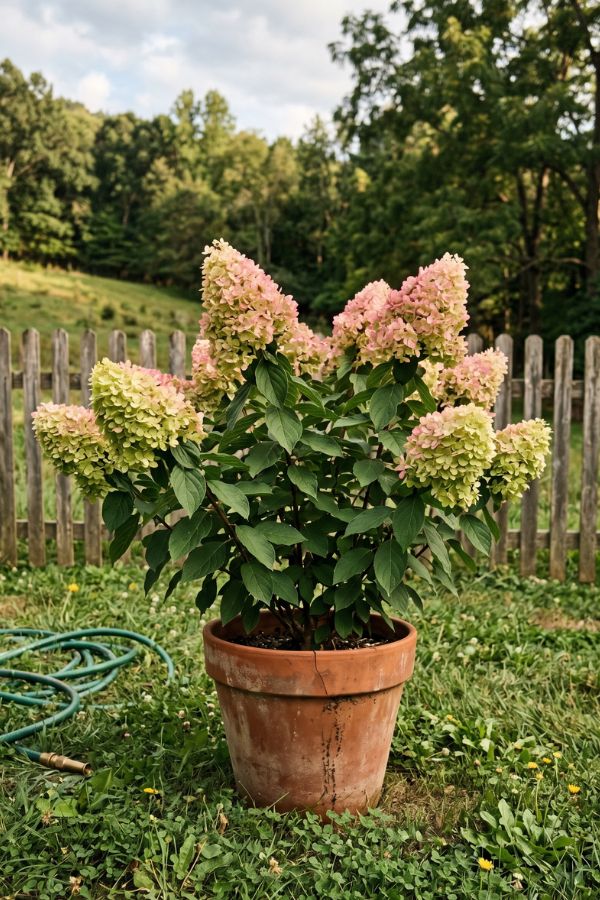
Most hydrangeas fry in full sun. This one doesn’t. ‘Limelight’ is the exception that handles direct light all day and still puts out massive flower heads that shift from green to pink as fall arrives.
I planted mine along the front walkway and it stopped traffic the first summer. Zones 3-8, blooms on new wood, so even a hard prune in spring won’t cost you flowers.
Tip
Don’t confuse panicle hydrangeas with bigleaf hydrangeas (the blue/pink ones). Bigleaf hydrangeas burn in full sun. Panicle hydrangeas love it.
2. Ninebark
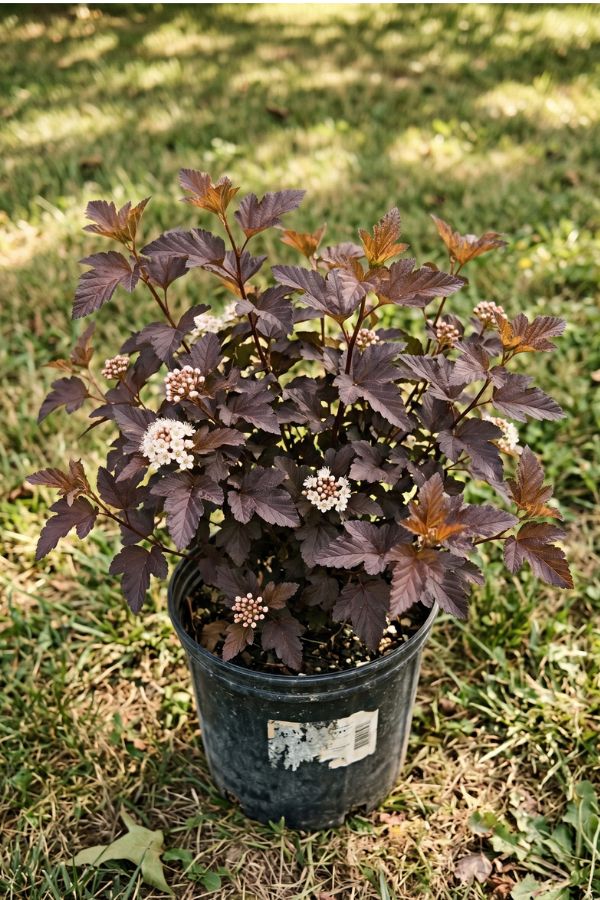
This is my pick for anyone who wants color without flowers. The burgundy and gold foliage cultivars (‘Diablo’, ‘Coppertina’, ‘Tiny Wine’) look stunning from spring through fall. Native, pest-free, and zones 2-8.
I’ve never seen a ninebark struggle. Drought, clay soil, neglect. It handles all of it. If I could only plant one shrub in the front yard, this would be it.
3. Weigela
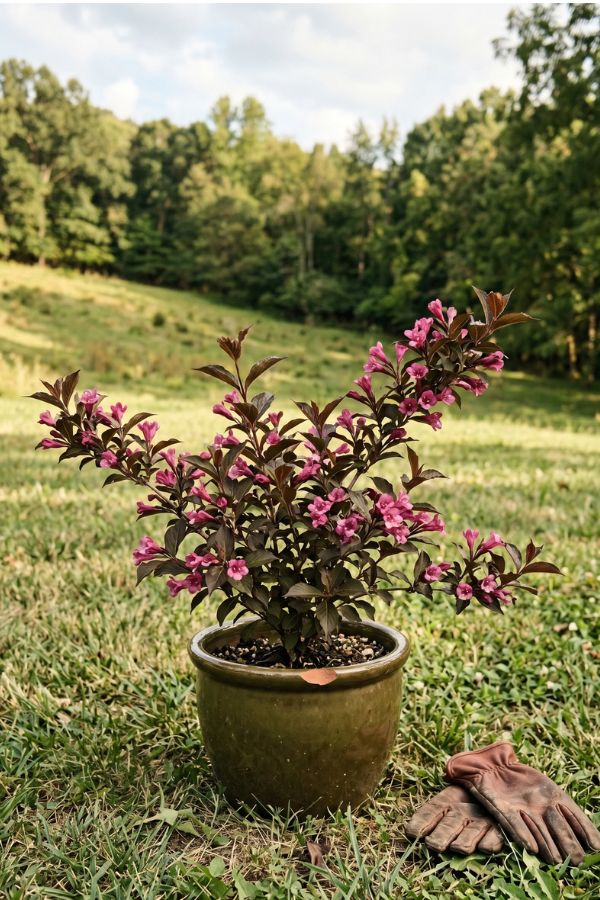
Hummingbirds love weigela. The trumpet-shaped flowers in spring bring them in every morning, and newer cultivars rebloom through summer. Deer resistant, which matters more than people realize for front yards.
Pick a compact cultivar like ‘Wine and Roses’ or ‘Sonic Bloom’ if you’re planting under windows. The species can hit 10 feet (300 cm), and nobody wants to prune a hedge every month.
4. Knock Out Rose
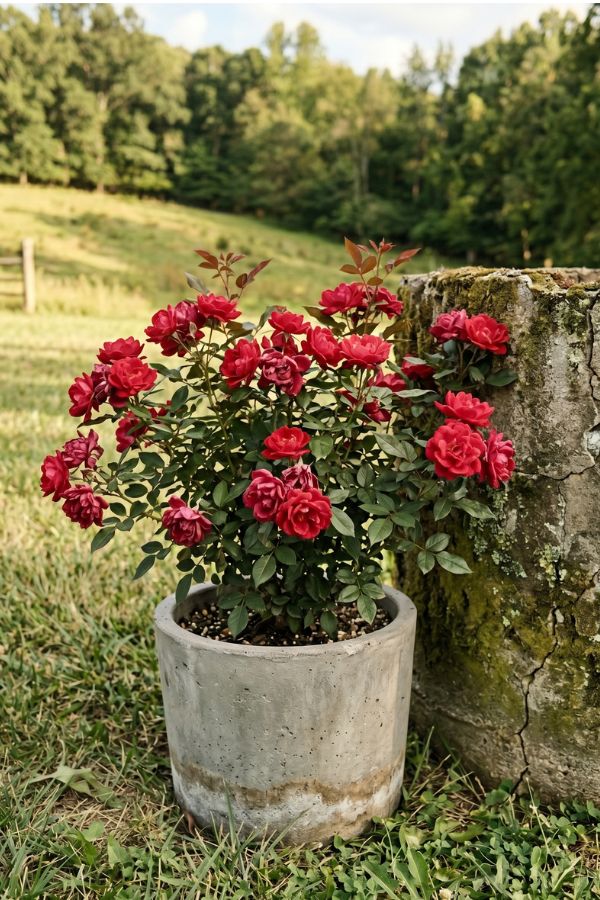
I have to be honest about Knock Outs. They bloom nonstop from June to frost and they’re hard to kill. Zones 5-9, compact, and available everywhere. That’s the upside.
The downside: they don’t smell like roses, they’re not deer resistant, and the “zero maintenance” marketing is a lie. You still need to deadhead, shape, and fertilize. Use hand pruners, not hedge trimmers. Shearing spreads Rose Rosette Disease (trust me, look it up before you shear).
5. Glossy Abelia
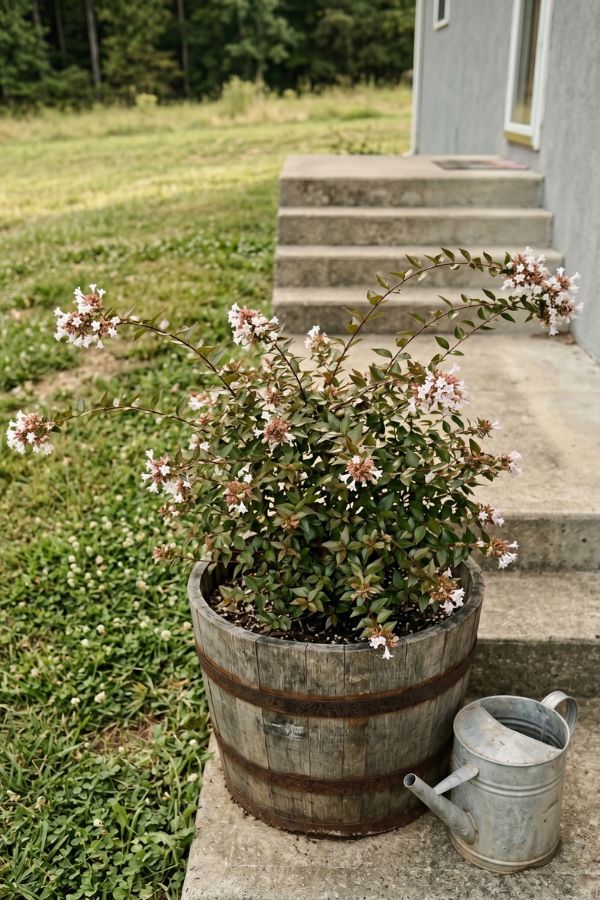
Nobody talks about abelia and I don’t understand why. It blooms from May through September. Five months of flowers. Semi-evergreen in warmer zones, deer resistant, and the fall foliage turns bronze.
This is the most underrated shrub on this list. I planted three along the front fence and they filled in beautifully within two seasons. Zones 5-9, fragrant, and pollinators swarm it all summer.
6. Bluebeard (Caryopteris)
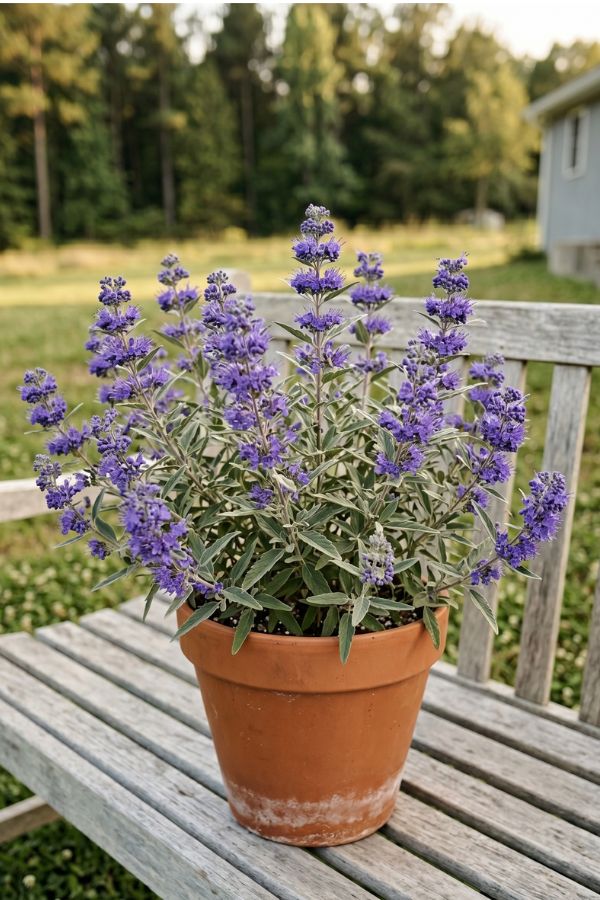
True blue is rare in the garden. Bluebeard delivers it in late summer when everything else is winding down. Compact, drought tolerant once established, and deer resistant. Perfect for the front of a border.
I cut mine to the ground every spring. Sounds harsh, but it grows back fast and blooms on new wood. Zones 5-9, though in zone 5 treat it more like a perennial (it dies back but returns).
7. Spirea ‘Little Princess’
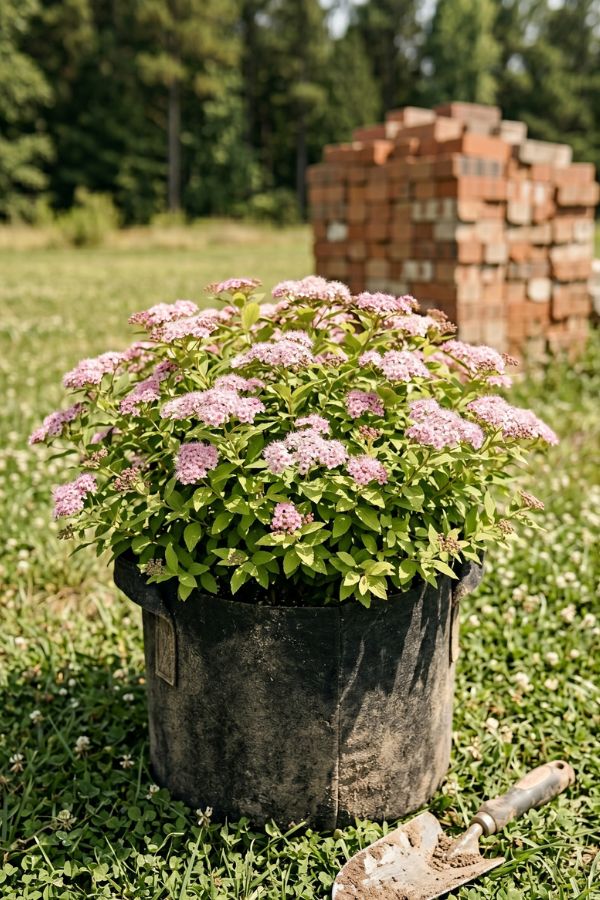
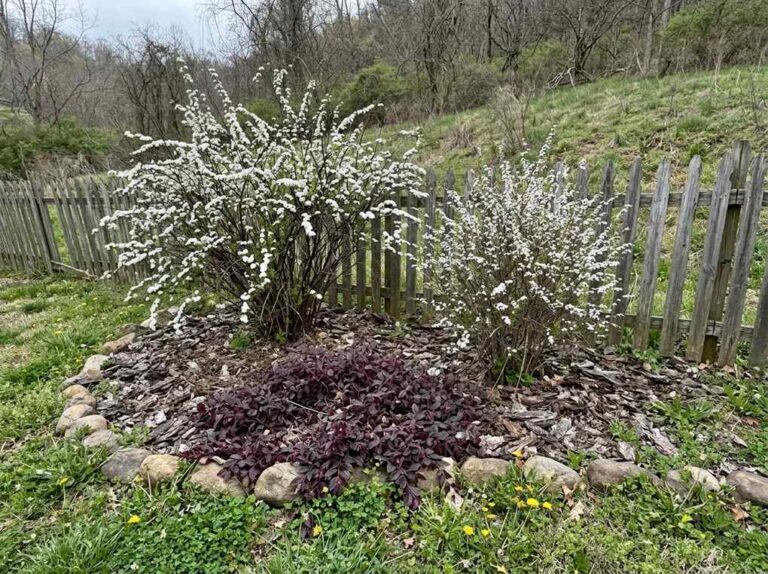
The gold standard for low-maintenance foundation planting. Pink flowers in late spring, compact mounding habit, and it handles poor soil, drought, and cold without complaining. Zones 4-8.
If you want something you can plant and forget, this is it. Deer resistant, no serious pest issues, and it stays small enough that you won’t be pruning it away from windows every summer. Not glamorous. But reliable beats glamorous every time.
Save this to Pinterest8. Loropetalum (Chinese Fringe Flower)
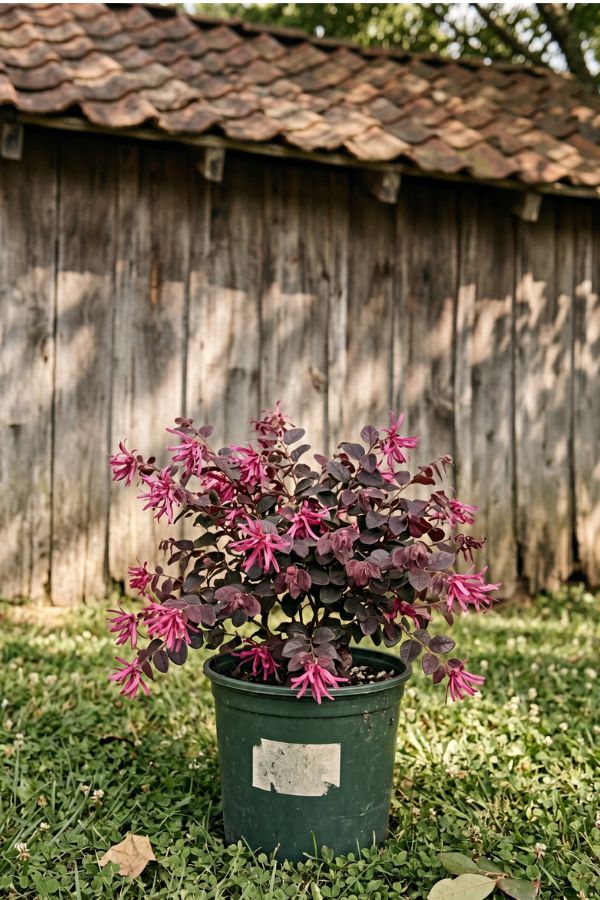
If you’re in zones 7b-9b, this is your secret weapon. Evergreen, burgundy foliage, and hot pink fringe flowers that bloom in late winter when the rest of the yard is still asleep. Deer resistant too.
Pick a dwarf cultivar for foundation planting. The species can reach 20 feet (610 cm). Cultivars like ‘Purple Pixie’ or ‘Crimson Fire’ stay under 4 feet (120 cm) and won’t swallow your front porch.
9. Dwarf Crape Myrtle
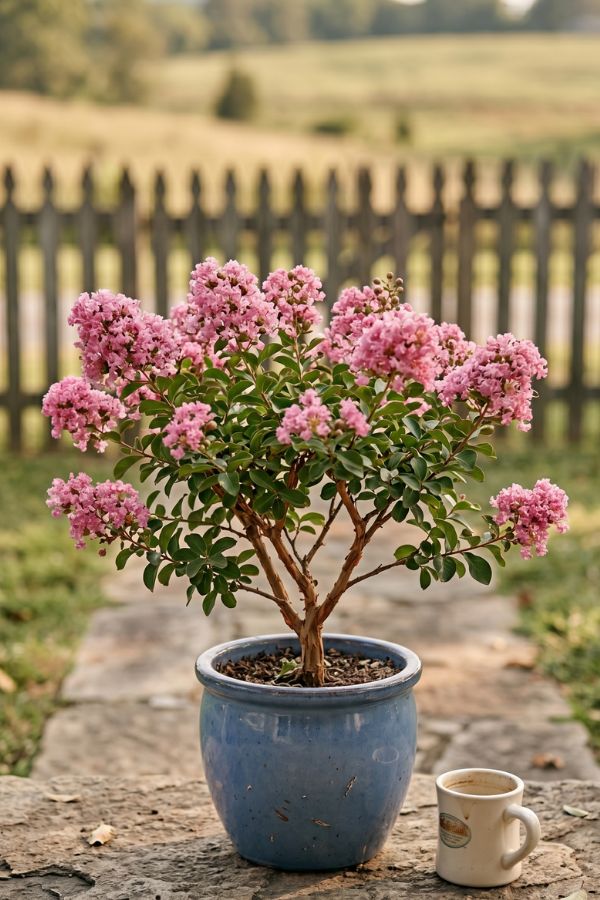
The summer showstopper. Nothing else blooms this long or this loud in full sun. Zones 7-9 for standard varieties, though newer series push into zone 4.
I planted a ‘Tonto’ by the front steps and it steals the show from July through October. Compact cultivars (‘Chickasaw’, ‘Pocomoke’, ‘Victor’) stay under 5 feet (150 cm). Just don’t commit “crape murder” and hack the tops off. Prune lightly in late winter instead (trust me on this one).
10. Arrowwood Viburnum
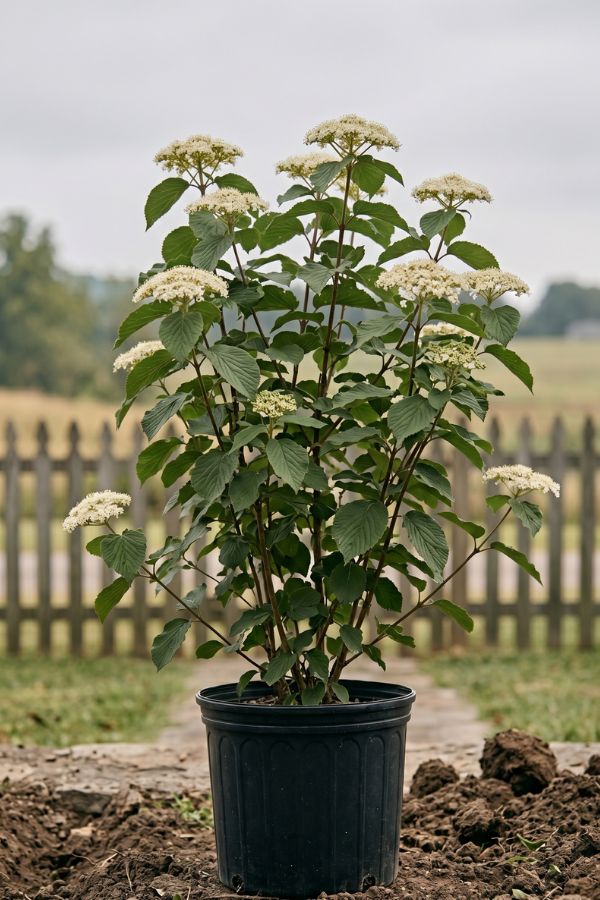
Native, deer resistant (Rutgers rates it “Rarely Damaged”), and it gives you three seasons of interest: white spring flowers, blue-black fall berries, and red-purple fall foliage. Zones 2-8.
This is the shrub I recommend to anyone who wants to attract birds. The berries bring them in every fall. Plant it as a corner anchor or background shrub since it gets tall.
11. Potentilla (Shrubby Cinquefoil)
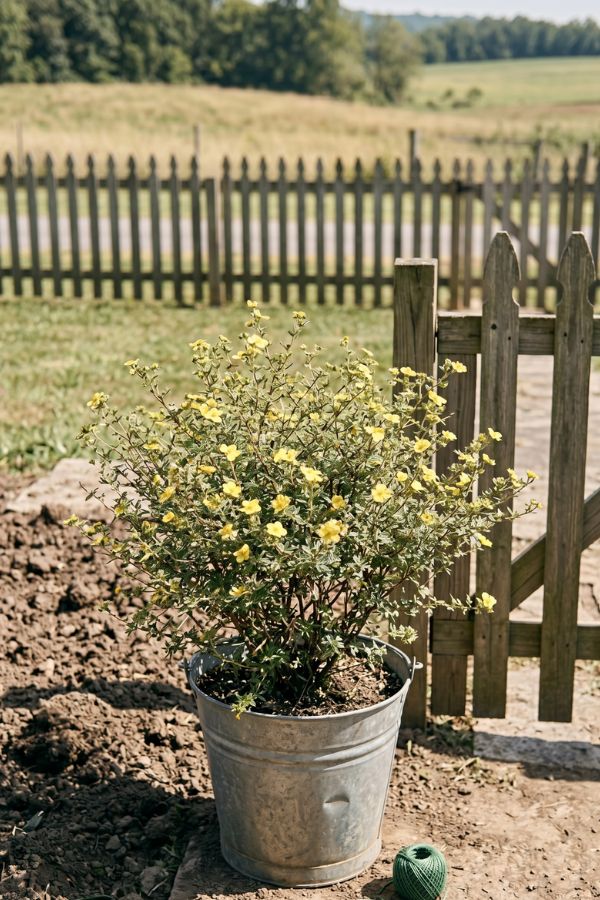
If you garden in cold zones (3-7), potentilla is one of the most reliable options. Deer resistant, non-toxic, native, and it blooms from June through September. Hard to argue with that.
Struggles in high heat and humidity though. Not a good pick south of zone 7. Stick to cooler climates and it’ll reward you with zero drama for years.
12. Boxwood
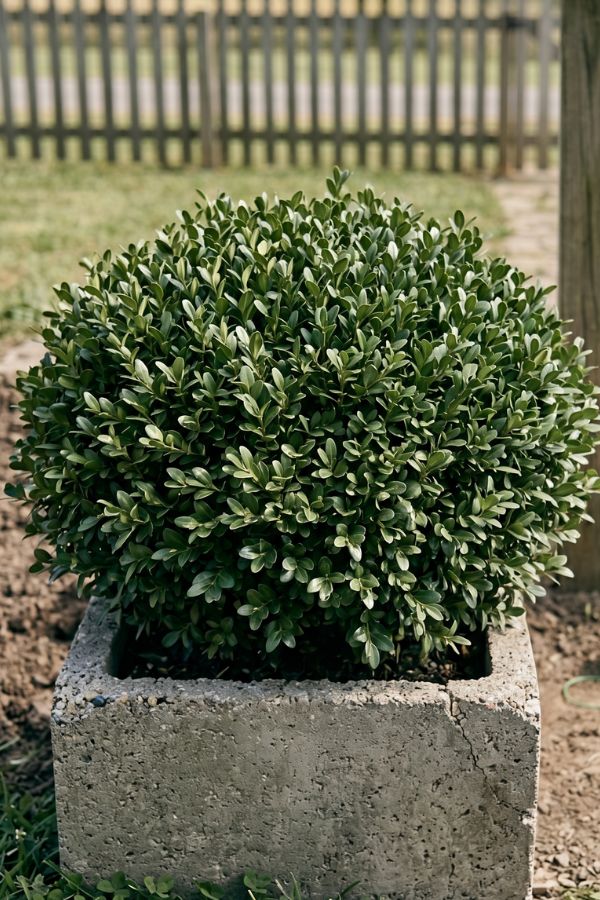
The classic. Clean lines, evergreen year-round, deer resistant. Zones 5-8. I get why everyone plants it.
But I have to be honest. Boxwood blight is spreading fast and it kills entire plantings with no cure. It’s also genuinely toxic to kids and pets according to the NC State Extension Plant Toolbox (steroidal alkaloids, not a mild stomach ache). Some gardeners I follow are ditching boxwood entirely and switching to inkberry holly or Japanese holly for the same formal look without the disease risk. Worth thinking about before you commit.
13. Japanese Holly
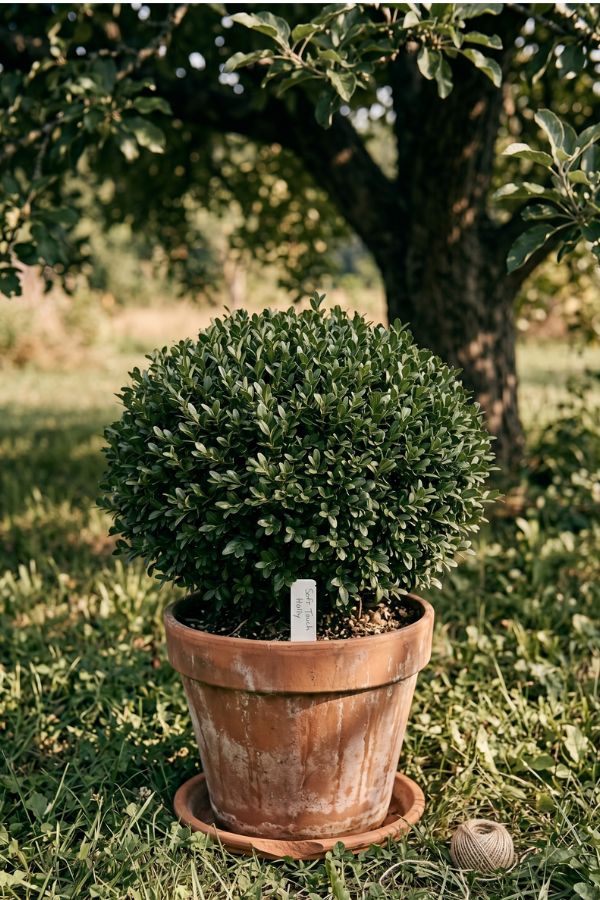
The boxwood alternative that doesn’t get boxwood blight. Small, glossy leaves. Tight, formal shape. Evergreen in zones 5-8. Cultivars like ‘Soft Touch’ and ‘Sky Pencil’ give you clean structure without the disease gamble.
One caveat: the berries are toxic to dogs and cats (ASPCA confirmed). Keep that in mind if your pets chew everything in the yard like mine do.
14. Rose of Sharon
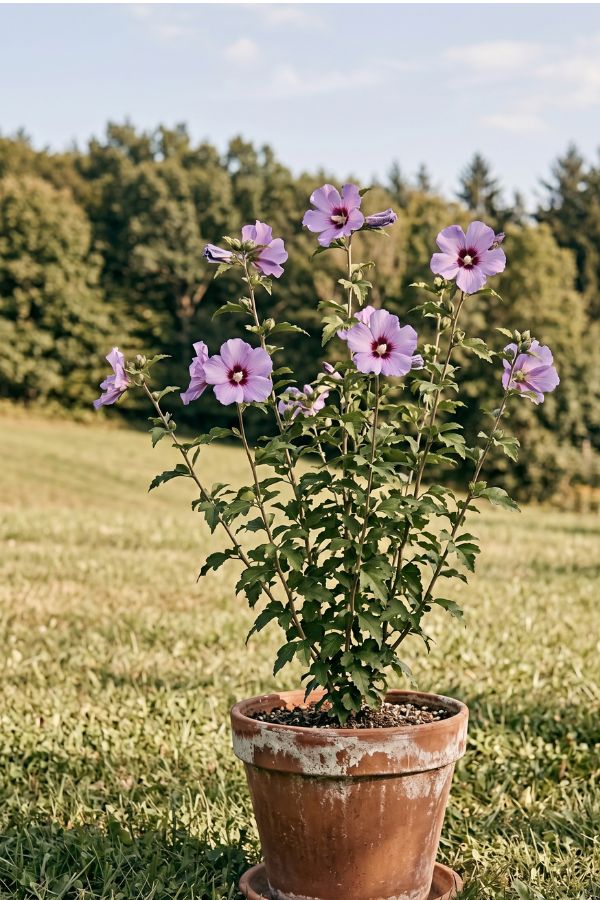
Gorgeous tropical-looking flowers in midsummer. Zones 5-9. Drought tolerant, grows in poor soil, and the blooms are big and dramatic.
Fair warning: it self-seeds aggressively. I’ve seen front yards taken over by volunteer seedlings within a few years. Look for sterile cultivars (‘Aphrodite’, ‘Minerva’, ‘Diana’) if you don’t want to spend every spring pulling baby plants out of your flower beds.
15. Forsythia
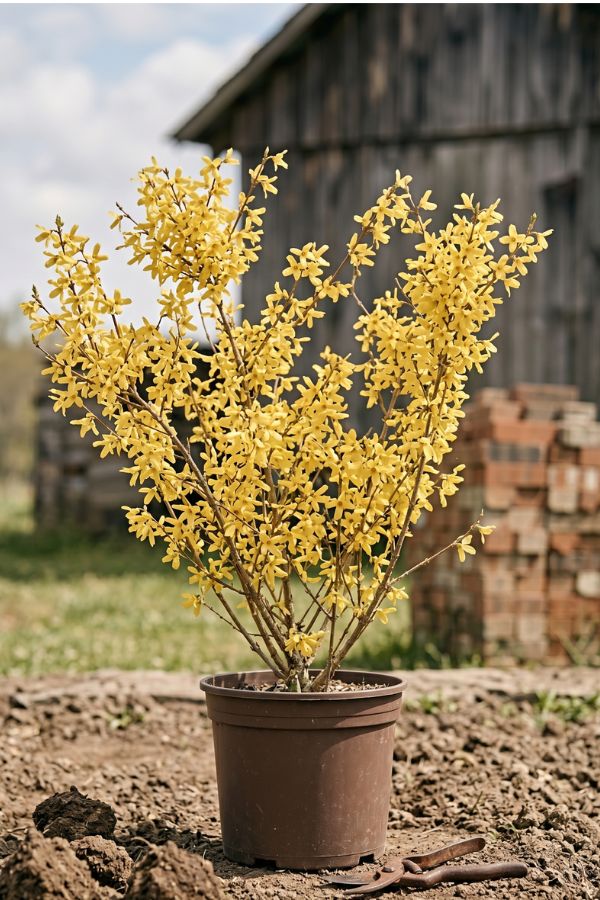
I’m including forsythia because those two weeks of yellow in early spring are genuinely beautiful. It’s one of the first things to bloom and it signals that winter is over.
That said, I have to be real. After those two weeks, it’s a green blob for the remaining 50 weeks of the year. It gets huge, needs regular pruning, and offers nothing in summer, fall, or winter. If you have the space and love that spring moment, plant it. If you want year-round value, skip it and plant ninebark instead.
Did you know
Landscaping with the right shrubs can increase your property value by 5-12%. Front yard curb appeal is one of the highest-ROI home improvements you can make, and it doesn’t require a contractor.
16. Butterfly Bush
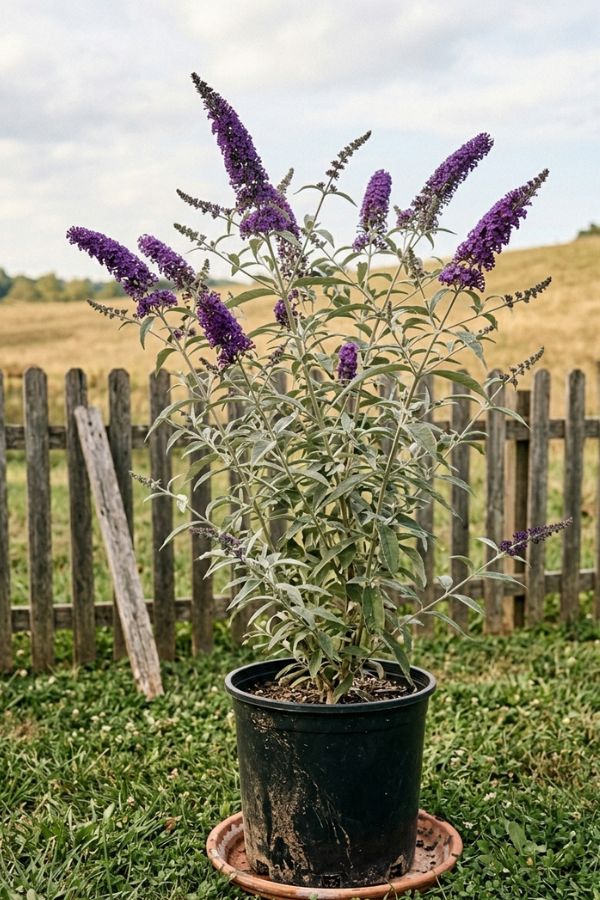
Pollinators go wild for butterfly bush. The long flower spikes attract butterflies, bees, and hummingbirds all summer. Zones 5-9, drought tolerant, and it blooms on new wood.
But check your local regulations before buying. It’s classified as invasive in several states (banned for non-sterile sale in Oregon and Washington). Stick to sterile cultivars like the ‘Lo and Behold’ series if you want the pollinators without the ecological guilt.
17. Creeping Juniper
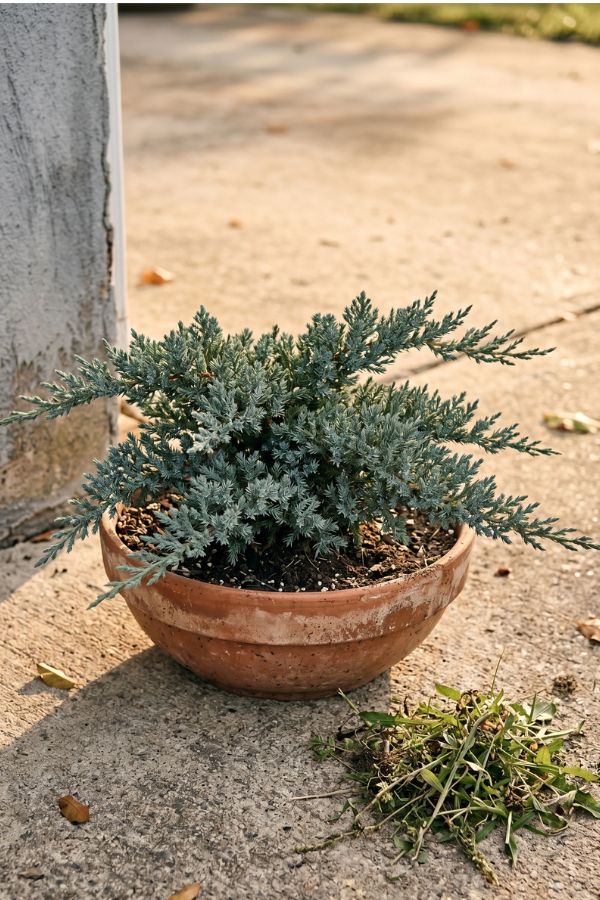
Not every front yard shrub needs to be tall. Creeping juniper is the groundcover pick for slopes, edges, and that strip between the sidewalk and the house where nothing else survives. Evergreen, zones 3-9, and basically zero maintenance once established.
I use ‘Blue Rug’ along the front path. It stays flat, stays green (with a purple winter tint), and I haven’t watered it once since the first summer.
18. Lilac
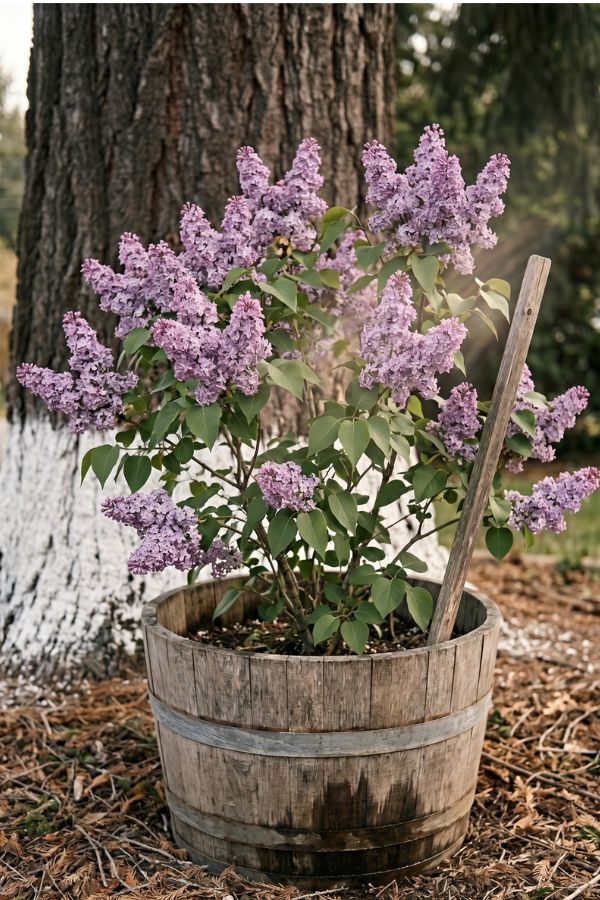
Nothing smells like lilac. Nothing. The spring fragrance alone justifies planting one. Drought tolerant once established, long-lived (some specimens last 100+ years), and the cut flowers are incredible in a vase.
Pick a compact cultivar for front yards (‘Bloomerang’, ‘Miss Kim’, ‘Tinkerbelle’). Standard lilacs can hit 15 feet (450 cm) and get leggy at the bottom, which isn’t the look you want next to your front door.
How to Pick the Right Shrub for Your Front Yard
Under windows: stick to shrubs that max out at 3-4 feet (90-120 cm). Spirea, bluebeard, potentilla, dwarf loropetalum, and creeping juniper are safe bets.
Corner anchors: go taller. Panicle hydrangea, ninebark, viburnum, and lilac fill large corners without looking cramped.
Foundation clearance: plant shrubs at least 3-5 feet (90-150 cm) from the house wall. Their mature width needs space to fill out without pressing against siding or blocking airflow.
Plant in odd numbers. Groups of 3, 5, or 7 look intentional and full. Pairs look like a mistake (don’t ask how I know).
Common Questions
How far apart should I plant foundation shrubs?
Half the mature width is the general rule. If a shrub grows 6 feet (180 cm) wide, space them 3 feet (90 cm) apart. They’ll fill in without competing. Too close and you’re pruning constantly. Too far and it looks patchy for years.
What’s the best shrub for full sun AND low maintenance?
Ninebark or spirea. Both handle heat, drought, poor soil, and neglect. Ninebark wins on looks (the colored foliage cultivars are stunning). Spirea wins on staying compact without pruning.
Should I pick evergreen or deciduous shrubs?
Mix both. Evergreen shrubs (boxwood, Japanese holly, juniper, loropetalum) give you winter structure so your front yard doesn’t look empty from November through March. Deciduous shrubs (hydrangea, weigela, ninebark) give you flowers and seasonal color. The best front yards layer both.
Which front yard shrubs should I avoid?
Anything invasive in your region. Check before planting butterfly bush, Japanese barberry, nandina, or burning bush. Also avoid planting anything that grows 15 feet tall under a 4-foot window. Check the mature size on the tag, not the size in the pot. The Rutgers deer resistance database is worth checking if deer are a problem in your area.
How long until front yard shrubs look full?
Most shrubs need 2-3 years to fill in properly. The first year they sleep, the second year they creep, the third year they leap. Be patient with the establishment period and water consistently that first summer.
Your Front Yard Is Waiting
I won’t pretend I got all of this right the first time. I planted a forsythia too close to the walkway and a rose of Sharon that now has babies everywhere. But the ninebark, the abelia, and the creeping juniper along the path? Those I’d plant again without thinking twice.
Start with two or three from this list. Give them a full growing season. You’ll know by fall which ones belong in your yard.