18 Small Trees That Actually Thrive in Pots (And Don’t Outgrow Them)

- Small space
- Patio or balcony
- Beginner friendly
- Year-round interest
I wanted a real tree on the patio. Not a houseplant pretending to be one. Something with actual bark, actual height, and actual presence. The problem was the yard wasn’t ready yet and I had exactly zero ground to plant in.
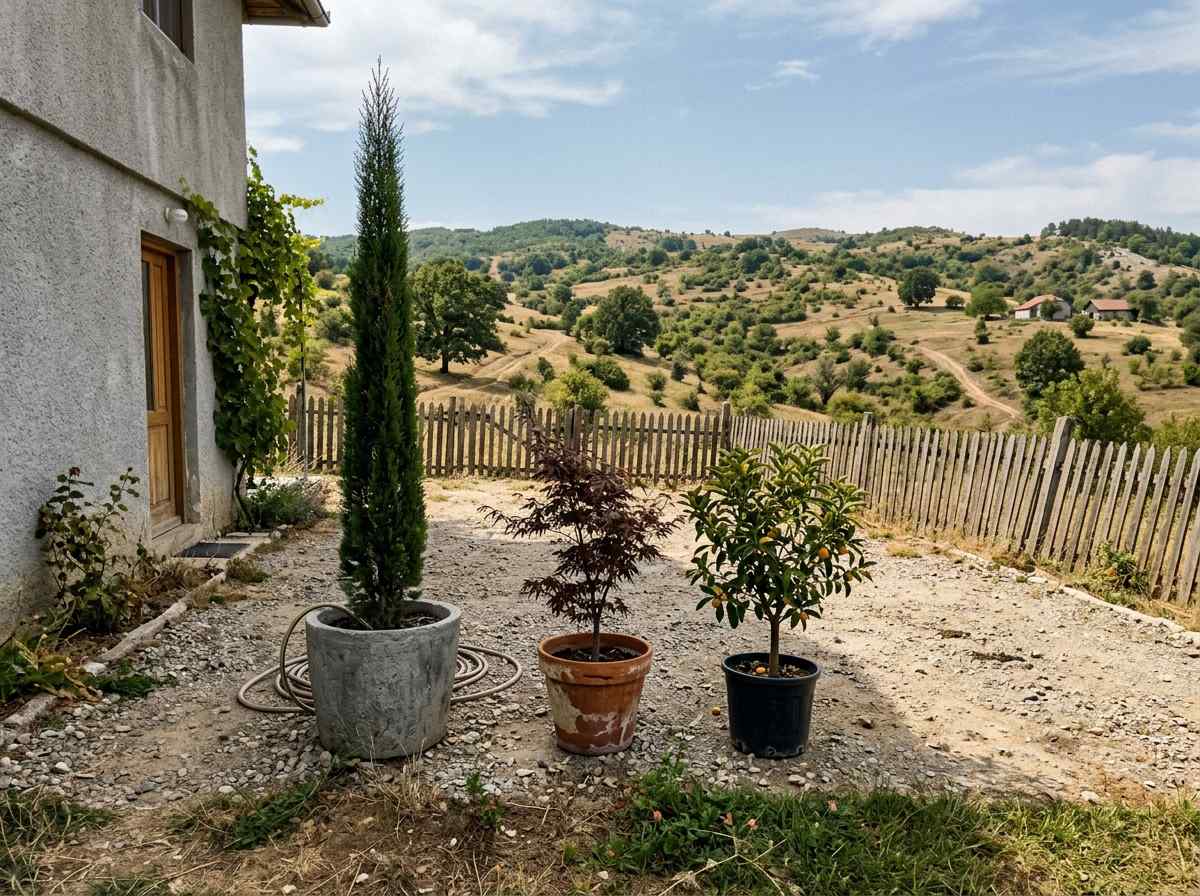
So I started with pots. Three years later, I have Japanese maples, a fig that won’t stop producing, and an olive tree that makes the whole corner feel like a different country. These are the 18 that actually worked.
Quick Summary
- All 18 genuinely thrive in containers long-term (not just “survive”)
- Mix of evergreen, flowering, fruiting, and foliage trees
- Each includes minimum pot size, zones, and pet safety
- Includes an honest “trees to avoid in pots” section at the end
- Best starter pick: Japanese Maple. Shallow roots, slow growth, stunning in every season.
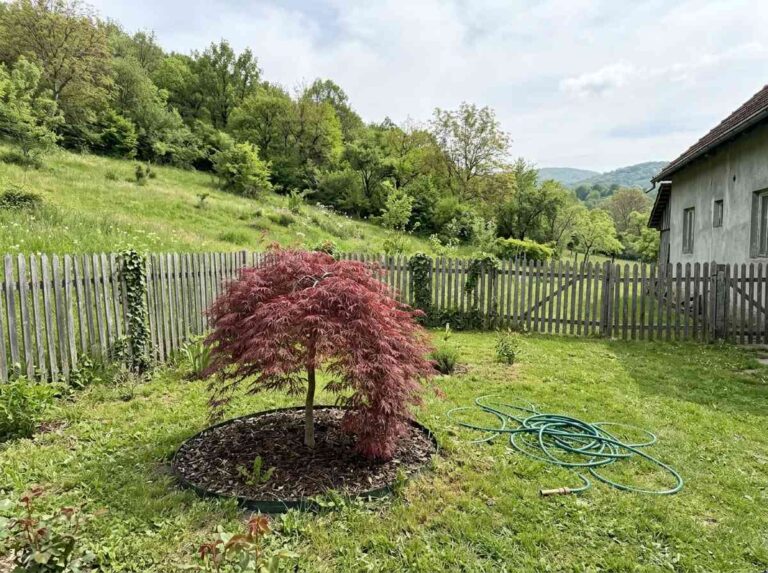
1. Japanese Maple
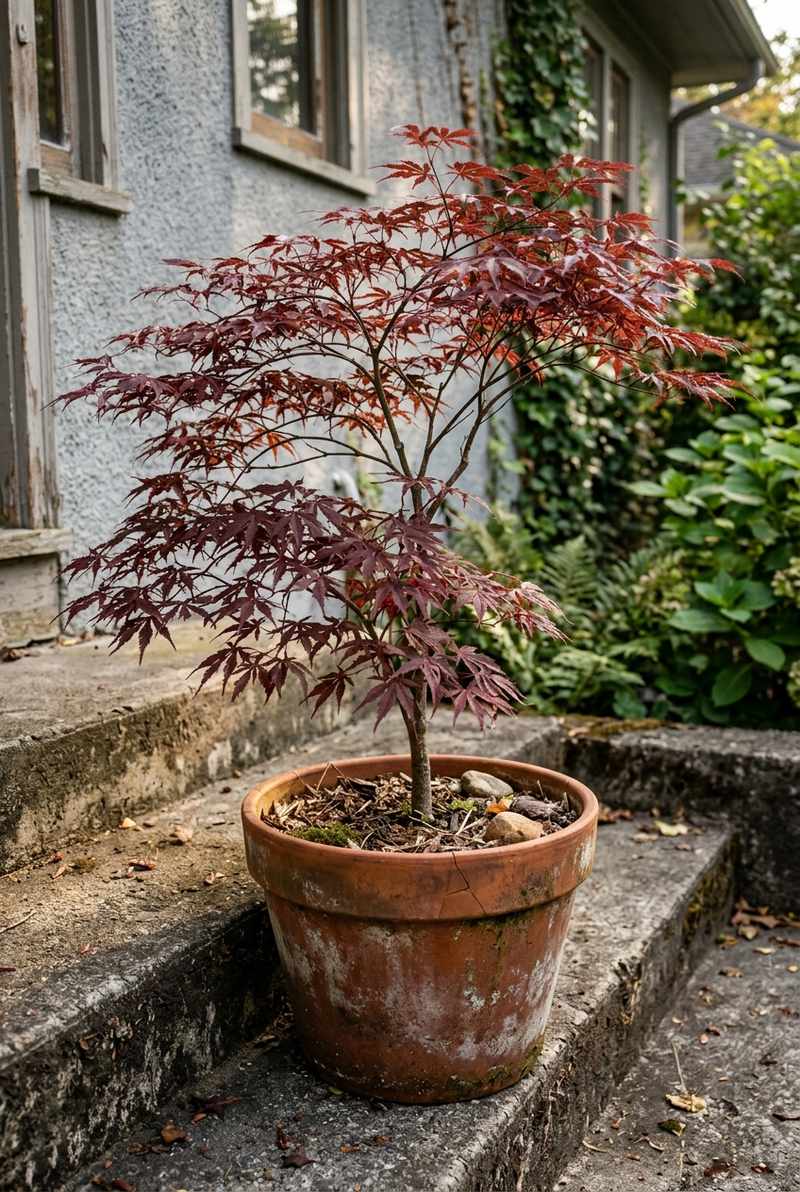
The undisputed champion of container trees. Shallow roots, slow growth, and foliage that shifts from spring green to autumn fire. Dwarf cultivars like ‘Shaina’ and ‘Crimson Queen’ stay compact for years without outgrowing their pot.
I keep mine in a 24-inch pot with half azalea mix, half potting soil. One thing I learned the hard way: don’t plant anything else in the same container. The roots can’t handle competition.
Pet safe: non-toxic to dogs and cats. Minimum pot: 18 inches (24 preferred).
2. Olive Tree
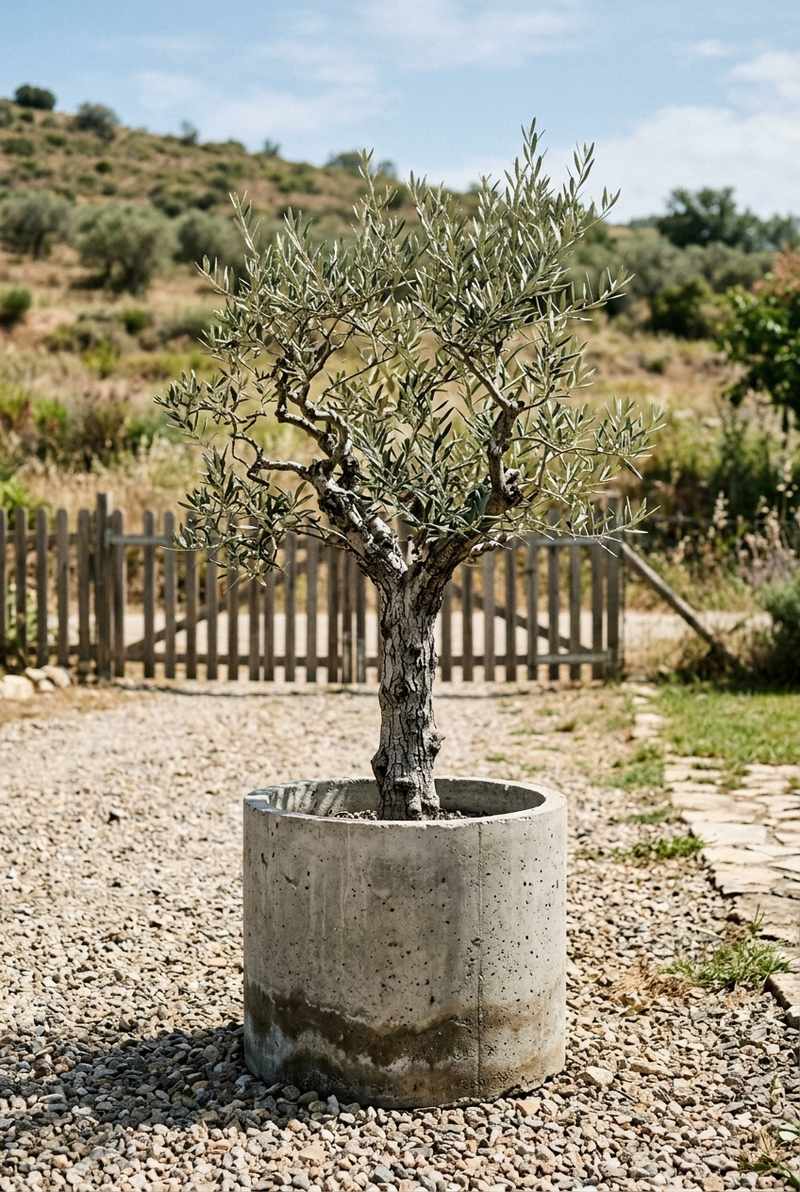
Nothing transforms a patio like an olive tree. The silvery foliage, the gnarled trunk, the Mediterranean feel. Shallow roots make it naturally suited to containers and it actually prefers being slightly root-bound.
Use terracotta or wood pots, not plastic. Plastic holds too much moisture and olives hate wet feet. Pick ‘Swan Hill’ if you don’t want messy fruit dropping on your patio.
Pet safe: non-toxic to dogs, cats, and horses. Minimum pot: 18 inches.
3. Meyer Lemon
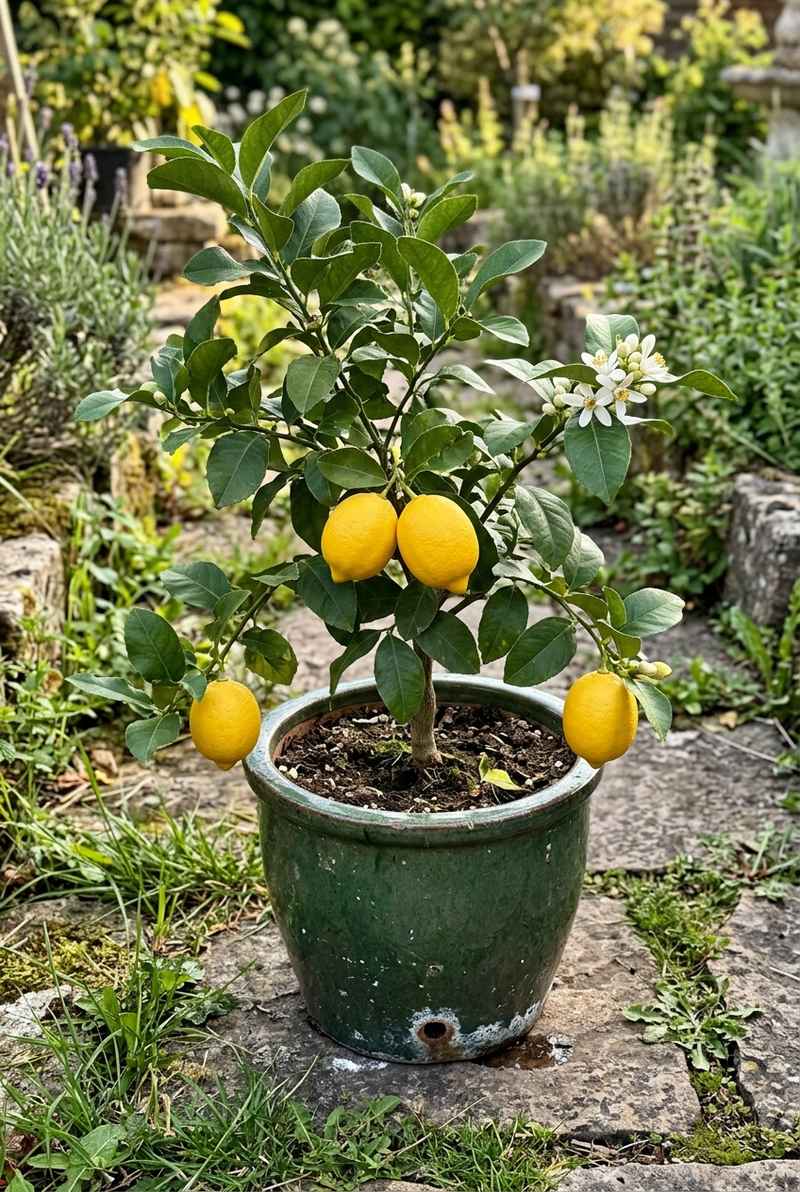
The most popular container fruit tree for a reason. Fragrant flowers, glossy leaves, and actual lemons you can pick. Meyer lemons are sweeter and thinner-skinned than store-bought, and the tree stays compact enough for a 5-gallon pot to start.
Heavy feeder. Diluted fertilizer every two weeks during growing season. Bring indoors before frost if you’re outside zones 9-11. Rotate the pot monthly for even sun exposure.
Pet warning
All citrus trees (lemon, lime, orange, kumquat) are toxic to dogs, cats, and horses per ASPCA. The compounds limonene and linalool in leaves, fruit, and stems cause GI irritation. Keep away from pets who chew plants.
4. Fig Tree
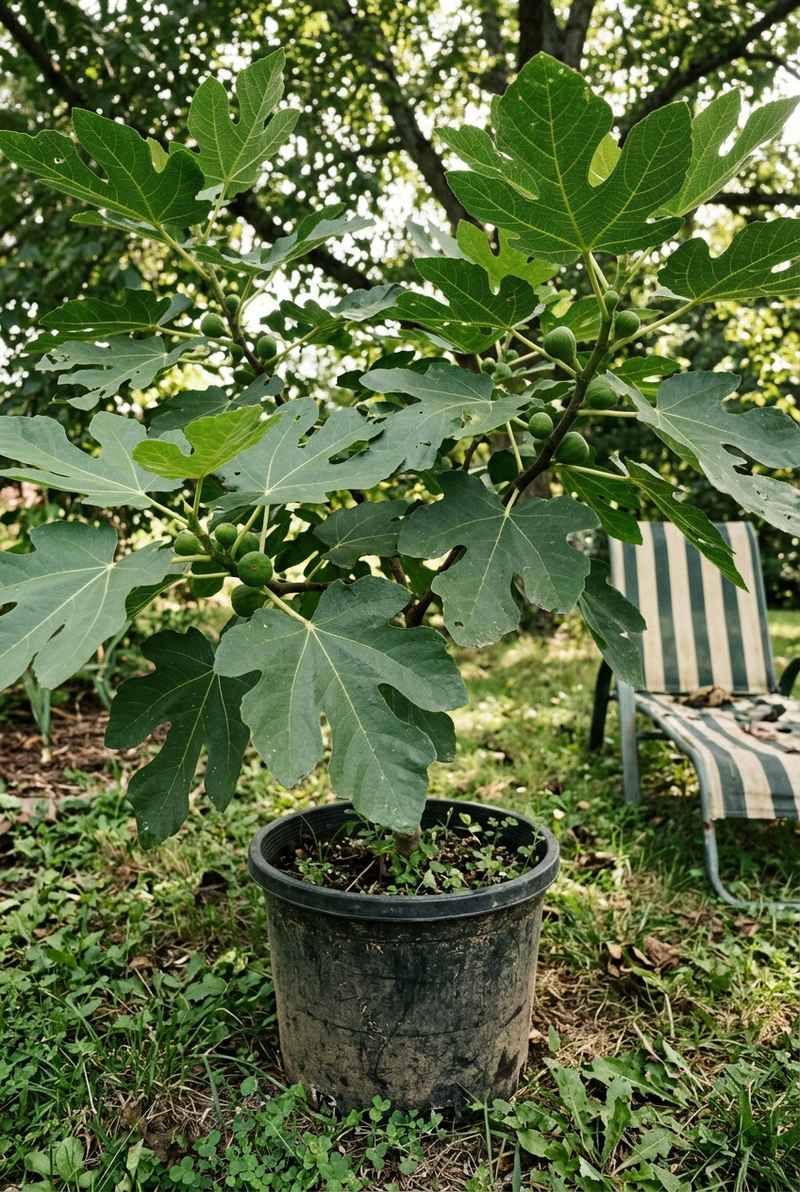
Here’s the surprise: figs actually produce more fruit in pots than in the ground. Root restriction triggers heavier fruiting. Experienced growers on the OurFigs forum swear by this. Bold tropical foliage, edible fruit, and a tree that rewards you for keeping it contained.
‘Chicago Hardy’ handles cold down to zone 5. Start with an 18-inch pot, minimum. Don’t use black pots in direct sun. Dark containers absorb heat and literally cook the roots.
Pet caution: fig sap is a skin and GI irritant per ASPCA. Minimum pot: 18-24 inches.
5. Bay Laurel
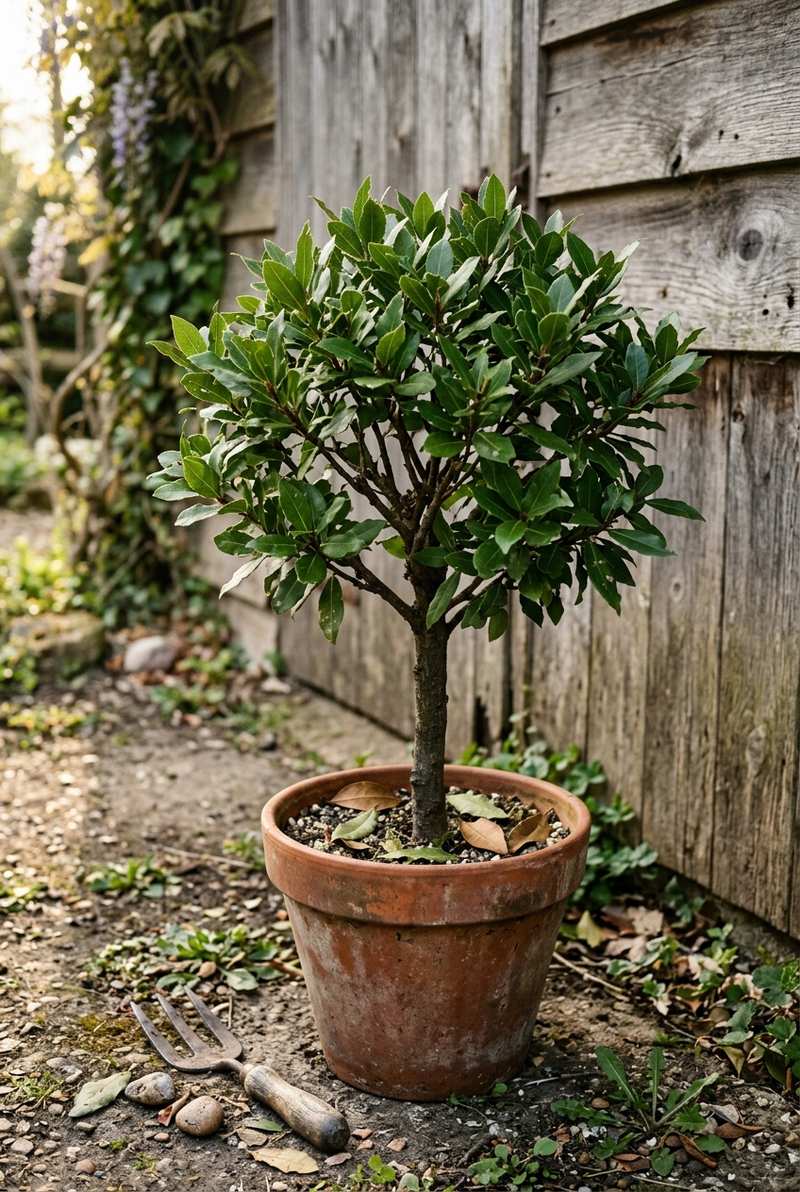
A tree that looks elegant AND gives you fresh bay leaves for cooking. Clip the outer 6 inches regularly and it stays compact, dense, and shaped however you want. Excellent for topiary if that’s your thing.
Slow grower (4-12 inches per year), so it won’t outgrow a 24-inch pot for years. Bring inside before frost if you’re in cold zones. Grows well near a bright window through winter.
Pet note: low toxicity to dogs and cats (GI upset if ingested). Minimum pot: 24 inches for a 5-6 ft tree.
6. Dwarf Crape Myrtle
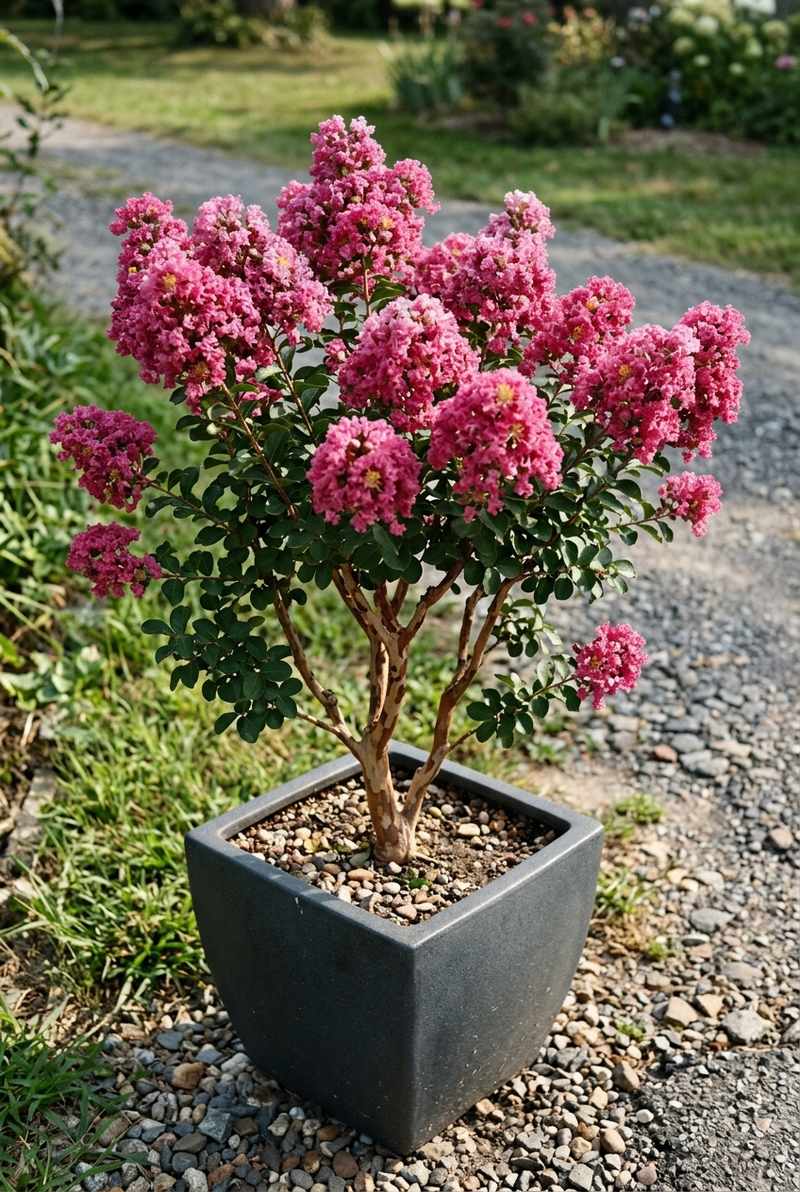
Nothing blooms this long in a pot. July through September, nonstop crepe-papery flowers in pink, red, white, or lavender. Plus exfoliating bark and fall color. Three seasons of interest from one container.
Compact cultivars ‘Chickasaw’ (2 ft), ‘Pocomoke’ (3-4 ft), and ‘Victor’ (3-6 ft) all stay manageable. Don’t commit “crape murder” and hack the tops off (trust me on this one). Light prune in late winter instead.
Pet safe: non-toxic to dogs, cats, and horses per ASPCA. Minimum pot: 15-20 gallon.
7. Little Gem Magnolia
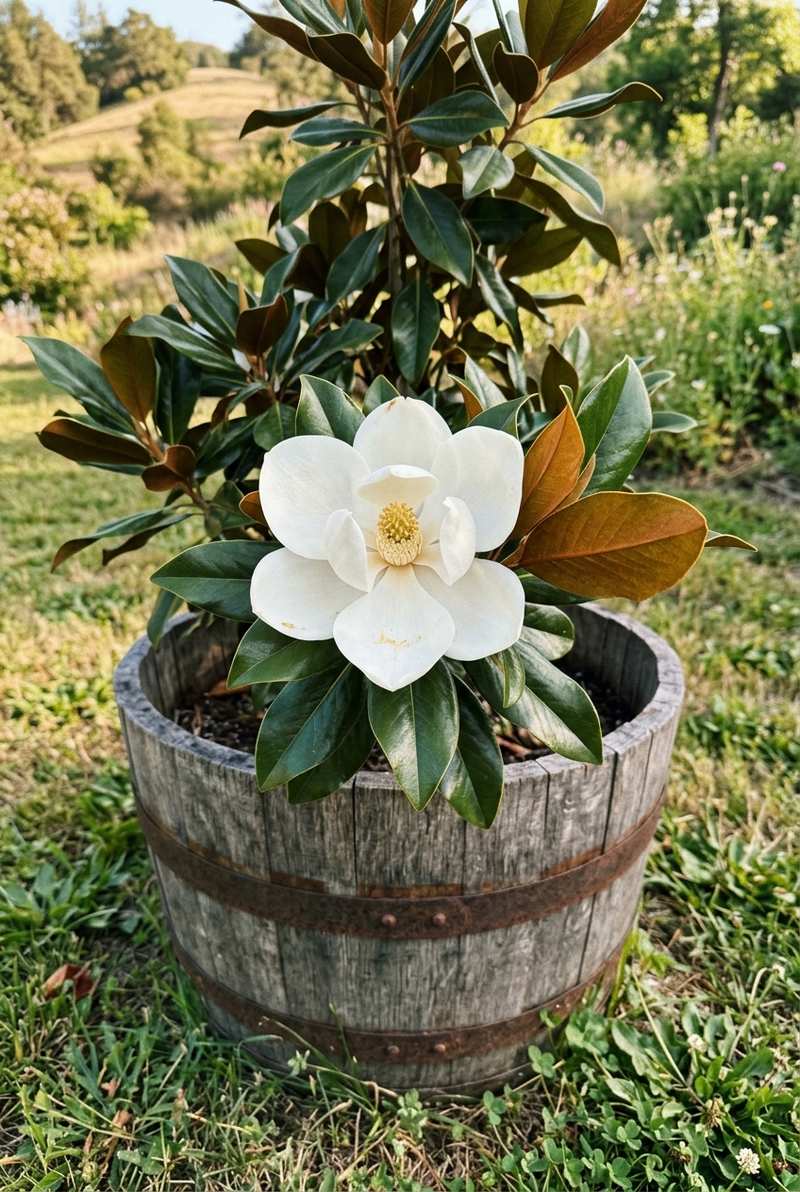
Glossy evergreen leaves with bronze-russet undersides and fragrant white flowers up to 4 inches across. ‘Little Gem’ is the compact cultivar of Southern Magnolia. It starts blooming young, which means you don’t wait years for flowers.
Slower-growing than the species, which is exactly what you want in a container. Needs a large pot (20-25 gallon) but rewards you with year-round structure and that classic magnolia scent.
Pet safe: non-toxic to dogs and cats. Minimum pot: 20-25 gallon.
8. Kumquat
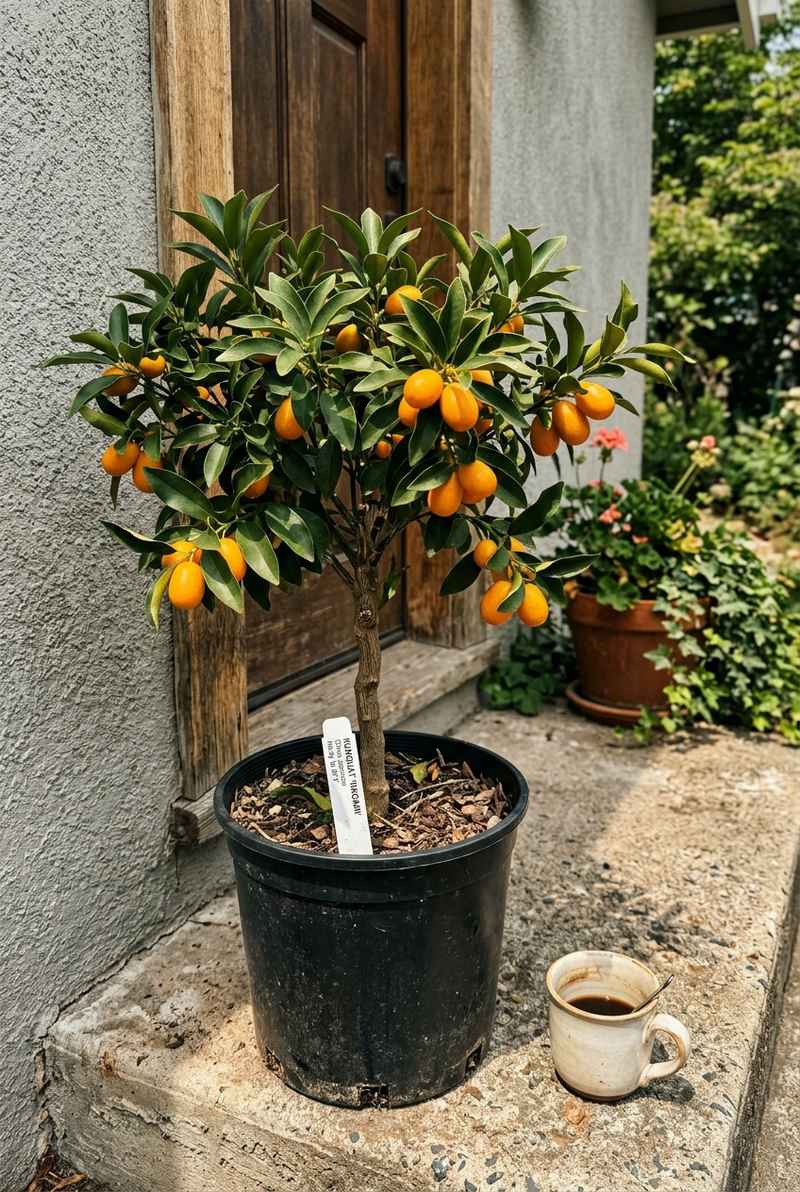
The most cold-tolerant citrus you can grow in a pot. Handles brief dips to 18F (-8C), which is far better than lemons or limes. The fruit is tiny, sweet, and you eat the peel and all. Kids love picking them straight off the tree.
Same care as Meyer lemon: heavy feeder, bring inside before hard frost, rotate monthly. But more forgiving if you forget a watering or two.
Pet caution: citrus oils toxic to dogs and cats per ASPCA. Minimum pot: 12-18 inches.
9. Japanese Camellia
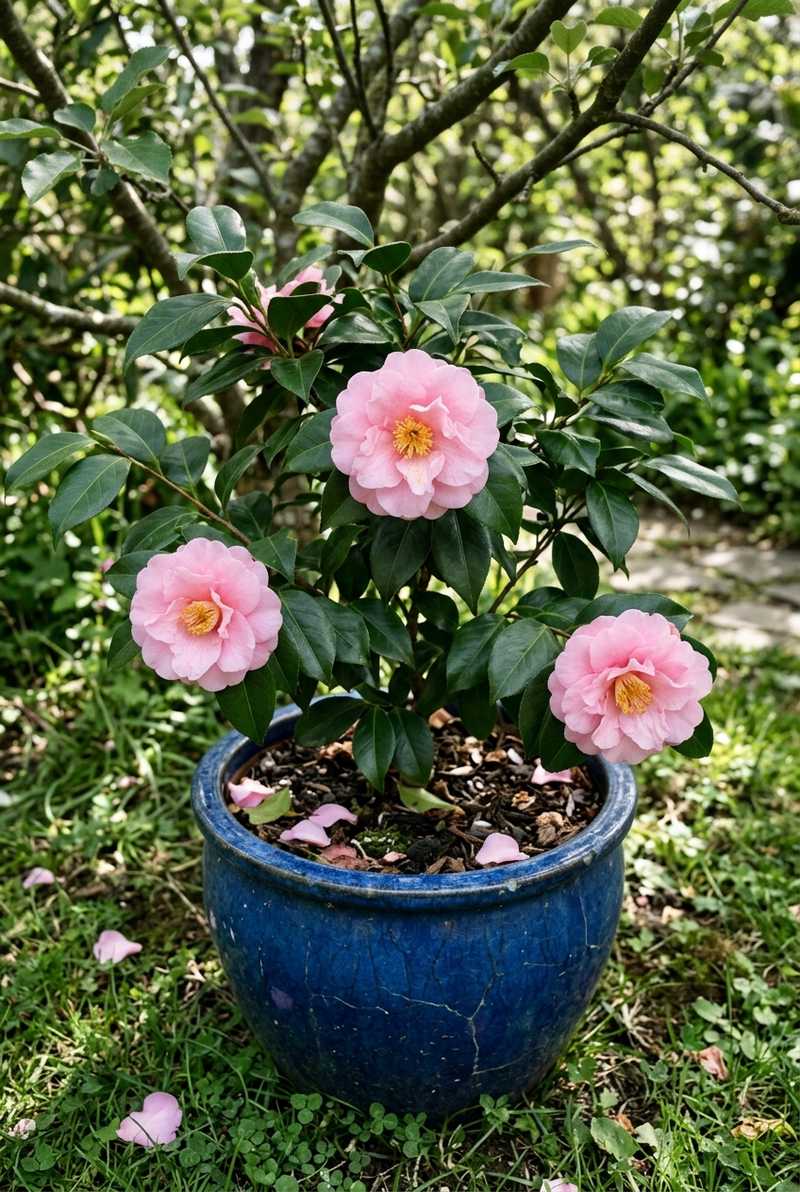
This is the tree that blooms when nothing else does. December through March, showy 3-5 inch flowers in white, pink, or red against glossy dark evergreen leaves. It’s like getting a bouquet from your patio in the dead of winter.
Needs acidic soil (pH 5.5-6.5) and doesn’t tolerate full afternoon sun. Perfect for a shaded porch or north-facing patio. Slow grower. Long-lived. I haven’t found a more elegant winter container tree.
Pet safe: non-toxic to dogs, cats, and horses per ASPCA. Minimum pot: 15-20 gallon for mature specimen.
Save this to Pinterest10. Pomegranate ‘Nana’
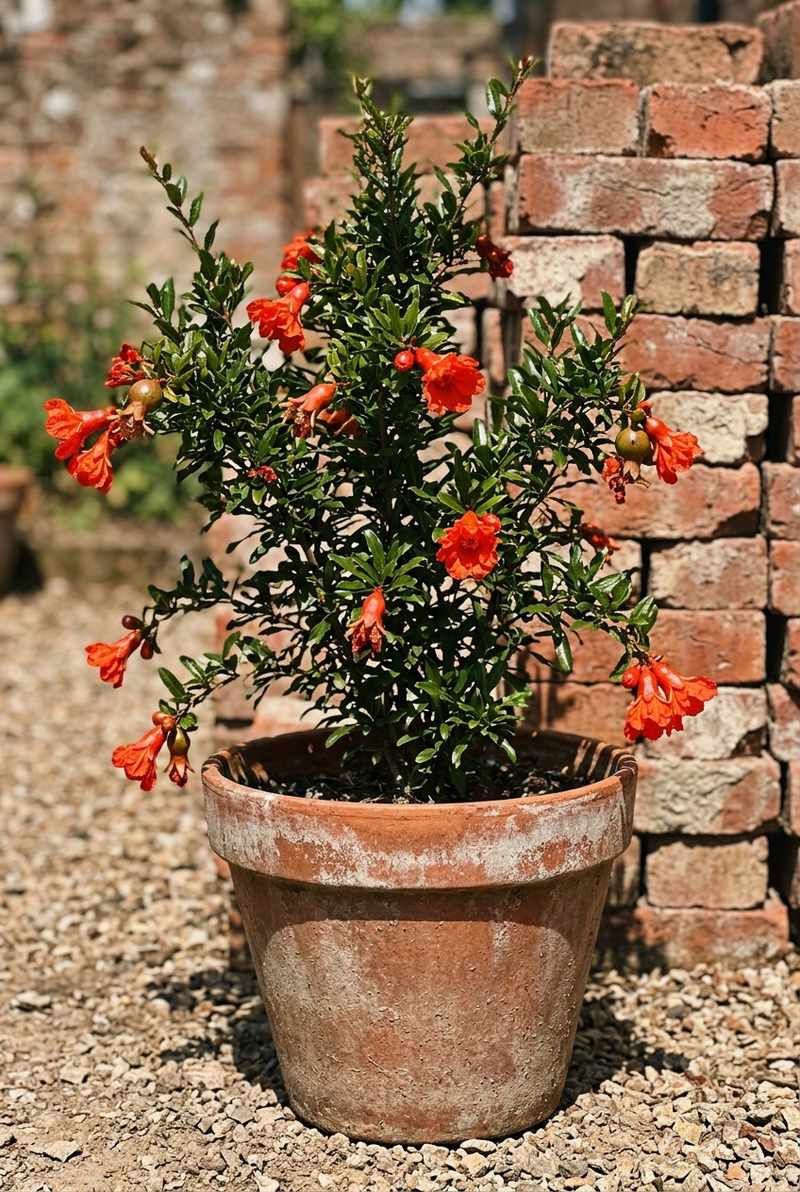
Crepe-like red-orange flowers, ornamental fruit, yellow fall foliage, and it attracts hummingbirds. The dwarf ‘Nana’ form stays under 6 feet (180 cm) and performs well in large containers according to Clemson Extension.
Drought tolerant once established, which is rare for a fruiting tree. Even moisture during fruiting season reduces fruit splitting. Begins producing well after about 3 years.
Pet note: tannins can cause GI irritation. Keep pets from eating large amounts of fruit or leaves. Minimum pot: 15-25 gallon.
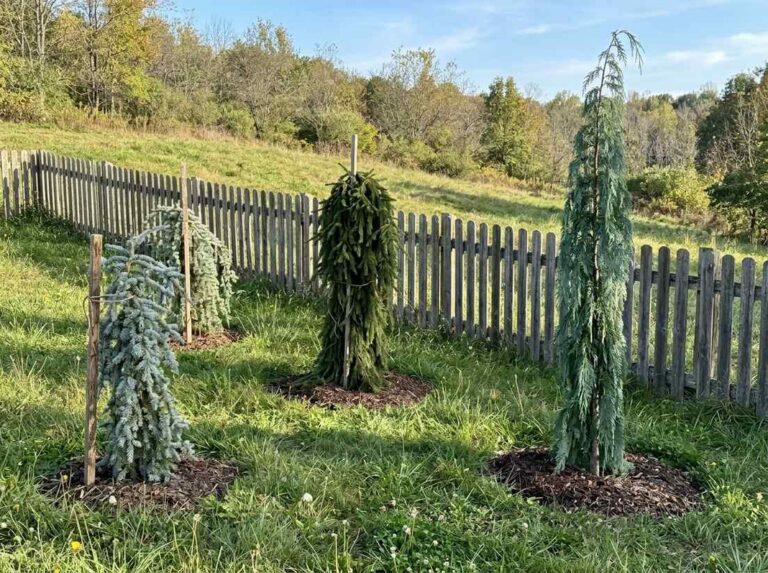
11. Dwarf Alberta Spruce
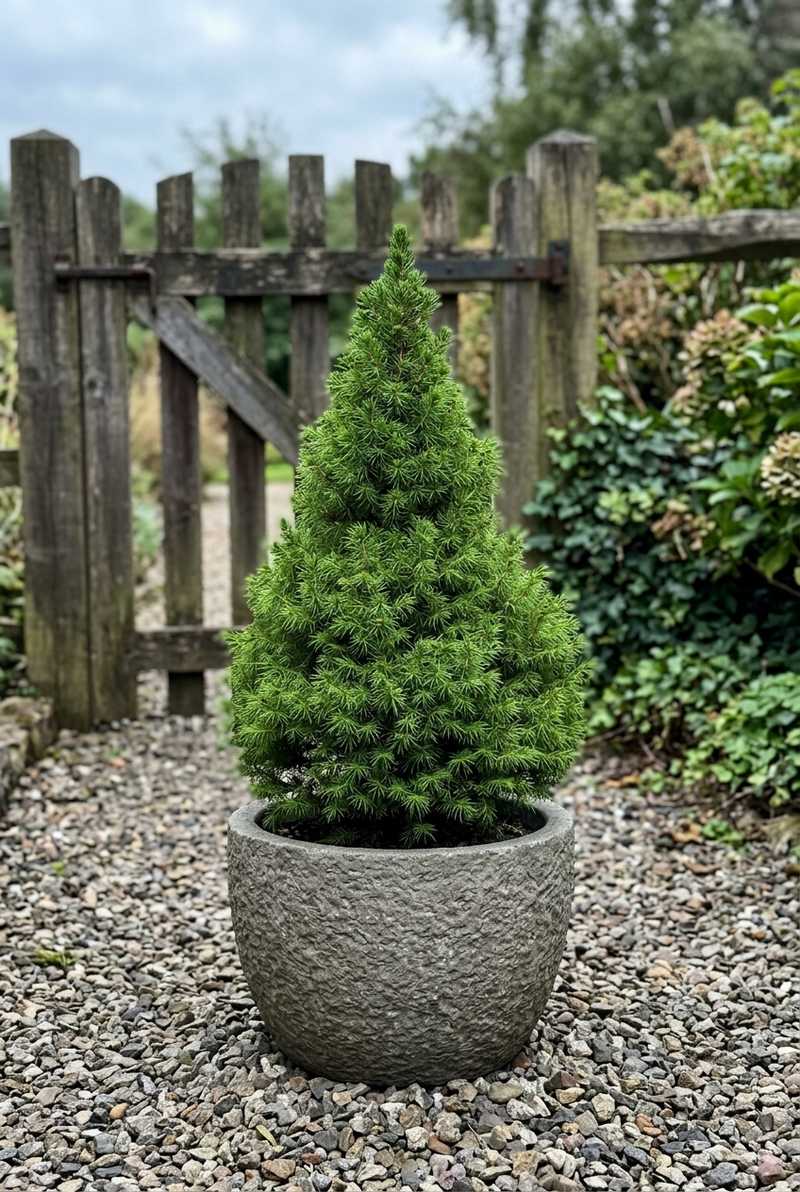
The classic Christmas tree shape in miniature. Dense, conical, bright green, and grows only 2-4 inches per year. That’s the slowest on this list. It’ll look proportional in a pot for 10-15 years before you need to think about what’s next.
Excellent for flanking a front door in matching pots. Can be shaped into spirals or pom-poms if you want a topiary look. Doesn’t do well in heat and humidity south of zone 6.
Pet safe: non-toxic. Minimum pot: 15-20 gallon for mature specimens.
12. Hinoki False Cypress
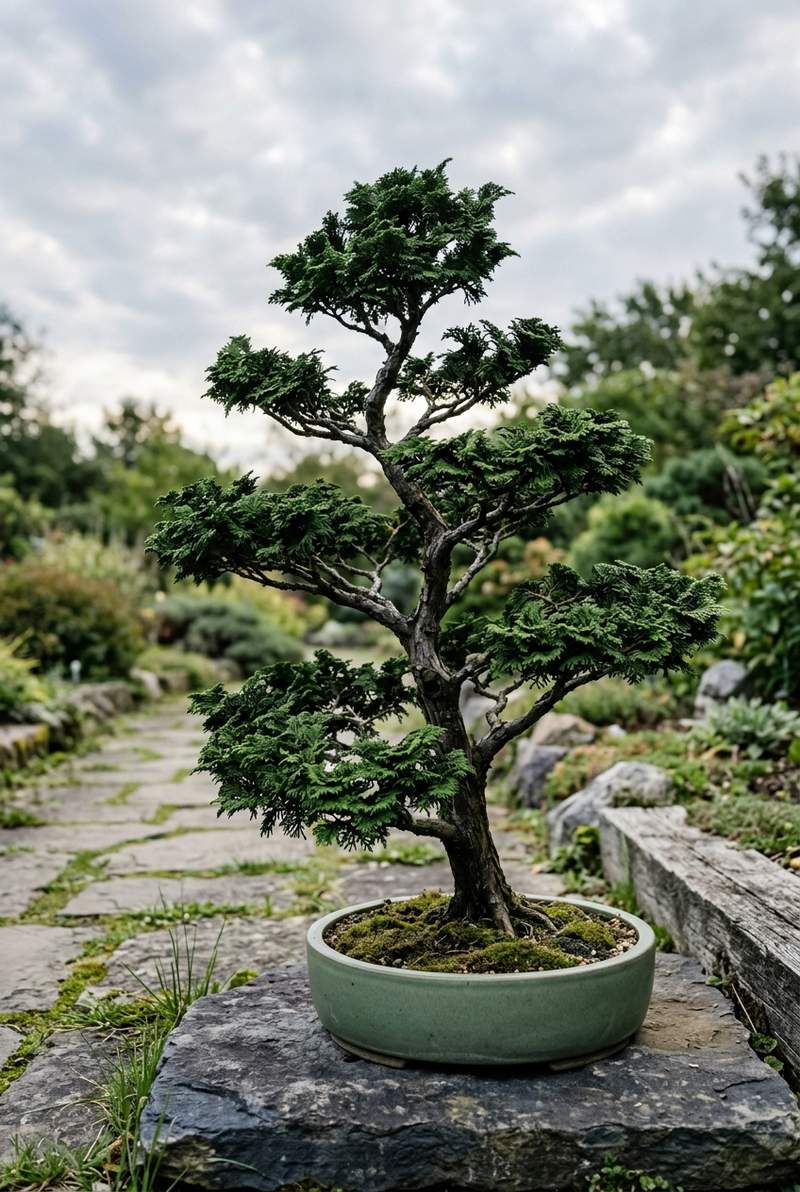
‘Nana Gracilis’ is the cultivar. Fan-shaped dark green foliage, sculptural tiered branching, and a Japanese garden aesthetic that makes any patio feel intentional. Grows 3-6 inches per year, so it stays in its pot without drama.
Year-round evergreen structure. No flowers, no fruit, no mess. Just quiet, sculptural beauty that gets better with age. I’d pair this with a Japanese maple for a corner that looks like someone planned it.
Pet safe: non-toxic. Minimum pot: 10-15 gallon.
13. Italian Cypress
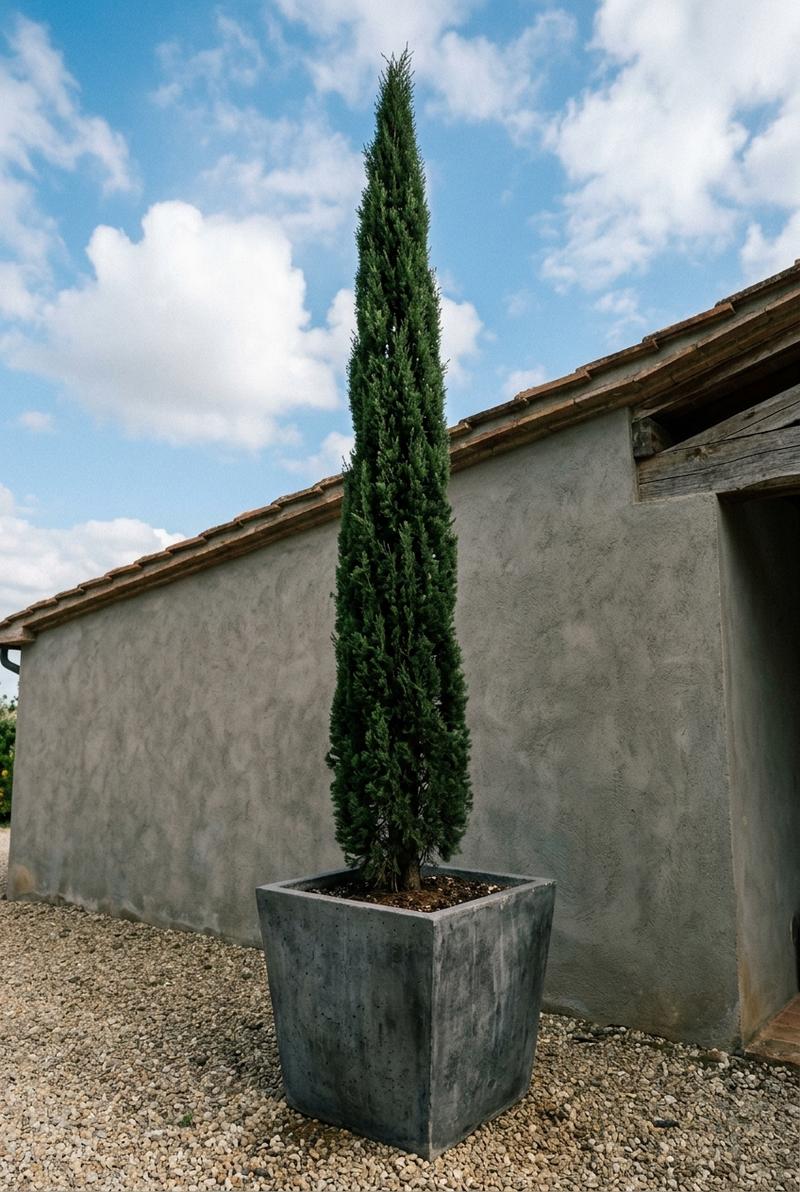
Dramatically columnar. Nothing else gives you that Tuscan villa entrance look like a pair of Italian cypresses flanking a front door. Aromatic foliage, almost zero width, and a silhouette that reads “formal” without any maintenance.
Slows down significantly in containers compared to in-ground growth. Needs a large pot (20-25 gallon) and excellent drainage. Good for warm climates. Not a great pick north of zone 7.
Pet safe: non-toxic. Minimum pot: 20-25 gallon.
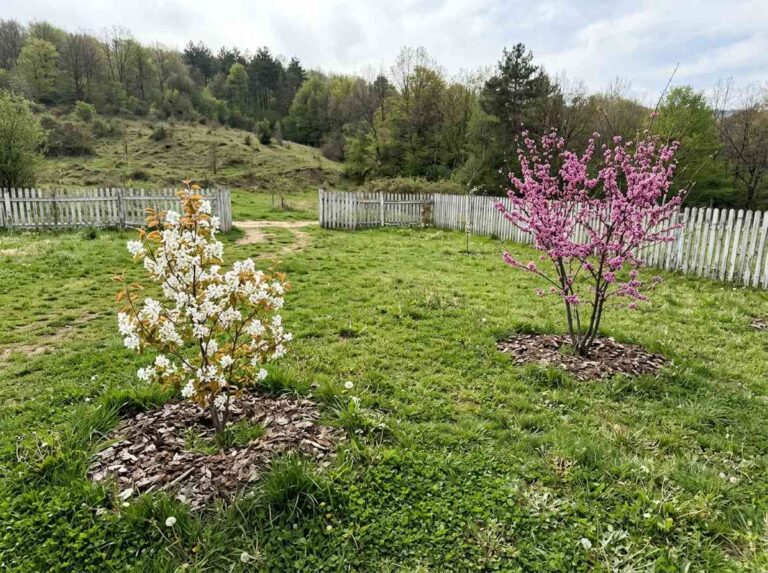
14. Serviceberry
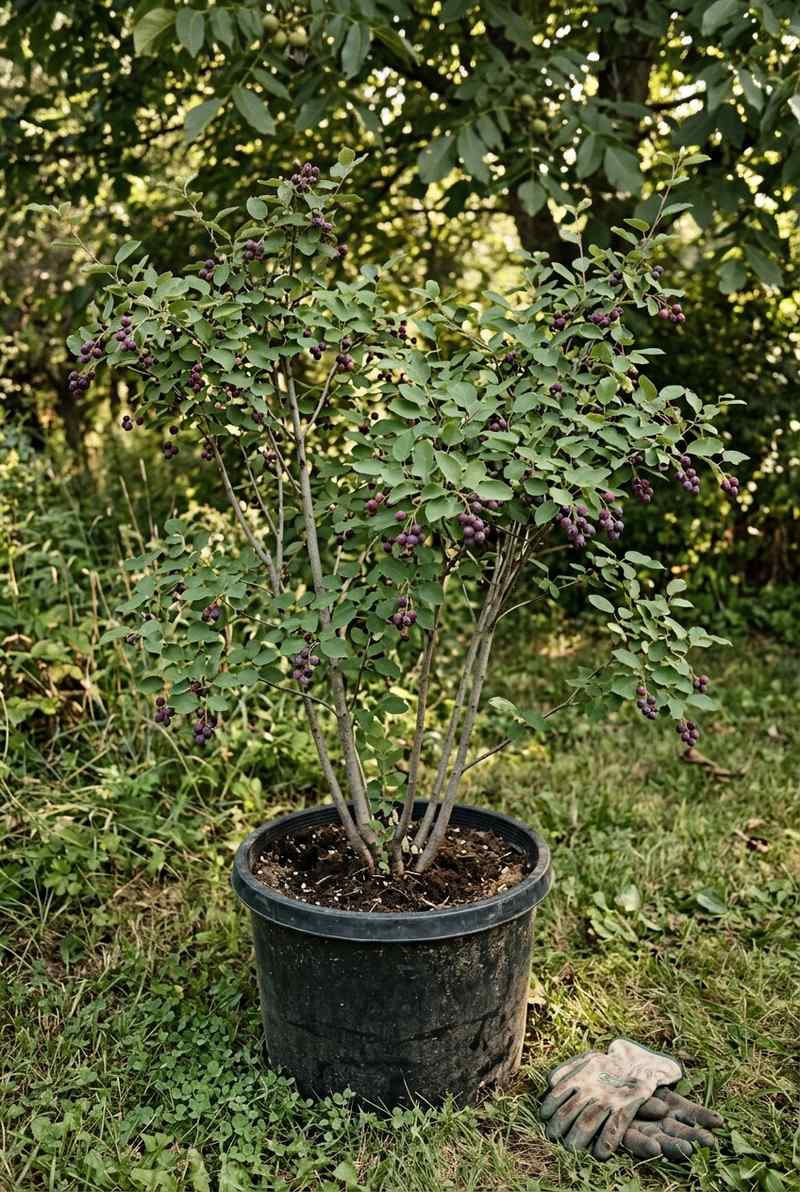
Three seasons of interest from one tree: white spring flowers, edible blueberry-like fruit in June, and red-orange fall color. ‘Regent’ is the most compact form and the best pick for containers. Birds love the berries, which is either a bonus or a warning depending on your perspective.
Native, widely adapted (zones 3-9 is a huge range), and recommended by Penn State Extension for both gardens and containers. Needs ericaceous (acidic) compost.
Pet note: leaves and unripe berries contain low levels of cyanogenic glycosides. Ripe berries are lower risk. Use caution with cats. Minimum pot: 15-20 gallon.
15. Dwarf Ornamental Cherry
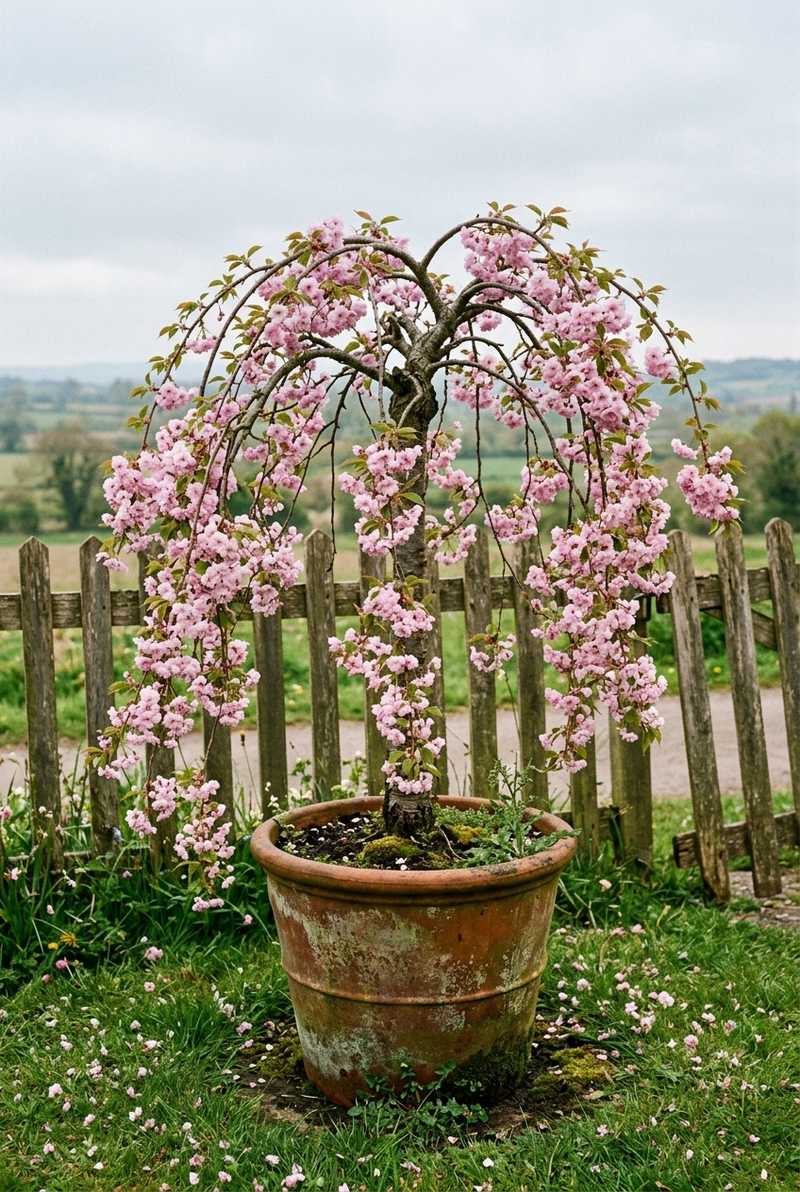
‘Snow Fountains’ is the weeping form and it’s breathtaking in spring. Cascading white blossoms on a compact weeping frame. If you want one tree that stops people on the sidewalk, this is it.
‘Okame’ is the upright option with pink flowers. Both bloom profusely in spring with attractive bark year-round. Needs a 20-inch pot minimum and good drainage.
Pet caution: cherry family contains cyanogenic glycosides in pits, leaves, and stems. Keep pets from chewing foliage. Minimum pot: 20 inches.
16. Ginkgo ‘Mariken’
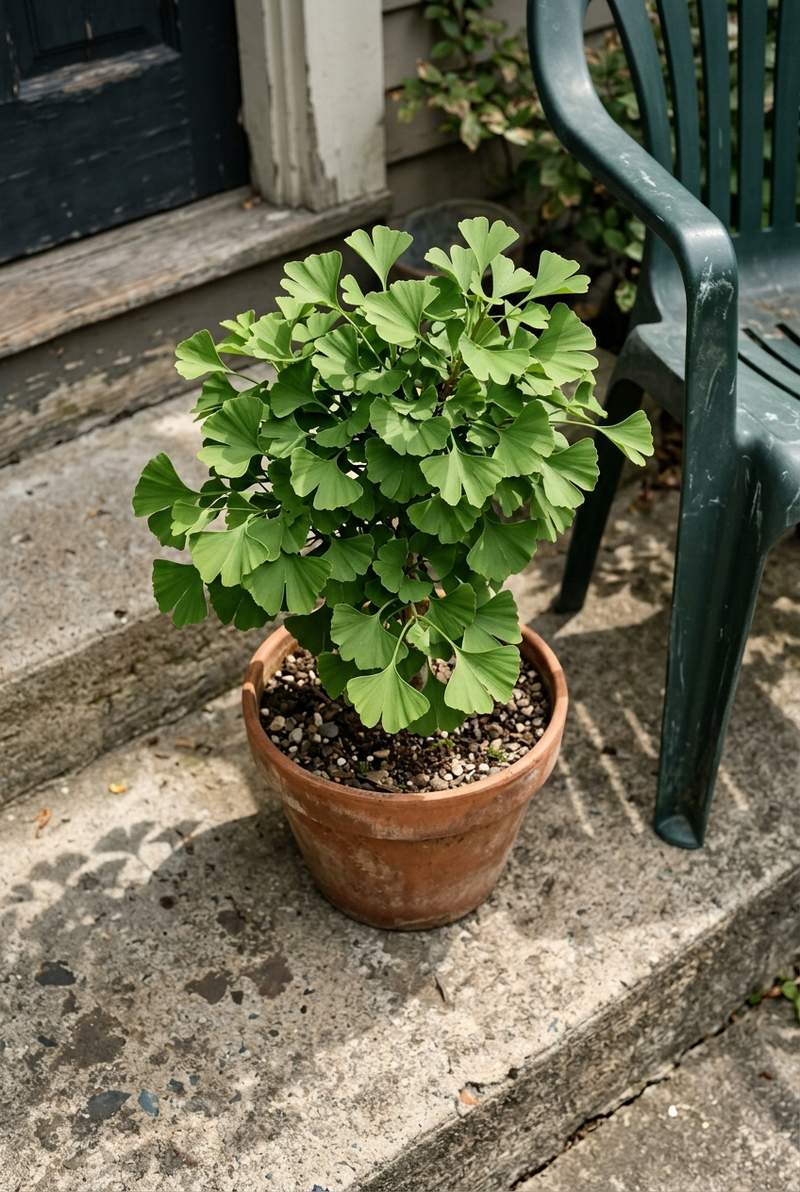
A dwarf ginkgo. Yes, that ancient tree with the fan-shaped leaves that turn blazing gold in fall. ‘Mariken’ stays tiny. Under 3 feet (90 cm) tall, rounded habit, pest-free, disease-free, and the fall color is unmatched.
Almost nobody includes this in container tree lists and I don’t understand why. It’s bombproof, beautiful, and stays small forever. One of the most underrated trees on this list.
Pet safe: non-toxic (male cultivars produce no messy fruit). Minimum pot: 10-15 gallon.
17. Eastern Redbud
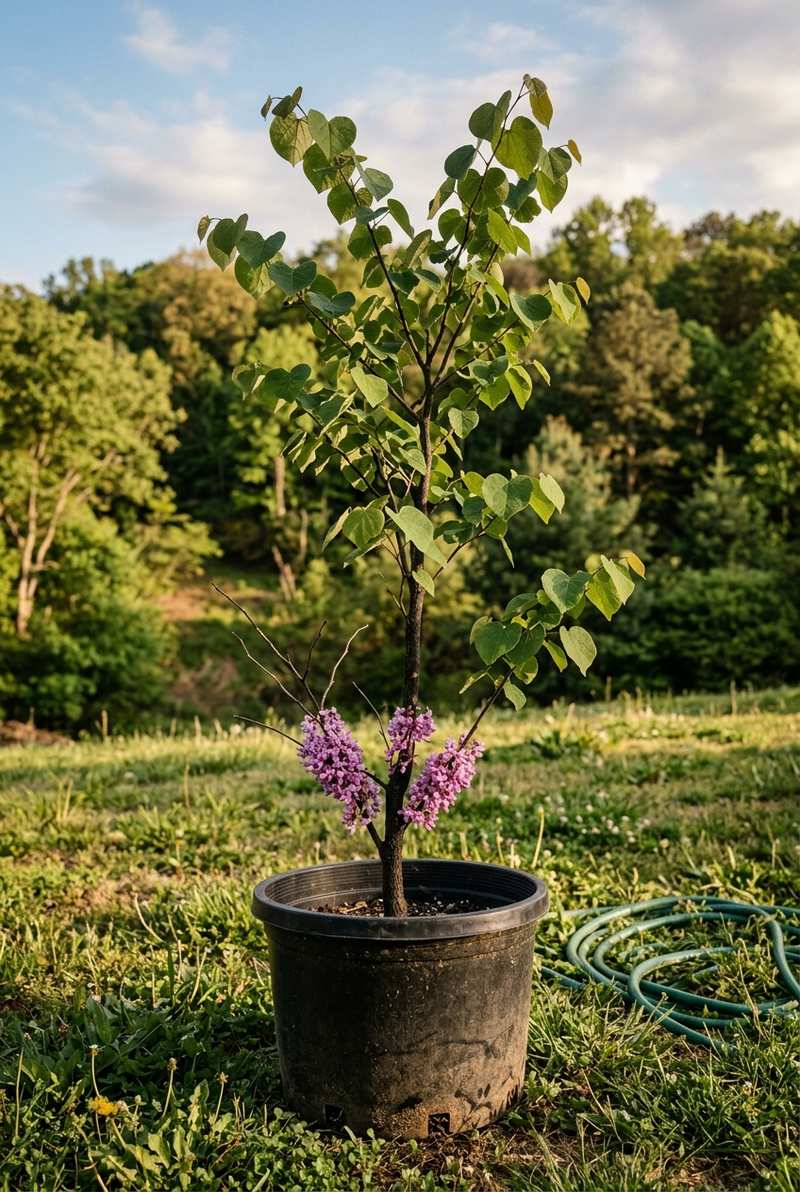
Rose-purple flowers covering bare branches in early spring before any leaves appear. ‘Forest Pansy’ adds deep purple foliage through summer. Genuinely one of the most beautiful spring trees you can grow.
Honest note
Redbud is a short-term container tree, not a permanent one. It gets too big and root restriction reduces flowering over time. Enjoy it on the patio for 2-3 years, then plant it in the ground. Don’t buy it expecting a forever pot tree.
Pet safe: non-toxic. Best as a temporary patio specimen or in a very large raised planter.
18. Star Magnolia
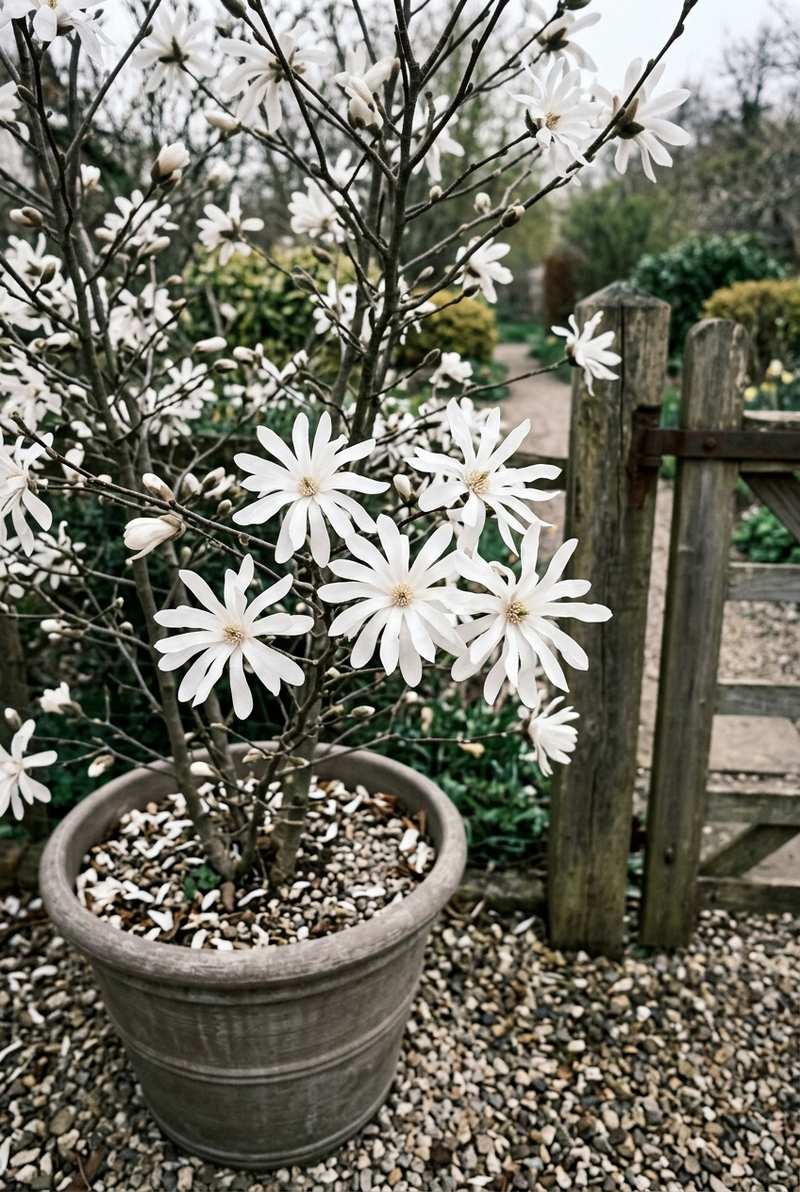
Fragrant star-shaped white flowers in early spring, before the leaves emerge. Smaller and slower than Little Gem Magnolia, which makes it a better long-term container candidate for cooler climates (zones 4-8 vs 7-10).
Multi-stemmed shrubby habit works well in a large pot. The flowers are delicate and the fragrance is strong enough to smell from across the patio. I’d put this near a seating area where you actually sit in spring.
Pet safe: non-toxic to dogs and cats per ASPCA. Minimum pot: 20 gallon.
Did you know
Trees in pots behave as if they are 2 USDA zones colder than your actual zone. Container roots sit above ground, exposed to air temperature instead of insulated soil. A tree rated to zone 6 in the ground may only survive zone 8 conditions in a pot. Plan accordingly.
Trees to Avoid in Pots
Not everything belongs in a container. These get recommended a lot but fail long-term:
- Eucalyptus. Grows too fast, gets leggy, outgrows any pot within a year or two.
- Willows. Aggressive root systems and massive water needs. Not a container plant.
- Any standard (non-dwarf) fruit tree. Without dwarfing rootstock, they exhaust a container in a few years.
- Large magnolias (species, not ‘Little Gem’). Fine as young trees temporarily. Impossible long-term.
- Tulip tree. Beautiful in the ground. Way too vigorous for any pot.
How to Keep Container Trees Alive
Pot size matters more than you think. Use the minimum sizes listed above. Too small and roots circle, strangle the trunk, and slowly kill the tree. Too big and outer soil stays wet while roots rot in the center. Pot up in stages.
Never use garden soil. It compacts in containers, suffocates roots, and brings fungal disease. Use quality potting mix. For acid-loving trees (camellia, serviceberry), use ericaceous compost.
Winter protection is non-negotiable. Group pots in a sheltered spot, wrap with burlap or straw, or bury the pot in the garden over winter. Terracotta and ceramic crack in freeze-thaw cycles. Use concrete, wood, or frost-proof pots if you’re leaving them outside.
Common Questions
Can trees really live in pots long-term?
Yes, if you pick the right ones. Slow growers with shallow or compact root systems (Japanese maples, olives, dwarf conifers) can thrive in pots for 10-20 years. Fast growers with aggressive roots (willows, eucalyptus) will struggle within a year or two.
How often do I water a potted tree?
Check the top inch of soil daily in summer. Water deeply when it feels dry. In winter, water less but don’t let it go completely dry. More container trees die from overwatering than underwatering. Bottom-water when possible.
What’s the best pot material?
Terracotta breathes well but cracks in freezing weather. Plastic retains moisture (bad for olives and drought-tolerant trees). Concrete, wood, and frost-proof ceramic are the safest all-around choices. Avoid black pots in full sun. They cook roots.
Do potted trees survive winter?
Depends on the tree and your zone. The “2 zones colder” rule applies. A zone 6 tree in a pot needs zone 8 winter conditions. Insulate the pot with straw, bubble wrap, or bury it. Bring tropical trees (citrus, olive, frangipani) indoors before first frost.
How big should the pot be?
Start with a pot at least 2 inches wider than the root ball on all sides. Pot up one size every 2-3 years. Final containers should be at least 18 inches (45 cm) in diameter for most trees. Larger for vigorous growers.
Start With One
I didn’t plan to have this many trees on the patio. Started with a single Japanese maple because I liked the leaves. Then came the fig because someone told me they fruit better in pots. Then the olive because I wanted that Mediterranean corner. Now I’m running out of space.
Pick one from this list. Put it where you’ll see it every day. Give it a season. You’ll know by fall if you want a second one.