17 Small Flowering Trees for Front Yards That Stay Under 20 Feet

- Front yard trees
- Under 20 feet
- Curb appeal
- Four-season interest
The redbud at the end of our street blooms before anything else wakes up. Pink flowers straight out of bare bark, no leaves yet, just color against gray sky.
That’s what made me want a small flowering tree of my own.
I’ve spent two years researching which ones stay under 20 feet and actually deliver on the promise.
This is my list, organized by bloom season so you can pick trees that give you color from late winter through fall.
Quick Summary
- All 17 trees stay under 20 feet (most under 15 feet)
- Organized by bloom season: winter → spring → summer → fall
- Mix of natives and ornamentals, all widely available at nurseries
- Each entry includes exact mature height, spread, zones, and bloom time
- Best starter pick: Serviceberry. Native, four-season interest, almost impossible to mess up.
1. Vernal Witch Hazel
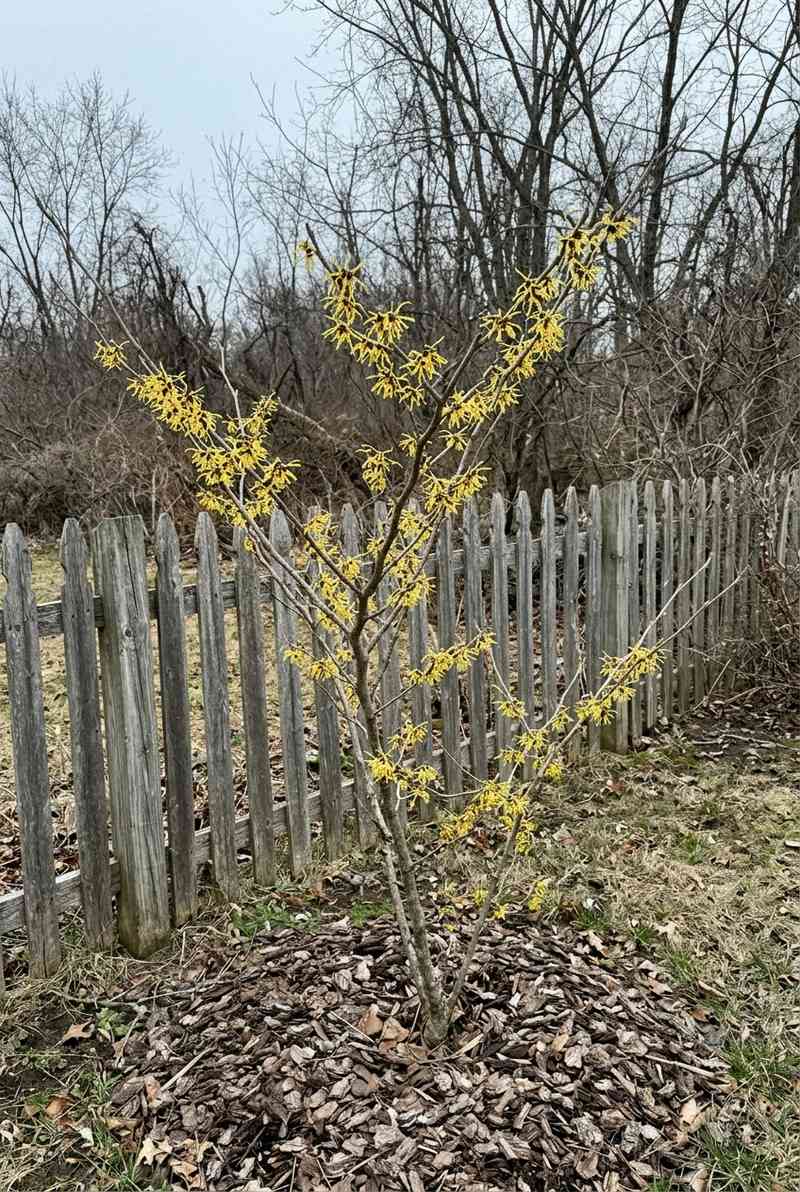
This blooms while snow is still on the ground. Spidery yellow flowers on bare branches, sometimes as early as February. It’s the earliest flowering tree you can plant in most of the US.
I love it as a statement piece near the front walk. Visitors notice it immediately because nothing else is blooming yet.
2. Star Magnolia
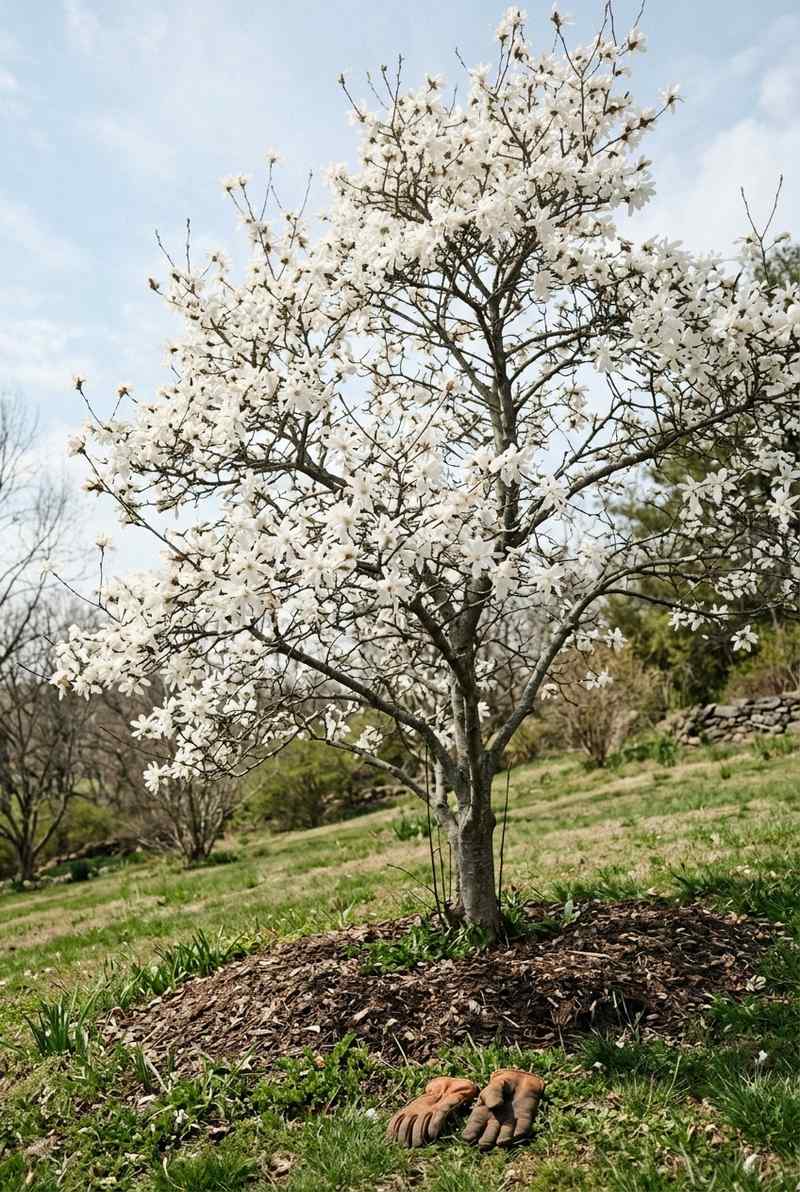
Those 12-18 petal white flowers opening in March are one of the prettiest things in any front yard. Slow grower, so it won’t outrun the space you give it.
One caveat: don’t plant it against a south-facing wall. Warm days in late winter trick the buds into opening early, then a frost kills the bloom for that entire year. North or east exposure is safer.
3. Eastern Redbud
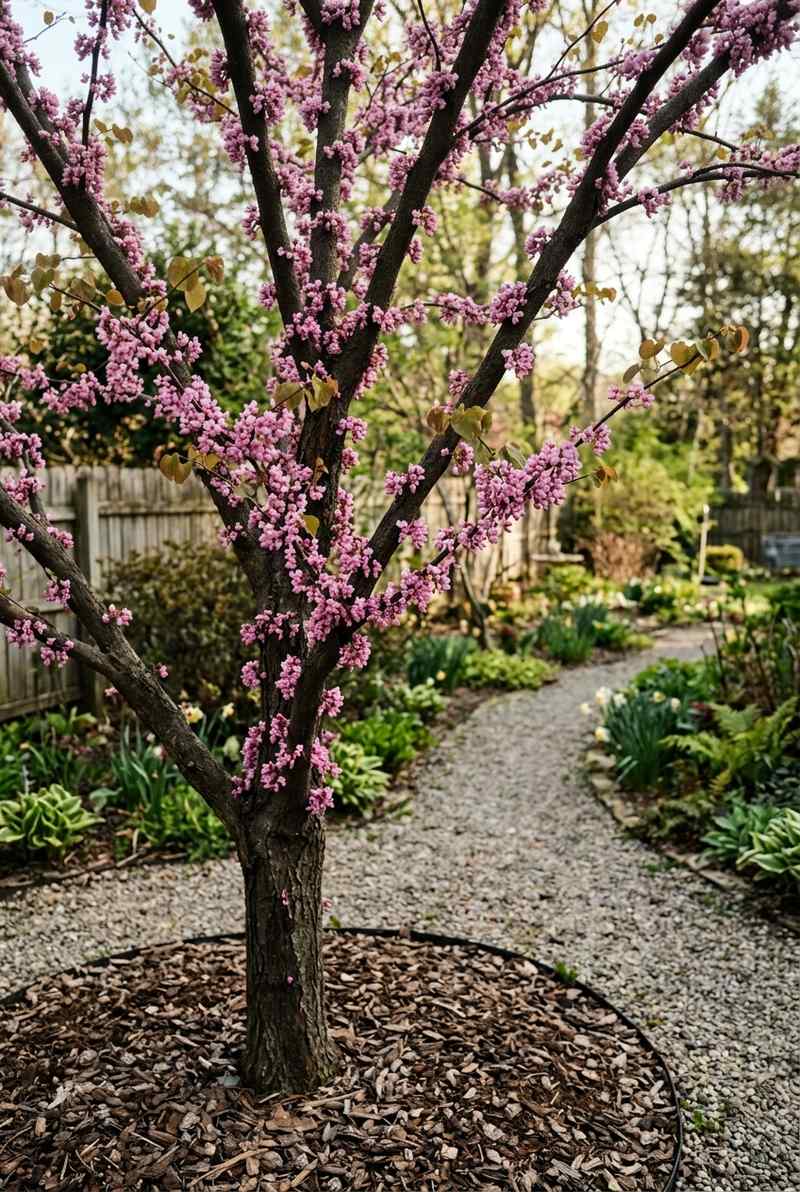
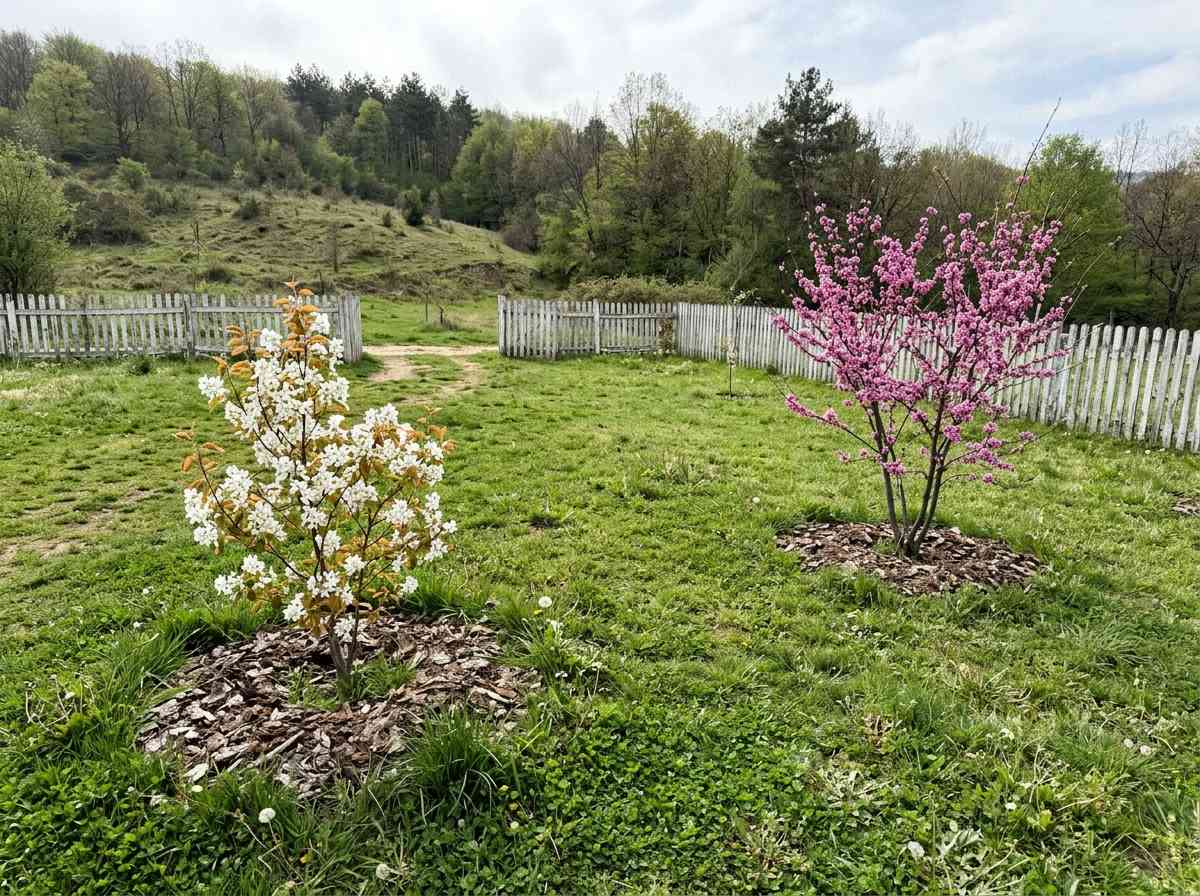
The one that started my obsession. Redbud flowers emerge directly from the bark of branches and even the trunk. It’s called cauliflory, and it means a mature redbud in full bloom looks pink from the inside out. Stunning.
Native to most of eastern North America. Heart-shaped leaves turn yellow in fall. ‘Ace of Hearts’ stays around 12 feet if you want a truly compact version. Avoid heavy wet clay or you’ll lose it to root rot.
4. Serviceberry
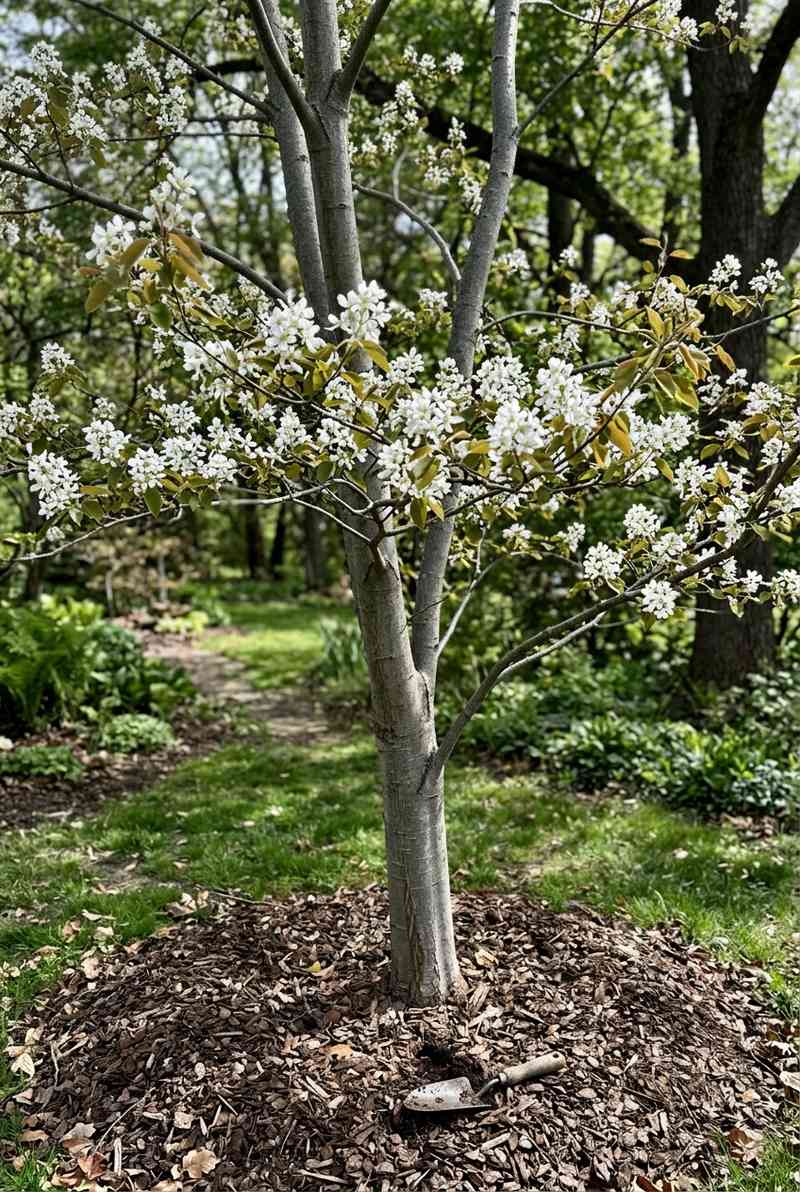
This is the one I’d plant if I could only pick one tree. Four-season interest: white spring flowers, edible blueberry-like summer fruit, brilliant red fall color, and clean gray bark in winter. Native. Nearly impossible to kill.
The bloom is short (about a week) but the rest of the year more than makes up for it. Birds love the fruit, which means you probably won’t get many berries yourself (don’t skip this part). Still worth it.
Tip
Serviceberry is one of the most underrated native trees in North America. It checks every box — flowers, fruit, fall color, wildlife value — and it’s rarely the first tree people think of. That’s changing.
5. Flowering Dogwood
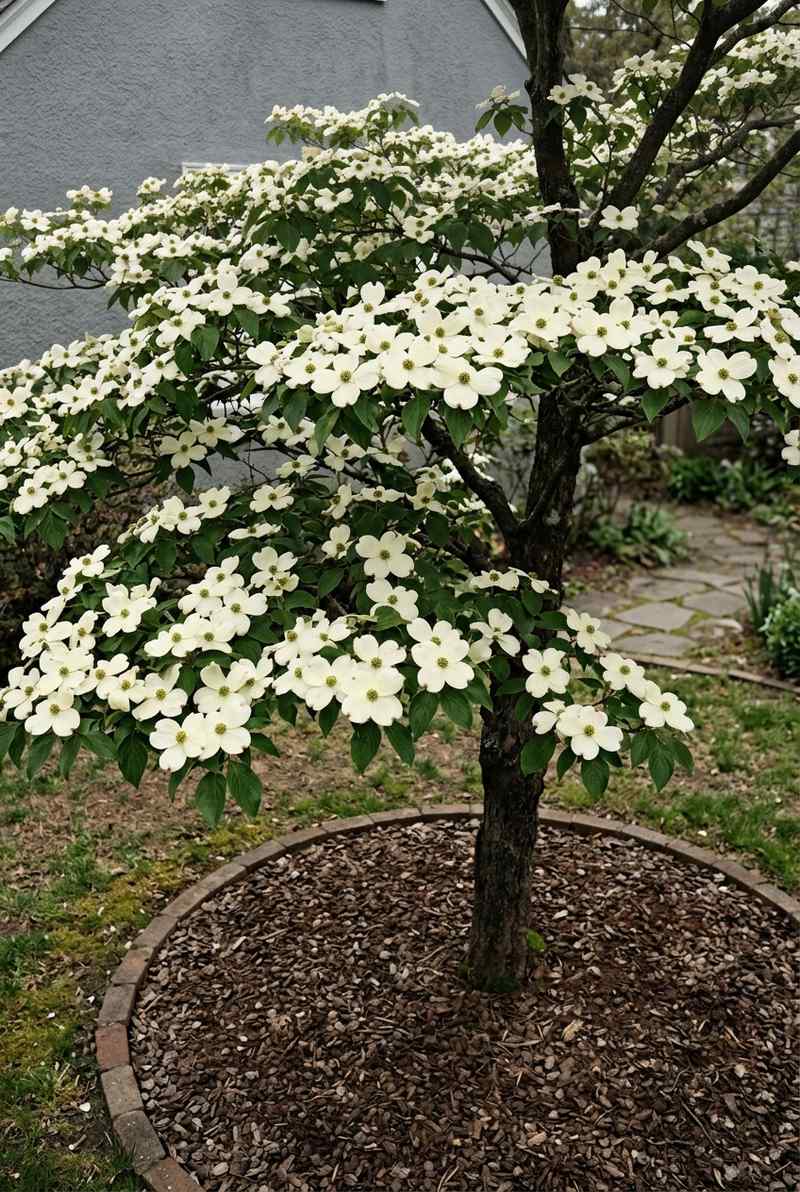
The classic. White or pink bracts floating in layers on horizontal branches. Red berries in fall that birds go crazy for. There’s a reason this is the state tree of Virginia and Missouri.
The honest downside: native flowering dogwood (Cornus florida) is susceptible to anthracnose disease. If that concerns you, go with Kousa dogwood below instead. It blooms later and resists disease much better.
6. Kousa Dogwood
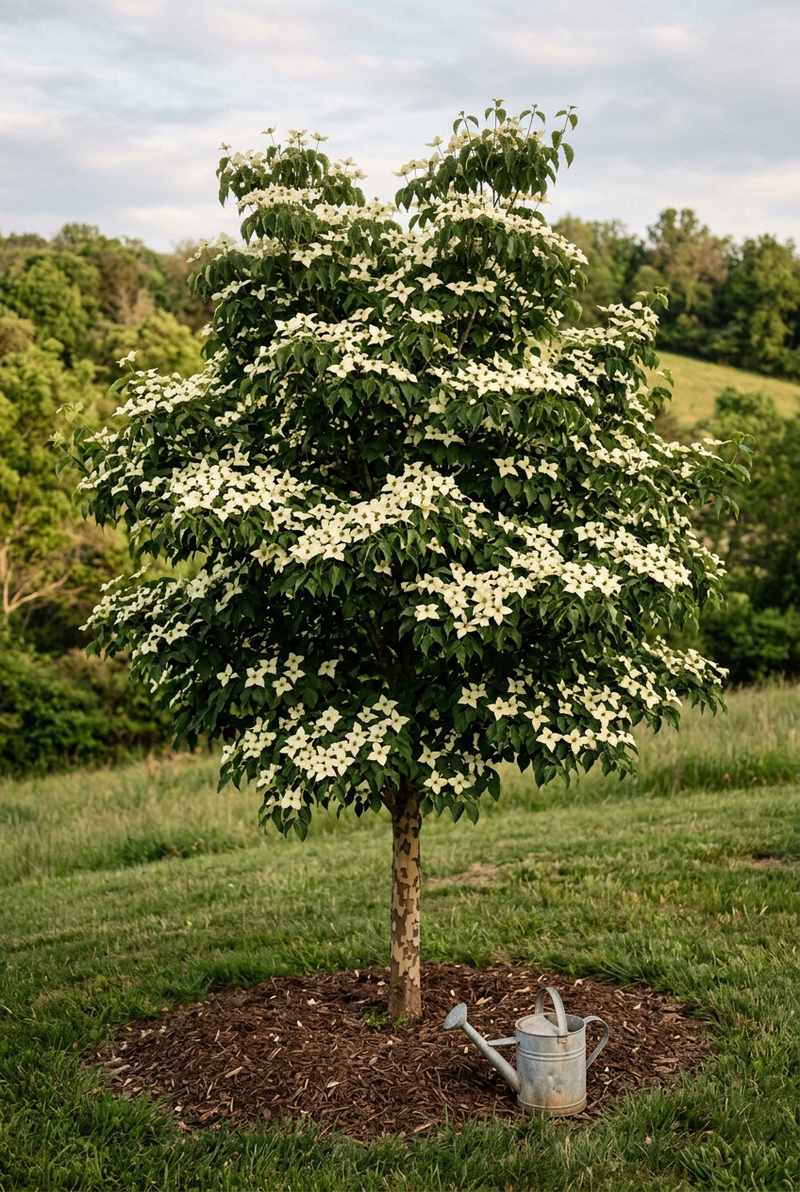
Blooms 3-4 weeks after native dogwood, which means you can plant both and get nearly two months of dogwood flowers in one yard. The pointed white bracts look different from native dogwood but equally beautiful.
Far more disease-resistant than Cornus florida. One warning: the raspberry-like fruit drops and makes a mess near patios or driveways. Plant it in a bed or lawn area instead.
7. Japanese Snowbell
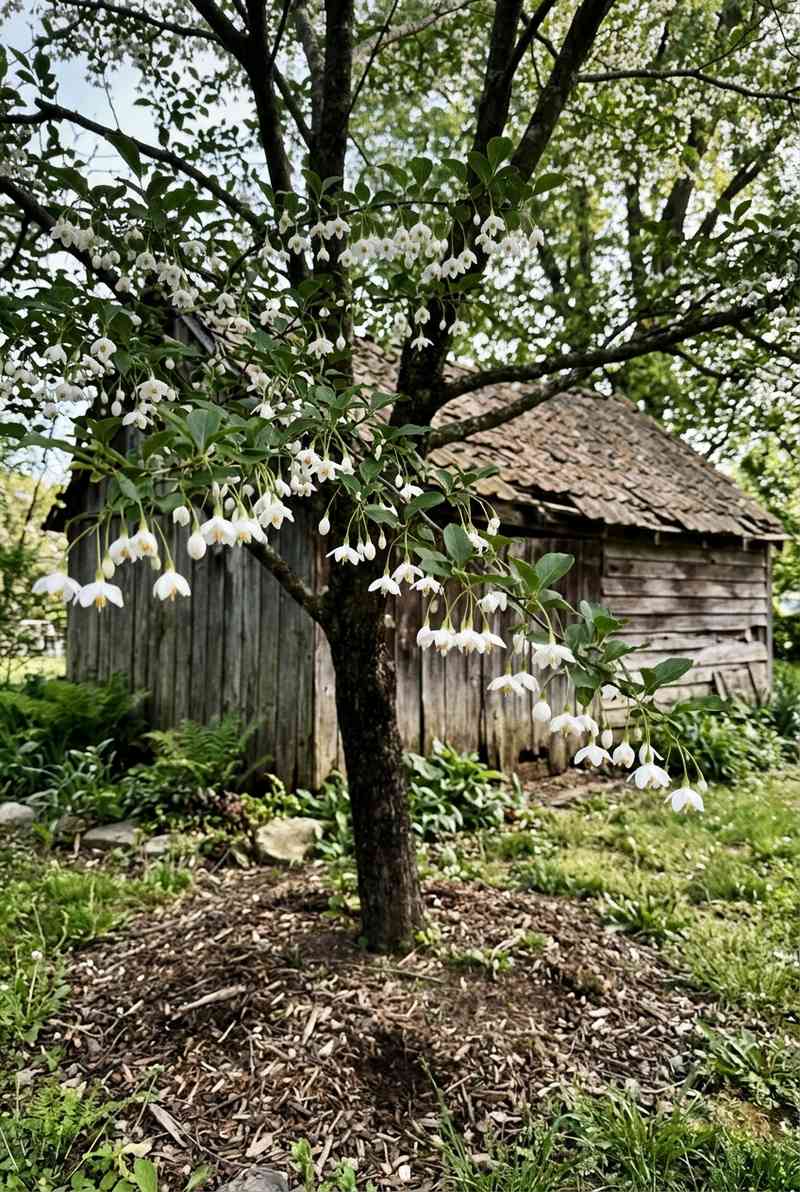
Delicate white bell-shaped flowers that hang beneath the branches like tiny lanterns. One of the most beautiful small trees I’ve ever seen in person, and almost nobody knows about it.
Here’s the trick most guides don’t mention: the flowers face downward, so you can only see them from below. NC State Extension specifically recommends planting it on a slope or above a walkway so you look up into the canopy. Planted flat in a lawn, you’d miss the whole show.
Save this to Pinterest8. White Fringe Tree
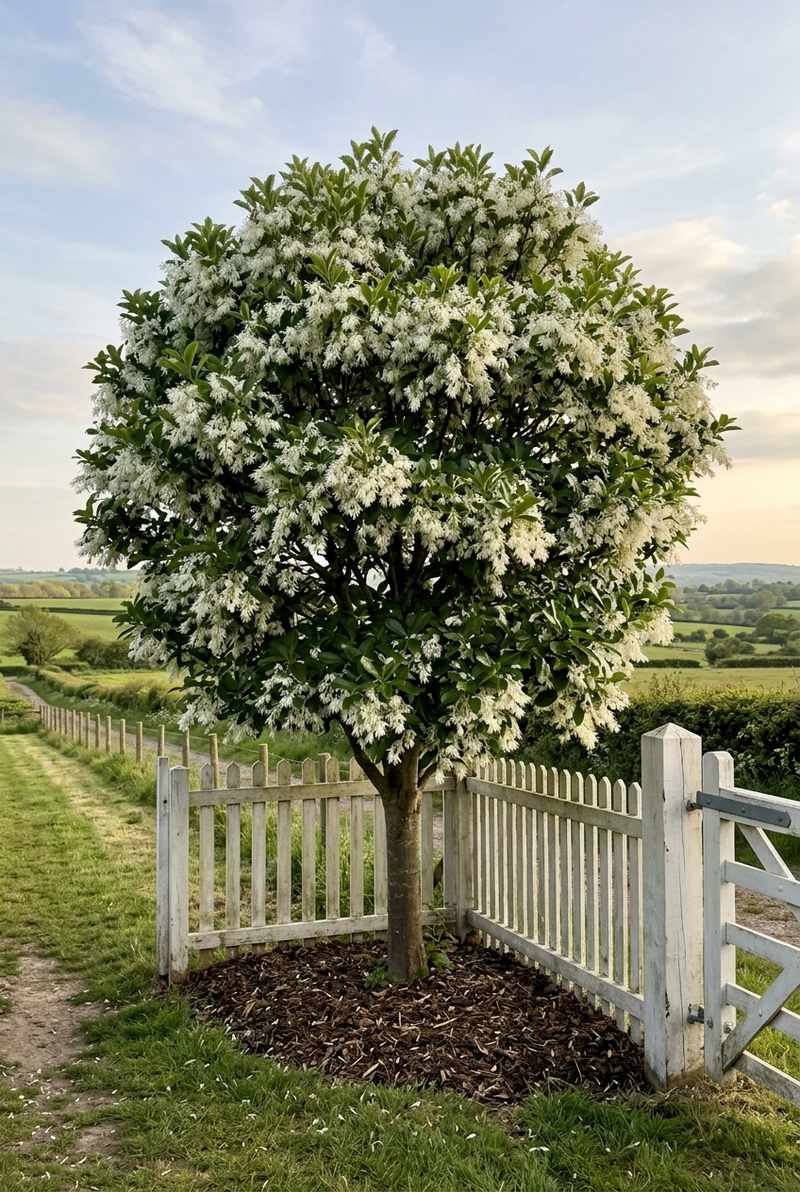
Drooping clusters of fragrant white flowers that look like delicate fringe. Native, adaptable to almost any soil, and stays compact. One of the most underused native trees I keep recommending to everyone.
Slow to establish but worth the patience. The fragrance alone is reason enough.
9. Crabapple ‘Adirondack’
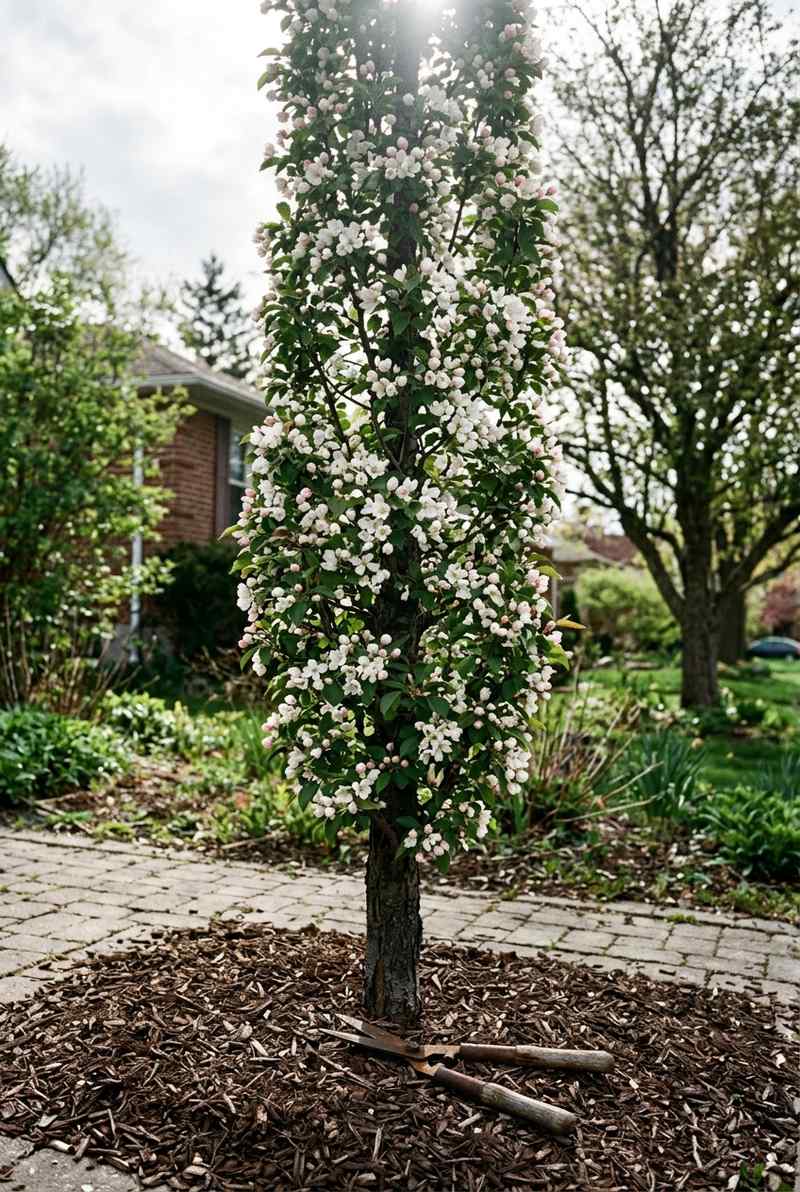
Not all crabapples are created equal. Older varieties get scab, rust, and fire blight. ‘Adirondack’ and ‘Prairifire’ are rated excellent for disease resistance by OSU Extension, which is why I’m listing them specifically.
‘Adirondack’ has a narrow upright shape, perfect near driveways where you don’t want wide branches. The small persistent fruit feeds birds all winter without the messy splatter of large-fruited varieties. This is the crabapple to buy if you’ve been burned by a bad one before.
10. ‘Ann’ Magnolia (Little Girl Series)
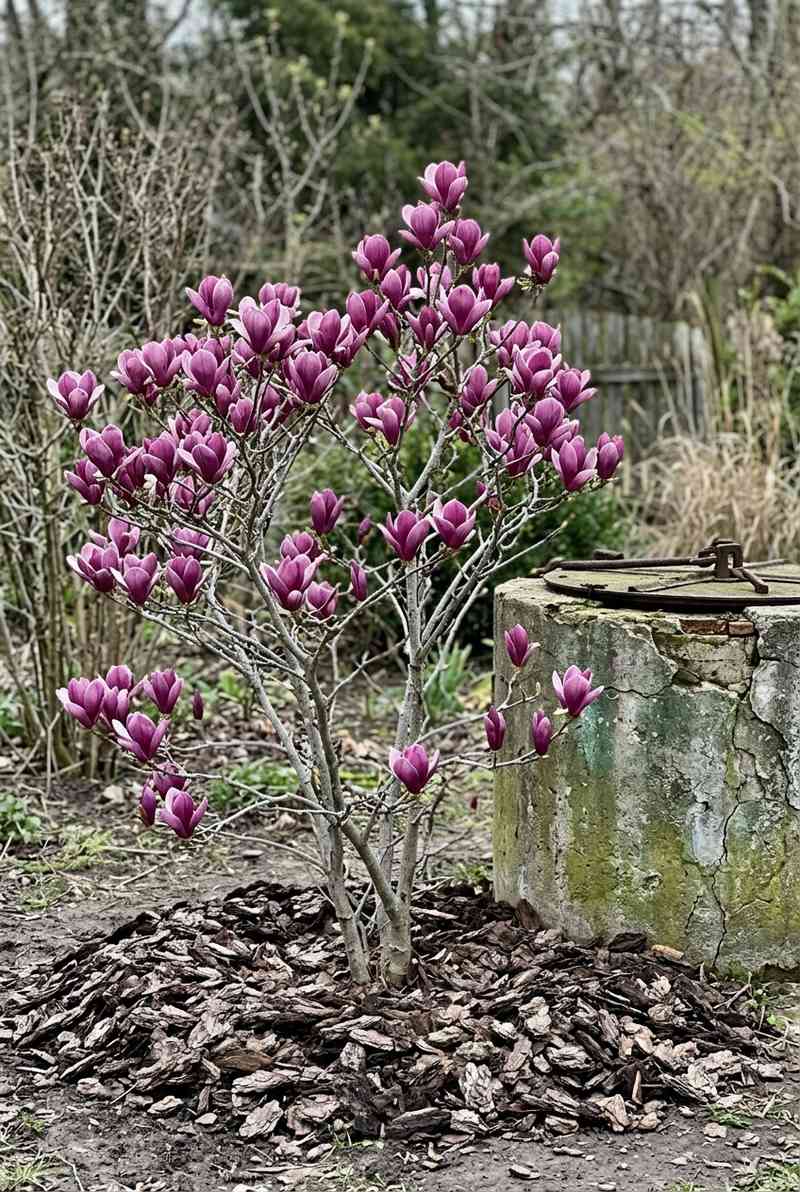
The Little Girl series of magnolias (‘Ann’, ‘Betty’, ‘Jane’, ‘Susan’) were bred to bloom later than star magnolia, which means they dodge late frosts. Smart breeding. Deep purple-pink flowers, not white.
Compact enough for the smallest front yards. Forum gardeners report lifespans of 80+ years, which makes Bradford pear’s 15-year lifespan look embarrassing.
11. Weeping Cherry
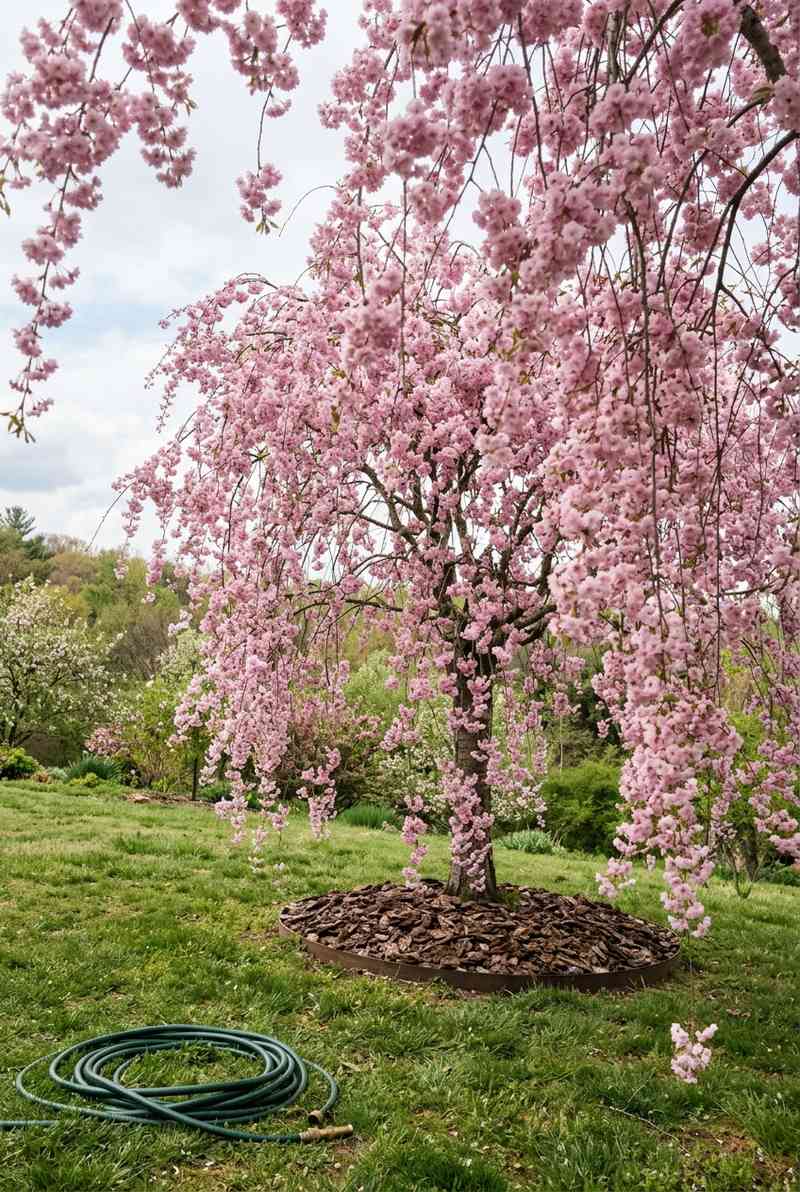
The most dramatic spring bloomer on this list. Cascading branches covered in pink or white flowers, the kind of tree that makes people slow down while driving past your house.
Shorter-lived than some others here (20-25 years typically). Needs full sun and good air circulation to avoid fungal issues. Worth it for the show, but go in knowing it’s not a forever tree.
12. Dwarf Korean Lilac (Tree Form)
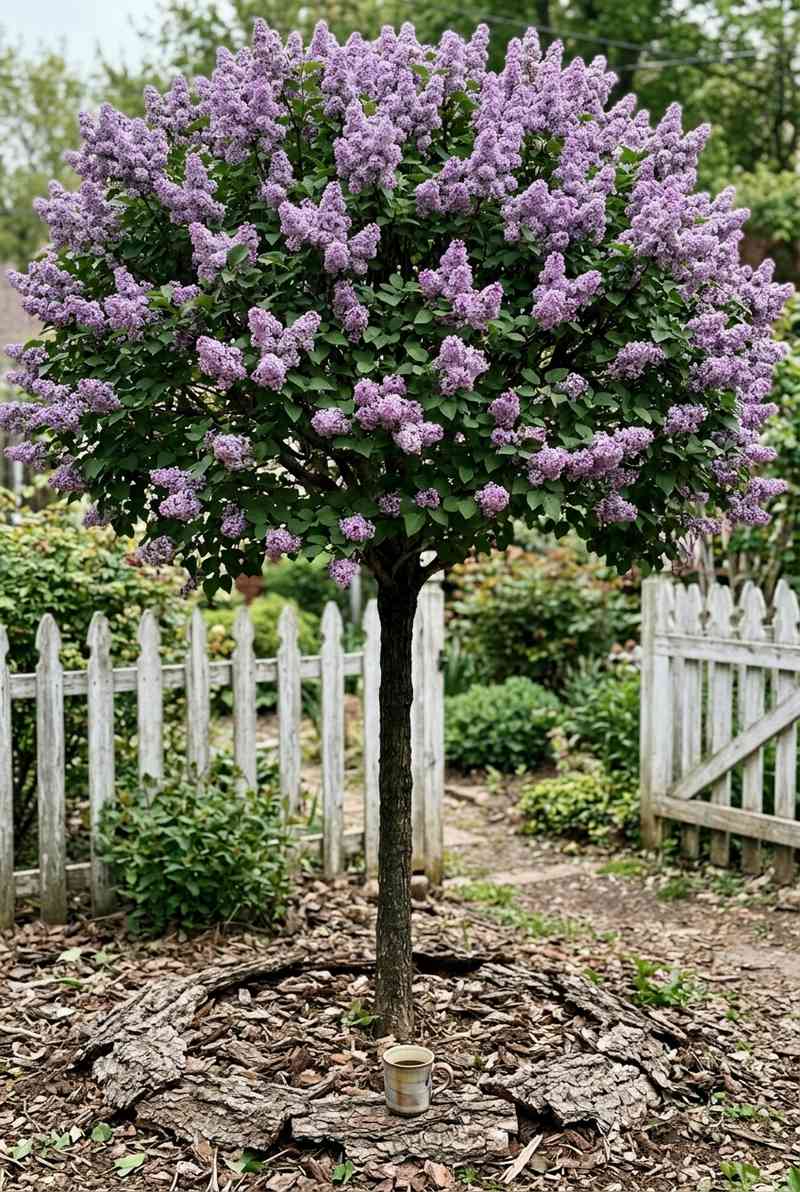
Grafted onto a single trunk to create a small tree instead of a spreading shrub. The fragrance is incredible (seriously, it’s worth planting near a window you open in spring).
Stays compact without constant pruning. Better mildew resistance than common lilac.
13. Japanese Tree Lilac
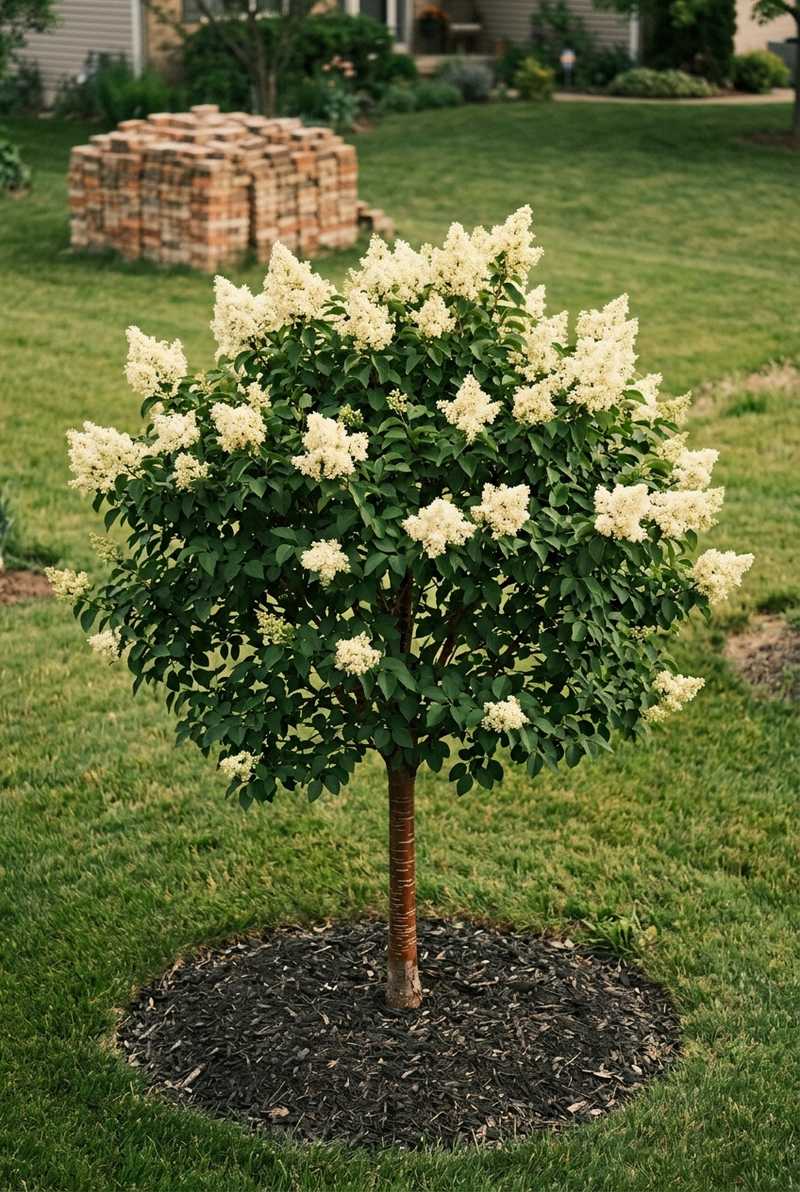
Most lilacs bloom in spring. This one waits until early summer, filling a gap when other flowering trees are done. White clusters, good fragrance, and almost no serious pest or disease problems.
‘Ivory Silk’ is the cultivar you’ll find most often at nurseries. Tough, cold-hardy, and tolerant of urban conditions including pollution and clay soil.
14. Dwarf Crape Myrtle
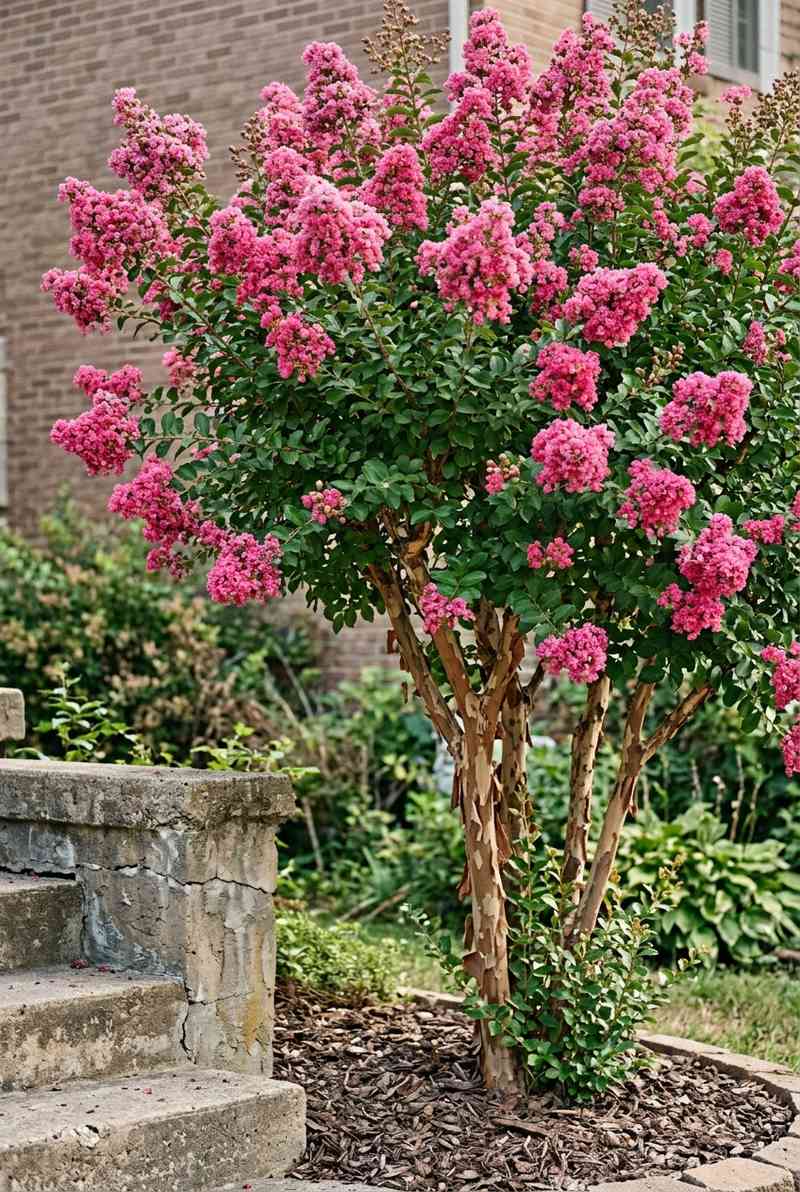
The king of summer bloom in warm climates. Months of flowers, beautiful peeling bark, and drought tolerance once established. The key is choosing the right cultivar size so you never have to prune it.
Avoid crape murder
Those brutally chopped crape myrtles you see everywhere? That’s what happens when someone plants a 25-foot variety in a 10-foot space and then hacks it back every year. University of Florida says if you pick the right size cultivar, you should never need to prune a crape myrtle. Ever. Buy the dwarf version. Skip the chainsaw.
15. Chaste Tree
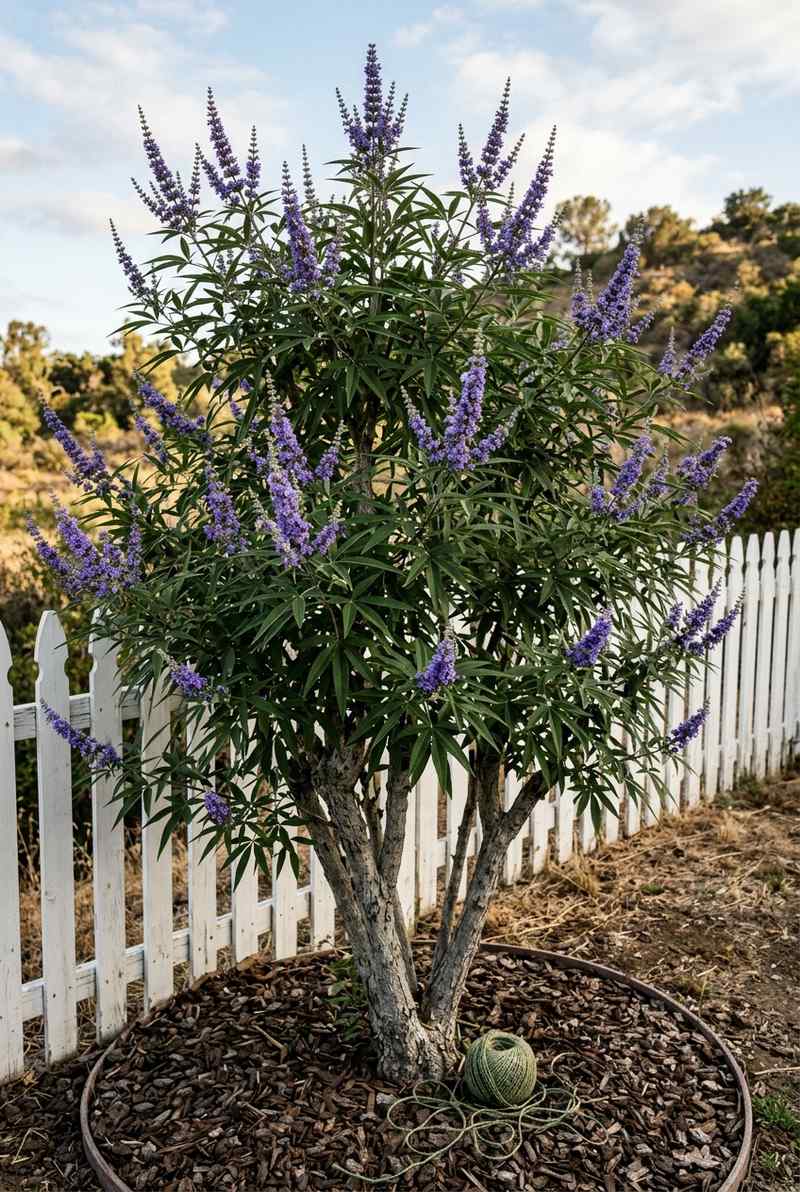
Blooms in late summer when most flowering trees are long done. Purple-blue flower spikes that look almost like a giant lavender bush trained into a tree. Butterflies and hummingbirds swarm it.
Extremely drought-tolerant. Can die back to the ground in harsh zone 6 winters but typically regrows from the base. I’d plant this for the late-season color alone.
16. Smoketree
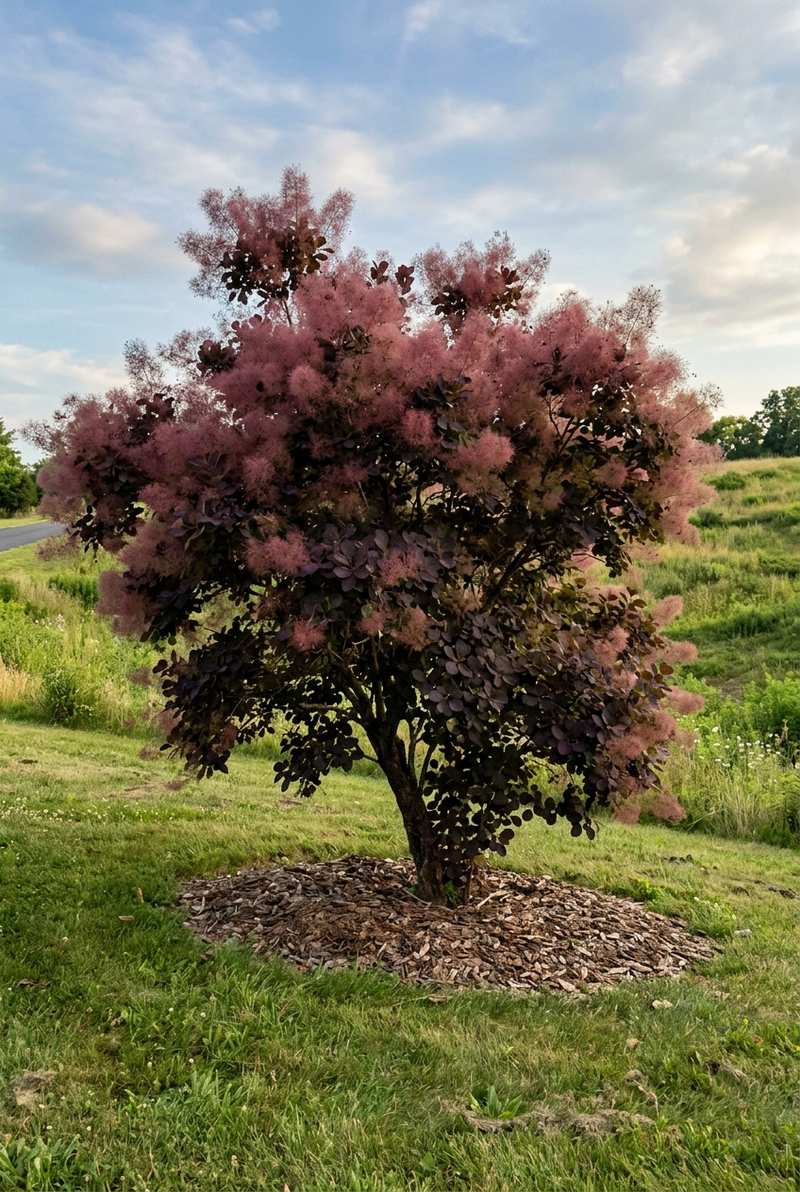
Not traditional flowers. The fading flower clusters produce feathery pink plumes that look like puffs of colored smoke hovering over the branches. Nothing else in a front yard looks like this.
‘Royal Purple’ has deep burgundy foliage all season, which means it gives you color even when it’s not blooming. Tough, drought-tolerant, and unbothered by most pests.
17. Seven-Son Flower
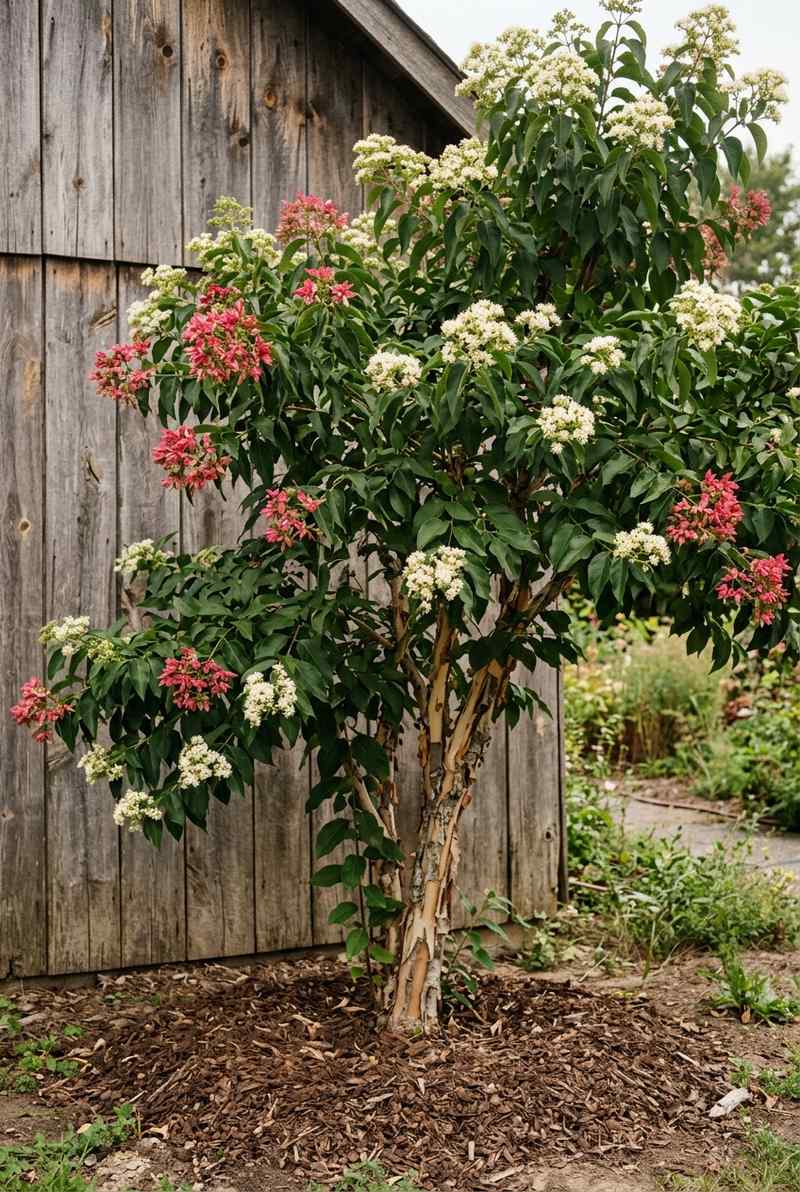
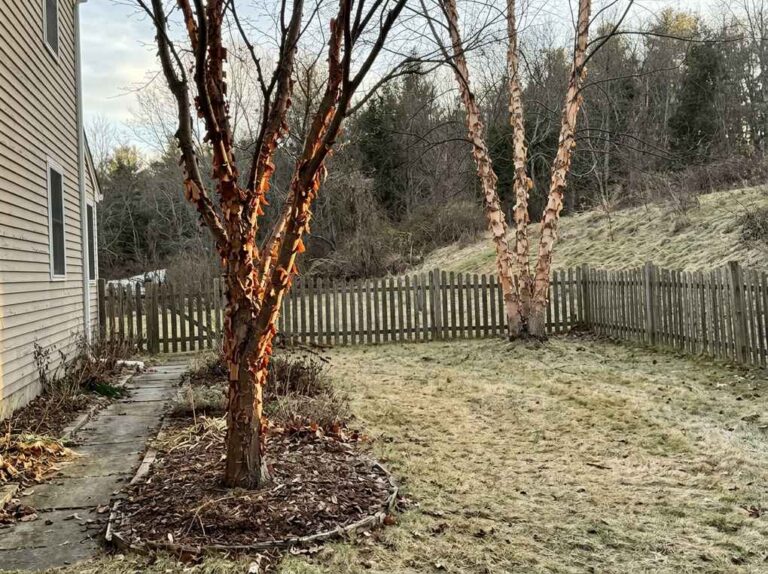
The rare tree that peaks in late summer AND fall. White fragrant flowers in August, then the sepals turn pink-red as the flowers fade, giving you a second wave of color into October. Beautiful peeling bark adds winter interest too.
Almost nobody grows this. Almost nobody even knows about it. That’s starting to change, and for good reason.
Trees I’d Skip for Front Yards
A quick warning about three popular trees that aren’t worth the trouble:
- Bradford/Cleveland pear. Smells terrible during bloom (trimethylamine, the same compound in rotting fish). Splits apart structurally around year 15. Invasive in many states, banned in some. Walk away.
- Large-fruited crabapples. Older cultivars drop messy fruit that stains driveways and attracts wasps. Stick to disease-resistant, small-fruited varieties like ‘Adirondack.’
- Full-size ornamental cherry. Beautiful but short-lived (15-20 years), prone to disease, and the petal drop near walkways gets slippery. Weeping varieties are better behaved.
Planting Tips That Save You Years of Trouble
Plant at least 6 feet (2 m) from your foundation. Branches grow wider than you expect, and shrubs planted against the house trap moisture that causes mold and invites termites.
Space trees at least 20 feet (6 m) apart from each other. Check the mature canopy spread, not just height. A tree that’s 15 feet tall can easily be 20 feet wide.
For continuous bloom in one front yard, pick one tree from each season: witch hazel (winter), redbud or serviceberry (spring), crape myrtle or chaste tree (summer), seven-son flower (fall). Four trees, year-round color.
FAQs
What’s the fastest-growing small flowering tree?
Eastern redbud grows 12-18 inches (30-45 cm) per year when young, making it one of the fastest on this list. Crape myrtle is similarly fast in warm climates. Most others are moderate growers.
Which small flowering tree has the longest bloom season?
Dwarf crape myrtle wins by a wide margin. It blooms from July through September in most zones. Everything else on this list blooms for 2-4 weeks.
Can I plant a flowering tree close to my house?
Minimum 6 feet (2 m) from the foundation. Check mature spread, not just height. A 15-foot tall tree with a 20-foot canopy spread planted 4 feet from the house will be brushing your siding within a few years.
The View From the Front Walk
I keep adding to a sketch of our front yard with little circles where each tree might go. One redbud near the mailbox for early spring. A serviceberry where the kids can reach the berries in summer.
Maybe a seven-son flower near the porch for late color.
Small trees don’t need a big yard. They just need someone who picks the right one for the right spot. Start with one. Give it two years. You’ll want a second before the first one finishes its first bloom.