18 Flowering Shrubs for the Front of Your House in Full Sun

- Foundation planting
- Full sun
- Curb appeal
- Low maintenance
The front of our house used to be a row of overgrown boxwoods that looked like they’d been there since the house was built.
Green blobs. No flowers, no color, no personality. I ripped them out last spring and started over.
This is the list I built while researching replacements. Every shrub here flowers, handles full sun, and actually looks good next to a house.
Some rebloom all season. Some I planted. Some I’m still planning.
Quick Summary
- 18 flowering shrubs tested for full sun front-of-house planting
- Mix of reblooming, native, fragrant, and four-season options
- Mature height and width included so you don’t outgrow your windows
- Honest notes on which ones I’d skip and why
- Best starter pick: Knock Out Rose. Reblooms all season, nearly impossible to kill in full sun.
1. Knock Out Rose
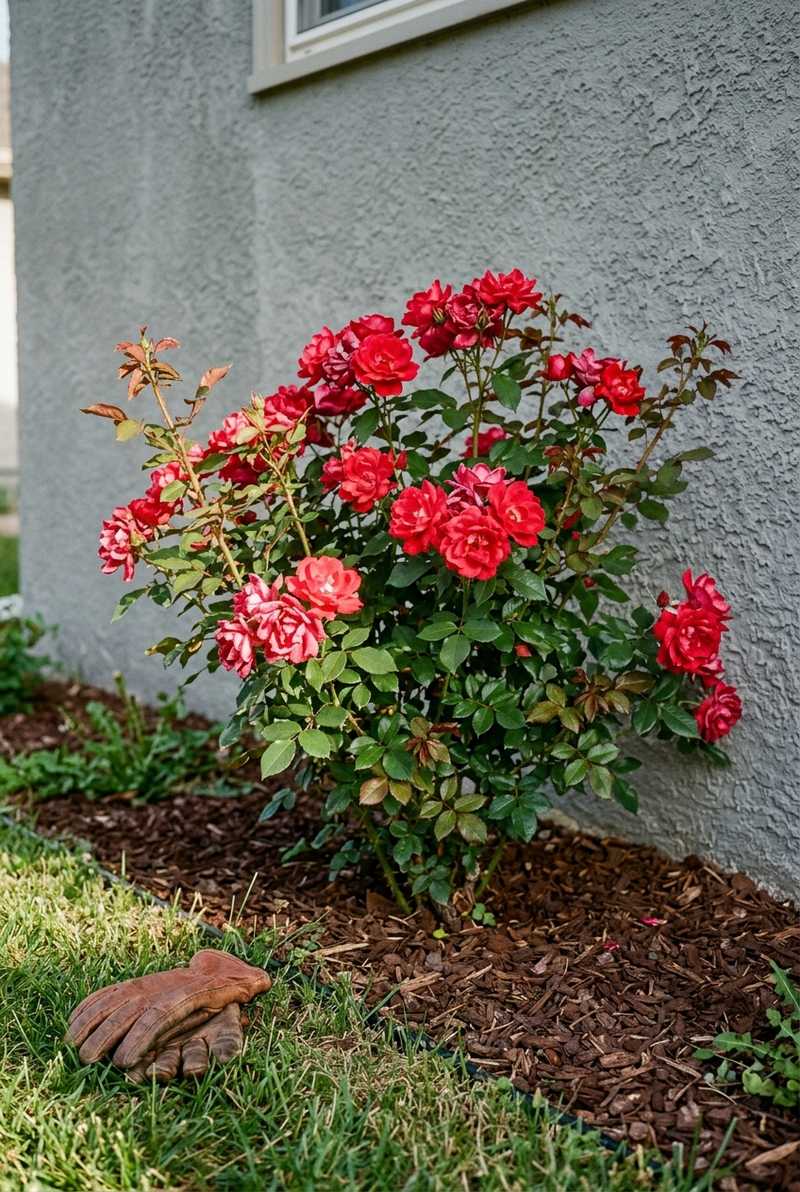
The shrub that changed foundation planting. Reblooms continuously from spring through first frost without deadheading. Resists black spot better than any rose I’ve grown. Red, pink, yellow, white, or coral depending on variety.
NC Extension notes these even bloom reasonably well in partial shade, which is rare for roses. This is the one I’d start with if you want instant, reliable color. Only real threat: rose rosette virus, which is fatal with no cure. Remove the entire plant immediately if you see distorted, bright red growth.
2. Panicle Hydrangea (Bobo / Little Lime)
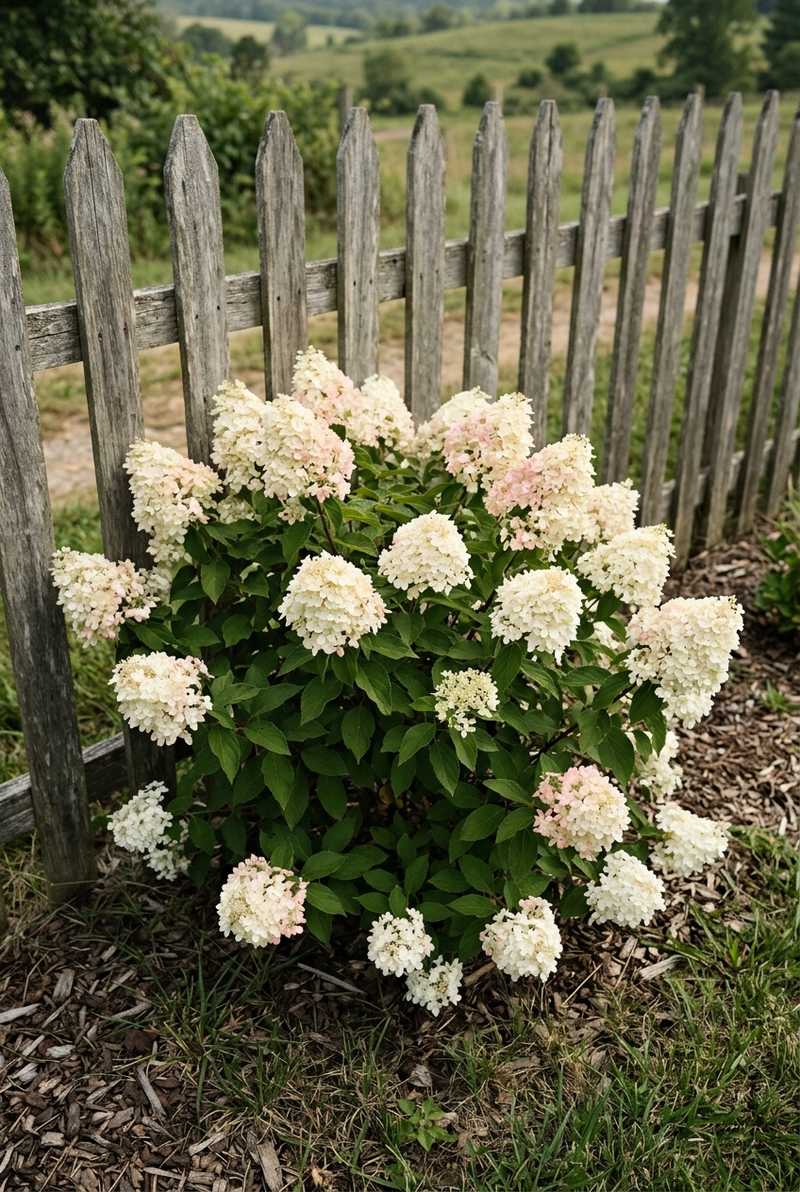
This is the hydrangea that actually works in full sun. The classic blue/pink mopheads (bigleaf hydrangeas) wilt and scorch in hot sun. Panicle hydrangeas handle heat, drought, and full exposure without flinching. Most homeowners buy the wrong species and blame the plant.
‘Bobo’ stays under 3 feet. ‘Little Lime’ reaches about 5 feet. Both start white and age to antique pink, which means they look different every month. Virtually no pest or disease problems.
Tip
If you want blue or pink hydrangeas in your front yard, those are bigleaf hydrangeas and they need afternoon shade. Full sun all day will cook them. Panicle hydrangeas are your full-sun option. Don’t mix them up at the nursery.
3. Spirea (Goldflame / Little Princess)
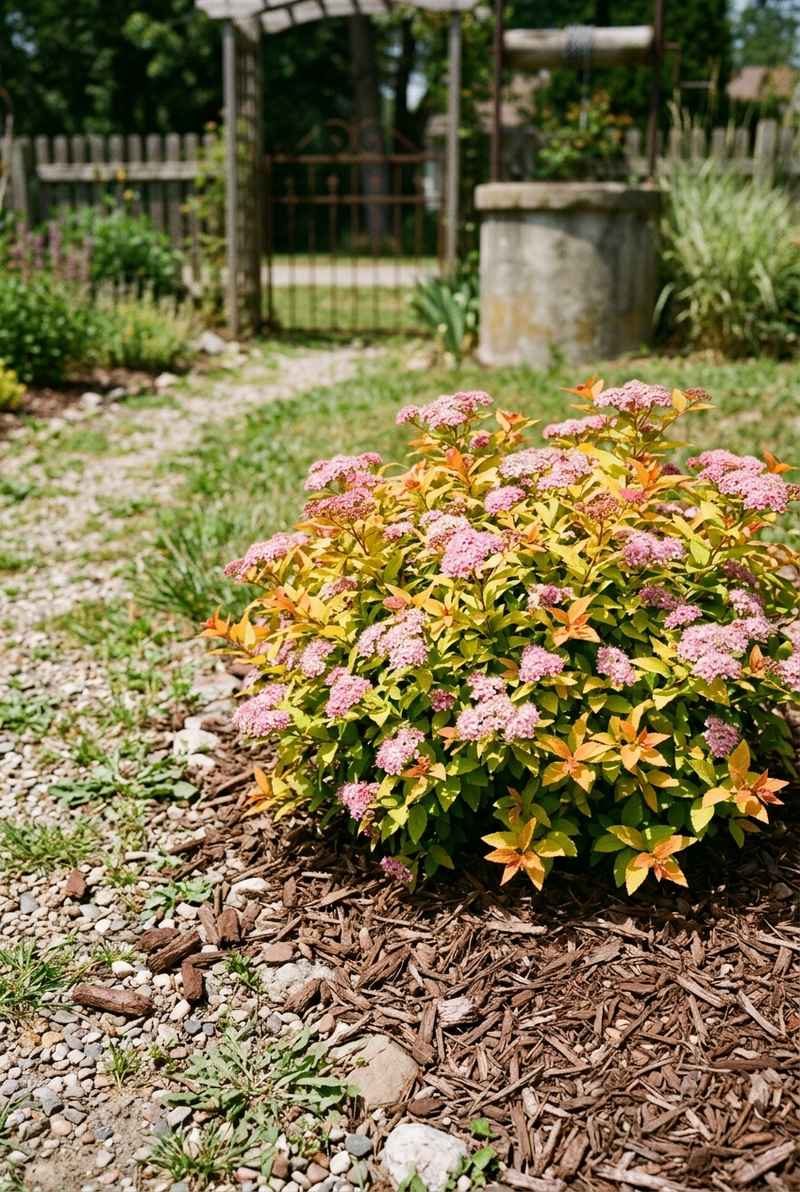
Tolerates poor soil, heat, drought, and even urban pollution. Pink flower clusters in summer, and ‘Goldflame’ adds orange-gold new foliage that makes the whole shrub glow in spring. Nearly universally recommended on gardening forums.
Fast grower. Prune after flowering if you need to shape it, but it naturally stays compact. One of the cheapest shrubs at any nursery, too.
4. Weigela (Sonic Bloom)
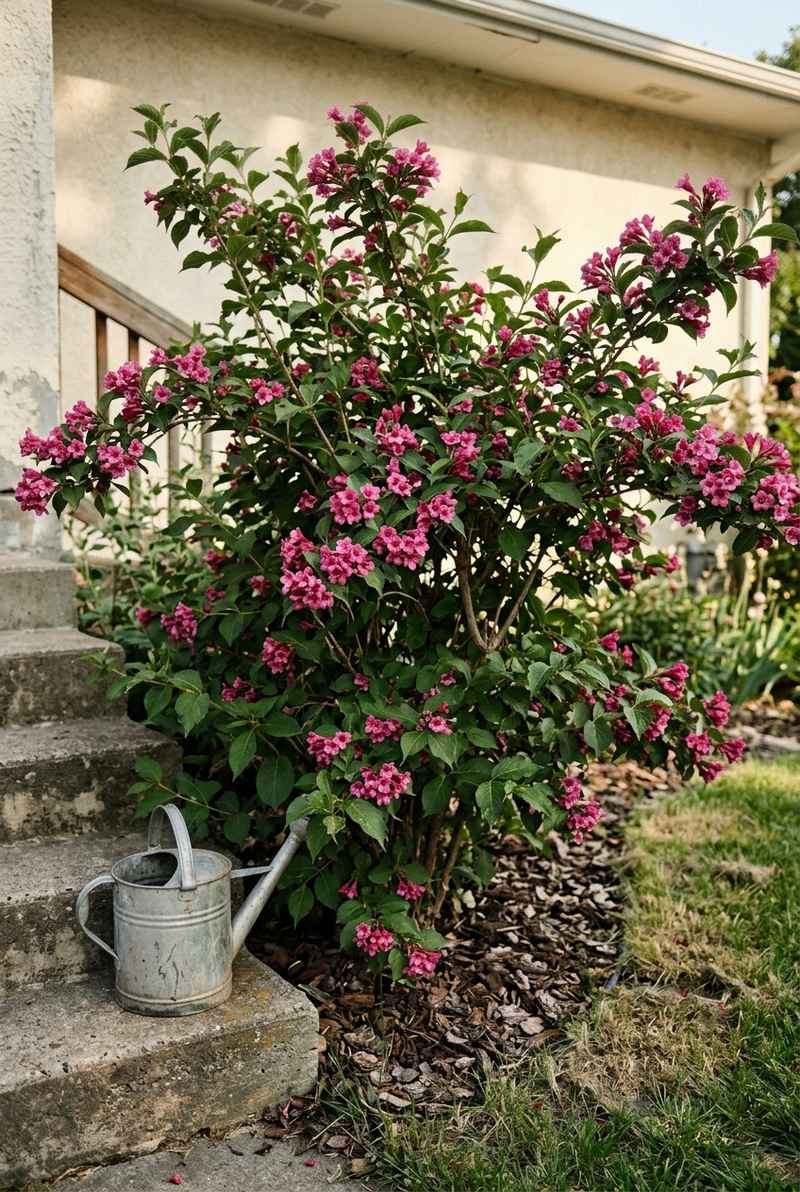
The Sonic Bloom series reblooms from late spring through fall without deadheading. Tubular flowers that hummingbirds can’t resist. Dark-leaved varieties like ‘Wine and Roses’ give you burgundy foliage all season, which means the shrub looks interesting even between bloom flushes.
Standard weigela blooms once in spring and then you’re looking at plain green for the rest of the year. Get a reblooming cultivar or don’t bother.
5. Glossy Abelia
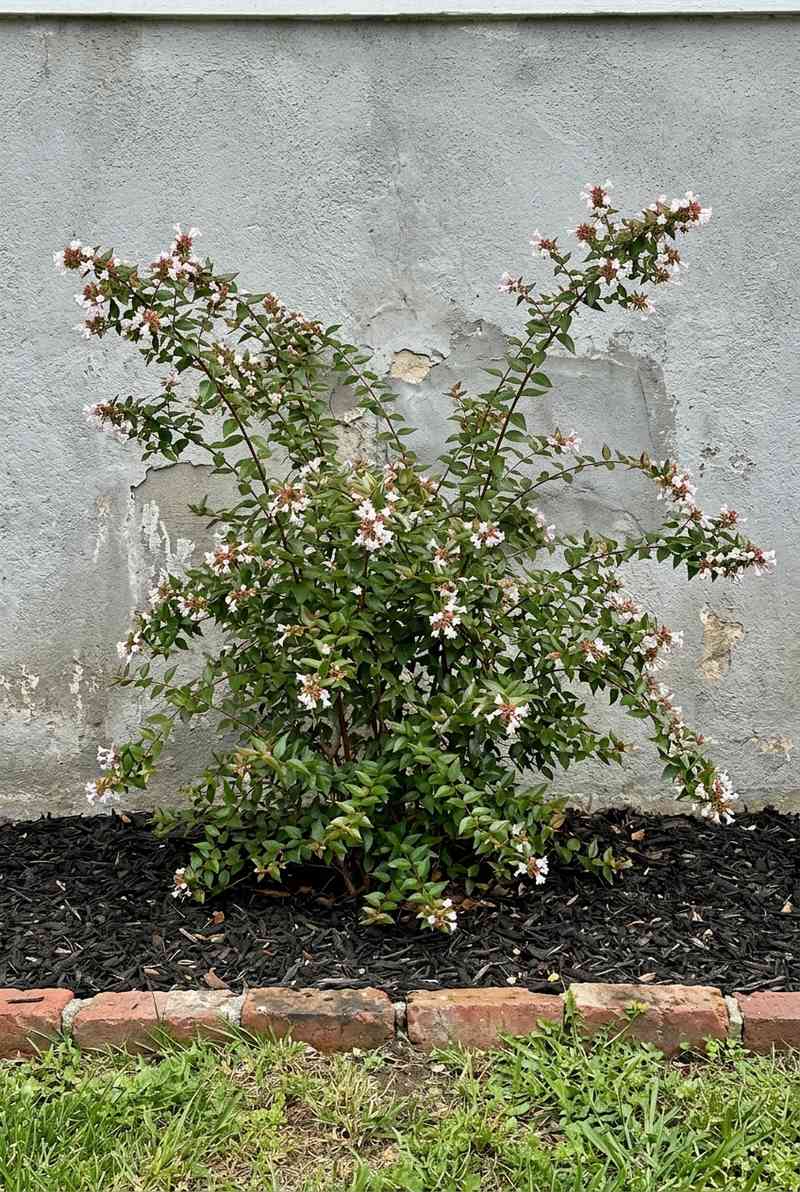
One of the longest bloom seasons of any shrub on this list. Small tubular flowers from late spring all the way until frost. Butterflies love it. Semi-evergreen in mild winters, so it keeps some structure year-round.
Graceful arching form that doesn’t need much pruning. I’ve seen these planted as informal hedges along front walkways and they look effortless (ask me how long I stared at my neighbor’s).
6. Dwarf Crape Myrtle
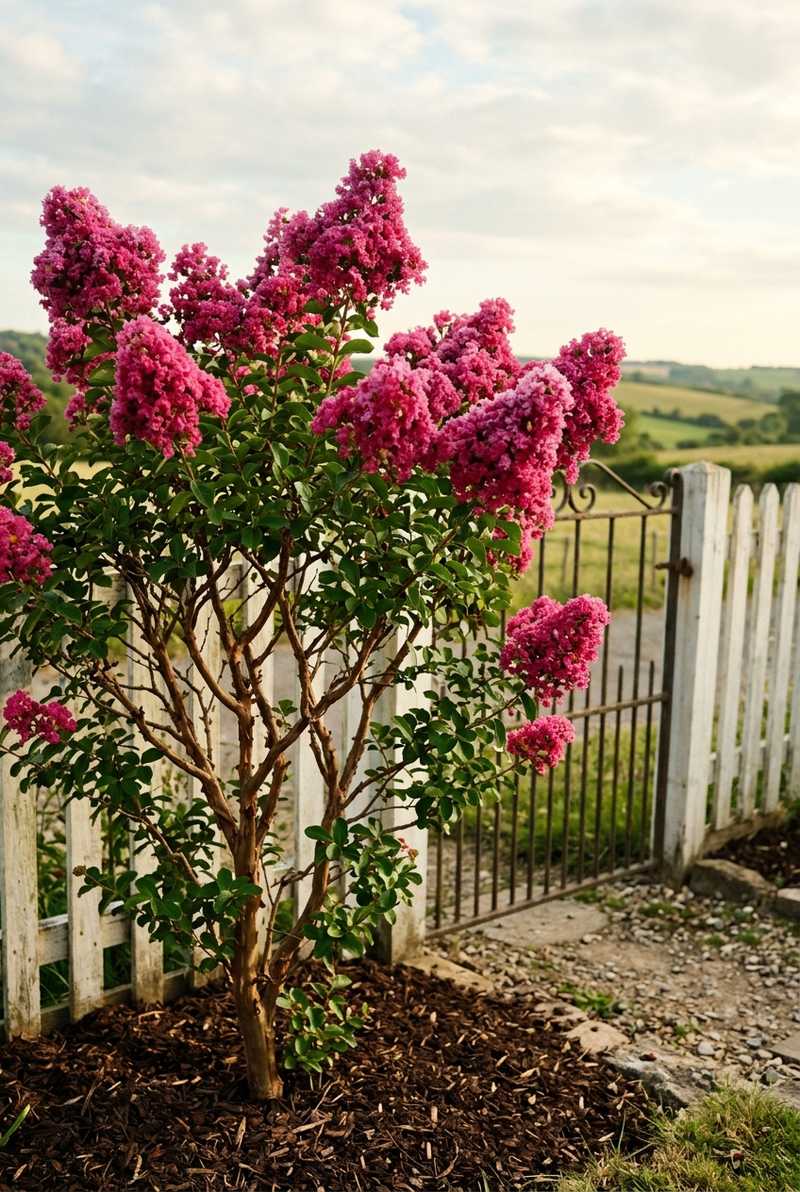
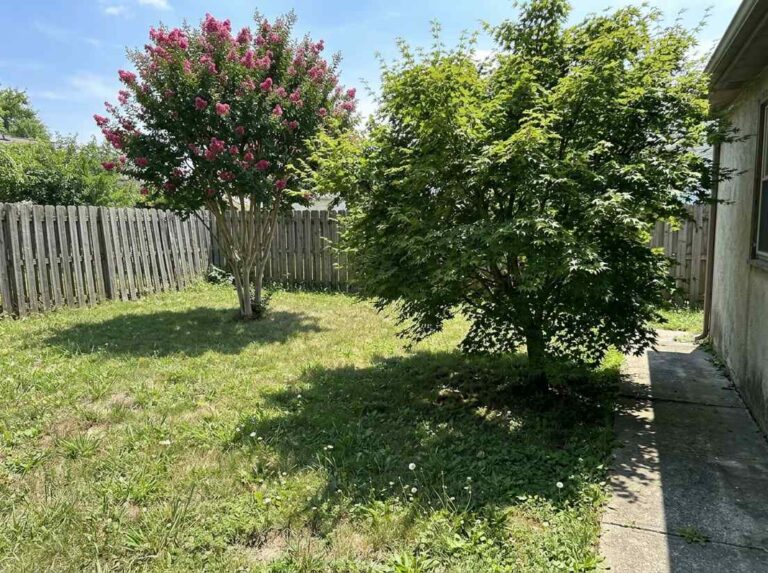
Months of summer bloom. Peeling bark. Fall color. Drought tough. If you’re in zones 7-9, this belongs in your front yard. Buy a true dwarf cultivar (3-5 feet mature) so you never have to prune it.
‘Pocomoke’ and ‘Petite Plum’ are genuine dwarfs. Avoid anything labeled “semi-dwarf” near windows. It’ll hit 12 feet and you’ll be out there with loppers every spring.
Save this to Pinterest7. Lavender
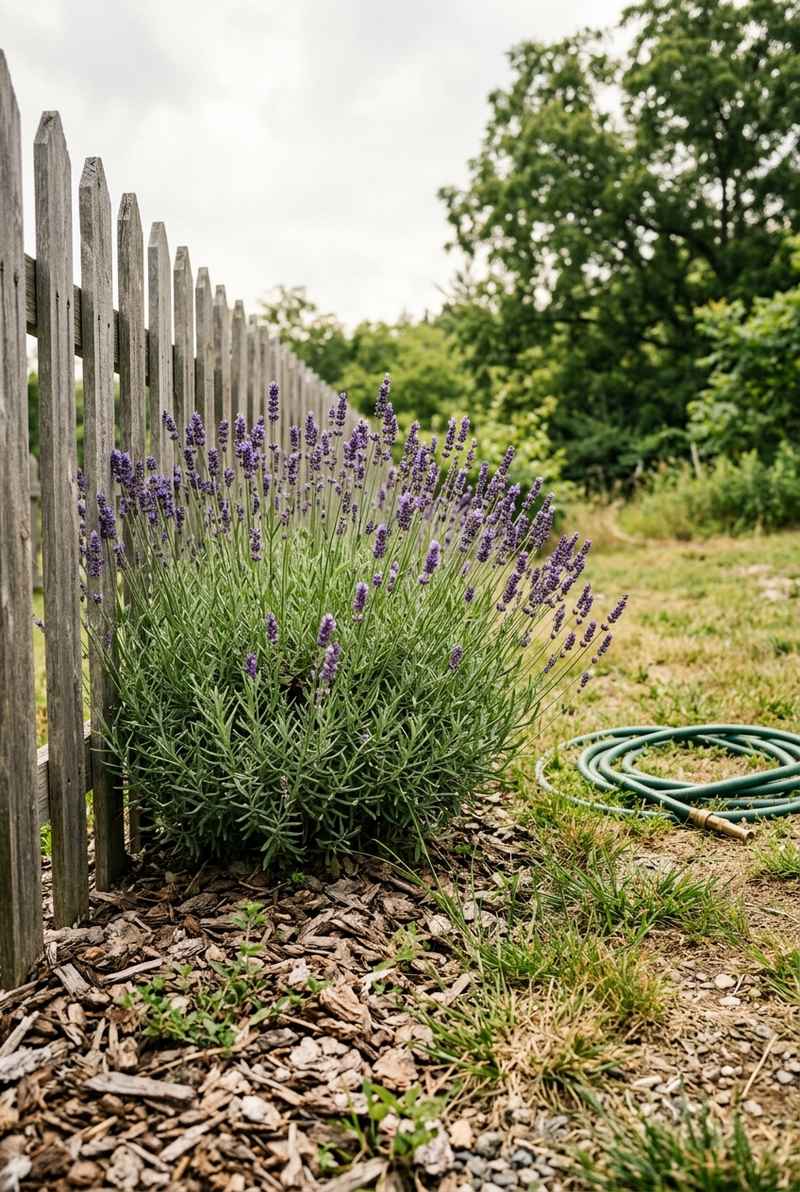
Fragrant, deer-resistant, drought-tolerant, and pollinators swarm it. A row of lavender along a sunny front path is one of those things that makes the whole yard feel intentional.
The catch: it demands perfect drainage. Wet feet in winter kills lavender faster than anything. If your soil is heavy clay, plant in raised beds or amend heavily with gravel. English lavender (Lavandula angustifolia) is hardiest. ‘Phenomenal’ is the cultivar most gardeners recommend for reliability.
8. Potentilla
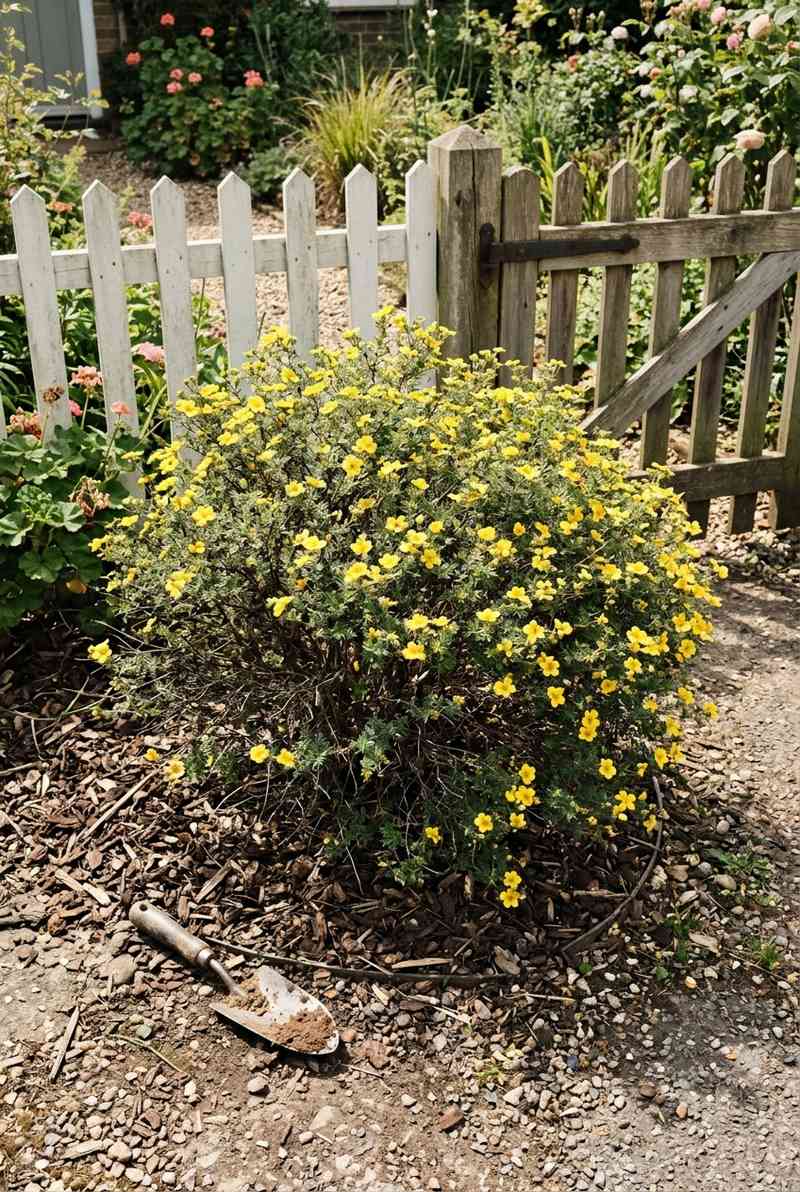
Blooms from June through October in most zones. Cold-hardy down to zone 2, which makes it one of the few flowering shrubs that works in genuinely cold climates. Not flashy, but dependable.
‘Goldfinger’ (yellow) and ‘Pink Beauty’ are the varieties I see most often. Compact, doesn’t need pruning, doesn’t spread. Does its job and doesn’t cause problems. Sometimes that’s enough.
9. Oakleaf Hydrangea
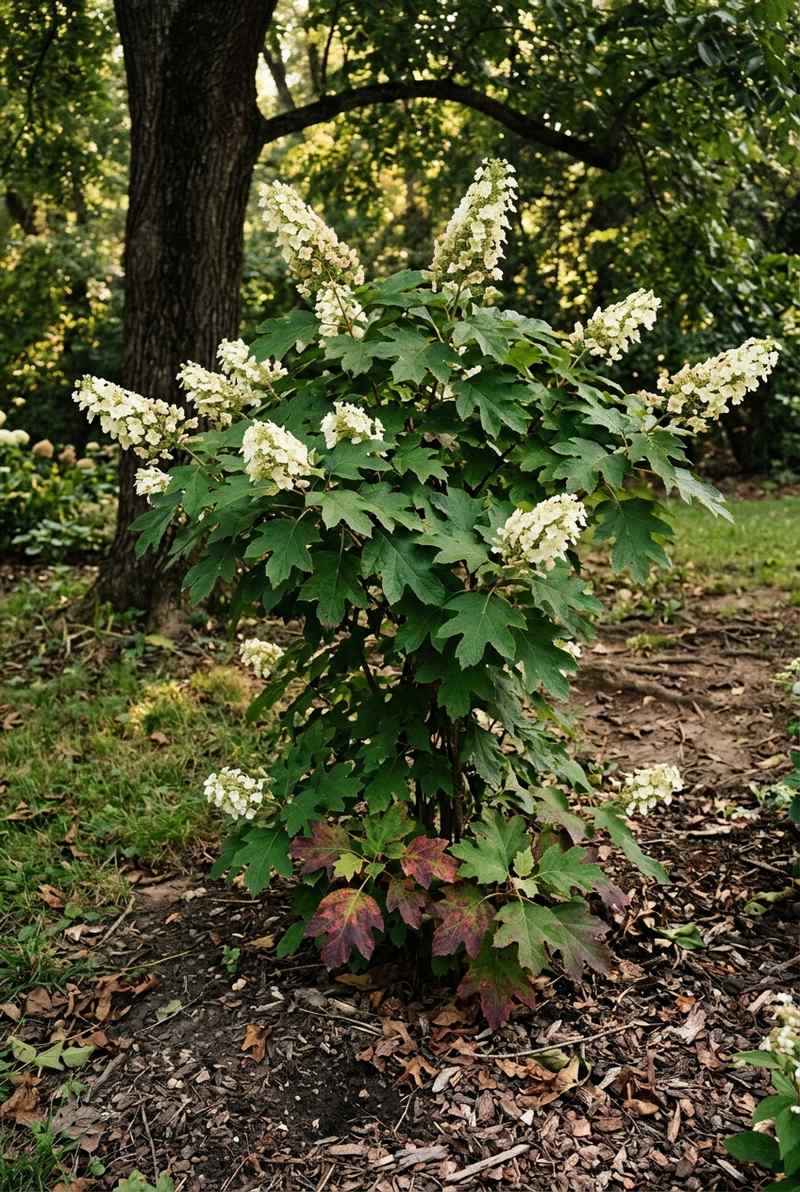
Native, deer-resistant, and genuinely interesting in all four seasons. White flower cones in summer, deep red-burgundy fall foliage, and exfoliating bark in winter. The fall color alone is worth the planting spot.
Bigger than some shrubs on this list, so give it room. ‘Ruby Slippers’ stays more compact at 3-4 feet if space is tight.
10. Dwarf Loropetalum
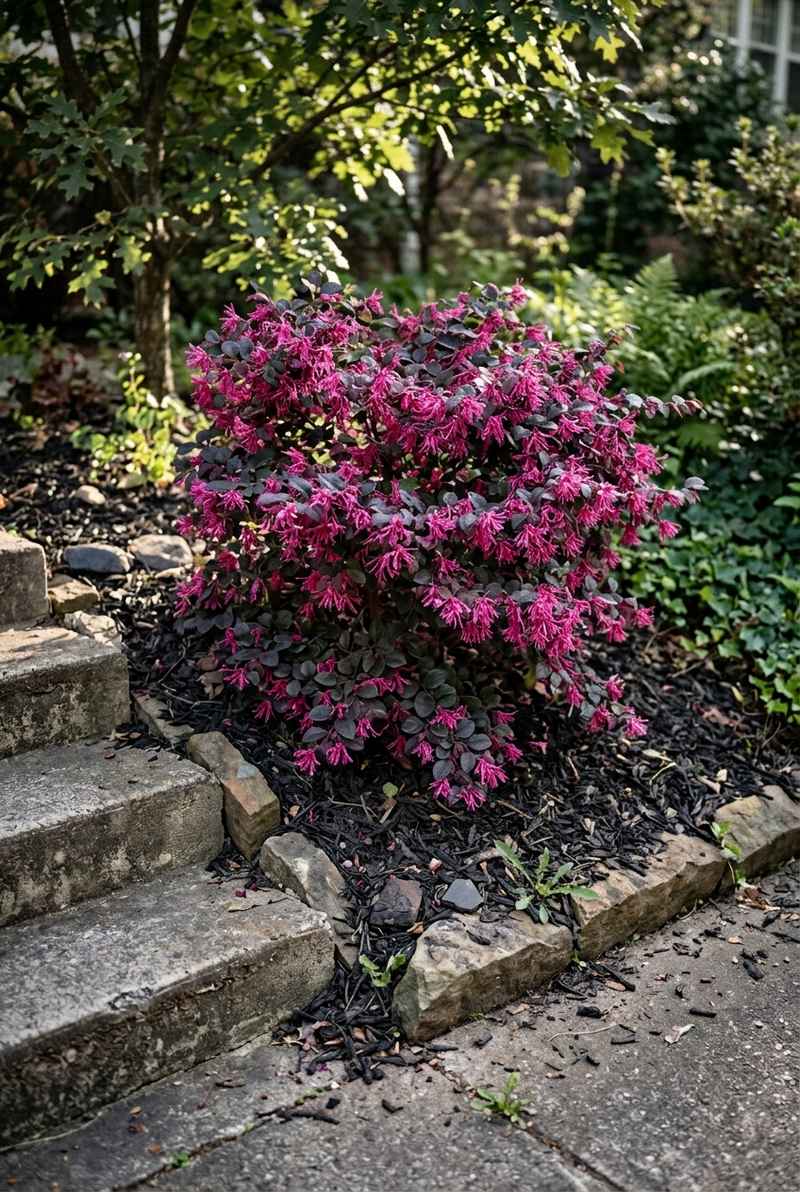
Deep purple foliage year-round with hot pink fringe flowers in spring. It’s like the plant couldn’t decide between being bold or being subtle and chose both. ‘Crimson Fire’ and ‘Purple Daydream’ are the dwarf varieties that stay under 5 feet.
Heat-tough. Pairs beautifully with lime green or silver plants for contrast. I planted one next to a ‘Goldflame’ spirea and the color combination stops people mid-walk.
11. Arrowwood Viburnum
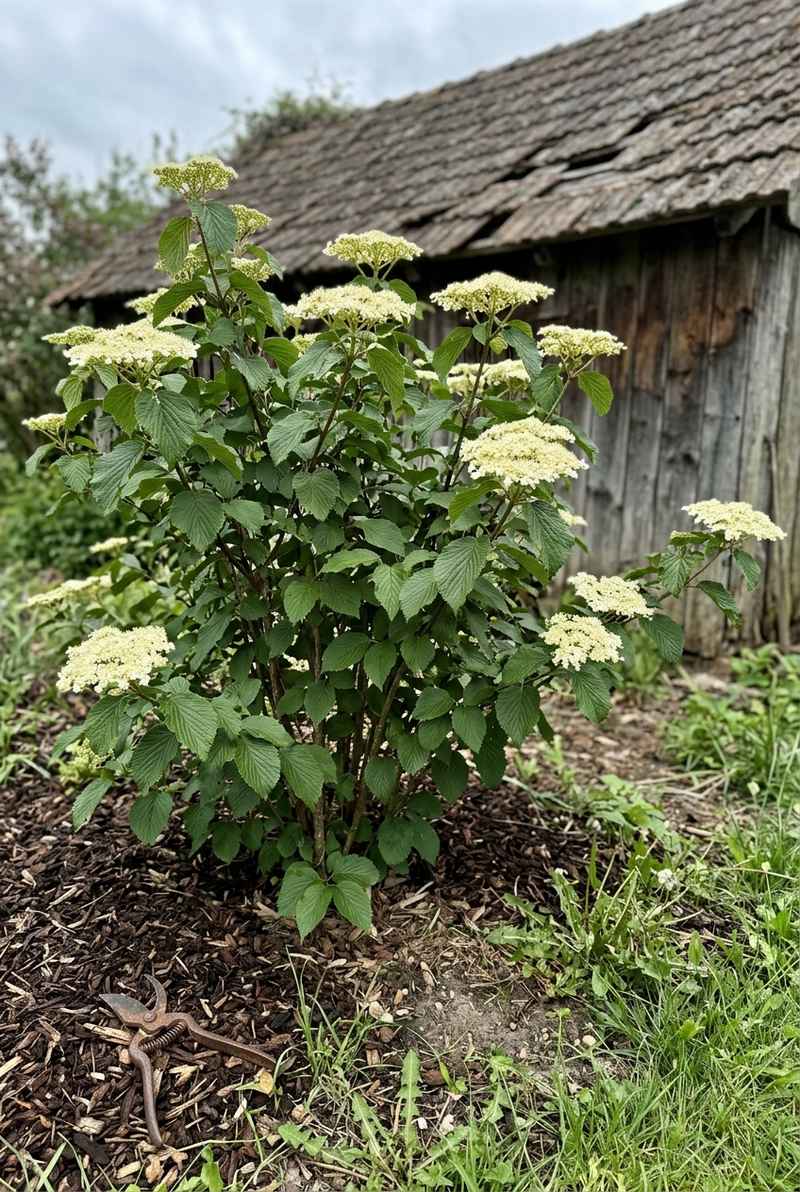
Native, multi-season interest. White flower clusters in spring, blue-black berries that birds devour in fall, and reddish-purple fall foliage. One of the best wildlife-supporting shrubs you can plant in a front yard.
Bigger than most foundation shrubs, so use it at a corner or as an anchor, not under windows. Incredibly adaptable to different soil types.
12. St. John’s Wort
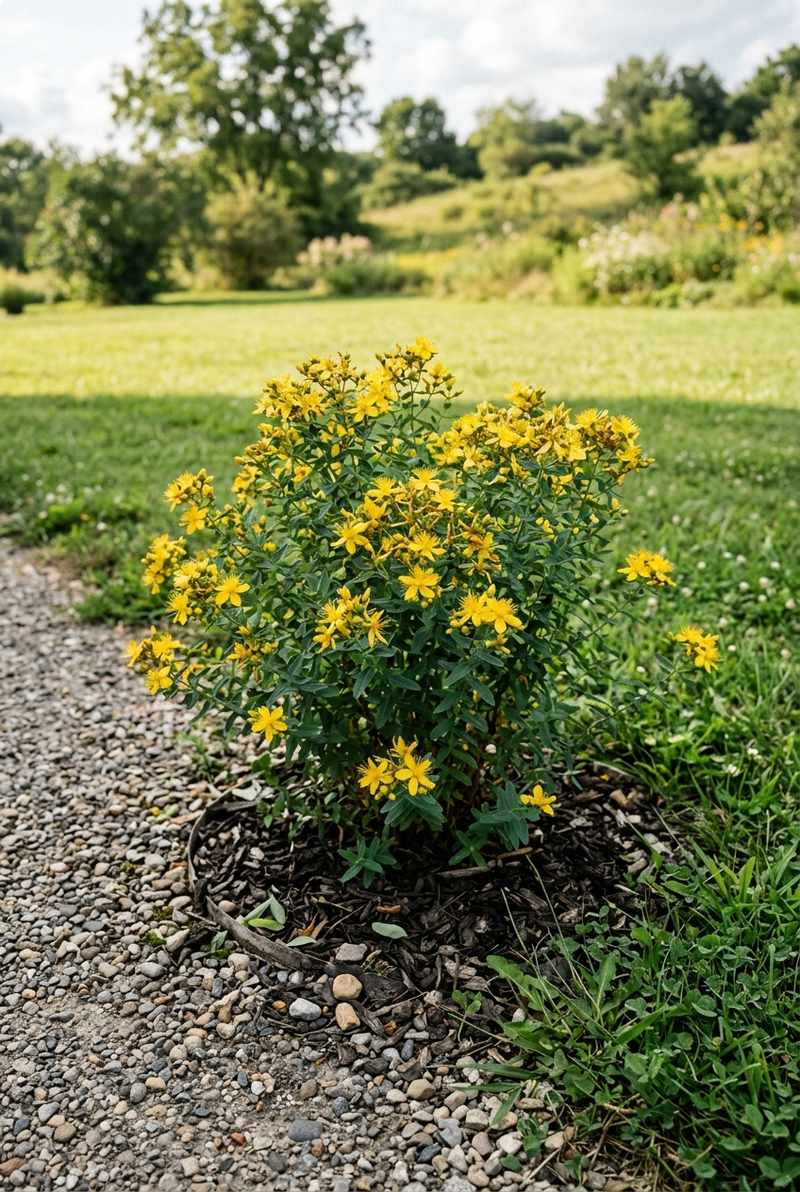
Almost nobody lists this one. Bright yellow flowers through the hottest months when many shrubs are done blooming. Drought-tolerant, compact, and completely unbothered by pests.
Low-growing enough to go under windows without covering them. ‘Hidcote’ is the variety to look for. Deserves way more attention than it gets.
13. Carolina Allspice
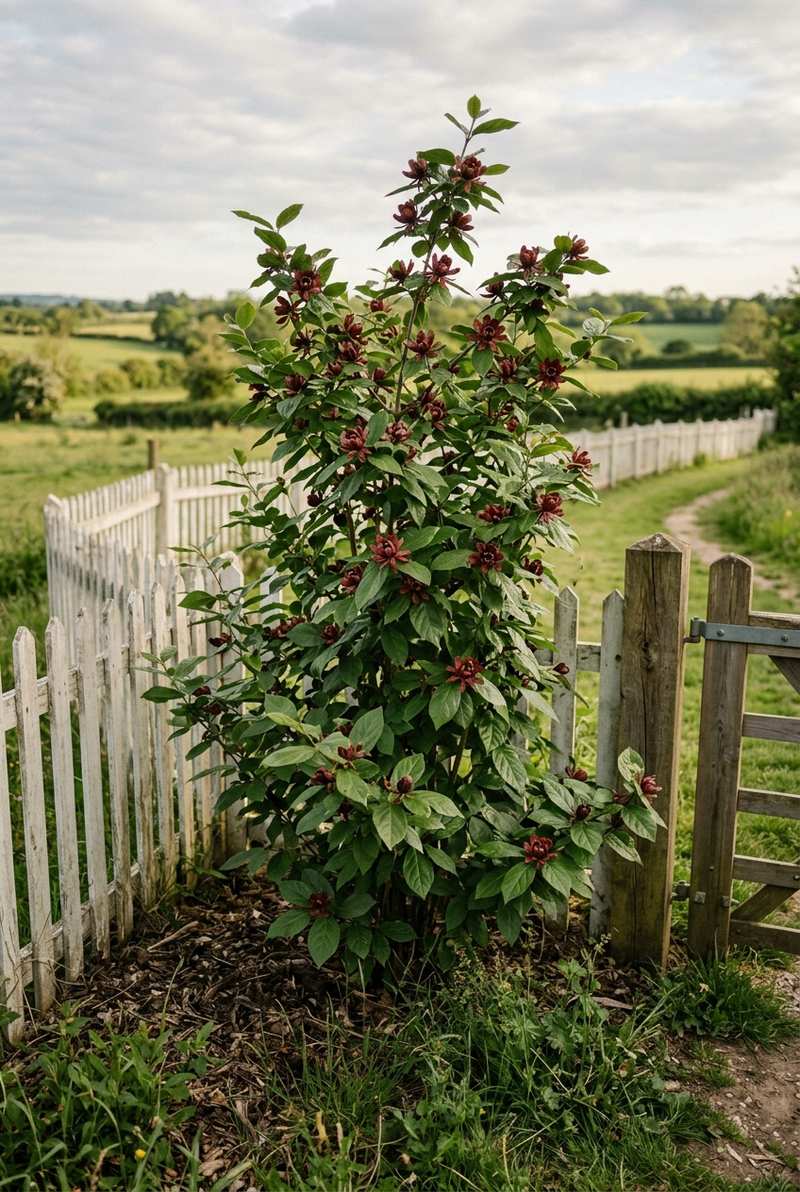
Unusual dark reddish-brown flowers with a spice fragrance you can smell from the sidewalk. Native. Not a typical choice, which is exactly why I like it. Plant one near the front door and watch visitors stop to sniff.
Spreads by suckers over time, so give it room or be prepared to manage it. The fragrance alone makes it worth a spot.
14. Winterberry Holly
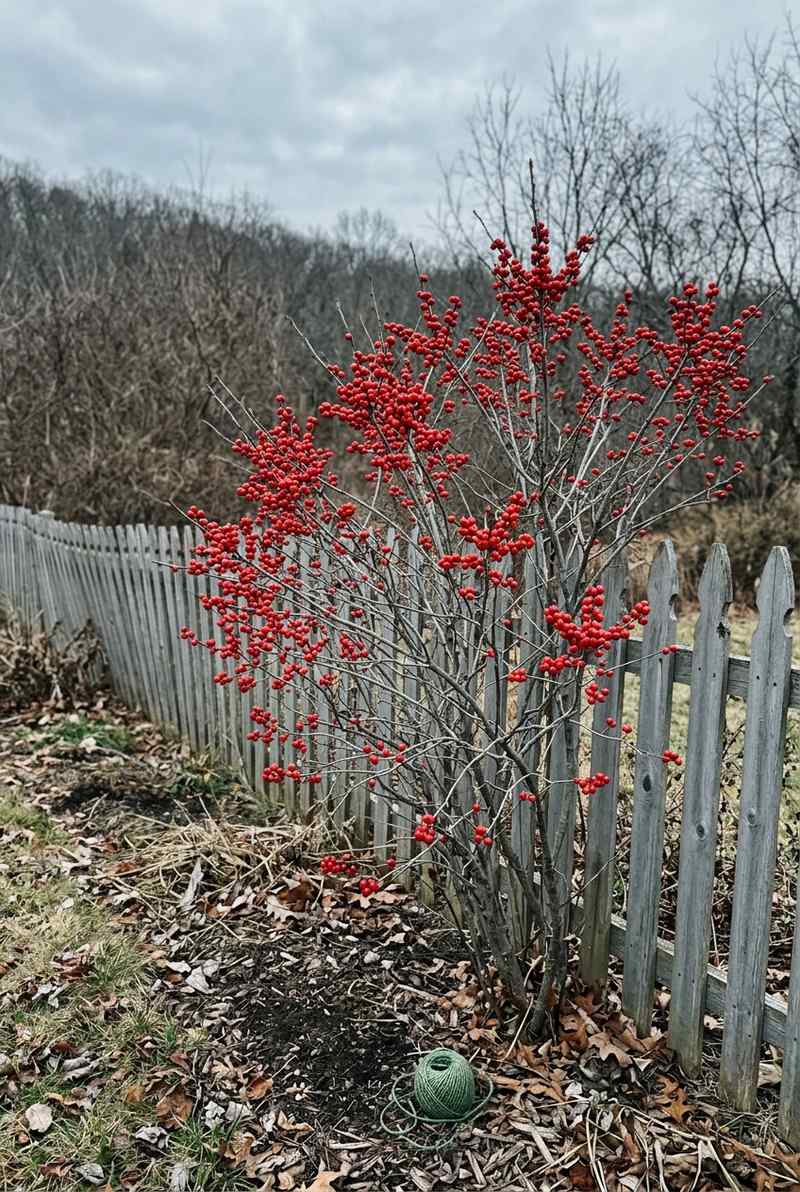
The flowers are nothing special. The berries are the whole point. Bright red fruit on bare winter branches that looks like the front yard is decorated for the holidays. Native, cold-hardy, and stunning against snow.
You need a male plant nearby for pollination or you won’t get berries. One male can pollinate several females within about 50 feet (15 m). ‘Winter Red’ is the most popular female cultivar. ‘Southern Gentleman’ is the most common male pollinator.
15. Ninebark (Diablo / Amber Jubilee)
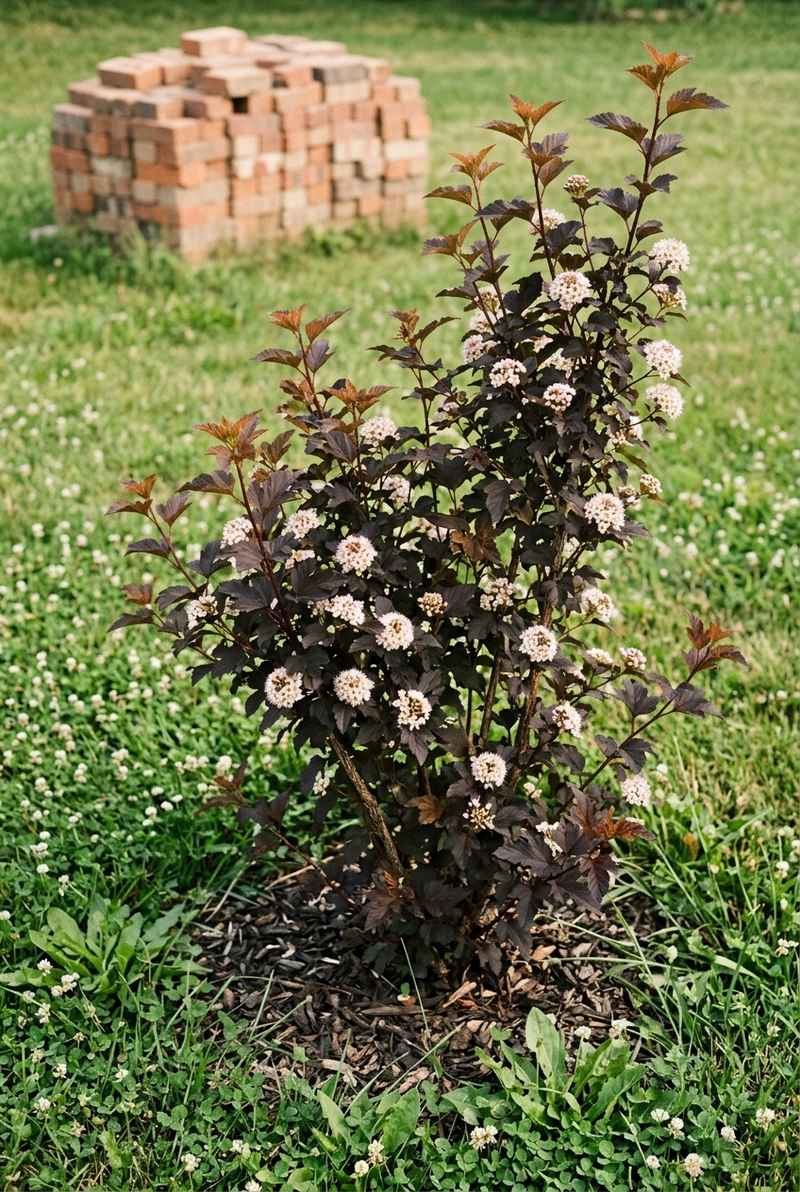
The flowers are pretty but the foliage is the real draw. ‘Diablo’ has deep burgundy leaves all season. ‘Amber Jubilee’ shifts from orange to gold to green as the season progresses. Exfoliating bark adds winter texture.
Native, tough, and unbothered by deer. One of those shrubs that makes the front yard look designed, even when nothing’s blooming.
16. Caryopteris (Blue Mist Shrub)
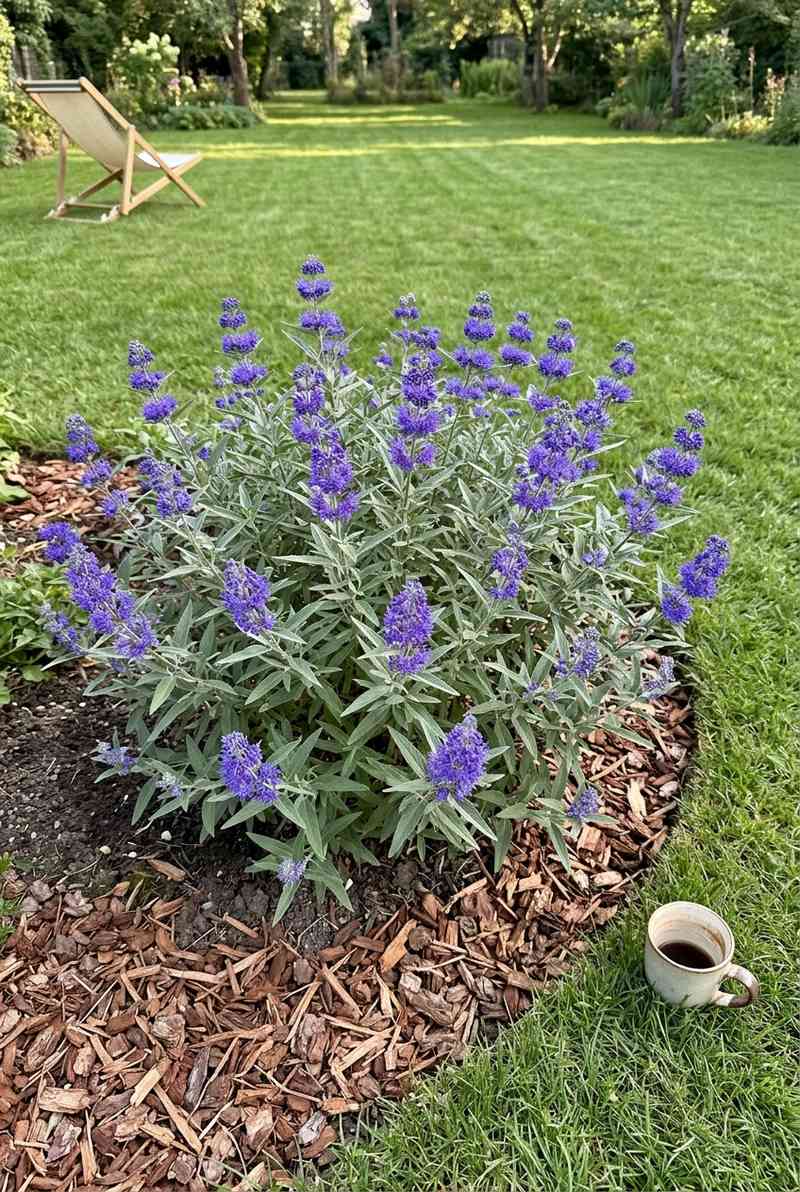
True blue flowers in late summer when the front yard is desperate for fresh color. Compact, aromatic silver-green foliage, and butterflies flock to it. Fills the August-September gap when most flowering shrubs are done.
Treat it like a sub-shrub. Cut it back hard in early spring and it regrows from the base. Dies back to the ground in cold zone 5 winters but returns reliably.
17. Butterfly Bush (Sterile Cultivar Only)
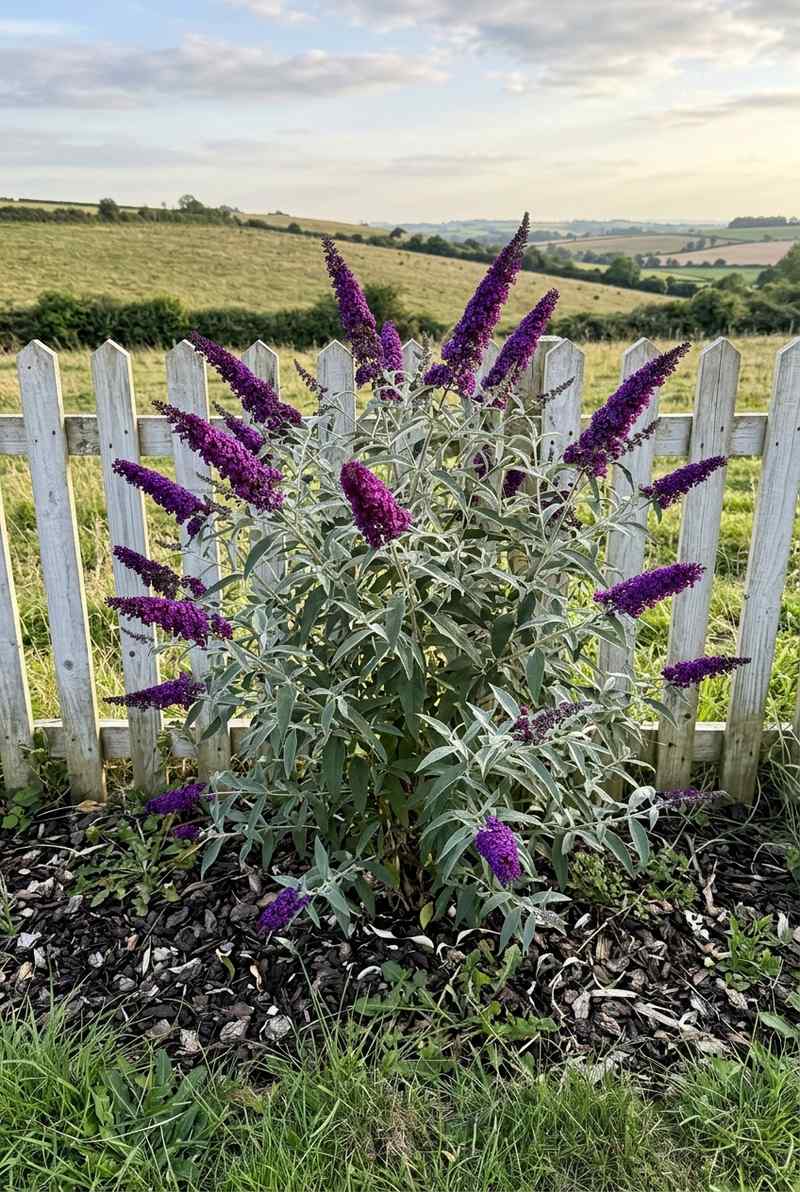
I need to be honest about this one. Traditional butterfly bush is invasive. Banned in Washington and Oregon, restricted elsewhere. The seeds spread aggressively by wind and water, and it outcompetes native plants that caterpillars actually need for egg-laying.
If you want one, buy only sterile or near-sterile cultivars like the Lo & Behold series or ‘Miss Molly.’ They still attract butterflies but don’t produce viable seed. Skip the old-school Buddleia davidii entirely.
18. Rose of Sharon (With a Warning)
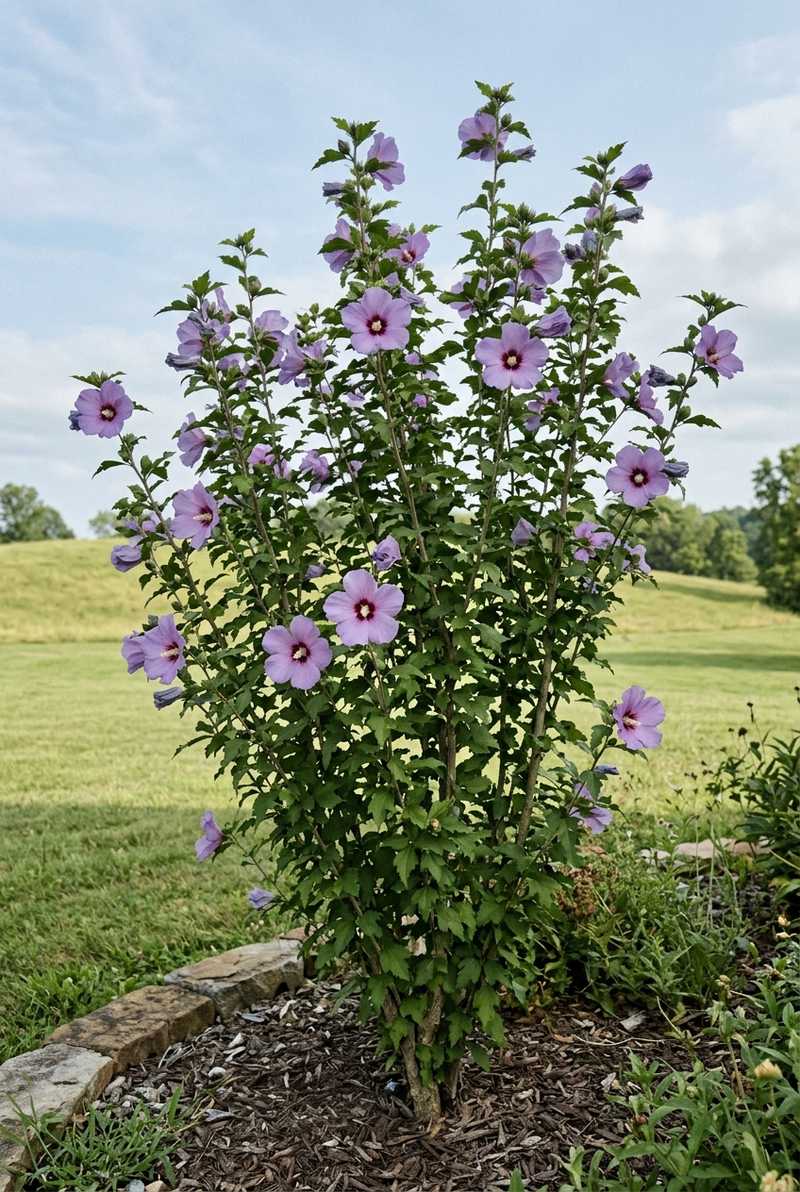
Gorgeous summer blooms. Tough as nails. Grows anywhere. The downside? It self-seeds so aggressively that one gardener on LawnSite called it a weed. Thousands of seedlings, every year, everywhere.
If you plant it, deadhead religiously or choose ‘Aphrodite’ or ‘Minerva’, which are less fertile. I’d only recommend this for someone willing to stay on top of seedling removal. Beautiful plant, bad behavior.
The Pruning Rule That Saves You Flowers
One thing I learned the hard way: spring-blooming shrubs flower on old wood. Prune them right after blooming, not in winter, or you cut off next year’s flowers. This includes weigela, lilac, forsythia, and Carolina allspice.
Summer and fall bloomers (spirea, panicle hydrangea, crape myrtle, caryopteris) flower on new wood. Prune them in late winter or early spring before growth starts. Get this backwards and you’ll wonder why nothing blooms.
Foundation planting mistake
Plant shrubs at least half their mature width away from the house wall. A 6-foot-wide shrub needs 3 feet of clearance from siding. Shrubs jammed against the house trap moisture, block airflow, and invite termites. Most front-of-house shrubs are planted too close. Check the tag for mature spread before you dig.
Common Questions
Which flowering shrub blooms the longest in full sun?
Knock Out Rose and Glossy Abelia both bloom from late spring through first frost. That’s roughly 5-6 months of continuous color with minimal effort.
What are the best deer-resistant flowering shrubs?
Lavender, potentilla, caryopteris, and ninebark are all deer-resistant. Roses and azaleas are deer favorites. If deer are a problem in your yard, start with the resistant varieties.
How far apart should I space flowering shrubs in a foundation bed?
Half their mature spread apart from each other, and half their mature spread away from the house. A shrub that grows 4 feet wide needs 2 feet between it and the next shrub, and 2 feet from the wall. This feels sparse at planting but looks right in two years.
The Row That Changed Everything
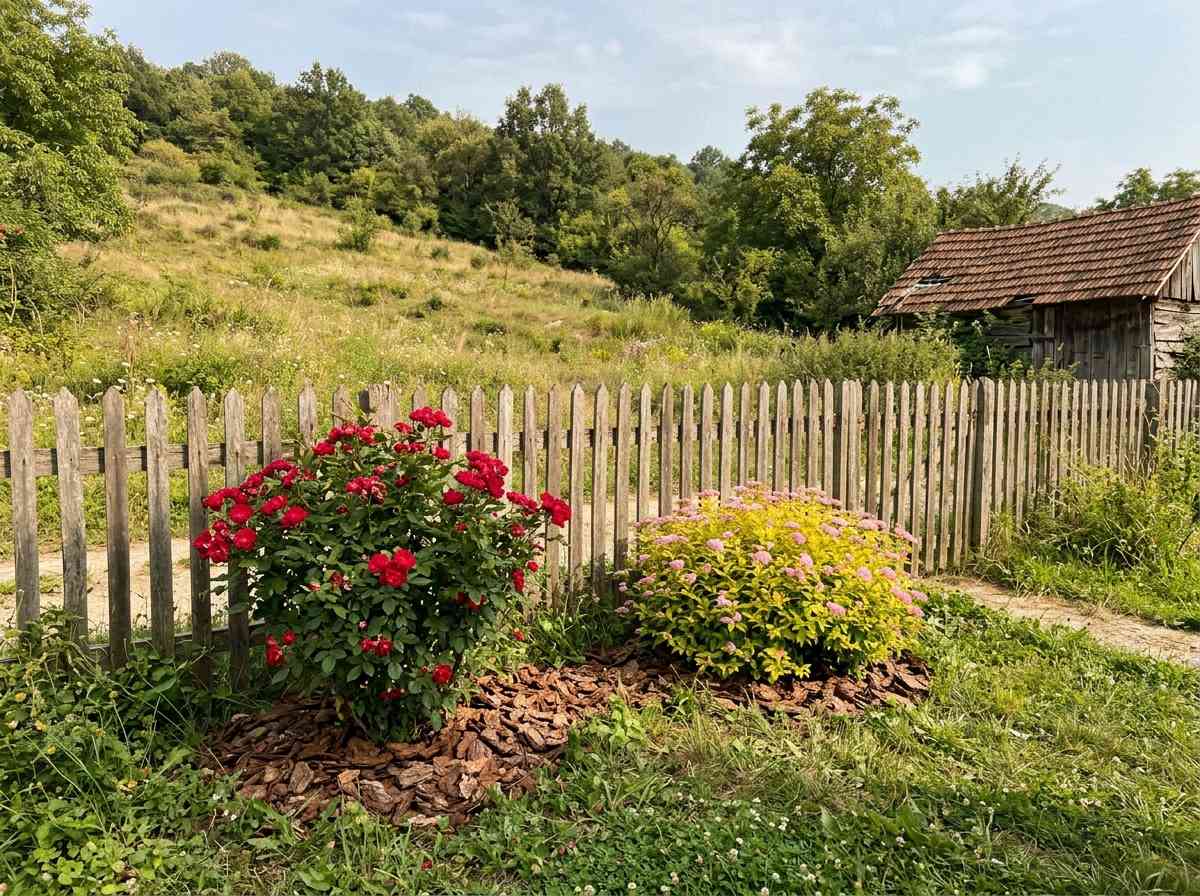
Those boxwoods I pulled out were fine. Green, reliable, boring. What replaced them, a Knock Out Rose, a panicle hydrangea, and a ‘Goldflame’ spirea, blooms from May through October and looks completely different every month.
Your front yard is the first thing people see. It doesn’t take 18 shrubs. Three good ones in the right spots will change how the whole house feels from the street.