How to Build Raised Garden Beds With Pallets (Under $10)
- Budget build
- Under $10
- Beginner DIY
- Upcycled materials
I wanted raised beds. The cedar kits online started at $80. Pre-made galvanized steel troughs were $150. I had $12 in my pocket and a weekend with no plans.
So I built two raised beds from free pallets for under $10 total. They’re not pretty. They grow vegetables exactly as well as the $200 versions. Here’s how I did it, what I spent, and the mistakes I made so you don’t have to.
At a Glance
- Free pallets + about $8-10 in screws and landscape fabric = two functional raised beds
- Only use pallets stamped HT (heat-treated). Never MB (methyl bromide). No stamp = don’t use for food.
- Lifespan: 2-5 years untreated. Raw linseed oil extends it.
- Soil is the real cost nobody mentions. Free municipal compost keeps it cheap.
- Total time: one afternoon. Skill level: if you can use a drill, you can build this.
What You’ll Need
- 4 HT-stamped pallets (free)
- 3-inch outdoor-rated deck screws (~$4)
- Landscape fabric (~$4-5)
- Cardboard (free, for ground layer)
- Drill/driver
- Staple gun
- Hand saw (for trimming uneven pallets)
- Work gloves
Time: 90 min first bed, 40 min second · Difficulty: Easy
Which Pallets Are Safe (And Where to Find Free Ones)
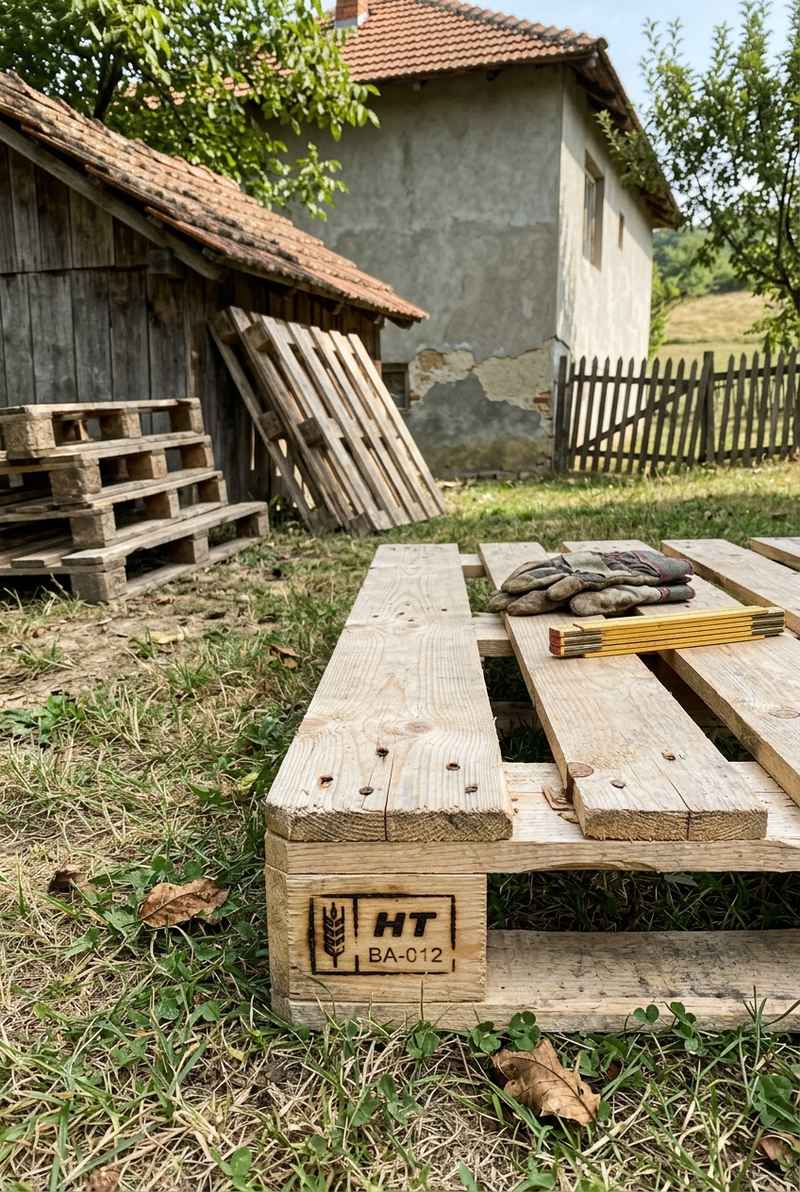
Not all pallets are safe for growing food. Some are treated with chemicals that leach into soil. This is the only part of this build where cutting corners can actually hurt you.
| Stamp | Meaning | Safe for Food? |
|---|---|---|
| HT | Heat-treated (heated to 56C/133F to kill pests) | Yes |
| KD | Kiln-dried | Yes |
| DB | Debarked | Yes |
| MB | Methyl bromide fumigant | No. Never. |
| No stamp | Unknown treatment | Skip for edibles |
MB pallets are rare now in the US and EU (the treatment is mostly banned), but they still show up through import supply chains. A faded or partial stamp is riskier than a clean unstamped domestic pallet.
Also inspect for stains, chemical spills, or oily smells. Even an HT pallet that carried chemicals as cargo can have residues soaked into the wood. Clean, light-colored wood with no odor is what you want.
Where to find free pallets
Facebook Marketplace (search “free pallets”), Craigslist free section, hardware stores, garden centers, and construction sites. Ask before taking. Most businesses are happy to get rid of them. I get mine from a local hardware store that sets them by the dumpster every Tuesday.
The $10 Materials List
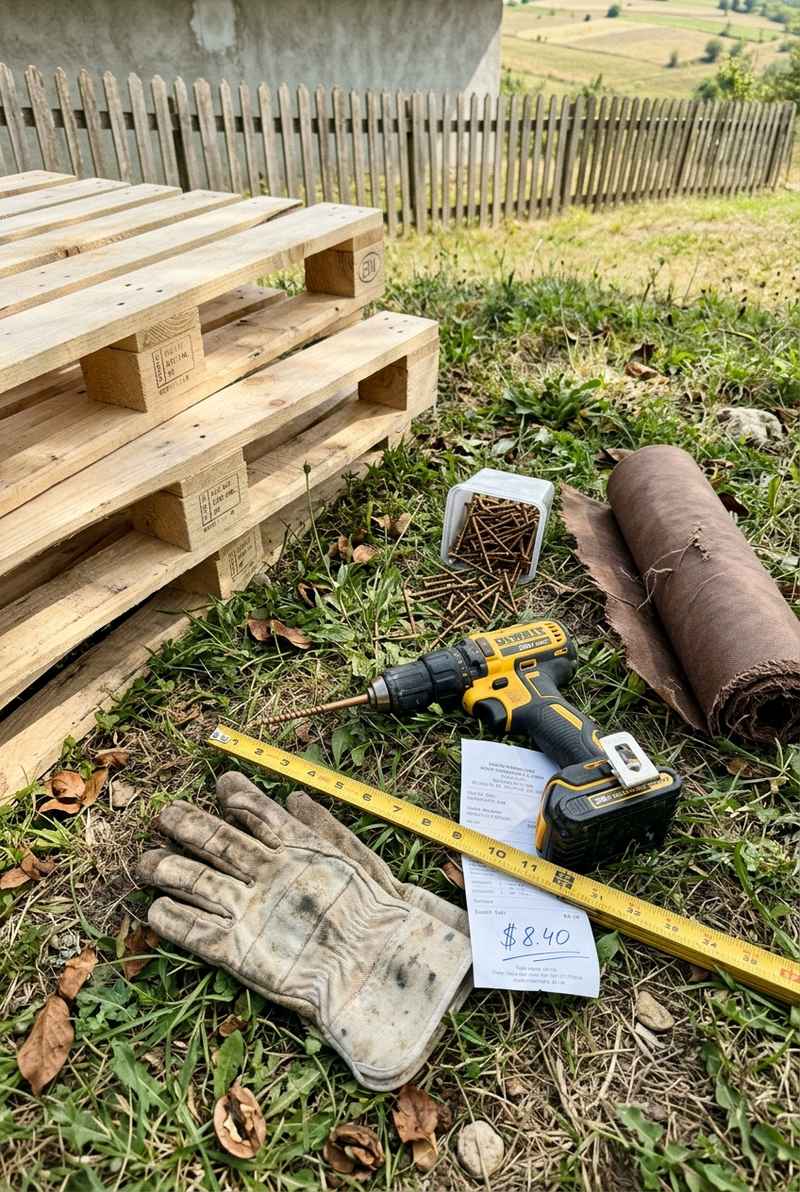
| Item | Cost | Where to Get |
|---|---|---|
| 4 HT pallets | Free | Hardware stores, warehouses, Craigslist |
| 3-inch deck screws (box) | ~$4 | Hardware store |
| Landscape fabric | ~$4-5 | Garden center or hardware store |
| Cardboard (ground layer) | Free | Recycling bin, appliance stores |
| Soil/compost fill | Free-$50 | Municipal compost, Craigslist, or bagged |
| Total (with free soil) | ~$8-10 |
Soil is the wildcard. If you source it free, the whole project is under $10. If you buy bags, add $30-50 depending on bed size. Either way, it’s a fraction of what pre-made raised bed kits cost.
I borrowed the drill. Already had a staple gun. The only cash I spent was $8.47 on screws and fabric. That’s a real number, not a “free if you already own a workshop” number.
Kill the Grass, Then Build on Top
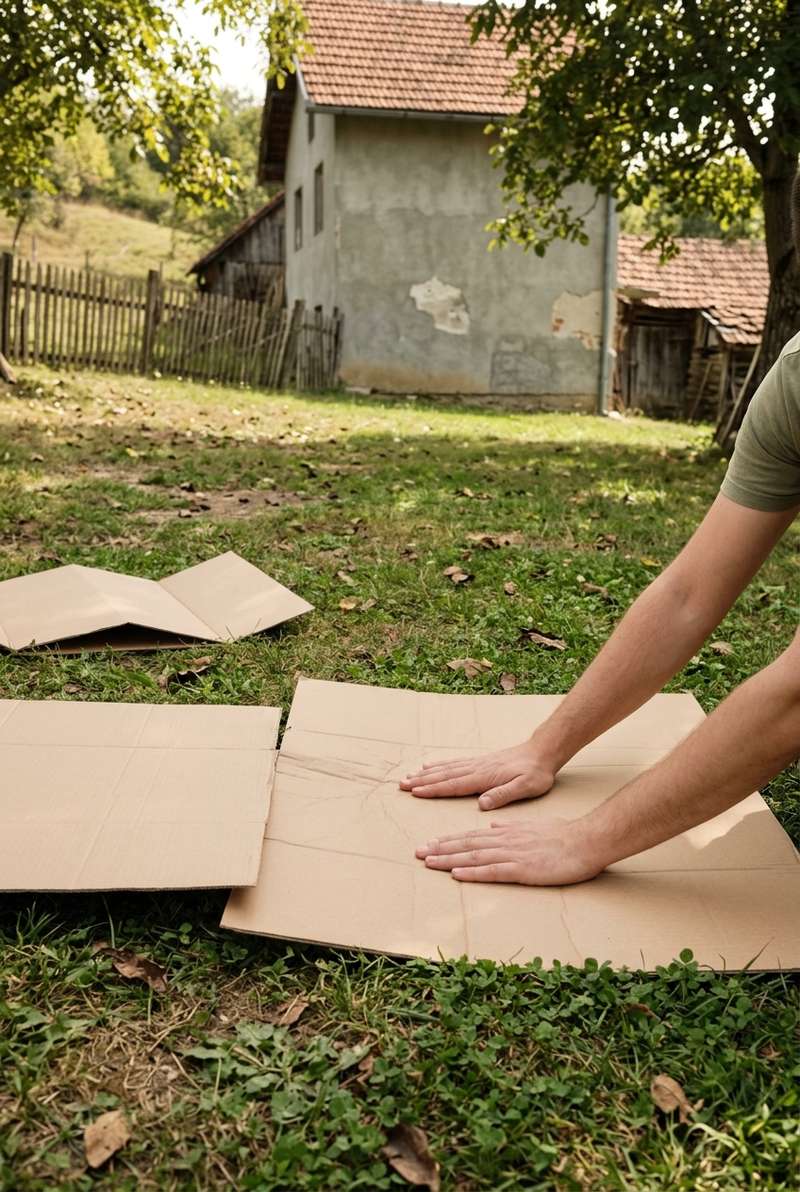
Clear the spot. Mow or pull any tall weeds. Lay cardboard or a thick layer of newspaper on the ground where the bed will sit. This smothers the grass underneath without any digging.
Don’t use landscape fabric on the bottom. You want worms and water to move through freely. Cardboard breaks down in 6-12 months, which is perfect. By then the grass is dead and the roots can grow into the native soil below.
Save this to PinterestFour Walls, Twelve Screws, Done
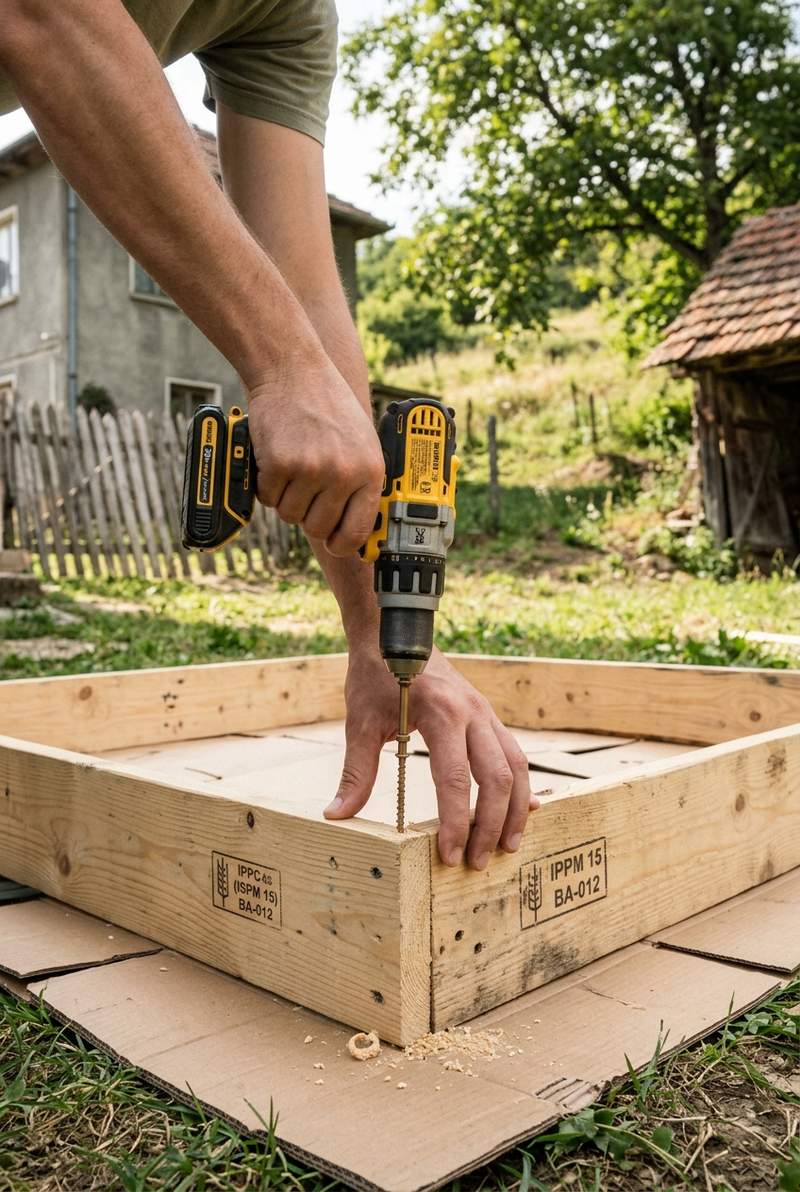
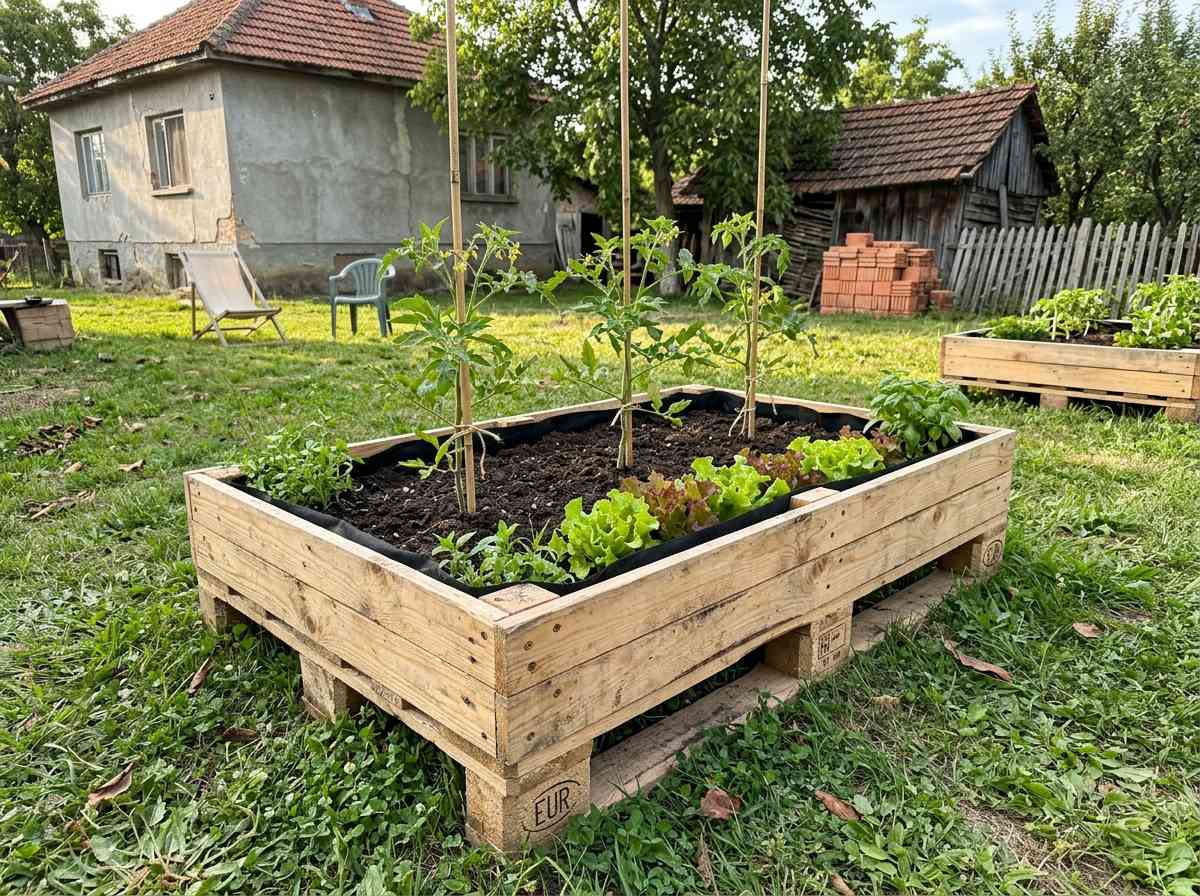
Stand two pallets on their sides as the long walls. Cut one pallet in half for the two short walls (or use two more full pallets for a bigger bed). Three screws at each corner: top, middle, bottom. That’s the whole frame.
Pre-drill your holes. Pallet wood splits easily. A quick pilot hole with a small bit prevents cracking. I split two boards on the first bed before I figured this out (trust me on this one).
Check level before tightening everything down. A wonky bed pools water on one side and leaves the other dry. Shim with flat stones or scrap wood underneath if the ground isn’t perfectly flat.
Depth matters
Pallet boards are only 3.5 inches (9 cm) tall when laid flat. That’s nowhere near deep enough for vegetables. Standing pallets on their side gives you about 12 inches (30 cm) of depth, which is the minimum for tomatoes, peppers, and root crops. Always stand them up. Never lay them flat and try to fill the gaps.
Line the Sides, Leave the Bottom Open
Staple landscape fabric to the inside walls of the frame. This keeps soil from falling through the gaps between pallet boards. Sides only, not the bottom. The bottom needs to drain freely.
Overlap the fabric at corners by a few inches. Pull it snug before stapling so it doesn’t sag when you add soil. About 6-8 staples per side does it.
What Goes Inside the Bed
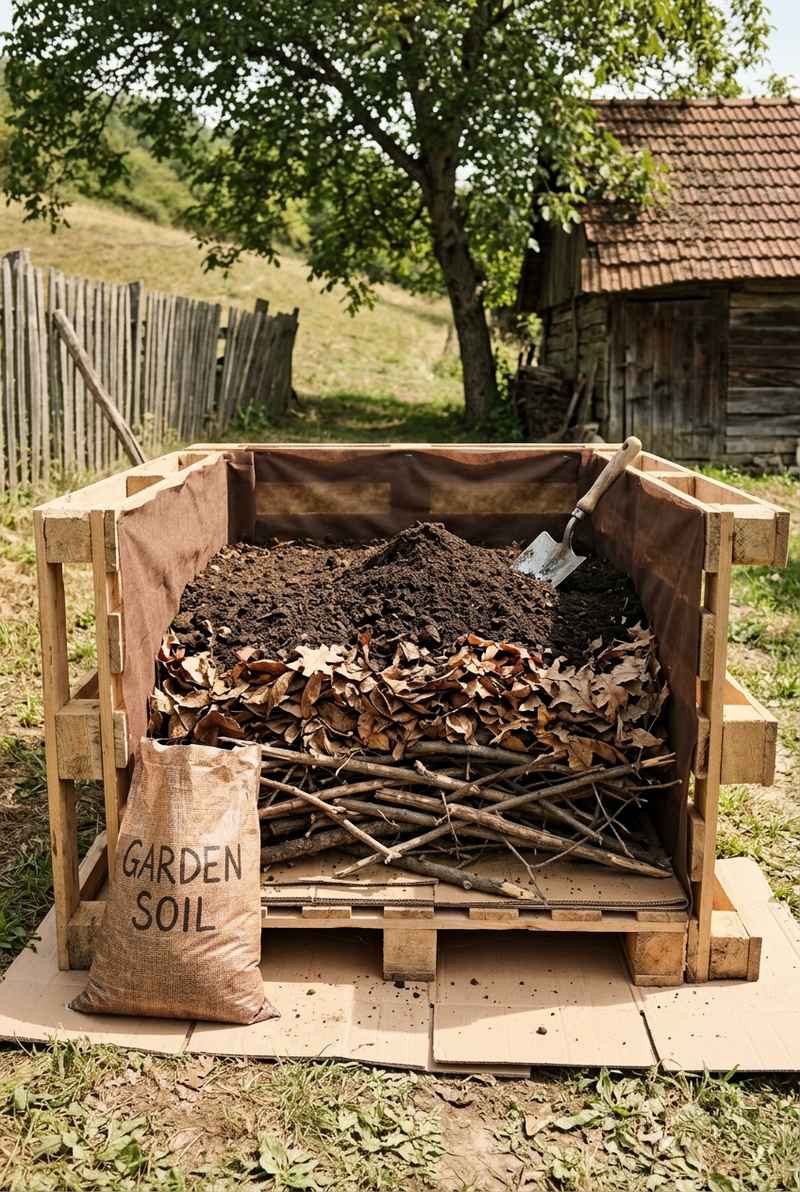
This is where most “free” raised bed projects get expensive. Bagged garden soil adds up fast. A standard pallet bed (roughly 48 x 40 inches, 12 inches deep) needs about 10 cubic feet of soil. At garden center prices, that’s $30-50 in bags.
The cheap way: check your city or county for free municipal compost programs. Many municipalities give away compost made from yard waste. Facebook Marketplace and Craigslist often have free dirt from people regrading their yards. I filled both beds for free with a mix of municipal compost and a neighbor’s leftover topsoil.
If you’re buying soil, the mix that works: 70% topsoil, 30% compost by volume. University of Maryland Extension recommends 25-50% organic matter. Don’t fill the bed with 100% compost. It drains too fast, holds nutrients poorly, and plants struggle in it. One Reddit gardener did exactly that and watched seedlings die. Same lesson as recharging raised bed soil: more compost is not always better.
Make It Last More Than Two Seasons
Untreated softwood pallet boards last 2-5 years in the elements. Wet climates and ground contact shorten that fast. Three things extend it:
- Apply raw linseed oil to the outside surfaces every 1-2 years. It soaks into the wood and slows moisture absorption. Raw only. Not boiled linseed oil, which contains metallic driers (lead or cobalt compounds) that leach into soil.
- Elevate the bed off wet ground with bricks, gravel, or scrap wood underneath. Keeping the bottom boards off soggy soil prevents the worst rot.
- Don’t overwater. Excess water accelerates wood decay from the inside. Water the plants, not the walls.
My first bed is in its second season and showing no signs of rot. The second bed, which sits on bare ground with no bricks underneath, is already softening at the bottom. Elevation makes a real difference.
The Honest Downsides
I’m not going to pretend this is perfect.
- They’re not pretty. Pallets look like pallets. If curb appeal matters, this isn’t your build.
- They rot. 2-5 years depending on climate and maintenance. You’ll rebuild eventually.
- Disassembling pallets for boards is brutal. One gardener on Permies: “takes a fair amount of work and yields relatively little useful wood.” I keep them whole.
- Time investment is real. Another commenter: “spending 8 hours building a free raised bed isn’t worth it vs spending $20 on two 2x8s.” He’s not wrong if you value time over budget.
For me, the $8 build was worth it because I had time and didn’t have budget. Your math might be different. That’s fine.
A 4×3 foot pallet bed gives you about 12 square feet of growing space. Enough for 2-3 tomato plants, 4-6 peppers, a row of lettuce along the edge, and herbs tucked in the corners. Same approach as container gardening: start with one bed of easy wins, learn from it, then build more when you’re ready.
Common Questions
Is pallet wood safe for growing vegetables?
Only if stamped HT, KD, or DB. These treatments don’t involve chemicals. MB-stamped pallets used methyl bromide fumigant and should never be used for food gardens. No stamp means unknown treatment. Play it safe and skip those.
How long does a pallet raised bed last?
2-5 years for untreated softwood in typical conditions. Wet climates and ground contact shorten it. Raw linseed oil, brick elevation, and controlled watering can push it to 5+ years.
Can I lay pallets flat instead of standing them up?
You can, but the planting depth is only 3.5 inches (9 cm). Too shallow for nearly all vegetables. Stand them on their sides for 12 inches (30 cm) of usable depth.
Do I need to line the bottom with fabric?
No. Line the sides to keep soil in, but leave the bottom open for drainage and worm access. Cardboard on the ground kills grass, then breaks down naturally.
Two Beds, One Afternoon, Eight Bucks
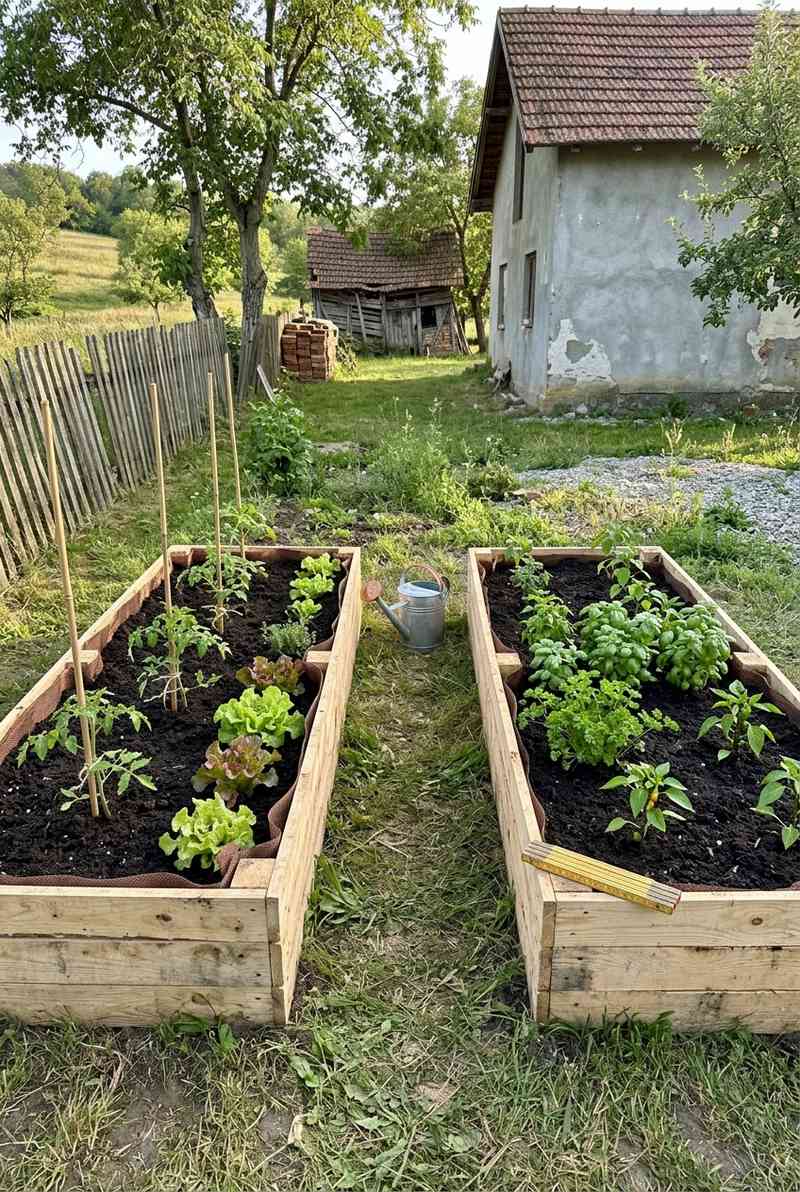
The first bed took me about 90 minutes because I was figuring things out. The second took 40 minutes. Both have been growing vegetables for two seasons now, and the tomatoes don’t care that the walls are made from pallet wood.
You don’t need a perfect setup to start growing food. You need soil, sun, water, and something to hold the soil in place. Pallets do that for practically nothing. Build one this weekend and plant something in it by Sunday.