16 Dwarf Weeping Trees That Fit in Small Gardens and Tiny Yards

- Small gardens
- Focal point trees
- Under 15 feet
- Four-season interest
I fell in love with weeping trees at a botanical garden. That cascading form, branches sweeping toward the ground, everything around it suddenly looking more intentional. Then I went home and measured my yard. No room for a 40-foot weeping willow.
Turns out, there are weeping trees that stay small enough for a tiny front yard, a courtyard, or even a large pot. These 16 stay under 15 feet. Some stay under 8. All deliver that dramatic cascading look without taking over your garden.
Quick Summary
- 16 weeping trees that stay under 15 feet (most under 10)
- Mix of flowering, evergreen, and foliage-focused picks
- Important grafting info that most lists skip
- Pot-friendly options noted
- Best starter pick: Weeping Japanese Maple. Slow, compact, four-season interest, near-zero problems.
The Grafting Thing You Need to Know
Almost every weeping tree on this list is grafted. The weeping top is one variety, attached to a different rootstock. The tree will try to revert to its upright rootstock form for its entire life. That means suckers will sprout from below the graft union.
If you don’t remove those suckers immediately, the rootstock outgrows and kills the weeping canopy. One landscaper on LawnSite reported replacing two weeping cherries because the rootstock had completely taken over. Cut any growth below the graft flush to the trunk, the moment you see it.
1. Weeping Japanese Maple
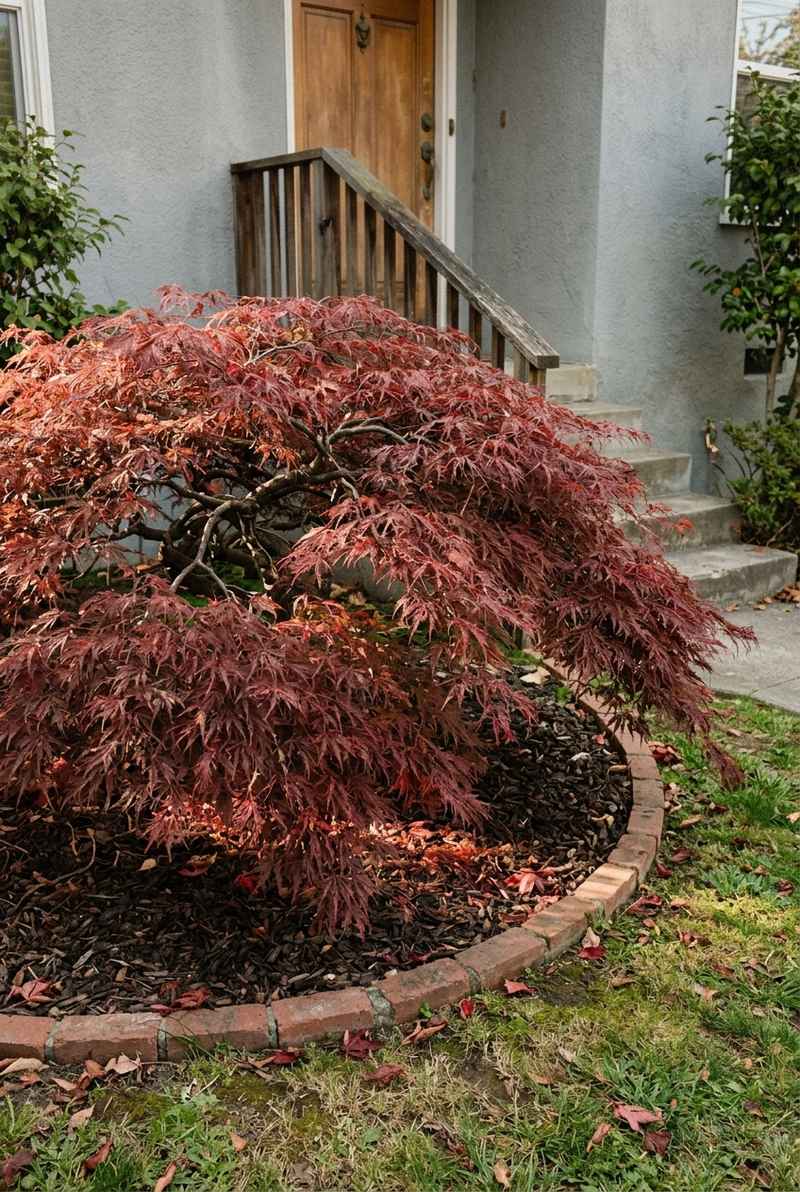
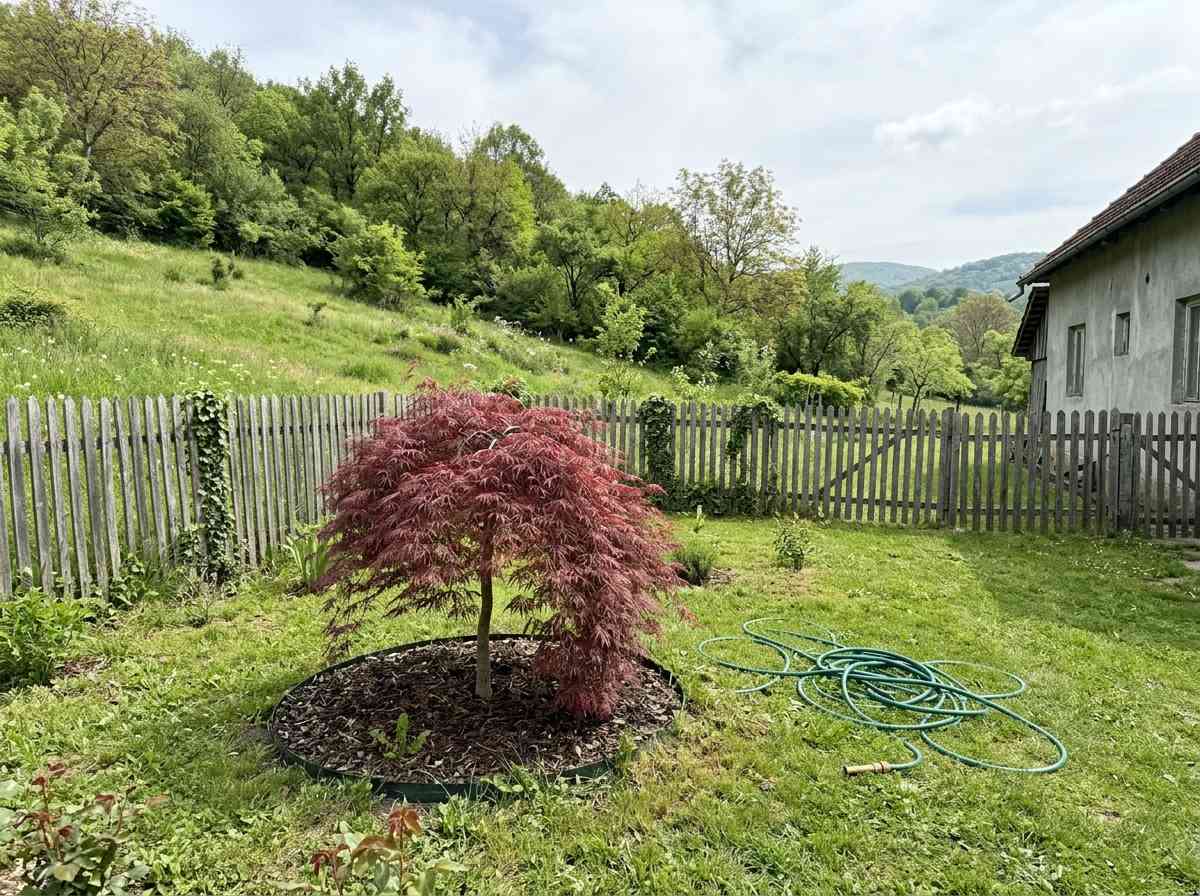
The most beautiful small tree you can grow. Period. Lace-leaf varieties (‘Crimson Queen’, ‘Viridis’, ‘Inaba Shidare’) cascade to the ground with foliage so finely cut it looks like red or green lace. Spring color, summer shade, fall fireworks, winter branch structure.
Grows wider than tall. A 6-foot tree might spread 10-12 feet, so give it room horizontally. Protect from hot afternoon sun and wind. Leaf scorch is the main issue in exposed spots. This is my top pick for any small garden. Not even close.
2. Weeping Redbud (Ruby Falls / Lavender Twist)
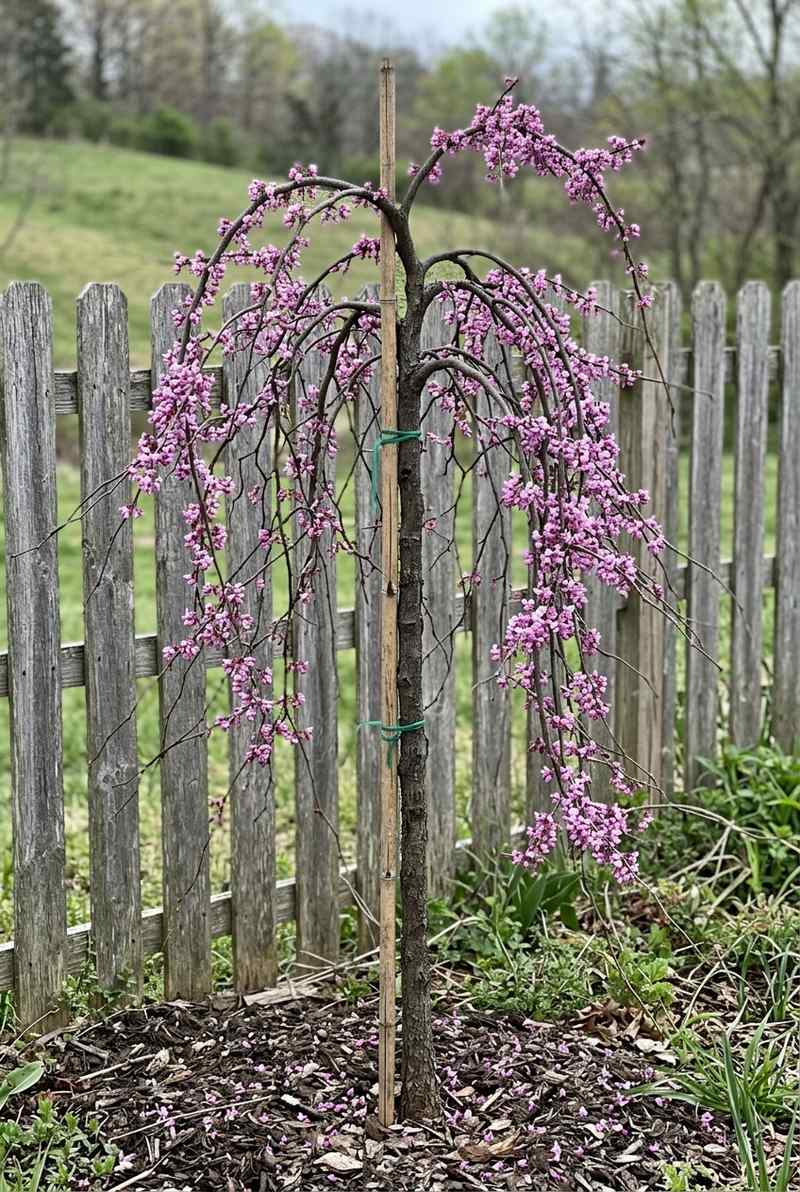
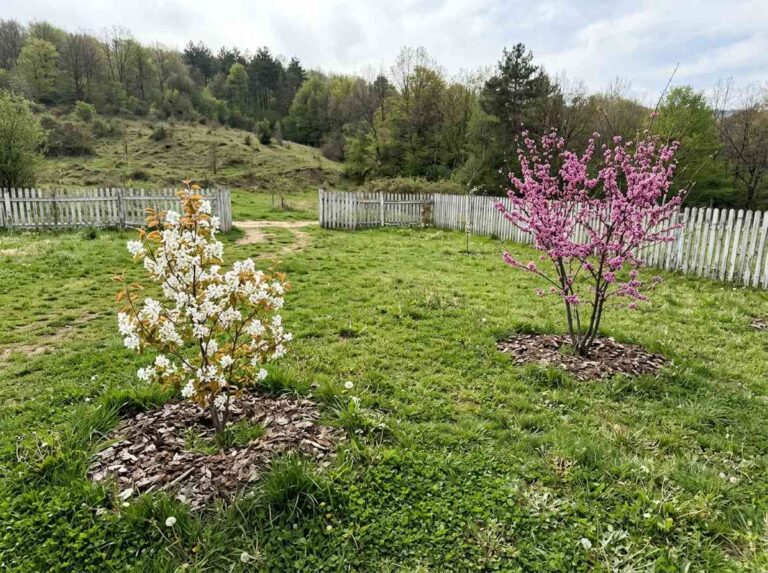
Pink-purple flowers on bare cascading branches in early spring, before any leaves appear. Then heart-shaped purple foliage (‘Ruby Falls’) or green foliage (‘Lavender Twist’) fills in for summer. The top recommendation on Houzz for small-yard weeping trees.
Narrow enough for tight spaces. Won’t spread aggressively. Graft union can be vulnerable on young trees, so stake for the first year or two. Once established, it’s tough.
3. Weeping Cherry (Snow Fountains)
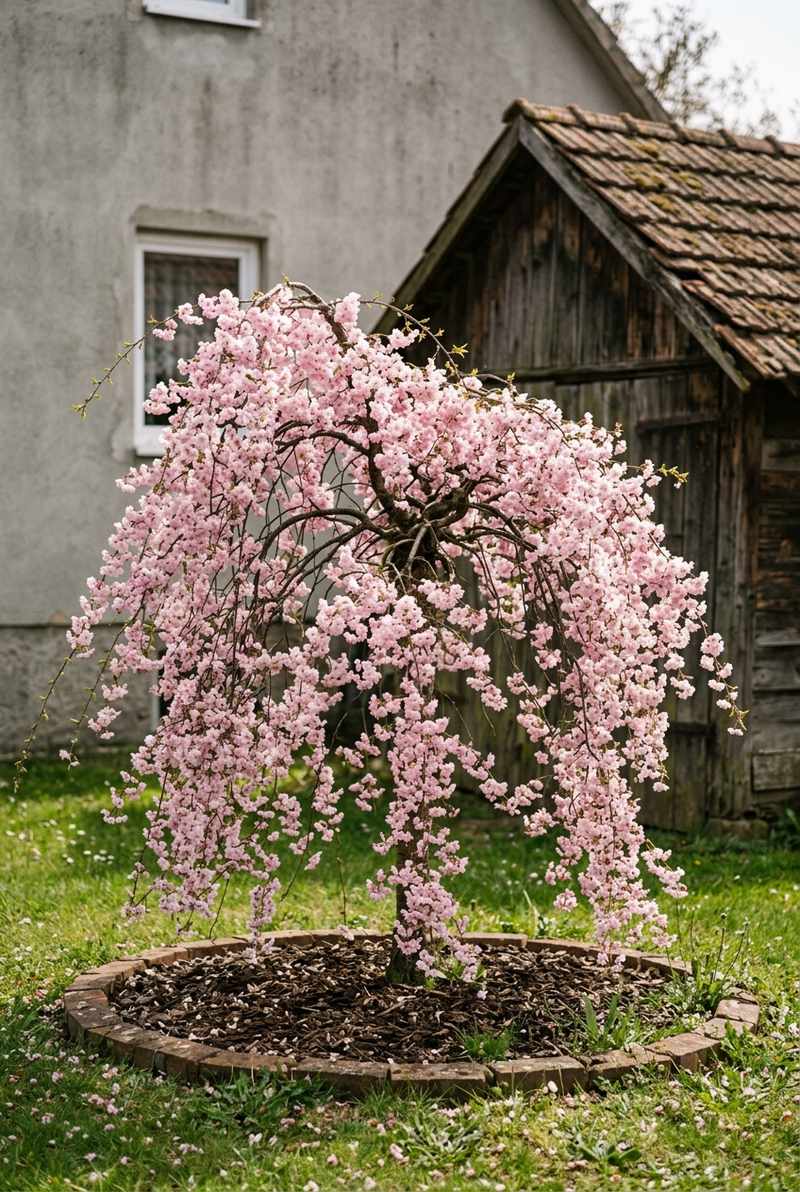
The most dramatic spring bloomer of any weeping tree. White or pink flowers cascading from arching branches. The kind of tree that makes people slow down while driving past your house.
Honest warning
Weeping cherry is beautiful but high-maintenance. Japanese beetles skeletonize the leaves in summer. Borers, aphids, spider mites, and black knot fungus all attack when the tree is drought-stressed. Lifespan is 15-20 years, shorter than most trees on this list. Go in with eyes open. The spring show is worth it if you accept the trade-offs.
4. Young’s Weeping Birch
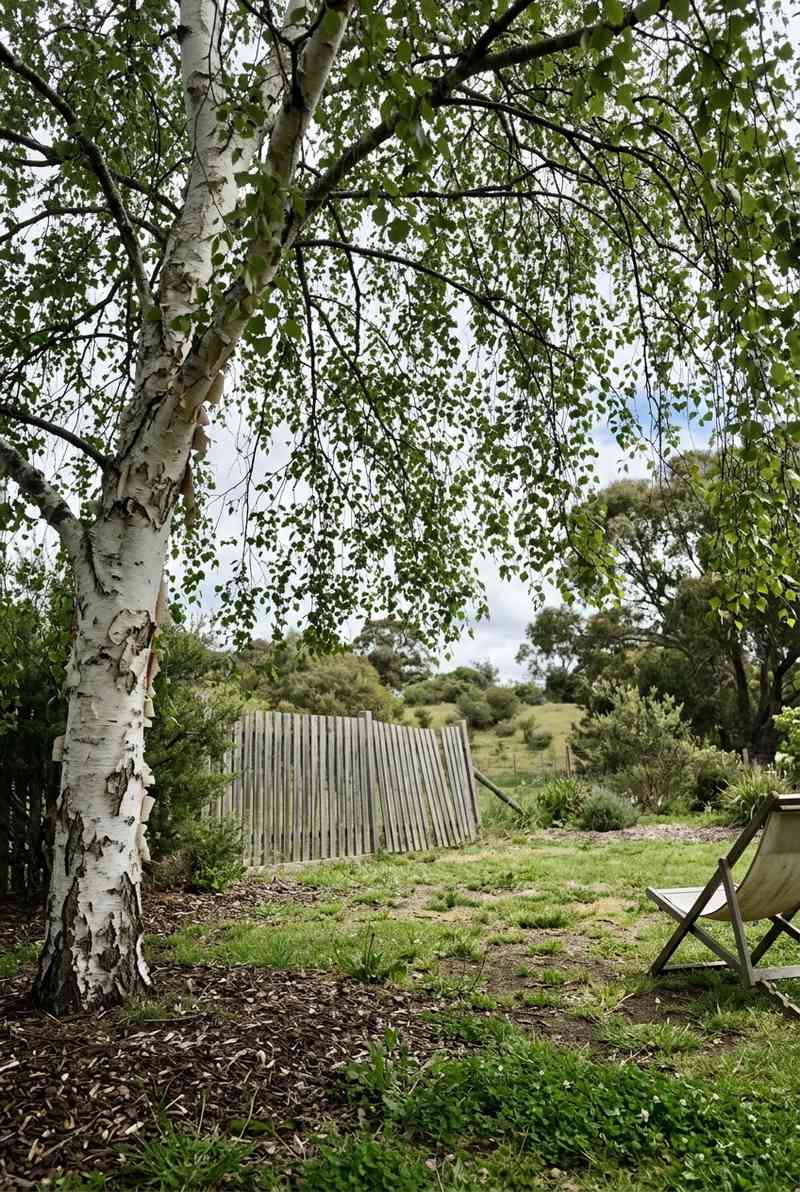
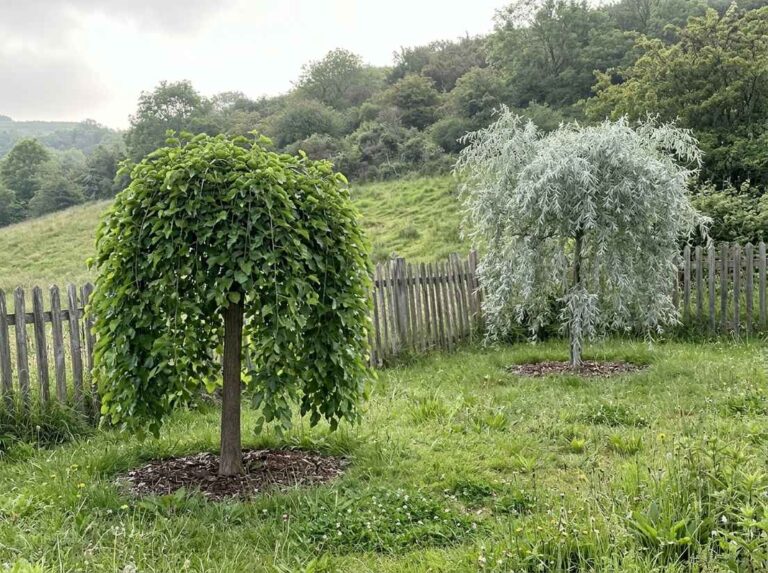
Forms a dome, not a fountain. Unlike other weeping trees, it never develops a central leader. The height is permanently fixed by where the graft sits on the trunk. White bark, fine branches, a mushroom-shaped canopy of dangling twigs.
Needs cool climates. Struggles badly above 75F (24C) in sustained heat. Perfect for zones 2-5. If you’re in zone 7+, skip this one. Bronze birch borer is a serious problem in warm areas.
5. Weeping Crabapple (Louisa)
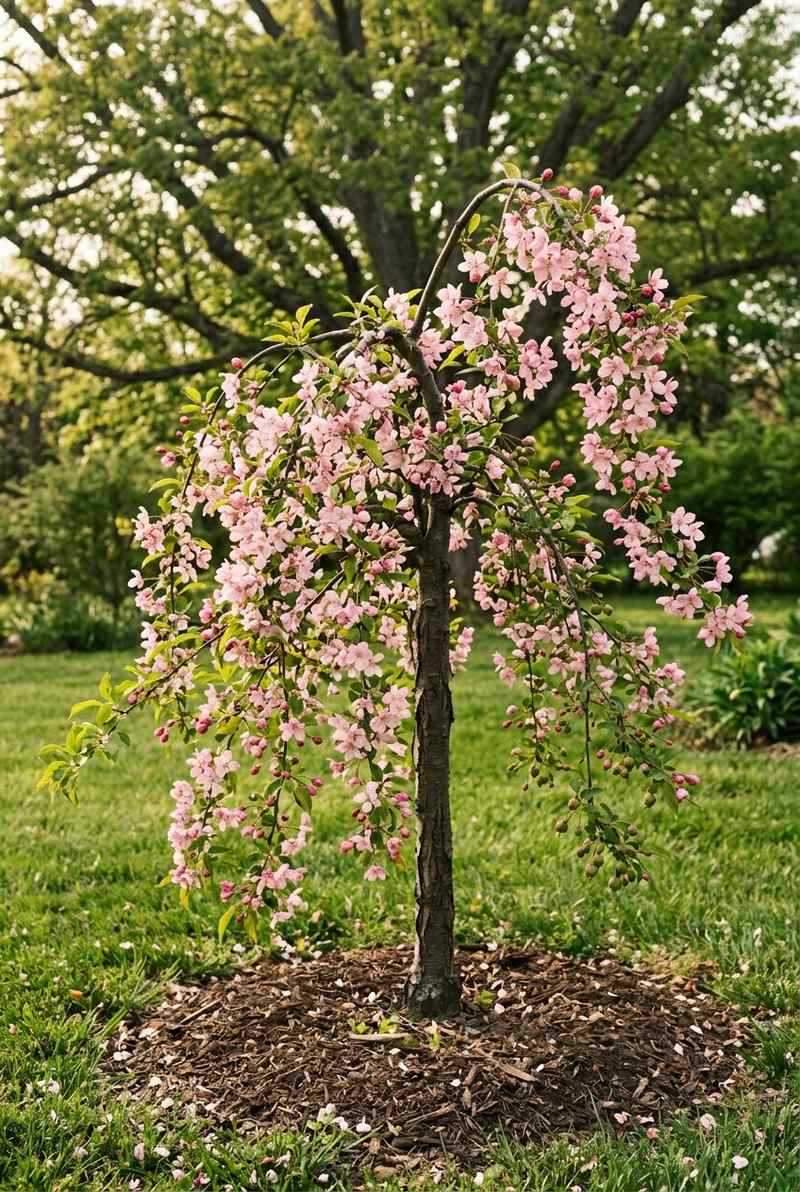
Pink spring flowers on weeping branches, followed by small persistent fruit that feeds birds all winter. ‘Louisa’ has good disease resistance, which matters because many crabapples are scab magnets.
At the larger end of “dwarf” at 12-15 feet. Give it room. The small fruit stays on the tree instead of dropping and staining your driveway, which makes this a much better choice than large-fruited weeping crabapples near walkways.
Save this to Pinterest6. Weeping Blue Atlas Cedar
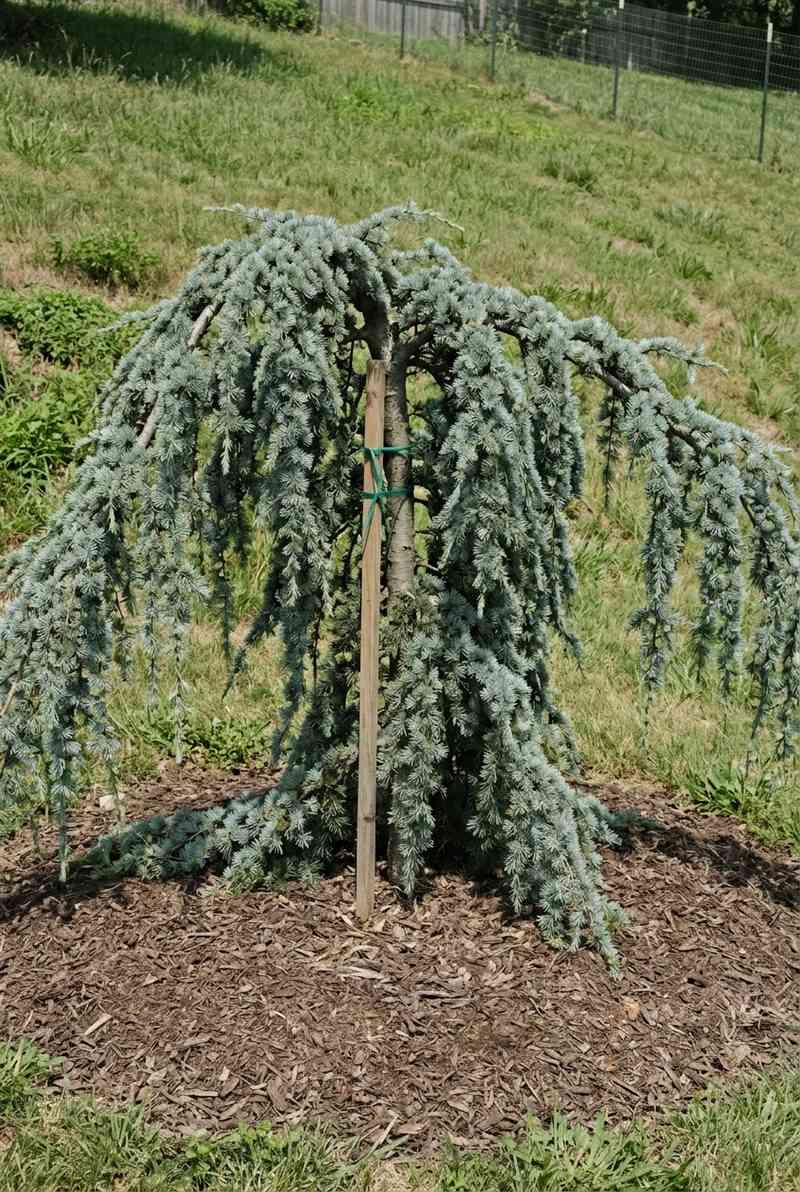
Silver-blue needles on cascading branches. Sculptural, dramatic, and completely different from every other tree on this list. You can train it over an arbor, along a fence, or let it sprawl as a living sculpture.
Warning: this one grows sideways more than down. NC State Extension lists spread routinely exceeding height. A 10-foot-tall specimen can be 15-20 feet wide. Not for tight spaces despite looking compact at the nursery. Give it serious room.
7. Weeping Norway Spruce
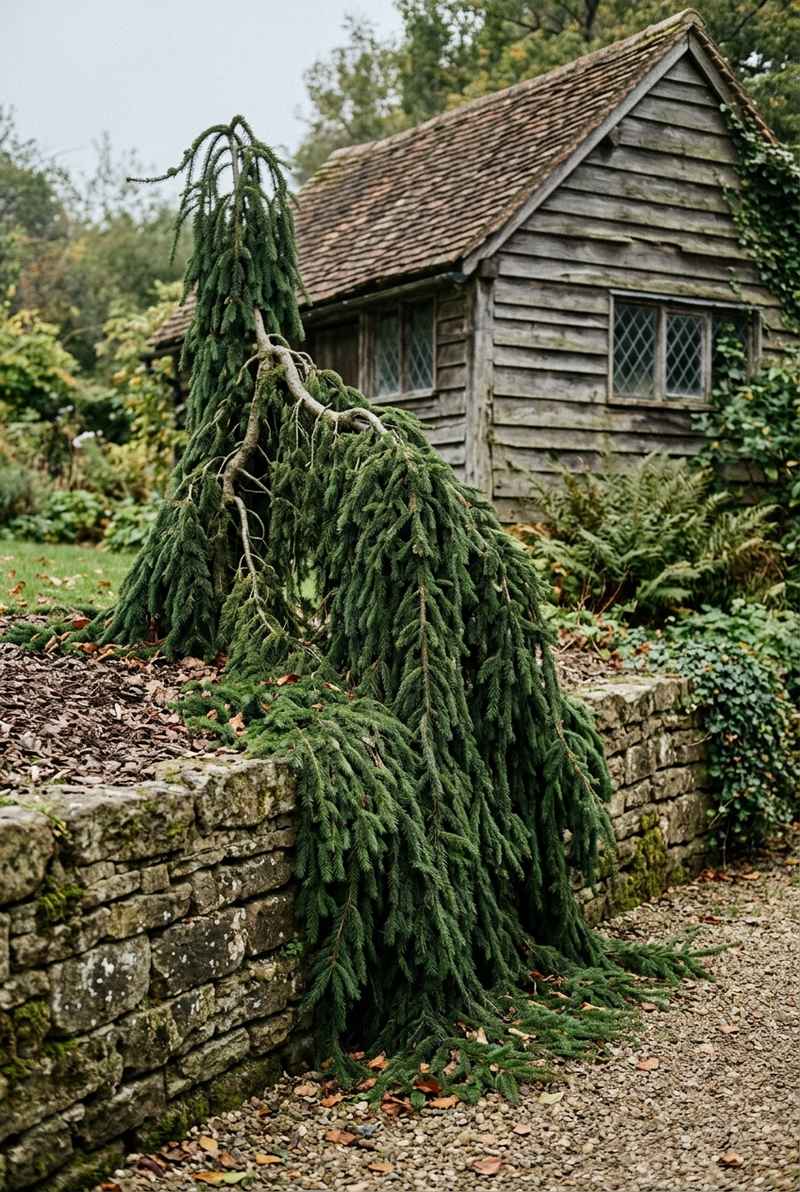
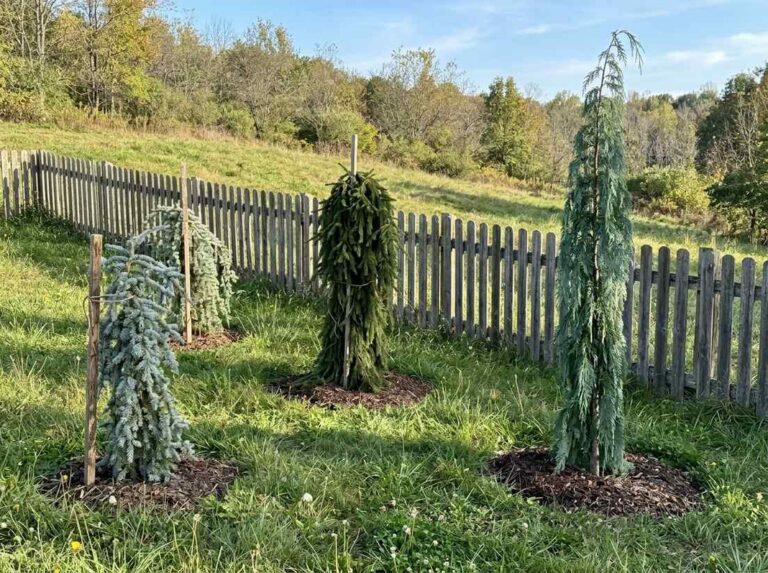
This tree has no natural shape. Without staking in the first 3 years, it grows flat along the ground as a creeping mat. The final form is entirely determined by how you train it. Stake it upright for a narrow weeping column. Let it drape over a wall. Your choice.
Evergreen, cold-hardy to zone 2, and dramatic in every season. One of the more unusual trees you can plant, and I mean that as a compliment.
8. Weeping White Pine
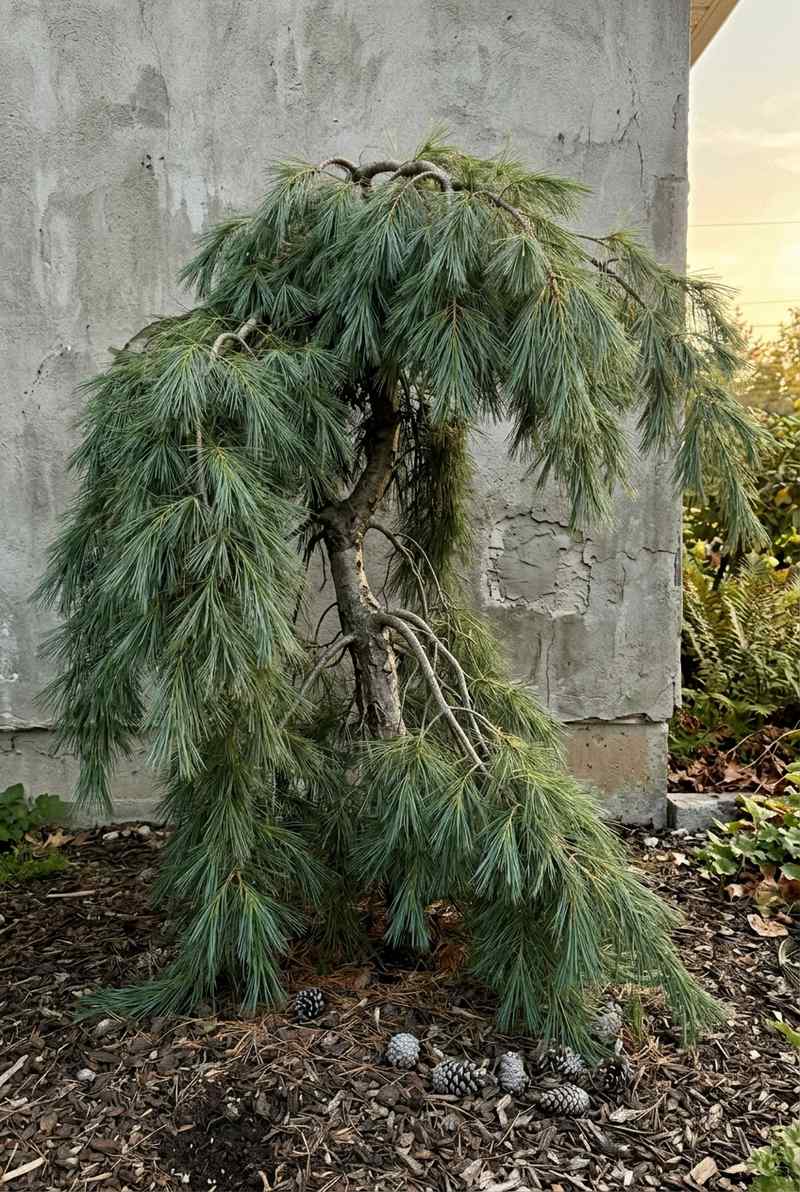
Soft blue-green needles on gently weeping branches. More subtle than the blue atlas cedar, less dramatic, but easier to fit into a small space. Wind protection helps since the soft needles can brown in exposed locations.
Stays genuinely small. A good pick for rock gardens or corners where you want year-round green without a tree that takes over.
9. Weeping Pussy Willow
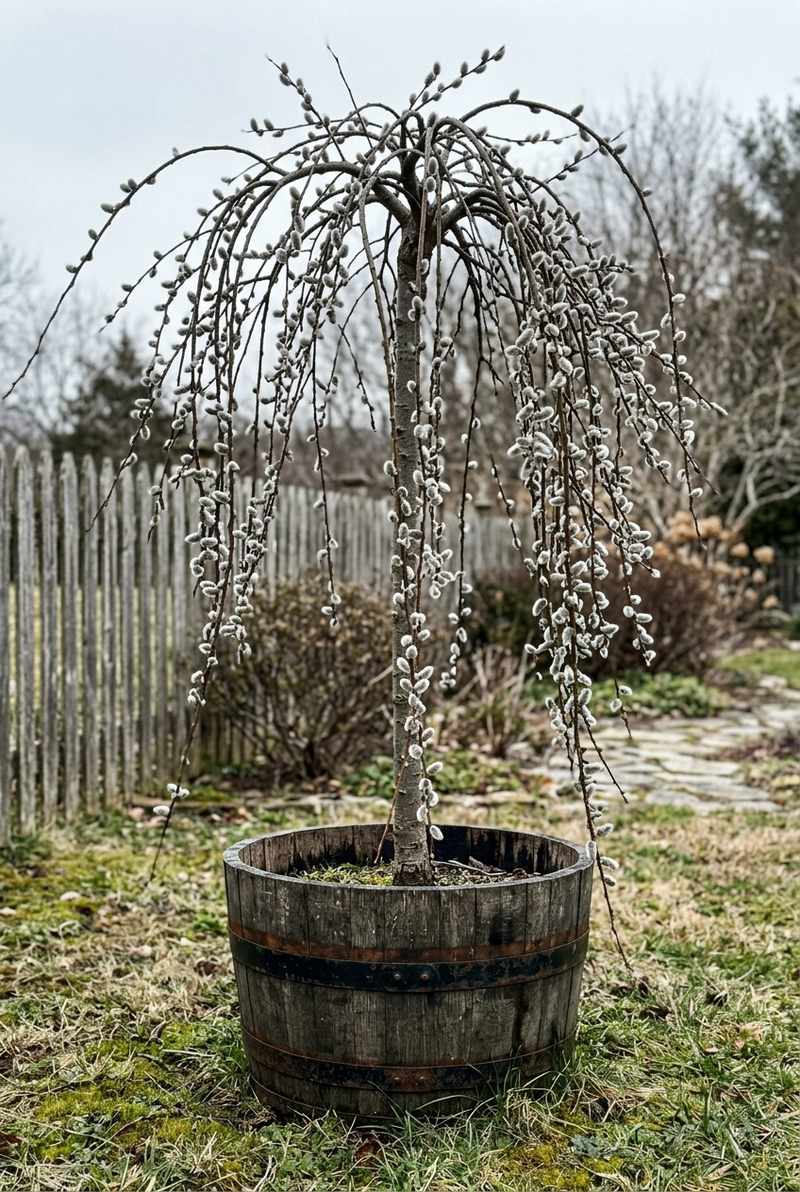
Fuzzy silver catkins in late winter on weeping branches. One of the first signs of spring. Works in large pots, which makes it the best weeping tree for patios and balconies.
Short-lived (10-15 years) and willow aphids can be annoying. But it grows fast and fills a wet spot where other trees drown. If you have soggy soil, this is your pick.
10. Weeping Mulberry (Chaparral)
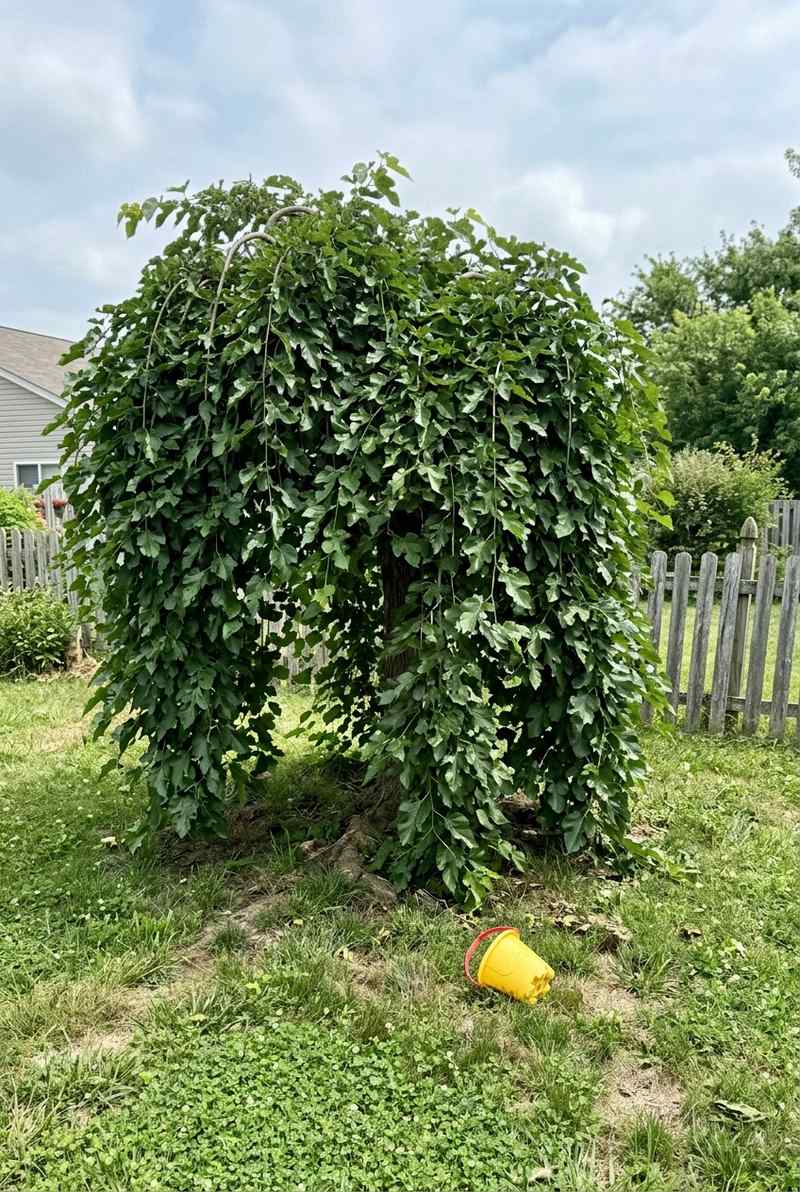
Dense curtain of cascading branches that reaches the ground, creating a natural fort or hiding spot. ‘Chaparral’ is a male (fruitless) variety. If you want edible berries, get a female cultivar, but expect the fruit to stain everything below.
My toddler would live inside a weeping mulberry if I let her. The branches form a canopy you can walk under. Wide-spreading, so it needs space.
11. Weeping Copper Beech
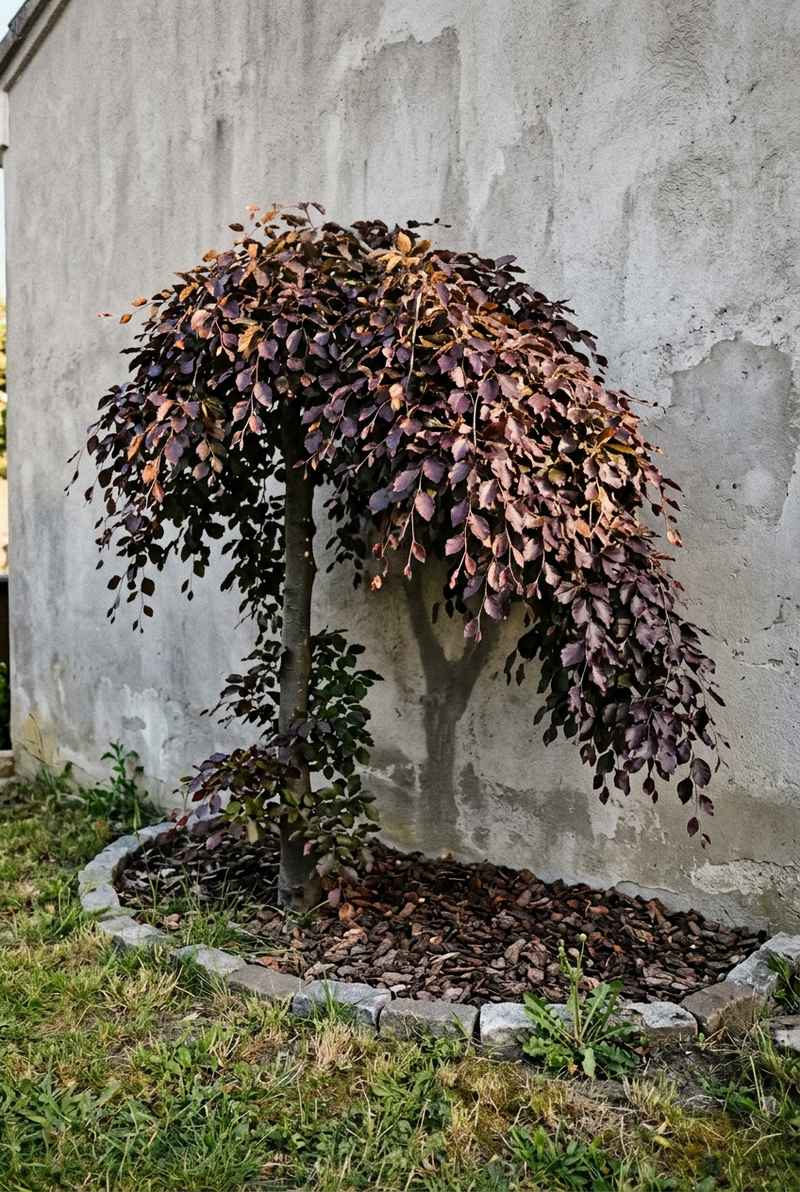
Deep purple foliage on weeping branches. Compact enough for the smallest yards. Rarely appears on weeping tree lists, which is a shame because the color is unmatched.
Slow grower. Give it good soil and consistent moisture. Not for hot, dry climates. But in zones 4-7 with decent rainfall, it’s a showstopper.
12. Weeping Colorado Spruce (The Blues)
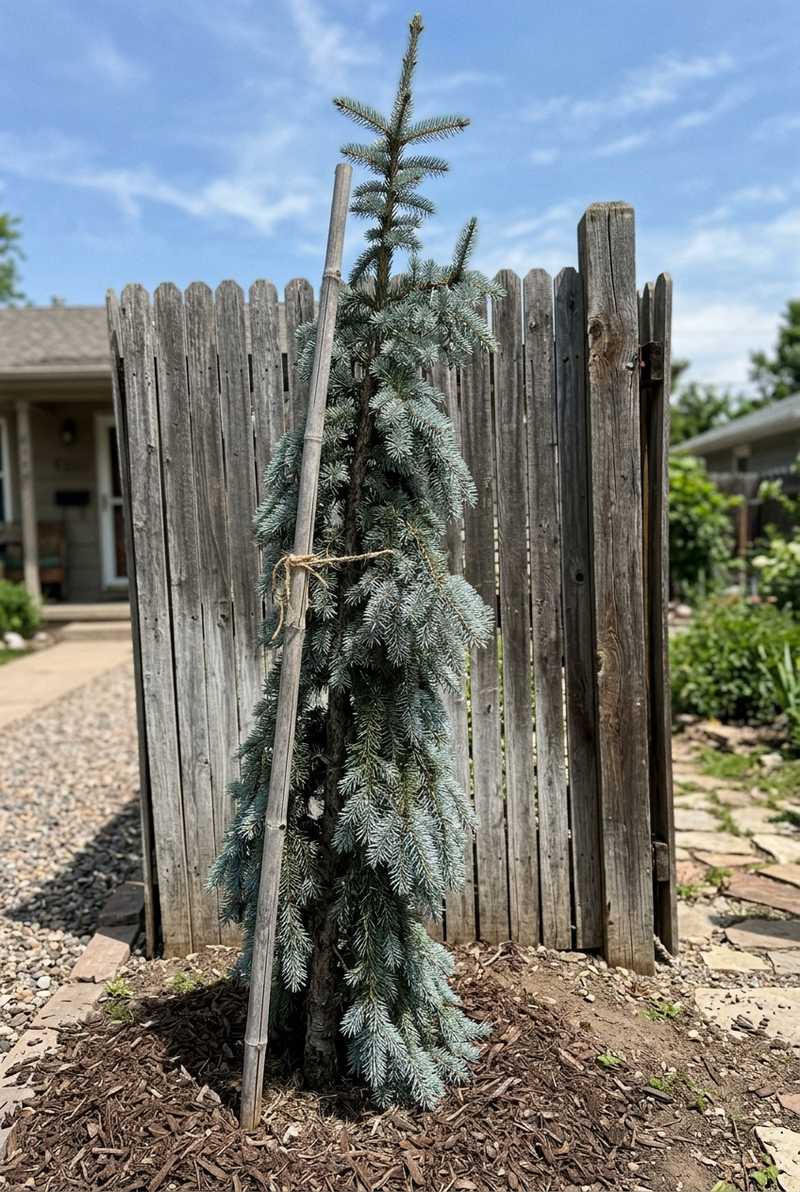
Intense silver-blue needles on narrow weeping branches. Evergreen, cold-hardy, and more upright than the blue atlas cedar, making it easier to fit into tight spots.
Needs staking to establish a leader in the first few years, similar to the Norway spruce. Once trained, it holds its form. Stunning as a specimen near an entrance or corner.
13. Siberian Peashrub (Walker)
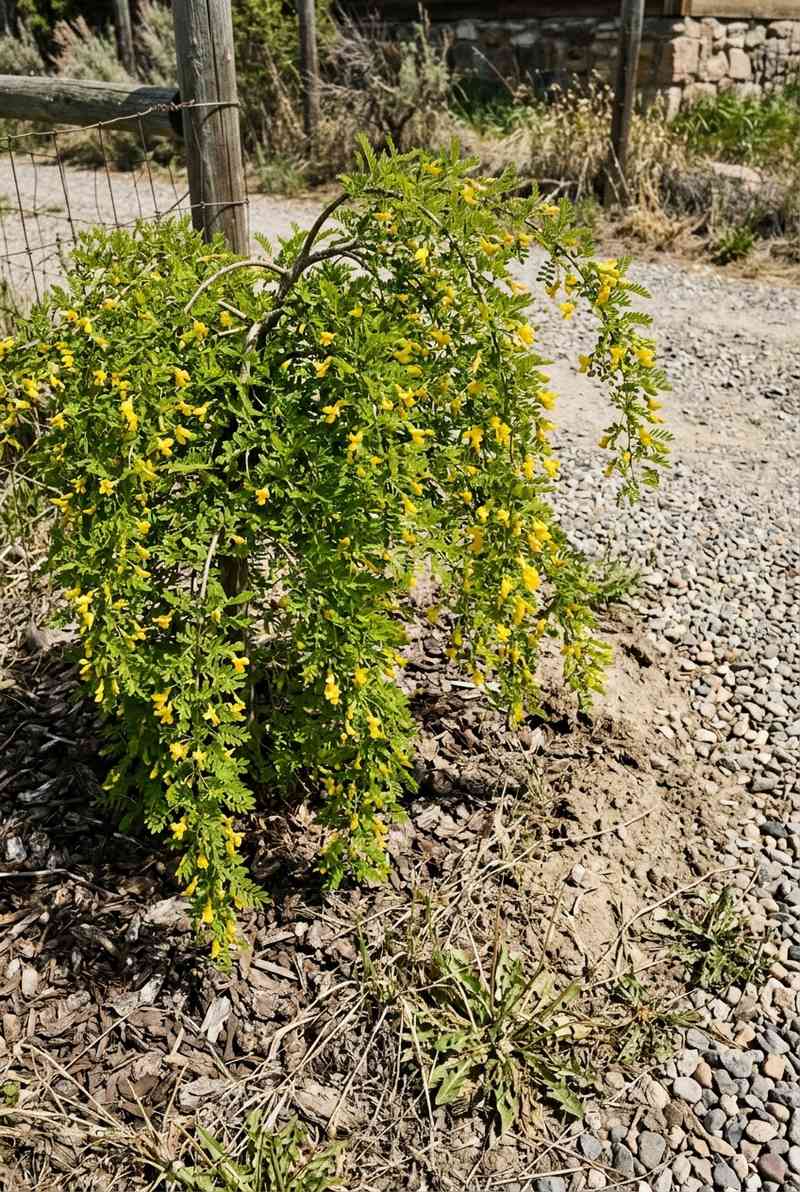
Almost nobody knows about this one. Fine, fern-like foliage on cascading branches with small yellow flowers in spring. Survives zone 2 winters and extreme drought. If you garden in a harsh climate where nothing else on this list works, try this.
Compact, tough, and genuinely unusual. The lacy foliage looks nothing like what you’d expect from the name.
14. Weeping Katsura
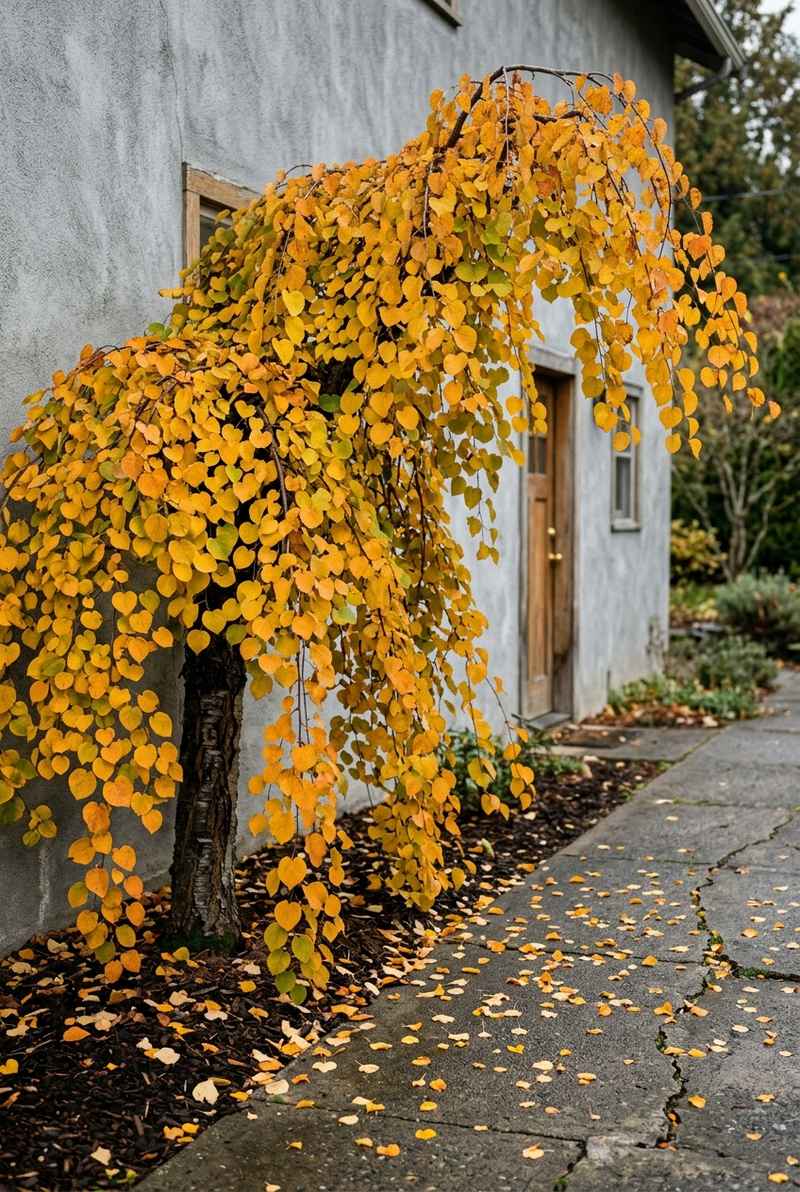
Heart-shaped leaves that smell like cotton candy or caramel in fall. Seriously. The autumn fragrance alone is reason enough to plant one near a window or walkway. Spring foliage emerges pink, turns blue-green in summer, then gold and orange in fall with that incredible scent.
Needs consistent moisture. Leaf scorch in dry, windy conditions. Give it a sheltered spot with afternoon shade in hot zones.
15. Weeping Hemlock
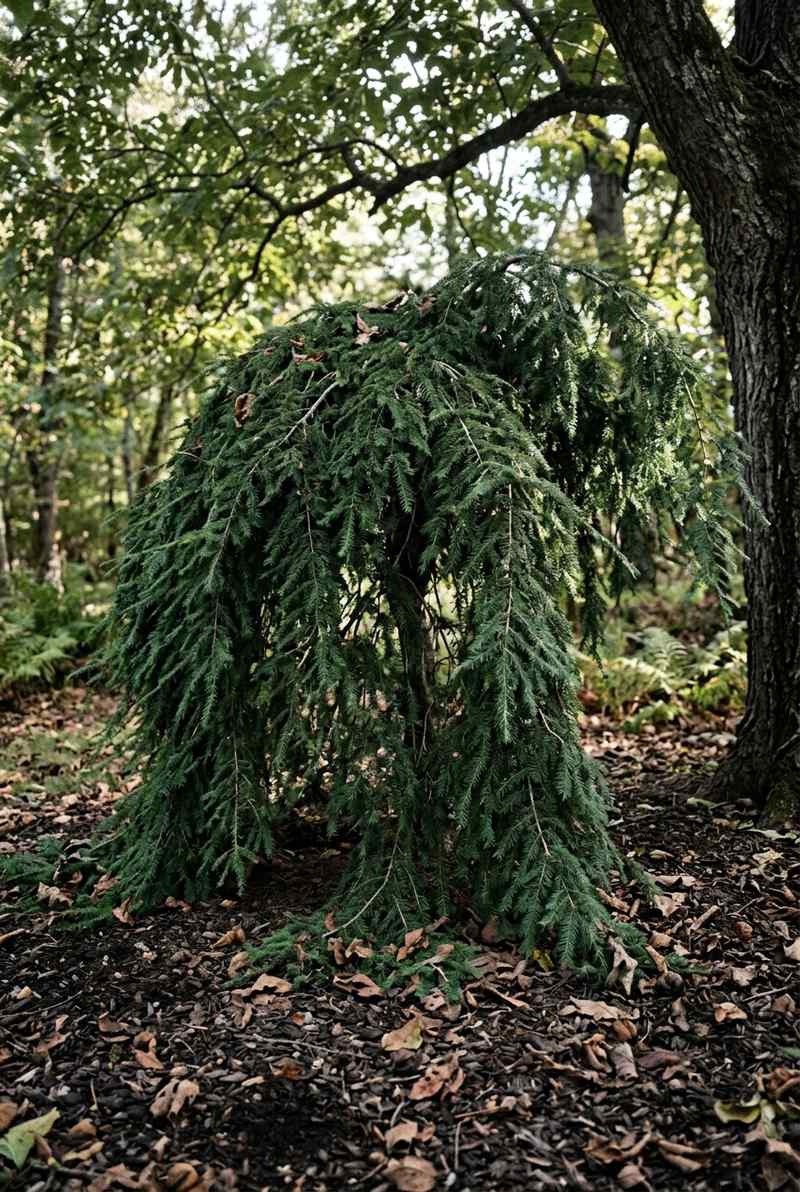
The best weeping evergreen for shade. Most weeping conifers demand full sun. This one thrives in part shade to full shade, filling a niche nothing else on this list covers. ‘Sargentii’ is the classic weeping form.
Woolly adelgid is a serious pest in eastern states. Check availability and pest pressure in your area before buying. In the right conditions, it’s one of the most elegant small evergreens you can plant.
16. Weeping Styrax (Japanese Snowbell)
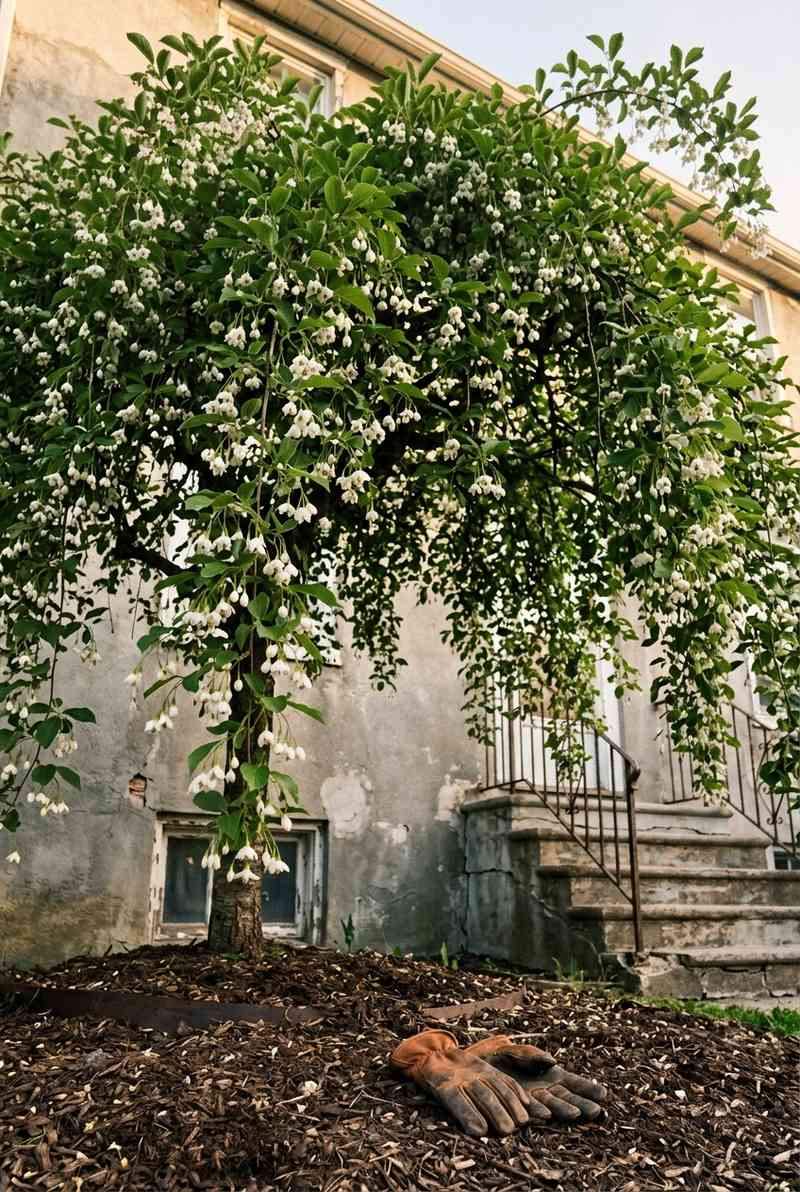
Pink or white bell-shaped flowers dangling from weeping branches in late spring. One experienced Houzz gardener called it an underrated alternative to weeping cherry: better disease resistance, longer-lived, and equally beautiful.
Needs acidic soil. Won’t thrive in alkaline conditions. If you’re looking for a weeping cherry without the disease headaches, this is the tree. I’d plant it where I can look up into the canopy, since the flowers face downward.
Common Questions
Can I grow a weeping tree in a pot?
Yes, some of them. Weeping Japanese maple, weeping pussy willow, and dwarf weeping Norway spruce all work in large containers (20+ gallons). Protect the pot from freezing solid in winter by wrapping it with burlap or moving it to a sheltered spot.
Why is my weeping tree growing straight branches?
Rootstock reversion. Growth below the graft union is the rootstock, not the weeping variety. Cut it off flush to the trunk immediately. If you let it grow, the rootstock will outcompete and kill the weeping top.
How far from the house should I plant a weeping tree?
At least half the mature spread away from the foundation. A tree with a 12-foot spread needs 6 feet of clearance. Weeping branches that touch walls or siding trap moisture and invite problems.
The One That Changes the Yard
I still haven’t planted my first weeping tree. I keep going back and forth between a Japanese maple by the front path and a weeping redbud in the corner where the fence meets the garden. The truth is either one would change how the whole yard feels.
A single weeping tree makes an entire small garden look intentional. Pick one, give it the right spot, check the graft once a year, and let it grow. It’ll be the thing every visitor asks about.