How to Recharge the Soil in Your Raised Beds This Fall (Step by Step)

- Raised bed gardens
- Fall garden prep
- Soil health
- All zones
Last October I pulled my dead tomato plants out of the raised bed and stared at the soil underneath.
It looked gray. Flat.
Compressed into something closer to cardboard than dirt. I’d been growing in the same bed for three seasons and never once thought about what was happening below the roots.
That winter I learned why yields had been dropping. Raised bed soil doesn’t recharge itself. It shrinks, compacts, and runs out of the stuff plants need. The fix took me one afternoon and cost almost nothing.
Here’s what I do now every fall, and what I wish I’d done from the start.
The Short Version
- Raised beds lose 1-2 inches of soil per year from decomposition and compaction
- Add 1 inch of compost annually, max 25% compost by volume in the bed
- Test your soil every 3-5 years before blindly adding amendments
- Cover crops or thick mulch protect the bed through winter
- More compost is not always better. One gardener’s beds failed from too much.
Read Your Soil Before You Add Anything
Most guides jump straight to “add compost.” That’s like taking medicine without knowing what’s wrong. Your soil tells you what it needs if you look.
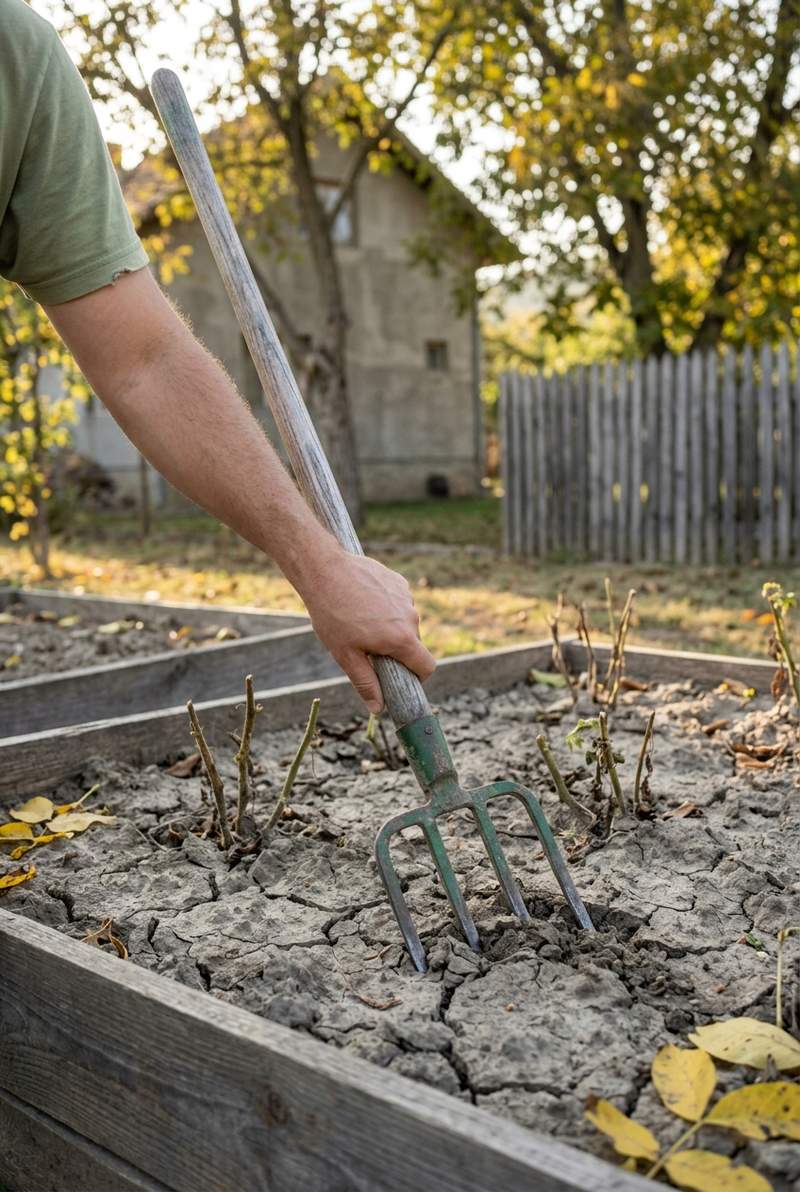
Water pools on the surface after rain. That’s compaction. The pore spaces between soil particles have collapsed, usually from foot traffic or years of watering without adding organic matter. A garden fork pushed in 6 inches and gently rocked fixes this without destroying the soil structure that tilling would wreck.
Plants turned yellow mid-season despite watering. Likely nitrogen depletion. Heavy feeders like tomatoes, peppers, and corn pull nitrogen hard, and raised beds don’t have the deeper soil layers that replenish in-ground gardens.
Blossom end rot on tomatoes or peppers. Usually a calcium uptake issue tied to inconsistent watering, but sometimes a pH problem. If your soil is above 7.0, calcium locks up. A $15 soil test tells you for sure.
Speaking of testing. Send a sample to your state extension lab every 3-5 years. It costs $15-25, takes two weeks, and tells you pH, phosphorus, potassium, and organic matter percentage. Fall is the best time because you get results back before spring planting. Write “raised bed” on the form so the lab runs the right analysis.
The One-Inch Rule (And Why More Isn’t Better)
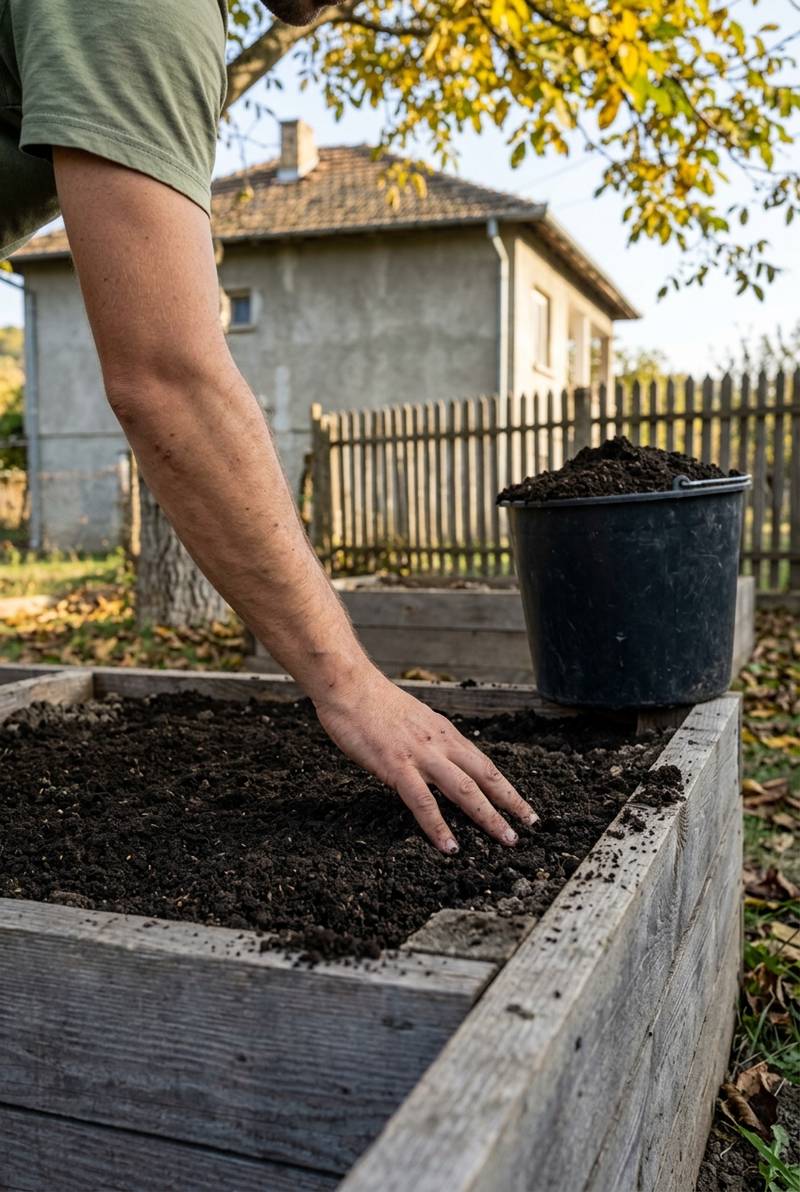
The standard recommendation from four separate university extension offices: add about 1 inch of finished compost per year. That’s it. Not 4 inches. Not a wheelbarrow load. One inch, spread on top after you clear the old plants.
I know it sounds stingy. But there’s a real reason for the restraint.
A gardener in Vermont posted on an extension Q&A forum after adding “several inches of manure-based compost” to their raised beds every year without testing. Their soil hit pH 7.6 with phosphorus and potassium through the roof. Even zucchini failed that year. The expert’s diagnosis: annual heavy compost without soil testing causes nutrient lockout. Too much of a good thing.
Common mistake
Never fill a raised bed with 100% compost. One Reddit gardener did this and watched seedlings die. Straight compost drains too fast, holds nutrients poorly, and lacks the mineral structure roots need. The target ratio is 70% soil to 30% compost by volume.
The compost ceiling, confirmed by University of Maryland Extension and others: no more than 25% of your bed’s total volume should be compost. For an established bed, 1 inch on top each fall is plenty. For a depleted bed that hasn’t been amended in years, go up to 2-4 inches once, then back to the 1-inch rule.
Four Free Amendments You Already Have
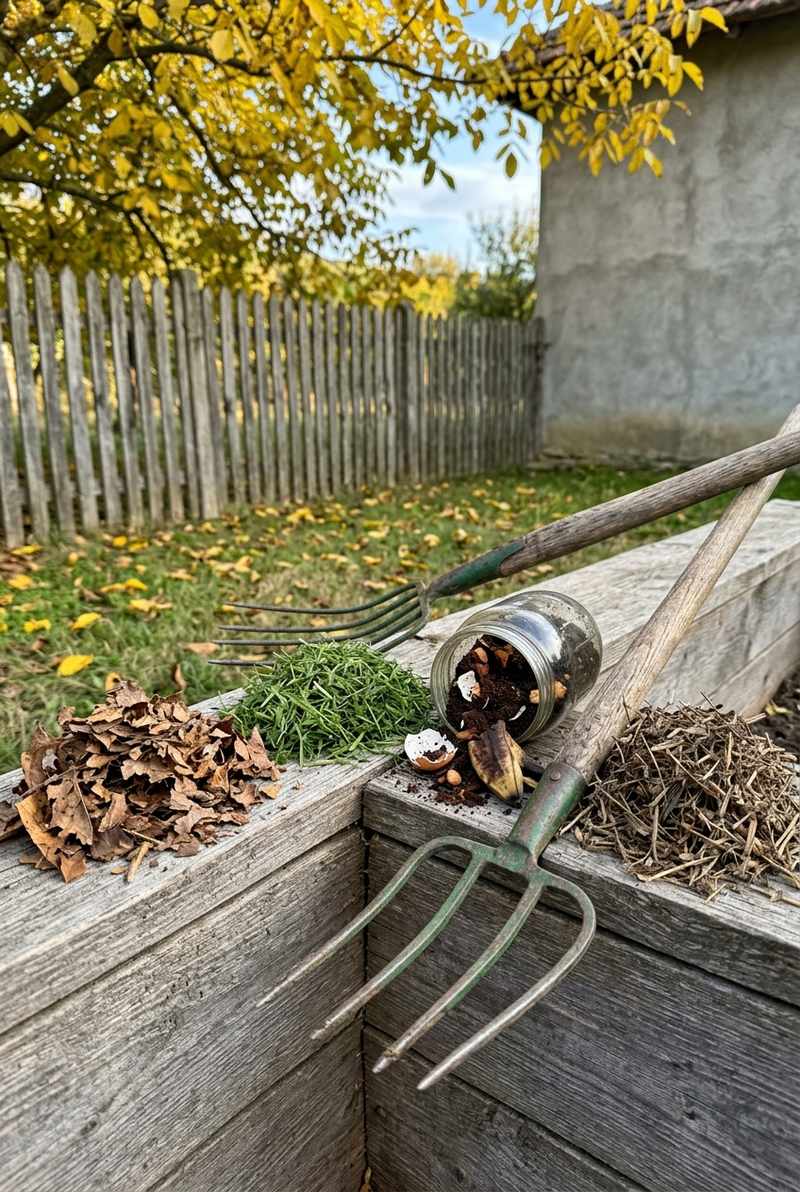
Before you buy anything, check your yard. The best soil amendments are sitting there already.
- Shredded leaves. Run them over with a lawnmower and spread 2-3 inches on the bed. They break down over winter and feed microbial life. Whole leaves mat and block water. Shredded ones don’t.
- Homemade compost. If you have a pile going, this is the gold standard. It’s free, it’s local, and it hasn’t been sitting in a plastic bag losing biology for six months.
- Grass clippings. Thin layers only, 1-2 inches max. Thick piles go anaerobic and smell terrible (trust me on this). Make sure the lawn wasn’t treated with herbicide, or you’ll kill your vegetables next spring.
- Spent garden plants. Cut healthy plants at the soil line instead of pulling them. The roots decompose underground and feed soil microbes all winter. Only remove plants that were diseased.
These four cost nothing and do 80% of the work. Worm castings, biochar, and bagged amendments are nice additions but not where I’d start.
Cover Crops: The Set-It-and-Forget-It Option
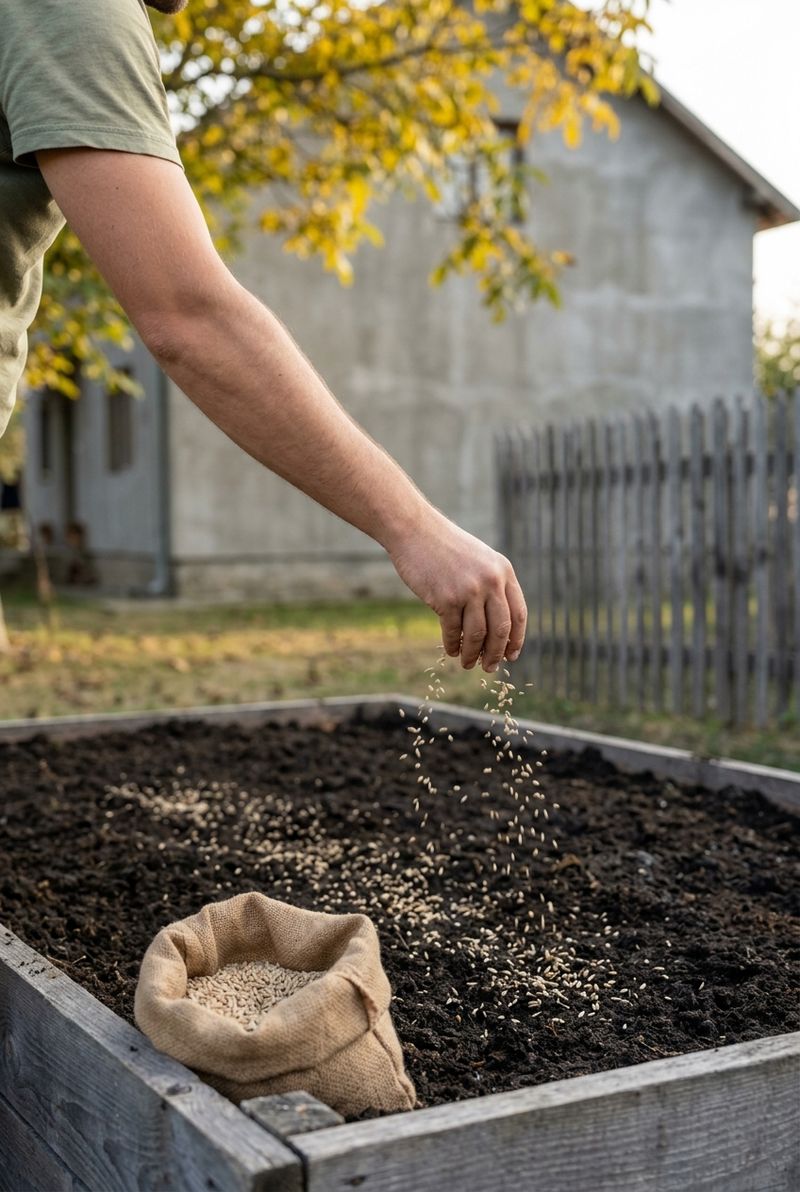
If you don’t want to think about your beds until spring, plant a cover crop. Seeds go in, they grow through fall, protect the soil all winter, and you cut them down before planting. It’s the closest thing to autopilot soil care.
The mix I use: winter rye plus crimson clover. The rye builds biomass and prevents erosion. The clover fixes nitrogen from the air into the soil. Together they do what compost and fertilizer do separately.
For a standard 4×8 foot bed, you need about half a cup of rye seed and a quarter cup of clover seed. Scatter evenly, rake lightly, water once. That’s the whole job.
Here’s what works by climate:
| Cover crop | Seed rate (per 100 sq ft) | Plant by | Best for |
|---|---|---|---|
| Winter rye | 3-4 oz | Mid-October | Biomass, erosion control |
| Crimson clover | 1-2 oz | Early September | Nitrogen fixing |
| Daikon radish | 1-2 oz | Late August | Breaking compaction |
| Spring oats | 3-4 oz | Early September | Winter-kills in cold zones (no cleanup) |
| Hairy vetch | 1-2 oz | Early September | Heavy nitrogen production |
Tip
Spring oats are the laziest option. They grow through fall, die when temperatures drop below 20F (-7C), and the dead foliage becomes mulch on its own. No cutting, no turning under. I planted them last year and did literally nothing until April.
What NOT to Add (The List Nobody Publishes)
Every raised bed guide tells you what to put in. Almost none tell you what to keep out. This is the section I needed three years ago.
- Fresh manure. Needs 90 days minimum before harvesting above-ground crops (tomatoes, peppers), 120 days for ground-contact crops (lettuce, carrots). E. coli risk is documented in university trials. Fall application for spring planting is fine. Dog or cat waste? Never. Not even composted.
- Wood chips tilled into the soil. The carbon-to-nitrogen ratio of wood chips is roughly 200:1. Tilled in, soil microbes steal all available nitrogen to break down the wood, and your plants starve. Wood chips as surface mulch between beds is fine. Just don’t mix them in.
- Herbicide-treated grass clippings. If the lawn was sprayed with broadleaf herbicide, those chemicals survive composting and will kill your tomatoes, beans, and peppers. If you’re not sure, skip the clippings.
- Play sand. Too fine. It bonds with clay and sets like concrete. If you need to improve drainage, use coarse builder’s sand.
- Diseased plant material. Anything with powdery mildew, blight, or wilt goes in the trash, not the compost pile. Home compost rarely gets hot enough to kill pathogens.
Did you know
Used coffee grounds are NOT acidic. After brewing, the pH sits around 6.5-6.8 (nearly neutral). University of Minnesota Extension confirmed this. They’re fine as compost material, but they won’t lower your soil pH. If you need acidity for blueberries, use elemental sulfur.
When to Replace vs. When to Amend
Short answer: almost never replace. Amend.
Experienced gardeners on every forum I read said the same thing. One grower ran the same beds for 12 years with nothing but annual compost and cover crops. The soil got better, not worse. Full replacement is expensive, unnecessary, and throws away years of built-up biology.
The only reasons to actually remove and replace soil:
- Persistent disease. Verticillium wilt, root-knot nematodes, or clubroot that keeps coming back despite rotation. After 12 productive years, one grower saw garlic rust and tomato wilt appear. At that point, replacing the top 6 inches made sense.
- Contamination. Lead from old paint, chemical spills, or soil sourced from an unknown location.
- Structural failure. Soil that’s turned to hardpan or is mostly decomposed wood filler from a cheap initial mix.
If your soil isn’t diseased or contaminated, the answer is always amend. A 1-inch compost top-dress plus crop rotation handles everything else. I rotate my tomatoes to a different bed each year and follow them with legumes. The beds haven’t needed anything more than that.
Tuck It In for Winter
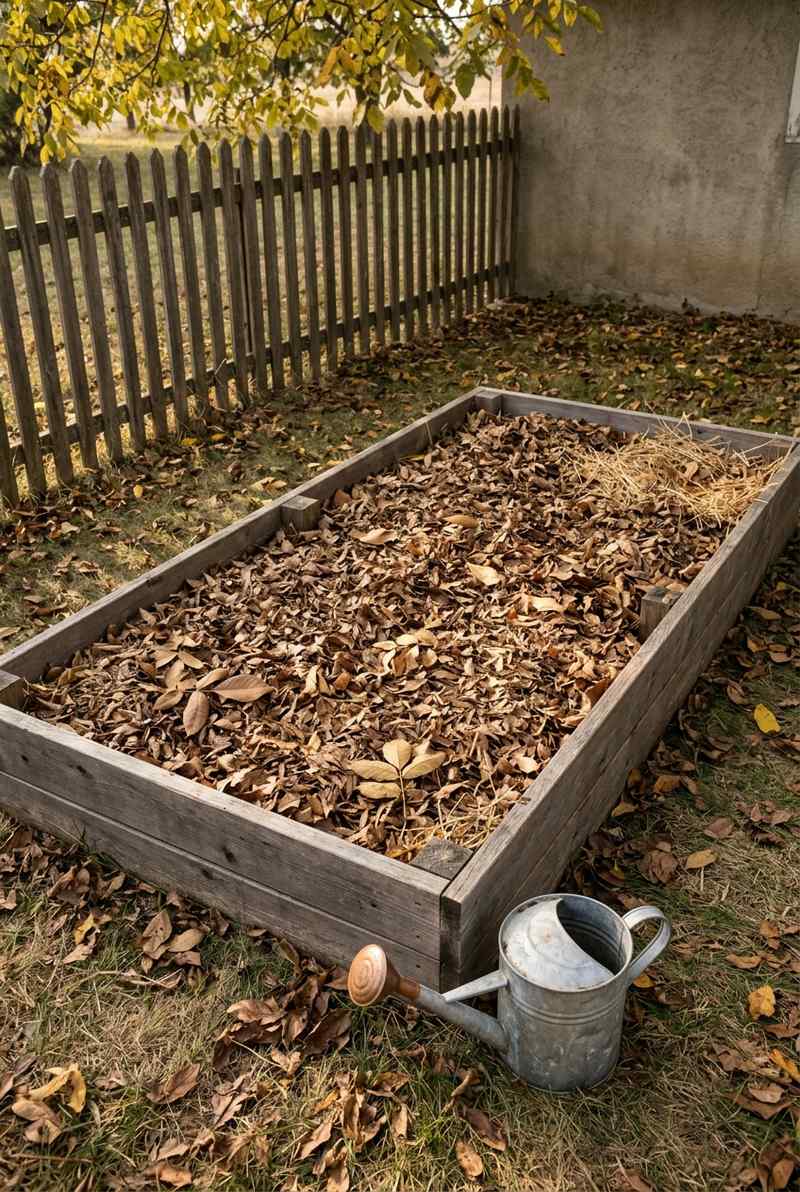
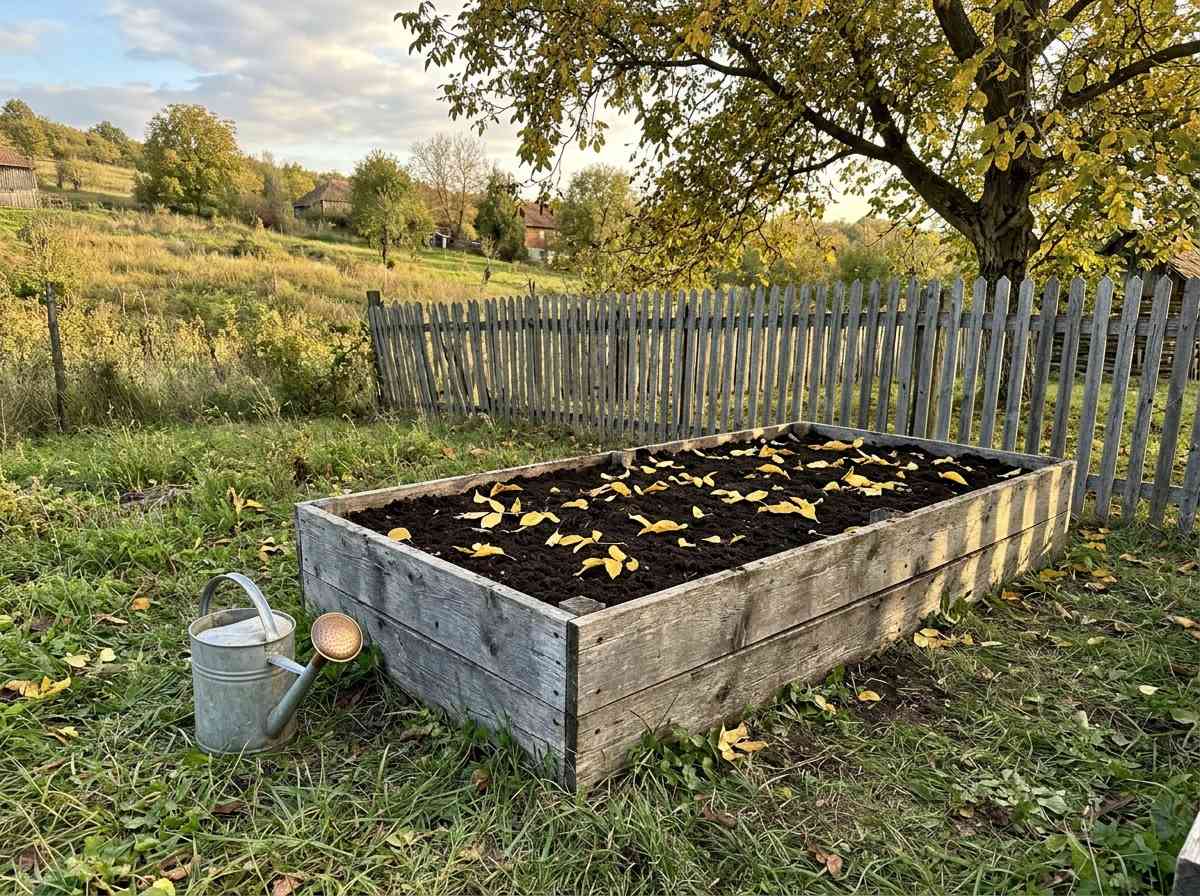
Bare soil through winter loses nutrients to rain, freezes and thaws into chunks, and comes out of spring in worse shape than it went in. Covering it takes 20 minutes and makes a real difference.
If you planted cover crops, you’re already done. If not, mulch the bed 3-4 inches deep with shredded leaves or straw. Not compost. University of Vermont Extension specifically warns against using compost as winter cover because rain and snowmelt leach the nutrients out before your plants can use them. Compost goes on in fall and gets worked in. Mulch goes on top as a blanket.
Straw works best if you can get it (4-6 inches because it compresses). Shredded leaves are free and nearly as good. Wood chips are fine on paths between beds but I keep them off the growing surface.
In cold zones (3-5), go thicker. 4-6 inches minimum to buffer freeze-thaw cycles. Check once a month through winter and add more if it’s compressed below 2 inches.
Tip
Keep mulch 2-3 inches away from perennial plant stems. Wet mulch against bark invites rot and gives slugs a winter hotel right next to next year’s dinner.
The Bed That Taught Me to Pay Attention
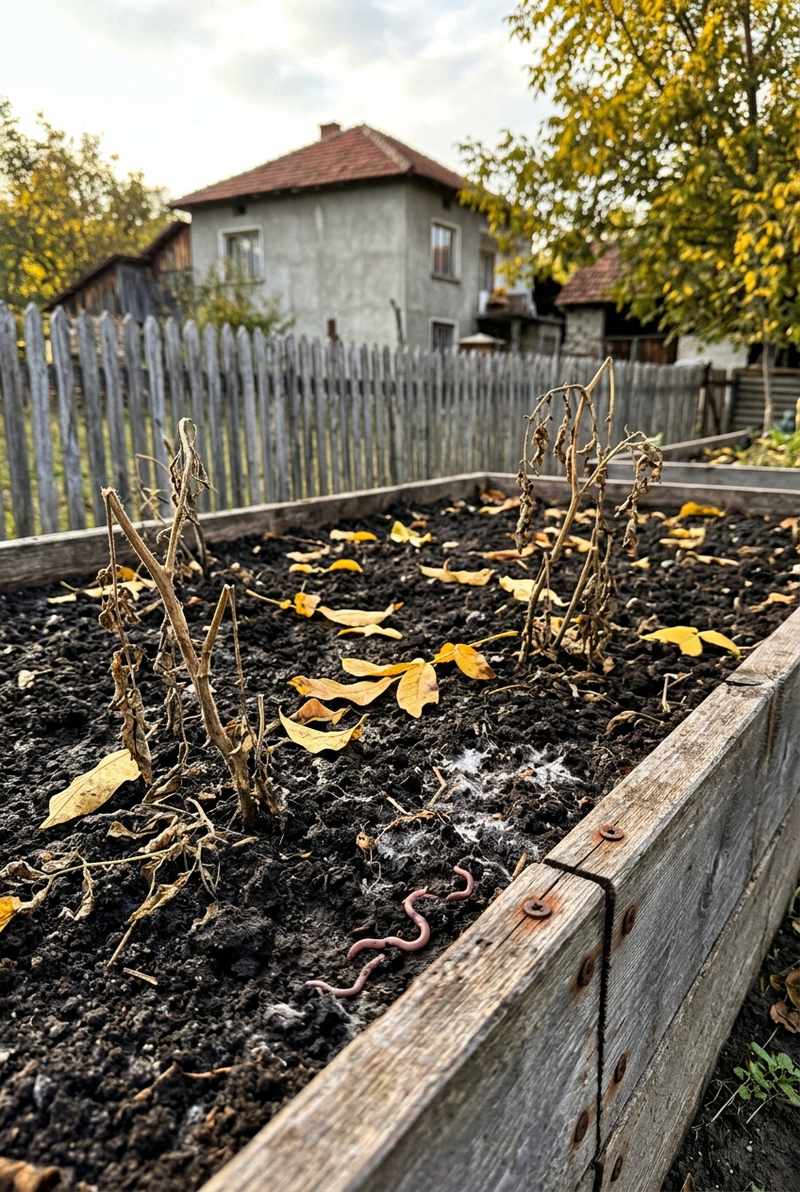
That gray, flat soil I stared at three Octobers ago is now dark, crumbly, and full of worms. All I did was start paying attention in fall instead of walking away after the last harvest.
One inch of compost. A handful of cover crop seed. A pile of shredded leaves. Twenty minutes of work that makes next year’s garden better than this year’s. Not a bad trade for an afternoon.