How to Grow Dahlias in Pots (From Tuber to First Bloom)

- Beginner friendly
- Container gardens
- Patios and balconies
- Zones 3-11
My three-year-old picked our first dahlia tuber off the garden center shelf because it looked, and I’m quoting her, “like a dead potato with spider legs.” She was right. It did.
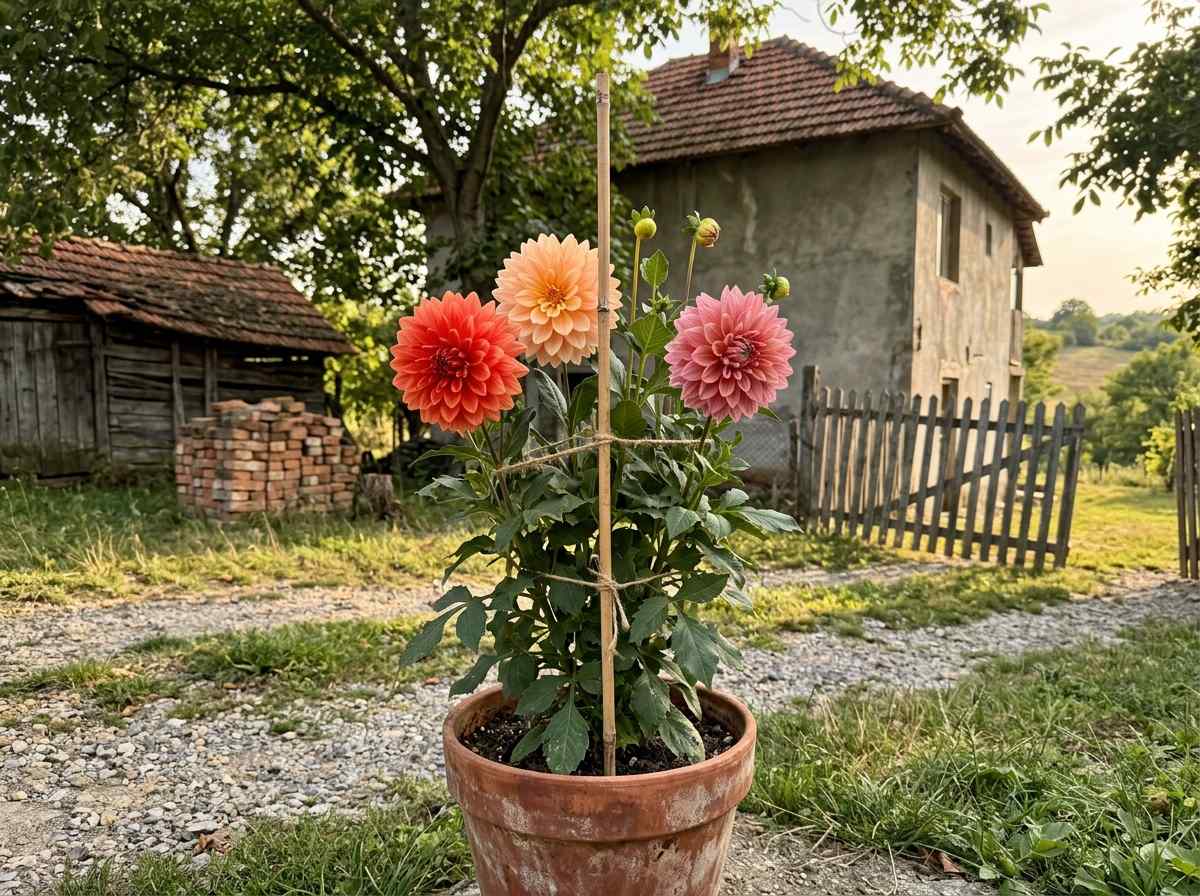
I had no bed space for it that spring. So I stuck it in a pot, expecting nothing, and by August the plant was taller than she was and pushing out dinner-plate blooms. She still takes credit.
Dahlias in pots sound complicated. They’re not. The whole process is ten steps and one rule that most guides bury halfway down the page. I’ll put that rule near the top. If you want the deep-technical version, the American Dahlia Society container guide is where I double-check myself.
Quick Answer
- Pot at least 12 inches wide and 12 inches deep for dwarf types, bigger for larger varieties
- Use potting mix with compost (never garden soil) and make sure the pot has drainage holes
- Plant the tuber 4-6 inches deep, eyes up, then water once and don’t water again until you see a green sprout
- Full sun, pinch at 3-4 leaf sets, stake early, feed with low-nitrogen fertilizer
- First blooms appear about 8-12 weeks after planting.
What You’ll Need
- One dahlia tuber (or a clump) with at least one visible eye
- Pot: 12 inches wide minimum for dwarfs, 16-24 inches for larger varieties
- Quality potting mix (about two-thirds of the pot’s volume)
- Compost or aged garden soil (one-third of the mix)
- Bamboo stake or sturdy garden stake (for varieties over 2 feet)
- Low-nitrogen fertilizer, something like 5-10-10
- Soft ties or twine for staking
Time: 20 minutes to plant, plus weekly maintenance · Difficulty: Easy
Step 1: Pick a Good Tuber
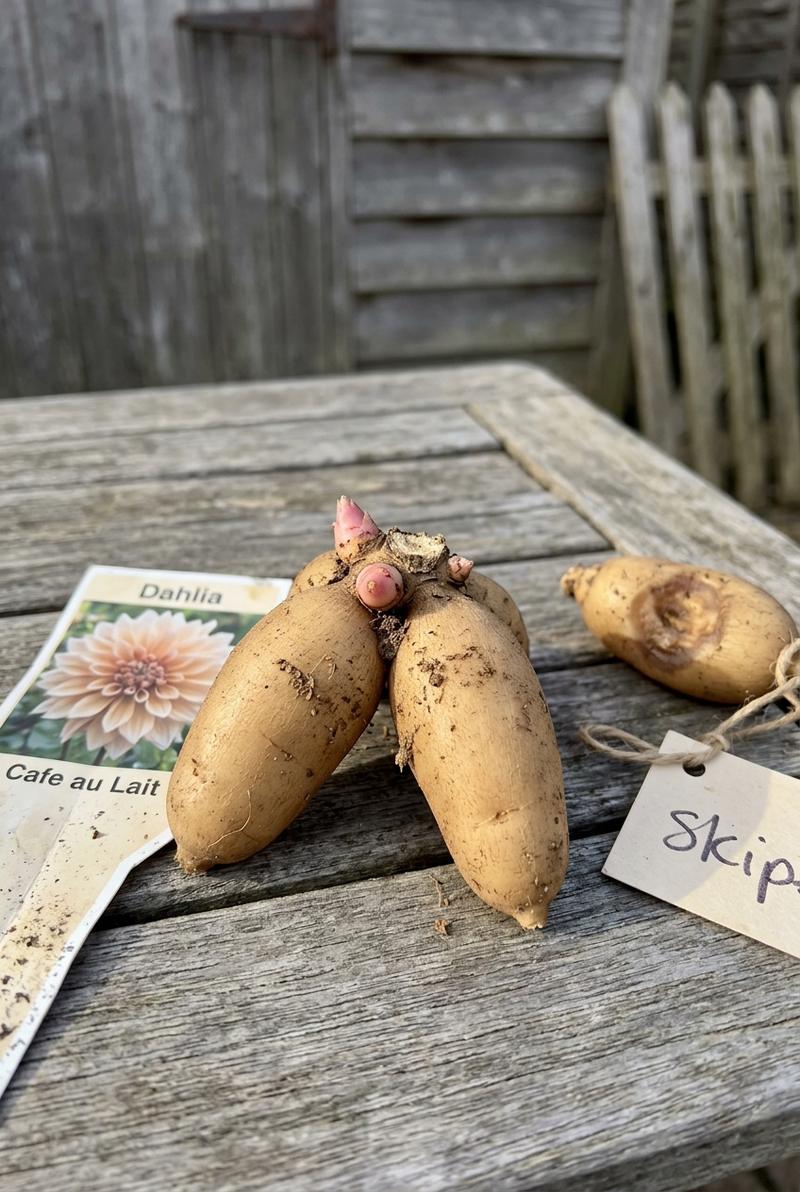
Not every tuber at the garden center is ready to grow. The first time I bought dahlias I grabbed whatever was on sale and one out of three never sprouted.
Look for firm, plump tubers that feel heavy for their size. Shriveled, soft, or lightweight ones have dried out and probably won’t come back.
You also want to see at least one eye. Eyes are small bumps at the crown (where the stem used to be), usually whitish, pinkish, or reddish. Never on the body of the tuber, always at the top where the old stalk came out.
Tip
If you can’t spot an eye, don’t panic. As long as the crown is intact, new eyes often form once the tuber warms up. Check again after a week in a paper bag at room temperature.
Step 2: Choose the Right Pot
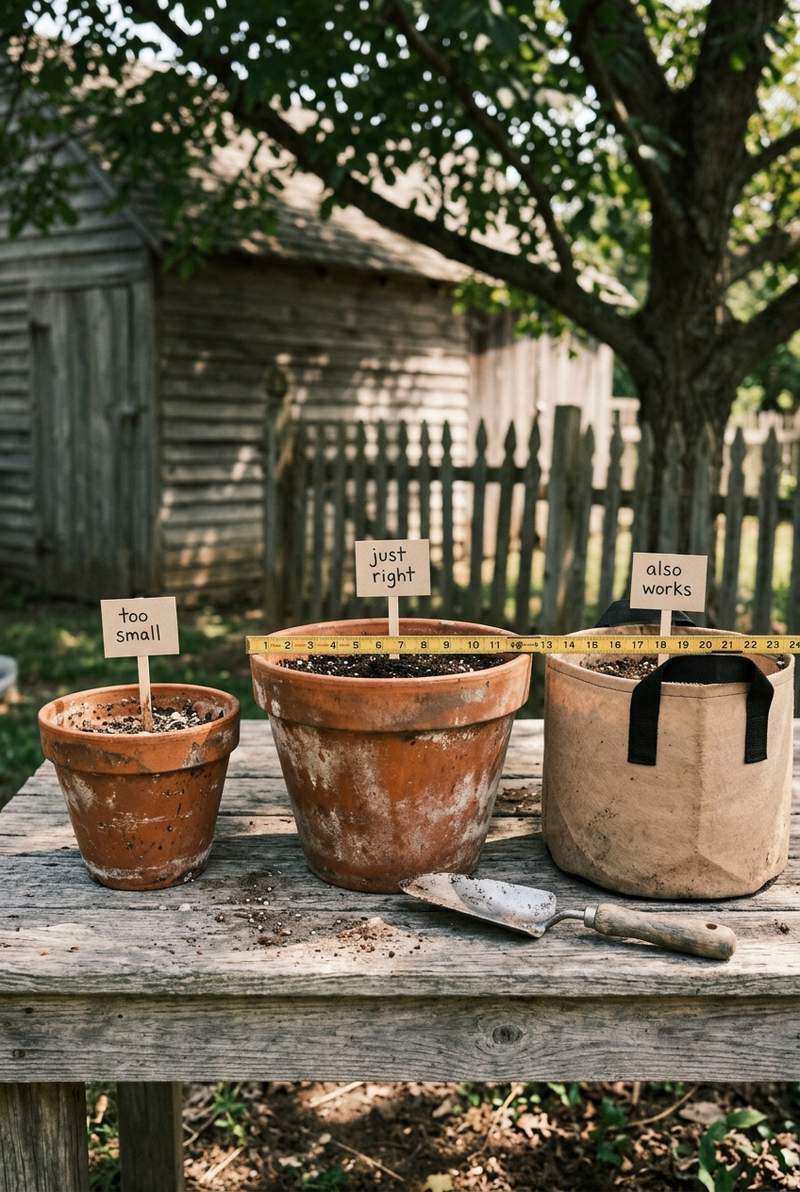
This is where most container dahlias fail before they even start. A pot that’s too small means a cramped tuber, limited roots, and flowers the size of a quarter.
My rule of thumb by dahlia type:
- Dwarf varieties (Gallery, Mignon, Figaro): 12 inches wide, 12 inches deep minimum
- Medium varieties (most ball and decorative types): 16-18 inches wide and deep
- Large varieties (dinner plate dahlias): 20-24 inches, or a half whiskey barrel
Drainage holes are non-negotiable. Dahlias rot in wet soil faster than almost any other flower I grow. If your pot doesn’t have holes, drill them before you plant. My guide to trees in pots covers the same drainage rules if you’re planning a whole container garden.
Step 3: Mix the Right Soil
Never use straight garden soil in a pot. It compacts, drowns the roots, and turns into a brick in July.
I use two parts quality potting mix to one part compost. The potting mix gives you drainage and air pockets. The compost adds weight and slow-release nutrients. Skip the kind with added fertilizer (anything that says “feeds for six months”). Dahlias don’t like high nitrogen early on and those mixes can burn the tuber.
Common mistake
Using bagged “garden soil” or topsoil instead of potting mix. They look similar on the shelf. They behave completely differently in a container. Potting mix every time.
Step 4: Plant the Tuber
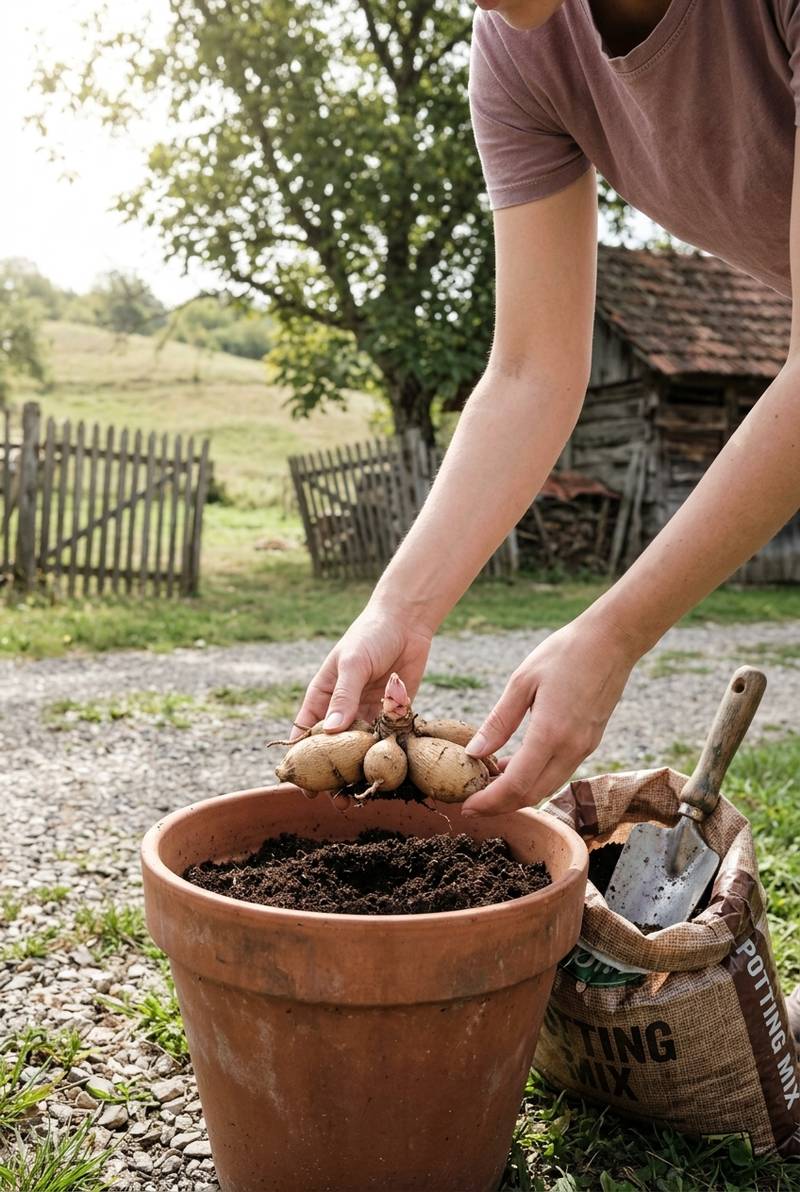
Fill the pot about two-thirds with your soil mix. Lay the tuber on its side with any visible eyes pointing up (the stem stub will also point up).
Cover with 4-6 inches (10-15 cm) of soil, leaving about 2 inches of space at the rim for watering. That’s it. Don’t bury it at the bottom of the pot.
Timing matters here. Plant dahlias outdoors after your last frost date, or start them indoors about 4-6 weeks before last frost for earlier blooms.
Step 5: Don’t Water Yet (The Rule Most Guides Skip)
This is the one. If you remember nothing else from this article, remember this step.
After planting, give the pot one light watering to settle the soil. Then do not water again until you see a green sprout push through the surface. That can take two or three weeks depending on temperature.
Why? The tuber already has all the moisture it needs to sprout. Watering an unsprouted tuber in cool damp soil is the number one way to rot your dahlia before it even starts. The American Dahlia Society says the same thing. Every grower I know who lost a tuber did it this way.
I lost two tubers my first spring learning this. Never again.
Step 6: Find the Sunniest Spot
Dahlias want at least 6 hours of direct sun per day, and more is better. My best pots sit on the south side of the house against a brick wall that reflects warmth. If dahlias earn a spot in your full-sun lineup, you’ll probably enjoy the rest of my 21 flowers that bloom all summer list too.
If you garden in a hot climate (zones 8+), morning sun with afternoon shade works best. Full all-day sun can scorch blooms in 95-degree heat.
Save this to PinterestStep 7: Pinch for More Blooms
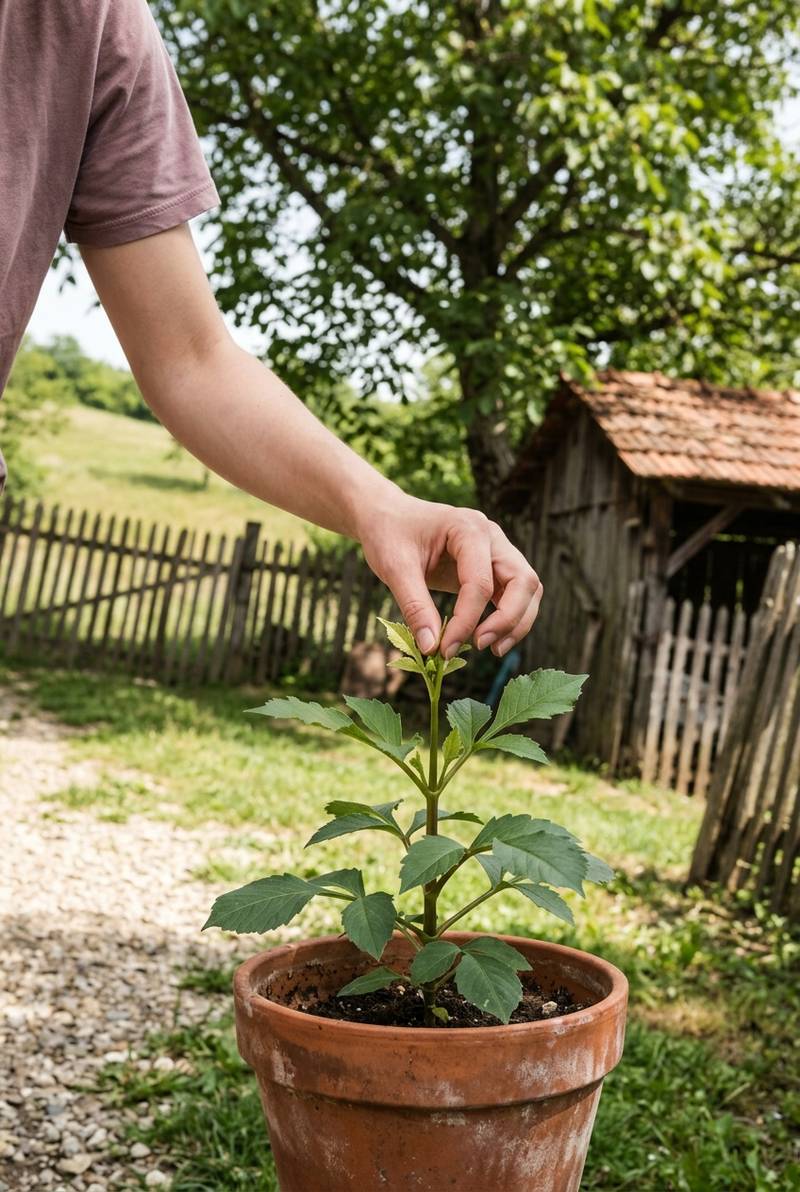
When your dahlia has three or four sets of leaves, pinch off the top inch of the main stem right above a leaf set. This hurts to do the first time. Do it anyway.
That one pinch tells the plant to send out side shoots, which means more stems, more buds, and more flowers. A pinched plant produces about two to three times as many blooms as an unpinched one. It won’t delay flowering by more than a week.
Tip
Use clean fingers or sharp pruners. A ragged cut invites disease into the stem.
Step 8: Stake Early (Not When It’s Flopping)
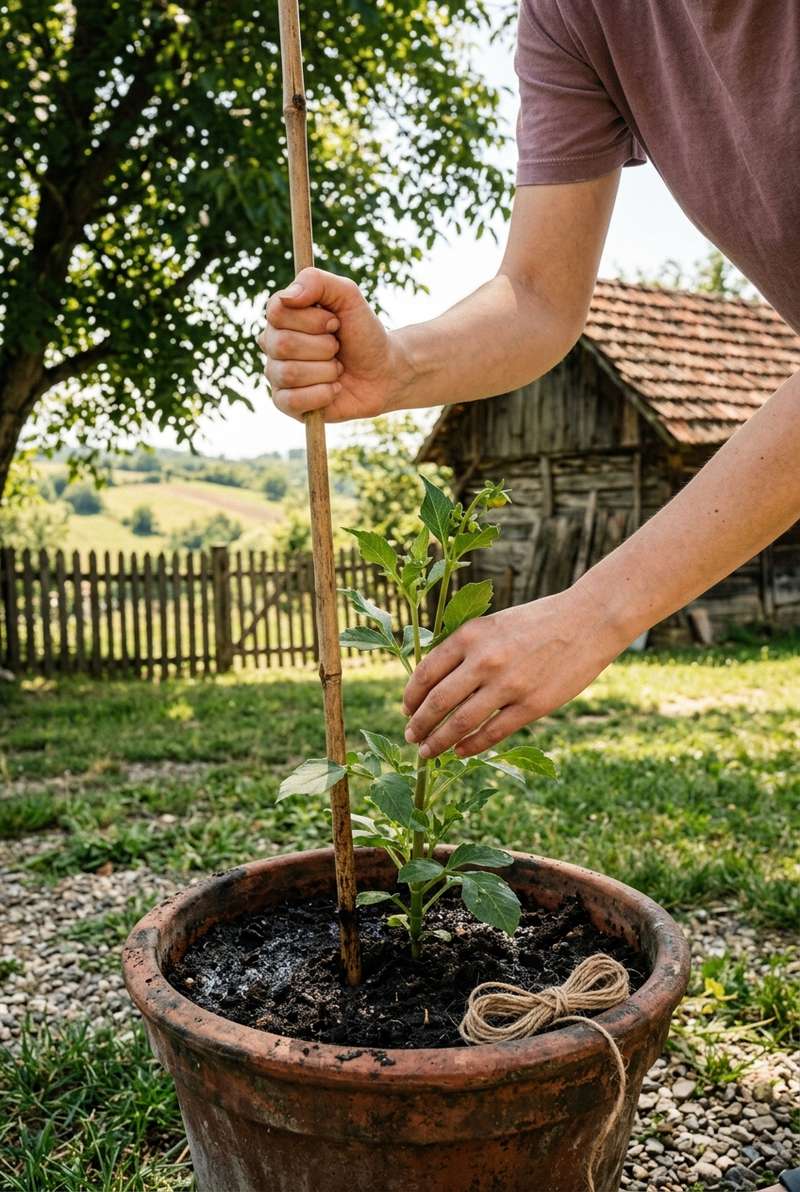
Dahlia stems are hollow and brittle. Once a plant is loaded with buds, one good storm will snap it in half.
Push a bamboo stake into the pot at planting time, a few inches away from the tuber so you don’t pierce it. As the plant grows, tie the main stem loosely to the stake every foot or so. Soft twine, cloth strips, or garden velcro all work.
I’ve learned this one the hard way. Twice.
Step 9: Water and Feed Once It’s Growing
Once your dahlia has sprouted and put out a few leaves, the rules flip. Now they’re thirsty.
Check the soil daily by sticking a finger two inches deep. If it’s dry, water thoroughly until it runs out the drainage holes. In hot weather, pots can need daily watering. Water the soil, not the leaves.
For fertilizer, use a low-nitrogen, high-phosphorus mix like 5-10-10 or a tomato fertilizer. Feed once a month starting when buds form. Skip anything high in nitrogen (the first number) or you’ll get beautiful leafy plants with barely any flowers.
Step 10: Deadhead to Keep Them Coming
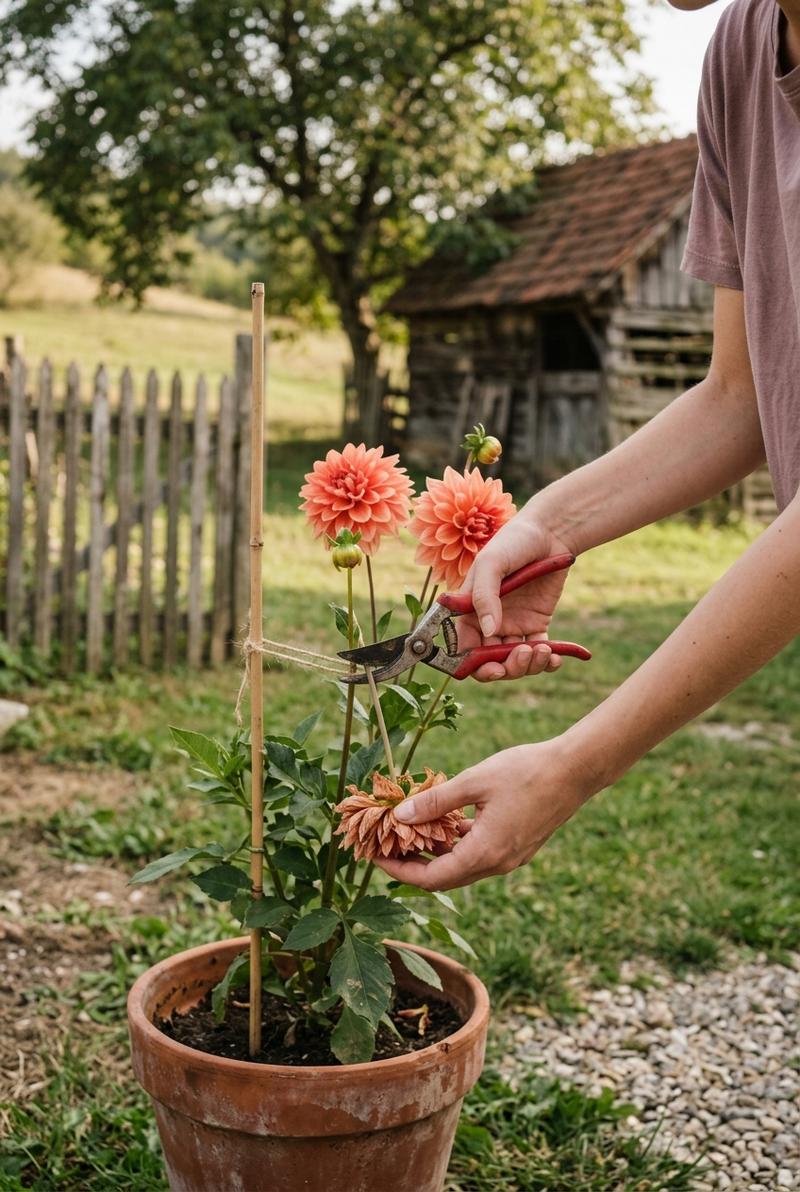
Once the first flowers fade, snip them off. A dahlia that’s putting energy into seed production stops making new buds.
Here’s the trick most people miss. Spent blooms are pointed at the tip. New buds are round. If you’re not sure, wait a day and look again. Snipping a round bud by mistake is the kind of thing you only do once.
Common Mistakes
- Watering before the sprout appears. The biggest tuber killer.
- Picking a pot too small for the variety. Dinner-plate dahlias in a 10-inch pot is a guaranteed disappointment.
- Using garden soil instead of potting mix. It compacts and drowns the roots.
- Fertilizing with high-nitrogen food. You’ll grow a bush, not a bloom.
- Staking after the plant has flopped. You can’t un-flop a dahlia. Stake at planting time.
- Skipping the pinch. Fewer flowers, taller weaker stems, same amount of work.
Most of these are things I learned by doing them wrong. The rot one still stings.
FAQ
How long does it take for a dahlia tuber to bloom?
About 8 to 12 weeks from planting to first bloom, depending on variety and warmth. Dwarf types flower fastest. Large dinner-plate varieties take longer and benefit from being started indoors 4-6 weeks before last frost.
What if my tuber has no visible eye?
As long as the crown is intact and the tuber feels firm, new eyes usually form once it warms up. Keep it in a paper bag at room temperature for a week and check again. If there’s still nothing and the tuber is soft or shriveled, it probably won’t sprout.
Can I leave the tuber in the pot over winter?
In zones 8 and warmer, yes, leave it in the pot and let it go dormant. In colder zones, either move the whole pot to a cool frost-free spot (32-50°F) and water lightly once a month, or dig the tubers out after the first frost, let them dry for a day or two, and store them in peat moss or newspaper somewhere cool and dark.
Which dahlia varieties work best in pots?
Compact growers like the Gallery series, Mignon, Figaro, and Happy Single types stay short enough not to need heavy staking and still put out beautiful blooms. Dinner-plate varieties can grow in pots but need the biggest containers and usually a stake from day one.
Do dahlias in pots need full sun all day?
At least 6 hours of direct sun. In hot climates, morning sun with afternoon shade prevents bloom scorch. In cooler zones, more sun is better.
One Tuber, One Pot, One Summer of Flowers
That first dahlia my daughter picked out is still the reason I grow them in pots every year. Three years later I have six varieties rotating through the patio, and she’s still convinced they belong to her.
Start with one dwarf variety in a 12-inch pot. Follow the no-water rule. By late summer you’ll have blooms the size of your hand, and you’ll understand why dahlia people get a little obsessive about tubers. If you want more container tips, Epic Gardening’s 11 container dahlia tips covers variety names and staking tricks in more depth.