How to Grow Poppies From Seed (The Trick Most Guides Skip)
- Beginner friendly
- Direct sow only
- Spring and fall planting
- Zones 3-10
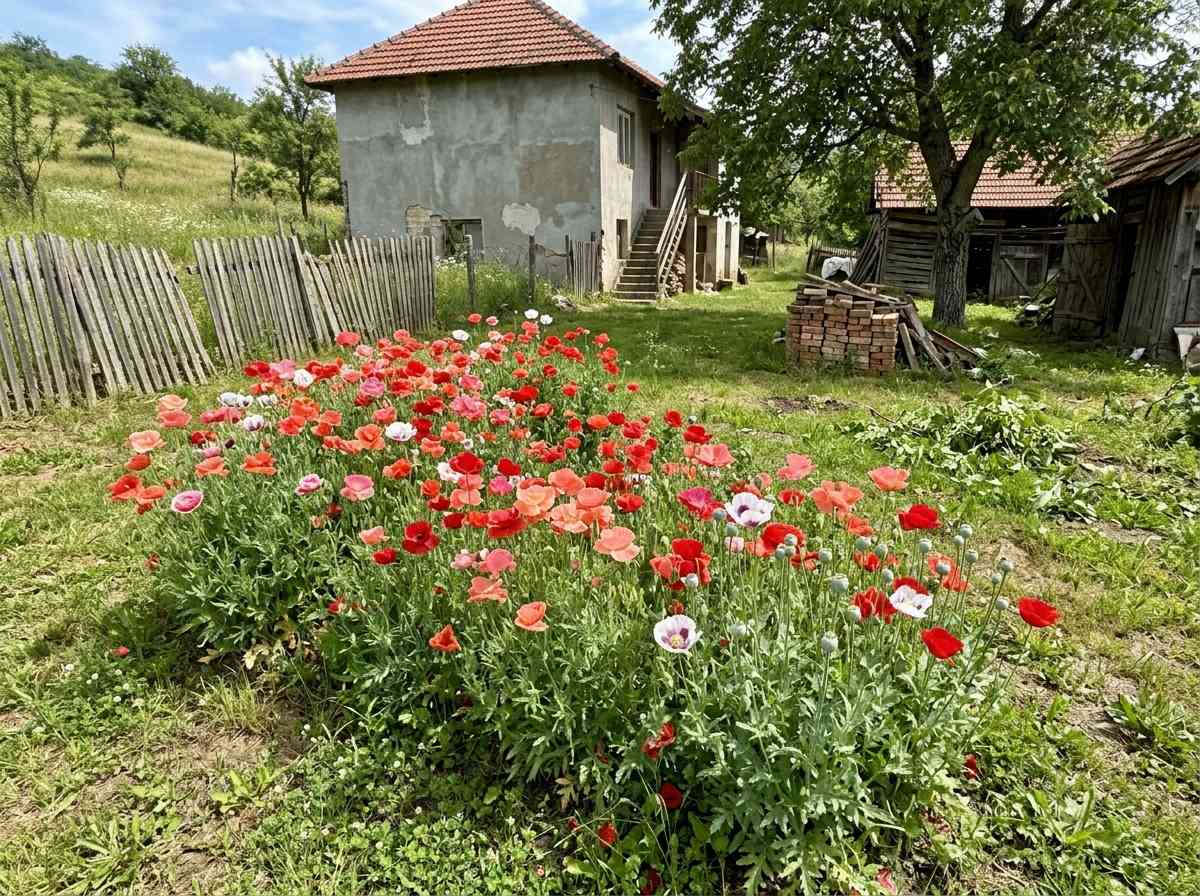
When I was seven, my grandmother had a strip of poppies along the side of her house that I was convinced were magic. Paper-thin petals in orange and red, and every time the wind hit them they looked like they were on fire. I used to pick the seed pods and shake them like maracas.
She told me the secret was to throw the seeds on the snow and walk away. I thought she was joking. Twenty years later, I finally tried it. Scattered seeds over a late-March snowfall, felt like an idiot doing it, and six weeks later I had poppies.
That’s the trick most guides skip or bury at the bottom. Poppy seeds need cold to wake up, and they need light to sprout. Cover them with soil like normal seeds and nothing happens. Here’s the whole process, from packet to blooms.
Quick Answer
- Sow poppy seeds in late fall or very early spring, directly in the ground
- Seeds need cold stratification (natural frost or 2-4 weeks in the fridge)
- Do NOT cover seeds with soil. Press them lightly onto the surface. They need light to germinate.
- Don’t transplant. Poppies have a taproot that doesn’t forgive being moved.
- Expect blooms in 60 to 90 days from sowing.
What You’ll Need
- Poppy seeds (Shirley, California, or breadseed are easiest for beginners)
- Fine sand (for mixing with seeds to spread evenly)
- A garden bed with full sun and well-drained soil
- A spray bottle or mister for watering
- Optional: a small container and your fridge (for cold stratification indoors)
Time: 15 minutes to sow, 60-90 days to bloom · Difficulty: Easy (if you follow the cold trick)
Pick the Right Poppy for Your Garden
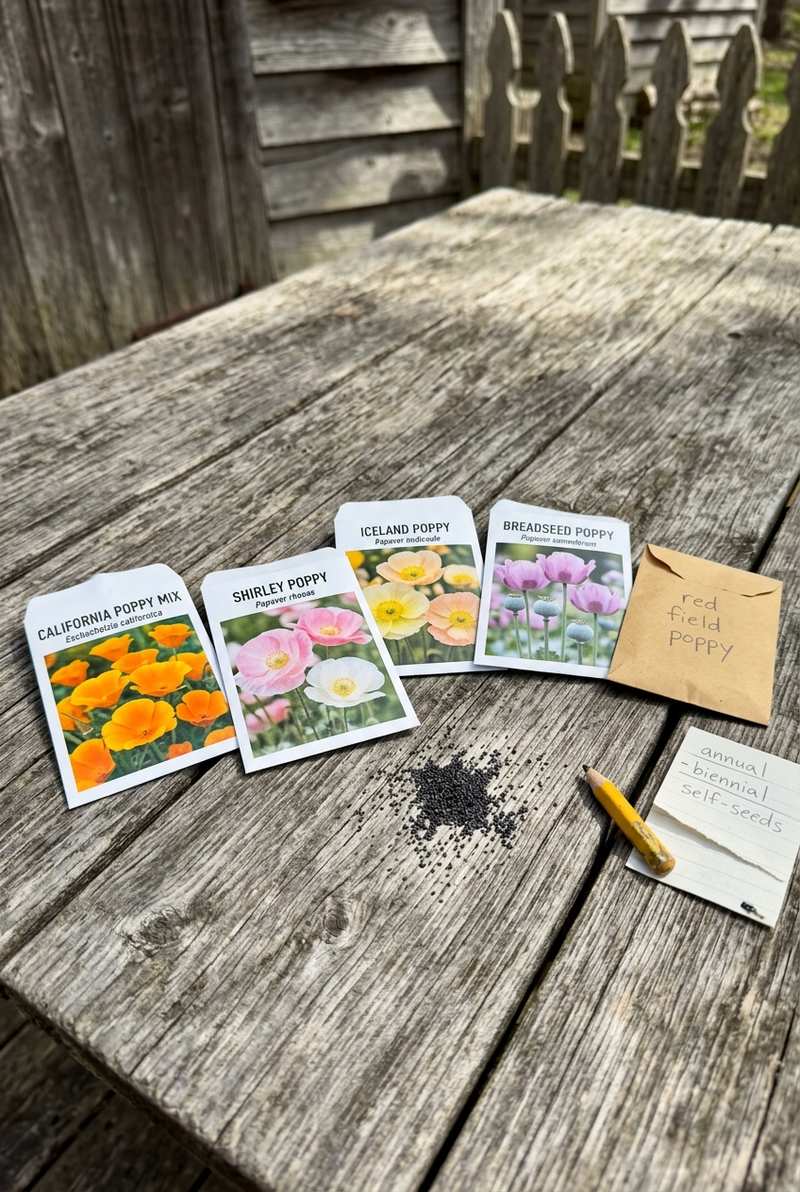
Not all poppies grow the same way. Some come back every year, some don’t, and one of them needs conditions most people can’t provide. Here’s what actually matters.
- Shirley poppy (Papaver rhoeas): Annual, 12-24 inches tall, soft pink/white/red tissue-paper petals. Self-sows freely. The easiest to grow.
- California poppy (Eschscholzia californica): Annual, 6-12 inches, golden orange cups. Loves dry, poor soil. Nearly impossible to kill.
- Breadseed poppy (Papaver somniferum): Annual, 24-36 inches, big peony-like blooms in purple, pink, red, white. Beautiful seed pods for dried arrangements.
- Oriental poppy (Papaver orientale): Perennial, zones 3-8, 24-36 inches. Huge flowers in late spring. Goes dormant in summer (leaves disappear completely).
- Iceland poppy (Papaver nudicaule): Short-lived perennial, zones 2-7. Gorgeous but fussy. Skip this one until you’ve grown the others first.
If you’re starting out, go with Shirley or California. They forgive everything.
Understand the Cold Trick (This Is the One)
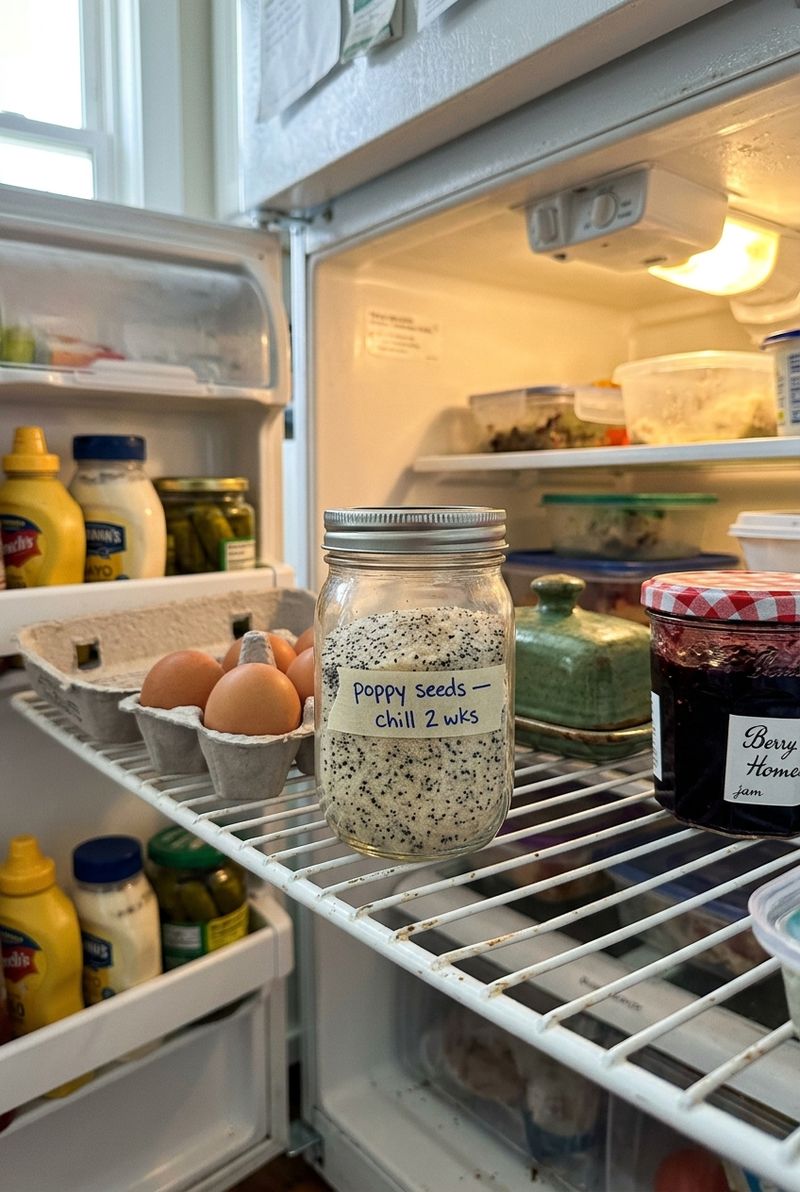
Poppy seeds have a built-in dormancy that breaks when they go through a period of cold. In the wild, seeds fall in summer, sit through winter, and germinate in spring. Your job is to recreate that cycle.
Three ways to do it:
- The snow method (my grandmother’s way): Scatter seeds directly onto a thin layer of late-season snow. As it melts, the seeds settle onto the cold, wet soil. The freeze-thaw cycle does the rest.
- Fall sowing: Sow seeds in late October or November. Winter does the stratification for you. Seeds sprout in early spring.
- The fridge method: Mix seeds with damp sand, seal in a zip-lock bag, and refrigerate for 2-4 weeks. Then sow outdoors in early spring.
I’ve tried all three. They all work. The snow method just feels the most satisfying (and slightly unhinged).
Tip
California poppies don’t need cold stratification. They’ll sprout in warm soil without any tricks. Every other type on the list benefits from it.
Prepare the Spot
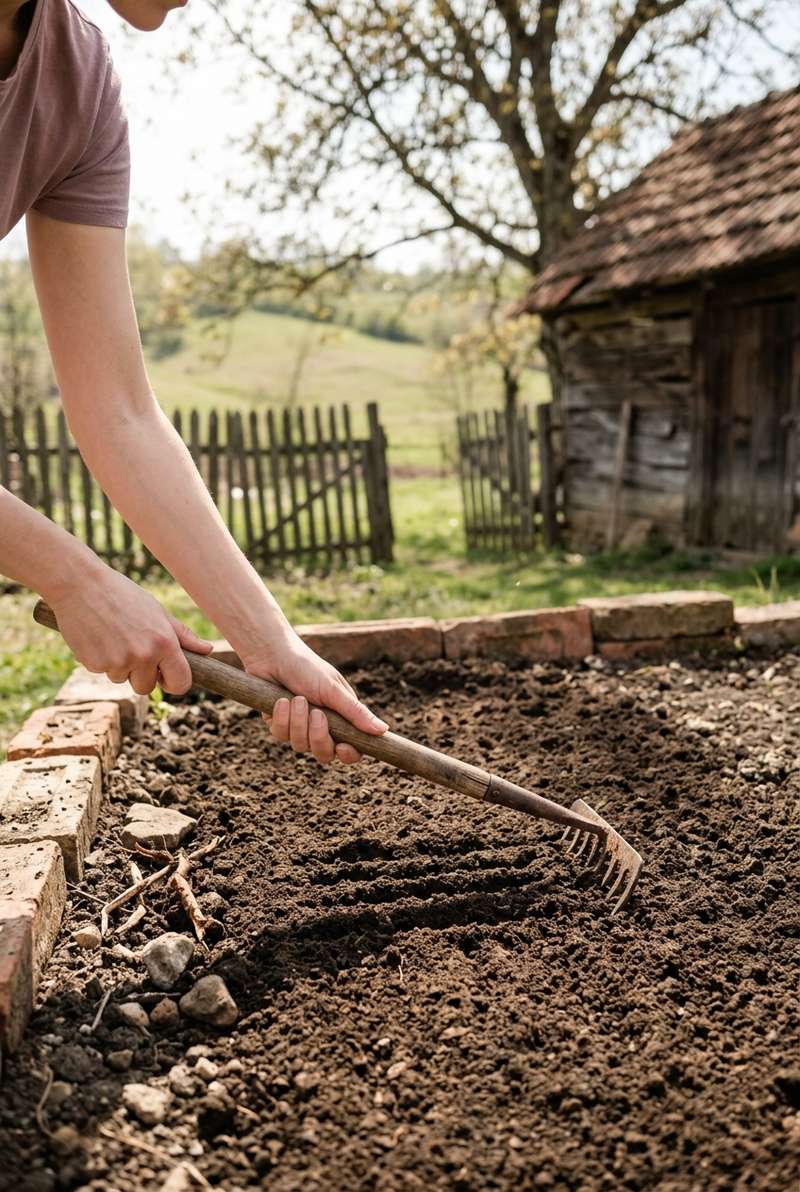
Poppies want full sun and soil that drains fast. Rich, damp garden beds are actually wrong for them. They prefer lean, gritty soil that other flowers would complain about.
Rake the area smooth and remove any mulch. Seeds this small can’t push through a layer of bark. If your soil is heavy clay, mix in a thin layer of sand or fine gravel to improve drainage. That’s all the prep you need.
Sow Without Burying
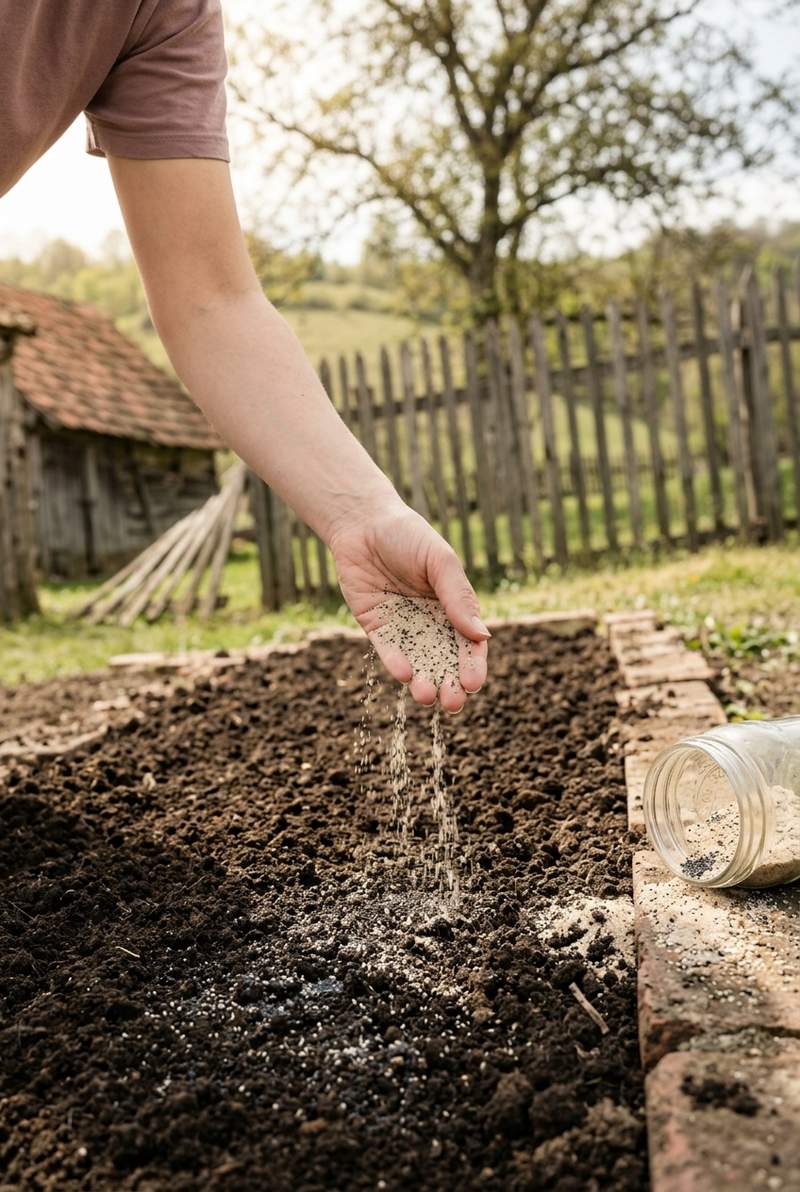
This is where most people lose their poppies. The seeds are tiny, nearly dust-sized, and they need light to germinate. Bury them under even a quarter inch of soil and they won’t sprout.
Mix one part seed with five parts fine sand. This makes it easier to spread them evenly and prevents dumping a thousand seeds in one spot. Scatter the mix over the prepared bed. Then press gently with your palm or the flat side of a rake. Firm contact with soil, but no covering.
The Utah State Extension says no more than 1/8 inch of cover. I’d say even that’s too much. Just press and walk away.
Water Like You Don’t Care
After sowing, mist the surface gently. A full-pressure hose will wash the seeds into clumps or right off the bed.
Keep the soil lightly damp (not wet) until you see sprouts, which takes 7 to 28 days depending on temperature. After that, pull back. Poppies respond best to what one grower on Fruition Seeds calls “sheer, total, utter neglect.” Overwatering kills more poppies than underwatering. About 1 inch per week once established is plenty.
Thin the Seedlings
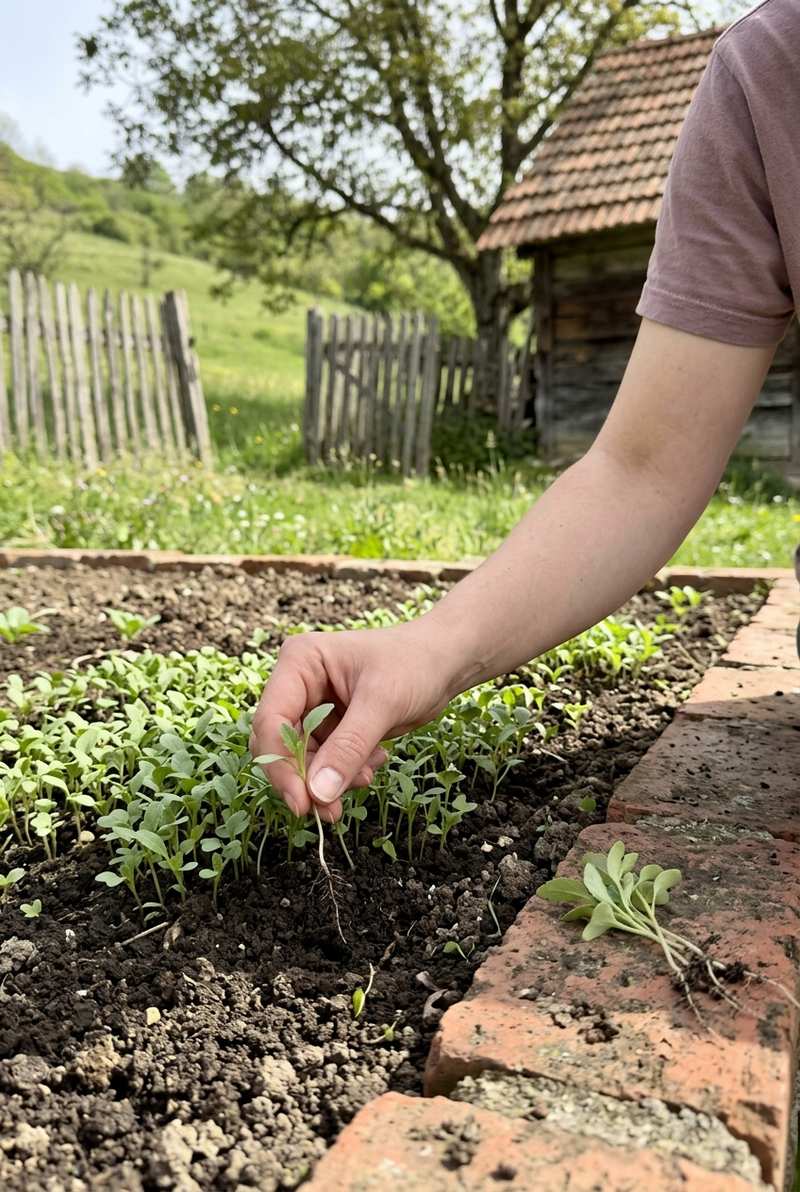
Poppy seedlings look like tiny ruffled lettuce leaves. You’ll have too many of them. That’s normal.
When they’re about 2 inches tall, thin to 6-8 inches (15-20 cm) apart. Use scissors and snip at the soil line. Don’t pull. Pulling disturbs the roots of the ones you’re keeping. I skipped thinning my first year and ended up with a carpet of spindly stems and no flowers.
Wait (and Don’t Touch Them)
Poppies don’t need fertilizer. They don’t need staking (most varieties). They don’t need deadheading unless you want to prevent self-sowing. What they need is full sun and dry feet.
Expect blooms around 60 to 90 days after sowing. Shirley poppies bloom in waves. Oriental poppies put on one massive show and then go dormant. California poppies keep going on and off until frost. If you love long-blooming flowers, you’ll want to check my 21 flowers that bloom all summer list for picks that keep going after poppies fade.
Save Seeds for Next Year
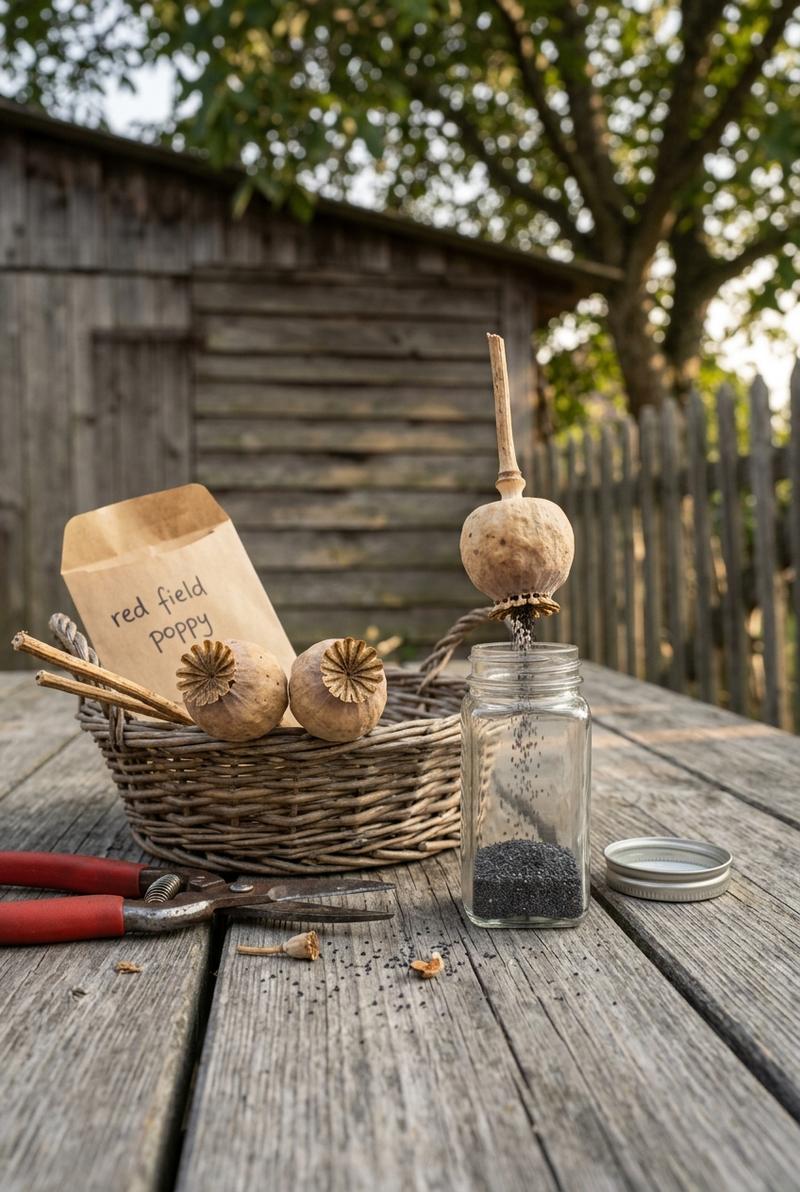
After petals drop, the seed pod stays on the stem and dries. Wait until the pod turns brown and you can hear seeds rattle when you shake it. Snip the pod, turn it upside down over a bowl, and tap.
One pod can hold hundreds of seeds. Store them in a paper envelope in a cool, dry spot. They stay viable for years. Or just let the pods open naturally and the wind handles reseeding for you.
Common Mistakes
- Burying the seeds. They need light. Press, don’t cover.
- Starting indoors and transplanting. Poppies have a taproot. Moving them is nearly always fatal.
- Overwatering. Once they’re up, they prefer to be dry. Soggy soil rots the roots.
- Sowing too late in spring. Poppies need cool soil to germinate. By May in most zones, it’s already too warm.
- Skipping the thinning. Crowded poppies grow tall and weak with no flowers. Thin early.
- Rich soil. Poppies do worse in good garden soil. Lean and gritty is better.
I’ve done four of these six. The overwatering one twice. Some plants just want you to leave them alone, and poppies want it more than most.
FAQ
Can I grow poppies in pots?
California and dwarf breadseed poppies work in deep pots (at least 10 inches). Oriental poppies don’t do well in containers because the taproot needs room. Use gritty, fast-draining potting mix and don’t overwater. My container gardening tips apply here too.
Why didn’t my poppy seeds germinate?
Three usual reasons. You covered them (they need light). You sowed too late when soil was warm (they need cool temps). Or you watered too much and the seeds rotted. Try the fridge method for 2-4 weeks and then surface-sow in early spring.
Do poppies come back every year?
Oriental poppies are true perennials and come back reliably in zones 3-8. Shirley, breadseed, and California poppies are annuals, but they self-sow so aggressively that they often return year after year without any help.
When is the best time to plant poppy seeds?
Late fall (October-November) or very early spring (as soon as the ground thaws, even with frost still happening). The sweet spot is when soil temperatures are still below 55F (13C). In most of the US, that means February through early April.
Why do my poppies only bloom for two weeks?
Oriental poppies are like that. One big flush and then the foliage dies back completely until fall. For longer bloom, grow Shirley or California poppies alongside them. Plant something that handles heat and dry soil to fill the gap when poppies go quiet.
The Maraca Method Still Works
I still shake the seed pods every fall, just like I did at my grandmother’s house. Except now it’s my yard, and the poppies are mine.
Throw. Press. Ignore. It worked thirty years ago and it works now.