How to Get Weeds Out of Rocks (Without Wrecking Your Soil)
- Gravel beds
- Between pavers
- Rock landscaping
- Tired of weeding
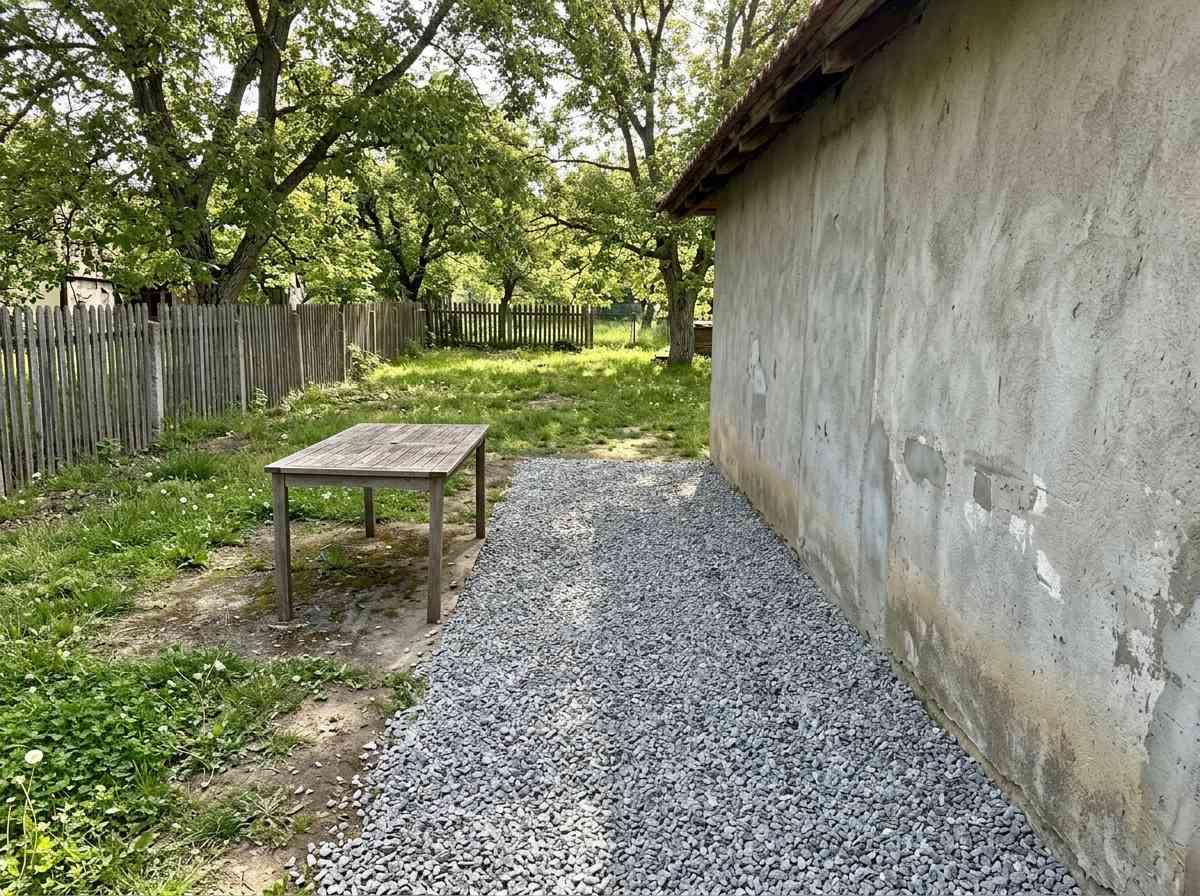
I spent three springs in a row pulling the same weeds from the same six-foot strip of gravel by the side of the house. Same chickweed. Same crabgrass.
Same wild violet that I’m pretty sure was laughing at me.
Year four I figured it out. The rocks weren’t the problem.
The fine layer of dirt sitting on top of the rocks was, and once I dealt with that, the weeding shrank from a weekend project to about an hour every spring.
Here’s what actually works, after a few years of getting it wrong.
Quick Pick: Match the Method to Your Rock Situation
- Driveway gravel: hand pull the established stuff, pre-emergent in early spring.
- Decorative rock bed: hand pull big weeds, then 20% horticultural vinegar on regrowth.
- Between pavers: boiling water from the kettle, then pre-emergent.
- Rock mulch around plants: hand pull only, no spray near roots.
- If you do nothing else this year: blow the leaves off your rocks every two weeks from October through December. That single habit breaks the whole cycle.
Why Your Rocks Grow Weeds (It’s the Dust, Not the Rocks)
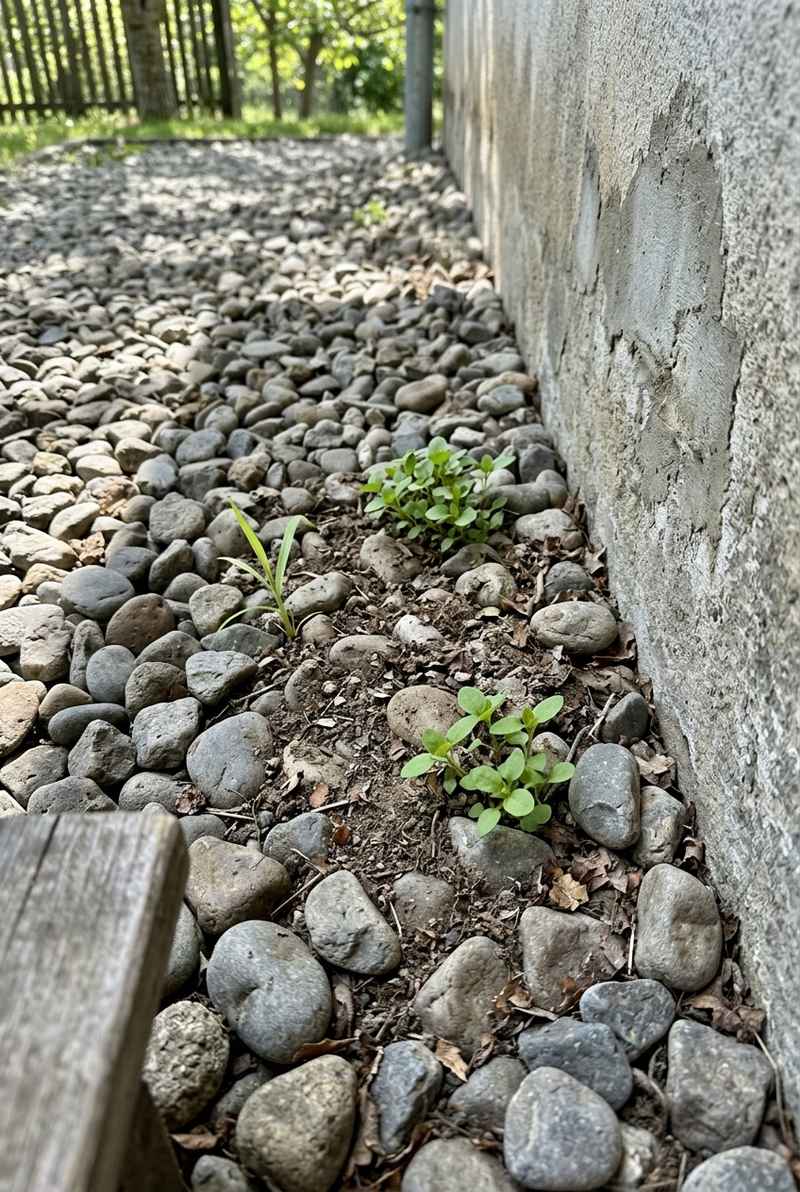
The thing nobody tells you when they sell you 800 pounds of decorative rock is that the rock itself isn’t a weed barrier. Rock is just inert chunks of stone.
Weeds don’t grow in rock. They grow in what lands on top of it.
Every fall, leaves blow in. Pine needles. Bits of bark. A few stray seeds from whatever’s nearby.
By spring, that organic matter has broken down into a thin layer of fine soil sitting in the cracks between your rocks and on top of any fabric underneath. That’s where the weed seeds germinate.
In a dust layer that wasn’t there when you laid the rocks.
The UC integrated pest management folks have written about this for years. The fabric you put down to “stop weeds” actually traps the debris on top instead of letting it cycle down into the soil below, which means the organic layer on the rock surface builds faster than it would without fabric.
By year four or five, your beautiful clean rock bed is a thin compost layer pretending to be a rock bed.
Once you see that cycle, the whole approach changes. You’re not fighting weeds. You’re managing dust.
Did you know
White and dark decorative rocks both stress nearby plants. UC IPM has documented that pale rock reflects so much light it damages sensitive plants, while dark rock holds heat and cooks the root zone. Stressed plants compete poorly against weeds, which is one more reason rock beds creep weedier than mulch beds over time.
Pull the Big Ones First, Always
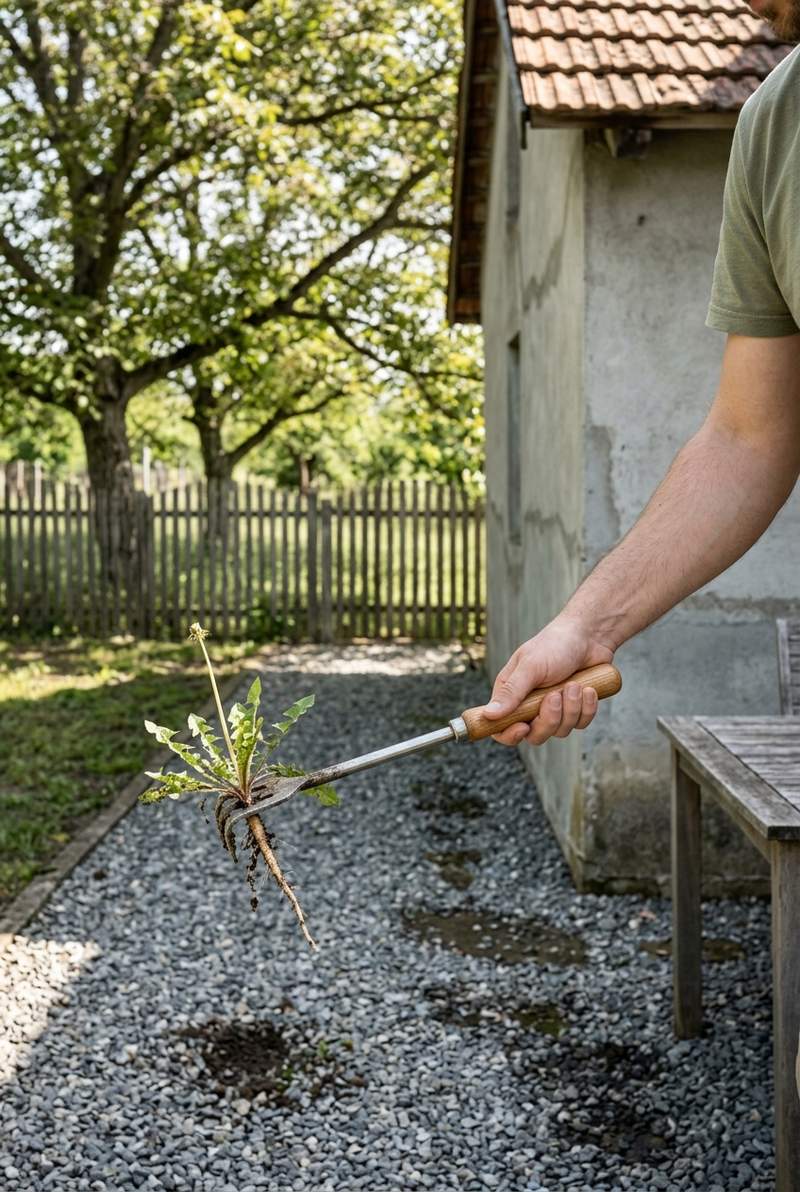
Before you reach for anything in a spray bottle, do the manual work.
Established weeds, especially perennials with deep roots like dandelion or bindweed, have to come out by hand or with a weeding tool. No spray is going to fix a six-inch taproot.
I keep an old fish knife and a long-handled weeder by the back door. The fish knife is for getting between pavers.
The long-handled weeder is for everything else, because at 39 my back has opinions about prolonged squatting.
Pull when the soil is damp. After rain is best. Roots slide out instead of snapping.
For small annual weeds in cracks and between pavers, the boiling-water trick really works. The next time you boil water for pasta, walk outside with the pot and pour a slow, careful stream over the weeds you want gone.
Iowa State Extension confirms it works on young, shallow-rooted annuals. You just have to hit the crown and the first couple inches of root.
Not deep, established stuff. Those will resprout.
But for the tiny green starts between bricks, one careful pour usually does it. Repeat in 7-10 days for anything that comes back.
Worth it for the cost (free) and the lack of chemicals near my toddler’s hands.
The Vinegar Trap: 5% From the Pantry vs 20% Horticultural
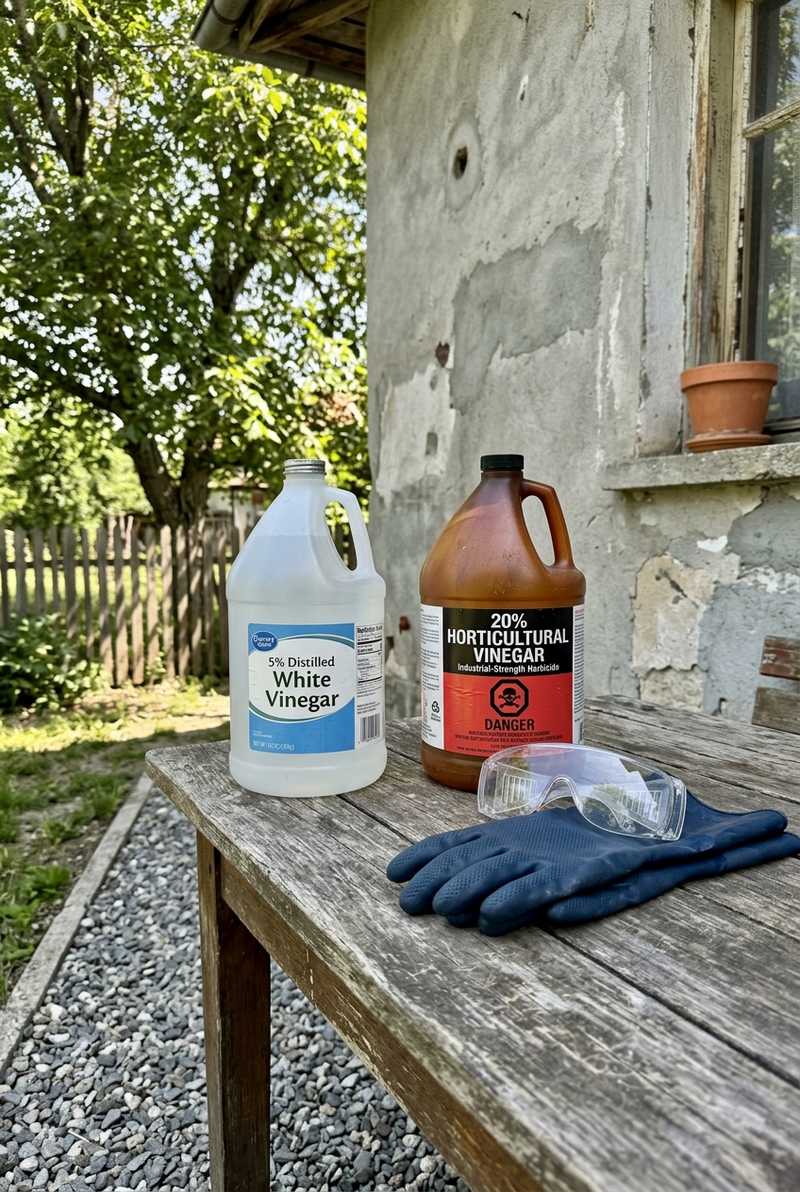
Here’s where most articles go off the rails. They tell you to grab the gallon of distilled white vinegar from the grocery store, dump it in a spray bottle, and watch the weeds die.
I tried that. It barely did anything past the seedling stage.
Five percent acetic acid is a kitchen ingredient. It is not a herbicide. UC’s IPM team puts it bluntly: not effective at this concentration.
You might brown the tips on a tiny seedling, but anything with established roots will laugh at you and resprout within a week.
Horticultural vinegar is a different product entirely. It’s 20 to 30 percent acetic acid, sold at farm supply stores, and it’s actually labeled as a weed killer.
It will kill annual broadleaf weeds on contact. Spray it on a hot, sunny day for the best burn.
It still won’t kill the roots. Contact only. Plan to retreat.
| Product | Concentration | Actually kills | What to expect |
|---|---|---|---|
| Grocery store white vinegar | 5% | Almost nothing | Maybe browns young seedlings |
| Horticultural vinegar | 20-30% | Annual broadleaves, tops only | Resprout in 2-3 weeks, retreat |
| Glyphosate (Roundup) at label rate | Varies | Annuals and perennials, roots too | Slow kill, 7-14 days |
Common mistake
Horticultural vinegar at 20% or higher carries a DANGER signal word on the label. It can permanently damage your eyes if it splashes, and it burns skin on contact. Wear sealed goggles and chemical-resistant gloves every time. Natural does not mean safe.
Why I Won’t Touch Salt or Bleach
You’ll see both of these recommended in old gardening forums and the occasional blog. Skip both.
Salt. It works. The problem is that the amount needed to kill the weed is the amount that sterilizes the soil for everything else, including tree roots that extend under your pavers.
Ask Extension agents recommend against it in nearly every landscape situation. Once it’s there, only heavy rainfall over years will leach it out, and in dry climates it basically doesn’t leave.
If you’re planning to plant anything within ten feet someday, salt closes that option.
If you’ve already gone the salt route and want a sense of how to bring damaged soil back, I went through the same fix on a different bed and wrote about it in how I recharged the raised bed soil. Different cause, same long recovery.
Bleach. Burns the tops, leaves the roots, washes into storm drains, harms aquatic life. Zero university extension programs recommend it.
It’s not registered as a herbicide and there’s no safe application rate. Don’t use it.
Both of these get suggested because they’re cheap and the visible weeds turn brown within a day. They don’t actually solve anything.
They just shift the problem to your soil.
Landscape Fabric Buys You Four Years, Then Costs You More
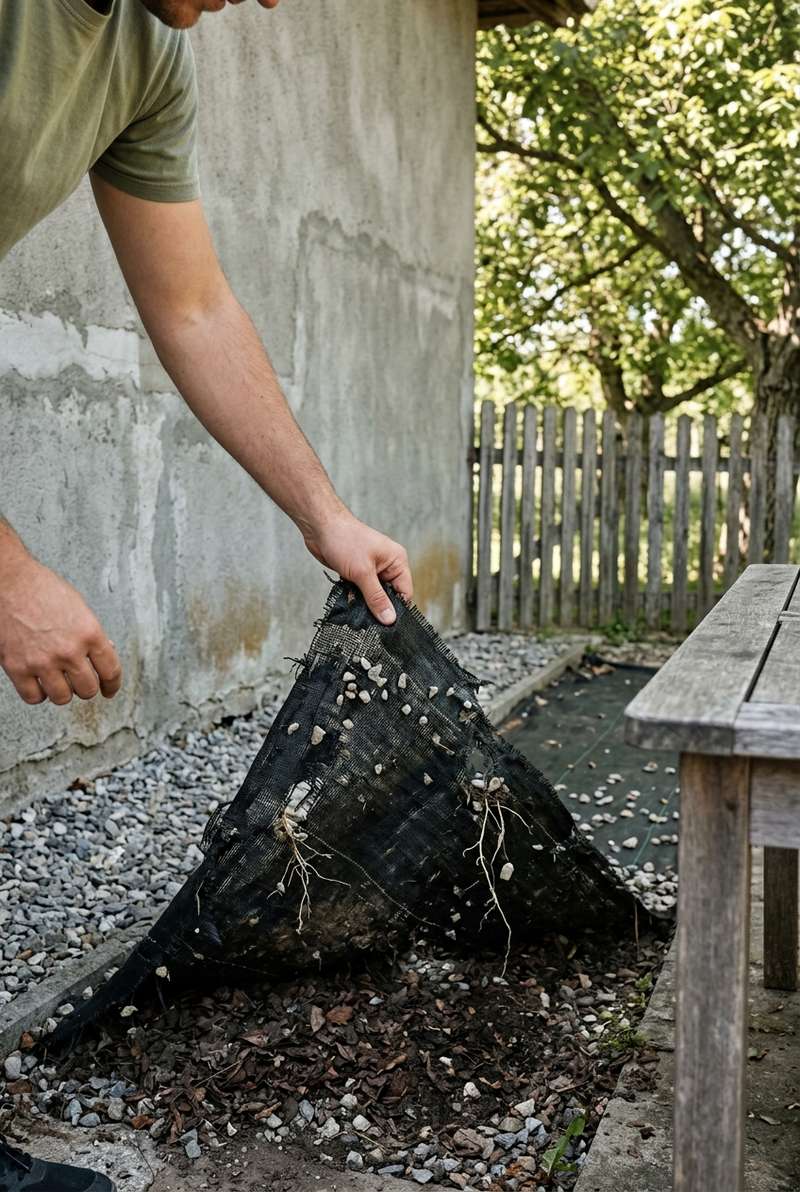
If you’ve already got landscape fabric down, I’m not telling you to rip it out tomorrow. But I’d like you to know what’s coming.
Marketing says 15 to 25 years of weed suppression. Real life under gravel is about four. Maybe five if you’re lucky and your yard doesn’t see much wind or leaf fall.
After that, here’s the cycle. Debris accumulates on top of the fabric. Soil forms. Seeds blow in.
Weeds germinate in the new dust layer with their roots anchored into the fabric. You can no longer pull them cleanly. The fabric starts to tear when you try.
By year seven I’ve watched neighbors pull up fabric in long shreds with rocks fused into the mesh. It is the worst gardening project I’ve ever helped with.
If you’re starting fresh, I’d skip the fabric entirely on decorative beds. Use a deeper layer of rock (4 to 6 inches, minimum), commit to blowing the leaves off in fall, and use a pre-emergent in spring.
That’s it. No fabric, no fused mess in year seven.
If you absolutely want fabric, use it only on hard-edged paths and accept you’ll be replacing it in year four or five, before the weeds anchor in.
Or if your real goal is a low-maintenance landscape, ground covers that choke out weeds do the same job as rock without the dust-management tax. I went that route on the front side and haven’t pulled a weed there in two years.
Save this to PinterestThe One Habit That Actually Breaks the Cycle
Everything above is about killing weeds you already have. This section is about not having them next year.
Three things, ranked by how much they actually move the needle.
Blow the Leaves Out Every Two Weeks in Fall
This is the whole article in one sentence. If you do nothing else, do this.
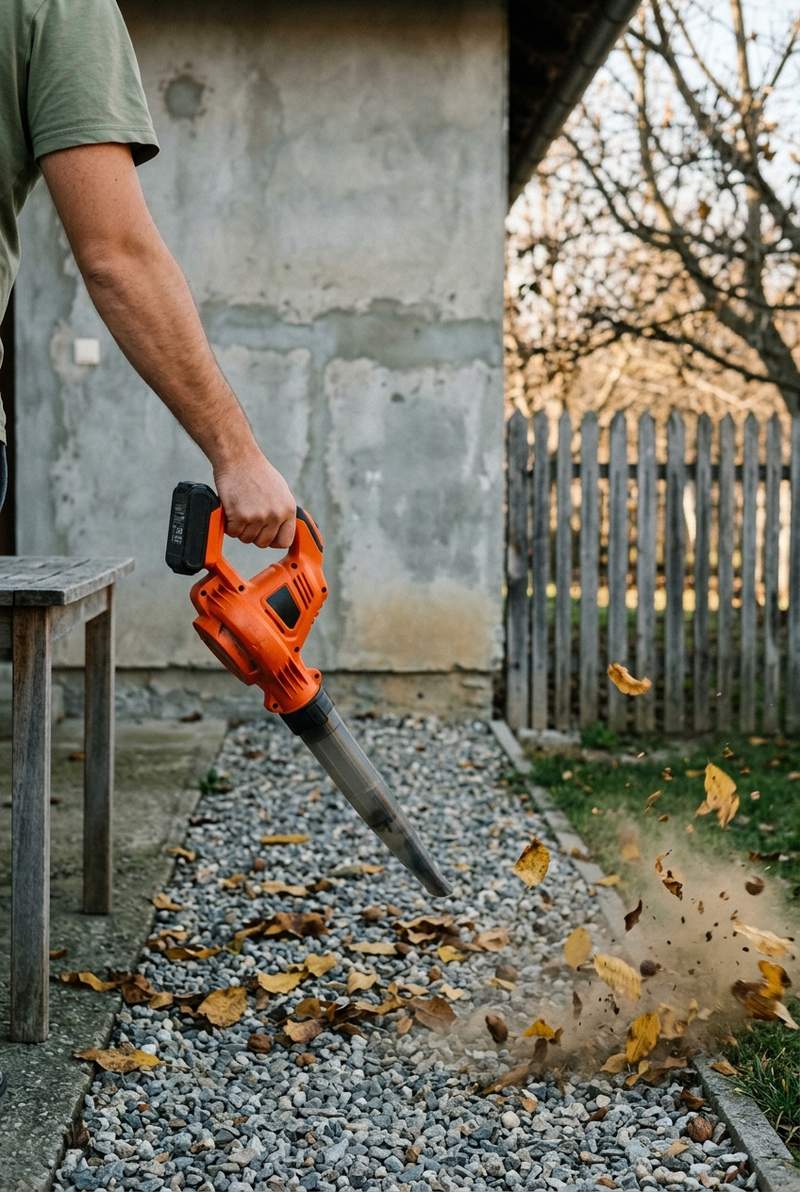
A cheap electric leaf blower, fifteen minutes, twice a month from October through December. The fine debris that would have decomposed into your germination layer never gets a chance to settle.
No dust layer, no weeds.
Tip
A small rechargeable leaf blower (around $80 to $120) is the single best weed-prevention tool I own. I run it over the gravel beds twice in October, twice in November, and once more after the first big wind storm in December. That’s the whole maintenance schedule.
Apply a Pre-Emergent Before Soil Hits 55F
Products like prodiamine (sold as Barricade) and oryzalin (Surflan) create a chemical layer that stops seeds from germinating. They don’t kill anything that’s already growing.
The timing matters more than the product. Apply when soil temperature is still below 55F (13C), typically a few weeks before the first reliable warm spell.
Once you see green shoots, it’s too late for that season.
This is the piece that converts most stubborn rock beds. You can hand-pull and vinegar all summer and still lose, because every weed that goes to seed feeds next year’s crop.
Stop the seed cycle and the population crashes.
Top Up Your Rock Depth to 4-6 Inches
A 2-inch rock layer is not deep enough to block light from reaching the soil. You want 4 to 6 inches across the whole bed.
Add rock to bald spots every two or three years. It also looks better.
The first season I added the pre-emergent step to the fall blower routine, the strip by the side of the house that I’d been weeding every spring for three years had maybe a dozen weeds in May. Not zero. Way less.
That’s the whole game.
An Hour in March, Quiet Rocks All Summer
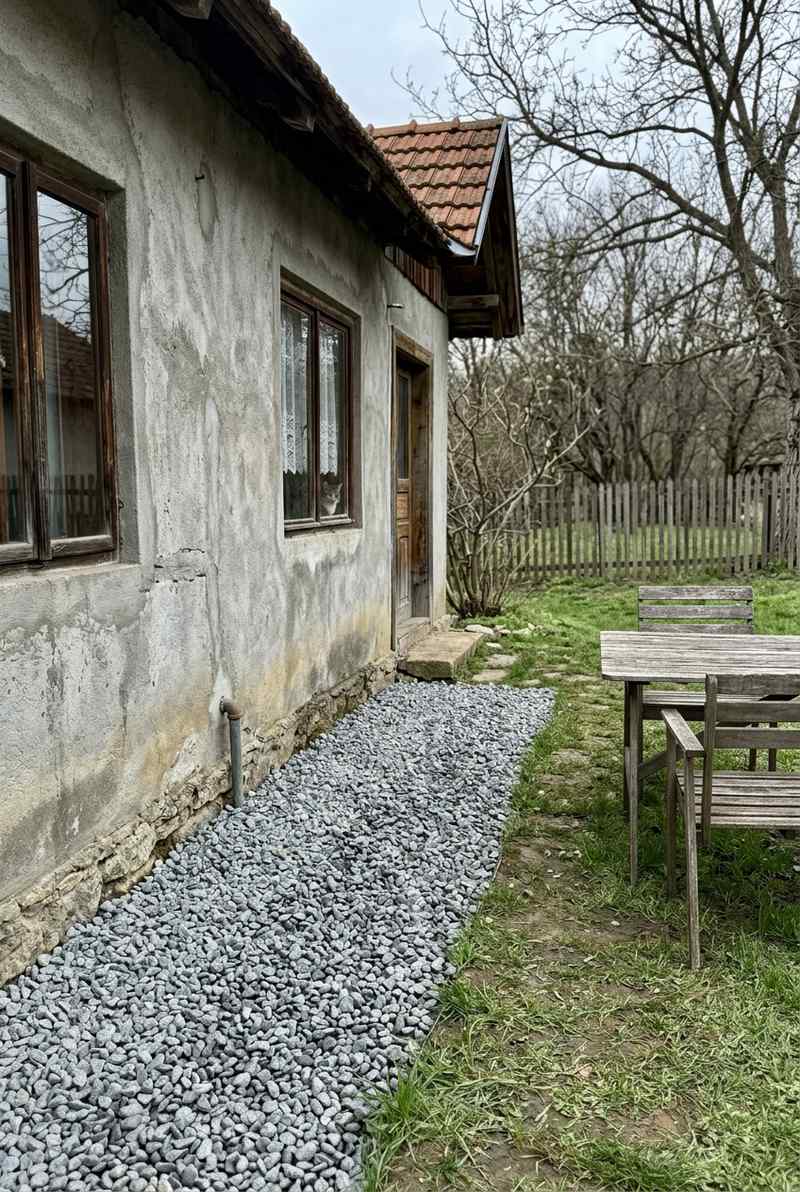
If you take the leaf blower route in fall and the pre-emergent in March, weeds in rocks stop being a project. They become a small thing you do once and then ignore for the year.
The first year of doing it this way is the hardest, because you’re cleaning up the backlog. By year two it’s an hour in early spring and twenty minutes here and there.
If I could go back and tell my first-year self one thing, it would be: stop fighting the rocks. Manage the dust. The weeds take care of themselves.