How and When to Prune Basil for Bigger, Bushier Harvests
- Kitchen herb
- Pesto garden
- Indoor windowsill
- Beginner-friendly
My first basil plant grew into a sad little tree. Two feet tall, four leaves at the top, a stalk like a chopstick, and a row of flower buds opening before the Fourth of July.
I’d been picking individual leaves off it for weeks like I was harvesting blueberries.
It turns out basil doesn’t want to be picked. It wants to be cut. And the difference between picking and cutting is the difference between four sad leaves and a bush you can’t keep up with.
Here’s the version of pruning I should have figured out in year one instead of year three.
Quick Pick: The Cuts That Actually Matter
- First pinch: when the plant is 6-8 inches (15-20 cm) tall with 6 true leaves.
- Maintenance pinch: every 2 weeks, or whenever any branch has 6-8 leaves.
- Flower-bud snip: the moment any bud appears, no exceptions.
- The cut itself: just above a pair of leaves, never above a single leaf.
- If you only do one thing all season: make the first pinch on time. Skip it and you’ll grow a basil tree.
Why Pinching Works (And Random Leaf-Pulling Doesn’t)
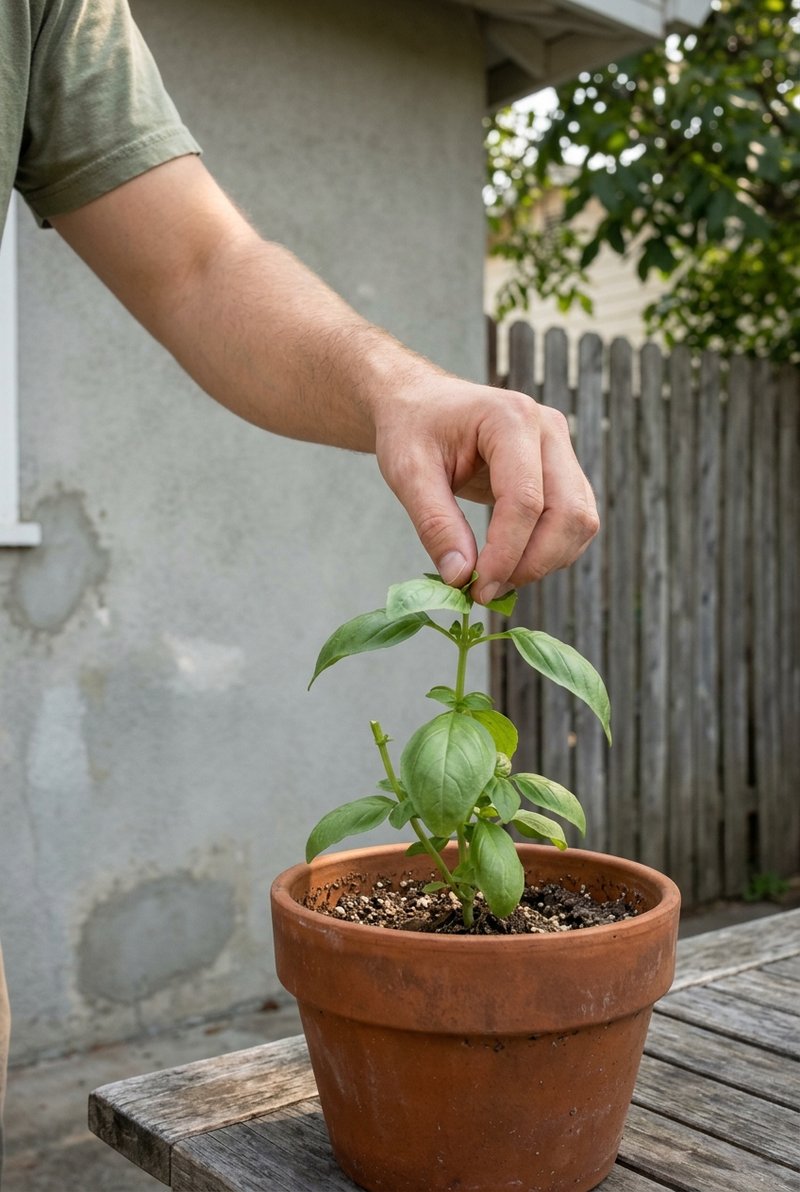
Before any cutting advice, the one piece of botany that makes everything else make sense.
Basil grows its leaves in opposite pairs. Every node on the stem has two leaves facing each other, not one leaf at a time. Look at any basil plant and you’ll see it: two leaves, then a gap, then two more leaves rotated ninety degrees, then a gap, then two more.
That paired structure matters because of how the plant decides where to grow next.
At the very tip of the main stem there’s a growing point producing a hormone called auxin. As long as that growing point is in place, the auxin flows down the stem and tells every lower bud “stay asleep, I’m in charge of growing this plant taller.” That’s called apical dominance, and it’s why an unpruned basil plant turns into a single tall stick.
The moment you pinch off that top growing point, the auxin signal stops.
The two little buds tucked at the leaf node just below your cut suddenly wake up and start growing. Two new stems from one cut. Each of those new stems then has its own growing tip, which you can pinch again in a couple weeks to get four stems. Then eight.
That’s the entire reason pruning multiplies your basil. Not magic. Plant hormones plus opposite leaves.
And it’s also why picking individual leaves from the bottom of the plant does nothing. You’re not removing the apical growing point. The auxin keeps flowing. The plant keeps growing straight up. You’ve just made it more naked.
The First Pinch Is the Most Important One
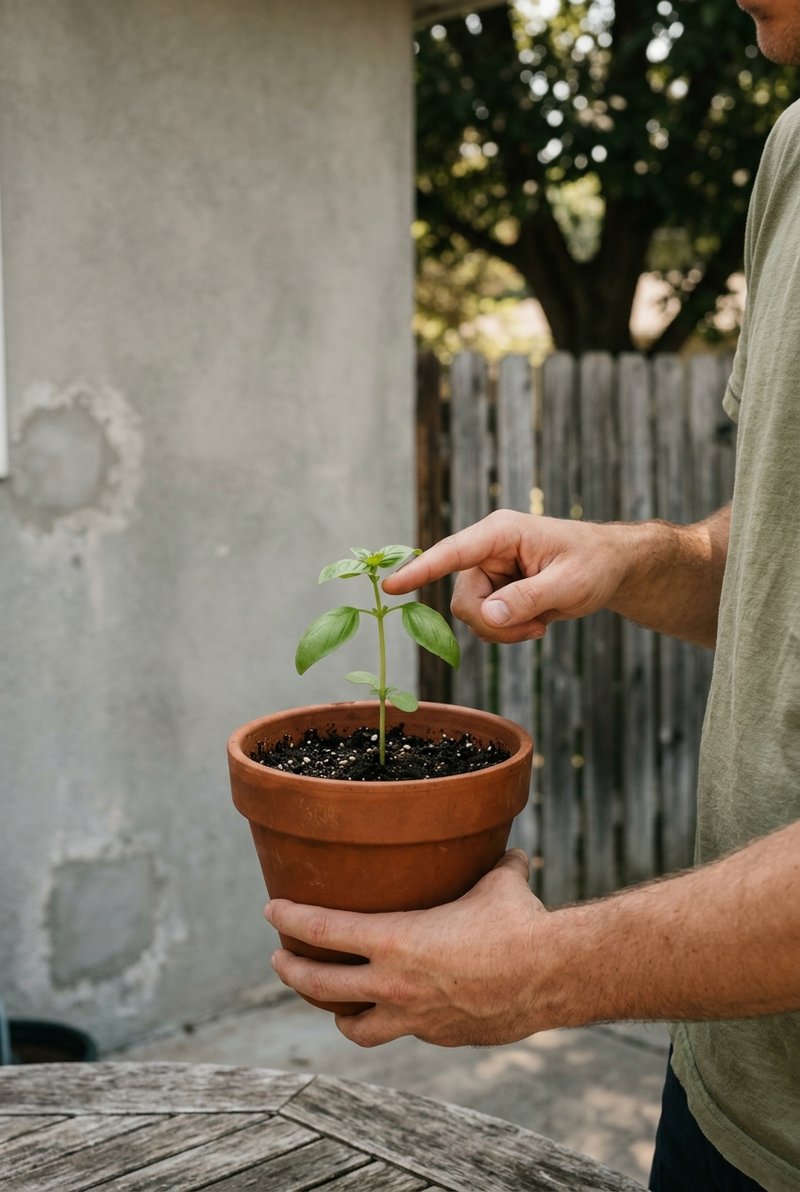
If you take only one piece of advice from this article, take this one.
When your basil plant is 6 to 8 inches (15-20 cm) tall and has 6 true leaves, take your fingernails or a small pair of scissors and cut the top off, just above the second set of leaves from the bottom.
You’ll feel like you’re amputating your own plant. Do it anyway.
What you’re leaving behind: a short stem with two pairs of leaves. What you’re removing: the upper third of the plant, including the growing tip.
Within a week, two new shoots will push out from the leaf node just below your cut. By two weeks, those shoots will be reaching for the sun and starting to make their own leaves.
This first pinch is the move that separates a bush from a tree. Most of the sad basil I see in friends’ kitchens missed this one cut. The plant got tall before anybody was paying attention, and once it’s tall and skinny with woody lower stems, you can’t really fix it.
Catch it at 6 inches. Always.
The Two-Week Rhythm That Builds a Bush
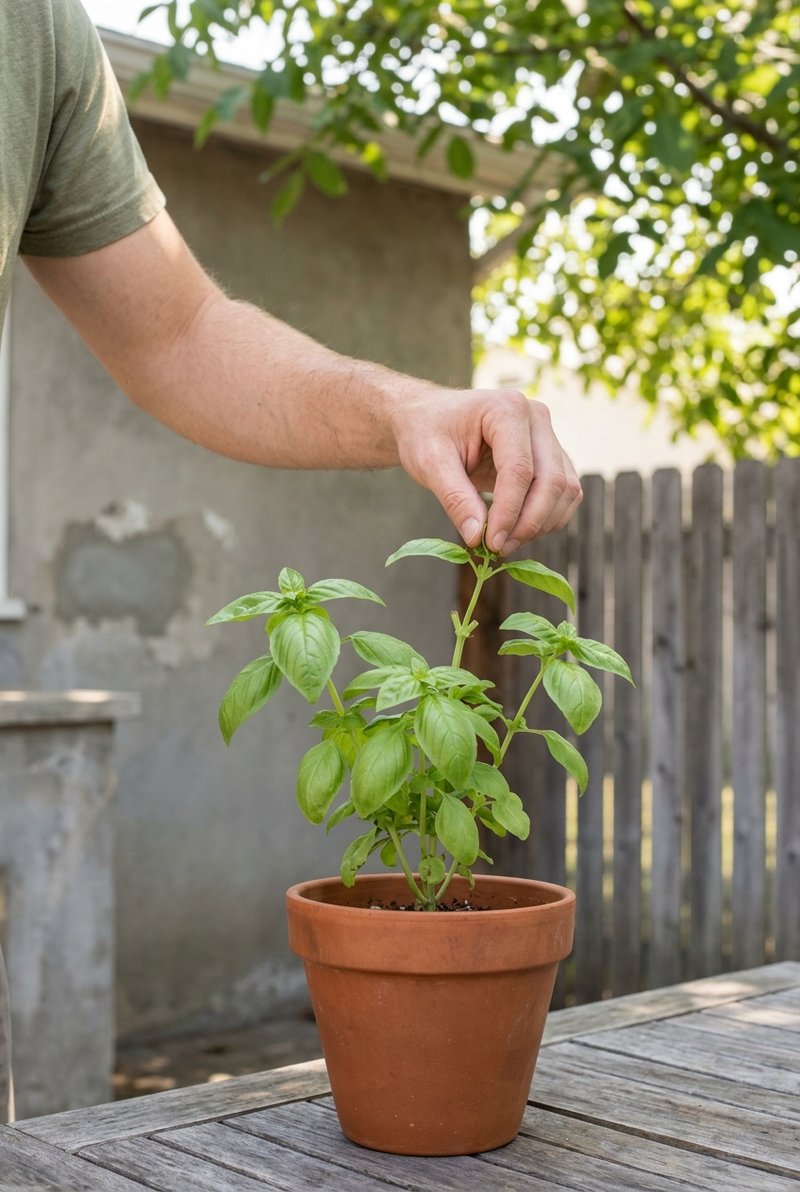
After the first pinch, the plant is on a different schedule. You’re now in maintenance mode.
Every 2 weeks, walk around the basil and trim the tip off every branch that has 6 to 8 leaves. Cut just above a pair of leaves, leaving the lower pairs intact. UMN Extension says the same thing in fewer words: keep cutting back to the first leaf set as branches reach 6-8 leaves.
Each trim doubles the number of growing tips on that branch. Two becomes four. Four becomes eight.
By August your basil should look like a small green cloud, not a row of sticks.
Three rules that keep the rhythm going.
Never take more than a third of the plant in one session. Going past that triggers a stress response and can actually push the plant toward early flowering, which is exactly what you’re trying to prevent.
Cut whole stem tips, not random leaves. One snip that removes a 3-leaf cluster is worth a hundred pulled single leaves.
Cut in the morning if you can. Essential oils peak before the sun heats the leaves, which means morning-harvested basil makes better pesto. By 2 p.m. on a hot day, the same leaves have noticeably less punch.
Different varieties run on slightly different rhythms.
| Variety | Bolt speed | Prune rhythm | Best for |
|---|---|---|---|
| Genovese | Average | Every 2 weeks | Pesto, classic Italian dishes |
| Italian Large Leaf | Average | Every 2 weeks | Caprese, fresh whole leaves |
| Thai | Fast | Every 10 days | Stir-fry, soups, curries |
| Lemon | Medium | Every 2 weeks | Tea, fish dishes |
| Purple / Dark Opal | Average | Every 2 weeks | Color contrast in the bed |
Pinch the Flowers the Day You See Them
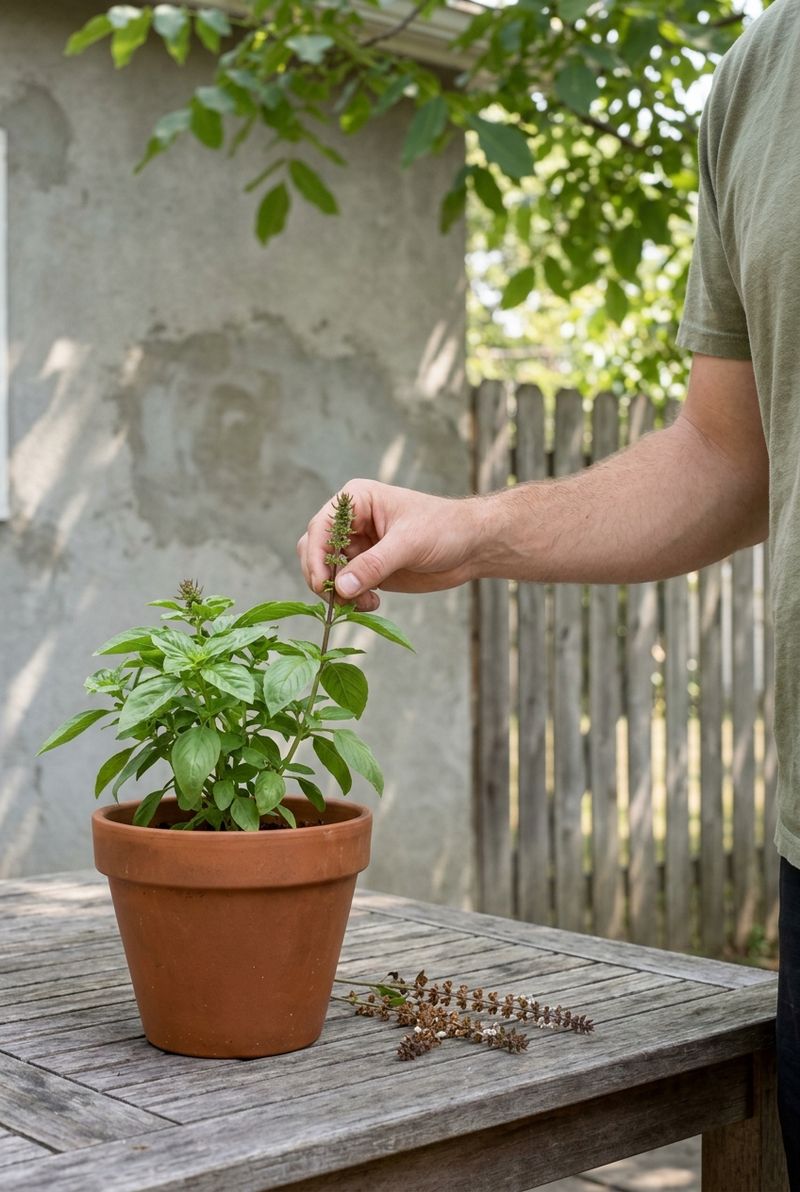
Once basil starts flowering, the leaves change. They lose the soft sweetness and pick up a bitter, almost peppery note.
That’s not random. The plant has decided it’s done making leaves and switched its energy into making seed.
Your job is to never let that decision happen. The moment you see a small tight bud forming at the top of any stem, snip it off above the next pair of leaves below.
One bud, one snip. Walk away.
Thai basil and Lemon basil bolt the fastest, so check them every few days during the hottest stretch of summer. Genovese and Italian Large Leaf are a little more relaxed, but only by about a week.
If daytime highs are sitting above 80F (27C) for days in a row, every basil variety speeds up the flowering clock. Check more often.
If Your Basil Already Bolted, Read This
Almost no article covers this part. They tell you how to prevent bolting and then ghost you when it happens.
Here’s the rescue cut.
Find the lowest pair of healthy leaves on a stem that’s holding a flower spike. Cut about 4 leaf nodes below the flower (UC Master Gardeners are the source on this one). You’ll be removing a serious chunk of the plant.
Water it deeply. Give it some shade through the hottest part of the afternoon for the next week if you can.
Within 10 days the plant should push out fresh leafy growth from the lower nodes you left intact. The bitterness fades. You’re back in leaf production mode, at least for another few weeks.
If the plant doesn’t respond in two weeks, it’s done. Pull it, compost it, and replant. Basil is cheap and fast.
Honestly, if mid-July rolls around and a bolted plant doesn’t bounce back fast, I just start a fresh round from seed. It’ll be ready to harvest by early September.
The Downy Mildew Threat You Should Know About
Pruning isn’t just about yield. It’s also the main thing standing between your basil and the disease that’s been wrecking commercial crops since 2007.
Basil downy mildew (caused by a water mold called Peronospora belbahrii) showed up in Florida in October 2007 and was through the entire East Coast within two seasons. It’s now everywhere. It rides into your garden on infected seed or wind-borne spores, and once it’s there, you can’t really cure it.
Spot the symptoms early
Pale yellow patches on the upper side of leaves, with a velvety gray-purple fuzz on the underside in the same spots. Per UMN Extension, the infection moves up from the lower leaves first. The moment you spot the gray fuzz, pull every affected leaf and toss it in the trash (not the compost). Heavy infection means pull the whole plant.
The disease loves humidity and stagnant air inside the leaf canopy. Which means a thick, unpruned, unventilated basil plant is the disease’s favorite restaurant.
Aggressive pruning to open up airflow is the single biggest thing you can do at home. Water at the soil line, not overhead. Avoid evening watering that leaves leaves wet overnight.
Did you know
Rutgers University has been breeding downy-mildew-resistant sweet basil specifically because of the 2007 outbreak. Look for varieties like Prospera, Rutgers Devotion DMR, Rutgers Obsession DMR, or Amazel on the seed packet. They’re not immune, but they’re dramatically more resistant than older sweet basil varieties, and they taste like the basil you remember.
Free Basil Plants From the Trimmings (the Water-Jar Trick)
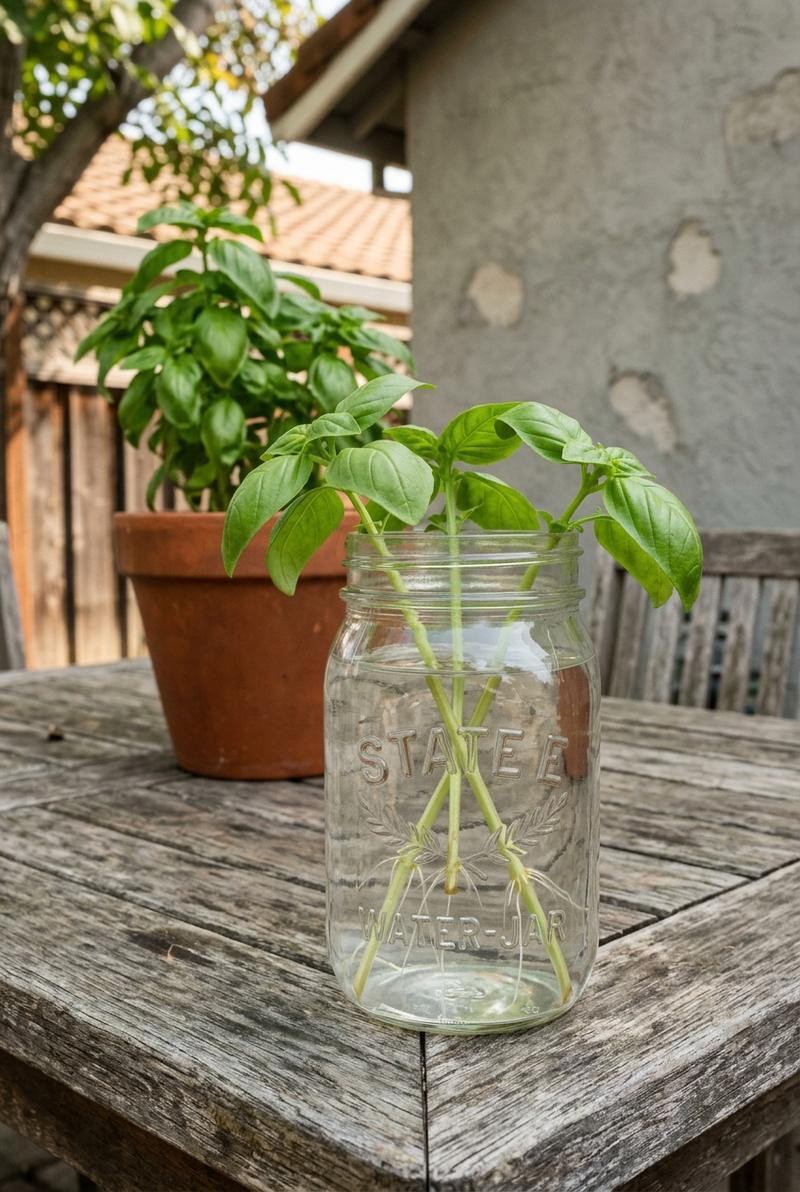
Every pinch and every maintenance trim gives you a few inches of fresh stem with a couple of leaf nodes on it. Don’t throw those in the compost.
Strip the leaves off the bottom half. Stick the bare stem in a small jar of water on the windowsill. Top up the water as it evaporates.
In 7 to 10 days you’ll see white roots forming at the submerged nodes. Once the roots are about an inch long, pot the cutting up in any small container of fresh potting soil. (If you’ve never grown anything in pots, my container gardening starter guide covers the basics.)
One basil plant becomes two. Then three. Then more than I know what to do with by mid-summer.
I started doing this the year my toddler decided basil leaves were a snack and ate her way through the windowsill plant in a single afternoon. I needed replacements fast, and a jar of water was a lot quicker than starting from seed.
Tip
The cuttings root fastest if you take them from soft new growth, not from older woody stems. The thinner and greener the cutting, the more eager it is to root.
Cut It Like a Haircut, Not Like a Salad
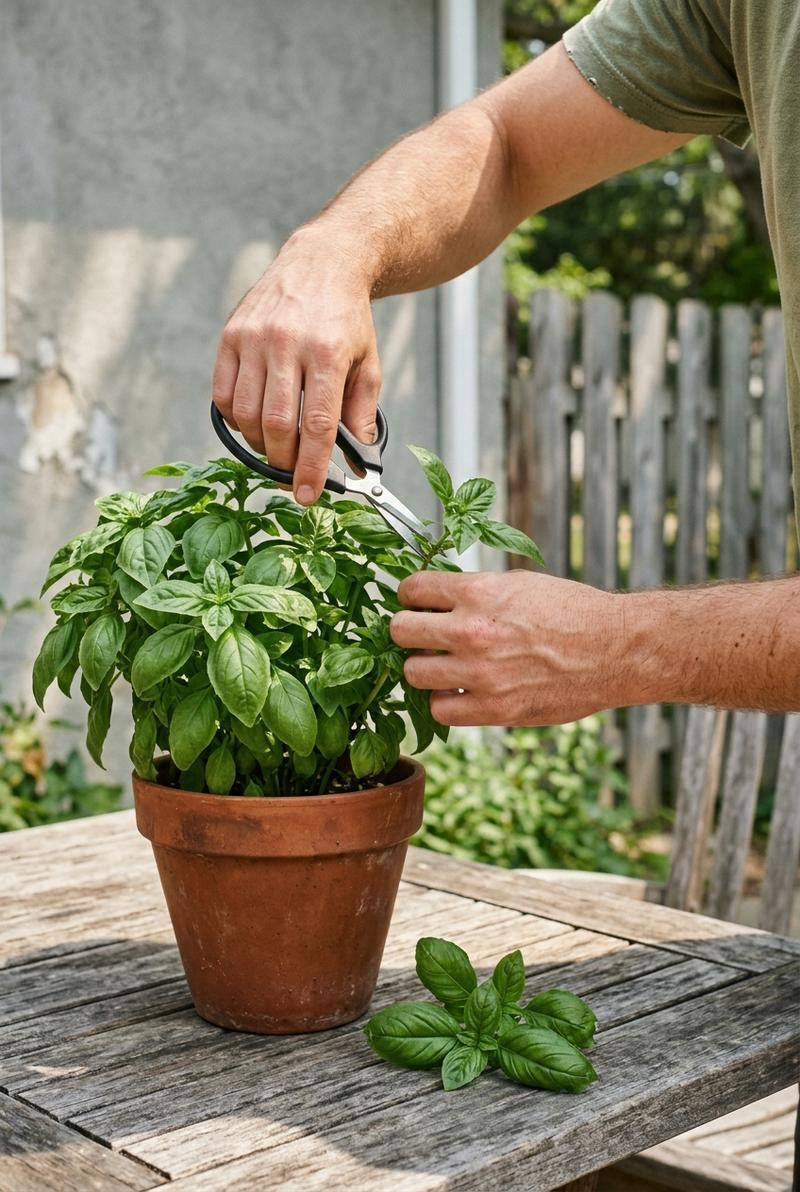
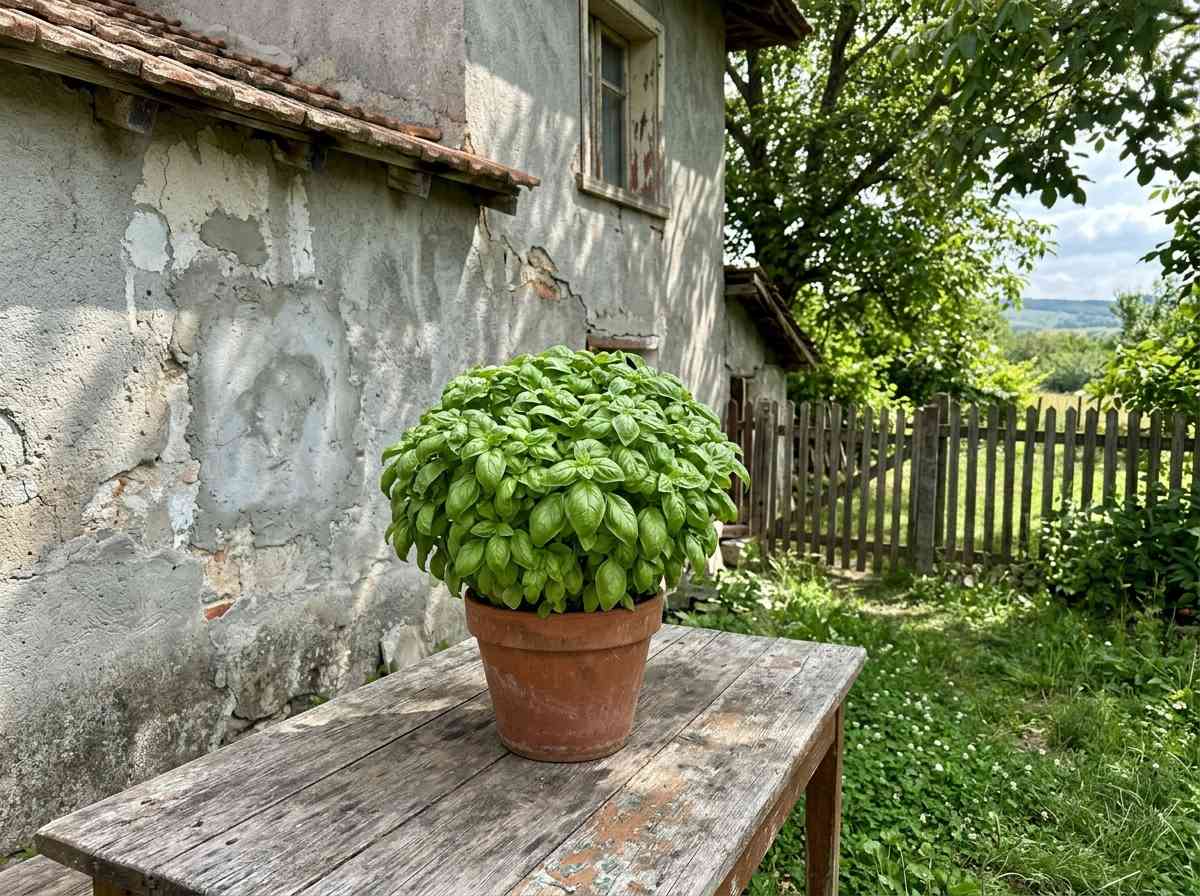
The basil tree from year one is a memory now. The current windowsill plant is on its third hard trim of the summer and gives me enough leaves for pesto on a Sunday with leftovers to dry.
The first pinch was the only thing I needed to change.
Treat your basil like a haircut you give every two weeks, not a salad you pluck whenever you remember. Snip flower buds the moment they show up. Take the trimmings, root them in water, and double your plants while you’re at it.