How to Grow Sunflowers From Seed (and Why Direct Sowing Wins)

- Cut flower garden
- Cottage garden
- Beginner-friendly
- Kid-friendly seed
The first time I tried to grow sunflowers, I started them on the kitchen windowsill in March. By the third week they were two feet tall, leaning sideways like drunk teenagers, and the moment I planted them outside they basically gave up.
I figured I’d ruined something delicate.
Turns out sunflowers are the easiest flower in my garden. I was just doing the one thing they hate.
Here’s the version I wish someone had given me before I wasted a packet of seeds and a perfectly good March.
Quick Pick: Which Sunflower Is for You
- Cottage garden you cut from for weeks: branching types like Italian White, Velvet Queen, or Lemon Queen.
- Tidy weekly bouquets: pollen-free single-stem like ProCut or Sunrich, sown every 10 days.
- Wow factor + edible seeds: Mammoth Russian or American Giant. One enormous bloom, harvested in late summer.
- Pots, kids, front of bed: dwarf varieties like Teddy Bear or Sunspot, blooming in 50-60 days.
- If you only do one thing: direct sow after the soil hits 50F (10C). Skip the windowsill.
Pick the Sunflower Before You Pick a Seed Packet
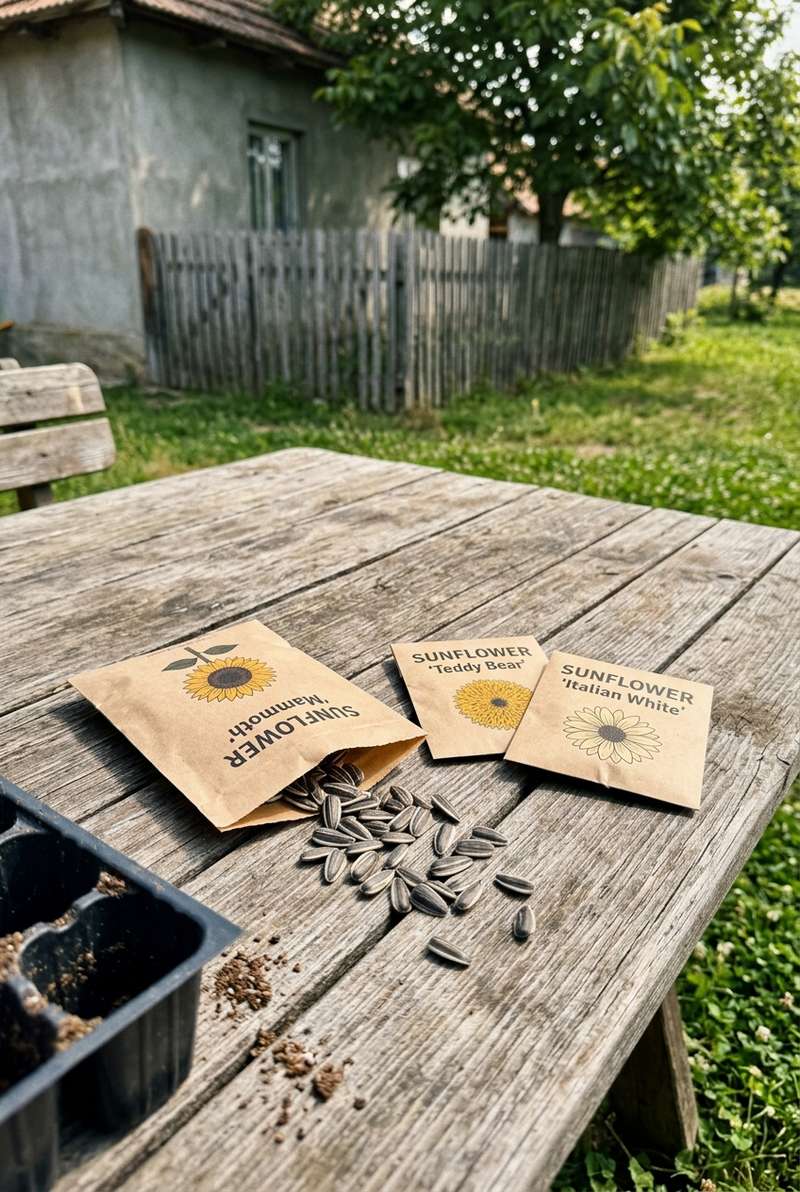
The biggest reason people are disappointed by their sunflowers has nothing to do with how they grew them. It’s the variety they bought.
Most packets at the garden center don’t tell you the one thing that matters most. There are two completely different kinds of sunflower plants, and they behave nothing alike.
Single-stem varieties bloom exactly one flower. Then they’re done. That’s it for the season.
If you bought Mammoth Russian expecting weeks of cutting, that’s why you got one giant bloom and an empty stalk.
Branching varieties keep producing side stems with smaller blooms for six to ten weeks. These are the ones you cut from all summer. Italian White, Velvet Queen, Lemon Queen, Autumn Beauty.
Once you know which kind you want, the rest of the decisions get easier.
| Type | Examples | Height | Days to bloom | Best for |
|---|---|---|---|---|
| Single-stem, pollen-free | ProCut, Sunrich | 5-6 ft (1.5-1.8 m) | 50-65 | Clean bouquets, succession sowing |
| Single-stem giants | Mammoth Russian, American Giant | 9-12 ft (2.7-3.6 m) | 90-120 | Wow factor, edible seeds |
| Branching, pollen-producing | Italian White, Velvet Queen, Lemon Queen | 5-7 ft (1.5-2.1 m) | 70-90 | Pollinators, weeks of cutting |
| Dwarf | Teddy Bear, Sunspot | 1-3 ft (30-90 cm) | 50-70 | Containers, kid projects, edges |
My three-year-old picks the giants every spring because she likes flowers taller than she is. I grow a row of Italian White for the dining table and a patch of ProCut for the actual bouquets, because I like having something to give to a neighbor without scrubbing pollen off the counter.
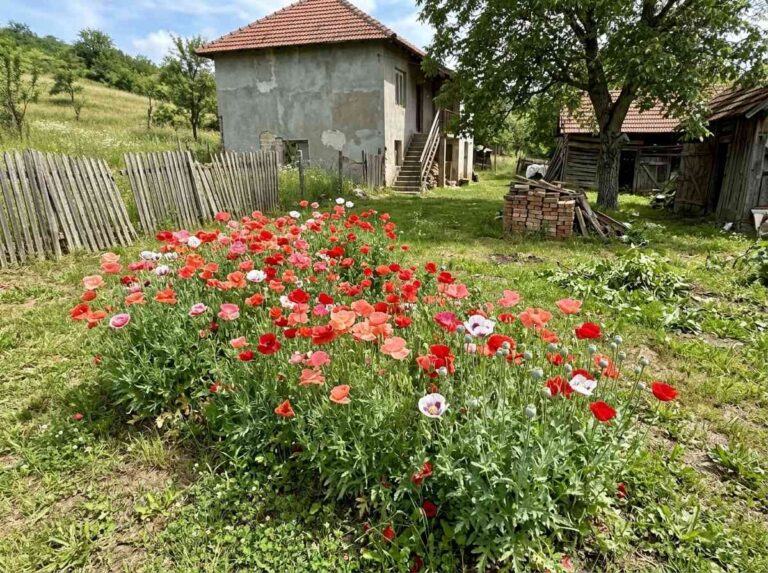
If your spring planning usually includes poppies from seed, sunflowers slot right in next to them. Same direct-sow rhythm, opposite shape.
Why I Stopped Starting Them Indoors
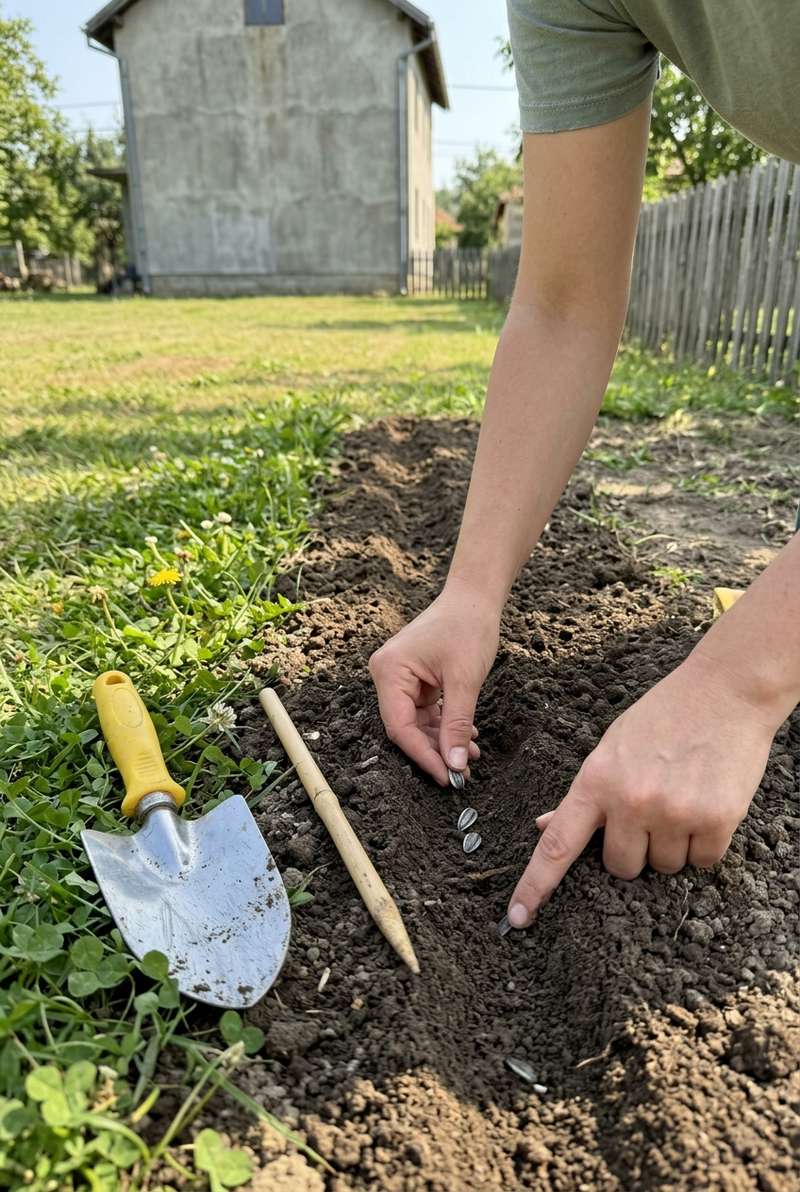
Sunflowers grow a long, single taproot that drives down into the soil within the first ten days of germination. It does not like being disturbed.
When you start a sunflower in a cell tray on the kitchen windowsill, the taproot hits the bottom of the cell almost immediately and starts spiraling. By the time you plant it out, the root system is already a small angry knot.
That’s the leggy, spindly, never-quite-recovered look. Not a problem with your light. A problem with the pot.
Direct sowing skips the whole mess. Wait until soil temperature hits 50F (10C), drop the seed an inch (2.5 cm) deep, and walk away. Germination takes 7 to 10 days, and the plant catches up to anything you could have started inside within about three weeks.
The one exception: squirrels.
If you have a squirrel problem (and most of us do), the seeds will be gone before the first leaves show. I lost an entire row to a fat gray squirrel that watched me plant every single one and then dug them up by dinner.
The fix is a strip of hardware cloth or chicken wire laid flat across the row, weighted with a couple of rocks. It only has to stay there until the seedlings push through, which is about two weeks. Then you lift it off.
Tin foil also works, oddly. Squirrels don’t like the noise.
Sow Every Ten Days for Blooms From June to October
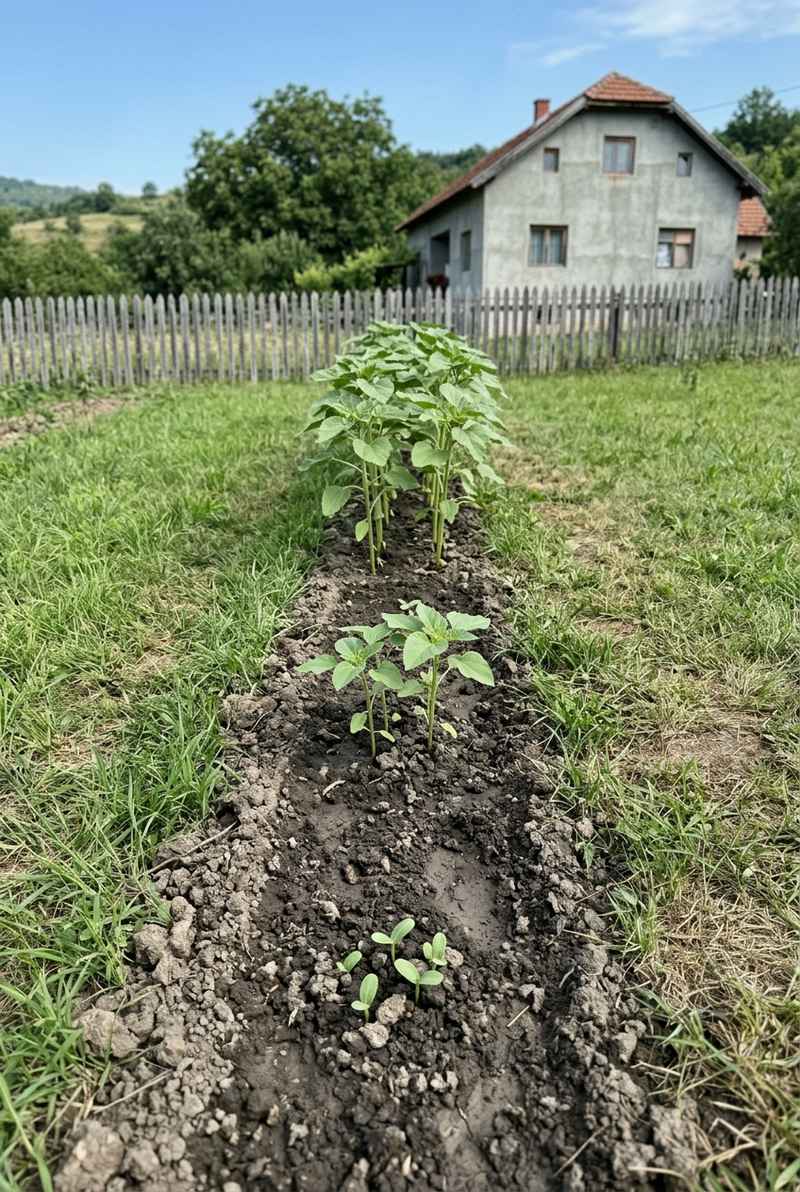
This is the trick that turned my one-and-done sunflower row into a five-month cutting garden.
Single-stem varieties bloom once. The plant grows up, opens one flower, and then the show is over for that plant.
So you stagger the sowing. Every 10 to 14 days from last frost through midsummer. One short row at a time.
By the time the first row is blooming, the second row is knee-high. By the time the second row is blooming, the third is up. The garden never has a sunflower gap.
Stop sowing about 90 days before your first expected fall frost. Anything later won’t have time to flower.
Tip
For a small garden, one packet of single-stem ProCut split into four sowings (April, mid-May, June, early July) gives you fresh sunflowers from mid-June through October. That’s the whole cutting plan, with one $4 seed packet.
Branching types don’t need succession sowing because they bloom for weeks on their own. One sowing in late spring is enough.
If you want a whole bed that blooms continuously without the sowing rhythm, my list of flowers that bloom all summer is built around the same idea. Sunflowers pair beautifully with most of them.
Keep Them Out of the Vegetable Bed
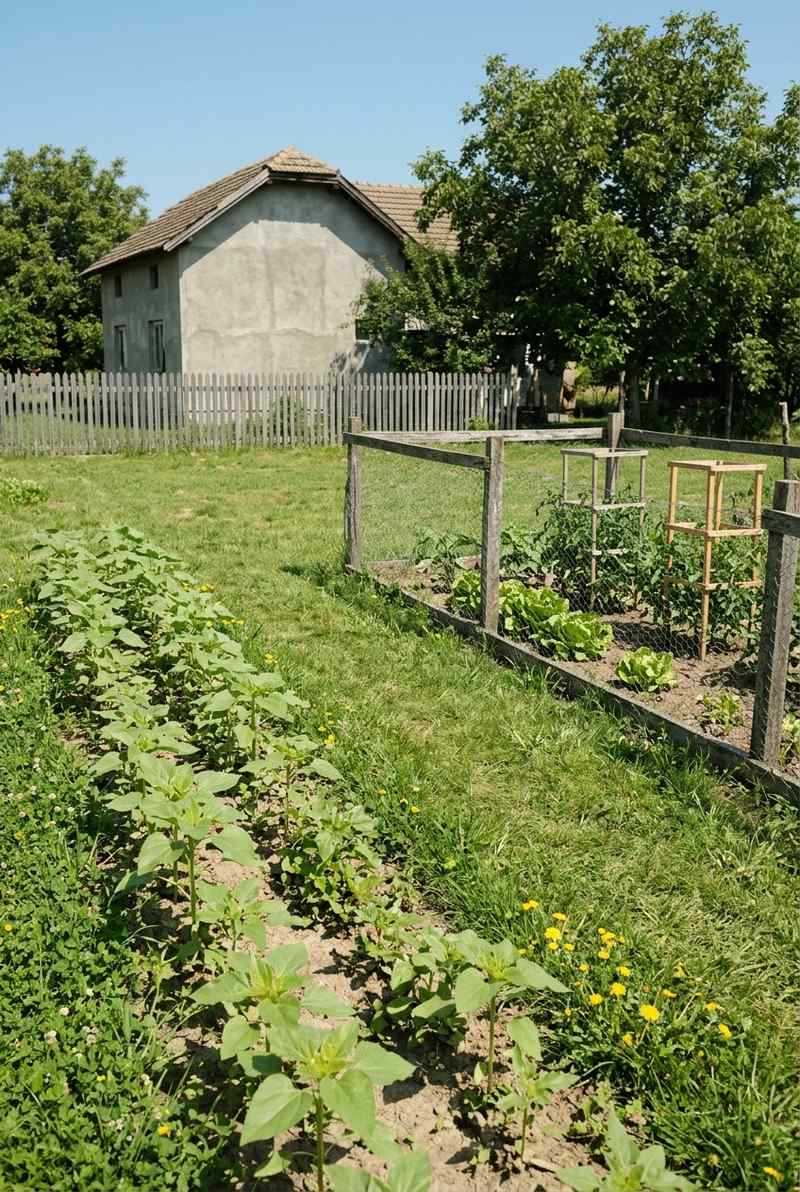
Here’s the fact almost nobody mentions when they sell you sunflower seeds. Sunflowers are allelopathic.
The roots, hulls, and decomposing leaves release chemicals that suppress the germination and growth of many nearby plants. Penn State Extension and the University of Illinois both flag this, especially for vegetable gardeners.
Plant a row of sunflowers along the edge of your tomato bed and the tomatoes within a foot or two will sulk all summer. They won’t die. They just won’t thrive.
The same goes for spent sunflower hulls dropped under a bird feeder. Bare patches form where nothing else will grow, sometimes for a year or two after the feeder comes down.
The fix is easy. Give sunflowers their own area.
A dedicated cutting row along a fence. A back-of-the-border patch behind perennials. A separate spot at the far end of the vegetable garden, not inside it.
If you’re already planning out a sunny stretch in front of the house, my list of full sun flowers for the front yard works the same border just as well, without the allelopathy issue.
Heads up
Never use spent sunflower hulls or shells as mulch in a vegetable bed or around tender perennials. The allelopathic compounds in the hulls take months to break down and will keep new seeds from germinating in that soil. Compost them in a separate bin instead, and let them sit for a full year before using.
The Pollen-Free vs Bee Magnet Conversation
Walk into any seed catalog and you’ll see the labels: pollen-free, pollen-producing, bee-friendly. They mean what they say, and the trade-off is real.
Pollen-free hybrids (ProCut, Sunrich, Vincent) are bred for the cut-flower market. No yellow dust on your tablecloth, no allergy flare-up, and up to two weeks of vase life in plain water.
They also produce no pollen for bees. Some nectar, yes. But pollen is what bees actually take home, and pollen-free hybrids don’t make any.
Pollen-producing varieties like Lemon Queen are the opposite. They’re the gold standard for native bee gardens and feed everything from honeybees to sweat bees to the occasional bumblebee that lands so hard the whole stem bends.
The pollen also gets everywhere. Your cut flowers will drop a yellow ring around the vase within a day.
My honest take: grow both. Plant a row of ProCut along the cutting bed and a clump of Lemon Queen further back for the bees. They cost the same. They take the same care.
You don’t have to pick one.
The Day They Stop Following the Sun
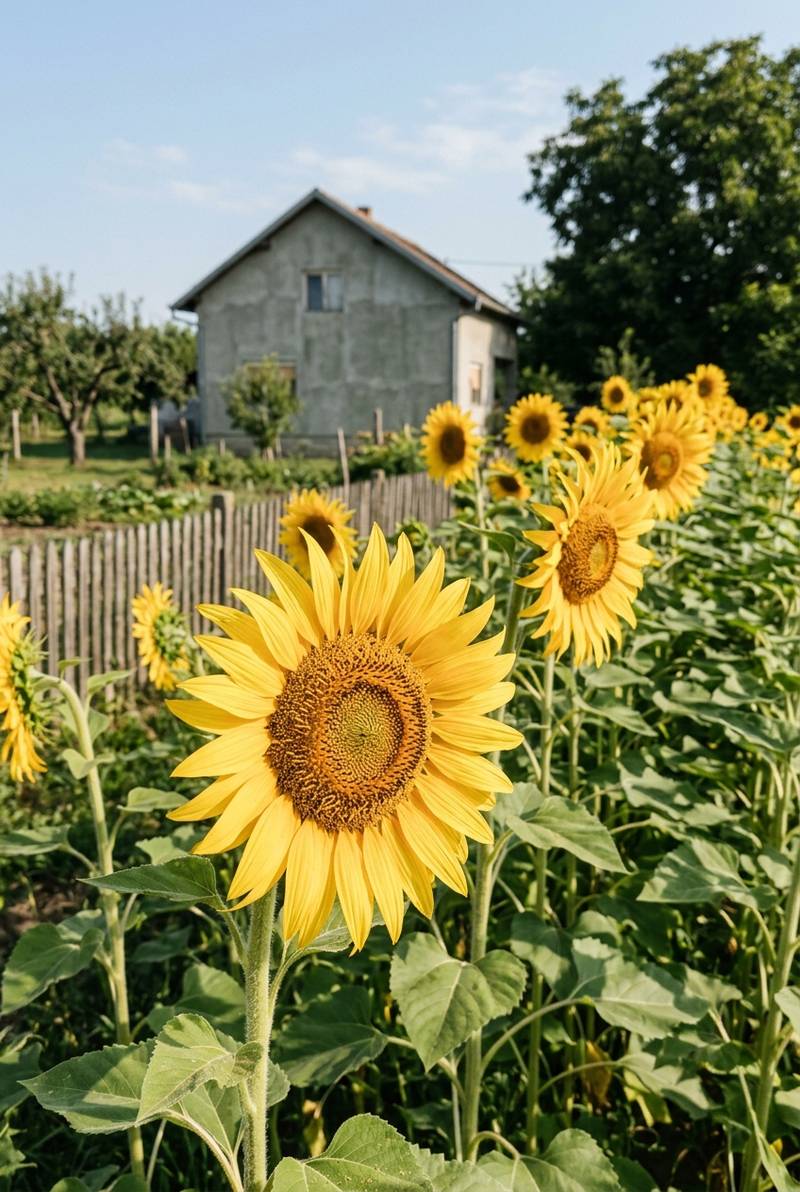
Here is the thing about sunflowers that surprised me most.
“Sunflowers follow the sun” is only half true. Young plants do, every day, from east in the morning to west at night, tracking the light with a slow circadian sway.
The moment a sunflower opens its bloom and reaches full maturity, the tracking stops. The stem stiffens. And the flower locks permanently facing east.
Every mature sunflower in a row, anywhere in the world, faces east. That’s why a field of them looks like a crowd watching the same sunrise.
Plant accordingly. The east side of your row gets the front-of-house view. The west side gets the back of every bloom.
I learned this the slow way. My first row was sown along the west side of the yard, facing the house. Every bloom turned its back on the kitchen window and stared into the neighbor’s yard all summer.
Now I plant them on the east side. The neighbors see the back of the row. I see the faces.
Did you know
Researchers writing in Science found that sun-tracking juvenile sunflowers accumulate up to 10% more biomass than plants prevented from tracking. The east-west sway isn’t just pretty. It’s the plant maximizing photosynthesis through the day. Once the bloom locks east at maturity, that morning sun warms the flower face first, which pollinators measurably prefer.
Eighty Days From a Brown Seed to an Eight-Foot Flower
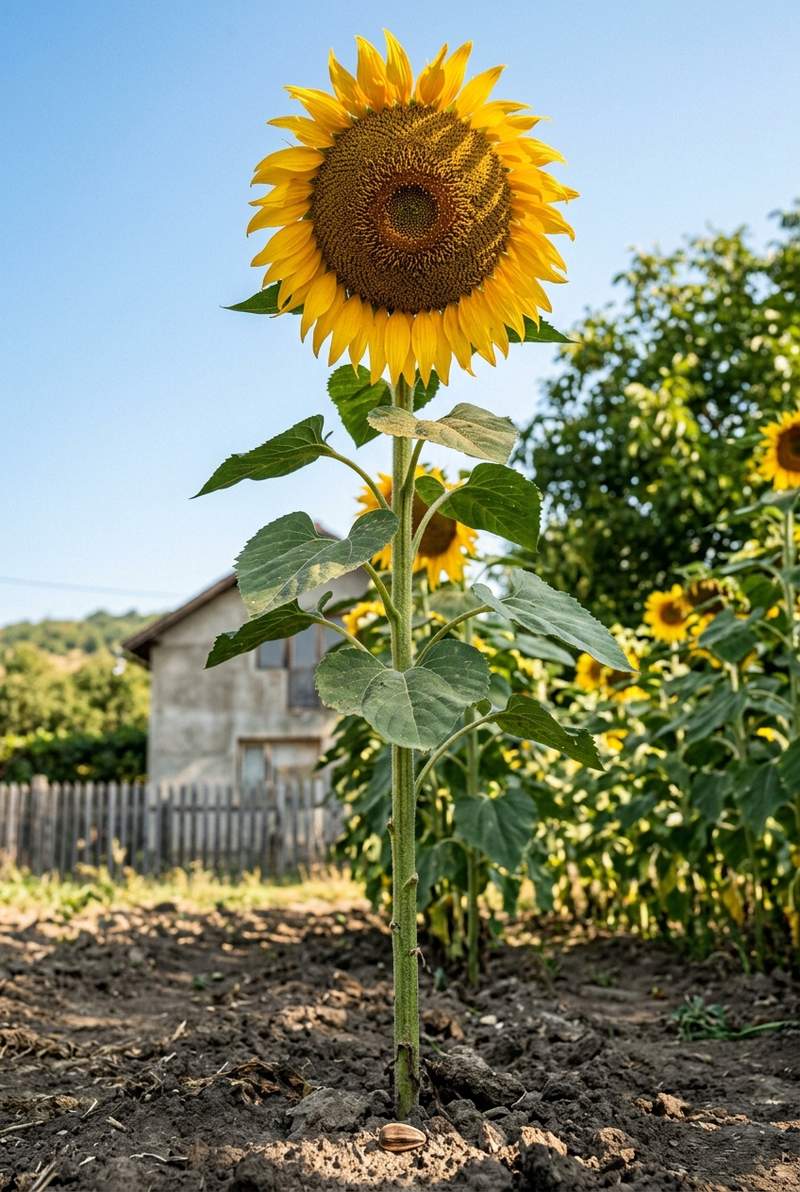
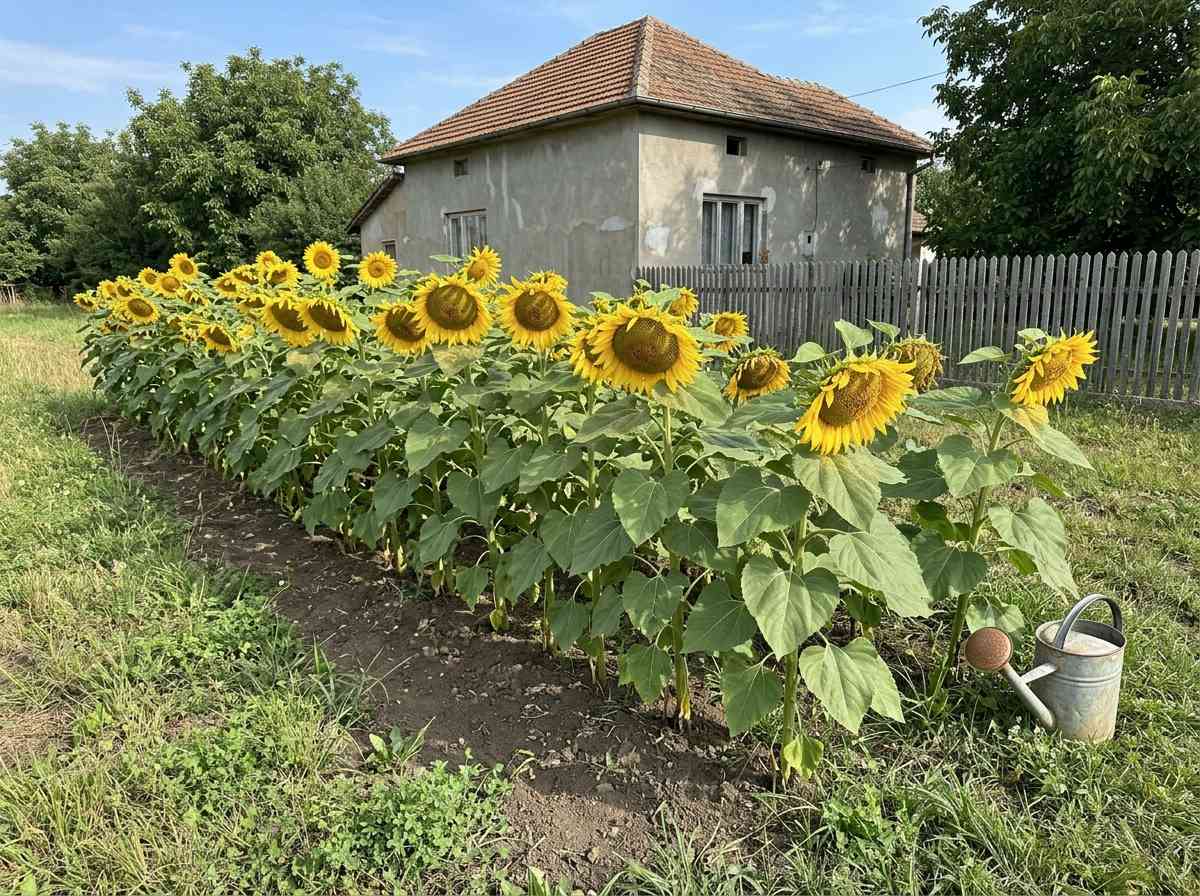
The sunflower I overcomplicated for a year turns out to be the easiest flower in my garden. Drop a seed in warm soil. Cover the row from the squirrels for two weeks. Walk away.
Eighty days later there’s a flower as tall as I am, facing east, with a bee asleep in the middle of it.
If I could go back and tell my windowsill-tray self one thing, it would be: stop trying to control sunflowers. They know what they’re doing. You just have to get out of the way.