How to Grow Blueberries in Pots

- Container fruit
- Patios & small yards
- Soil pH explained
- Zones 3-9
My first blueberry bush went into regular potting soil, because soil is soil, right?
It spent two years producing roughly nine berries and leaves the color of a highlighter, and then I finally read about pH. The second bush, planted in the right mix, out-fruited it the first summer.
And the part nobody leads with: pots are actually the easiest way to grow blueberries, because you get to build the weird acidic soil they demand instead of fighting your yard.
At a Glance
- Blueberries need acidic soil, pH 4.5-5.5. Regular potting mix doesn’t come close.
- The mix: half peat moss, half aged pine bark. That’s it.
- Start in a 5-gallon pot, finish in a 15-25 gallon one
- 6-8 hours of sun, steady moisture, and rainwater over tap when you can
- Plant two different varieties. Even “self-pollinating” bushes fruit noticeably better in pairs.
It’s a Soil Problem Before It’s Anything Else
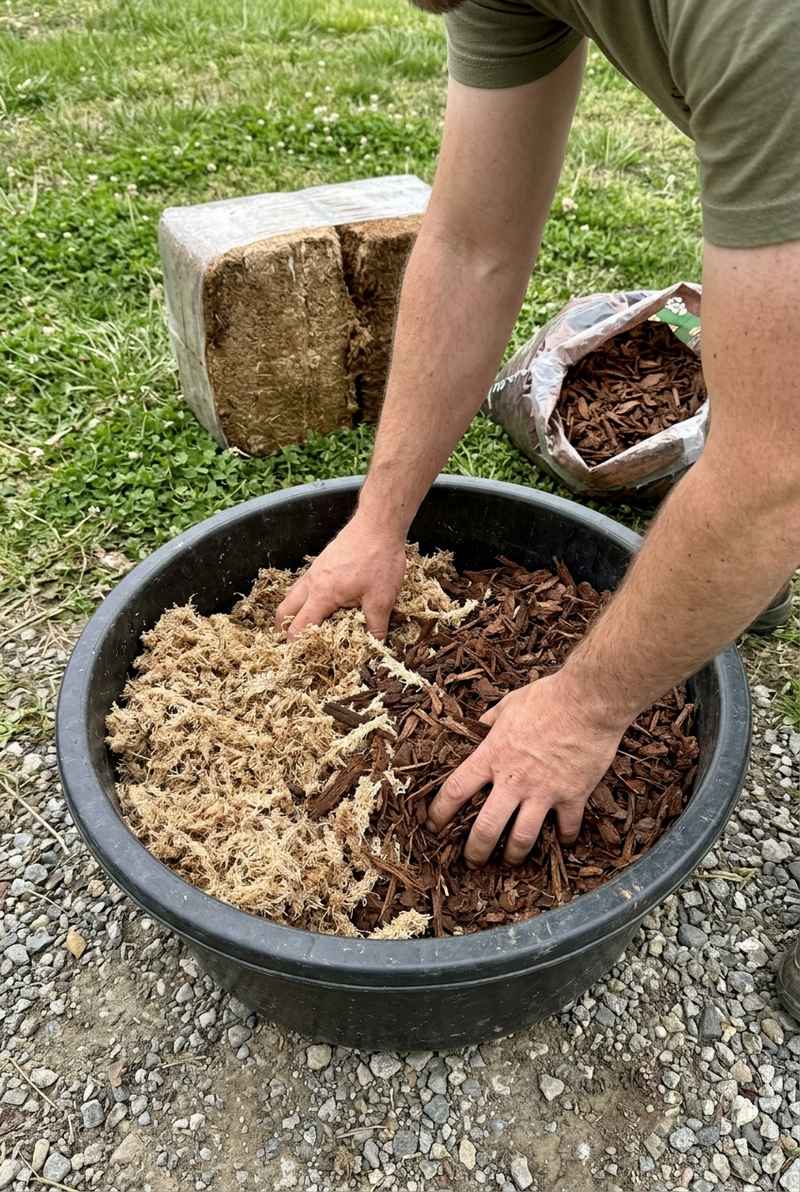
Blueberries want soil at pH 4.5-5.5, which is dramatically more acidic than your garden, your potting mix, and basically everything else you grow. In normal soil they can’t absorb iron, and you get yellow leaves and a bush that just sits there. That was my first one.
The container mix that works: half sphagnum peat moss, half aged pine bark, with a scoop of perlite if you have it. No garden soil, no standard potting mix, not even “premium” anything.
One trap inside the trap: use aged pine bark, not fresh. Fresh bark steals nitrogen from the pot while it breaks down, and your plant starves in its first spring. The bagged stuff sold as “pine bark fines” or soil conditioner is usually aged and fine.
Minnesota Extension’s blueberry guide goes deep on the pH science if you want it.
Pot Size: Wider Beats Deeper
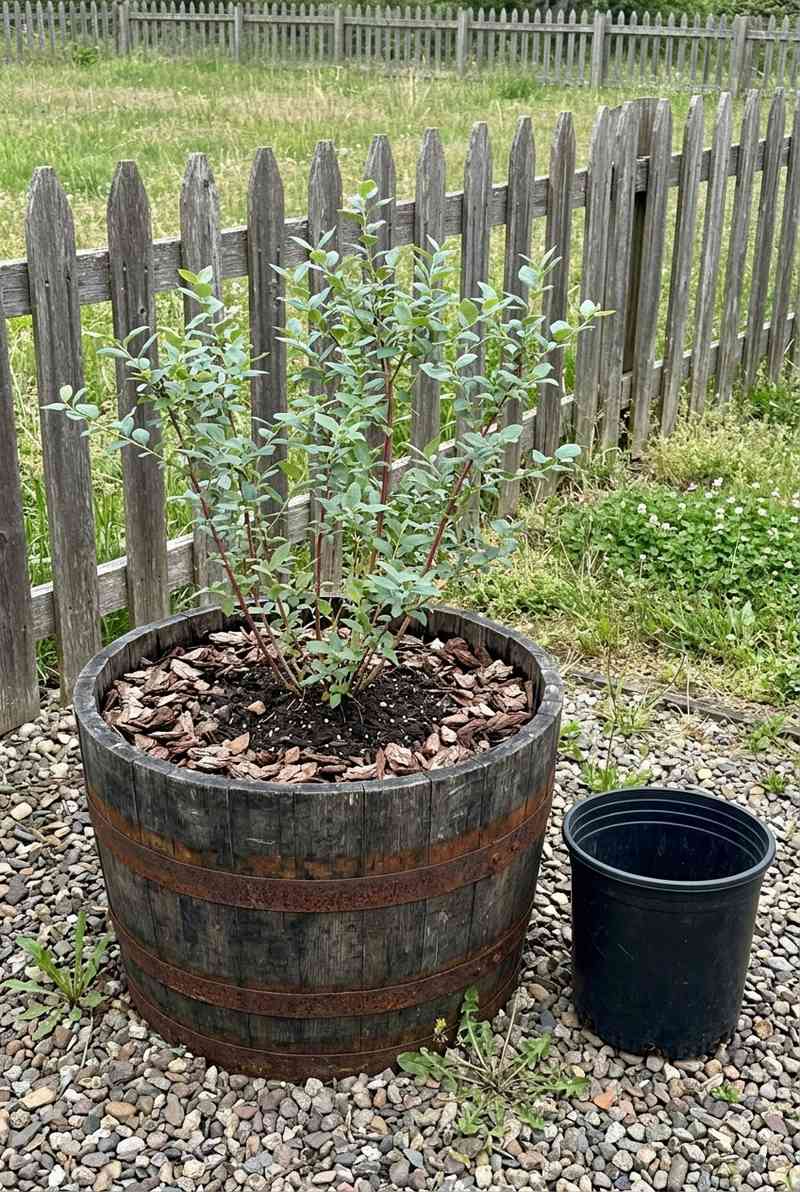
Blueberry roots are shallow and spread sideways, like a pancake, so a wide pot matters more than a deep one.
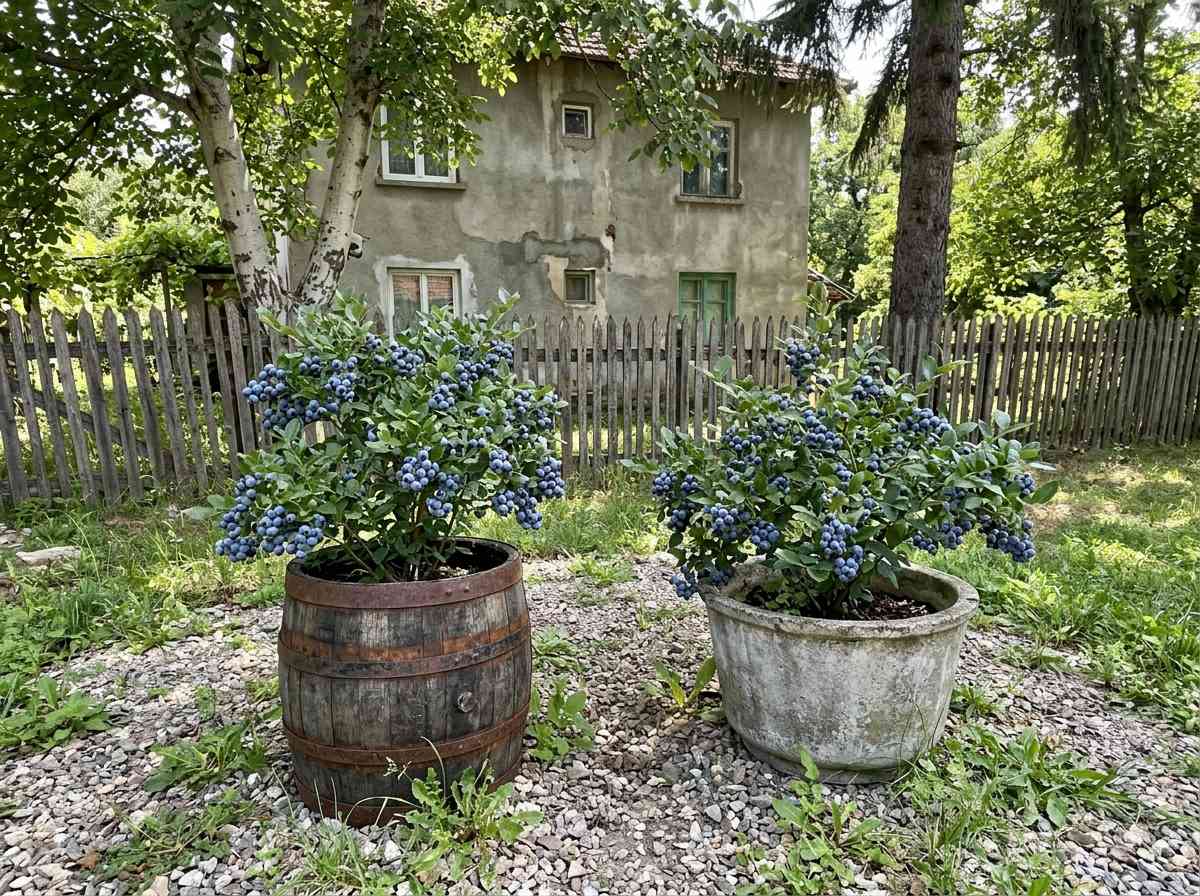
The schedule I follow: start a young bush in a 5-gallon pot, then up-pot every 2-3 years until it lands in its forever home, a 15-25 gallon container (roughly 18-28 in / 45-70 cm across). A half whiskey barrel is the classic and looks better than anything from the garden center.
Drainage holes are non-negotiable. Drill extra if you have to. Wet feet plus acidic mix equals root rot with extra steps.
Buy Two Bushes. Here’s Why.
Most blueberry varieties are technically self-fertile, and the tag will happily tell you so. What the tag skips: plant two different varieties that bloom at the same time and both bushes give you bigger berries and more of them.
These four are bred for pots:
| Variety | Size | Zones | Why pick it |
|---|---|---|---|
| Top Hat | Under 2 ft (60 cm) | 4-7 | True dwarf, lives happily on a patio table |
| Jelly Bean | 1-2 ft (30-60 cm) | 4-8 | Fruits fast, often in year 1-2 |
| Peach Sorbet | 1-2 ft (30-60 cm) | 5-10 | Foliage shifts color all four seasons |
| Northblue | Up to 4 ft (1.2 m) | 3-8 | The cold-climate workhorse, biggest yields here |
I run Jelly Bean and Northblue side by side. The pair costs one extra bush and roughly doubles the harvest, which is the best math in fruit growing.
Save this to PinterestTap Water Is the Slow Killer
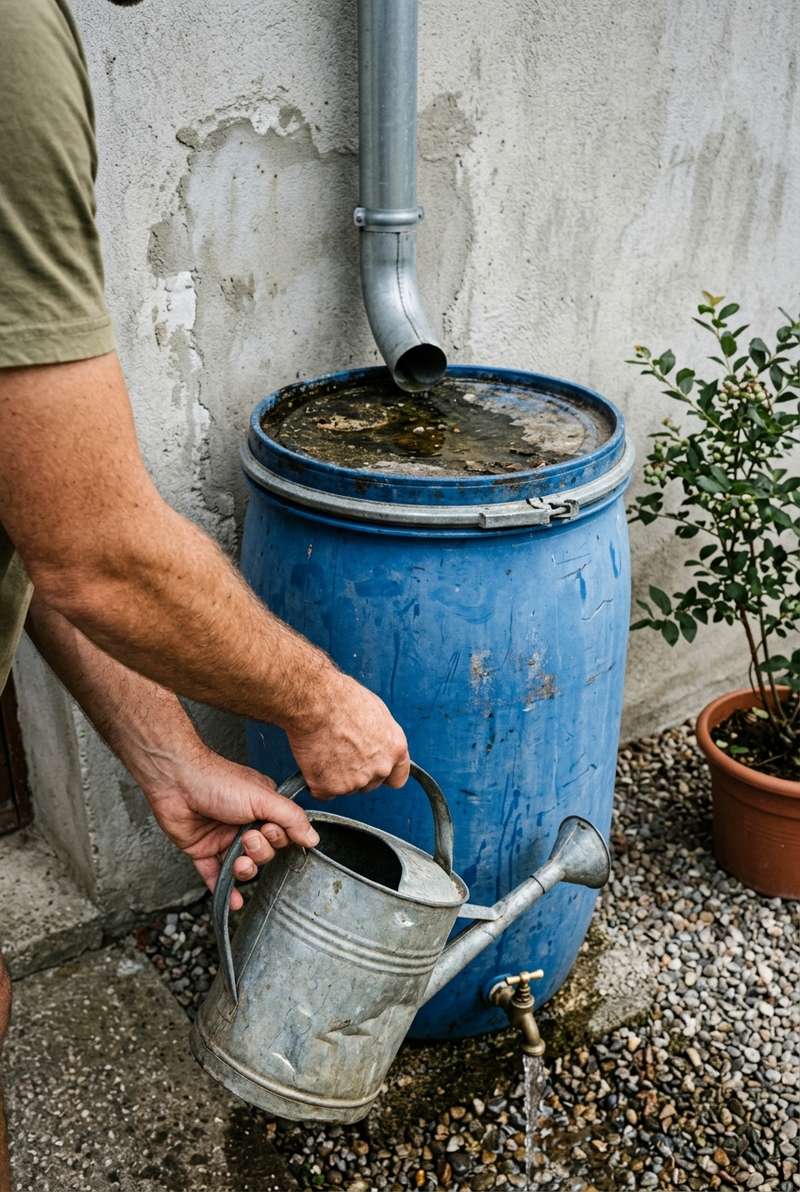
You build the perfect acidic mix, and then undo it one watering can at a time. Most city tap water is alkaline, and over a season it quietly pushes your pot’s pH back up toward “nine berries and yellow leaves” territory.
Rainwater is the fix. A barrel under a downspout covers a couple of potted bushes all summer. No barrel? Some growers add a teaspoon of vinegar per 2 liters of tap water; I’d rather just retest the soil pH once mid-season and correct with a sprinkle of elemental sulfur when it drifts.
Keep the pot consistently moist, water when the top inch (2.5 cm) is dry, and mulch the surface with 2-3 in (5-7 cm) of pine straw or bark. The one thing forums agree on: you basically can’t over-mulch a blueberry.
Feeding Shallow Roots Without Burning Them
Blueberries eat lightly and only like one form of nitrogen (ammonium), so grab an acid-lover fertilizer, the kind sold for azaleas and hollies, and use less than the bag suggests.
Feed in early spring before the buds break, scratch it gently into the surface away from the crown, and stop by mid-summer. Those pancake roots sit right under the mulch; heavy-handed granular feed burns them fast (I speak from experience, unfortunately).
Common mistake
Coffee grounds won’t acidify your pot. Spent grounds test nearly neutral, around pH 6.5-6.8, because the acid leaves with the brewed coffee. If the pH needs to drop, elemental sulfur or an acid fertilizer does the actual work.
Winter: The Pot Is the Weak Point
The bush isn’t the problem in winter; the exposed root ball is. Frozen ground stays near freezing, but a container swings much colder with the air.
The ladder of protection, mildest climate to coldest: shove the pot against the house foundation, wrap it in burlap or frost cloth, or move it into an unheated garage or shed for the coldest months. Unheated matters. The plant still needs its winter chill to fruit; it just doesn’t need its roots turned into a popsicle.
Water it lightly once a month in storage. Dormant isn’t dead.
Birds, Patience, and the First Real Harvest
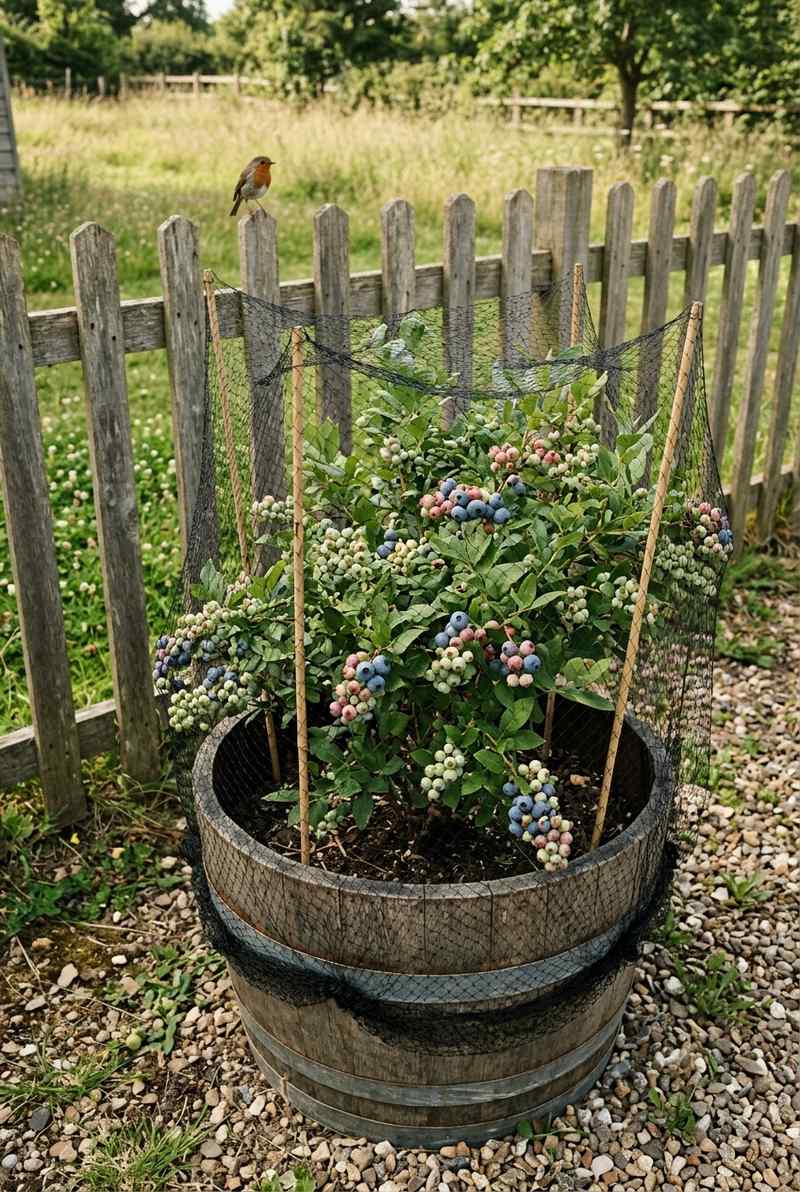
Year one and two are mostly establishment. A young bush wants to fruit before it can afford to, so pinch off most blossoms the first spring… it hurts, and it works. Real harvests start in year 2-3.
When berries show their first blush of color, net the bush that week. Wait until they’re blue and the birds will beat you to every single one. Not most of them. All of them.
I learned this from a robin who cleared my entire first-ever ripe crop in one morning while I watched through the window, coffee in hand, too slow to matter.
Then leave ripe berries on the bush a few extra days after they turn blue. That’s when the sugar shows up, and it’s the difference between store berries and the reason you did all this.
Potted Blueberry Questions
Why are my blueberry leaves turning yellow with green veins?
That’s iron chlorosis, and it’s a pH message, not an iron shortage. The soil has drifted above 5.5 and the roots can’t grab iron anymore. Test, then correct with sulfur or acid fertilizer.
Is one bush enough?
It’ll fruit, so yes, technically. But two varieties blooming together mean bigger and more berries on both. If the patio only fits one pot, pick Jelly Bean and enjoy; if it fits two, don’t overthink it.
When do I repot?
Every 2-3 years, early spring, one pot size up, with fresh acidic mix each time. The mix breaks down and the pH creeps up as it ages, so repotting is also a soil reset.
Can I grow them indoors?
Not really. They need real sun and hundreds of winter chill hours below 45°F (7°C) to set fruit. A pot on a sunny patio, yes. A pot in the living room, decorative foliage only.
Worth Every Weird Bag of Peat
There’s a specific July morning coming for you: coffee in one hand, picking sun-warm berries off a bush on your own patio with the other. My first real harvest filled one cereal bowl and I was ridiculously proud of it.
Get the soil right, buy the second bush, and the rest is mostly waiting. If containers are your whole gardening situation, my container gardening guide covers the fundamentals, and tomatoes from seed is the logical next addiction.