12 Flowering Vines That Cover Your Fence Fast

- Fence privacy
- Fast coverage
- Perennial & annual picks
- No invasive traps
The chain link fence came with the house. Ugly, sagging in one corner, and the first thing I saw from the kitchen window every morning.
Three years later it’s a wall of clematis and coral honeysuckle, and the hummingbirds got there before I finished planting.
These are the 12 vines I’d trust on a fence, plus the five famous ones I’d never plant again.
Quick Summary
- 8 perennial vines that build up over 2-5 seasons and come back forever
- 4 annual vines that cover a bare fence in a single summer
- Every entry shows how the vine climbs and which fence type it fits, the detail most lists skip
- 5 popular vines to avoid (trumpet vine, English ivy, and friends), with the horror stories why
- Best starter pick: large-flowered clematis on a chain link or wire-wrapped fence.
Match the Vine to the Fence First
Most “vine won’t grow” complaints have nothing to do with the plant. The vine just can’t physically grab the fence it was given.
| How it climbs | Works on | Fails on |
|---|---|---|
| Twining stems or leaf stalks (clematis, honeysuckle, wisteria) | Chain link, wire, netting, thin posts | Flat wood panels with nothing to wrap around |
| Needs tying (climbing roses) | Any fence you can attach wire or ties to | Nothing, but it won’t climb by itself |
| Clinging aerial roots (climbing hydrangea) | Masonry, mature trees | Wood and vinyl, where roots cement on and damage the surface |
Twining vines need something thin to wrap around. Got a solid wood privacy fence? Run galvanized wire across it in a grid, and suddenly every twiner on this list works there too.
With that sorted, here are the keepers. Perennials first, one-season annuals after.
1. Large-Flowered Clematis
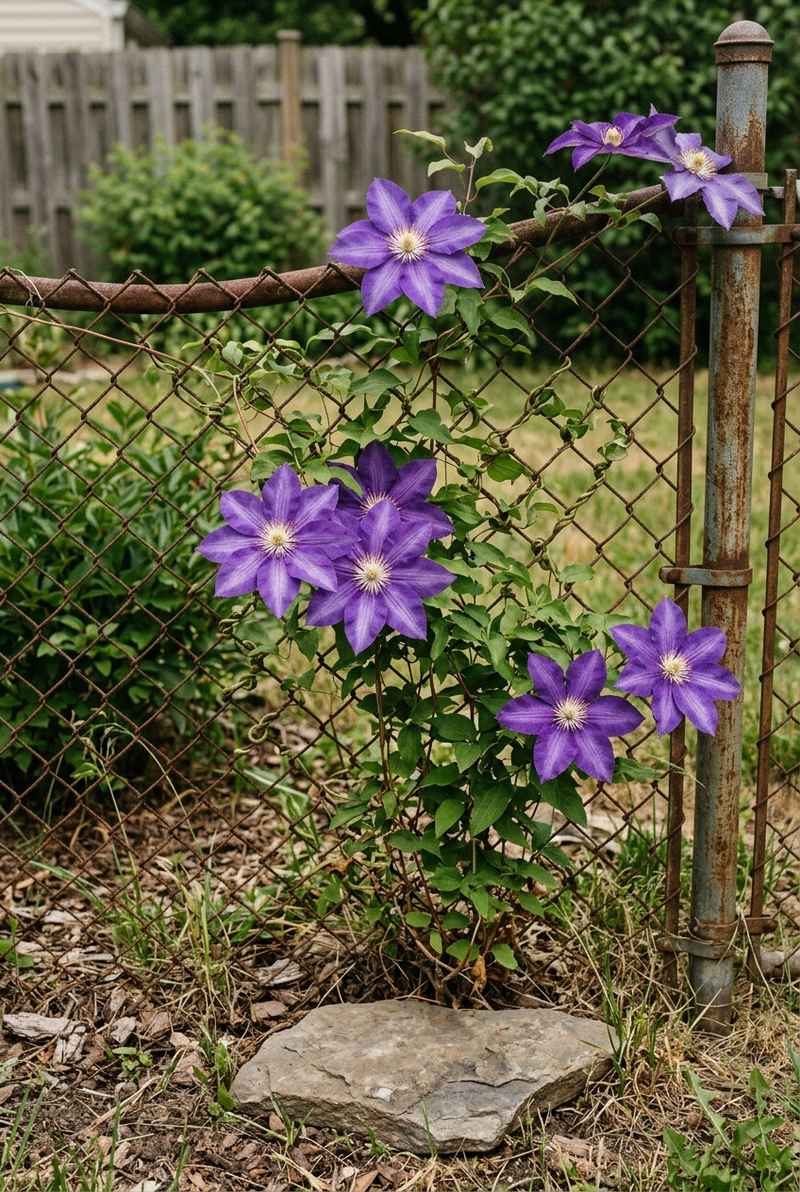
Dinner-plate blooms in purple, pink, white, or striped, and over 2,500 cultivars to choose from. Nothing else on a fence looks this dramatic.
The rule that makes or breaks it: head in the sun, feet in the shade. Mulch the root zone 2-3 inches (5-7 cm) deep or shade it with a low plant in front. My first one cooked to death in bare, baking soil before anyone told me (learn from my dead clematis).
2. Coral Honeysuckle
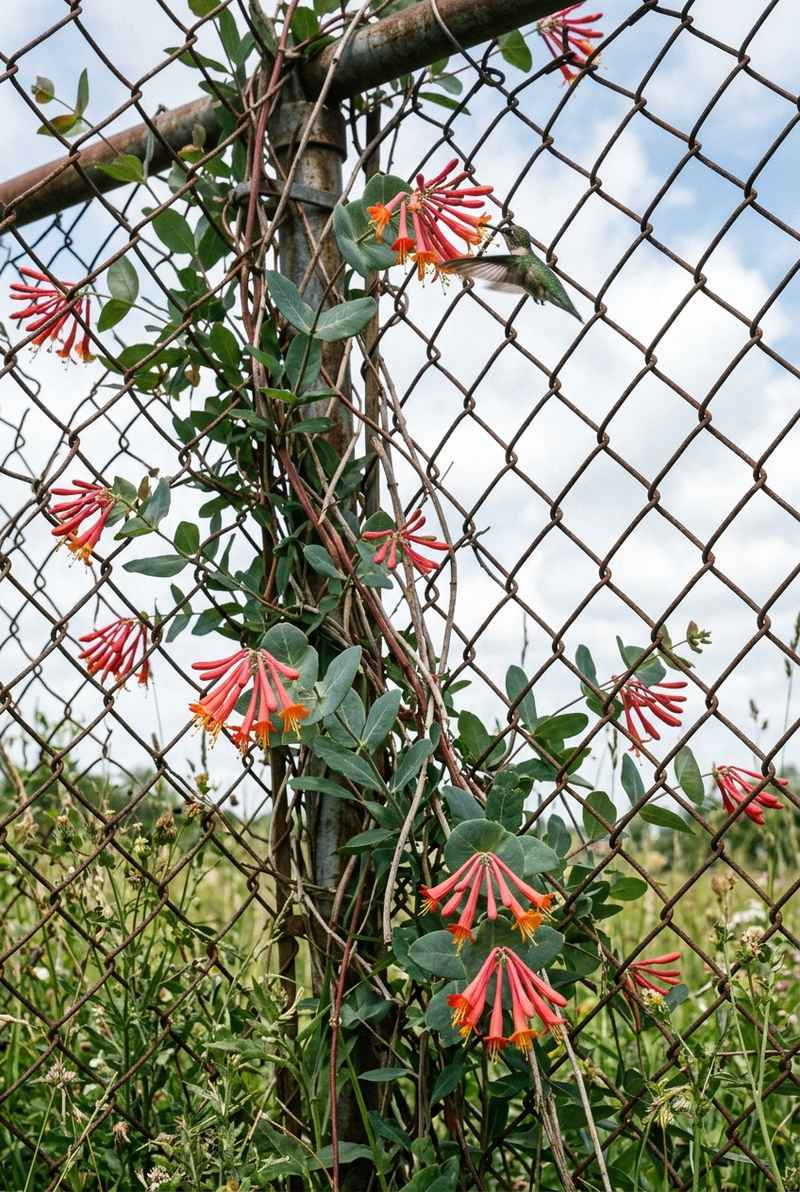
Clusters of coral-red trumpets from spring to frost, and the single best hummingbird plant I grow.
Honest note: unlike its invasive Japanese cousin, this native honeysuckle is not fragrant. You’re trading perfume for hummingbirds and a clear conscience. I’d make that trade every time.
3. Climbing Roses
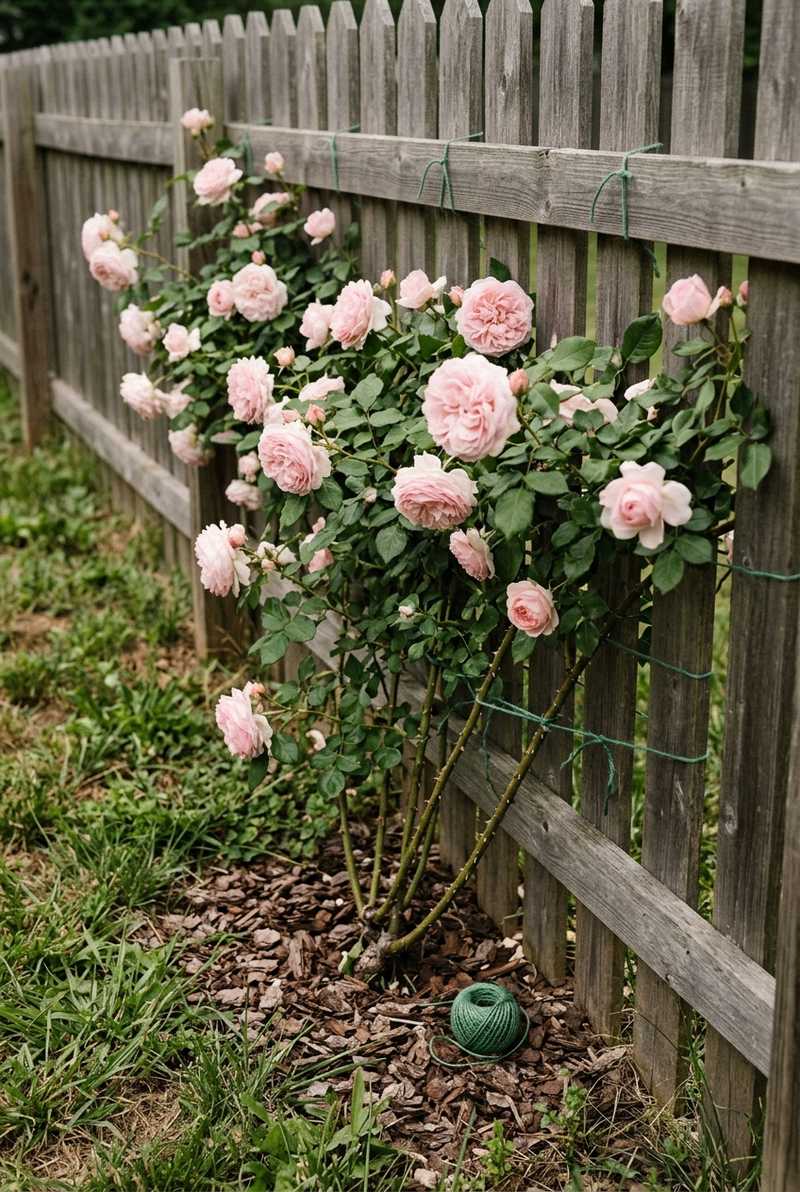
The bare fence in my author bio became this. A ‘Eden’ rose, tied cane by cane, one season at a time.
Here’s what surprises people: roses don’t actually climb. No tendrils, no twining. You tie the long canes to the fence yourself, and bending them toward horizontal makes them bloom along their whole length instead of just at the tips.
4. American Wisteria ‘Amethyst Falls’
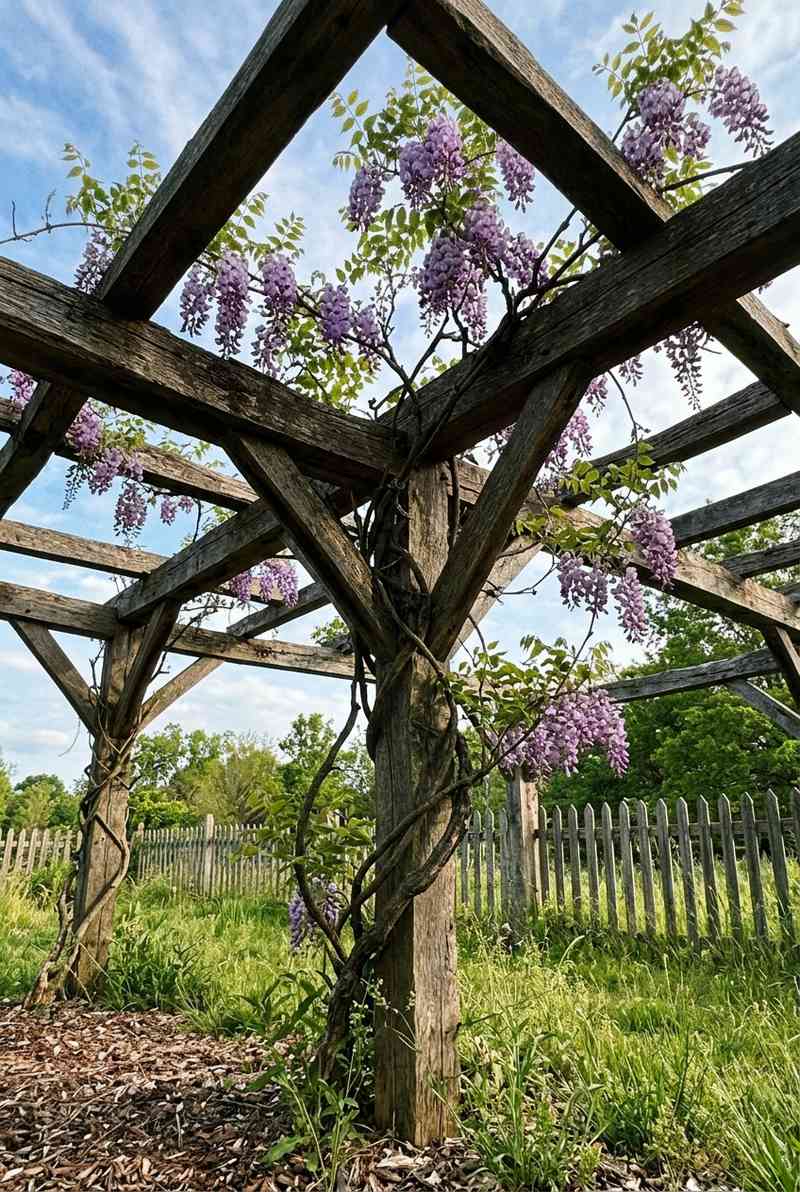
You can have wisteria without the regret. The native American species stays a fraction of the size of the Asian kinds, doesn’t escape into the woods, and ‘Amethyst Falls’ blooms in its first year or two instead of making you wait a decade.
Still a wisteria, though. Give it a support you’d trust to hold a person.
5. Crossvine
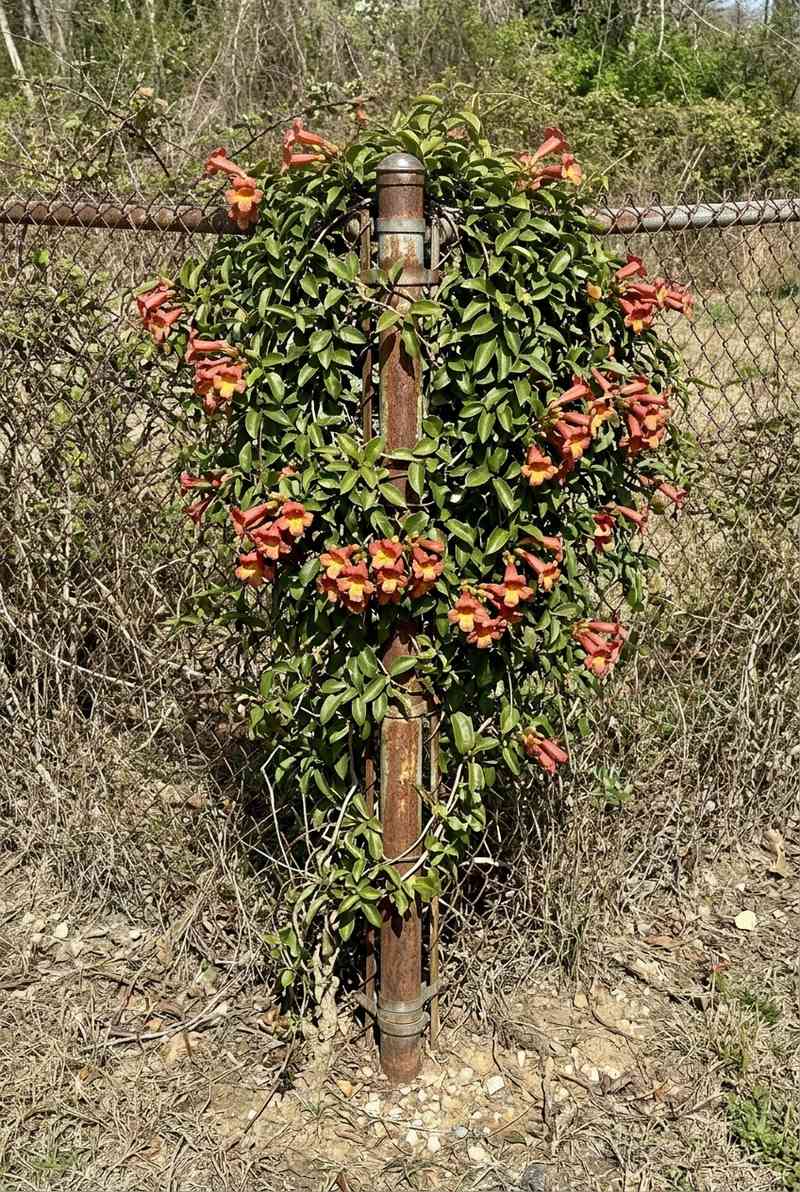
The pick almost nobody knows. Orange-red trumpets in spring, hummingbird traffic all season, and real speed without the rap sheet… crossvine is not considered invasive, unlike its lookalike cousin trumpet vine.
If you want maximum coverage per year from a plant you won’t fight later, this is my pick.
6. Climbing Hydrangea
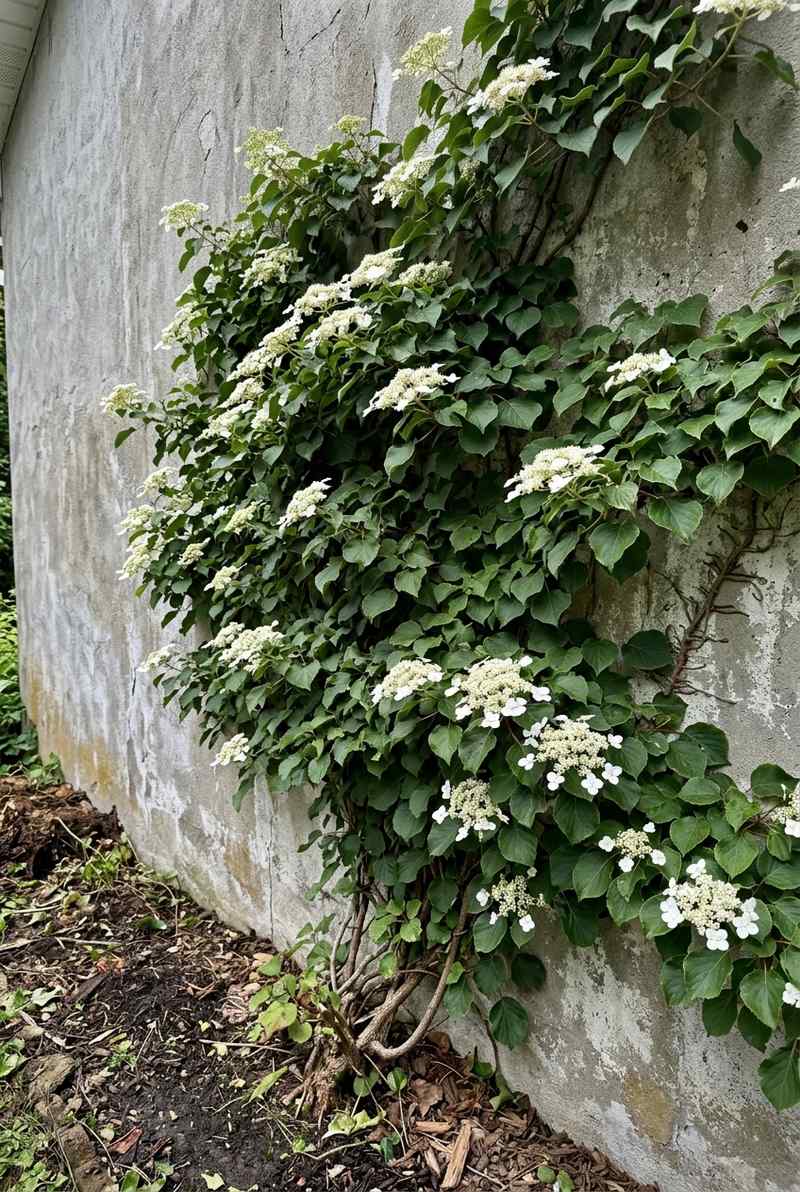
The best flowering vine for shade, full stop. Lacy white blooms in early summer on a north wall where nothing else flowers. It also earned a mention in my shade plants guide for exactly that reason.
But never on wood siding or fences. Its aerial roots cement themselves to the surface, and removal strips paint and rots boards. Brick, stone, or a mature tree trunk only.
Save this to Pinterest7. Star Jasmine
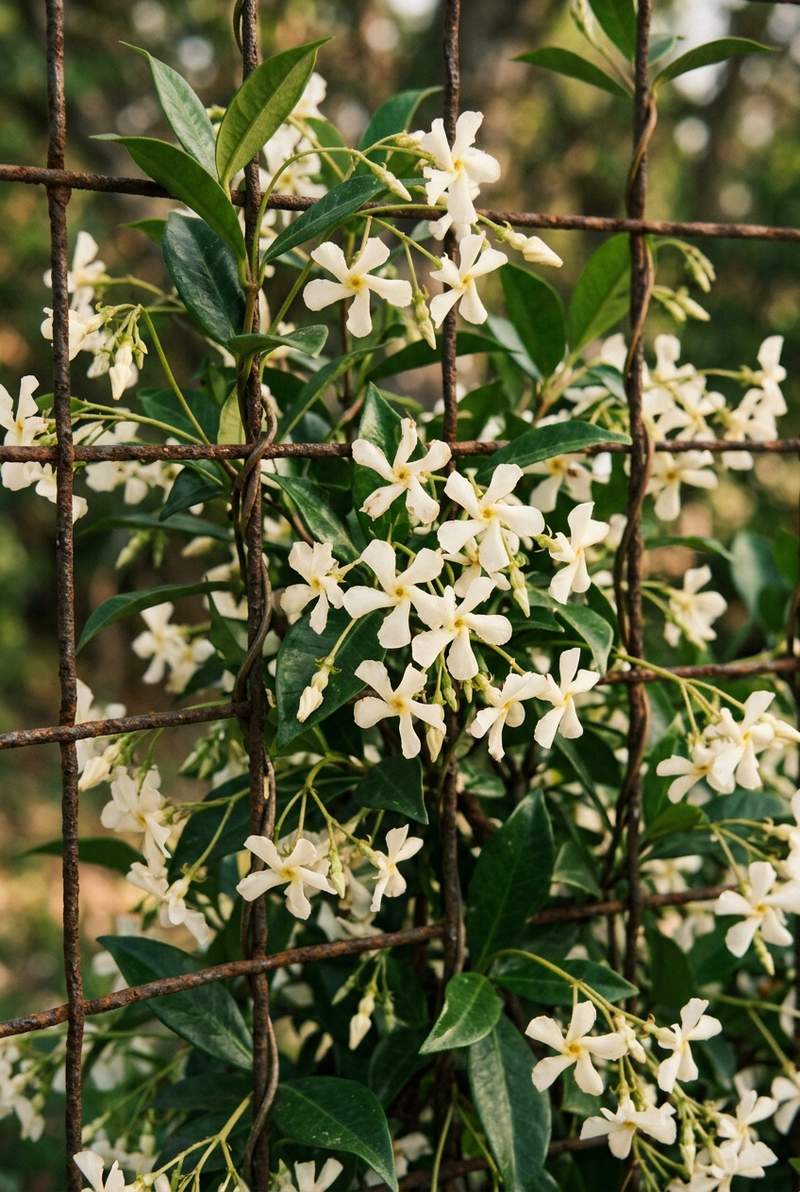
For warm-climate readers, this is the fragrance plant of the list. White pinwheel flowers in late spring with a scent that carries across the whole yard, on glossy evergreen foliage that hides a fence year-round.
Zones 8-10 only. Colder than that, grow it in a pot and haul it in for winter.
8. Passionflower
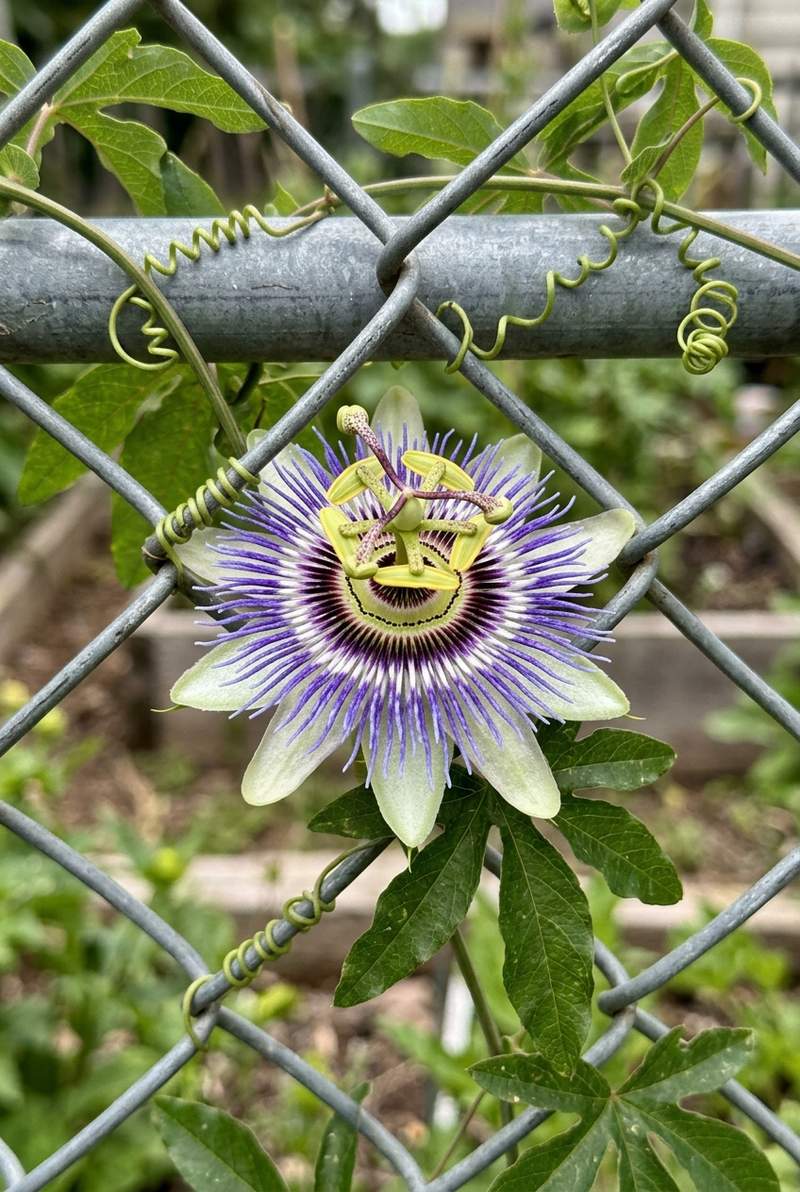
The flowers look engineered by someone showing off. Purple fringed rings, layered crowns, and butterflies treat it as a host plant.
One caveat: in warm climates it spreads by underground runners, so mow around it or plant it with a root barrier. Fast has a price (this one’s worth paying, but know it upfront).
The One-Season Cover-Ups: 4 Annual Vines
Perennials take 2-5 seasons to fill a fence. Annuals do it in one summer, then die with frost. Plant both: annuals cover the fence this year while the perennials build.
9. Morning Glory
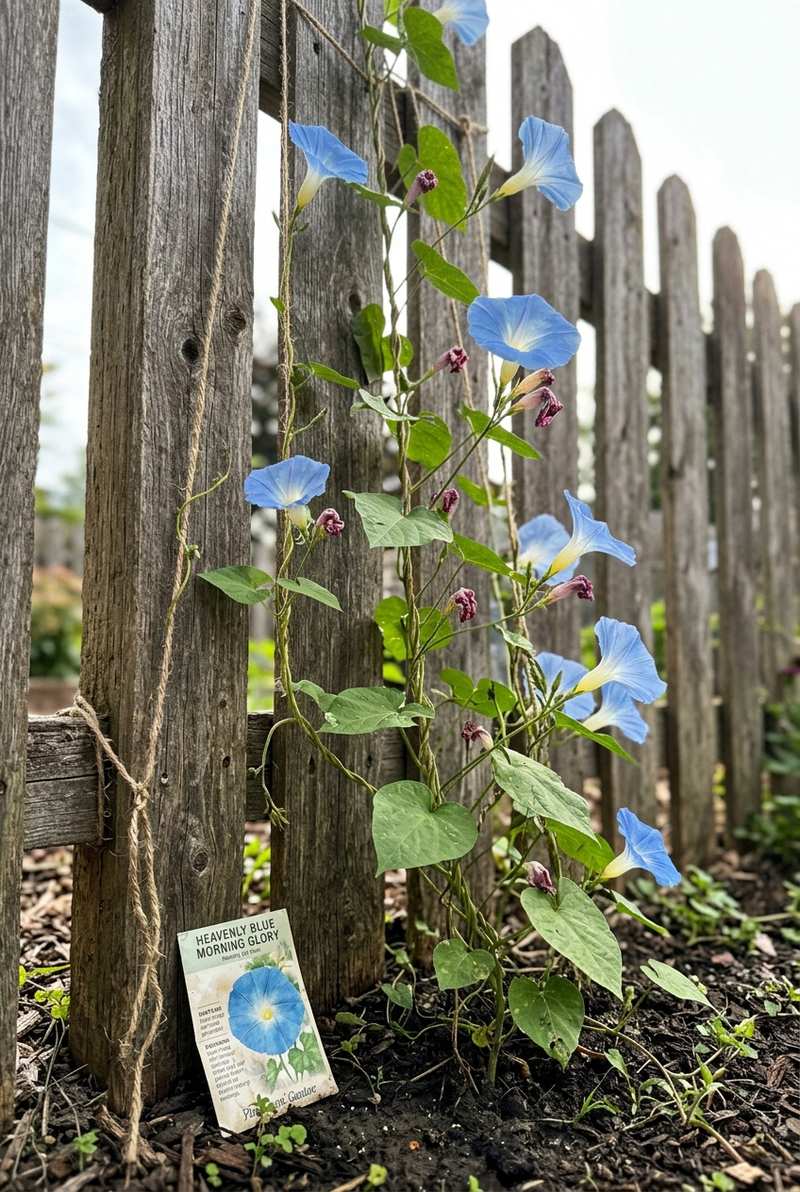
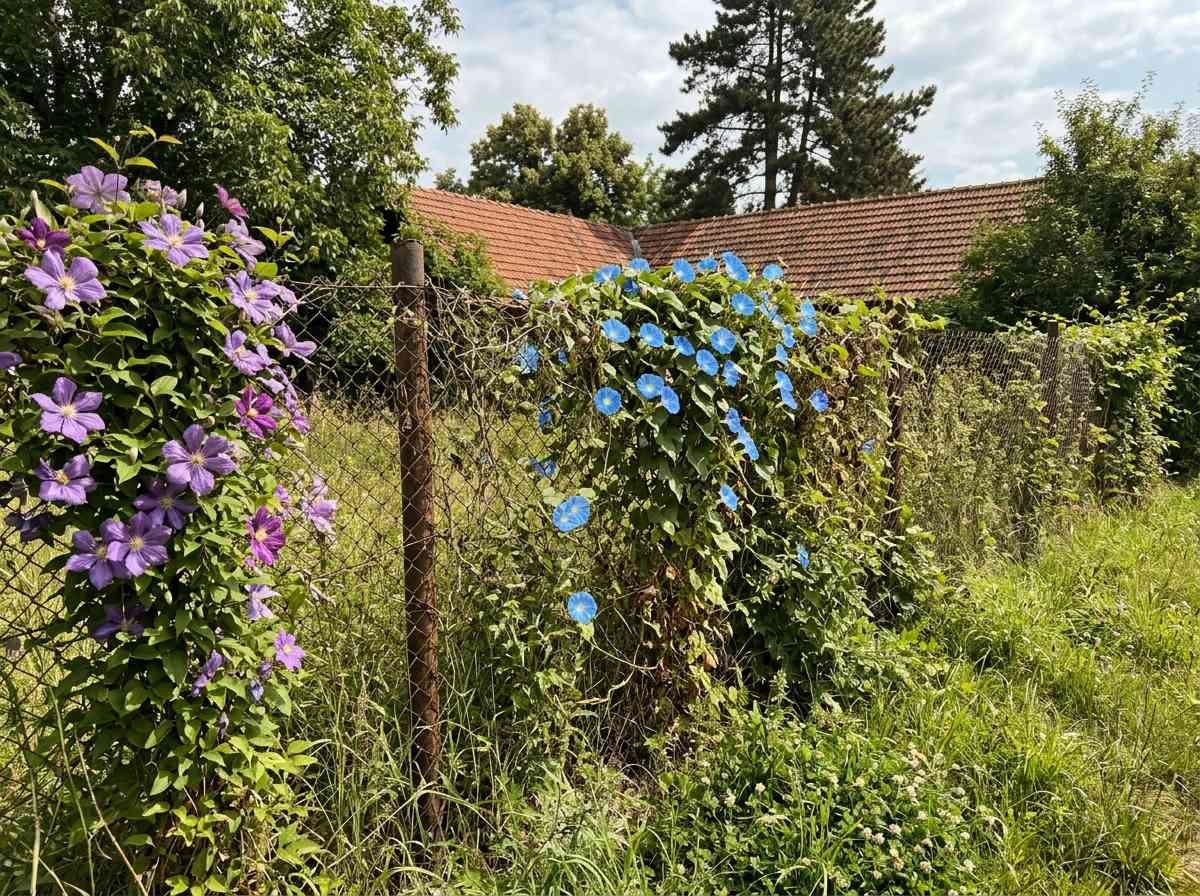
Sky-blue trumpets by mid-summer from seed you poked in the ground in May. The fastest gratification in this whole article.
It does self-seed enthusiastically, so deadhead before seed pods brown if you don’t want volunteers next year.
10. Black-Eyed Susan Vine
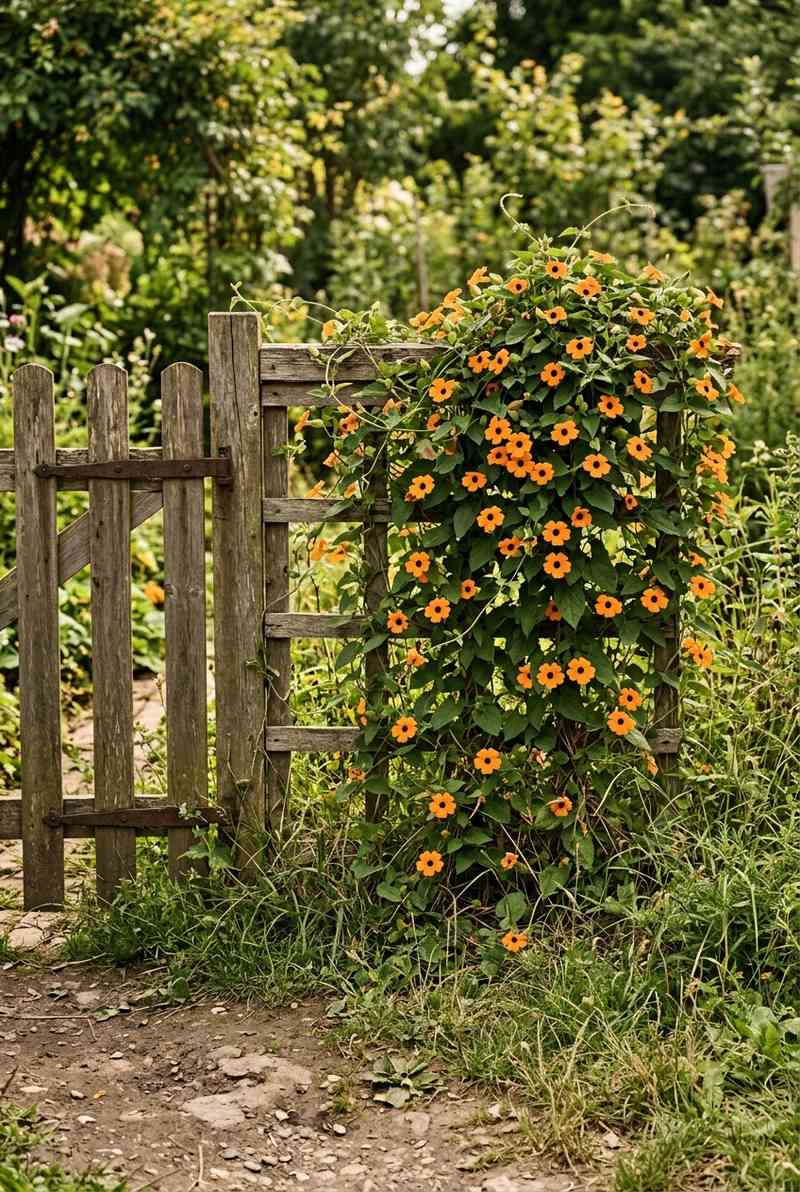
Cheerful orange flowers with dark centers, nonstop from summer to frost. Smaller than the others, which makes it the right size for a short fence section, a mailbox post, or a porch railing pot.
11. Hyacinth Bean
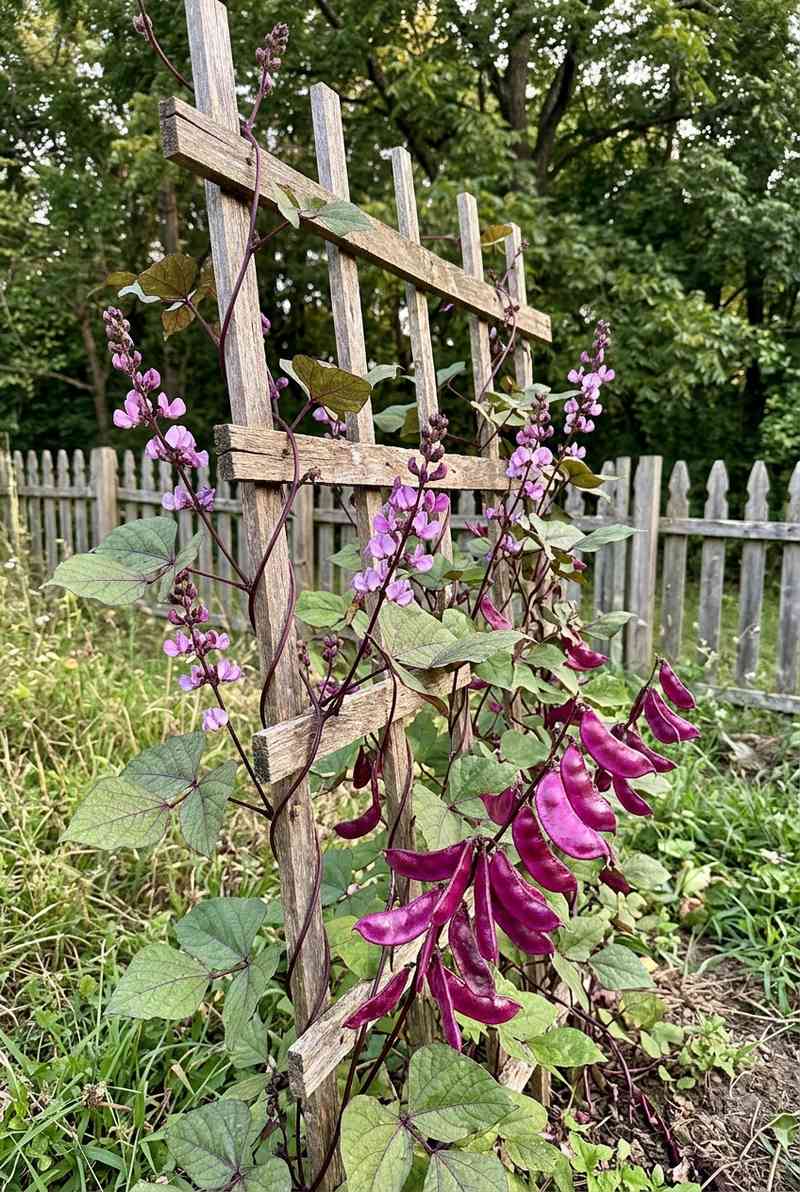
Purple stems, purple-backed leaves, lilac flower spikes, then glossy magenta seed pods that look painted. Whole thing from one packet of seeds.
Guests ask about this one more than anything else I grow. Worth it for that alone.
12. Mandevilla
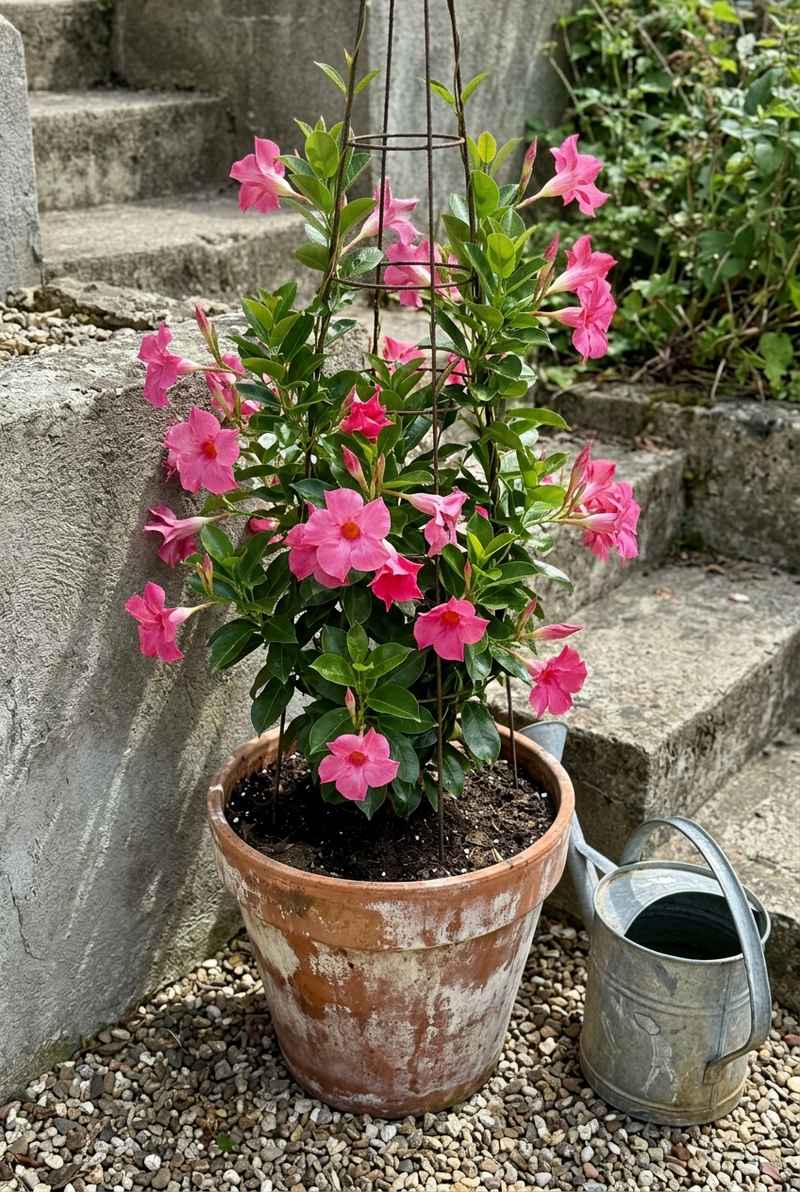
Big tropical pink trumpets all summer with zero deadheading. Buy it as a started plant, not seed, and it flowers from day one on a porch rail or fence-corner trellis.
The Five I’d Never Plant on a Fence
These get recommended constantly. Forum threads from people who planted them read like disaster reports.
Trumpet vine. Spreads by underground runners with roots over a foot deep. One gardener found shoots coming up through the dirt floor of their shed, 20 feet from the plant.
Chinese and Japanese wisteria. Invasive escape artists that build trunk-thick wood. A forum favorite: a five-year-old vine snapping the trellis it grew on. Plant the American one (number 4) instead.
Sweet autumn clematis. Wind-blown seeds put babies in every bed within 30 feet. Invasive in over 10 states.
Japanese honeysuckle. Listed as a noxious weed in most of the country and banned for sale in several states. Coral honeysuckle gives you the hummingbirds without the takeover.
English ivy. Wood fences rot and collapse under its weight, and its roots bore into mortar. Evergreen, yes. Worth it, no.
Common mistake
Buying “wisteria” seedlings or seeds. Seed-grown wisteria can take 10 to 15 years to bloom, sometimes never. Always buy a named, grafted cultivar that’s already flowered in its pot.
Fence Vine Questions, Answered
What’s the fastest way to cover a fence?
Plant annuals and perennials together this spring. Morning glory or hyacinth bean covers the fence by July, and by the time they quit, your clematis or crossvine is two seasons into taking over the job.
Will vines ruin my wood fence?
Twining vines on wire, no. Clinging vines (climbing hydrangea, ivy) and heavy woody giants (Asian wisteria), yes. The “Climbs by” line in each stats box above is exactly this warning.
When should I plant?
Perennial vines go in spring or early fall, at least 6 weeks before frost. Annual vine seeds wait until after your last frost, in soil that’s already warm.
How do I get more flowers, not just leaves?
Sun, mostly. Nearly every vine here blooms hardest with 6+ hours. And go easy on fertilizer: high nitrogen grows you a green wall with no flowers on it.
The View From the Kitchen Window Now
That sagging chain link fence is still under there somewhere, holding up more flowers than the rest of the yard combined. Best thing I ever did with the ugliest thing we own.
Pick one perennial and one annual, plant them the same weekend, and let the fence disappear. For what to plant at its feet, my summer-long bloomers handle the ground floor.