10 Best Hanging Basket Flowers for Full Sun
- Full sun porches
- Blooms all summer
- Heat tolerant
- Annual baskets
My first hanging basket was a fuchsia. On a south-facing porch. In July.
It lasted eleven days, and nobody at the nursery had mentioned fuchsias are shade plants. These 10 flowers are the opposite: they want that blazing porch, and most bloom from May to frost.
I’ve also marked which ones clean up after themselves, because that changes everything.
Quick Summary
- 10 flowers that handle 6+ hours of direct sun in a hanging basket
- “Self-cleaning” flowers drop spent blooms on their own. No deadheading, ever.
- Full-sun baskets need water daily in summer, sometimes twice. Plan for it.
- Use a basket at least 12 inches (30 cm) wide, or it dries out faster than you can keep up
- Best starter pick: calibrachoa. Thousands of small blooms, zero deadheading.
Deadhead or Not: The Cheat Sheet
This is the single most useful thing to know before buying, and almost no list tells you. Self-cleaning flowers drop their spent blooms and keep going. The others need you out there pinching.
| Flower | Deadheading | Habit |
|---|---|---|
| Calibrachoa | Never (self-cleaning) | Trails 12-24 in (30-60 cm) |
| Supertunia petunias | Rarely, one mid-summer haircut | Trails 2-3 ft (60-90 cm) |
| Trailing verbena | Never (self-cleaning) | Trails and spreads |
| Lantana | Rarely | Mounds and spills |
| Portulaca | Light pinching helps | Trailing succulent mat |
| Scaevola | Never (self-cleaning) | Trails 8-18 in (20-45 cm) |
| Ivy geranium | Yes, weekly | Trails 2-3 ft (60-90 cm) |
| Bacopa | Never (self-cleaning) | Soft trailing curtain |
| Nasturtium | No | Trails 1-3 ft (30-90 cm) |
| Sweet potato vine | No flowers, foliage only | Trails 3-5 ft (90-150 cm) |
If you want a basket you only ever water, build it from the “never” rows. Details on each below.
1. Calibrachoa (Million Bells)
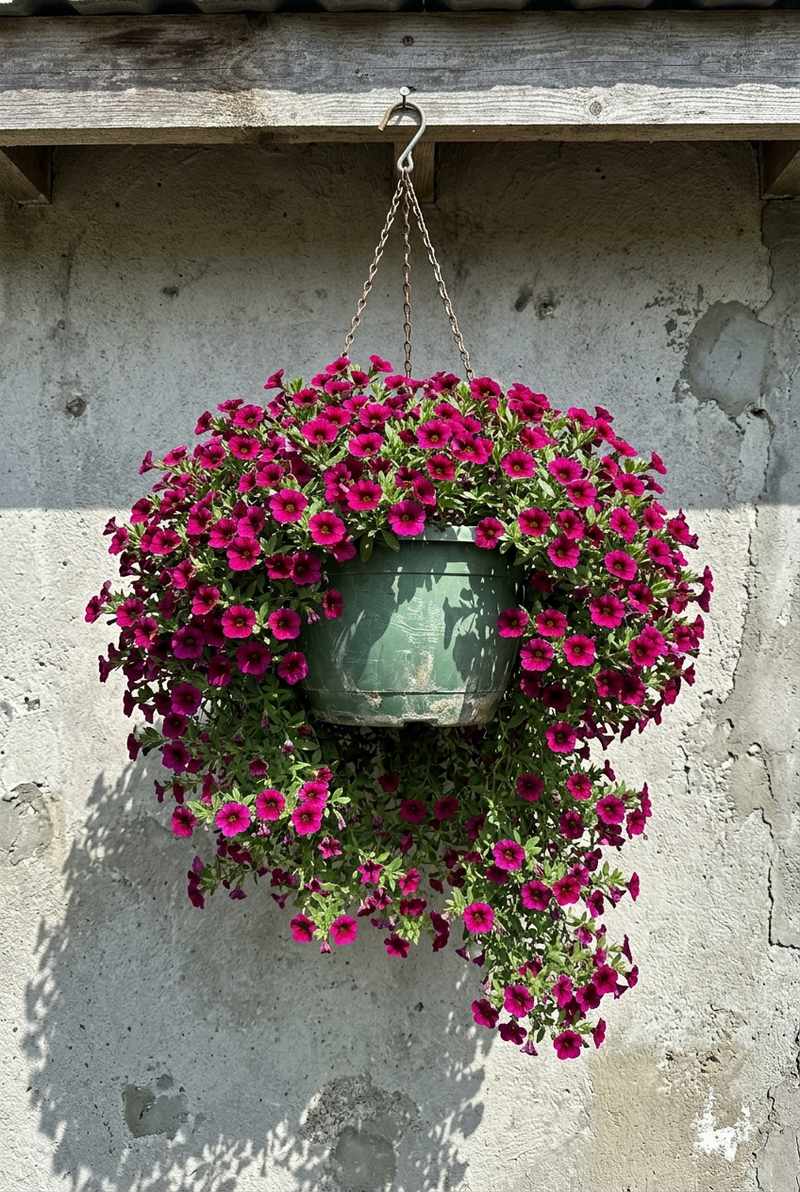
Looks like a petunia shrunk to a quarter of the size and multiplied by a hundred. Blooms nonstop from spring to frost, and every spent flower falls off by itself.
Its one demand is sharp drainage. Wet feet rot it, and yellowing leaves usually mean too much water, not too little. Minnesota Extension’s guide covers it well.
One quirk worth knowing: if new leaves turn yellow between green veins, the soil pH has crept too high and the plant can’t pull iron anymore. An acidic fertilizer fixes it (sounds nerdy, but it saves the basket).
2. Supertunia and Wave Petunias
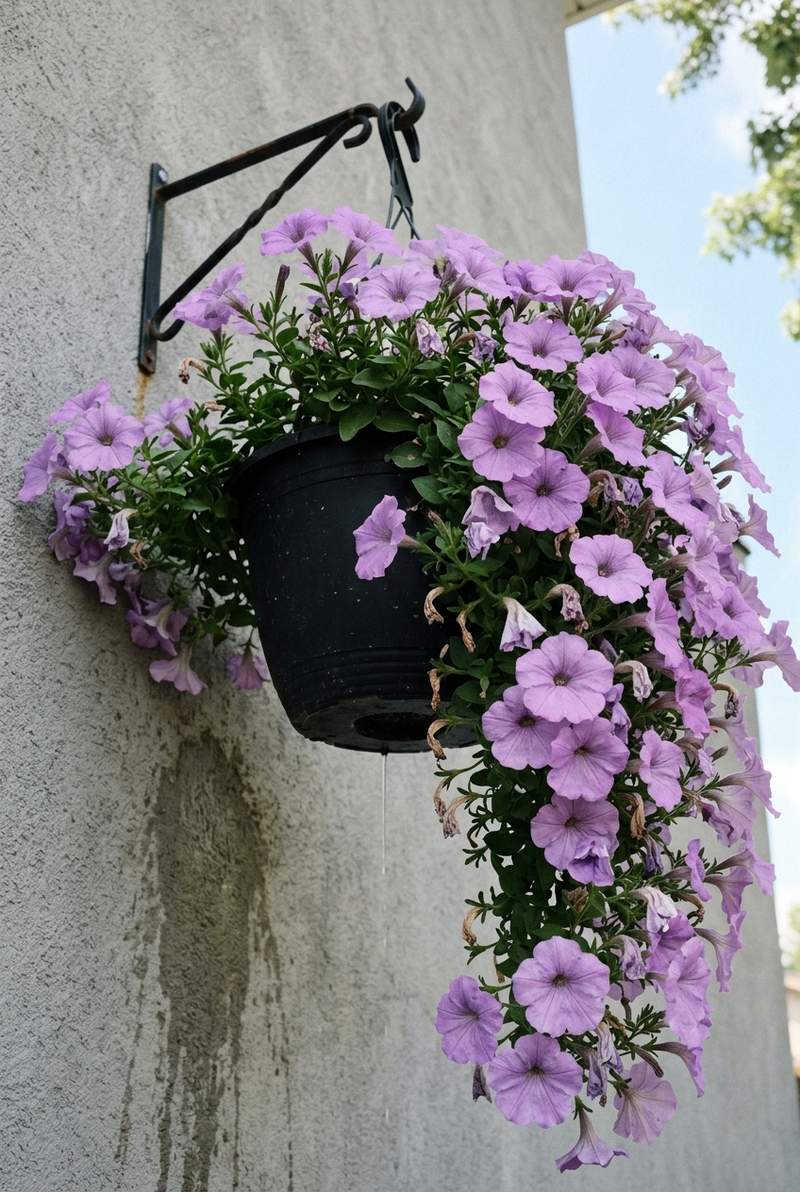
The biggest flower show per dollar in the garden center. A single Supertunia fills a 12-inch (30 cm) basket by itself and pours over the sides in a solid sheet of color.
By mid-July it will go leggy. Everyone’s does. The fix is a haircut: cut the whole thing back by a third, feed it, and within two weeks it rebounds fuller than before. Most people assume a leggy petunia is finished… it’s just asking for the trim.
3. Trailing Verbena
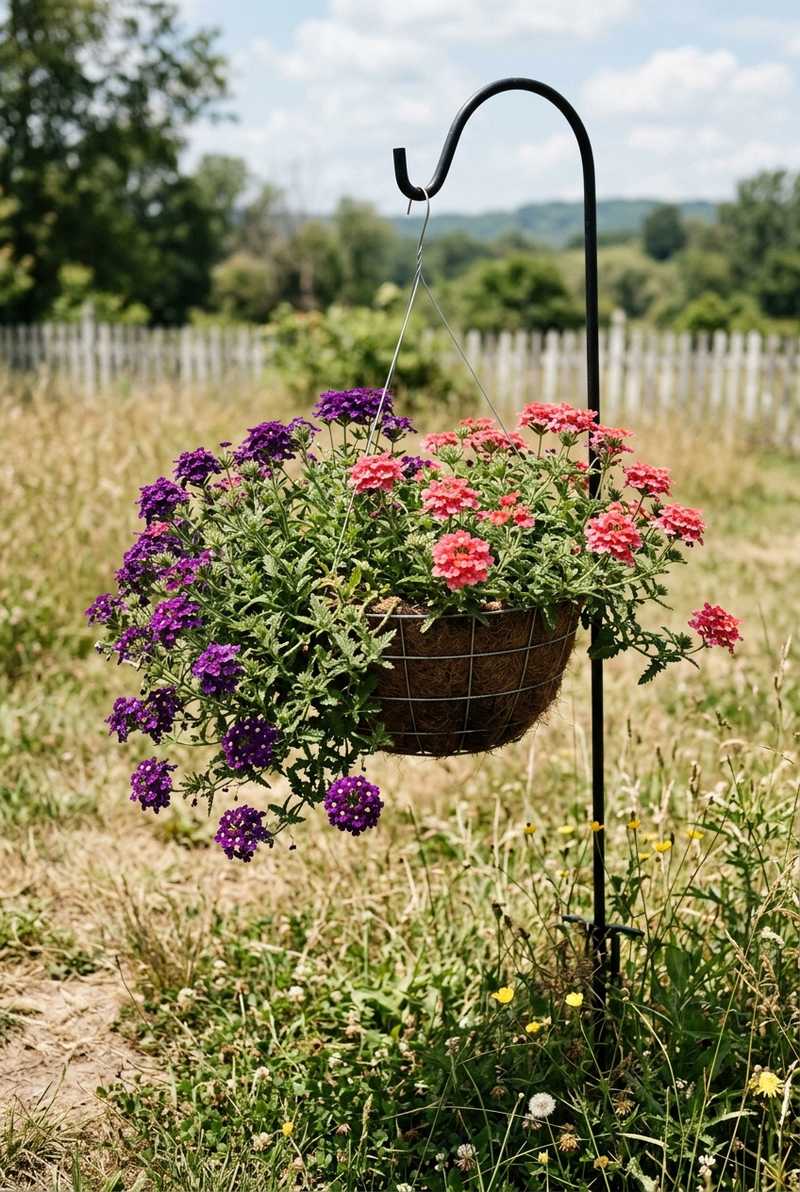
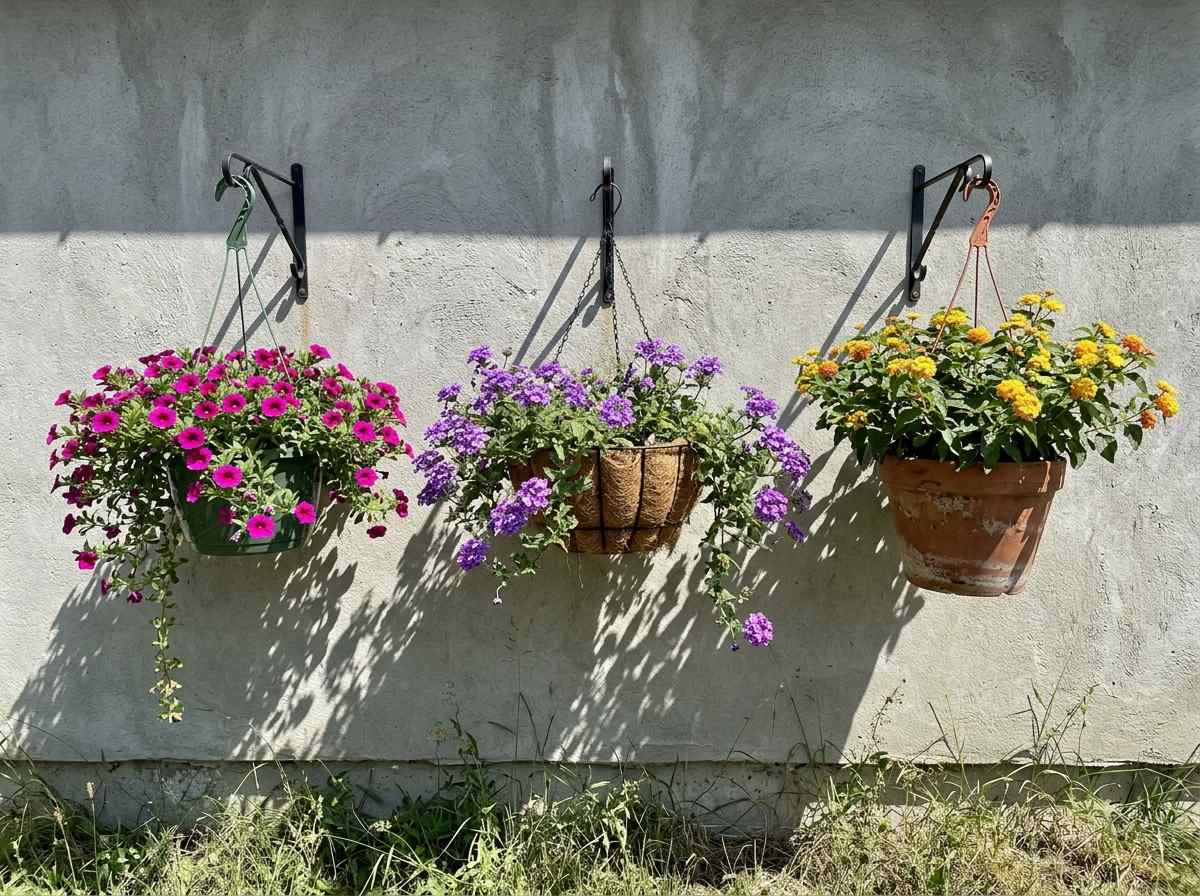
Clusters of small flowers in colors petunias can’t do, on a plant that treats heat and drought as a mild suggestion. Self-cleaning, butterfly-friendly, and happiest in exactly the spot that fries everything else.
Mine share dry-corner duty with the plants from my drought-tolerant flowers list. Same personality, higher altitude.
4. Lantana
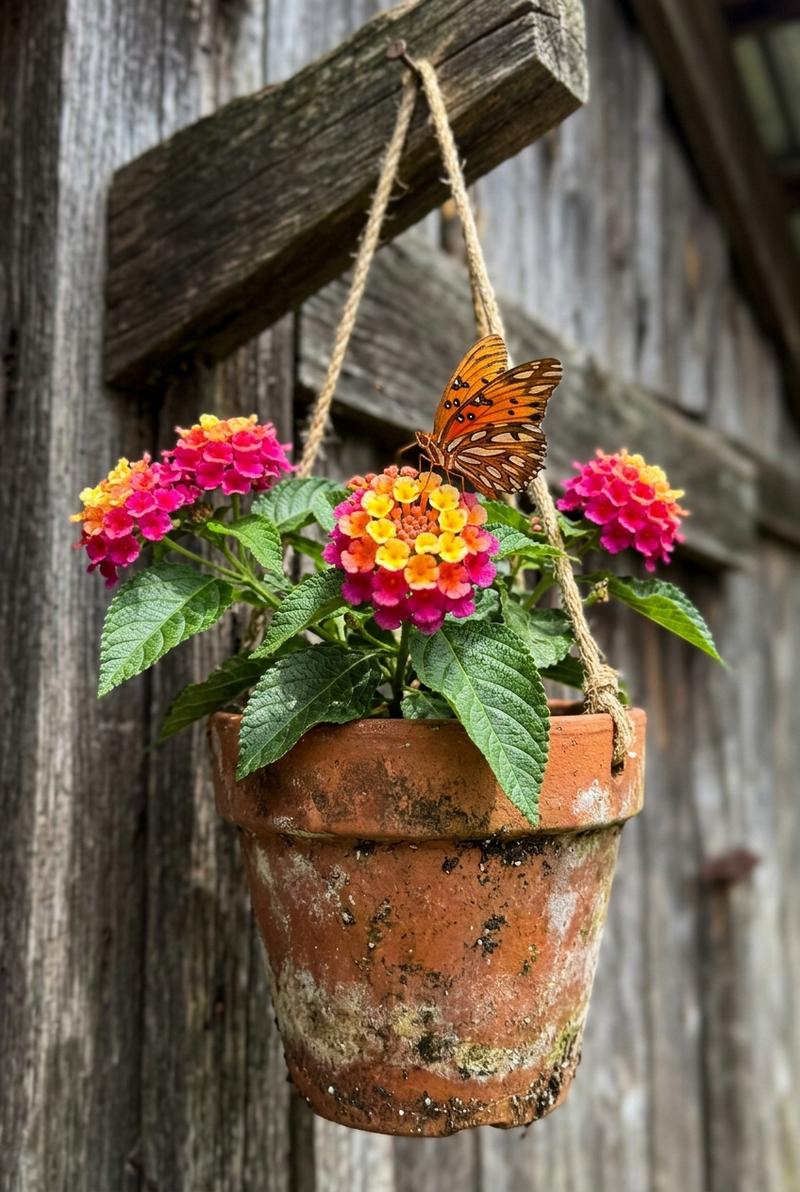
The heat champion. When August humidity is flattening the whole porch, lantana is the basket still blooming like it’s opening day.
The color-shifting flower clusters (yellow to orange to pink on the same head) pull in butterflies constantly. Skip the water panic with this one; it prefers drying out a bit between drinks.
In zones 9-11 it acts like a perennial and can get big. Everywhere else it’s a well-behaved annual that earns its spot every single summer.
5. Portulaca (Moss Rose)
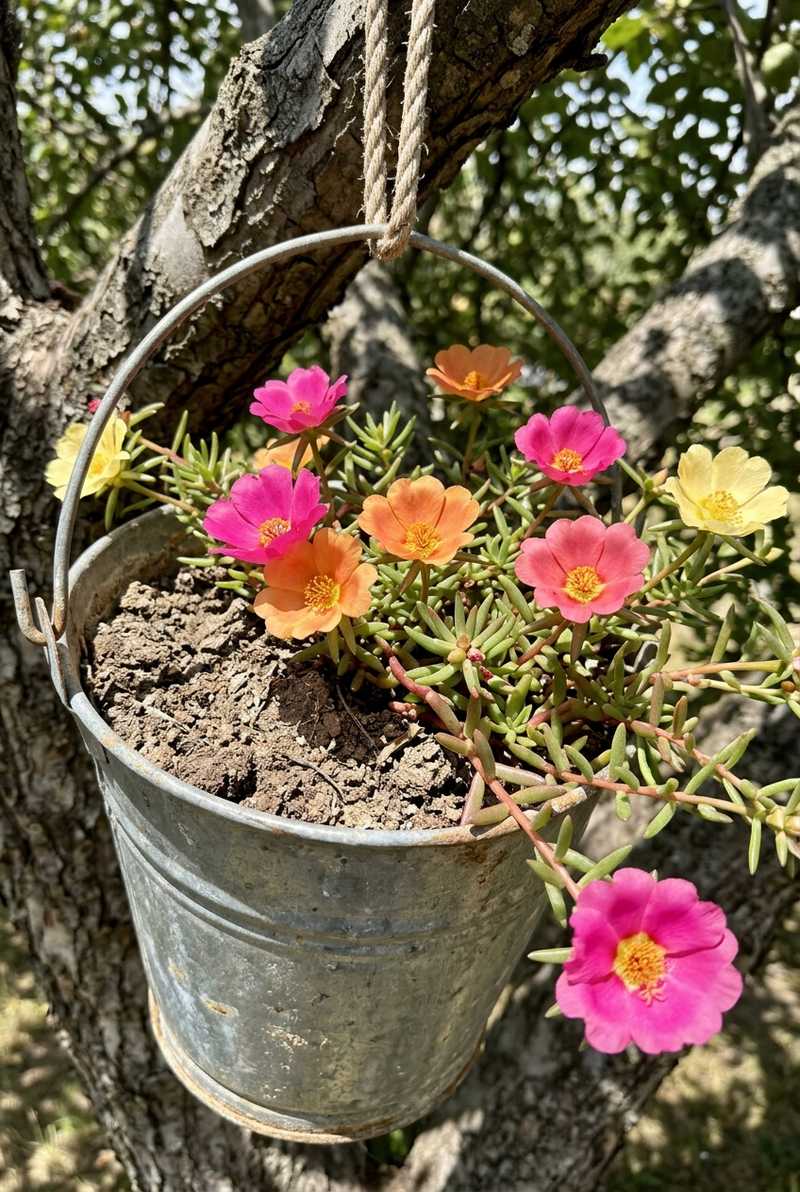
A trailing succulent with neon rose-like blooms. For the basket you know you’ll forget to water, this is the honest answer.
The catch: the flowers close on cloudy days and in the evening. If your porch time is after dinner, pick something else. If it’s morning coffee, portulaca is perfect.
Save this to Pinterest6. Scaevola (Fan Flower)
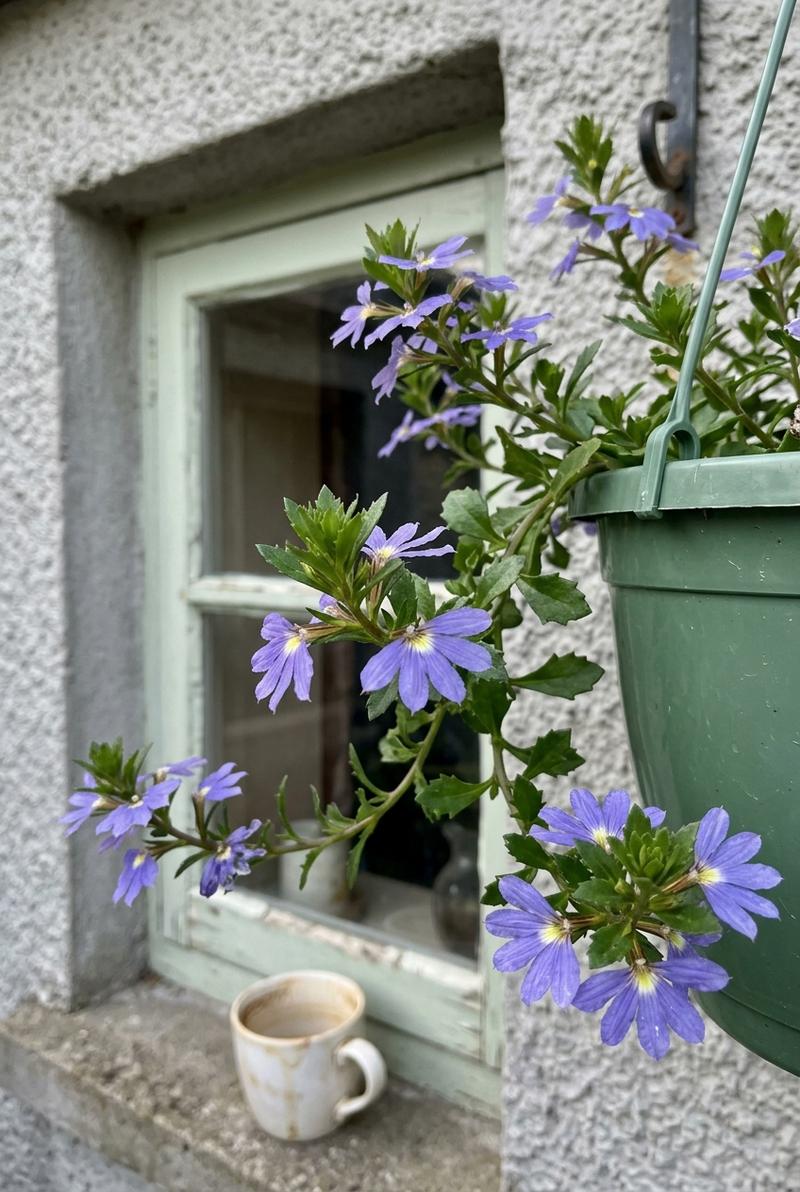
The pick nobody’s neighbor has. Odd little fan-shaped blue or purple flowers along trailing stems, completely self-cleaning, and genuinely heat-proof.
Blue is rare in full-sun baskets. This is where you get it.
It shrugs off missed waterings better than petunias too, which makes it my pick for anyone who travels. Give it a basket at least 8-10 inches (20-25 cm) deep and it handles the rest.
7. Ivy Geranium
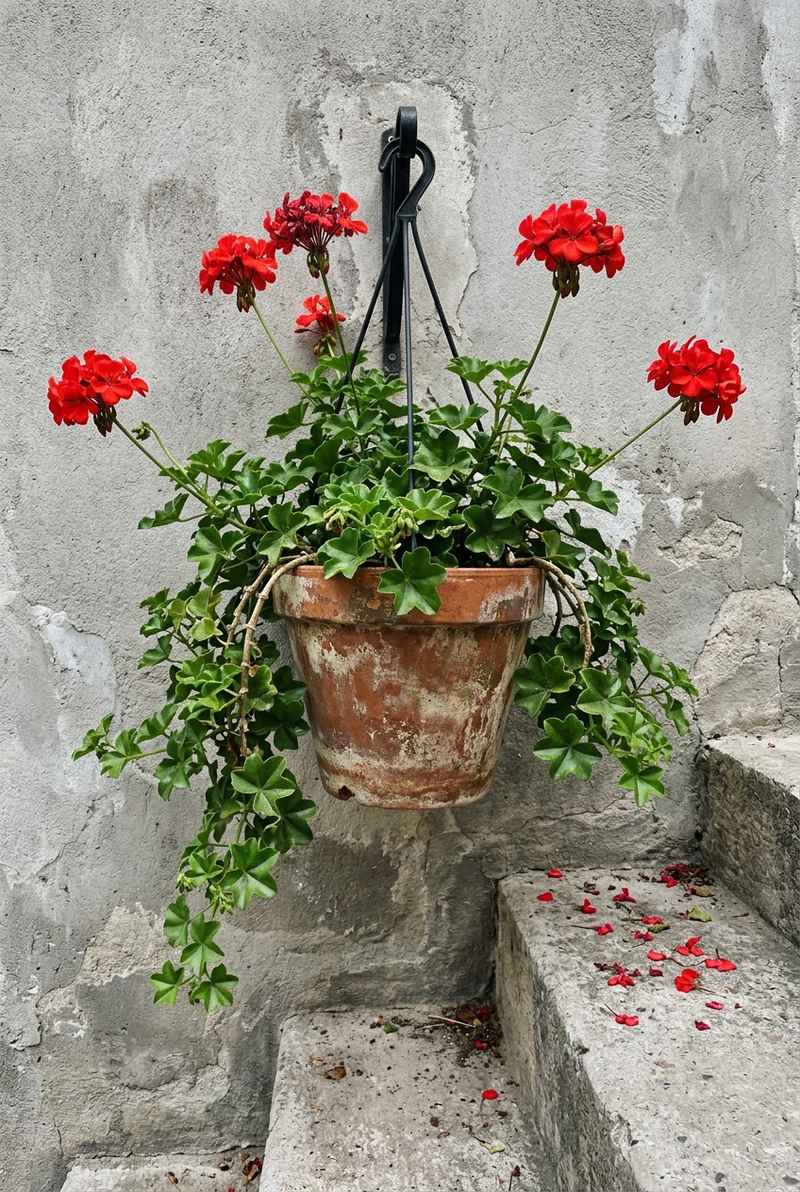
The classic European balcony basket, with glossy trailing foliage and clusters of red, pink, or white.
Two honest caveats: it wants weekly deadheading to keep blooming hard, and it sulks in sticky Southern humidity, where fungal spots move in. Dry-summer climates, it’s spectacular. Gulf Coast, choose lantana instead.
8. Bacopa
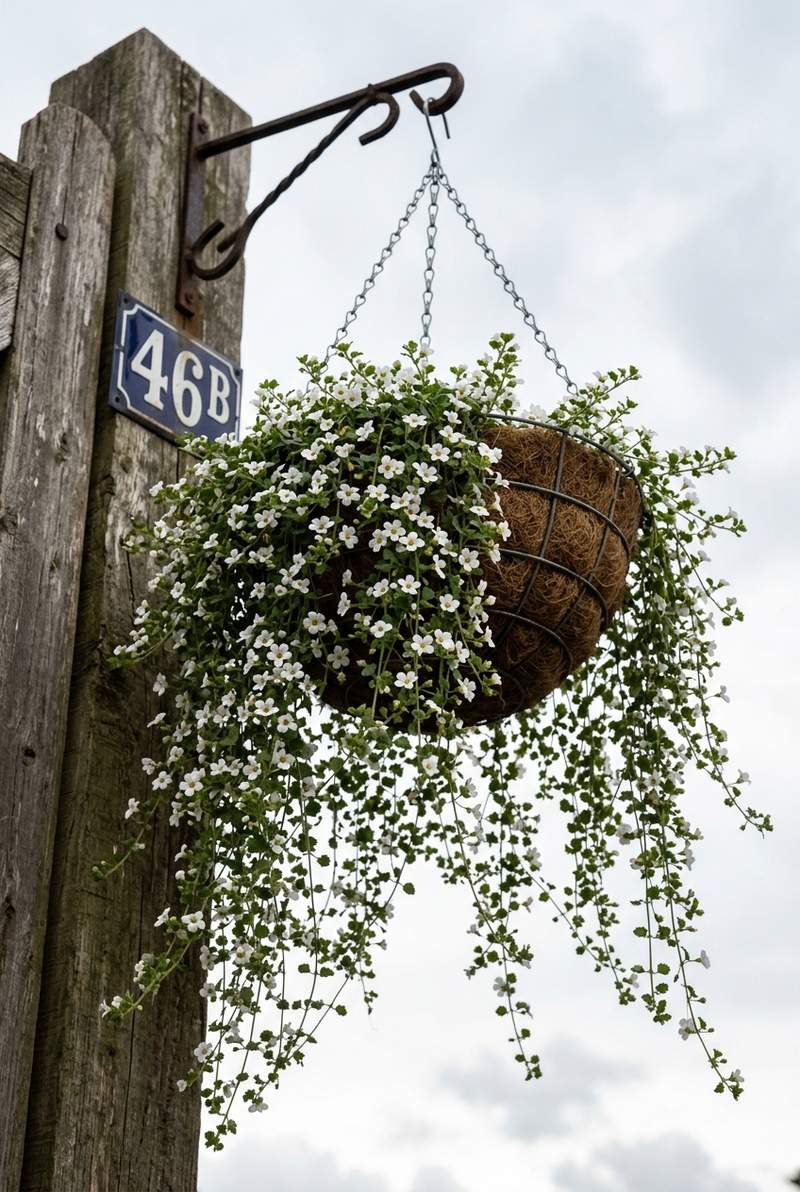
A curtain of tiny white or lavender flowers that softens the edge of any basket. Self-cleaning and tidy.
Its weakness is drought: let bacopa dry out badly once and it drops every bud, then takes weeks to forgive you. Pair it with thirstier plants, never with portulaca logic.
9. Nasturtium
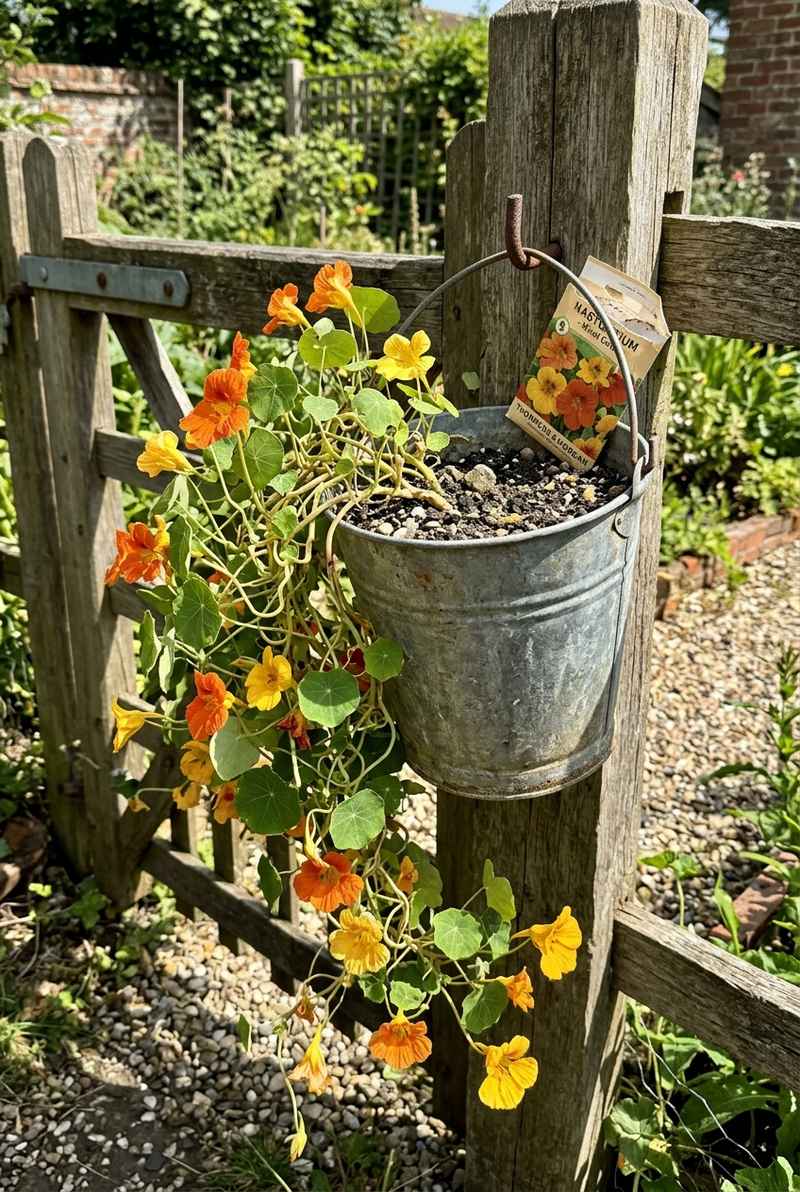
Round lily-pad leaves, orange and yellow blooms you can toss in a salad, and the cheapest basket on this list. A packet of seeds in May is a full basket by July.
The trick is neglect: rich soil gives you all leaves and no flowers. No fertilizer, lean soil, full sun. It blooms out of spite.
10. Sweet Potato Vine
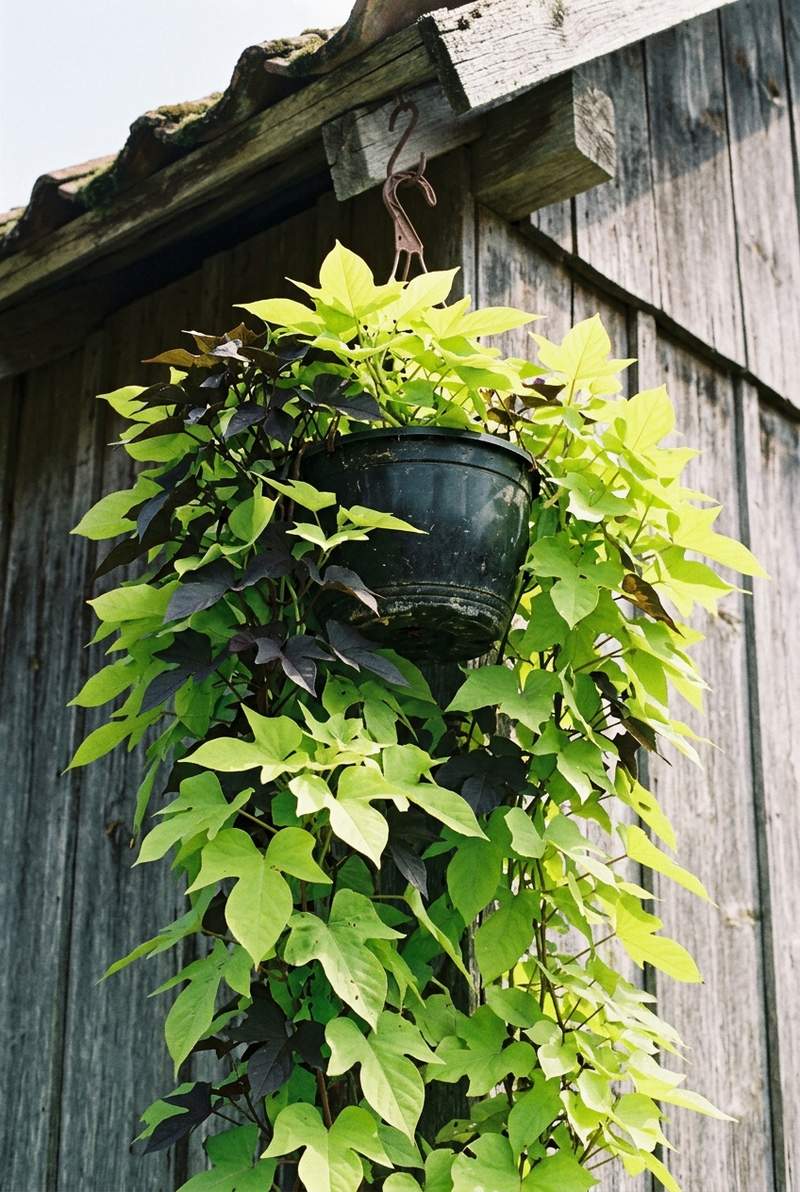
The only non-flower here, and the one that makes every mixed basket look professional. Chartreuse or near-black foliage pouring 3-5 feet (0.9-1.5 m) down.
One plant per basket. It grows like it’s being paid.
The Two That Don’t Belong in Full Sun
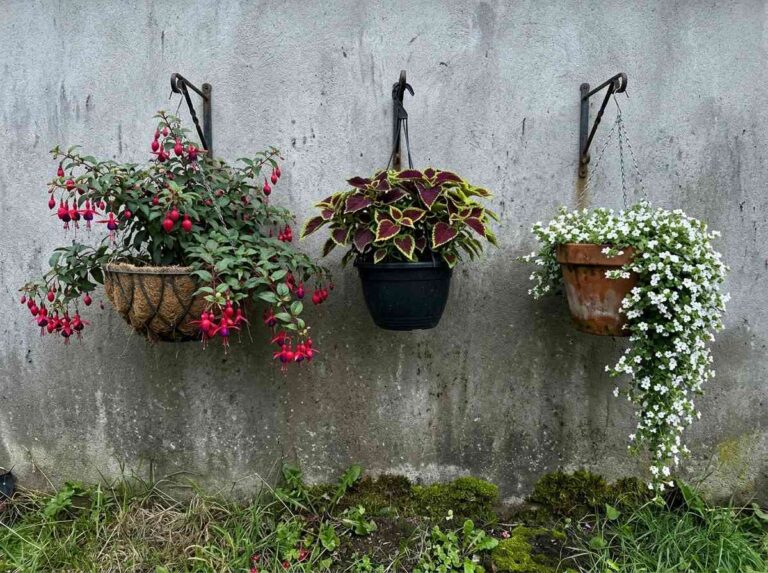
Fuchsia. Sold hanging next to the sun plants, but it’s a shade plant. It scorches, drops buds, and dies exactly like mine did.
Trailing lobelia. Gorgeous in May, quits blooming once temperatures pass 80°F (27°C). It’s not dead, just heat-dormant… trim it, and it comes back with cool fall weather. But it’s a spring-and-fall plant, not a summer one.
Both are wonderful plants in the right spot. That spot just isn’t a hook in six hours of direct sun.
Keeping Them Alive Until October
A full-sun basket in July needs water every single day, until it runs from the drainage holes. During heat waves, morning and evening. This is the honest cost of the look, and no plant choice gets you out of it.
Two more habits carry the season. Feed weekly with diluted liquid fertilizer, because daily watering washes nutrients straight through. And if the soil ever dries into a hard brick that water runs around instead of into, dunk the whole basket in a bucket for 15 minutes to re-wet it.
Basket size matters more than people think. Under 12 inches (30 cm) wide, there just isn’t enough soil to buffer a hot afternoon. The same logic runs through my container gardening guide: bigger pots forgive more mistakes.
Tip
Store-bought baskets look their best the day you buy them, then decline, because the roots have already filled the pot. Repot into a bigger basket with fresh mix the week you bring one home and it keeps improving all summer instead.
Basket Questions From My Inbox
Why is my petunia basket leggy with flowers only at the tips?
Normal by mid-summer. Cut the whole plant back by a third, feed it, and it regrows dense and blooming within two weeks.
Why are my calibrachoa leaves turning yellow?
Whole-leaf yellowing usually means overwatering. Yellow between green veins on new growth means the pH drifted up and blocked iron; feed with an acidic fertilizer.
Do water-storing crystals work?
Gardeners are split, and I’m on the skeptical side. A bigger basket with better soil beats crystals every time, and overdoing crystals turns your soil surface into slime.
Can I mix these in one basket?
Yes, if you match water needs. Petunia, calibrachoa, and bacopa drink together happily. Portulaca and lantana want the dry basket. Never mix the two groups.
The Porch, Round Two
The hook where that fuchsia died now holds a calibrachoa and scaevola basket that hasn’t stopped blooming since May. Right plant, right porch.
Pick from the self-cleaning rows, buy the bigger basket, and go fill that bare hook this weekend. For the beds below it, my summer-long bloomers finish the picture.