15 Hanging Basket Flowers That Thrive in Shade
- Shady porches
- Part & full shade tagged
- Bloomers + foliage
- North-facing friendly
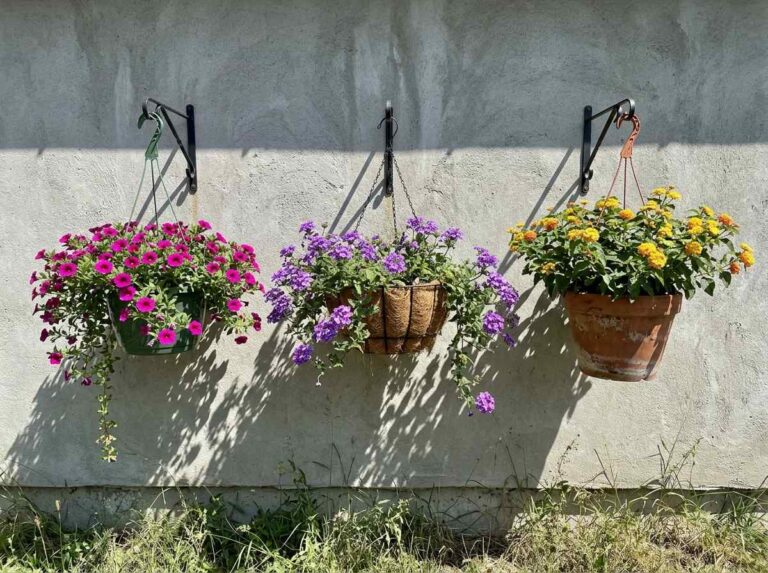
The north side of our porch never sees direct sun, and for two years its empty hook just… hung there, judging me.
Turns out shade baskets aren’t a compromise. Fuchsias, begonias, and torenia bloom in light that would starve a petunia, and the foliage options get downright theatrical.
Fifteen plants that want your shady hook, each tagged by how much shade it actually handles.
Quick Summary
- 10 flowering picks plus 5 foliage plants that carry deep shade
- Every entry tagged: part shade (some morning sun) or true full shade
- Most “shade” bloomers still want dappled light or morning sun. Deep dark corners get the foliage crew.
- Shade baskets dry out slower, so the killer here is overwatering, not drought
- Best starter pick: torenia. Blooms in real shade, cleans up after itself, and shrugs off heat.
How Much Shade Is Your Shade?
“Shade plant” covers two very different porches, and mixing them up is why shade baskets get a bad reputation.
| Light level | What it means | Best picks below |
|---|---|---|
| Part shade | 4-6 hrs sun, ideally morning | Fuchsia, begonias, impatiens, alyssum |
| Full shade | Under 3 hrs direct sun | Torenia, browallia, coleus, heuchera, ferns, ivy |
Shade doesn’t mean darkness. Even full-shade plants want bright, open, or dappled light. A basket in a truly dark corner grows leggy stems and no flowers, no matter what you plant in it.
One design trick before the list: florists build baskets as thriller (one upright showpiece), filler (mounding color), spiller (trailing edges). I’ve noted which job each plant does best.
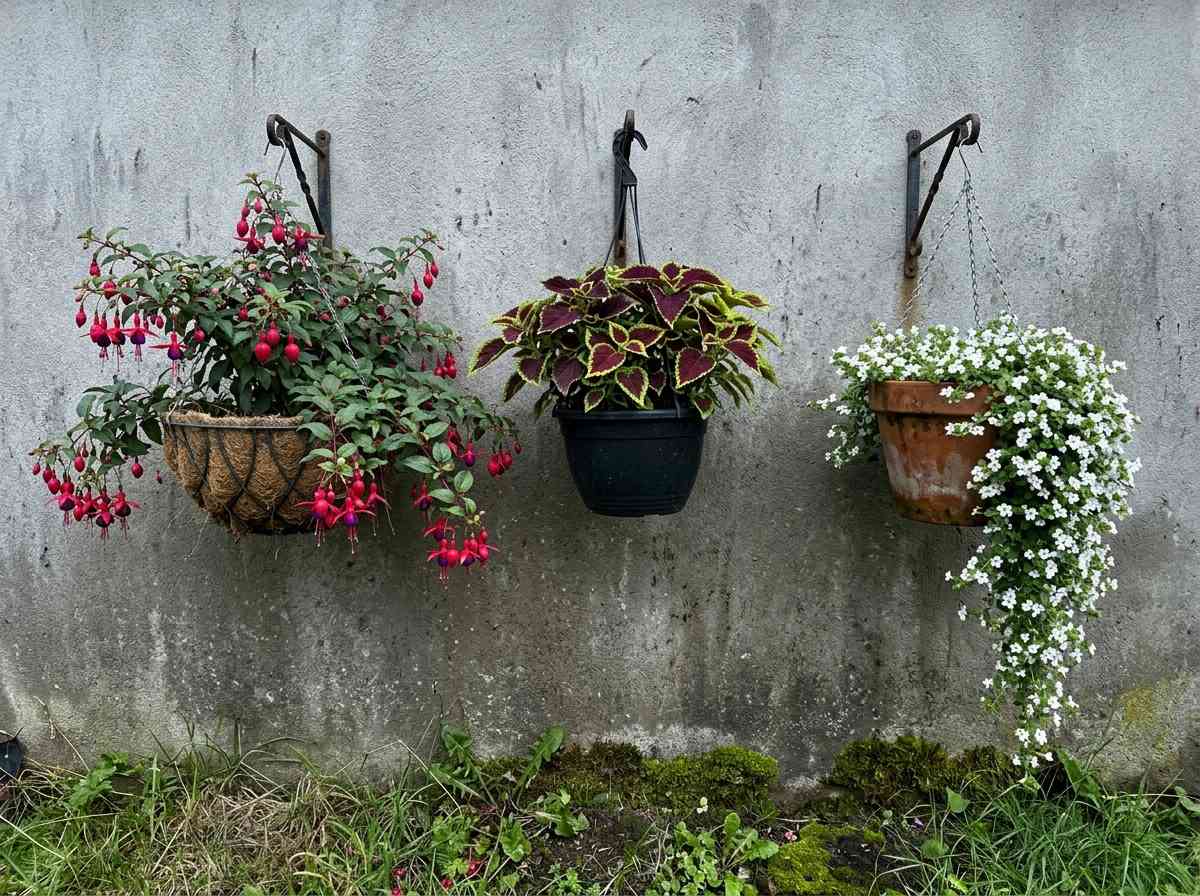
1. Fuchsia
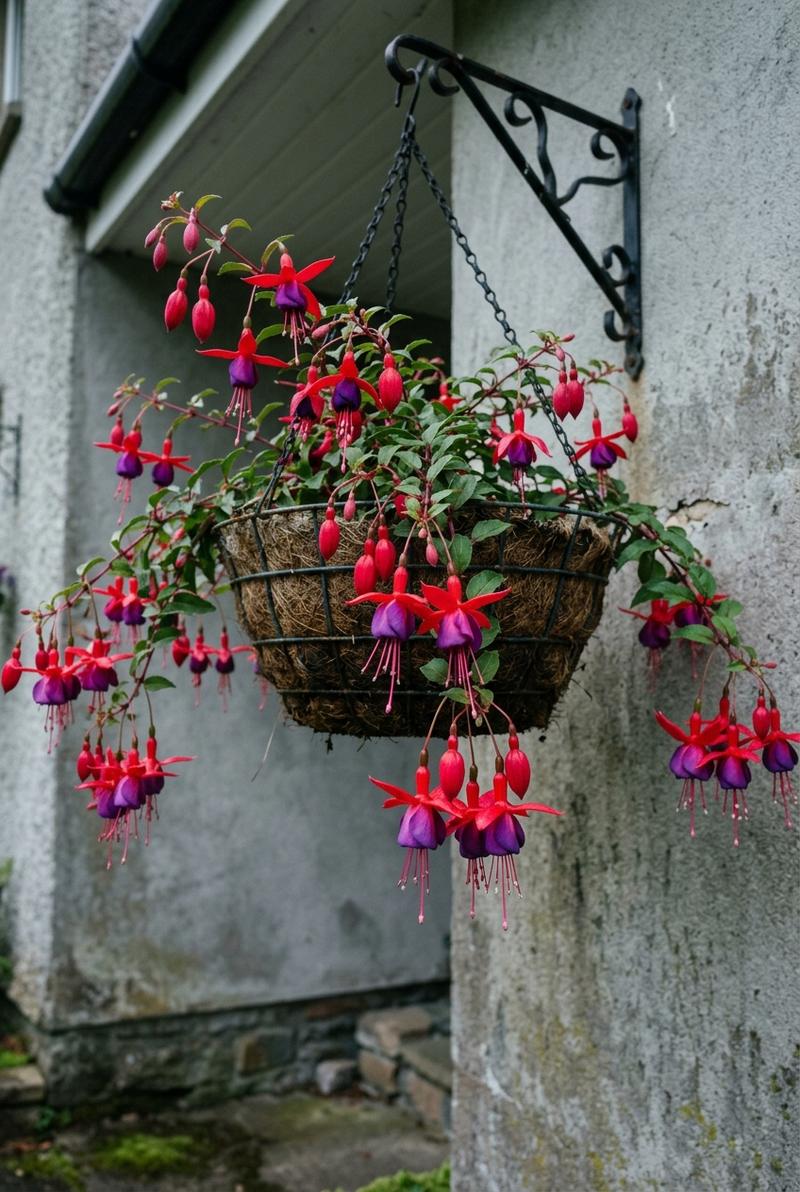
The queen of shade baskets: dangling two-tone bells that hummingbirds visit on a schedule. This is the plant I banished from my sunny porch in the full-sun basket guide, and here, in cool shade, it finally makes sense.
Its honest limits: flowering slows once days average above 76°F (24°C), and hot climates should hunt for heat-bred types like ‘Gartenmeister’. Never let it fully dry out either… a bone-dry fuchsia basket turns water-repellent and takes a bucket-dunk to fix.
2. Tuberous Begonia
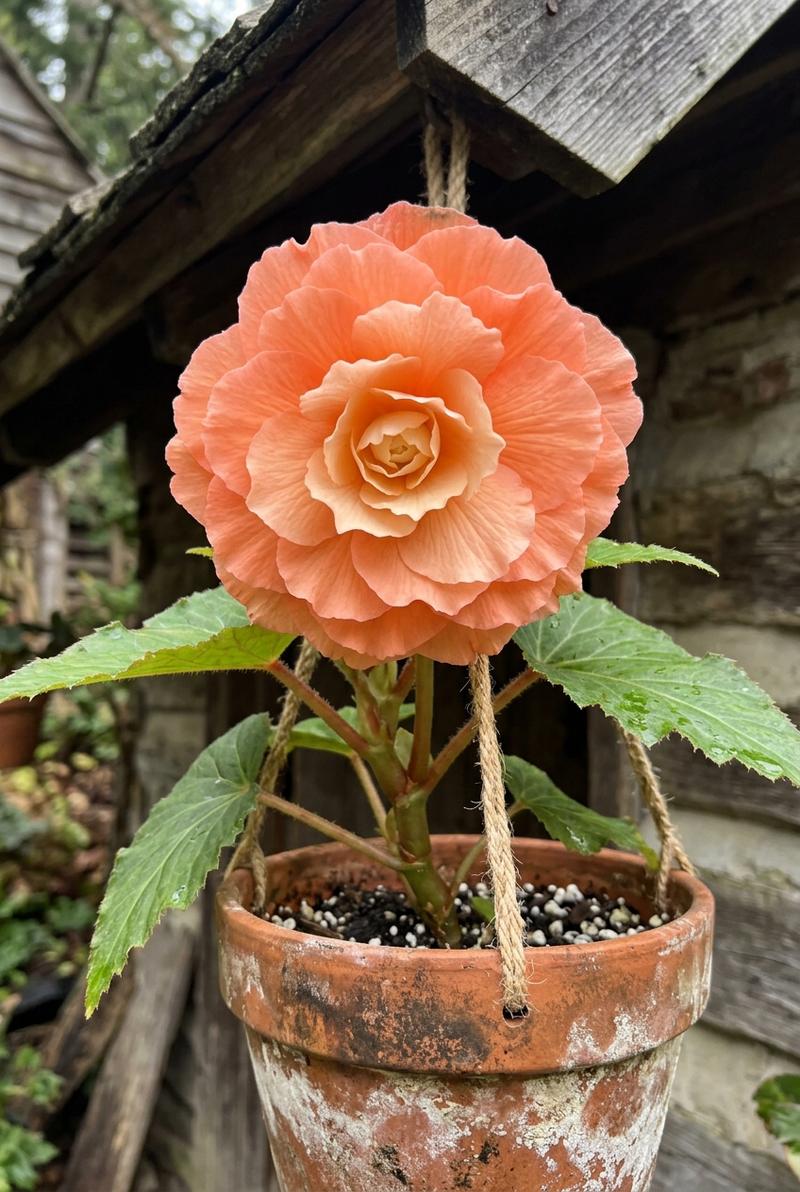
Rose-shaped blooms the size of your palm, in colors that look airbrushed. Nothing else in shade matches the flower drama.
Give it airflow and a light hand with the watering can; thick begonia stems rot before they wilt.
3. Dragon Wing Begonia
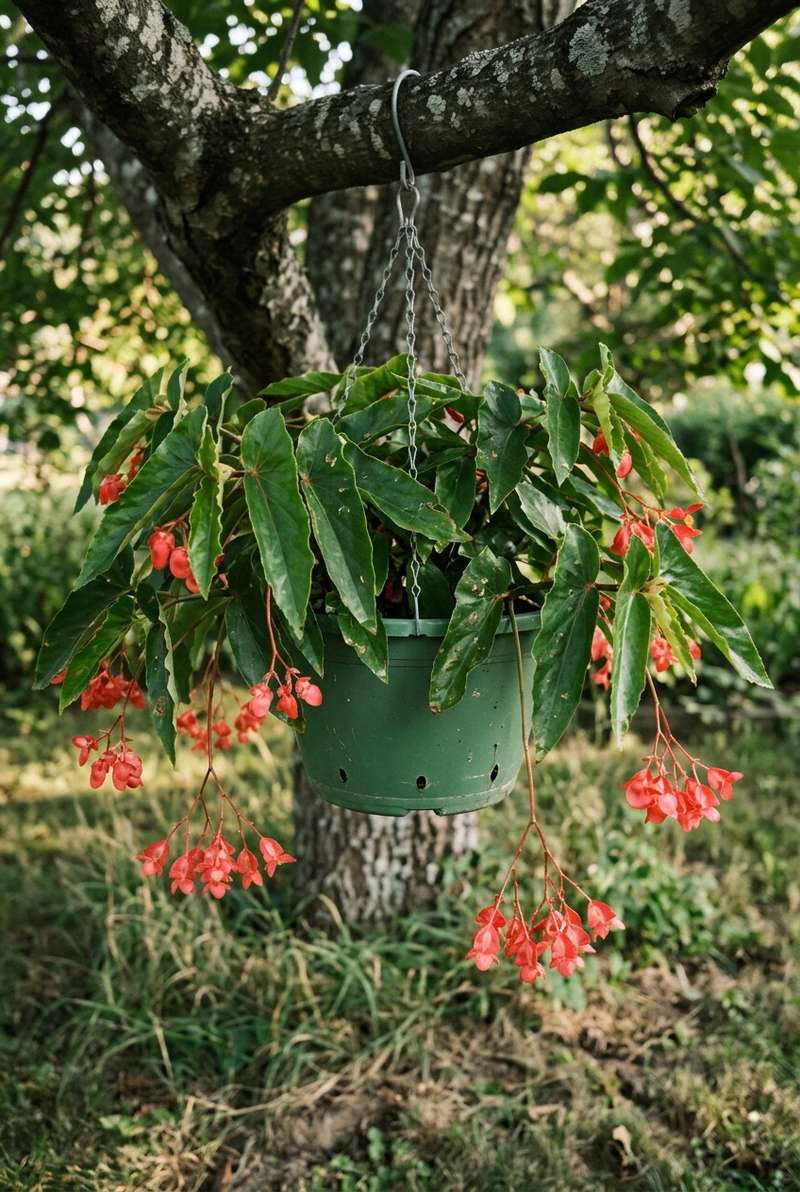
The workhorse begonia. Glossy angel-wing leaves, nonstop red or pink sprays, and real tolerance for heat and humidity that flattens the tuberous kind. If you want one plant per basket and zero fuss, this is my pick.
4. Begonia Boliviensis
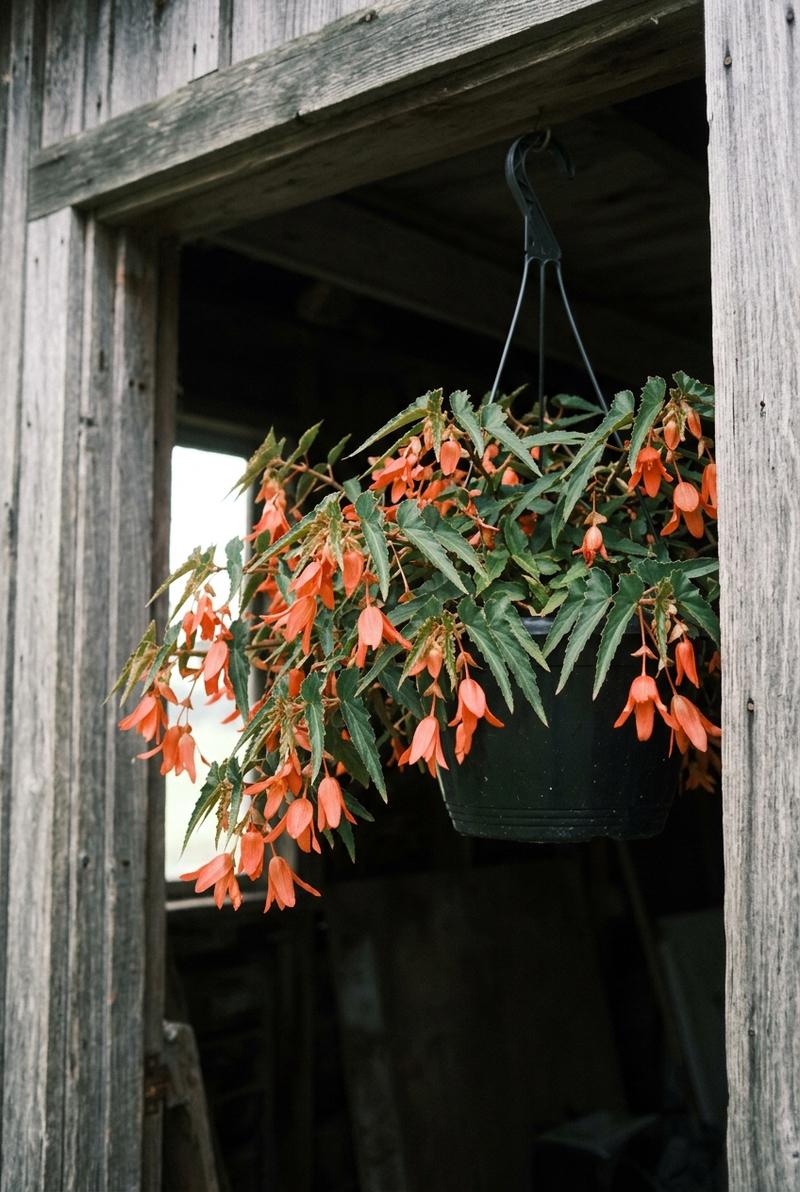
A begonia that behaves like a waterfall: arching stems loaded with narrow orange or red bells pouring over the basket rim. Bred from a high-altitude Andean species, so it handles brighter, breezier spots than its cousins.
5. Impatiens (The Resistant Ones)
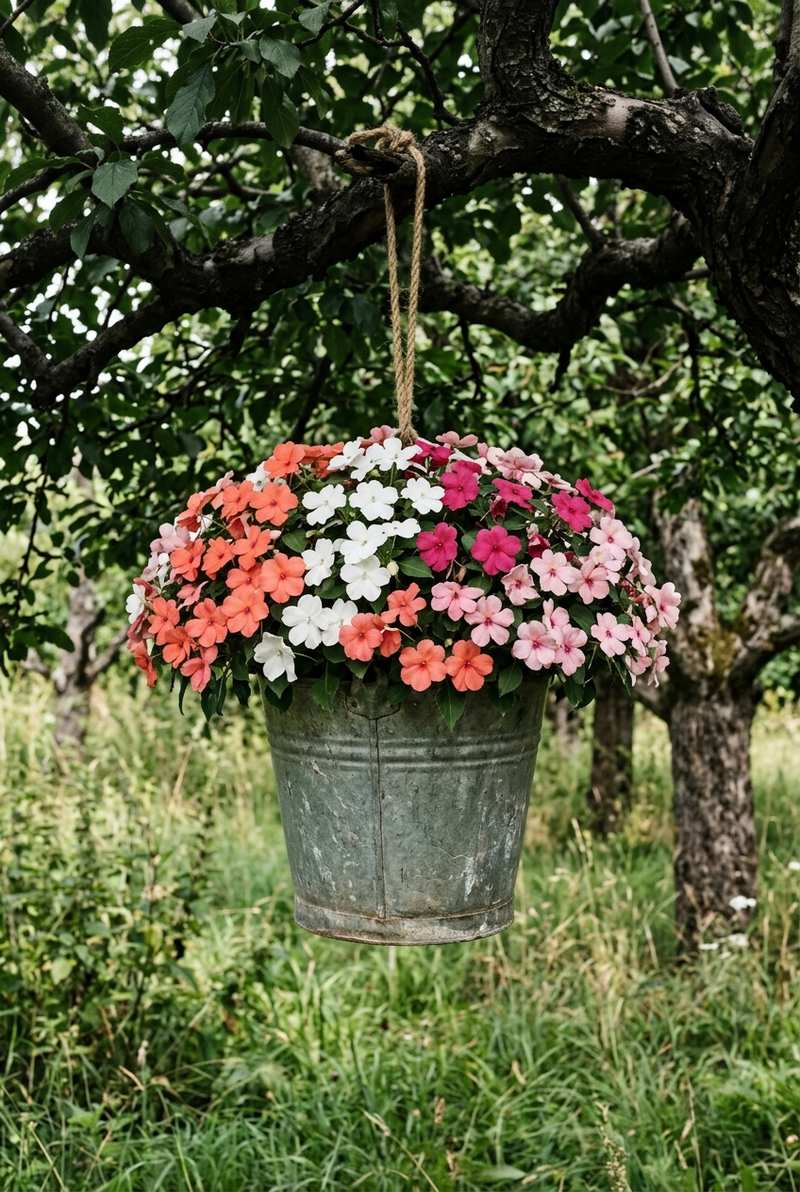
Quick history: around 2011, downy mildew tore through classic impatiens and wiped out more than half the market almost overnight. The fungus lingers in soil for years, which is why your grandmother’s favorite disappeared from garden centers.
The comeback is real, but read the tag: buy ‘Beacon’ or ‘Imara XDR’ series, the mildew-resistant generations. Same wall-to-wall color, none of the heartbreak. UMass Extension tells the whole saga here.
6. New Guinea Impatiens
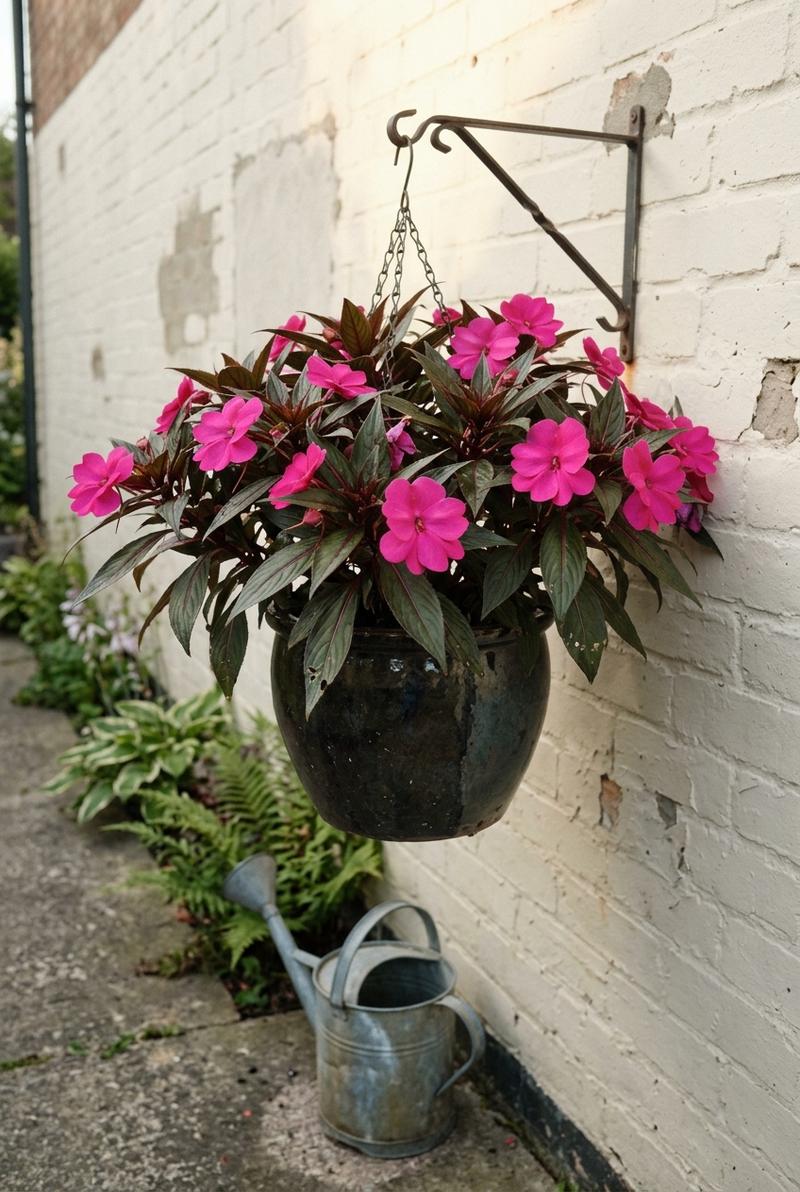
Bigger flowers, glossier leaves, and it was never susceptible to the mildew that took down its cousin. For the bracket between shade and sun, the bright east side, the spot with a few strong afternoon rays, this is the impatiens to hang.
7. Torenia (Wishbone Flower)
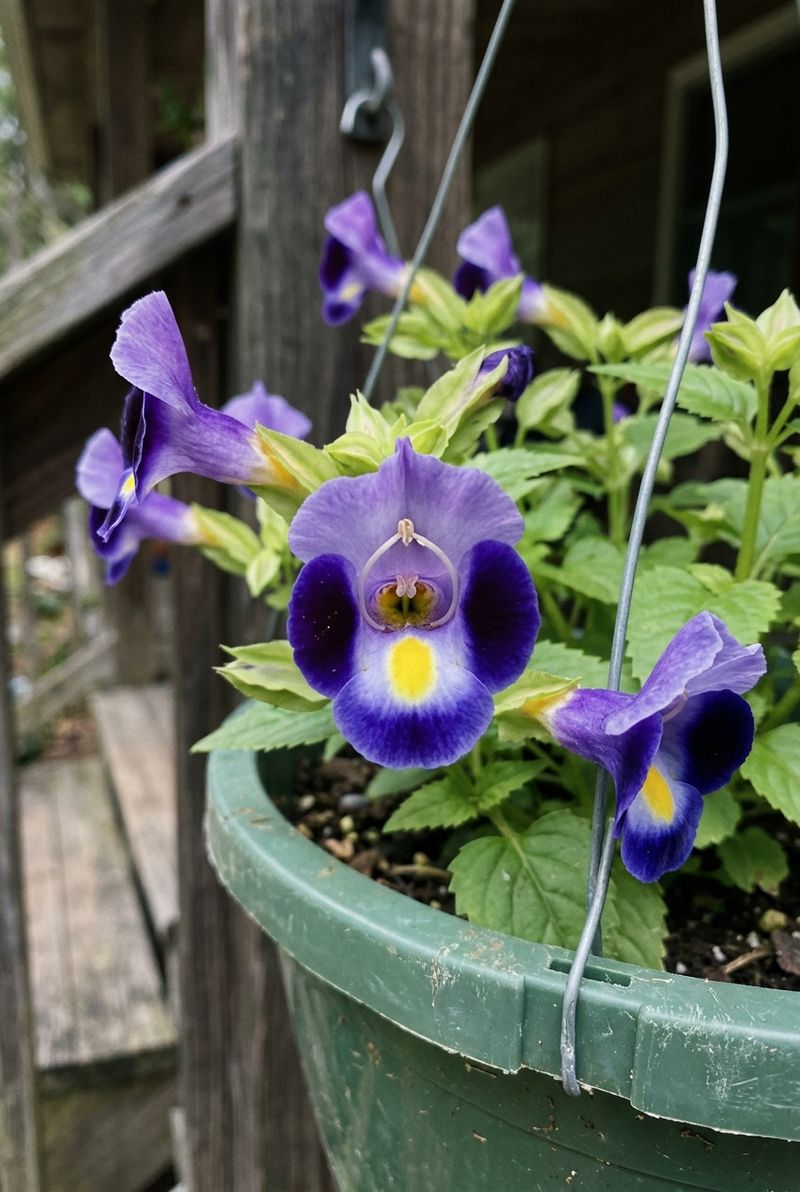
My best-starter pick. Little trumpet flowers in purple, blue, and yellow with a tiny wishbone inside each one, blooming steadily in genuine shade through genuine heat.
Forums call it the impatiens replacement. I’d call it an upgrade.
Save this to Pinterest8. Browallia
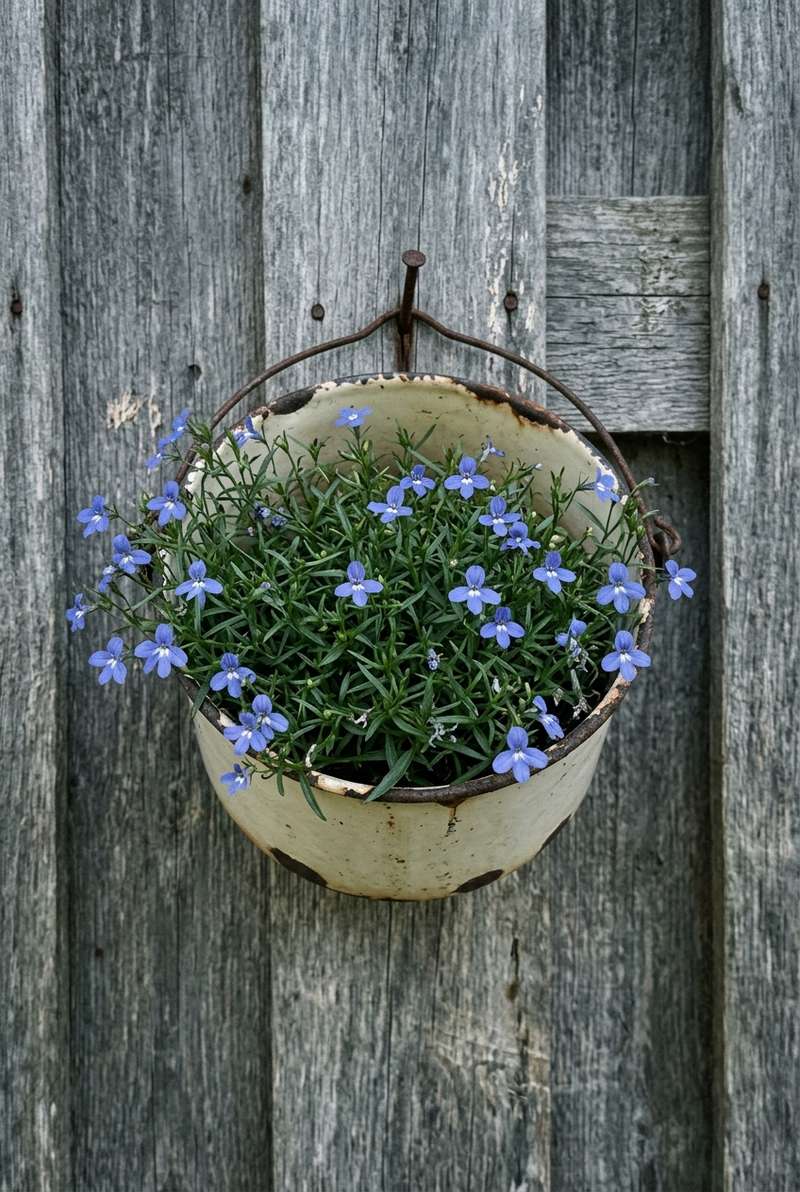
The one nobody knows. Star-shaped blue or white flowers on a tidy mound, happy in real shade and untroubled by summer heat.
True blue is rare in shade. Worth hunting the seed racks for.
9. Trailing Lobelia
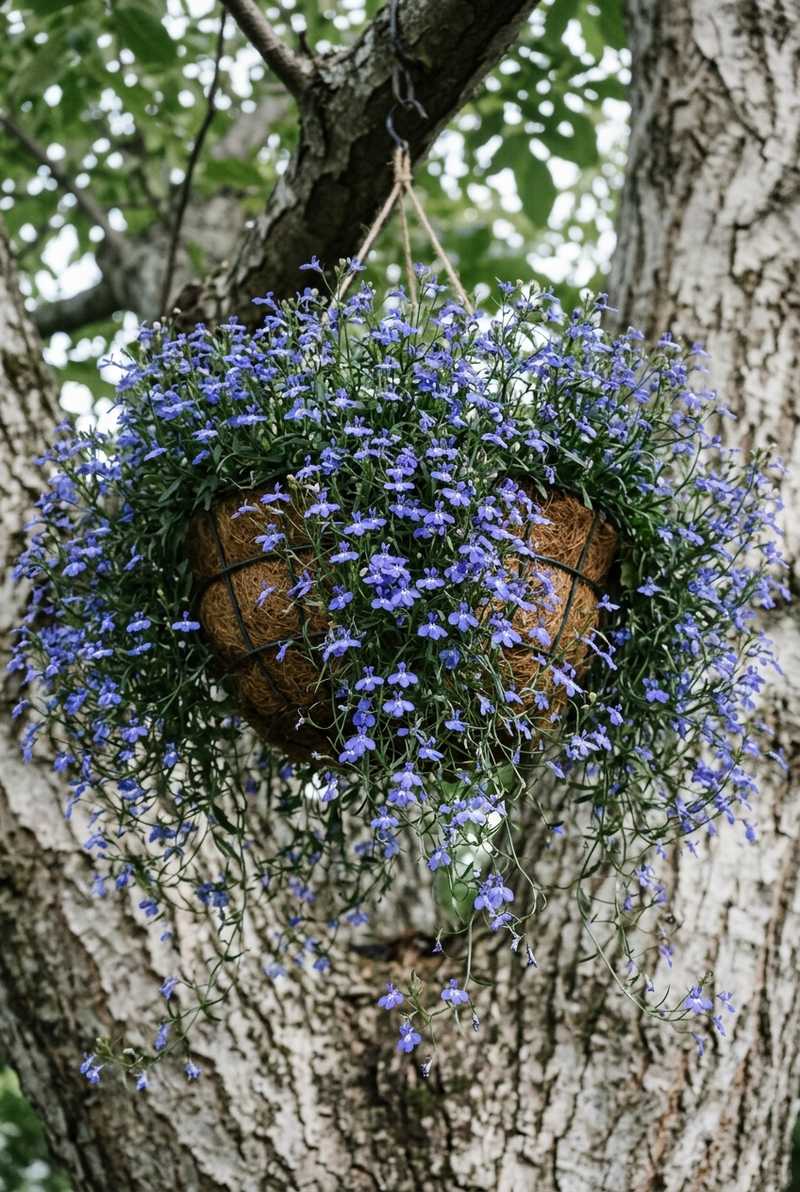
In the sun-basket article, lobelia was a warning. Here it’s home. With afternoon shade, that electric blue foam keeps going far longer into summer, and a mid-season trim brings it roaring back for fall.
10. Bacopa
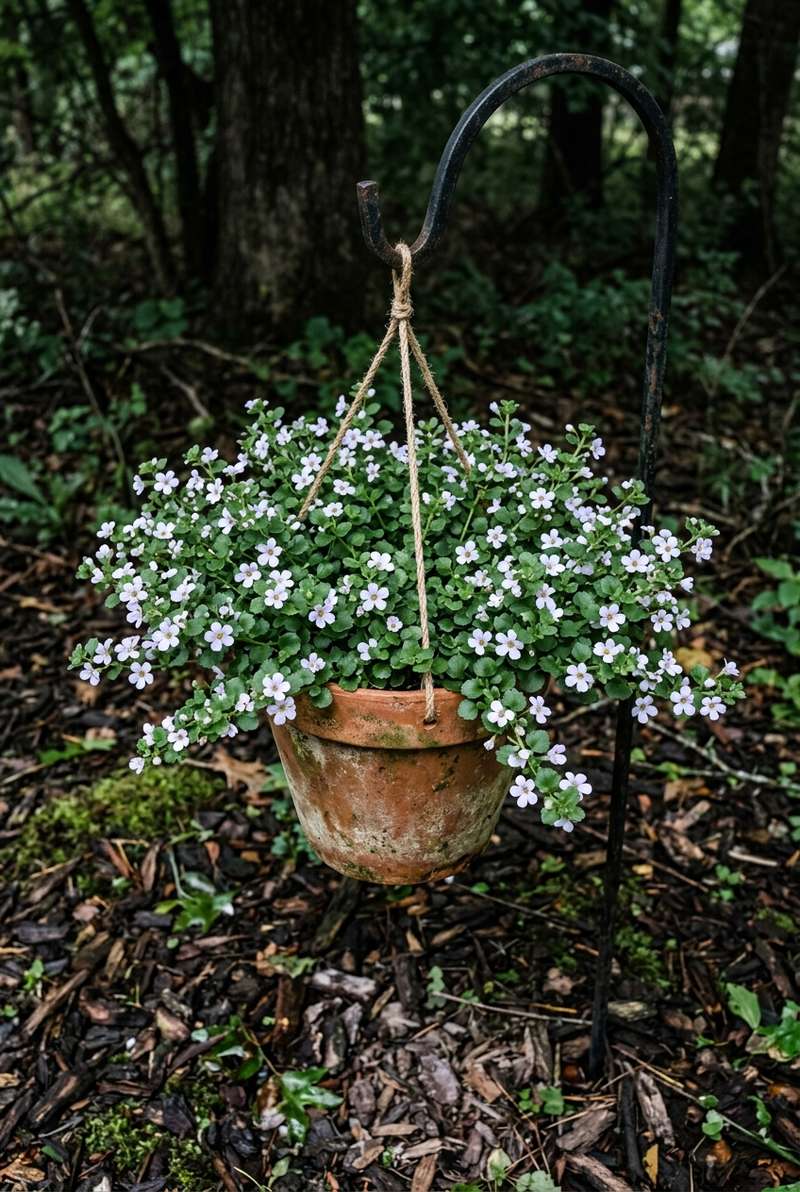
A soft white curtain over the basket edge, and honestly happier here than in full sun. One warning carries over: bacopa shows no visible stress until it’s too late, then drops every bud at once after a dry-out. Steady water buys total loyalty.
The Foliage Crew (For Real Shade)
When the light gets too low even for torenia, leaves take over the show. These five carry the darkest hooks.
11. Coleus
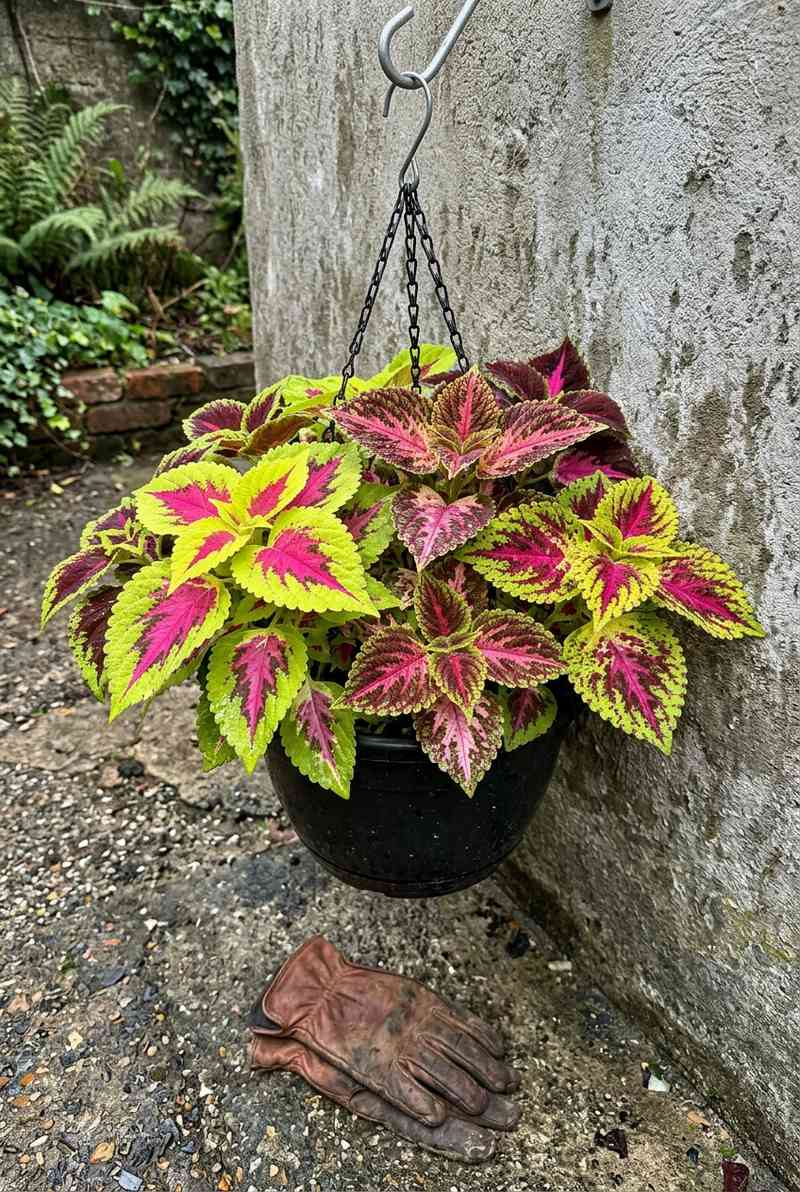
Leaves in lime, burgundy, hot pink, and combinations that look hand-painted. Louder than most flowers, in zero direct sun.
Counterintuitive care note: coleus does flower, and you should pinch those spikes off. The blooms are forgettable and they drain energy from the leaves you actually planted it for.
12. Heuchera (Coral Bells)
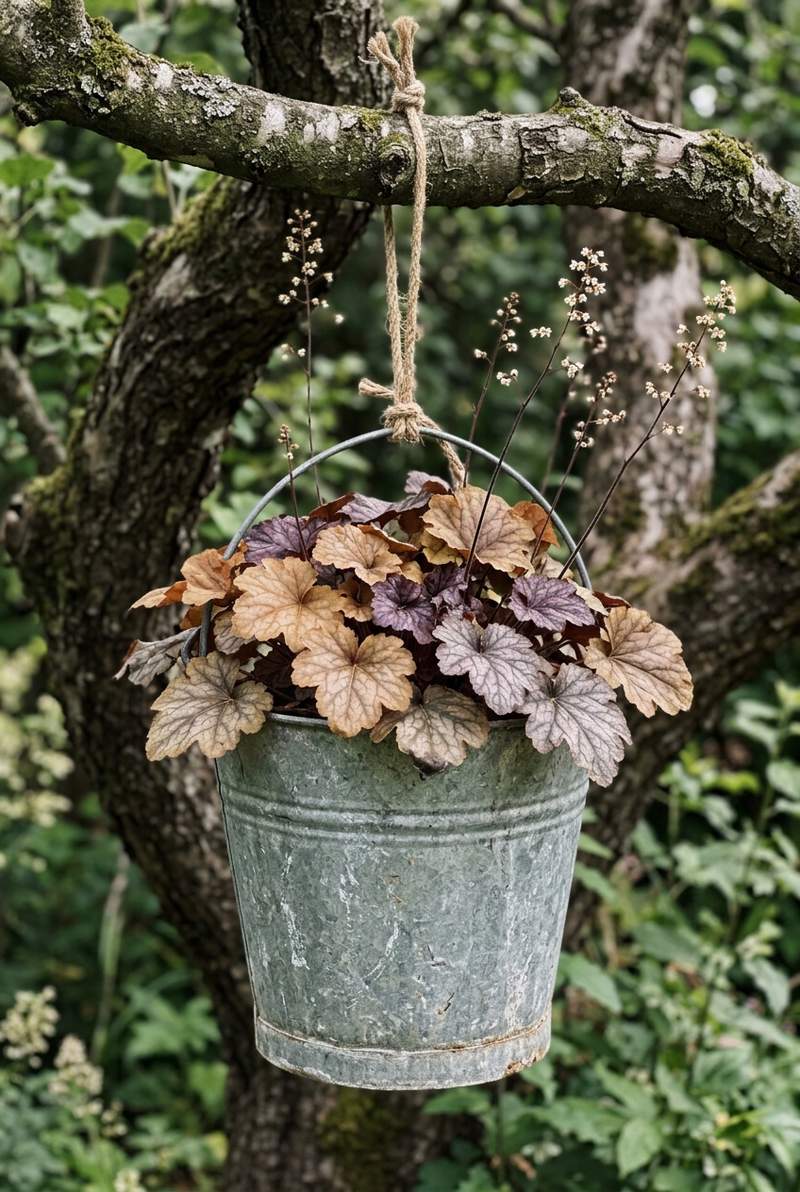
Ruffled leaves in caramel, plum, and silver, and here’s the budget trick: it’s a hardy perennial. When the basket season ends, plant it in the garden and it comes back for years. One purchase, two lives. It’s a regular in my shade perennials list for the ground-level version.
13. Boston Fern
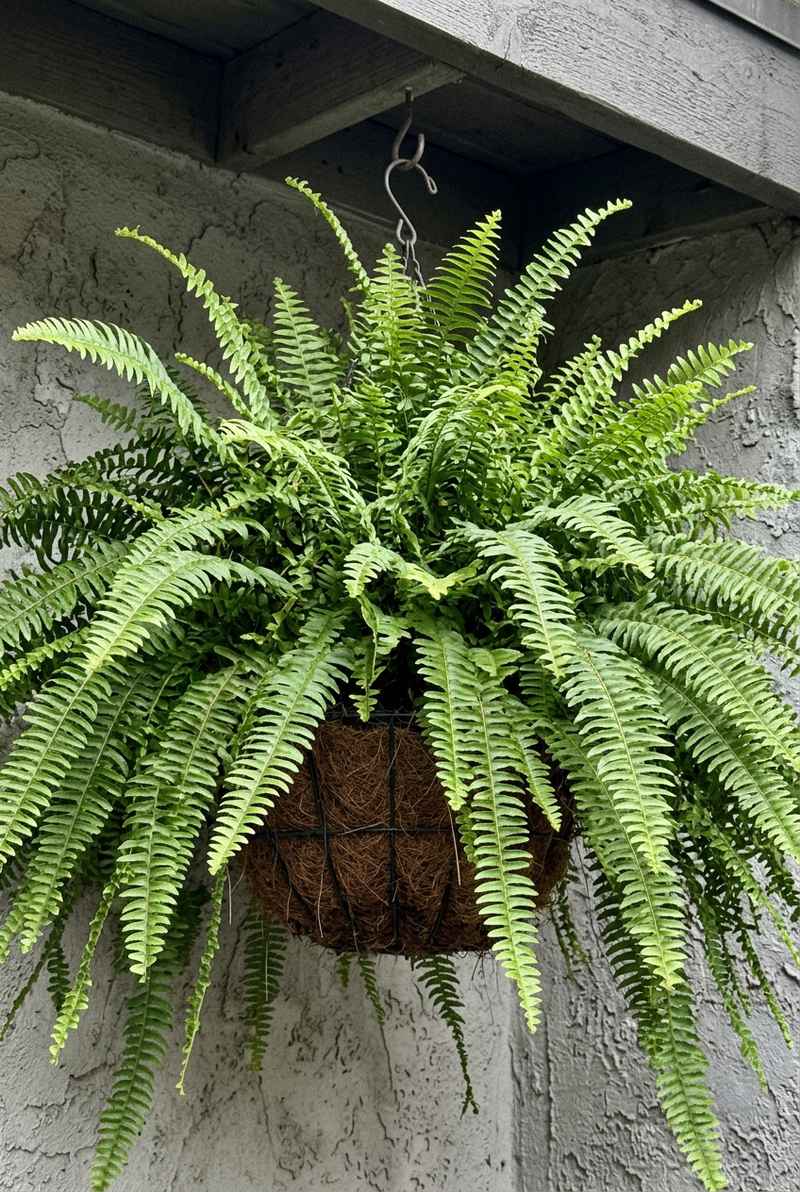
The classic porch fern for a reason. One plant fills an entire basket with green fireworks and asks only for water and misting in dry spells. No flowers, no drama, pure volume.
14. Sweet Alyssum
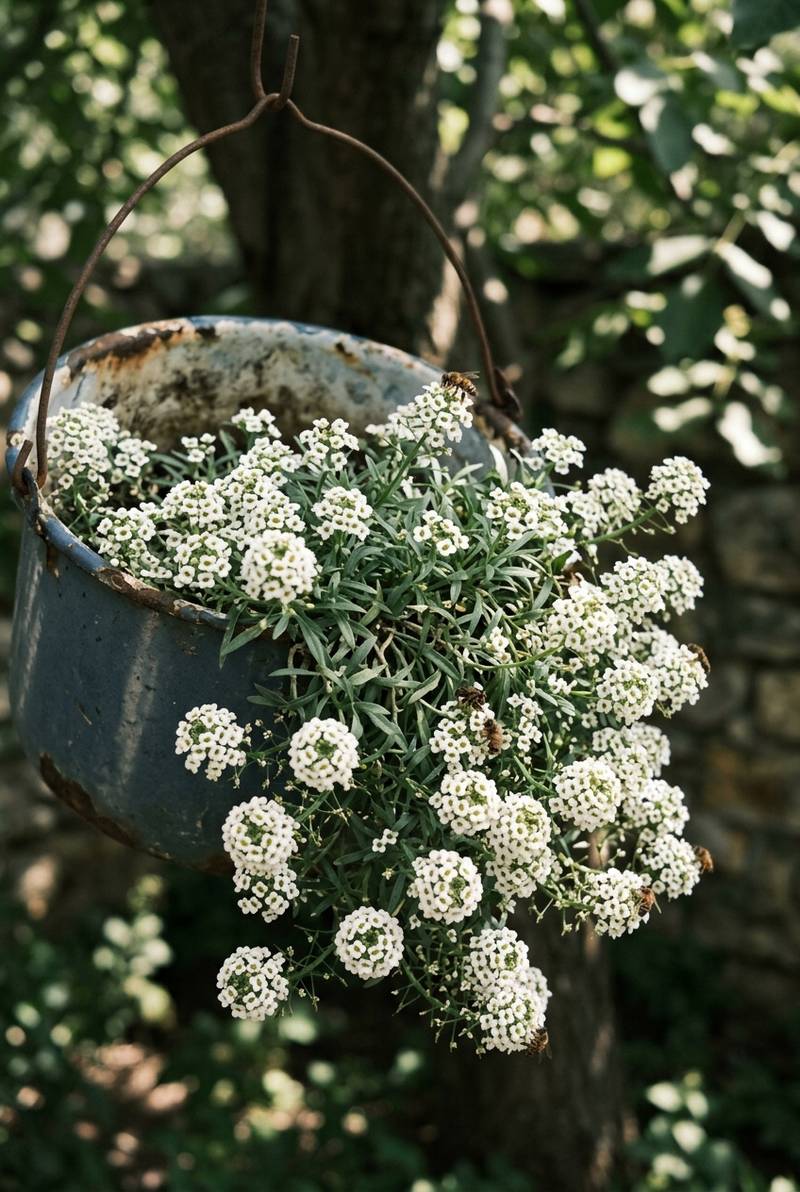
Clouds of tiny honey-scented flowers that soften every edge they touch. It wants at least dappled light, so hang it on the brighter end of your shade, and it repays you in fragrance every time you walk past.
15. Vinca Vine
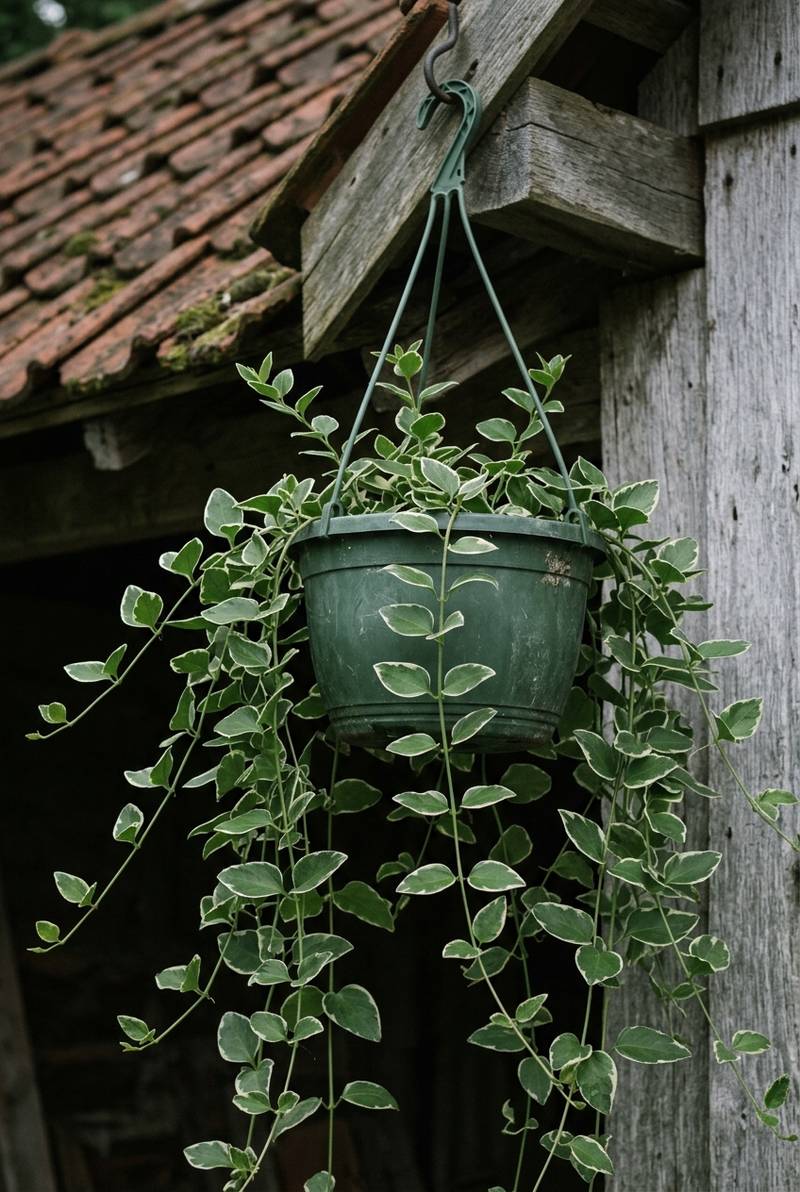
Silver-edged trailing leaves that give any mixed basket that finished, spilling-over look. Nearly unkillable in a basket. Just keep it in the basket; on the ground it’s a spreader with ambitions.
Watering a Shade Basket Is Backwards
Sun-basket rules say water daily. Shade baskets flip it: the soil holds moisture longer, and the common killer is overwatering into root rot, not drought. Check with a finger 2 inches (5 cm) down and water only when it’s dry there.
That’s the other trap. Covered porches are exactly where shade baskets hang, and covered means every drop comes from your watering can. Feed lightly every couple of weeks and both problems stay theoretical.
Shade Basket Questions
Why won’t my shade basket bloom?
Usually the corner is darker than the plant can handle. Move it somewhere with bright indirect or dappled light, or swap the bloomers for the foliage crew, which is built for exactly that spot.
Is it safe to buy impatiens again?
Yes, if the tag says Beacon, Imara XDR, or New Guinea. Unnamed classic impatiens are still a gamble anywhere downy mildew has been in the soil, and it survives there for years.
My fuchsia was gorgeous in June and quit in July. Why?
Heat. Fuchsias slow down above 76°F (24°C) and stop entirely in heat waves. Keep it watered and shaded through the worst of it and it usually rebounds when nights cool. Clemson’s fuchsia guide has the details.
Can I mix bloomers and foliage in one basket?
That’s the prettiest kind. Coleus thriller, impatiens filler, vinca vine spiller is a classic shade recipe that looks professionally made for under $20.
The Hook Isn’t Empty Anymore
That judgy north-porch hook now holds a fuchsia, and the hummingbird that owns it does a patrol lap every evening while dinner cooks.
Shade isn’t the porch’s flaw. It’s just a different plant list, and now you have it. The sunny side of the house gets its own list in my full-sun basket guide.