

How to Grow Peonies (And Why They Won’t Bloom)

- Planting to first bloom
- No-bloom troubleshooting
- Fall planting guide
- Zones 3-8
The most expensive tool in peony growing is a ruler, and it costs a dollar.
Plant the roots at the right depth and a peony blooms for fifty years, maybe a hundred, outliving the person who planted it. Plant them an inch too deep and you get a healthy green bush that never flowers, ever, and no amount of fertilizer will fix it.
This guide covers both halves: how to plant one right, and how to diagnose the one that’s sulking.
The Short Version
- Plant bare-root peonies in fall, eyes 1-2 inches (2.5-5 cm) below the surface, never deeper
- Full sun (6+ hours), well-drained soil, 3 ft (90 cm) apart, away from tree roots
- Expect the three-year rhythm: sleep, creep, leap. No blooms year one is normal.
- No blooms after year three? The ranked troubleshooting list below finds the reason.
- The #1 cause of a never-blooming peony is planting too deep, and it’s fixable.
The Ruler Is the Whole Secret

A bare-root peony looks like a knobby brown hand with pink or white buds on top. Those buds are the “eyes,” and where they sit relative to the soil surface decides everything.
The rule: eyes 1-2 inches (2.5-5 cm) below the surface. In heavy clay or warmer zones, stay at the shallow end, 1 inch. Nowhere, in any soil, deeper than 2.
Half an inch too deep can mean years without a single flower. So measure (yes, with an actual ruler, I’m serious).
This is also why I’d buy bare root instead of potted. With bare root, you control the depth. With a potted peony, you inherit whatever the nursery did.
Picking a Spot for a Plant That Outlives You
Peonies hate moving. Every relocation costs you two or three years of blooms while they re-establish, so this decision is closer to planting a tree than a flower.
I walked my yard with a compass app before choosing the spot for mine. Overkill? Maybe. But that bed gets sun from nine to four, and the peonies have never once made me regret the ceremony.
The spot needs 6+ hours of direct sun and soil that drains. Wet feet rot the roots faster than anything else.
Keep them 3 ft (90 cm) apart and away from trees and big shrubs. Tree roots steal the water and food, and crowded peonies trade flowers for fungus. Airflow matters more than it seems.
Fall Planting, In Order

September and October are peony season. Warm soil, cool air, and a whole winter for roots to settle before the show. This is the same fall-planting logic behind my spring-blooming perennials list, where peonies took the number 12 spot.
What You’ll Need
- Bare-root peony with 3-5 eyes
- Ruler
- Compost for the planting hole
- Watering can
Time: 20 minutes · Difficulty: Easy
Dig a wide hole about a foot deep and loosen the bottom. Mix compost into the fill soil, then build a firm mound in the center.
Set the root on the mound, eyes pointing up, and lay your ruler across the hole. Adjust until the eyes sit 1-2 inches below where the soil line will be.
Backfill gently, firm with your hands, and water deeply once. Done. No mulch piled on top of the crown… that’s just “planting too deep” in slow motion.
Sleep, Creep, Leap: The Three-Year Contract
New peonies run on a schedule nobody warns you about, and half the “my peony is broken” panic is just this.
| Year | What you get |
|---|---|
| Year 1 (sleep) | A few stems, maybe one bloom, roots doing all the real work underground |
| Year 2 (creep) | Twice the stems, a handful of flowers |
| Year 3 (leap) | Reliable full bloom, and it builds from here for decades |
Digging one up in year two because “it’s not working” resets the clock to zero. Patience is a peony skill.
Save this to PinterestThe Care Calendar (It’s Short)
Established peonies need four small jobs a year.
Early spring: set peony rings over the emerging red shoots. Do it now, while they’re ankle-high; wrestling a hoop over a full bush in May is a lost cause (ask me how I know).
Spring feeding: a light hand with low-nitrogen fertilizer, something like 5-10-10. High nitrogen grows you a big, leafy bush with no flowers on it.
Dry spells: deep, occasional watering at the base, especially while buds are forming. Skip overhead sprinklers; wet leaves invite botrytis.
After the first hard frost: cut all foliage to the ground, bag it, and throw it out. Don’t compost peony foliage. Botrytis spores overwinter in the dead leaves and reinfect the plant every spring if you leave them nearby.
Why Your Peony Won’t Bloom, Ranked
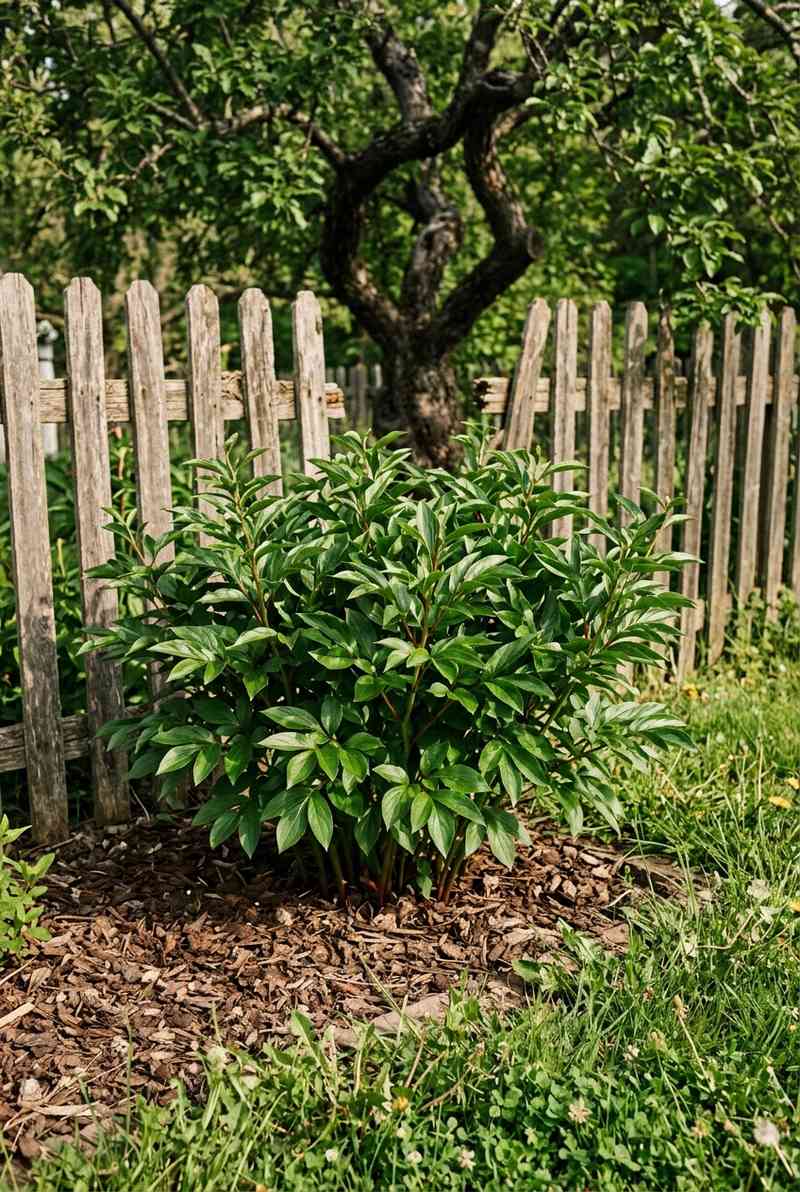
Three years old or more and still no flowers? Work down this list in order. It’s ranked by how often each one turns out to be the answer, and Iowa State Extension keeps a similar list if you want a second opinion.
1. Planted too deep. The classic. Healthy foliage, zero flowers, year after year. Fix: in fall, dig it up and replant with the eyes 1 inch (2.5 cm) deep. This one repair revives more “broken” peonies than everything else combined.
2. Not enough sun. Under 6 hours and blooms fade away, especially as nearby trees grow and shade creeps in over the years. The fix is a fall move to a sunnier spot, then patience.
3. Too young or recently moved. See the three-year contract above. Not broken. Just early.
4. Too much nitrogen. Often from lawn fertilizer drifting into the bed. Big leaves, no buds. Stop feeding and it usually corrects in a season.
5. Late frost killed the buds. A one-year problem, not a plant problem. Cold snagged the buds after they formed.
6. Bud blast. Buds form, then brown, blacken, and shrivel without opening. Cool wet spring weather and botrytis are the usual culprits, which is exactly why the fall foliage cleanup matters. Missouri Botanical Garden has a good rundown.
7. Overcrowding. A decades-old clump can simply run out of room. Divide in fall, 3-5 eyes per piece, replant shallow.
8. Not enough winter chill. Peonies need roughly 500-1,000 hours below 45°F (7°C) to set buds. In zone 9 and warmer, that math usually doesn’t work. More below.
About the Ants
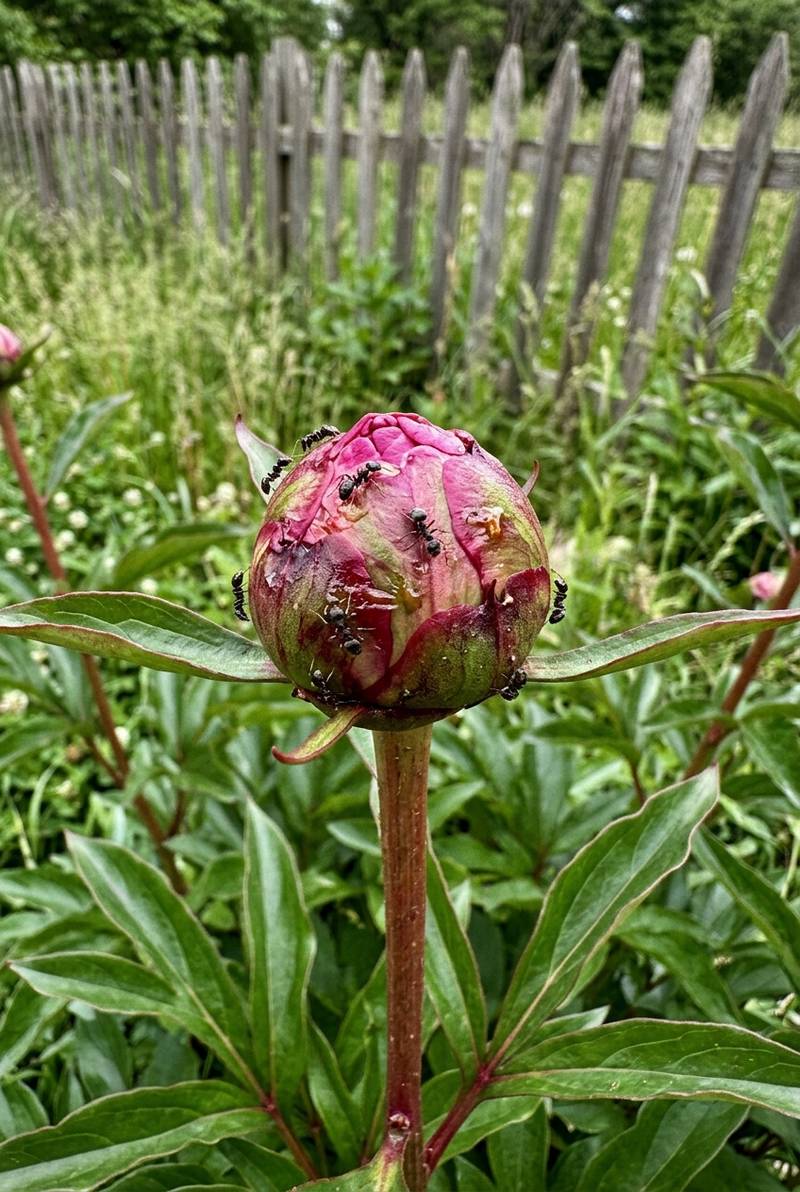
Peony buds secrete sweet nectar, and ants show up for it. The old story that flowers can’t open without ants is a myth… the buds open fine with or without them.
They’re harmless, possibly even helpful as pest bouncers, so skip the spray. My toddler considers ant-watching on the peony buds a full morning activity, and honestly, fair.
Peony Questions I Keep Getting
Can I move an established peony?
Yes, in fall, with the whole root mass and a shallow replant. Just budget for two to three quiet years afterward. Peonies forgive the move; they just don’t rush the forgiveness.
Can I grow peonies in zone 9?
Standard herbaceous types will grow leaves but rarely flower; there just isn’t enough cold. Your best odds are low-chill Itoh hybrids or tree peonies, planted where they get any winter chill your yard offers.
My buds formed and then dried up. What happened?
That’s bud blast, number 6 on the list. Check whether a late frost hit, whether the spring was cold and wet, and whether last year’s foliage was left lying around the crown over winter.
Fifty Years From One Afternoon
Somewhere there’s a peony blooming beside a house whose original owners are long gone, planted right the first time by someone with a ruler and twenty minutes.
Mine were half-price bare roots from a clearance bin, planted one October on a whim. They’re now the plant I’d rescue first in a fire.
Plant yours this fall, at exactly the right depth, and let it spend the next half century paying you back every June… right as the summer bloomers line up to take over.