How to Grow Peppers from Seed
- Seed starting
- Sweet & hot peppers
- Indoor to transplant
- Beginner friendly
My first tray of pepper seeds sat on a windowsill for three weeks and produced exactly nothing. I blamed the seeds, bought new ones, and got nothing again.
The seeds were fine. The windowsill was the problem. Peppers germinate on heat, and a $20 heat mat turned my three-week failures into five-day sprouts.
The full run is below, from seed packet to a transplant that doesn’t stall.
At a Glance
- Pepper seeds want 80-90°F (27-32°C) soil to germinate. A heat mat is the difference between 5 days and 3 weeks.
- Start indoors 8-10 weeks before last frost, superhots even earlier. That’s a month before your tomatoes.
- Grow lights, not a windowsill, once they’re up
- Transplant only when nights stay above 55°F (13°C). Cold-stalled peppers often never recover.
- If your seeds “won’t sprout,” it’s almost always temperature, not the seeds.
The Windowsill Lie
Seed packets say “sow indoors,” and everyone pictures a sunny window. But pepper germination is a temperature game, and a spring windowsill runs 55-65°F, which is close to nothing happening.
The target is 80-90°F (27-32°C) soil. On a heat mat at that range, sweet peppers pop in about a week. On a cool sill, the same seeds take three weeks, or rot first and take forever.
And the type of pepper changes the math completely:
| Type | Germination (with heat) | Days to ripe fruit after transplant |
|---|---|---|
| Sweet and bell peppers | 7-21 days | 60-90 |
| Standard hots (jalapeño, cayenne) | 1-3 weeks | ~90 |
| Superhots (habanero, ghost, reaper) | 30-35 days, sometimes 100+ | 90-120 |
So if your ghost pepper tray looks dead at day 25… it isn’t. Superhot seed coats are thick and slow. Keep the tray warm and wait it out.
Count Backwards From Last Frost
Peppers get lumped in with tomatoes on every seed-starting calendar, and it quietly ruins seasons. They need a head start.
Start sweet and standard hot peppers 8-10 weeks before your last frost date. Superhots, 10-12 weeks. Tomatoes only need 6-8, so your peppers go into trays about a month before the tomato seeds even come off the shelf.
Miss the window and there’s no catching up; a late-started pepper spends its summer growing a plant instead of fruit.
Concrete example: if your last frost is May 10, pepper seeds go into trays between late February and mid-March. Tomatoes can wait until the end of March. Write both dates down now, because March-you will not remember.
Sowing Day
What You’ll Need
- Seed tray or cells with a humidity dome
- Sterile seed-starting mix (not garden soil)
- Heat mat
- Grow light
- Spray bottle
Time: 30 minutes · Difficulty: Easy
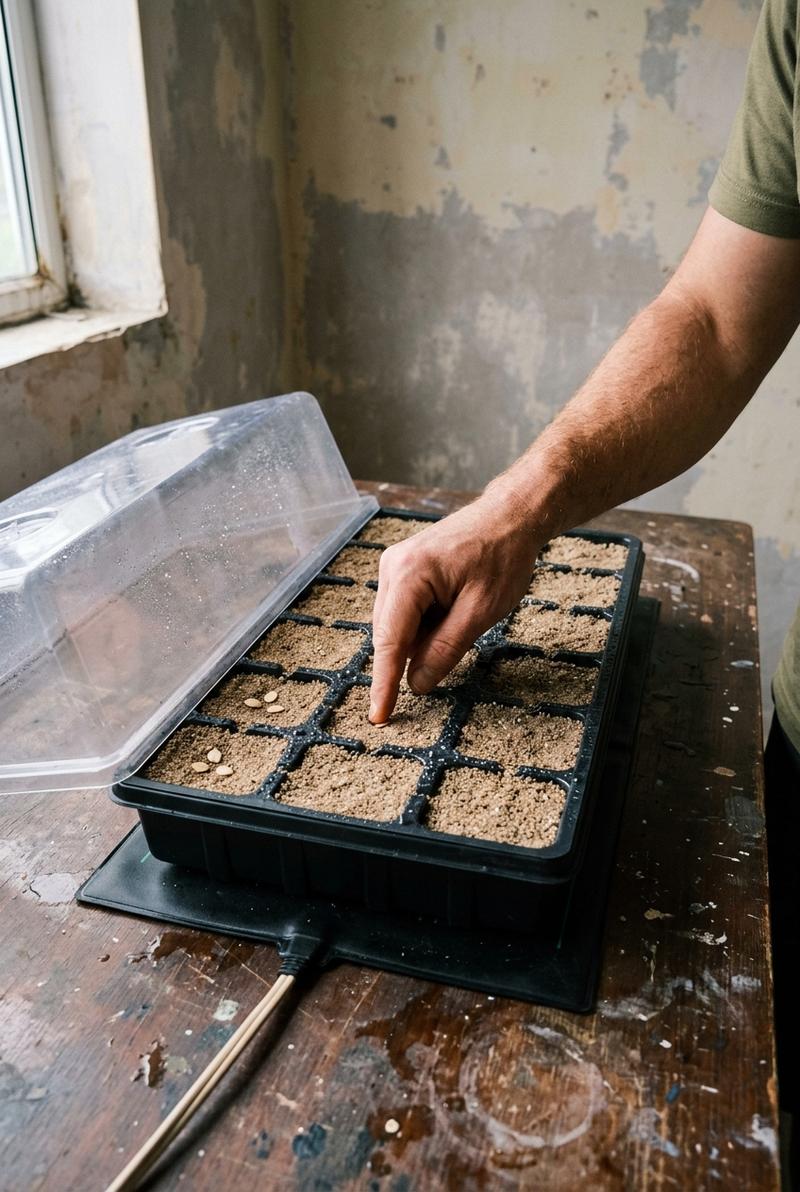
Fill cells with pre-moistened mix, press seeds 1/4 inch (6 mm) deep, two per cell, and mist the surface. Dome on, mat on, and park the tray somewhere you’ll walk past daily.
Keep the mix barely moist, never soggy. Wet trays plus stagnant air breed damping off, the fungus that folds healthy seedlings overnight. A sterile mix and a light hand with the spray bottle prevent most of it.
When both seeds in a cell sprout, keep the stronger one and snip the other at soil level with scissors. Don’t pull it… yanking one seedling wrecks the roots of its neighbor.
They’re Up. Now Light Is Everything.
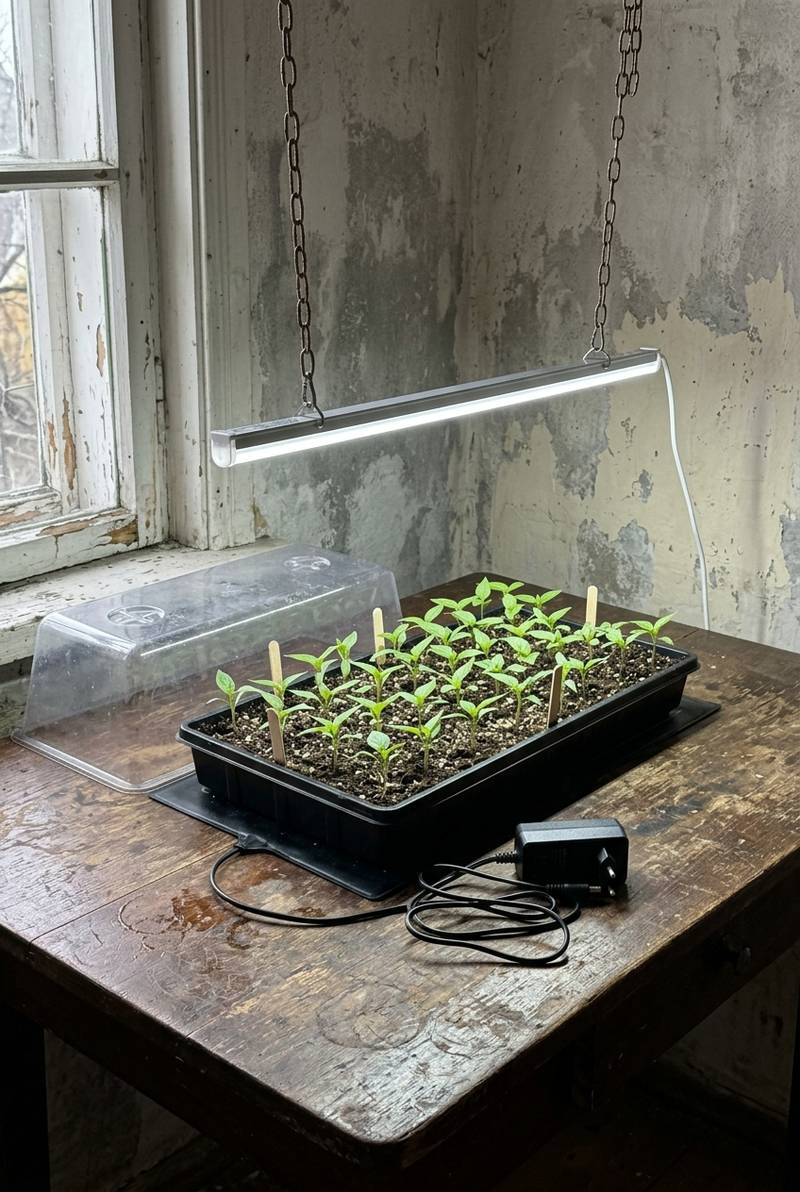
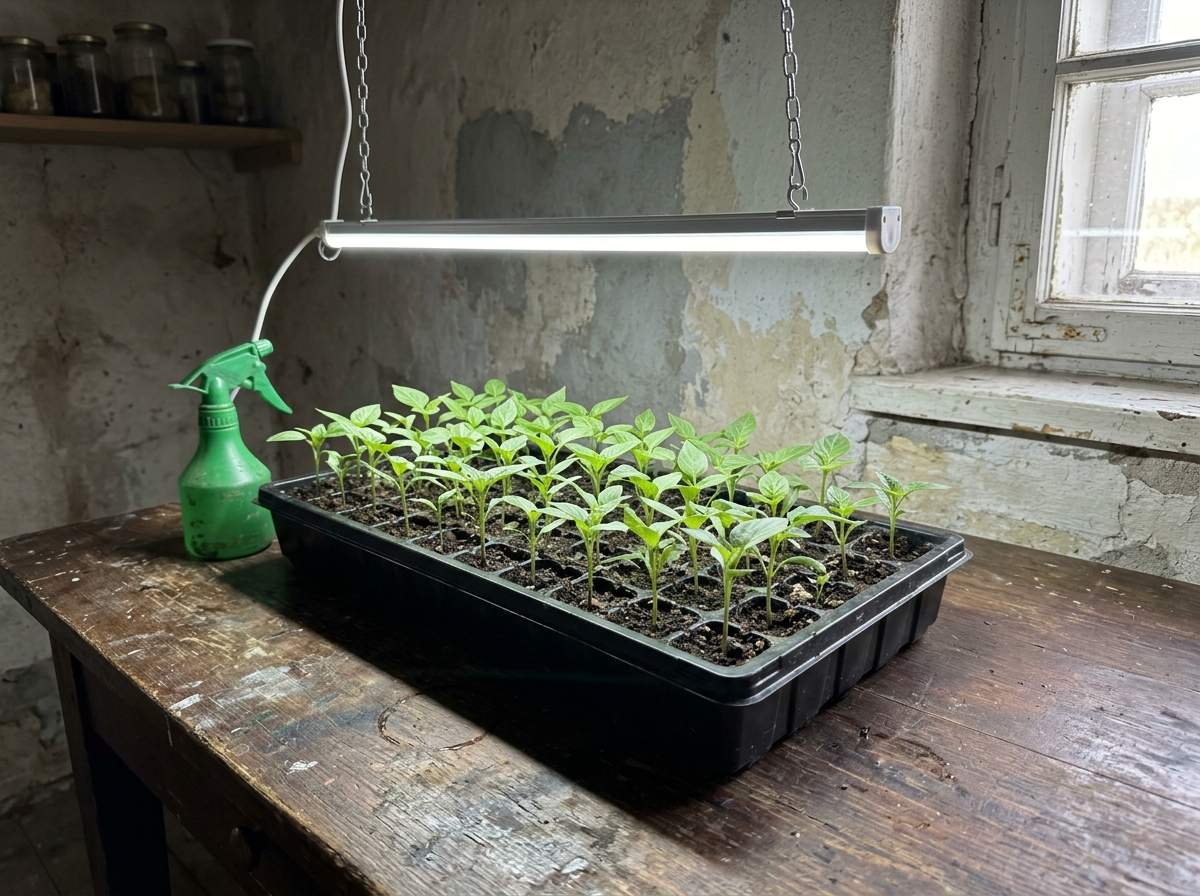
The day sprouts appear, three things change at once: dome off, heat mat off, and grow light on.
Leaving the mat running cooks the roots into leggy stretch, and a window doesn’t deliver anywhere near enough light. Run the light 14-16 hours a day, hung 7-12 in (18-30 cm) above the leaves, and aim for around 70°F (21°C) room temperature.
A small fan on low, pointed nearby rather than at the tray, thickens the stems and keeps fungus away. Cheap insurance.
If seedlings still stretch tall and pale, the light is too far away or too weak. Drop it closer and add hours before you blame anything else. Leggy is always a light complaint.
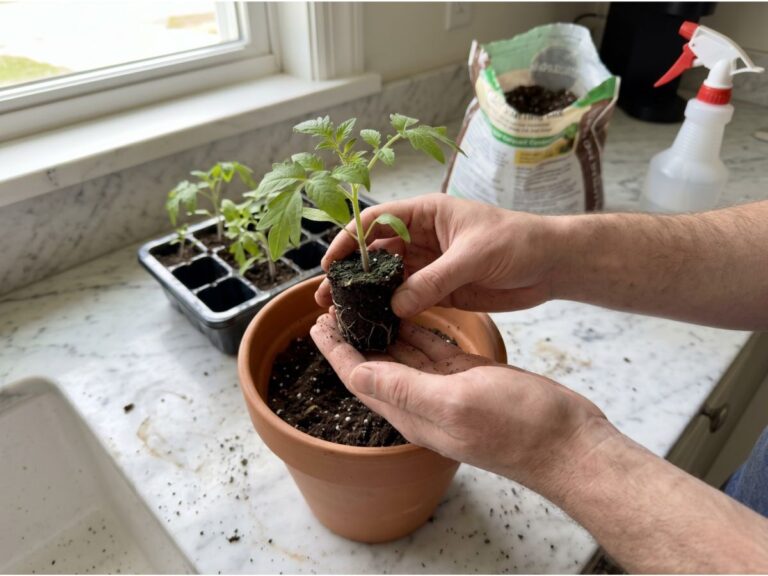
Once true leaves show up, start feeding with half-strength balanced fertilizer, and pot up to 3-inch (7.5 cm) pots when roots fill the cells. Same routine as my tomato seed guide, just on the earlier schedule.
Save this to PinterestHardening Off: The Ten Days Everyone Rushes
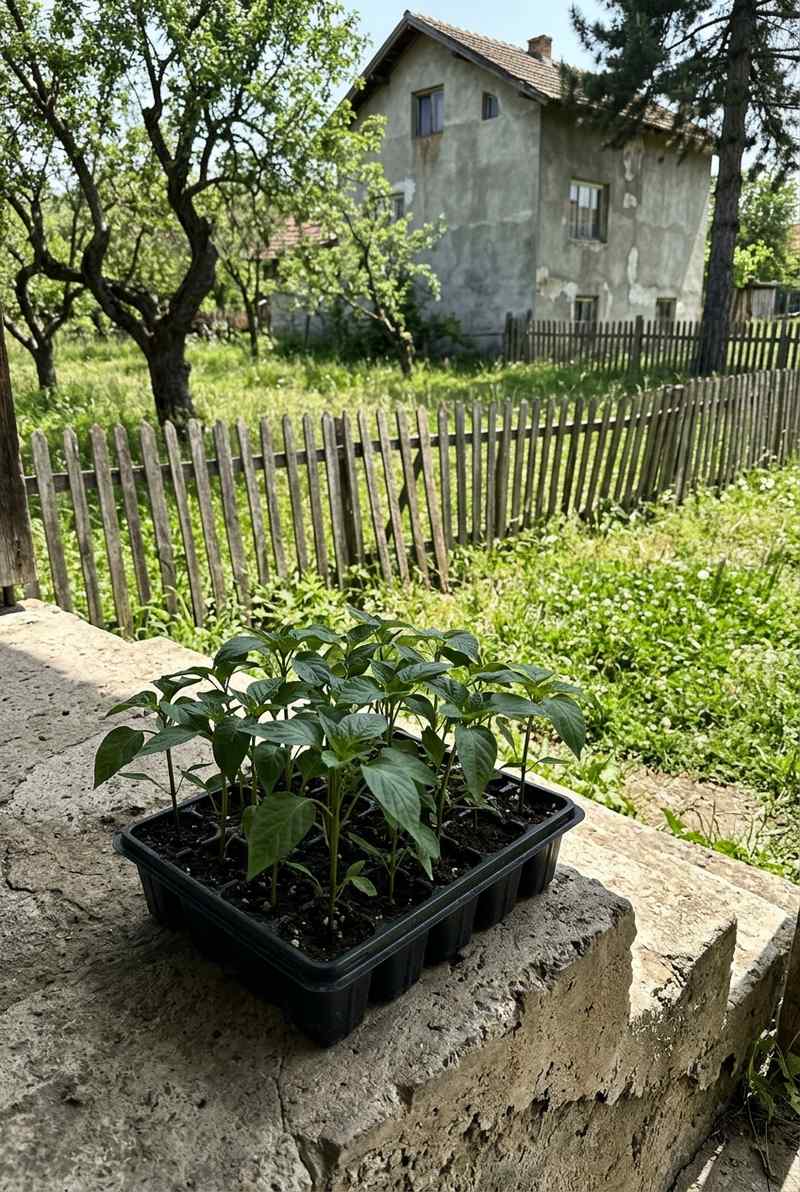
Indoor seedlings have never met wind or direct sun. Skip the transition and they sunburn, snap, or sulk for weeks.
The schedule that works: days 1-3, an hour outside in shade. Days 4-6, two to three hours with some morning sun. Days 7-10, half days in real sun. Then full days, and overnight if temperatures cooperate.
Peppers want the long version of this, closer to ten days than five. Tomatoes forgive a rushed hardening off. Peppers file it away and hold a grudge.
Transplant Later Than Feels Right
Common mistake
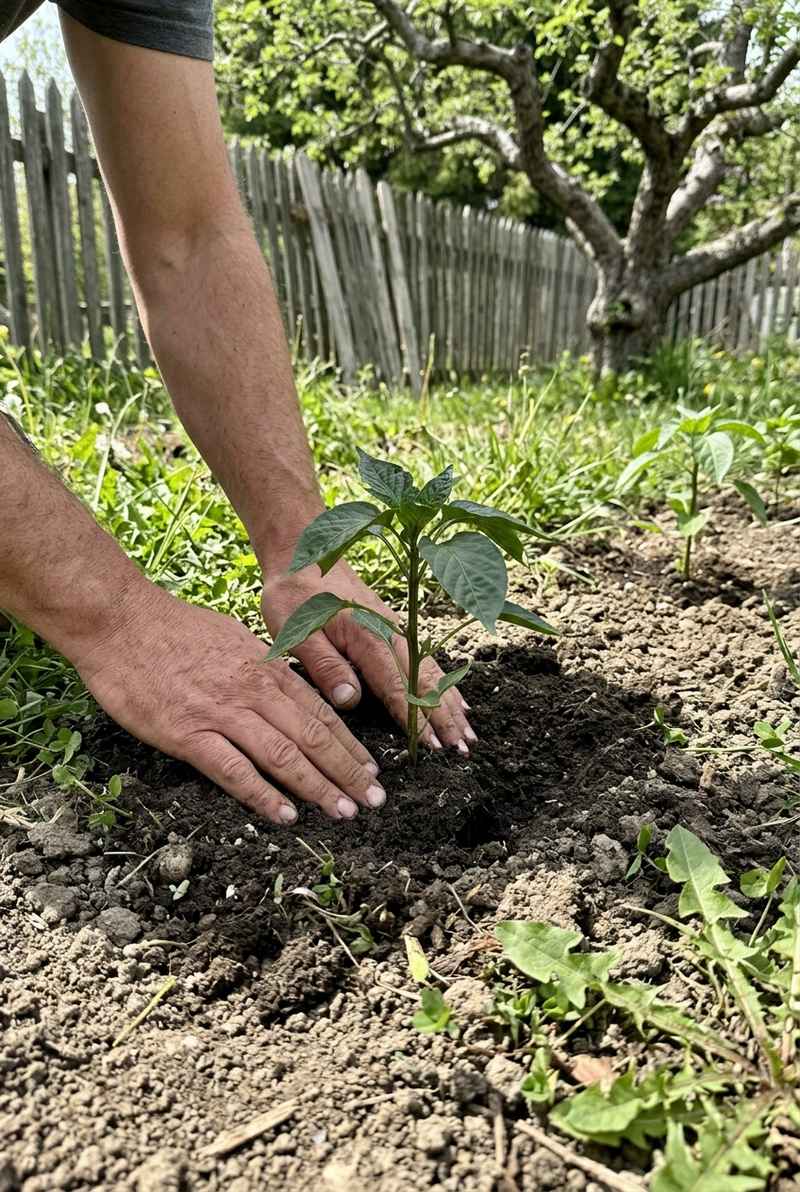
Planting peppers out with the tomatoes. A cold-shocked tomato recovers; a pepper that goes into cold soil often stalls and never fully catches up. Wait for soil at 65°F (18°C) and nights reliably above 55°F (13°C), even if that’s two weeks after the tomatoes went in.
Space plants 18-24 in (45-60 cm) apart in full sun, in soil that’s had compost worked in. If you’re planting into raised beds, my soil recharge guide covers the prep.
Set a short stake at planting time too. A loaded pepper plant in an August storm folds at the ankles, and staking after the damage is a sadder job than staking before.
One more counterintuitive move: pinch off the first flowers for a couple of weeks after transplant. The plant builds roots instead of rushing one early pepper, and repays you double by August. Utah State’s planting guide backs the patience.
Pepper Seed Questions
My seeds haven’t sprouted in two weeks. Dead?
Probably just cold, or a slow variety. Check the soil temperature first, then check the packet: if it’s a superhot, two weeks is barely a warm-up. Give hots a full month on heat before you call it.
Does the paper towel method work?
Yes, well, for germination testing especially: damp towel, zip bag, warm spot, and you see exactly which seeds are viable. One warning: once a root grows into the towel, cut the paper around it instead of peeling the seedling off, or the fine root hairs tear away with the towel.
Should I top my pepper seedlings?
The forums argue about it forever; extension research doesn’t back topping as a yield booster. I skip it. Pinching early flowers, on the other hand, is the version of “topping” that actually pays.
Do I have to start over every year?
Technically no. Peppers are tropical perennials, and a favorite plant can be potted up, brought indoors under a grow light, and kept producing for years. Most of us just restart from seed because winter windowsill peppers are a whole hobby of their own.
Five Days, Not Three Weeks
That $20 heat mat is now the hardest-working tool I own for exactly six weeks a year. The rest of the time it warms the cat.
Get the heat right, start earlier than the tomatoes, transplant later than the tomatoes, and pepper growing stops being mysterious. It’s just warm, patient, and worth it.