10 Tall Narrow Shrubs for Tight Spaces, Sorted by Where They Go

- Narrow beds and side yards
- Sorted by spot
- Zones 2-9
- Most 3 feet wide or less
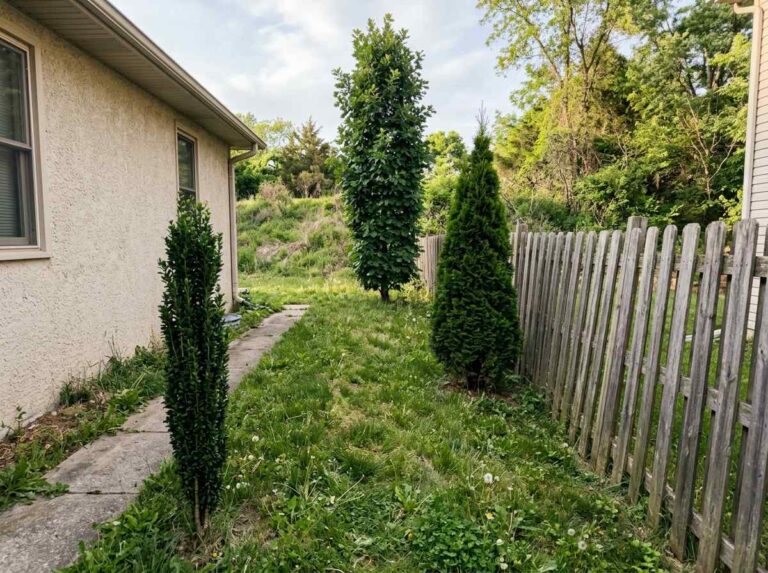
There’s a strip of soil between my front walk and the porch wall that’s about 3 feet (90 cm) wide.
For two years it grew weeds and one sad hosta. Every shrub I looked at wanted four or five feet of elbow room.
So I went hunting for tall narrow shrubs with real widths behind them. These 10 grow upward instead of outward, and most stay 3 feet (0.9 m) wide or less.
Quick Summary
- 10 shrubs with a narrow, upright habit, from 5 to 16 feet (1.5 to 5 m) tall
- Sorted by where they go: beside the house, along a walk, in shade, or as a slim screen
- Every entry lists mature height and width, zones, sun and the one thing to watch
- Four narrow shrubs I’d skip, and why
- Best starter pick: Graham Blandy boxwood. Just 1 to 2 feet (30 to 60 cm) wide, up to 15 feet (4.5 m) tall, and deer tend to leave it alone.
Width Is the Whole Game
Height is easy to control. Width is the number that decides whether a shrub fits.
Before I planted anything, I found a rule from an Ask Extension expert: plant at least half the shrub’s mature width plus 1 foot (30 cm) away from the foundation. A shrub that ends up 2 feet (60 cm) wide wants its center about 2 feet (60 cm) from the wall.
That rule sent half my wish list back to the nursery. The shrubs below are the ones that fit beds 3 to 5 feet (0.9 to 1.5 m) wide.
Tip
Before you buy, push a stake into the soil where the center of the shrub will go. Measure from the stake to the wall and to the walk. If half the mature width doesn’t fit on both sides, keep shopping.
Beside the House and Between Windows
Narrow enough for a bed that’s slimmer than your arm.
1. Graham Blandy Boxwood
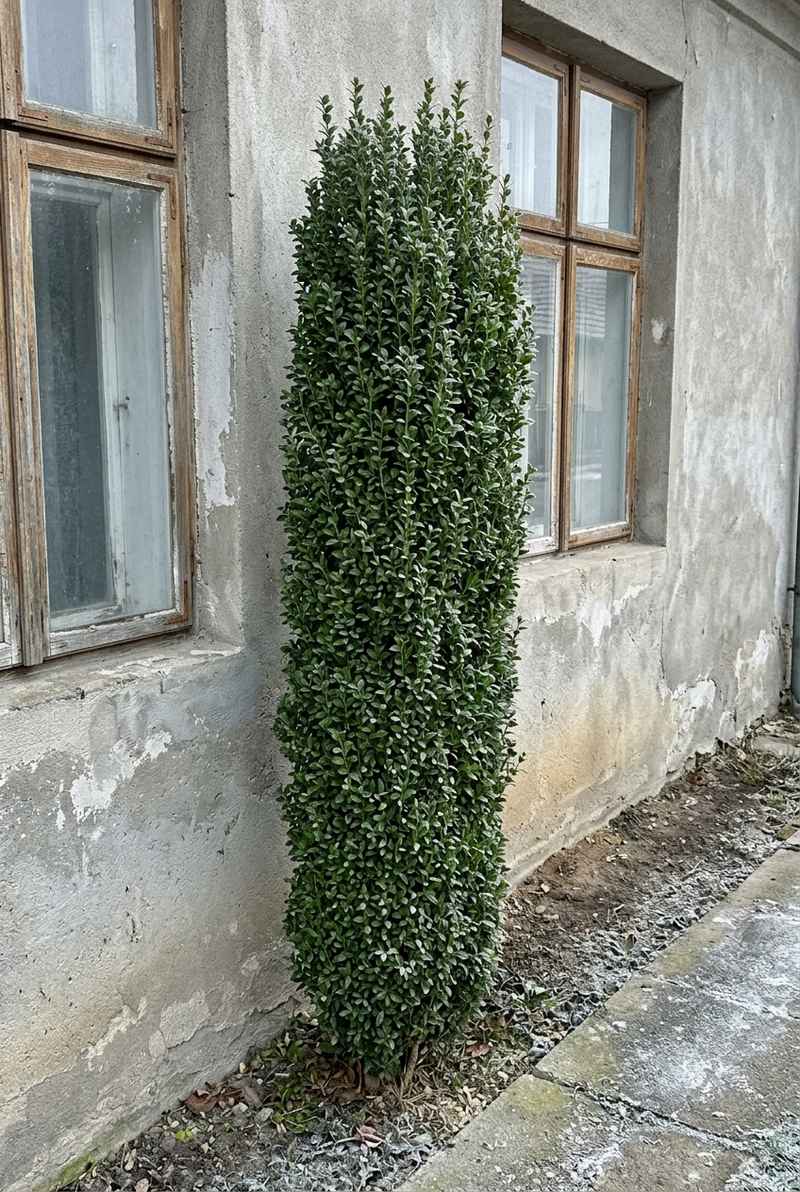
My starter pick, and the one I planted first.
It’s a columnar boxwood with glossy, dark green leaves and branches that sweep straight up. Missouri Botanical Garden lists it at up to 15 feet (4.5 m) tall with only a 2-foot (60 cm) spread, and it grows slowly, so it takes its time getting there.
Rabbits and deer tend to avoid boxwood, which matters right by the front door. The weak spots are boxwood blight, and foliage that scorches or bronzes in full winter sun and wind.
It’s named after Graham Blandy, a New York stockbroker (I looked him up so you don’t have to).
2. Green Spire Euonymus
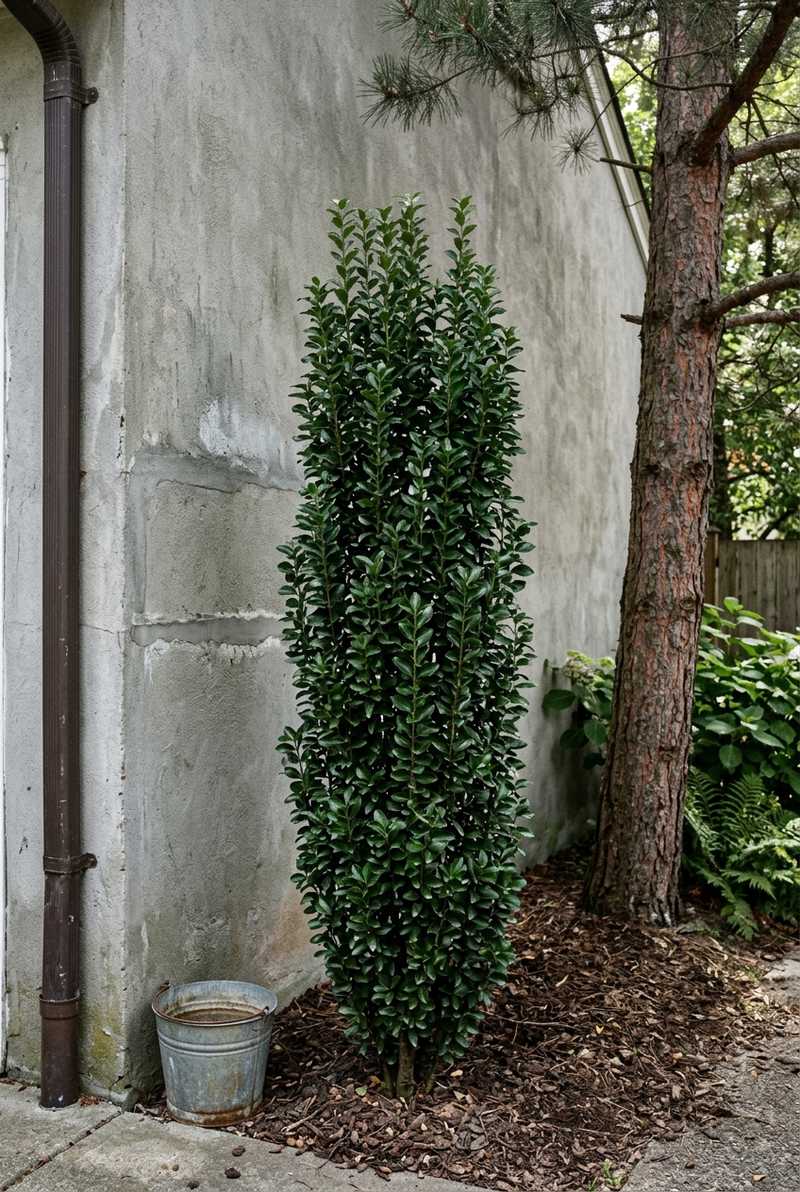
A glossy green column for a spot that gets some afternoon shade.
Green Spire is a narrow selection of Japanese euonymus, up to 8 feet (2.5 m) tall with a 2-foot (60 cm) spread. The plain species grows 5 to 8 feet (1.5 to 2.5 m) wide, so the cultivar name matters here.
Missouri Botanical Garden says it does best in part shade and appreciates afternoon shade where summers are hot. Euonymus scale and powdery mildew are the two problems to watch.
3. Yellow Ribbon Arborvitae

The one with color.
New growth comes in yellowish-orange in spring, then settles to medium green. It’s a slow, semi-dwarf arborvitae, most often seen at 8 to 10 feet (2.5 to 3 m) tall and 2 to 3 feet (60 to 90 cm) wide.
It’s hardy down to zone 2. Like other arborvitae, it can burn in exposed winter spots and break under heavy snow.
It’s also deer candy. An Ask Extension expert calls eastern arborvitae very palatable to browsing deer, so plant it close to the house, not out by the road.
Along a Walk or a Driveway
A little more room here, 3 or 4 feet (0.9 or 1.2 m) wide, so plant them a step back from the edge of the path.
4. Castle Spire Blue Holly
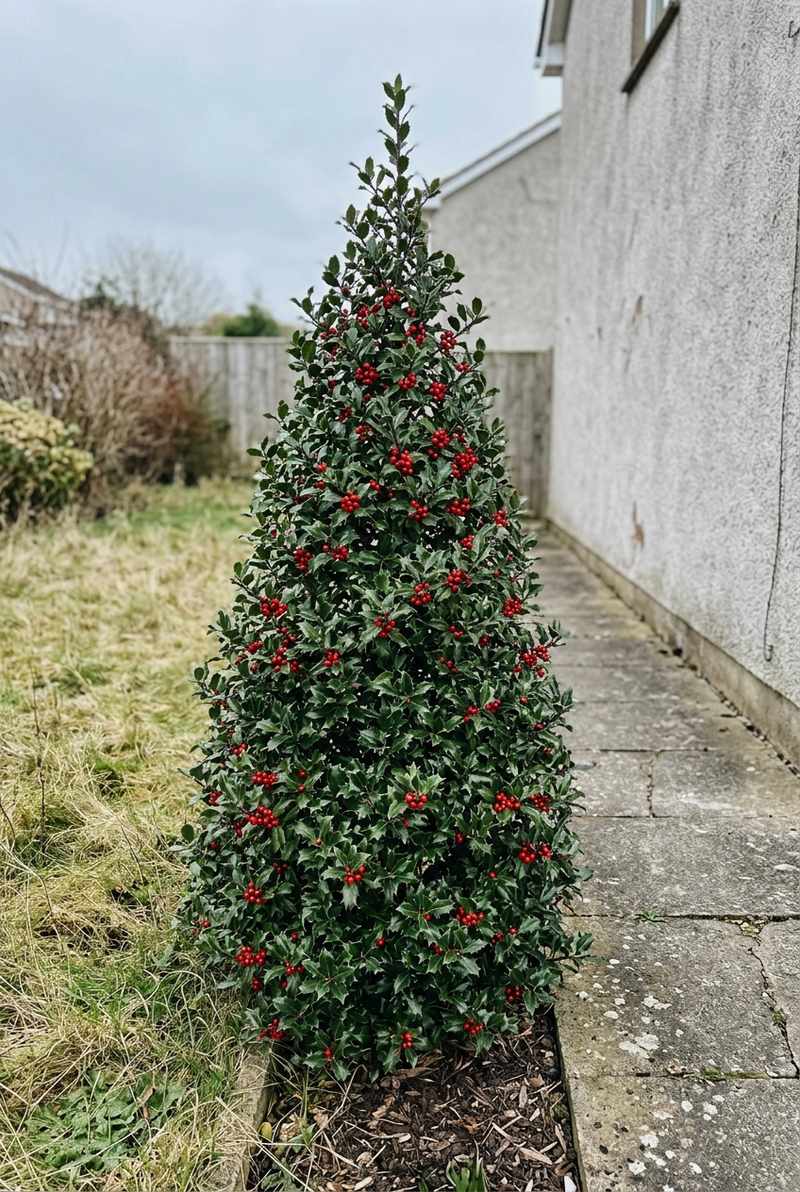
A narrow holly with berries, for colder gardens than most hollies like.
It’s one of the Meserve hollies, bred from crosses Kathleen Meserve started making in the 1950s for hardier, English-style hollies. Castle Spire grows 8 to 10 feet (2.5 to 3 m) tall and 3 to 4 feet (0.9 to 1.2 m) wide.
It’s a female plant. For berries it needs a male nearby, such as Castle Wall, and Missouri Botanical Garden suggests a single male for every three to five females.
Give it a spot out of cold winter wind. It may not be reliably hardy everywhere in zone 5.
5. Irish Juniper
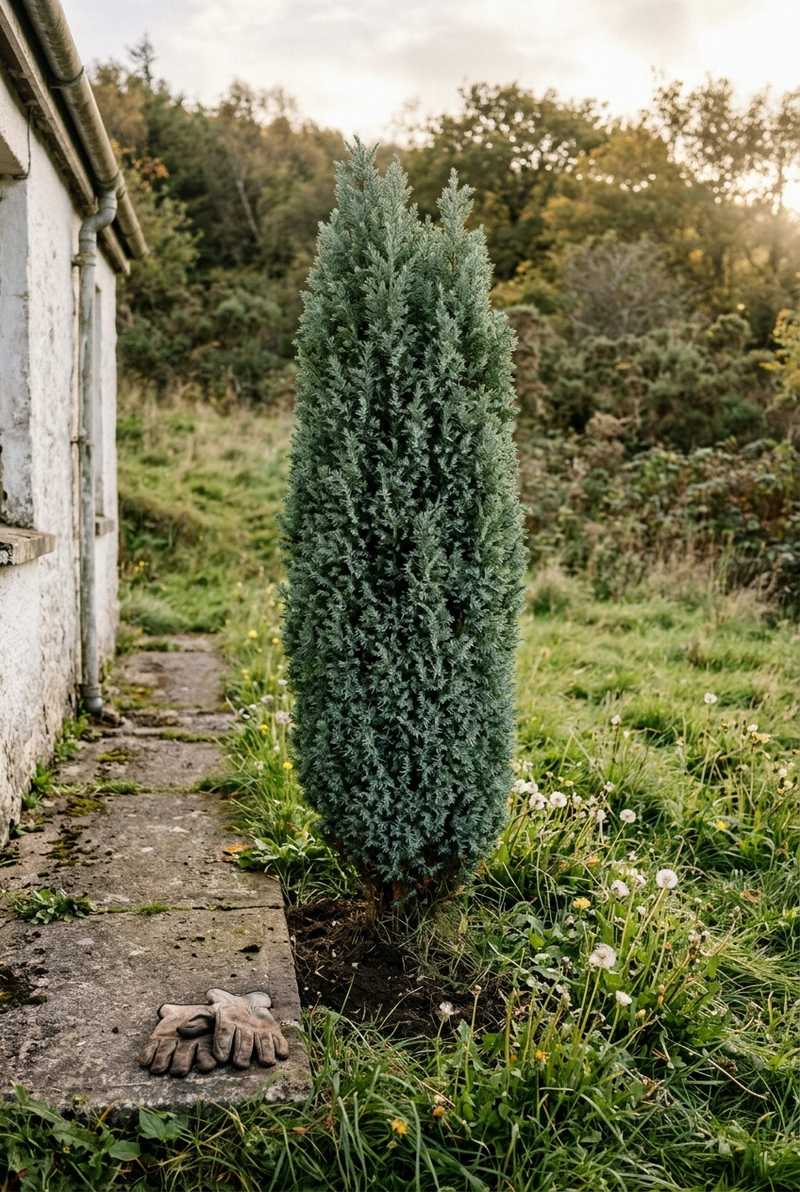
A dense, upright column that asks for almost nothing (my favorite kind of plant).
NC State lists it at 5 to 15 feet (1.5 to 4.5 m) tall and 2 to 4 feet (60 cm to 1.2 m) wide, and says it needs little to no pruning. It’s drought resistant once established and not often browsed by deer.
One honest note: it gets broader and more conical as it ages. Plant it for the width it’ll be in ten years, not the width in the pot.
6. Purple Pillar Rose of Sharon

The flowering pick, and the one I’d put by a mailbox.
Plain rose of Sharon grows into a wide vase. Purple Pillar is the narrow version: Cornell’s woody plant database gives it 10 to 16 feet (3 to 5 m) tall and only 2 to 3 feet (60 to 90 cm) wide.
Rose of Sharon blooms from June to October and loses its leaves in winter. The species can self-seed aggressively, so I snip the spent flowers before they set seed.
Save this to PinterestIn the Shade
Most narrow evergreens want sun. These two don’t mind a north side or a spot under trees.
7. Upright Japanese Plum Yew

The shade answer, if you can wait for it.
Missouri Botanical Garden says plum yew tolerates shade better than most needled evergreens, and it handles full sun only where summers are cool. This upright form grows 8 to 10 feet (2.5 to 3 m) tall and 3 to 5 feet (0.9 to 1.5 m) wide, with dark needles arranged like a bottlebrush.
Be patient. The species can take as much as 10 years to reach 4 feet (1.2 m), and deer tend to leave it alone.
8. Shrubby Podocarpus
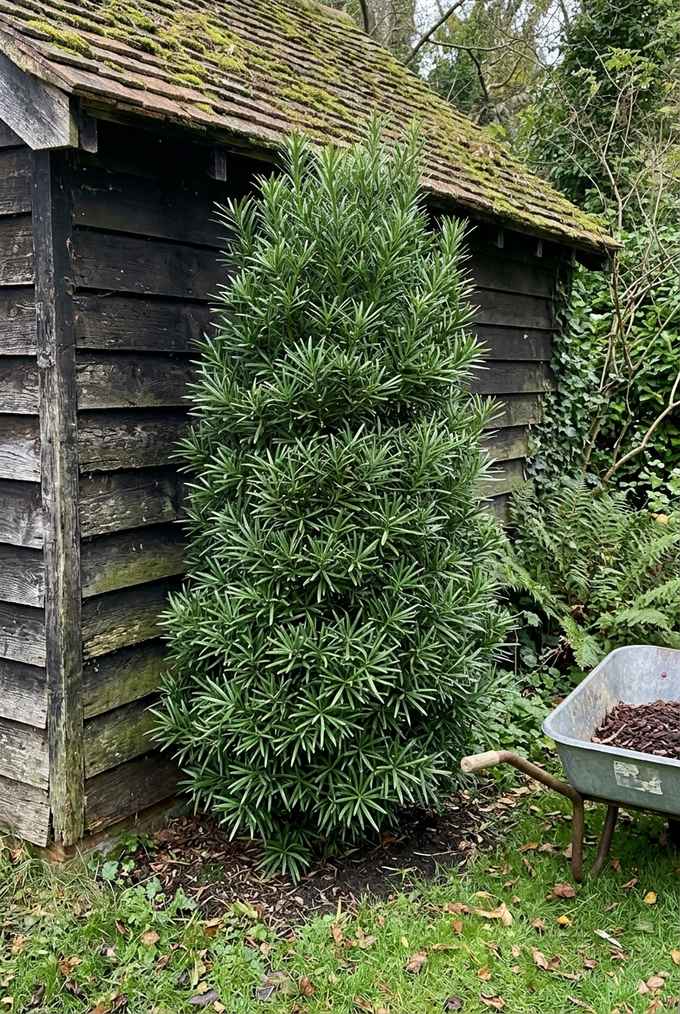
A soft-needled column for zones 7 to 9.
This slower, compact form grows into a narrow, dense, upright shape, 8 to 12 feet (2.5 to 3.5 m) tall and 4 to 5 feet (1.2 to 1.5 m) wide. It’s tolerant of shade.
Drainage is the deal-breaker. Missouri Botanical Garden says it’s intolerant of wet soils, and the leaves may yellow in alkaline soil.
A Narrow Screen
Two tall, slim evergreens for a row. Plant three or four and you’ve got a green wall that takes up a single strip of soil.
9. Will Fleming Yaupon Holly

The tough one, and my pick for a screen in a warm climate.
It’s a narrow, upright form of a holly native to the eastern United States, growing up to 15 feet (4.5 m) tall and just 2 to 3 feet (60 to 90 cm) wide. NC State lists it as tolerant of drought, salt spray and wet soil.
It’s a male plant, so there are no berries. And it starts out tight and dense, then opens out as it matures, which makes it a looser screen than the boxwood.
10. Blue Arrow Juniper
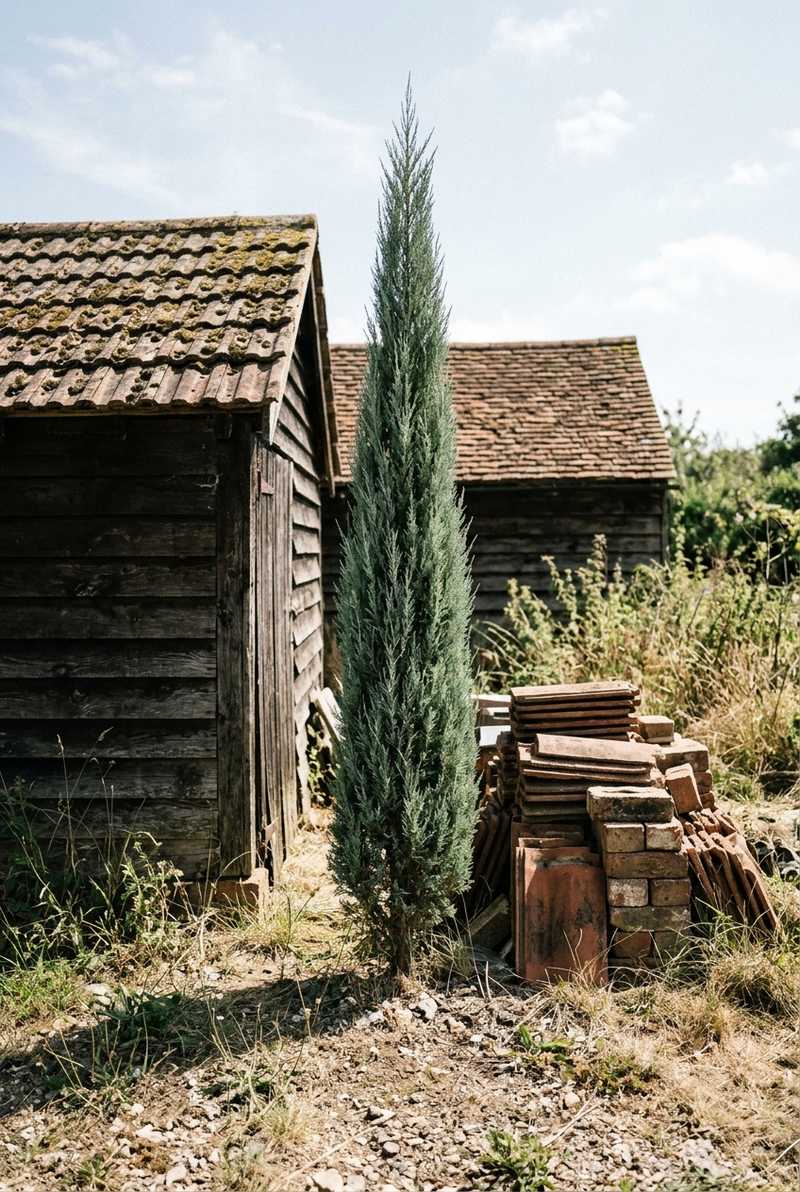
A blue-green exclamation point for a sunny, dry spot.
Oregon State lists it at 12 to 15 feet (3.5 to 4.5 m) tall and only 2 feet (60 cm) wide, and some growers consider it an improved form of Skyrocket juniper. It needs only occasional watering once established.
Two cautions carry over from Skyrocket, which Purdue describes: it doesn’t do well in wet soil, and it’s an alternate host for cedar-apple rust. I wouldn’t plant it beside an apple tree.
Narrow, But I’d Skip Them
Some of the narrowest shrubs at the garden center come with a catch.
| Shrub | Why it’s sold as narrow | Why I’d skip it |
|---|---|---|
| Fine Line buckthorn | A feathery column, 5-7 ft (1.5-2 m) | Missouri Botanical Garden says alder buckthorn is invasive in parts of the Northeast and Midwest and to check local laws |
| Helmond Pillar barberry | A slim purple column | Japanese barberry is considered somewhat invasive in some areas, particularly eastern North America |
| Sky Pencil holly in wet clay | The famous skinny holly | An Ask Extension expert says Japanese hollies get root rot in wet soil and decline over time |
| Skyrocket juniper near apples | Extremely narrow | Alternate host for cedar-apple rust, according to Purdue |
That holly is still a good plant in well-drained soil, and it’s in my tall skinny trees list, along with taller options for wider gaps.
Questions About Tall Narrow Shrubs
What’s the narrowest evergreen shrub?
Graham Blandy boxwood and Green Spire euonymus are both listed at 1 to 2 feet (30 to 60 cm) wide. Blue Arrow juniper comes close at about 2 feet (60 cm).
Which tall narrow shrubs grow in shade?
Upright Japanese plum yew and shrubby podocarpus both tolerate shade. Green Spire euonymus prefers part shade.
How far from the house should I plant a narrow shrub?
At least half its mature width plus 1 foot (30 cm), measured from the center of the shrub to the foundation. For a shrub 3 feet (90 cm) wide, that’s about 2.5 feet (75 cm).
What if I need something taller than 15 feet?
Then you’re shopping for narrow trees. My narrow evergreen trees list covers the ones that make a taller privacy screen.
A Strip Worth Looking At
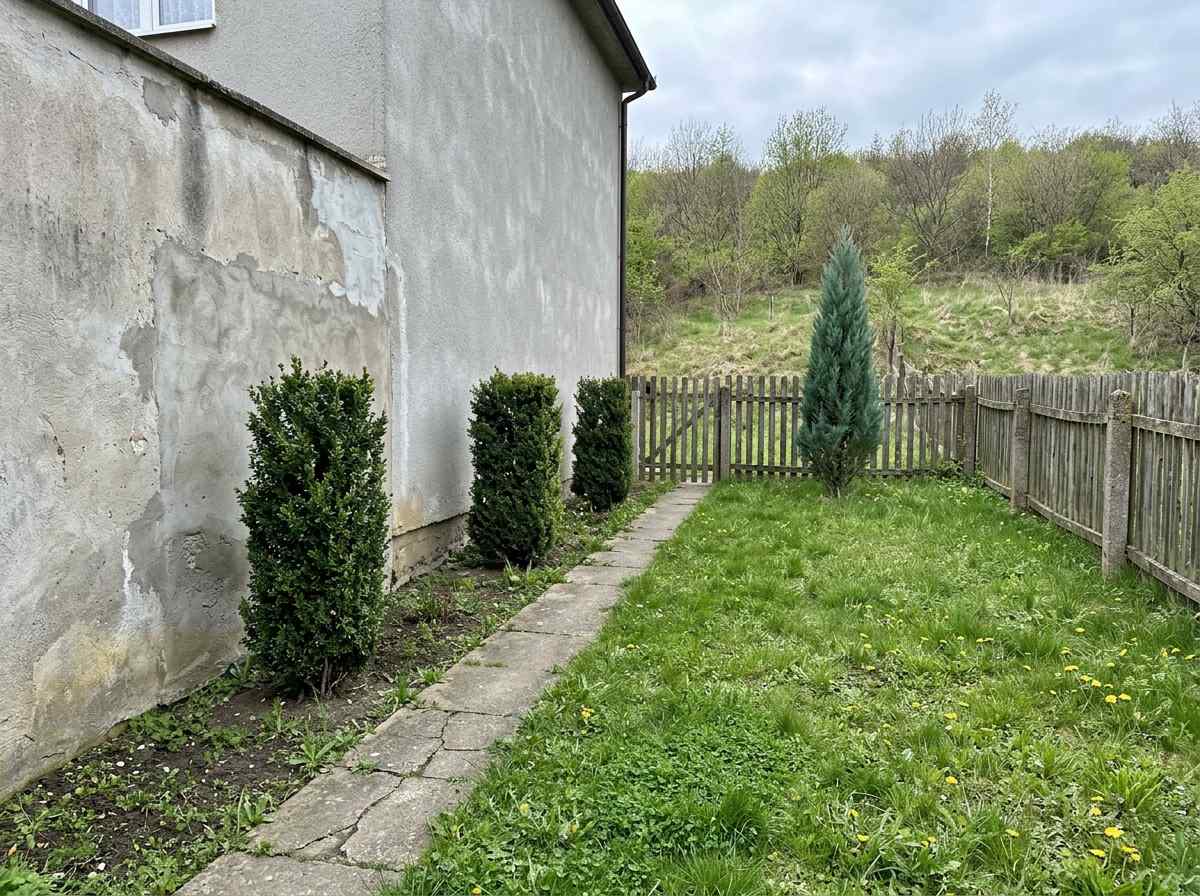
The strip by my walk now holds three boxwood columns and a lot less hosta guilt.
Measure the strip, halve the shrub’s width, add a foot. If you’d rather have something wider and lower out front, my low-maintenance shrubs are a good place to start.
The widths here come from Missouri Botanical Garden, NC State Extension, Oregon State and Cornell, so check the plant page for your exact cultivar before you buy.