13 Small Evergreen Trees for Front Yards, Sorted by Shape

- Front yards and small lots
- Sorted by shape
- Zones 2-10
- Conifers and broadleaf
From June to October my front yard looked fine. Then the leaves dropped, and for five months the view from my kitchen window was a bare lawn and a mailbox.
So I went looking for small evergreen trees: something green in January that wouldn’t swallow the walkway in ten years.
These 13 typically stay at 25 feet (7.5 m) or less, and most are far smaller. I’ve sorted them by shape, because that’s what you see from the street every single day.
Quick Summary
- 13 small evergreen trees, typically 25 feet (7.5 m) tall or less, sorted by shape
- 4 cones, 4 mounds and odd shapes, then 5 broadleaf evergreens for mild winters
- Every entry lists size, zones, sun and the one problem to watch for
- Why the size on the nursery tag is only where the tree starts
- Best starter pick: Fat Albert Colorado spruce. Hardy in zones 3-7, a perfect cone, and typically about 10 by 7 feet (3 by 2 m) after 10 years.
The Tag Is Where the Tree Starts
“Small” on a nursery tag usually means small now.
The University of Maryland Extension says to take the stated size “with a grain of salt,” because older plants keep growing and never really settle at one height.
So every size below is the mature size from Missouri Botanical Garden or NC State Extension. Where a source also says how big the tree gets after a set number of years, I’ve added that, because that’s the tree you’ll actually live with.
Cones and Christmas-Tree Shapes
The classic outline. These four hold a pointed, tidy shape, the one most people picture when they hear “evergreen tree.”
1. Fat Albert Colorado Spruce

My starter pick, and the tree that started this whole list.
Missouri Botanical Garden calls its shape a perfect cone, and that’s not an exaggeration. The needles are steel blue and the branches are packed tight.
It grows slowly to 10 to 15 feet (3 to 4.5 m) tall, typically about 10 by 7 feet (3 by 2 m) after 10 years. It was first picked out as a seedling at Iseli Nursery, and NC State says it’s named after a cartoon character (you can guess which one).
The catch is heat. NC State warns it struggles in heat and humidity, so in a hot, sticky summer climate I’d skip down to the broadleaf section.
2. Techny Arborvitae
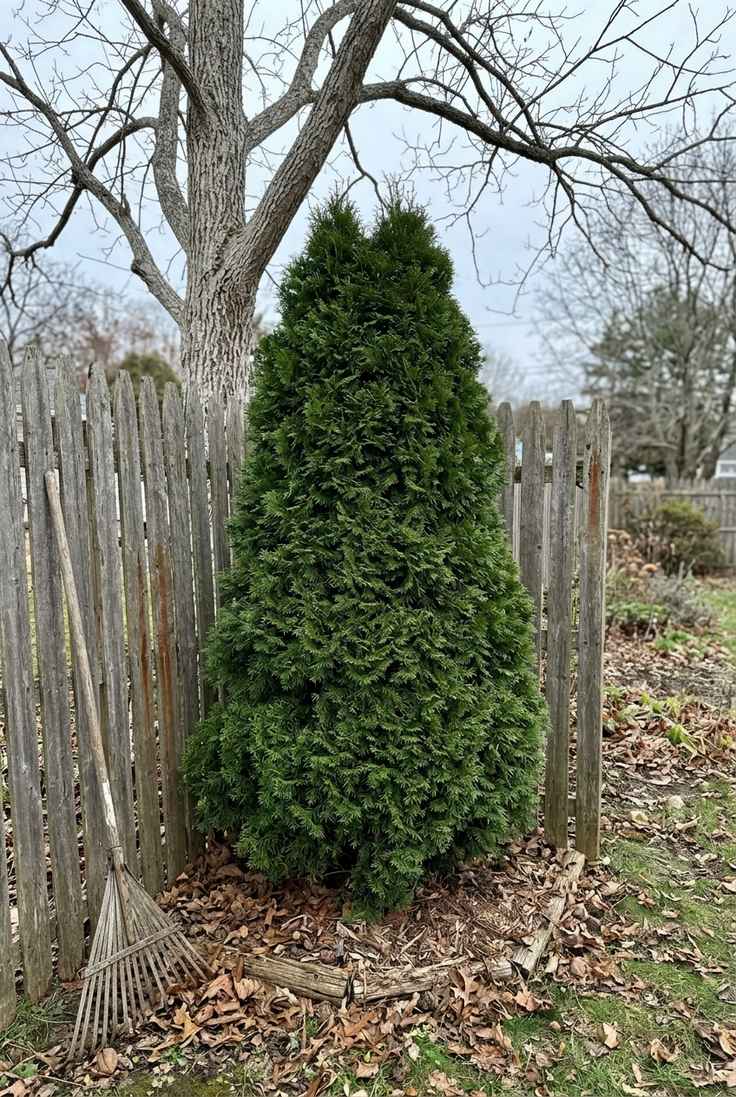
A broader, darker arborvitae than the skinny ones that line every fence.
Techny grows 10 to 15 feet (3 to 4.5 m) tall and 6 to 10 feet (1.8 to 3 m) wide, with dark green foliage that doesn’t yellow in winter. It’s hardy down to zone 2, the coldest zone on this list.
You might find it sold as ‘Mission’. Same plant.
Missouri Botanical Garden lists two winter problems: burn in exposed spots, and stems that can break under heavy ice and snow.
Deer are the other risk. An Ask Extension expert calls eastern arborvitae very palatable to browsing deer, so skip it if they visit your yard.
Tip
After a heavy, wet snowfall, brush the snow off arborvitae branches from below with a broom. It’s two minutes of work, and it keeps the stems from splaying open or snapping.
3. Dwarf Serbian Spruce
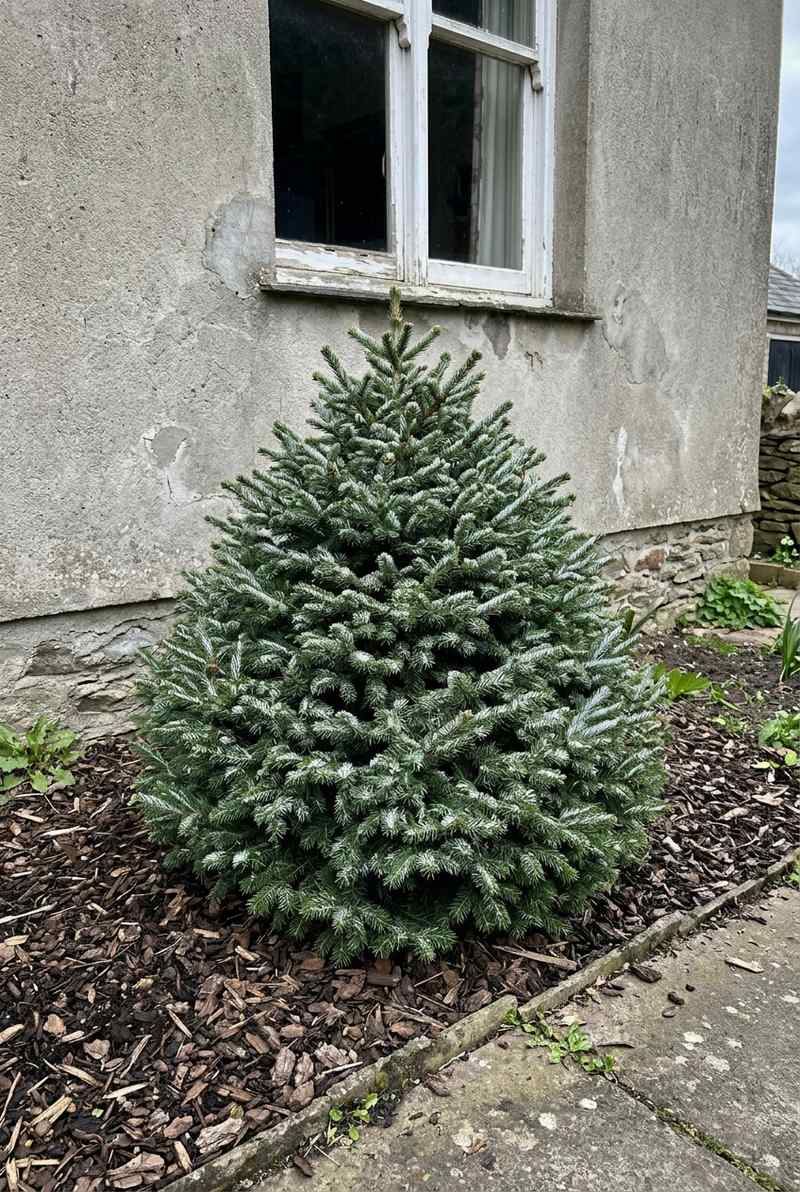
The smallest cone here, and the one I’d tuck into a bed under a window.
It starts out as a globe and slowly becomes a dense cone, 4 to 8 feet (1.2 to 2.5 m) tall and just as wide. The needles are short, stiff and silvery blue-green.
NC State traces it back to around 1930, when it turned up as a witch’s broom at a nursery in the Netherlands. Some growers call it “one of the best small conifers.”
Like the full-size Serbian spruce, it likes cool summers.
4. Emily Bruner Holly
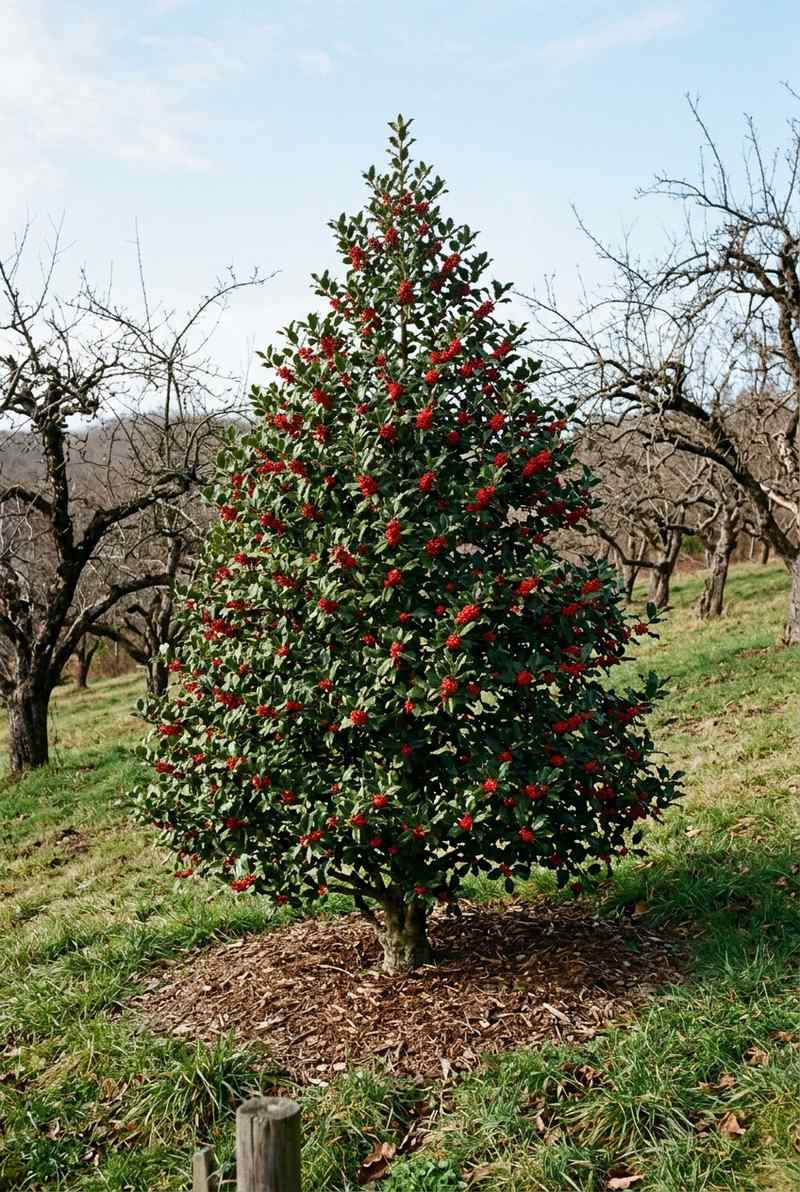
A holly that grows as a cone, for gardens where spruces sulk in the heat.
A University of Tennessee student bred this hybrid, and it has glossy leaves and a dense, broad pyramid shape. Expect 15 to 20 feet (4.5 to 6 m) tall and 5 to 8 feet (1.5 to 2.5 m) wide.
NC State notes good fruit production, and it needs more nitrogen than other hollies to stay dark green.
Choose the spot once. Mature plants don’t tolerate root disturbance, so this isn’t one to move in five years.
Mounds, Umbrellas and Odd Shapes
Not every evergreen has to be a cone. These four are lower, wider or just plain strange (they’re also the ones the neighbors ask about).
5. Thunderhead Japanese Black Pine
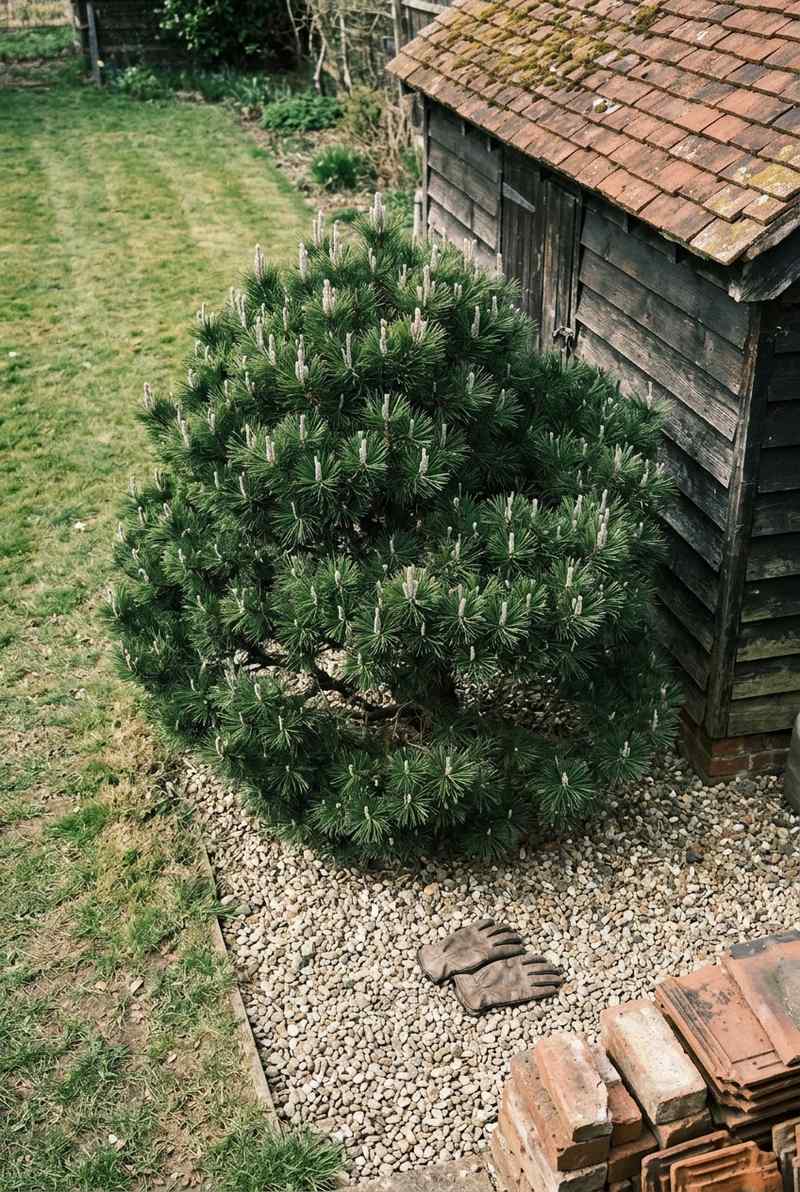
This one looks like a bonsai that kept going.
It’s a compact Japanese black pine with dark, glossy needles and an irregular, dense habit, 5 to 10 feet (1.5 to 3 m) tall. In late winter and early spring the new shoots come up as silver-white candles all over the plant.
NC State suggests it for a courtyard or small city garden. That’s where I’d put it too, somewhere I walk past every day.
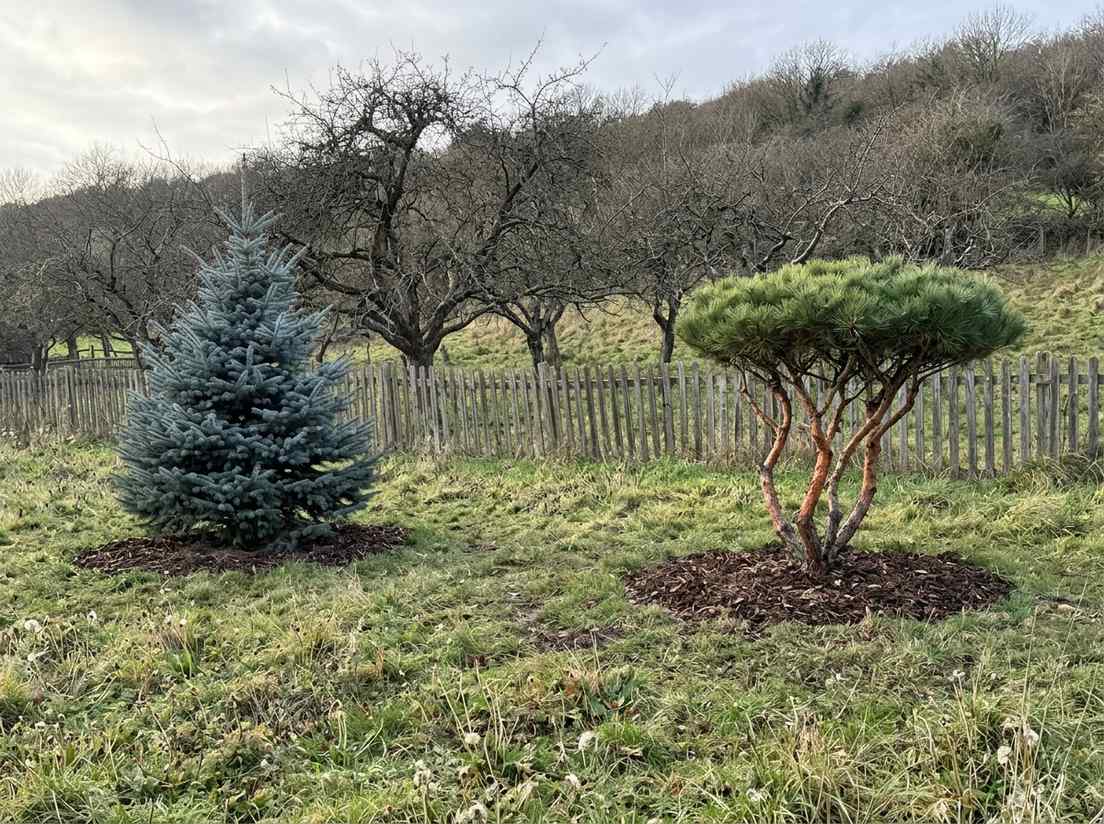
6. Tanyosho Pine
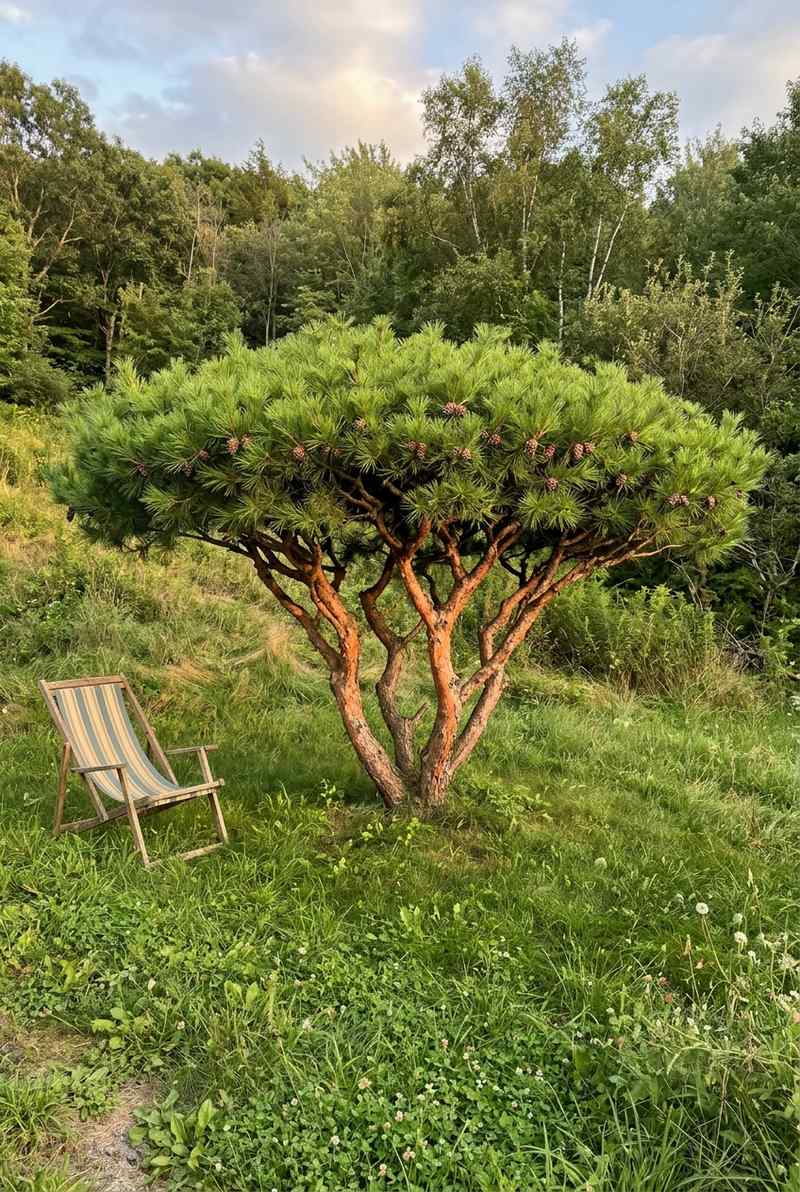
The umbrella pine: short, often multi-trunked, with orange-red bark and a flat crown like an open parasol.
Fair warning, it’s wider than it is tall. Missouri Botanical Garden lists 10 to 20 feet (3 to 6 m) tall and 15 to 25 feet (4.5 to 7.5 m) wide, though it may take 30 years to reach 15 feet (4.5 m).
The rootstock a nursery grafts it onto can change how big it gets, so ask before you buy. The needles may also yellow a little in winter.
7. Bristlecone Pine
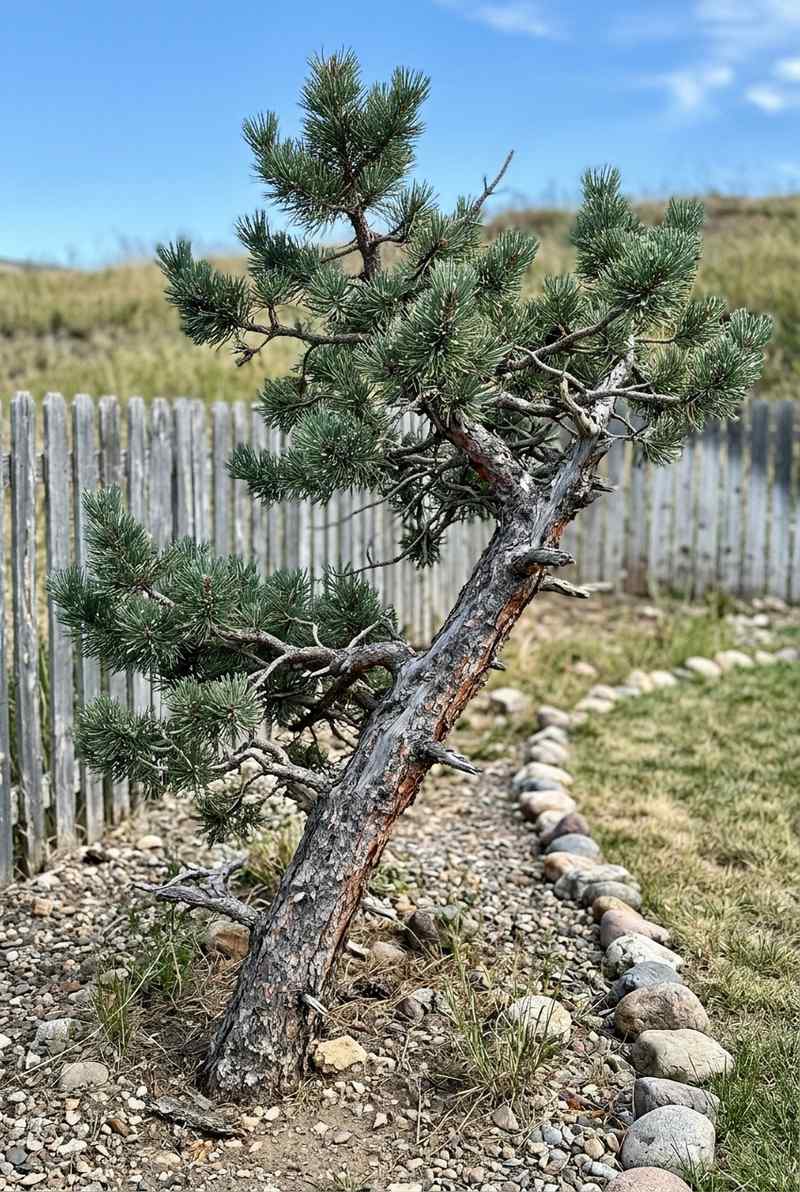
My favorite oddball.
NC State calls the species “one of the oldest trees on earth,” and even a young one looks ancient. It grows slowly into an irregular, twisted shape, 8 to 20 feet (2.5 to 6 m) tall.
The blue-green needles are covered in resin, so up close they look dotted with sticky specks. It grows in dry, rocky, poor soil that would sink most of the trees here.
Shelter it from drying winds, though. Wind damage and white pine blister rust are the two things NC State warns about.
Save this to Pinterest8. Dwarf Eastern White Pine
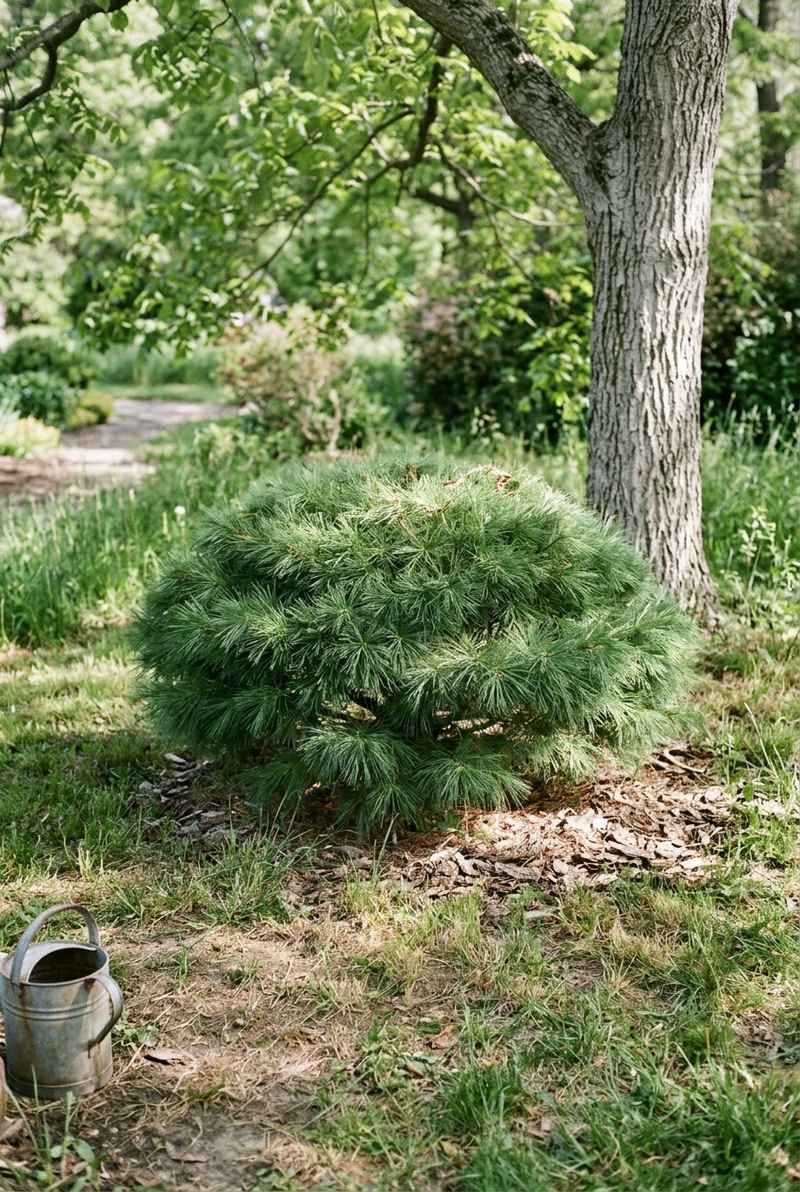
Soft needles in a low, flat-topped dome. If the spruces feel too stiff and prickly, start here.
It stays 2 to 7 feet (0.6 to 2 m) tall and can spread up to 10 feet (3 m). Sun or shade both work for it, which opens up spots the other pines here won’t take.
Keep it back from the street, though. NC State says it doesn’t tolerate salt spray or air pollution, and it may need shelter from strong winds.
Broadleaf Evergreens for Mild Winters
Zone 7 or warmer (8 for loquat)? You get a whole different set of choices here, with flowers, berries and leaves instead of needles.
9. Yaupon Holly
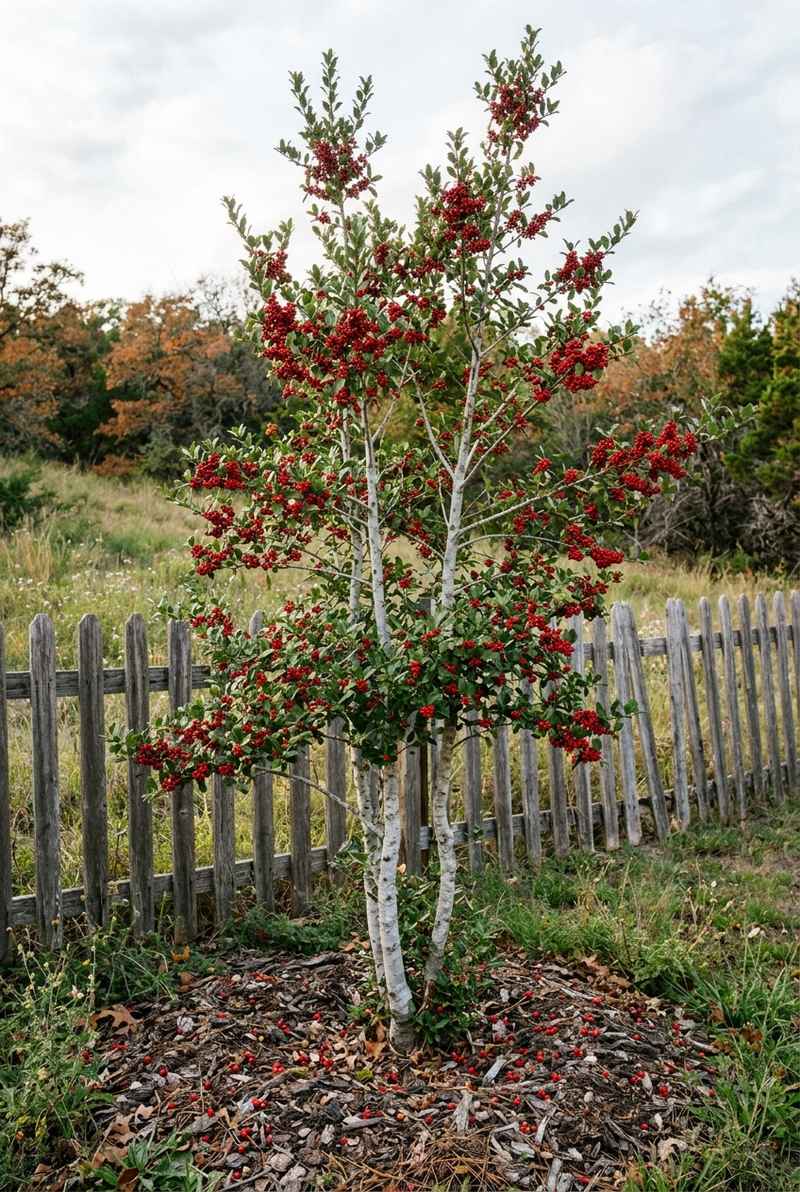
A native holly that puts up with almost anything.
Yaupon grows as an upright, irregularly branched small tree, 10 to 20 feet (3 to 6 m) tall, and it’s native to the eastern United States. NC State’s list of what it tolerates is hard to beat: drought, salt spray and occasional flooding.
It’ll grow anywhere from full sun to deep shade, but it fills out thicker and fruits more in sun.
Yaupon comes as male plants and female plants, and only the females carry the bright red berries. So buy a female, and make sure there’s a male somewhere nearby.
10. Southern Wax Myrtle

The impatient gardener’s pick.
Wax myrtle is a native, fast-growing shrub or small tree, typically 10 to 15 feet (3 to 4.5 m) tall, though NC State lists it at up to 25 feet (7.5 m). It even grows in dry shade.
Two catches. It suckers, so it can slowly turn into a thicket, and at the cold end of its range it’s only semi-evergreen, with leaves that brown in a hard winter.
11. Strawberry Tree
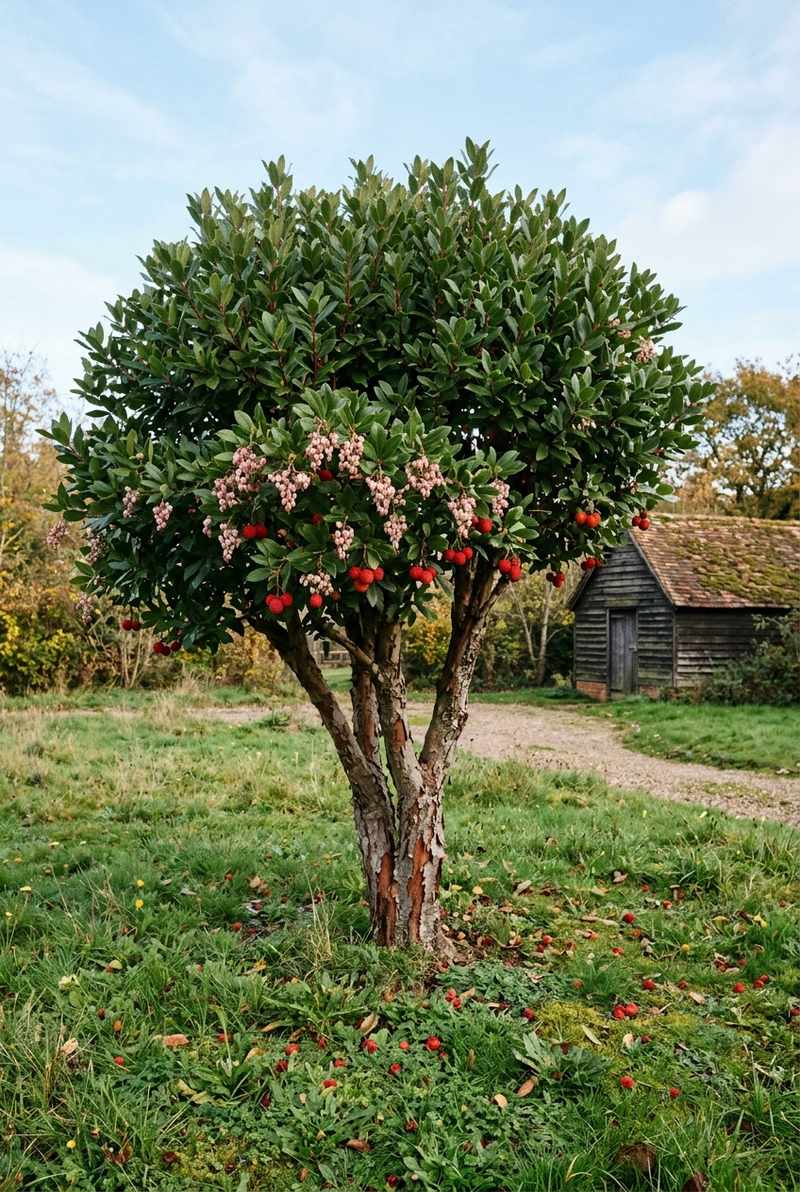
Flowers and ripe fruit on the same branch, at the same time. It still feels like a magic trick to me.
Pinkish-white flowers open in October and often keep going into January. The fruit takes almost a full year to ripen, so by the time the new flowers open, last winter’s fruit has turned strawberry red.
You can eat it, but NC State calls the taste rather bland. I’d grow it for the bark instead, which peels and flakes to show reddish-brown inner bark.
It typically stays 10 to 15 feet (3 to 4.5 m) tall, though old trees can get bigger. Skip it in very humid climates, and keep it away from the patio (fallen fruit is messy).
12. Holly Osmanthus

It looks like holly, it isn’t holly, and it smells far better.
Young leaves have spiny, holly-like edges, while older leaves are often smooth. In fall it opens tiny flowers that NC State describes as highly fragrant.
Missouri Botanical Garden gives 8 to 10 feet (2.5 to 3 m) tall and about as wide in gardens, and it grows slowly. NC State also lists it as resistant to deer damage.
Go easy with the pruners. Cutting it back can cost you next year’s flowers.
13. Loquat
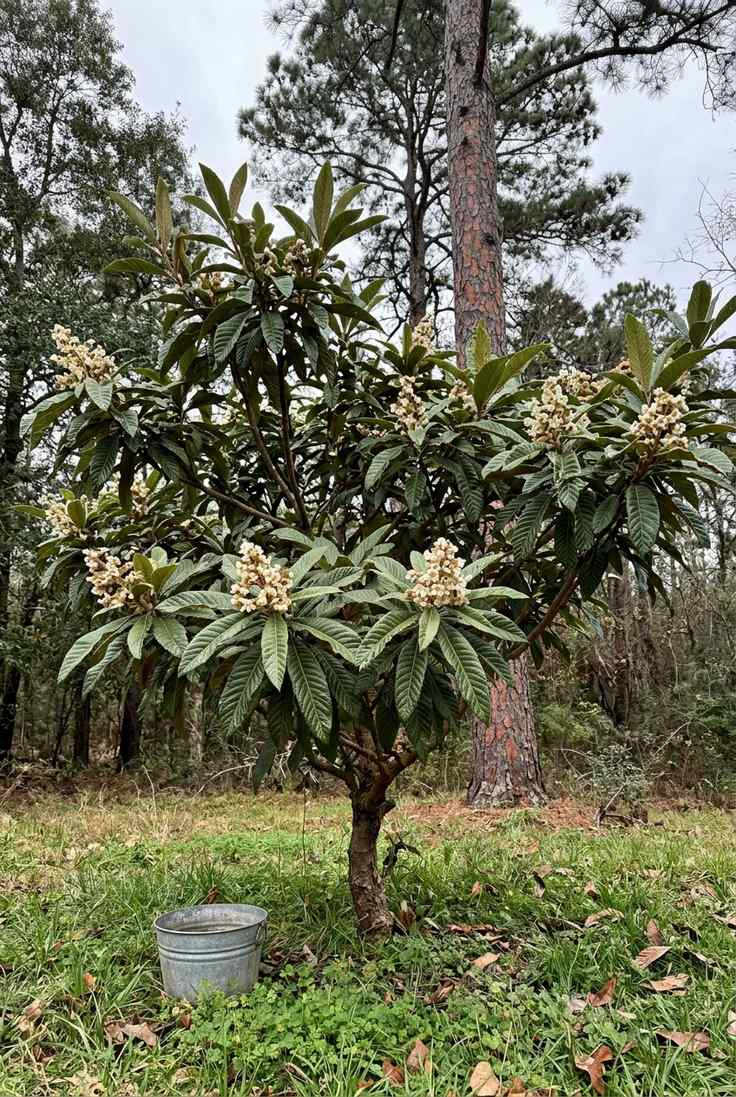
The tallest tree on the list, and the one I’d plant for fruit.
Loquat is a small, round, short-trunked tree, 10 to 25 feet (3 to 7.5 m) tall, with big wrinkled leaves and sweetly fragrant white flowers in late fall. Whether you get fruit depends on your winter.
NC State says that below 28°F (-2°C) the blooms or fruit likely won’t survive, even though the tree itself can handle about 10°F (-12°C).
Watch for fire blight. And Missouri Botanical Garden notes the seeds and young leaves are mildly poisonous, so I’d pick up fallen fruit where small kids play.
Pick the Shape First, Then the Tree
Shape decides how a tree sits in a front yard long before its needles or leaves do.
| Shape | Where it works | Picks from this list |
|---|---|---|
| Cone | Beside a door, at a corner of the house, as one focal point | Fat Albert, Techny, dwarf Serbian spruce, Emily Bruner holly |
| Mound or umbrella | Front of a bed, beside a walk, in a courtyard | Thunderhead, Tanyosho, bristlecone, dwarf white pine |
| Broadleaf | Zone 7 and warmer (loquat 8), for flowers, berries or fruit | Yaupon, wax myrtle, strawberry tree, holly osmanthus, loquat |
Cones pull the eye up and look formal. Mounds and umbrellas sit low and feel relaxed, and the broadleaf group gives you flowers or berries on top of the green.
Questions About Small Evergreen Trees
What’s the best small evergreen tree for a cold climate?
Techny arborvitae is hardy to zone 2, and Fat Albert spruce and Tanyosho pine to zone 3. Fat Albert is the one I’d start with: slow, dense and blue.
Which small evergreen trees grow fast?
NC State lists yaupon holly, wax myrtle and loquat as fast growers. Fat Albert, dwarf Serbian spruce, bristlecone pine and holly osmanthus are all slow.
How close to the house can I plant one?
Take the width from the table and halve it. That’s the least room the branches need between the trunk and the wall, and I’d add a little more.
What about weeping or very narrow evergreens?
They have their own lists. See my weeping evergreen trees for drooping shapes, and tall skinny trees for side yards only a few feet wide.
Something Green in January
My kitchen window still looks out at the mailbox. But now there’s a blue cone beside it, and February doesn’t look quite so bare.
Pick the shape, check your zone, trust the mature size. And if your evergreen has to live in a pot on the porch, my list of small trees for pots covers the ones that can.
Most of the numbers here come from Missouri Botanical Garden and the NC State Extension Plant Toolbox, both worth a look before you buy.