12 Trees With Peeling Bark That Look Good All Winter
- Winter interest
- Small yard picks
- Zones 2-9
- Normal vs. sick bark
In January my garden is sticks. Brown sticks, gray sticks, a few sticks I forgot to cut back.
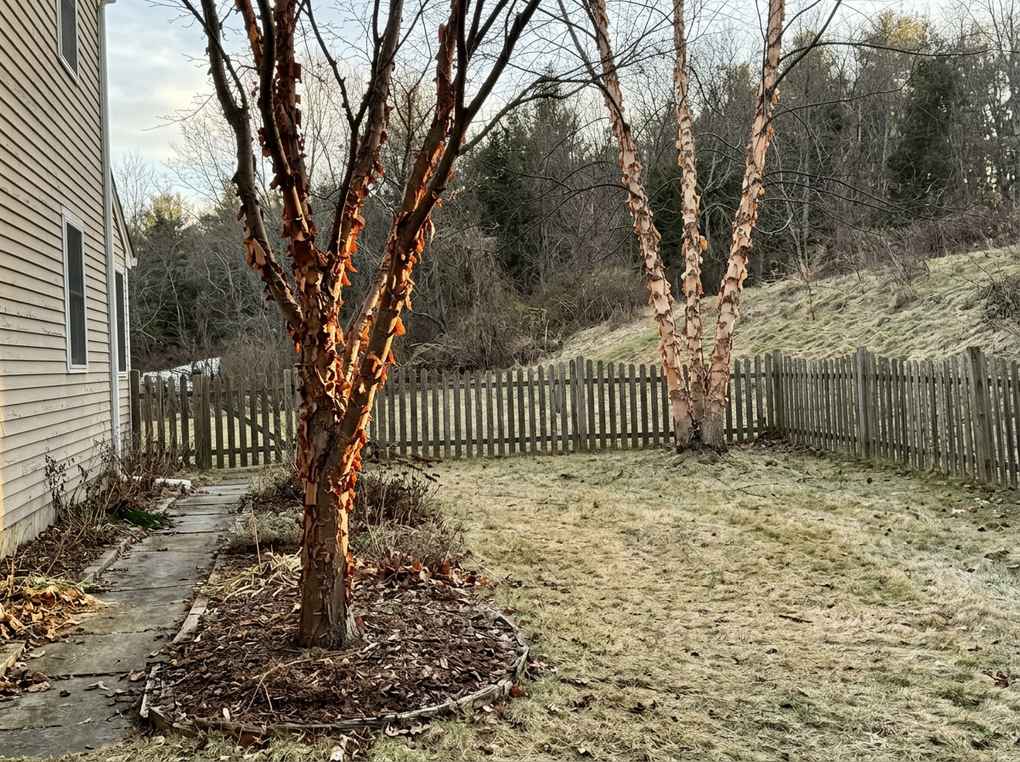
Then one afternoon the low sun caught the tree by the library steps, and the whole trunk lit up like a copper lamp. Bark hanging off it in thin, glowing curls.
That was a paperbark maple, and it sent me down a hole. These are 12 trees with peeling bark that give you something to look at when everything else has quit.
Quick Summary
- 12 trees with ornamental peeling bark, grouped by the kind of peel
- Sizes from a 10-foot (3 m) river birch to a 70-foot (21 m) one, with zones for each
- Some peel from a young age, some make you wait ten years. Each entry says which
- A short guide to telling normal peeling from a real problem
- Best starter pick: Paperbark maple. Zones 4-8, a small-yard size, and bark that earns its spot in every season.
First: Is Peeling Bark Normal?
On the trees below, yes. Peeling is the whole point.
On a tree that isn’t supposed to do it, look closer before you worry. The University of Maryland Extension describes harmless growth cracks that open when a tree grows fast in a rainy stretch.
Here’s how they tell them apart from trouble.
| What you see | What it usually means |
|---|---|
| Bark split with smooth, lighter new bark forming inside | A growth crack. Bark covers it again and no permanent damage occurs |
| No heartwood showing, no decay, nothing oozing | Still a growth crack |
| Damage mostly on the south and west sides of the trunk | Winter injury, where the sun is strongest |
| Heartwood visible, decay or oozing | Not a growth crack. Time to call your extension office or an arborist |
Don’t help it along
It’s tempting to pull the loose bark off. Gardeners on the UBC Botanical Garden forum say to leave it alone: the tree sheds bark on its own schedule, and pulling it can damage the tissue underneath.
Now the fun part.
Papery Curls
These peel in thin sheets and strips that catch the light. They’re the ones people stop and touch.
1. Paperbark Maple
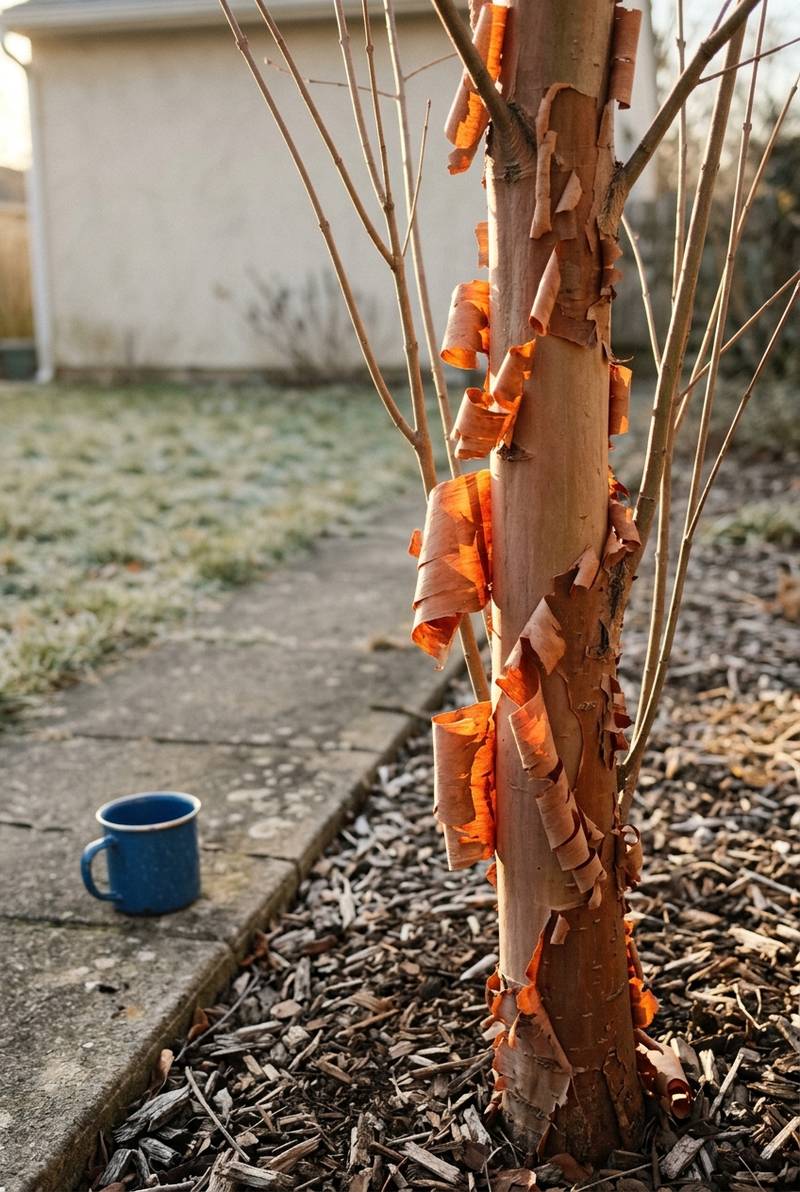
The tree that started this whole list, and my starter pick.
Its cinnamon bark peels into large curls that stay on the tree instead of dropping, so the trunk looks like it’s wrapped in copper ribbon. Fall color runs orange to red, and at 20 to 30 feet (6 to 9 m) it fits a normal front yard.
It grows slowly and it’s intolerant of drought, so water it through dry summers. One note from the forums: young trees take a few years in the ground before the bark really shows off.
2. Three-Flowered Maple
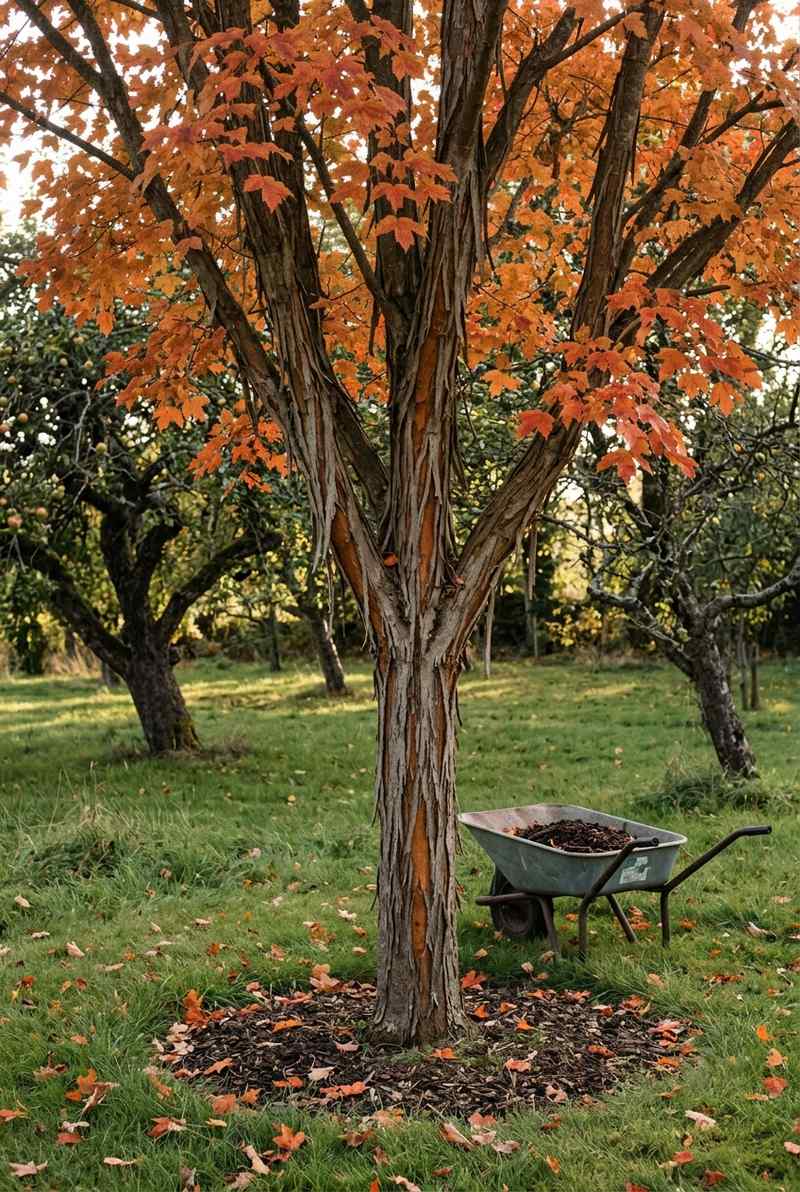
Paperbark maple’s lesser-known cousin, and the one I’d pick if I wanted something my neighbors don’t have.
The bark is ash-brown and peels in vertical strips to show orange-brown underneath. Less dramatic than the curls, more like a tree that’s been gently combed.
Fall color is its second act: orange to red. It prefers moist, acidic soil with good drainage.
3. Fox Valley River Birch
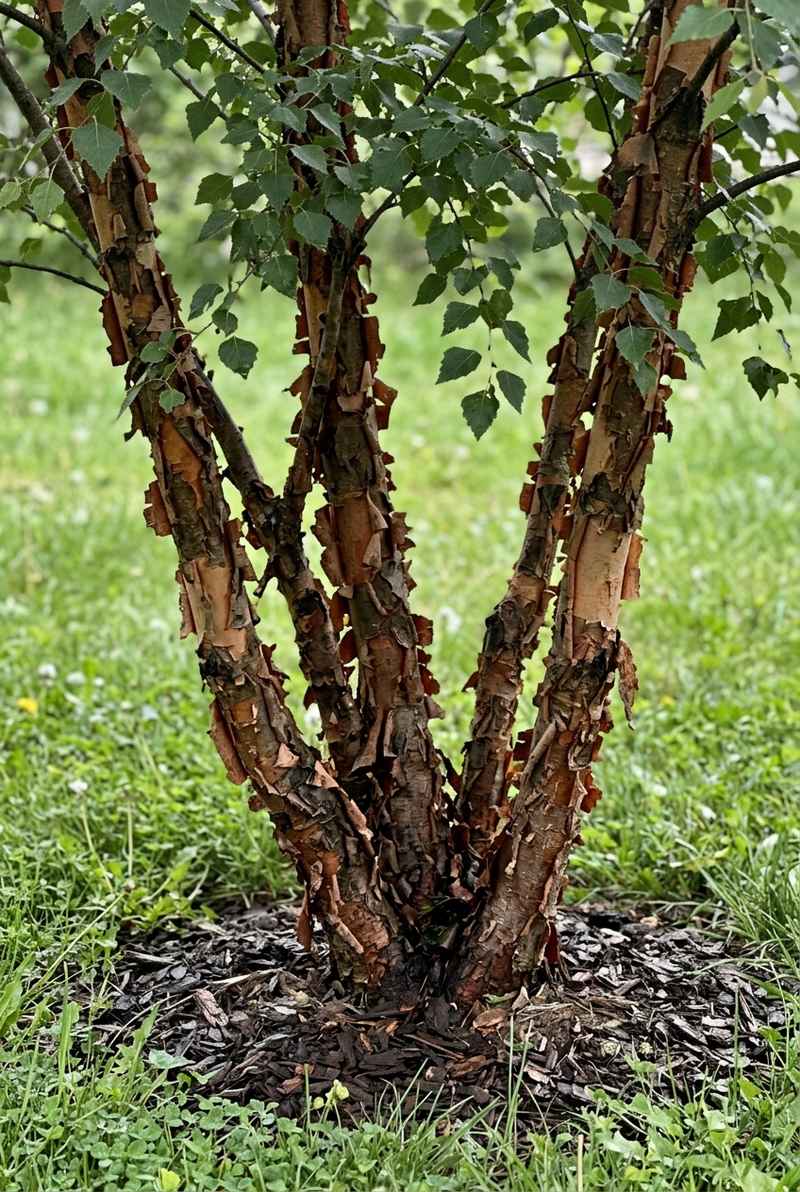
A river birch that tops out around 10 feet (3 m). I didn’t believe it either.
Its official name is ‘Little King’, and the orangish-brown bark starts peeling at an early age, so you aren’t waiting a decade. It handles wet soil, turns yellow in fall, and it’s extremely resistant to bronze birch borer, the pest that kills heat-stressed birches.
Give it acidic soil if you can. In high-pH ground the leaves can yellow.
4. Heritage River Birch
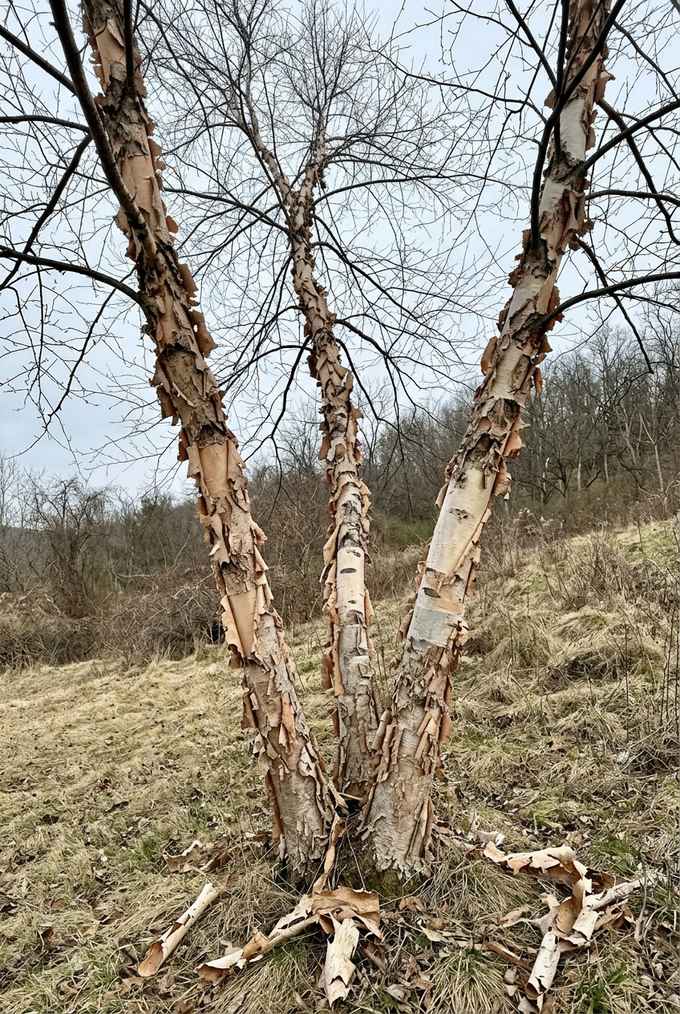
Same species, completely different scale.
Heritage grows fast into a 40 to 70 foot (12 to 21 m) tree, with salmon-cream bark that peels back to a creamy white almost as pale as a paper birch. It shares its little cousin’s resistance to birch borer.
Gorgeous. Also enormous. Plant this one only where a big shade tree makes sense (and nowhere near the house).
Polished Mahogany
Two cherries grown for their trunks, not their fruit.
5. Tibetan Cherry
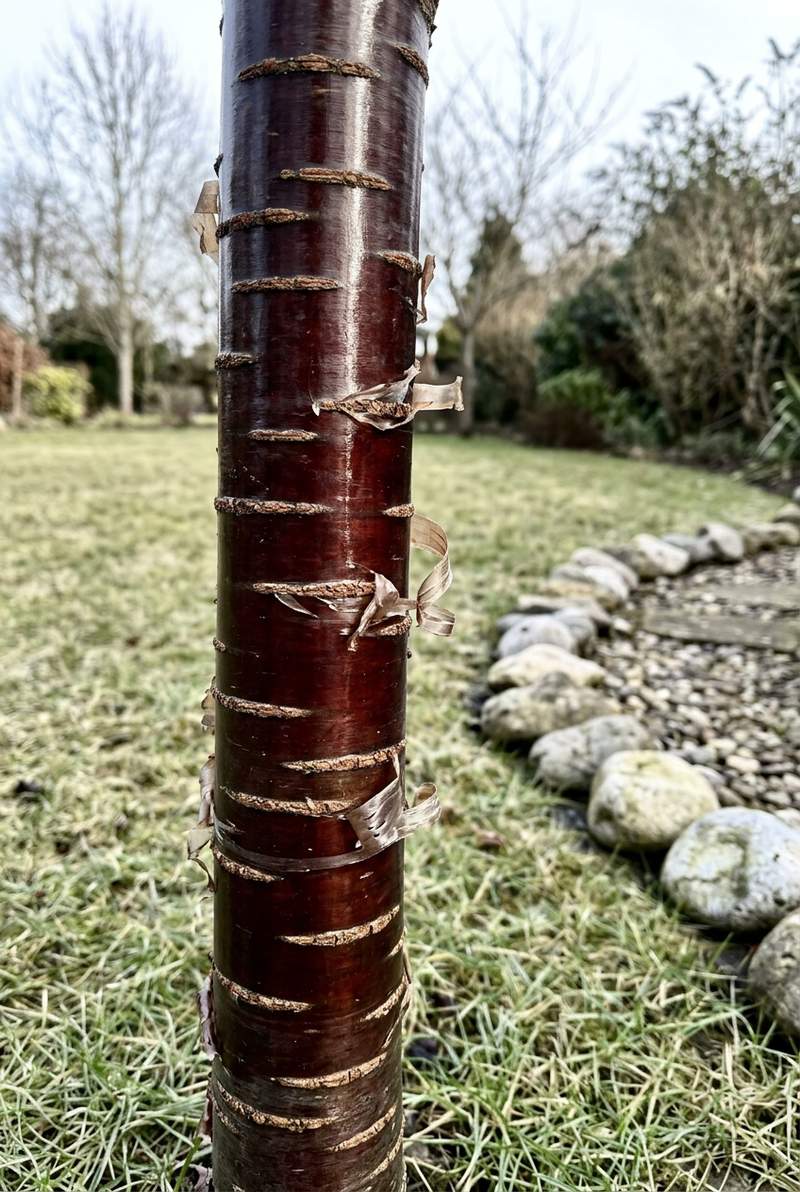
The shiniest bark on any tree I know.
Old bark peels a little like a birch and leaves behind a polished, mahogany-brown sheen that looks waxed (it isn’t). In winter sun it’s almost unreal.
Honest warning
Missouri Botanical Garden lists a long run of possible problems for this tree: cankers, leaf spot, borers, Japanese beetles and more. It also has no fall color and a narrow range, zones 5 to 6. Plant it for the bark, with your eyes open.
6. Amur Chokecherry
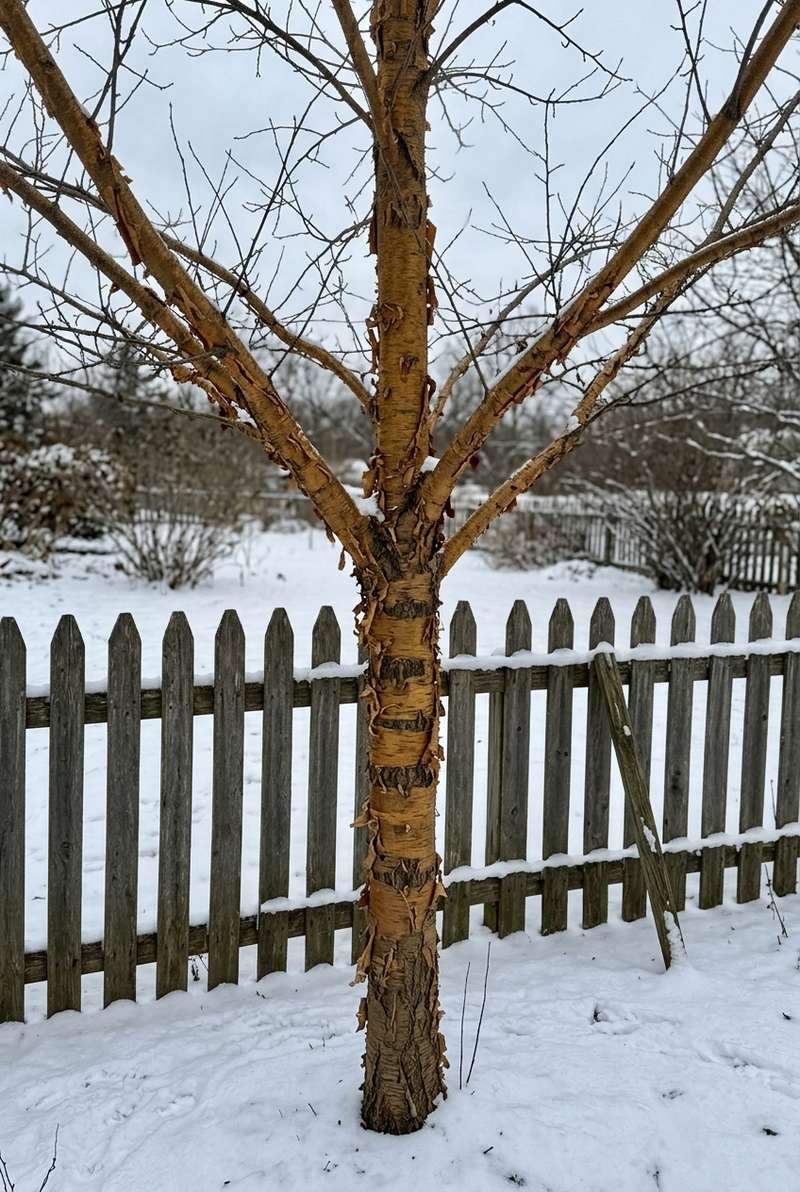
The cold-climate answer.
Golden-brown to russet exfoliating bark, fragrant white flowers in spring, and hardiness all the way down to zone 2. If your winters scare other trees, this one won’t flinch.
The limit runs the other way. It dislikes heat and humidity and generally doesn’t grow well south of zone 6.
Save this to PinterestCamouflage Patches
Here the bark doesn’t curl. It flakes off in puzzle pieces and leaves a pattern.
7. Japanese Stewartia
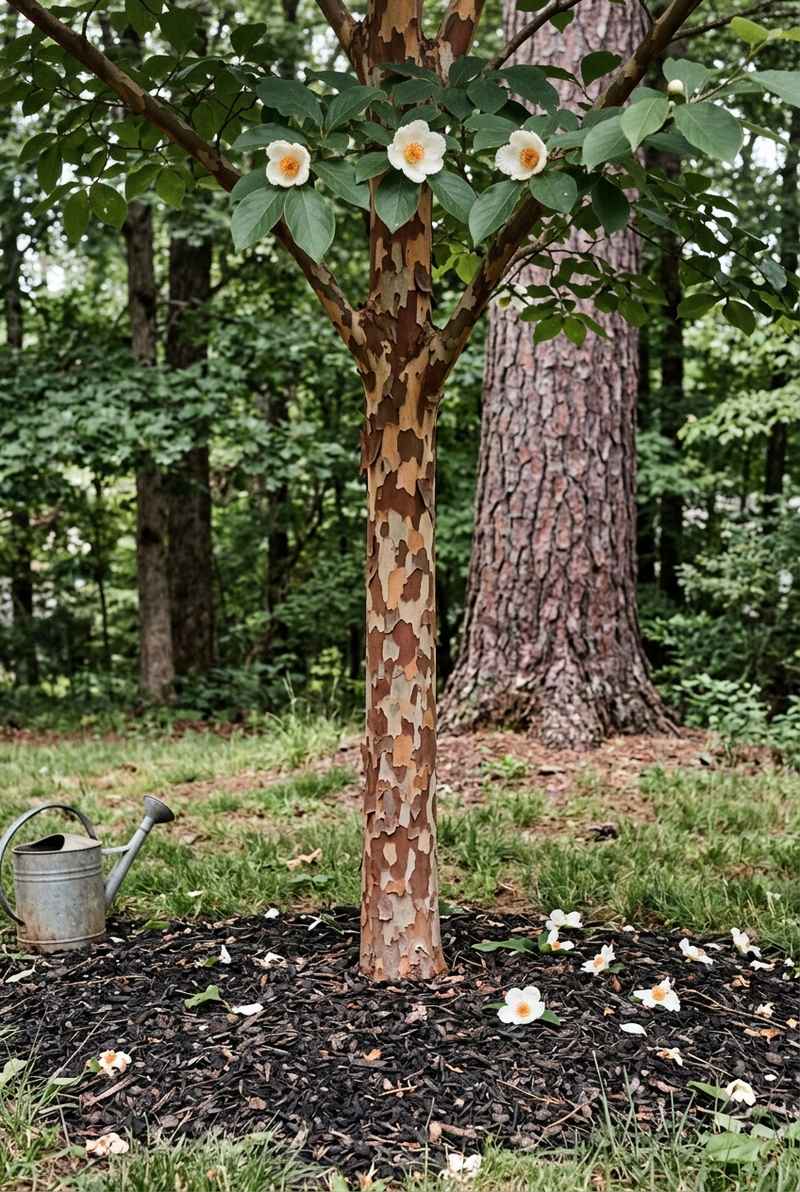
If I had room for exactly one more tree, this might be it.
White flowers that look like camellias open in early summer. The leaves turn reddish-orange and burgundy in fall.
Then the exfoliating, reddish-brown bark carries winter. Four seasons, one trunk.
It’s small and slow-growing, and it transplants best when it’s young. So buy a small one and be patient.
8. Persian Ironwood
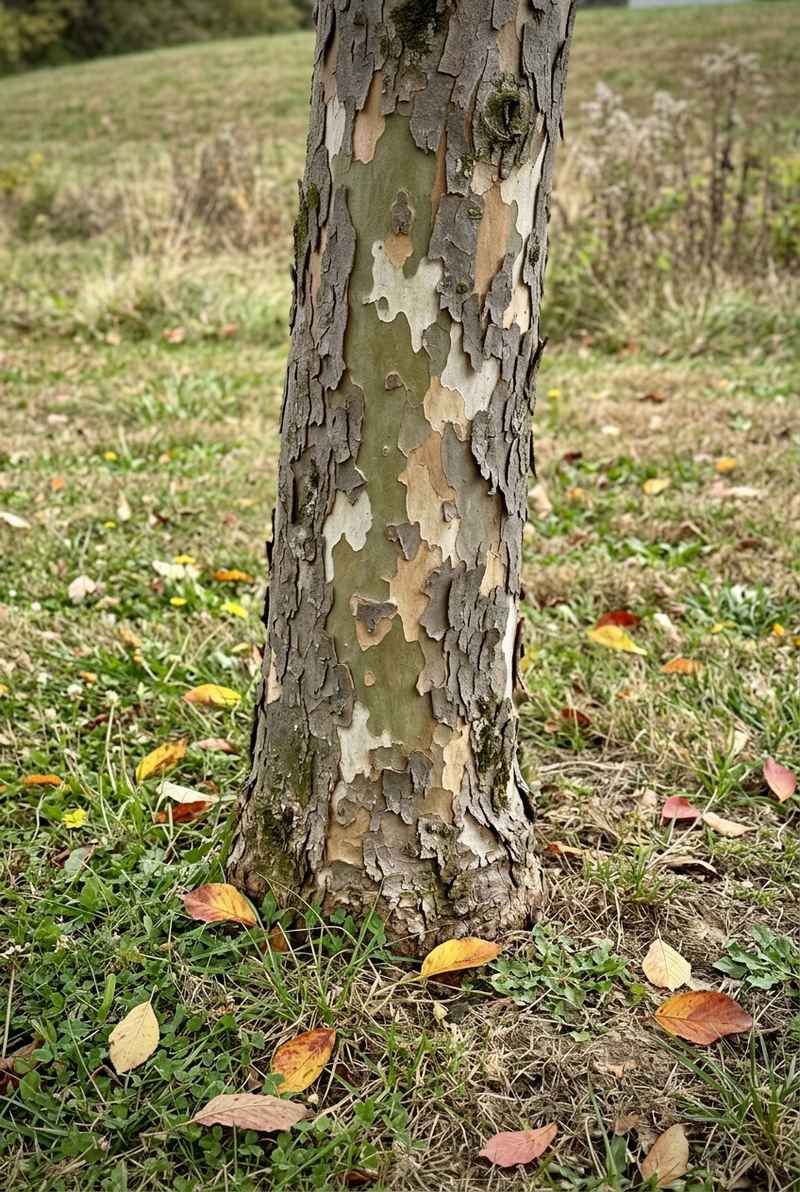
Mature trees flake to show patches of green, white and tan, like a watercolor someone left out in the rain.
The key word is mature. This tree is typically about 10 feet (3 m) tall after seven or eight years, and the bark show comes later.
What you get in the meantime is fall color in yellow, orange and red.
Missouri Botanical Garden reports no serious insect or disease problems.
9. Kousa Dogwood
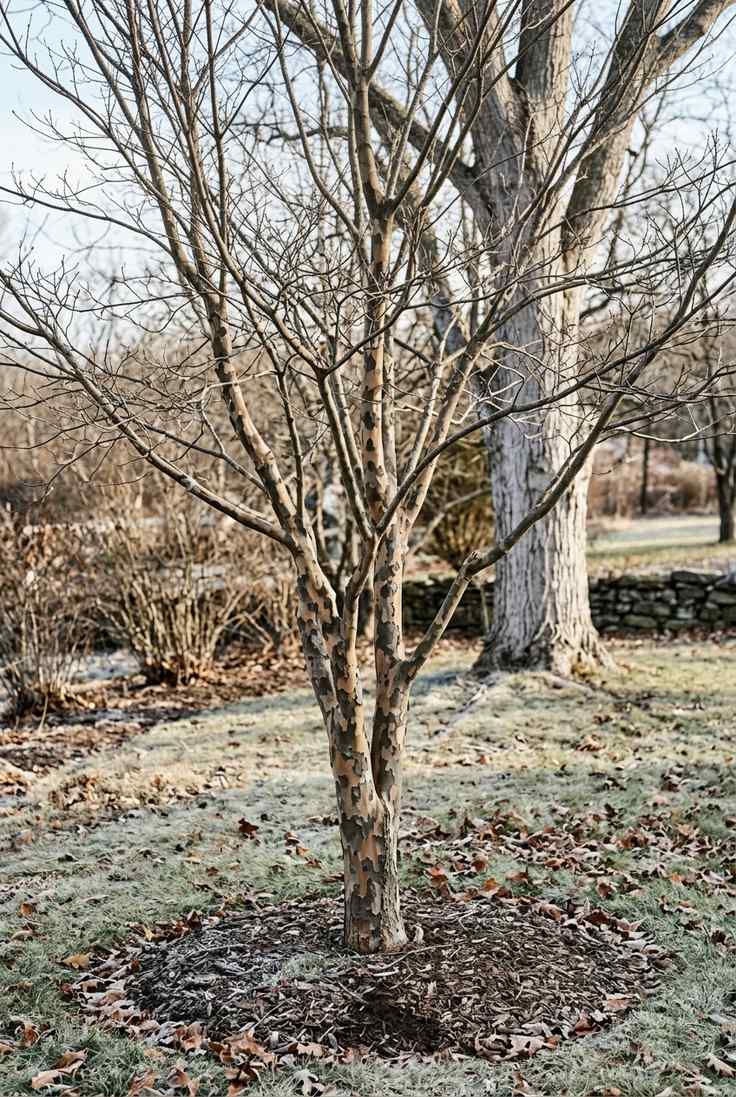
You probably know this one for its flowers. Look at the trunk next time.
On mature trees the bark is mottled tan and gray, and it’s at its best in winter when nothing else is competing. Flowers come in late spring, and fall color runs from purple to scarlet.
It has better disease resistance and cold hardiness than the native flowering dogwood. In hot, full-sun spots the leaves can scorch, so a little afternoon shade helps.
10. Lacebark Pine
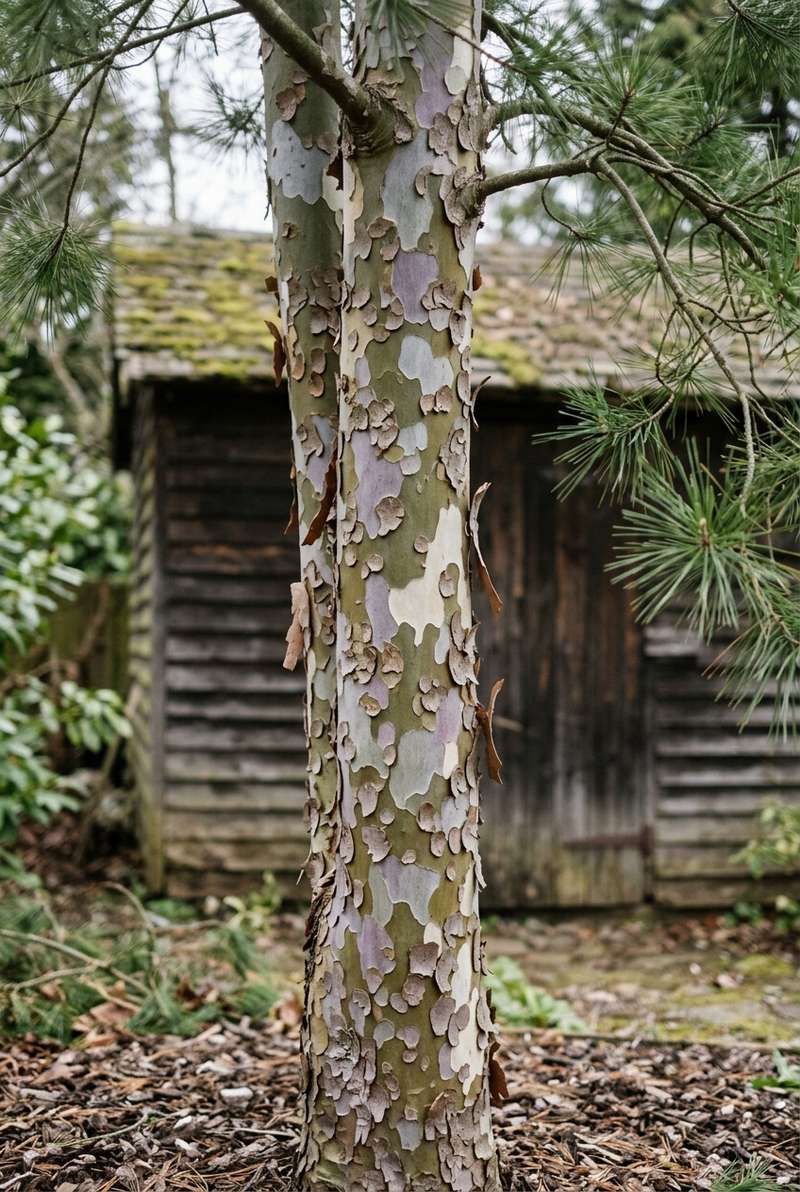
The only evergreen here, and the slowest reward.
Its bark peels into patches of white, olive, silver and pale purple, and eventually turns milky white. Stunning… eventually.
Did you know
Expect to wait ten years or more before a lacebark pine starts to peel, and longer still for the white to show. Its branches are also brittle under heavy snow and ice. This is a tree you plant for the person you’ll be in fifteen years.
Shreds and Strips
The last two are big shrubs that can be grown as small trees. Both bloom when most trees are finished.
11. Seven-Son Flower
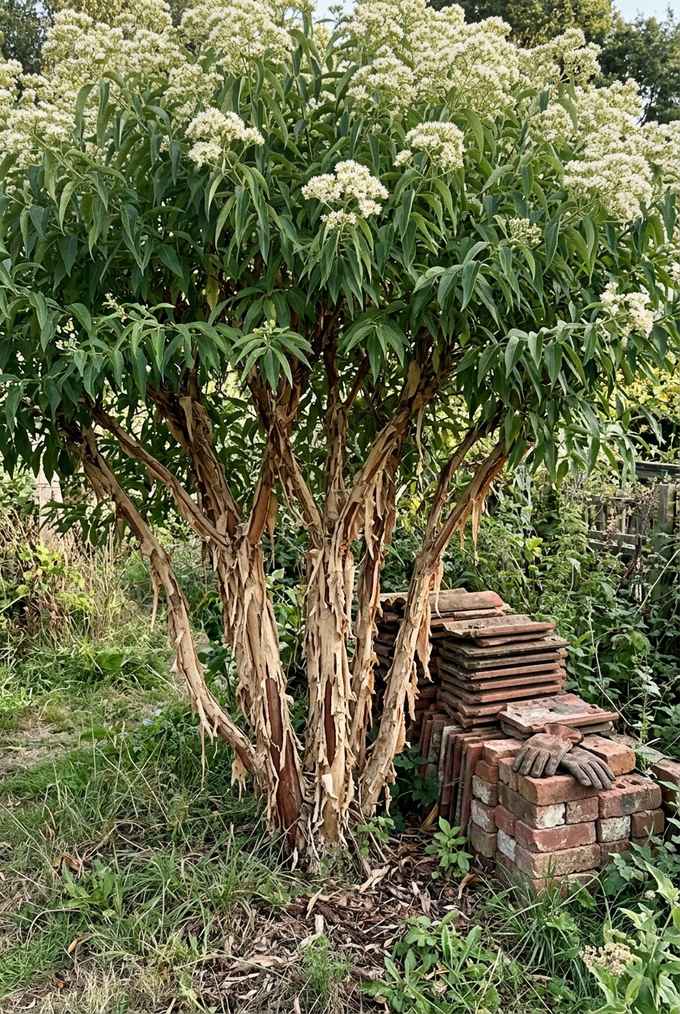
Narrow, late-blooming and almost unknown. I love an underdog.
Fragrant creamy-white flowers open in late summer to early fall, when the garden needs them most. All winter, tan bark peels away to show brown beneath.
It naturally grows as a multi-stemmed shrub, 15 to 20 feet (4.5 to 6 m) tall and only about 10 feet (3 m) wide. It can be trained to a single trunk if you start early.
12. Natchez Crape Myrtle
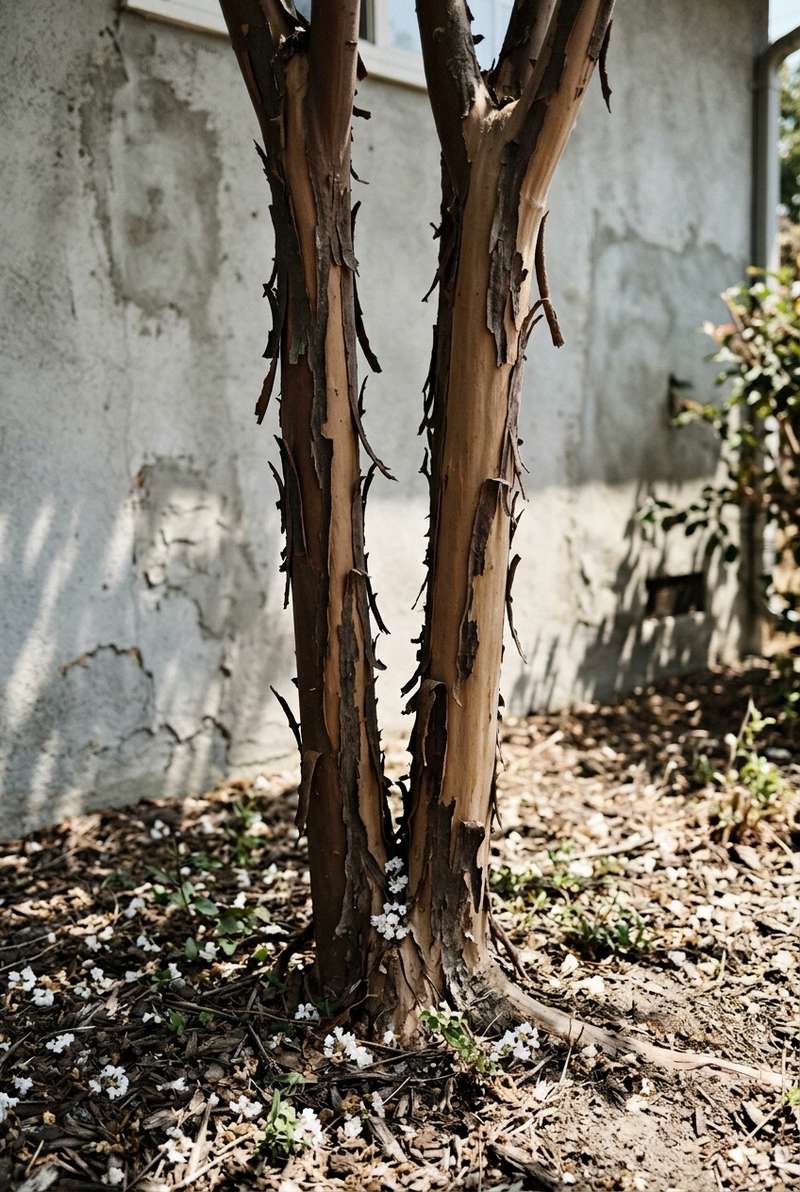
For warm gardens, nothing beats it.
White flowers from midsummer to early fall, orange to red fall leaves, and dark cinnamon bark that exfoliates with age. In the South it grows as a proper small tree.
In colder areas the top growth often dies to the ground in winter, and it comes back as a shrub. Zone 7 and warmer is where you get the trunk worth showing off.
Peeling Bark That Needs a Park
Three famous peelers that I left off the main list on purpose.
| Tree | Mature size | Why it’s not on the list |
|---|---|---|
| Shagbark hickory | 70-90 ft x 50-70 ft (21-27 m x 15-21 m) | Far too big for a typical yard |
| American sycamore | 75-100 ft tall and wide (23-30 m) | Bigger still |
| Paper birch | 50-70 ft (15-21 m) tall, zones 2-6 | A big tree for cold climates that needs constant moisture and some afternoon shade |
If you’d like peeling bark on something much smaller, ninebark and oakleaf hydrangea both do it. They’re on my plant-and-forget shrubs list.
Questions About Peeling Bark
Which tree with peeling bark is best for a small yard?
Fox Valley river birch stays around 10 feet (3 m) tall. Paperbark maple and seven-son flower are the next size up, at 15 to 30 feet (4.5 to 9 m), and both fit most front yards.
What tree has white peeling bark?
Heritage river birch peels to a creamy white inner bark, and lacebark pine eventually turns milky white. Paper birch is the classic, but it’s a big tree for cool climates.
Should I pull off the loose bark?
No. It comes away when the tree is ready, and pulling it early can damage the tissue beneath. The curls are the show anyway.
How long until the bark starts peeling?
It depends on the tree. Fox Valley river birch peels young, paperbark maple takes a few years, and lacebark pine usually needs at least ten.
Plant It Where the Winter Sun Hits
I still walk past that paperbark maple by the library, and I still slow down every time.
So here’s my one piece of placement advice: put a peeling tree where low winter light reaches the trunk, and somewhere you’ll pass it often. Mine is going by the front path, right beside the spot where I’m planning a small flowering tree for spring. Missouri Botanical Garden’s profile of paperbark maple is a good place to start if you want the details.