9 Trees That Look Like a Weeping Willow but Stay Small

- Willow look
- Under 35 feet
- Zones 4-9
- Small yard friendly
There’s a weeping willow by the pond in the park near my house, and I’ve wanted one since the first time I walked under it. That green curtain, moving like water.
Then I read what the roots do. And how big “big” really is.
So I went hunting for trees similar to a weeping willow that I could plant without losing the yard, the pipes, or the neighbors. These nine all weep. None of them will swallow a house.
Quick Summary
- 9 small trees with a willow-style droop, from 6 to 35 feet (1.8 to 10.5 m) tall
- Two are true willows scaled down. One has real willow-shaped leaves. One is evergreen
- Each entry says how close it comes to the willow look
- The honest numbers on why a full-size weeping willow rarely fits a home lot
- Best starter pick: Weeping mulberry. It stays 6 to 8 feet (1.8 to 2.5 m) tall and every branch falls to the ground.
Why Not Just Plant the Willow?
Because the experts who love it keep telling people not to.
Missouri Botanical Garden lists the weeping willow at 30 to 50 feet (9 to 15 m) tall and just as wide, with wood that’s weak and tends to crack. It adds that the tree is often very difficult to site in a residential landscape.
The University of Florida’s extension is blunter: not for residential lots. The roots are aggressive, they spread about three times the reach of the canopy, and the tree rarely lasts much beyond 30 years.
NC State finishes the job. Its invasive roots can damage water or sewage pipes, and it isn’t typically recommended for home landscapes because of litter, breakage, disease and insects.
| Weeping willow | The trees below | |
|---|---|---|
| Height | 30-50 ft (9-15 m) | 6-35 ft (1.8-10.5 m) |
| Width | 30-50 ft (9-15 m) | 5-25 ft (1.5-7.5 m) |
| Roots | Aggressive, wide-ranging, a known pipe problem | Small-tree roots, in proportion to the canopy |
| Typical life | Around 30 years | Varies. Several are long-lived |
One more thing before the list. Most small weeping trees are grafted, and I explained how to handle the graft in my dwarf weeping trees guide. This list is narrower: only the ones that scratch the willow itch.
True Willows, Scaled Down
If it has to be an actual willow, these two exist. They come with some willow habits.
1. Kilmarnock Willow
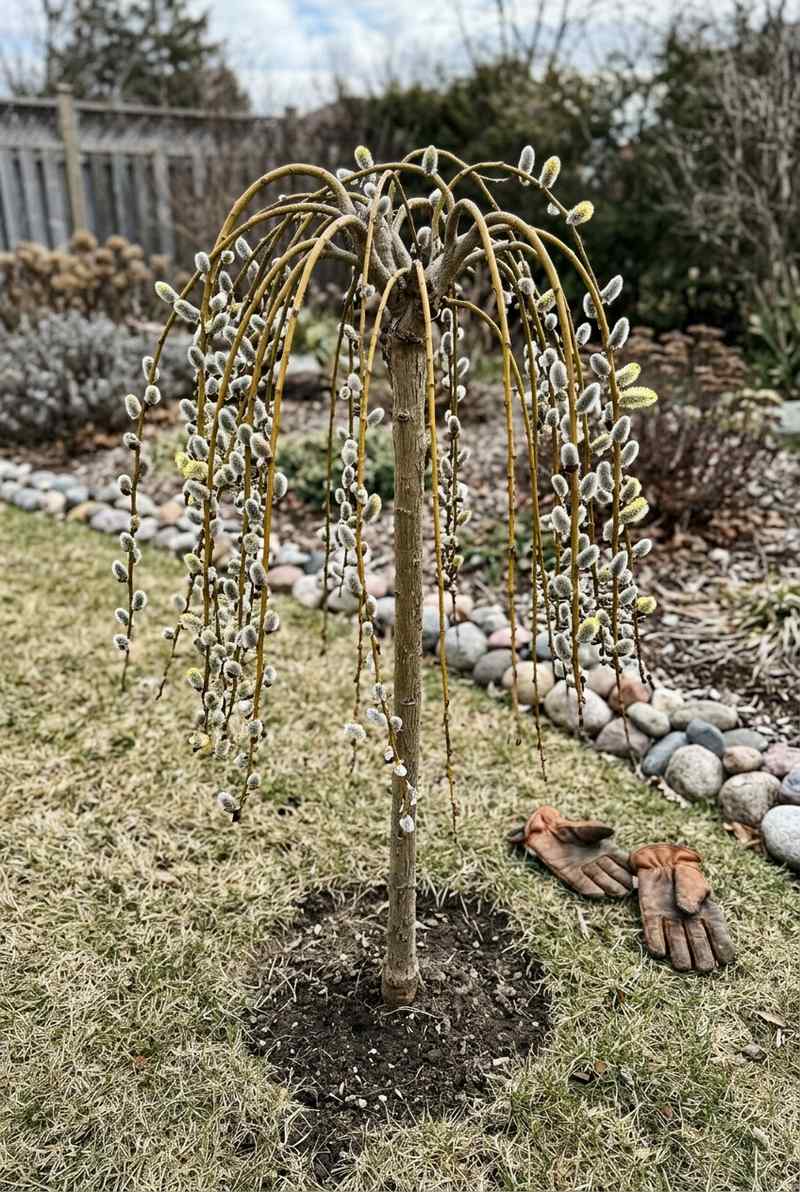
A weeping willow you can stand next to and look down on.
It’s a stiffly weeping little tree, usually grafted on top of a straight trunk, and the Royal Horticultural Society puts it at 5 to 8 feet (1.5 to 2.5 m) tall and wide. In late winter the bare branches carry big gray catkins.
It’s still a willow, though. The species has weak wood that may crack, and NC State notes it can be short-lived. Plant it for ten good years, not fifty.
2. Weeping Purple Willow
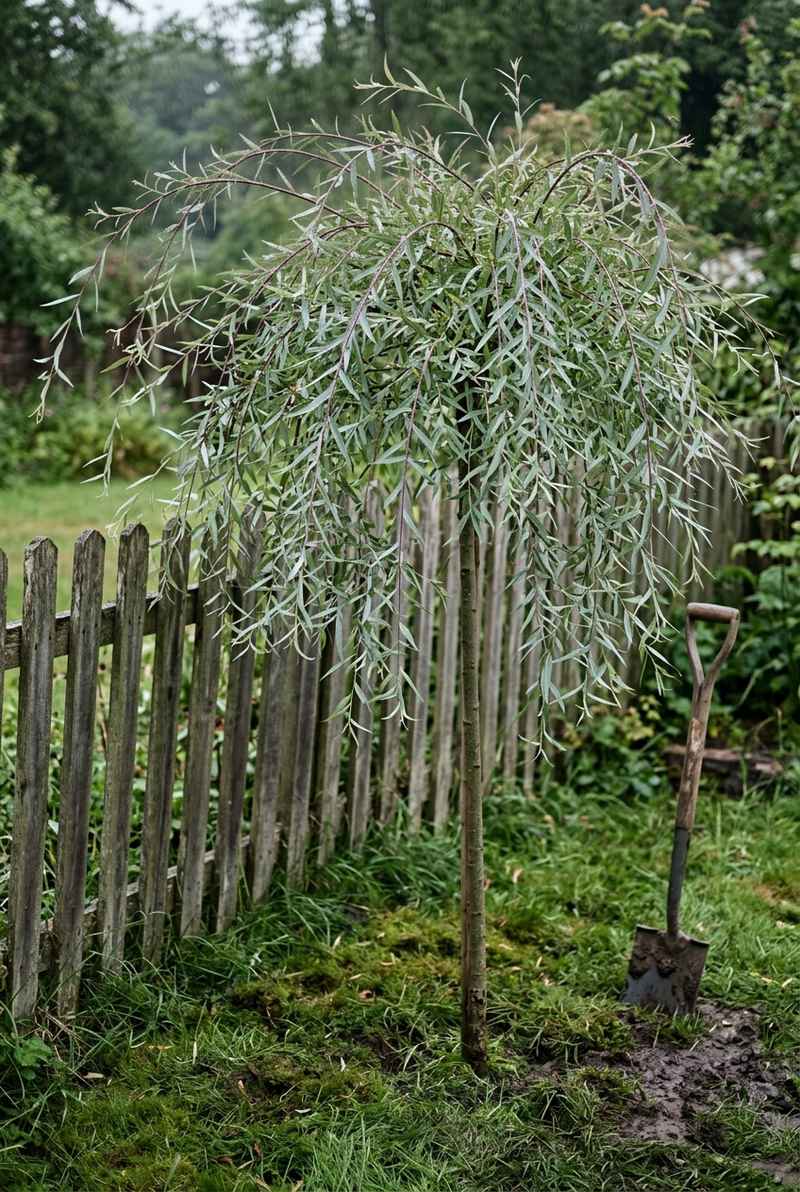
Finer and airier than the Kilmarnock, with slim branches and bluish-green leaves.
The RHS lists it at 8 to 13 feet (2.5 to 4 m) tall and 5 to 8 feet (1.5 to 2.5 m) wide, reached over 10 to 20 years. Like its big cousin it likes moisture, and it even takes poorly drained soil.
So if your yard has a damp corner where you pictured the big willow… this is the pocket-sized version.
Willow Leaves, No Willow
3. Weeping Willowleaf Pear
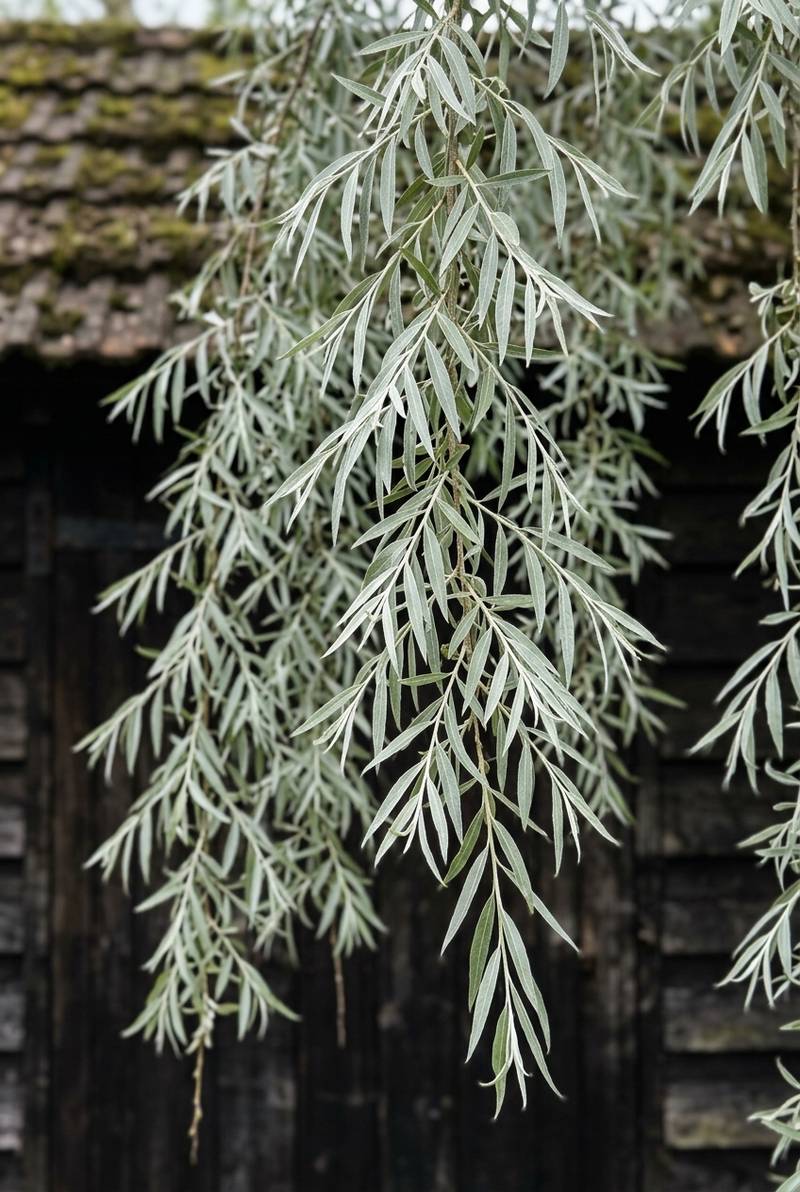
The leaves are the trick here. They’re narrow, silver-gray and shaped like willow leaves, on branches that droop.
From across the yard it reads as a small silver willow, 15 to 25 feet (4.5 to 7.5 m) tall, with white flowers in April as a bonus. It’s an ornamental pear, so don’t expect fruit worth eating.
Honest warning
Fireblight can be a major problem for this tree, especially where summers are warm and humid, and Missouri Botanical Garden says it generally won’t perform well south of zone 7. In cooler, drier climates it’s a beauty.
The Curtain Effect
These don’t have willow leaves. They have the other half of the magic: branches that fall like a curtain.
4. Weeping Mulberry
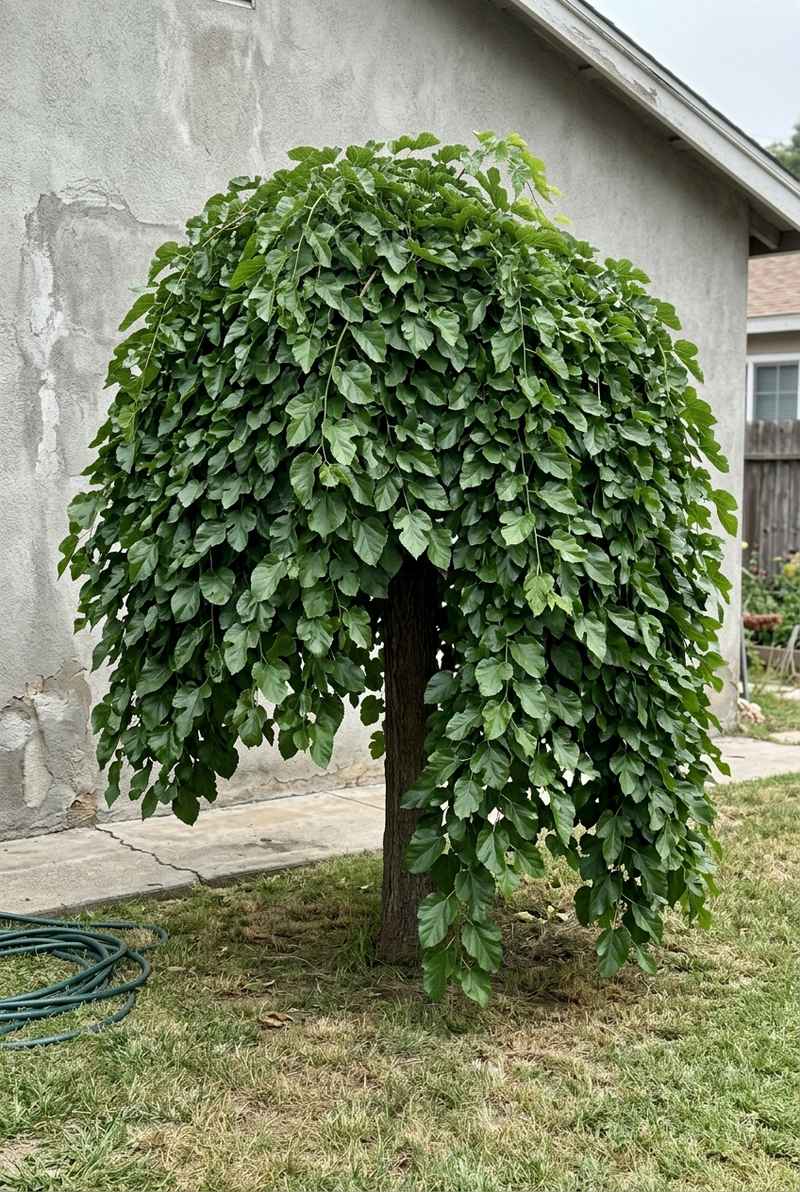
My starter pick, and the closest thing to a willow you can fit in a small front yard.
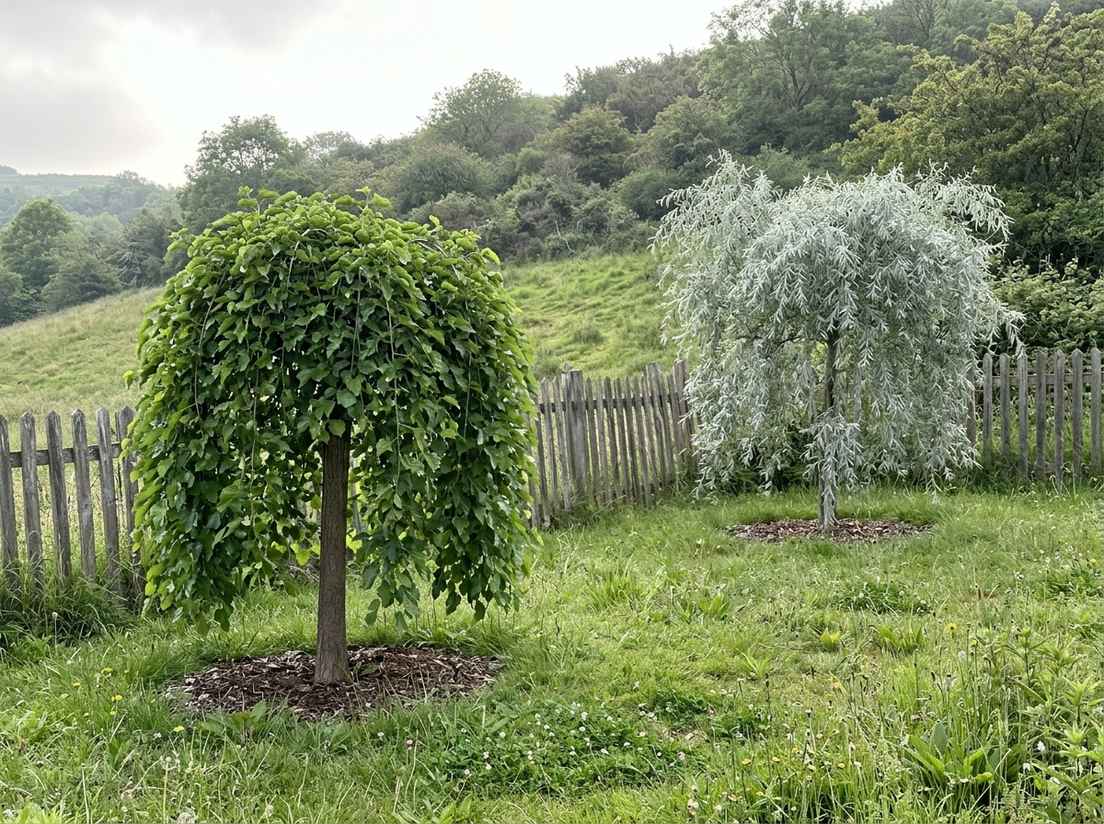
‘Chaparral’ is grafted about 6 feet (1.8 m) up a straight trunk, and from there every branch weeps all the way to the ground. The result is a green dome 6 to 8 feet (1.8 to 2.5 m) tall and a bit wider, with a hidden room inside.
It tolerates heat and drought. Missouri Botanical Garden does note that messy fruit can be a concern, so ask the nursery whether your tree fruits before you plant it over a path (or a white car).
5. Weeping Katsura
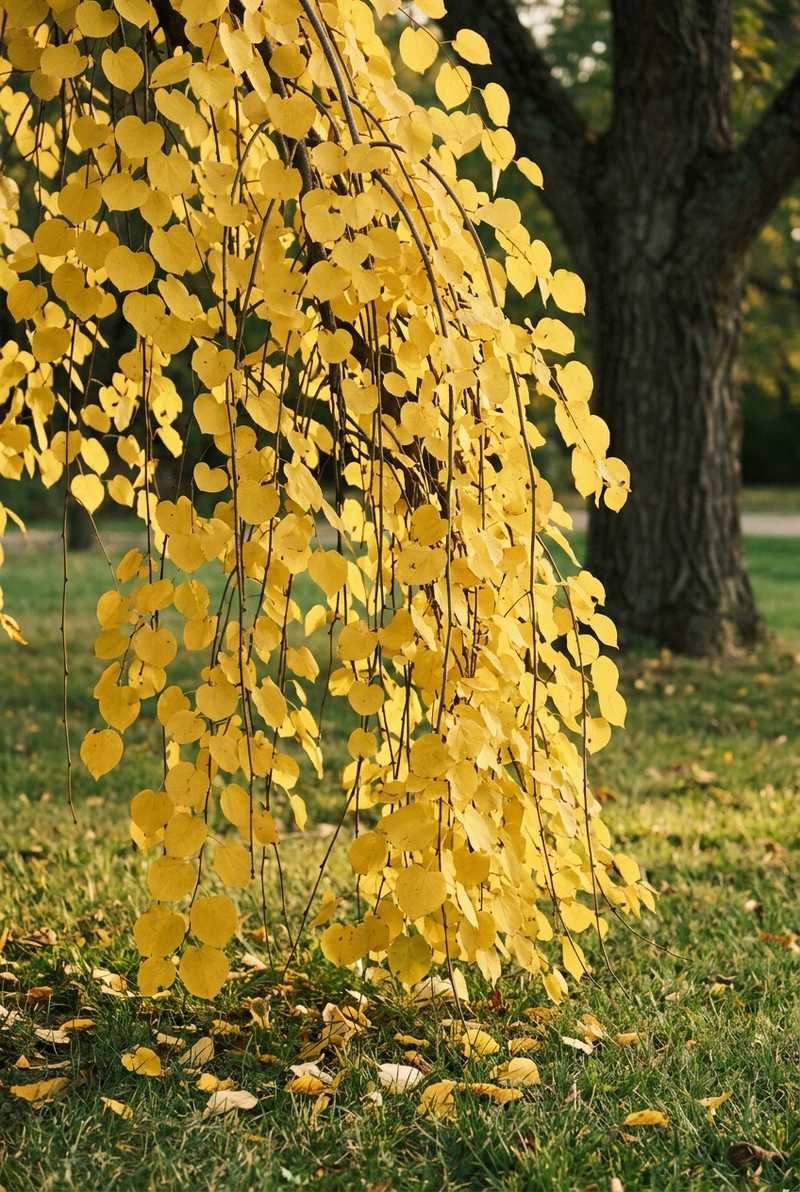
Softer than a willow, and honestly prettier up close.
Heart-shaped leaves hang on pendulous branches that dip toward the ground, then turn a clear yellow in fall. NC State calls it long-lived, with a canopy that sits only a foot or so (30 cm) off the ground.
It isn’t drought resistant when young, so water it regularly for the first few years.
Save this to Pinterest6. Cascade Falls Bald Cypress
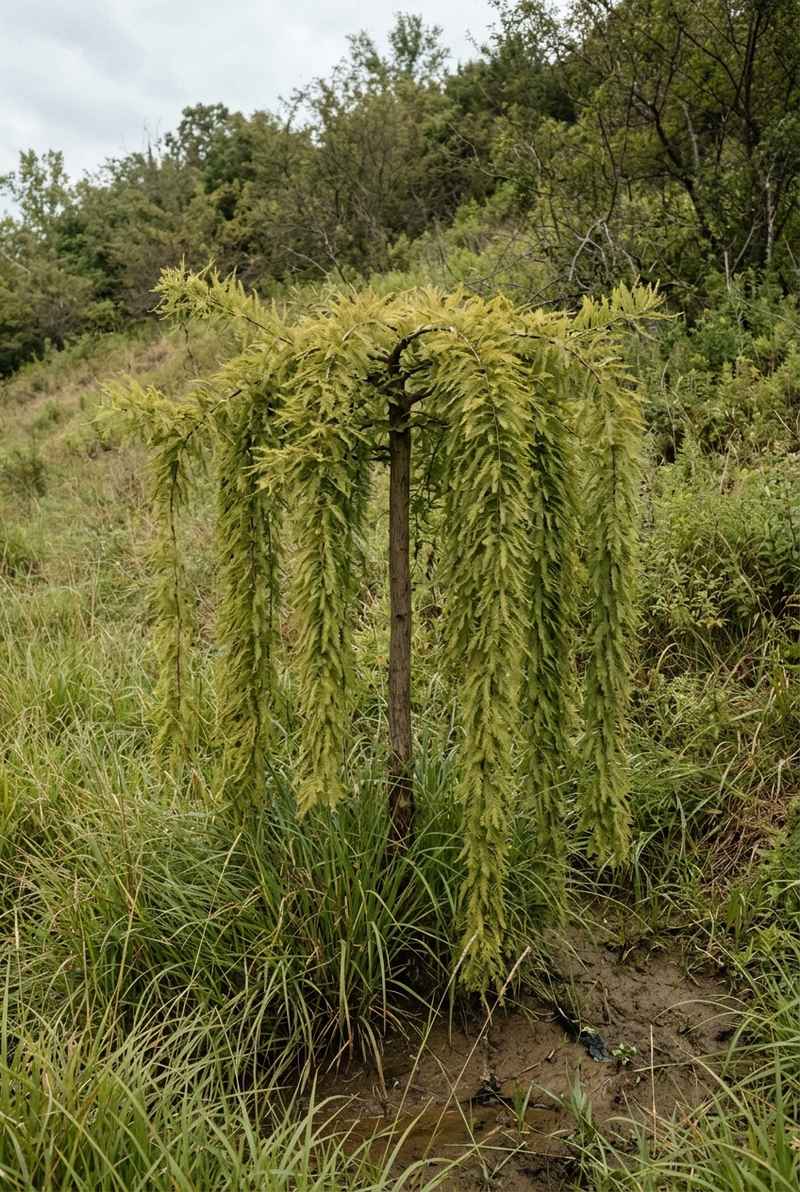
The one I’d plant in the exact spot a willow wants: low, damp ground.
Its branches hang outward and then plunge straight down, covered in fine, feathery needles that turn color and drop in fall (it’s a deciduous conifer, which surprises everyone once). It reaches 8 to 12 feet (2.5 to 3.5 m) in its first ten to fifteen years and tops out near 20 feet (6 m).
It grows in anything from average garden soil to wet soil. And it stays narrow, 5 to 8 feet (1.5 to 2.5 m) across.
7. Weeping Japanese Pagoda Tree
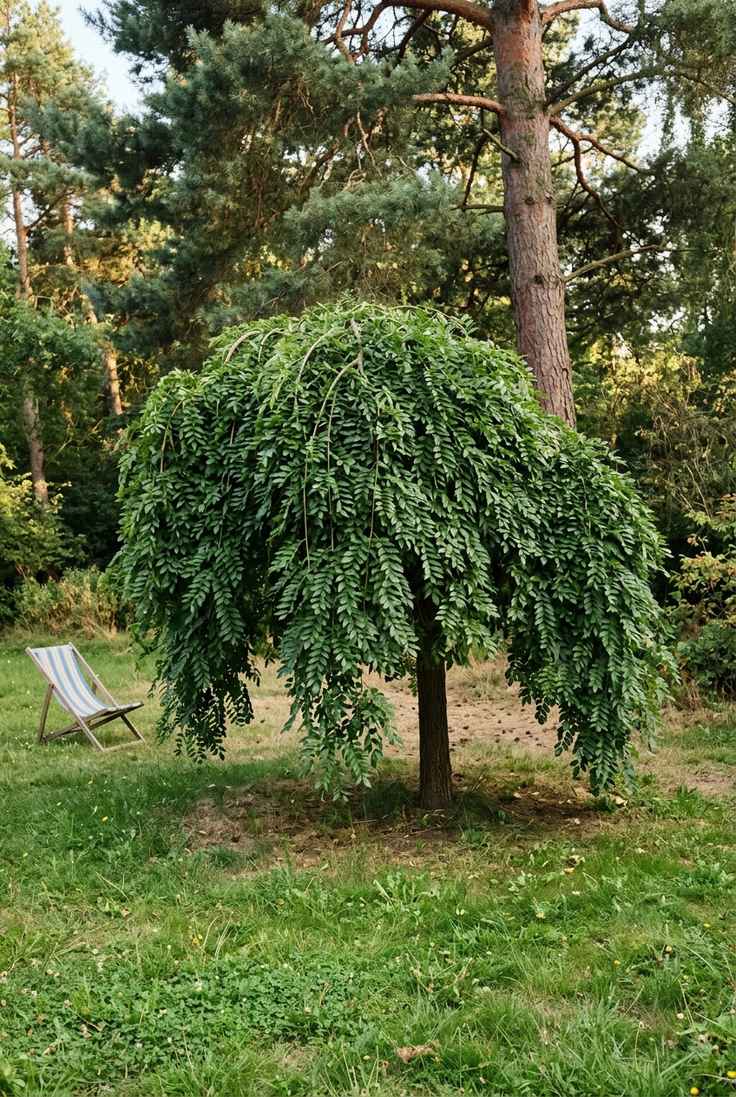
The broadest look-alike here, for a yard with a little more room.
Its branches droop gracefully toward the ground from a 15 to 25 foot (4.5 to 7.5 m) crown, and the foliage turns yellow in fall. It tolerates drought and city conditions, which a real willow never would.
One oddity: unlike the regular pagoda tree, this weeping form rarely flowers. You’re growing it for the shape.
8. Snow Fountains Weeping Cherry
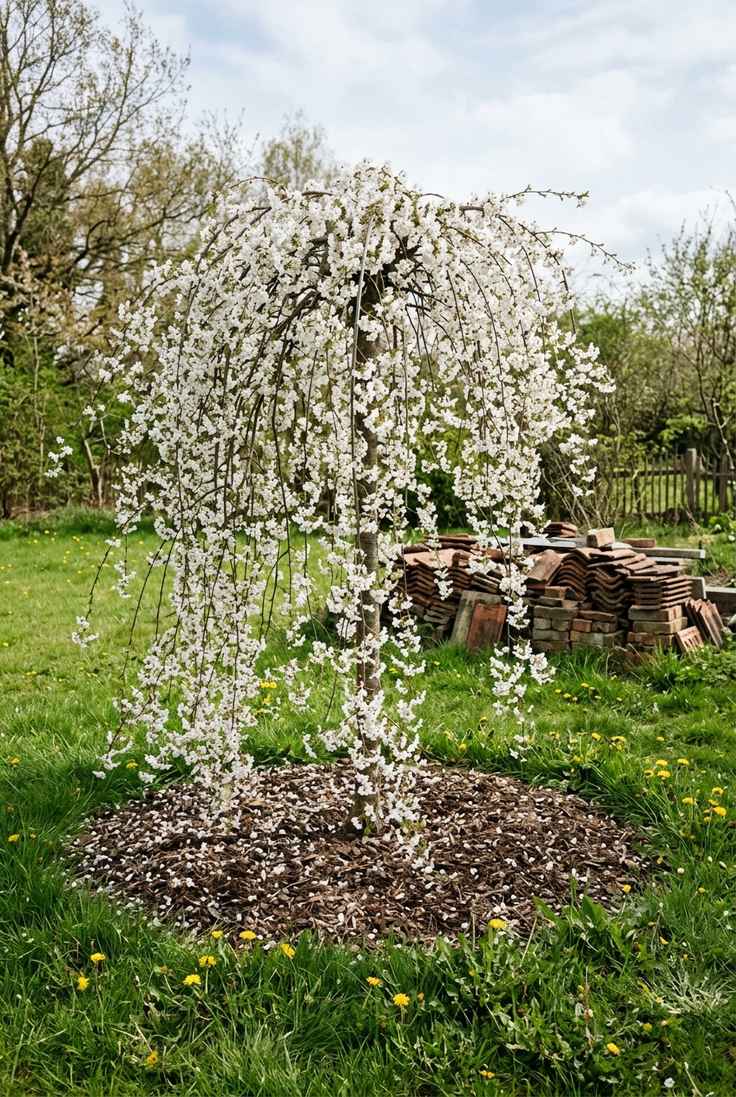
A willow that blooms. Sort of.
Its branches cascade right down to the soil and, in early spring, cover themselves in pure white flowers. Unlike most weeping cherries it weeps naturally, without needing a graft at the top.
It grows slowly to 8 to 15 feet (2.5 to 4.5 m). The catch is the usual cherry catch: a long list of possible pests and diseases, so give it sun, air and decent soil.
The Evergreen Curtain
9. Weeping Alaskan Cedar
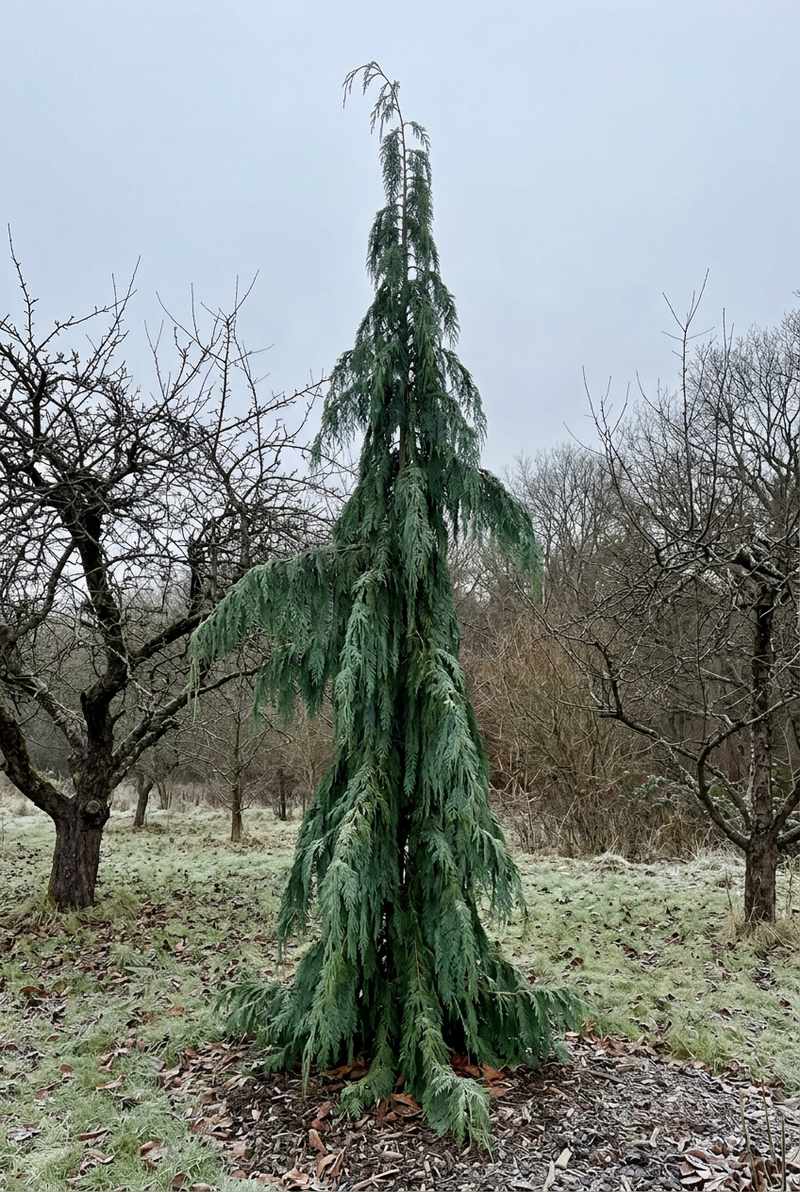
Everything above is bare in winter. This one isn’t.
It’s a slender evergreen with drooping sprays of blue-green foliage, and it can reach 35 feet (10.5 m) tall and 12 feet (3.5 m) wide over 35 years, though it’s often seen much smaller. The species lives for centuries in the wild, which is about as far from a willow as a tree can get.
It does best where summers are cool. In hot-summer climates, pick from the deciduous trees above.
Questions About Willow Look-Alikes
Is there a small weeping willow?
Yes, two. Kilmarnock willow stays around 5 to 8 feet (1.5 to 2.5 m), and weeping purple willow reaches 8 to 13 feet (2.5 to 4 m). Both are real willows.
What tree looks most like a weeping willow?
Weeping willowleaf pear has the closest leaves. Weeping mulberry has the closest curtain, with branches that touch the ground, and Cascade Falls bald cypress is the match for wet soil.
How far should a weeping willow be from a house?
Far. The University of Florida says the roots travel roughly three times as far as the branches reach, and calls the tree unsuitable for residential lots.
Which willow look-alike is evergreen?
Weeping Alaskan cedar. It keeps its drooping blue-green foliage all year in zones 4 to 7.
The Curtain Without the Tree
I still visit the willow in the park. I just don’t want its roots under my driveway.
Decide what you love about the willow: the leaf or the curtain. Then buy that. For a small front yard I’d plant the weeping mulberry and never look back.
If you’d like flowers along with the droop, my small flowering trees list has a few more. And the University of Florida’s weeping willow fact sheet is worth five minutes before anyone talks you into the real thing.