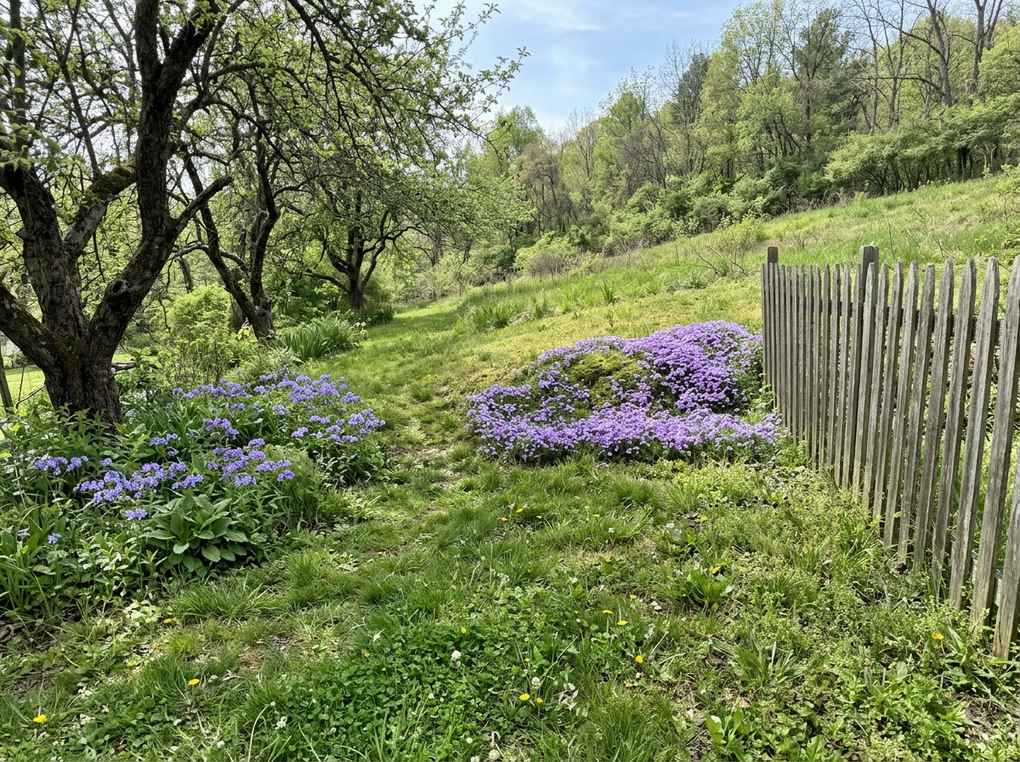
14 Ground Covers With Purple Flowers (Sun, Shade and In Between)
- Sorted by light
- Bloom months listed
- Zones 3-10
- Honest about spreaders
I asked for a purple ground cover at the garden center and got walked straight to a flat of periwinkle. Pretty lavender-blue flowers, glossy leaves, cheap.
I almost bought twelve.
Then I looked it up in the car, and that’s how this list started. So here are 14 options for ground cover with purple flowers, sorted by how much sun you have, with the bloom months and the spreading habits printed right on each one.
Quick Summary
- 14 purple-flowered ground covers: 5 for full sun, 4 for sun to part shade, 5 for shade
- Every entry lists zones, size, bloom months and how it spreads
- “Purple” on a tag can mean lavender-blue, violet or magenta, so each one says which
- Plant three or four from different groups and you get purple from March to September
- Best starter pick: Creeping phlox. Hardy in zones 3-9, tolerant of deer and drought, and a solid sheet of color in spring.
Start With Your Light, Not the Color
Every plant below flowers in some shade of purple. What kills them is the wrong spot.
The sun lovers rot in damp shade. The shade lovers scorch on a hot bank. So pick your row in this table first, then read only that group.
| Your spot | Look at | Purple from |
|---|---|---|
| Full sun, soil on the dry side | Creeping phlox, creeping thyme, ice plant, poppy mallow, verbena | March until frost |
| Sun for part of the day | Serbian bellflower, Rozanne geranium, mazus, bugleweed | May through summer |
| Mostly shade | Woodland phlox, crested iris, dead nettle, blue violet, lilyturf | April to September |
One note on the fast spreaders. A ground cover that fills in quickly will also keep going, and a few of these are flagged as invasive in some parts of the country, so I’ve said so wherever the extension sources do.
Full Sun: The Dry-Spot Purples
These five want at least six hours of sun and soil that drains fast.
1. Creeping Phlox
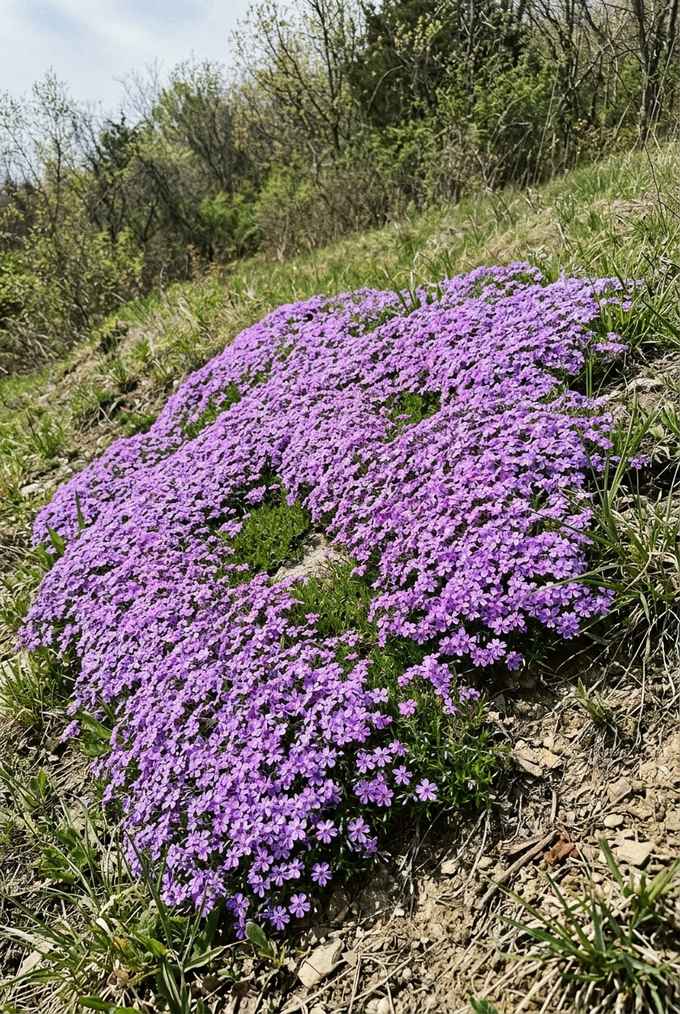
This is the one that turns a bank into a purple quilt for a few weeks every spring.
It forms a tight, mossy mat only 3 to 6 inches (8 to 15 cm) tall that keeps some green through winter, and it copes with hot, dry spots better than its phlox cousins. Good drainage matters more than rich soil.
After the flowers fade, cut the stems back by half. It keeps the mat dense, and sometimes you get a light second bloom for the trouble.
2. Creeping Thyme
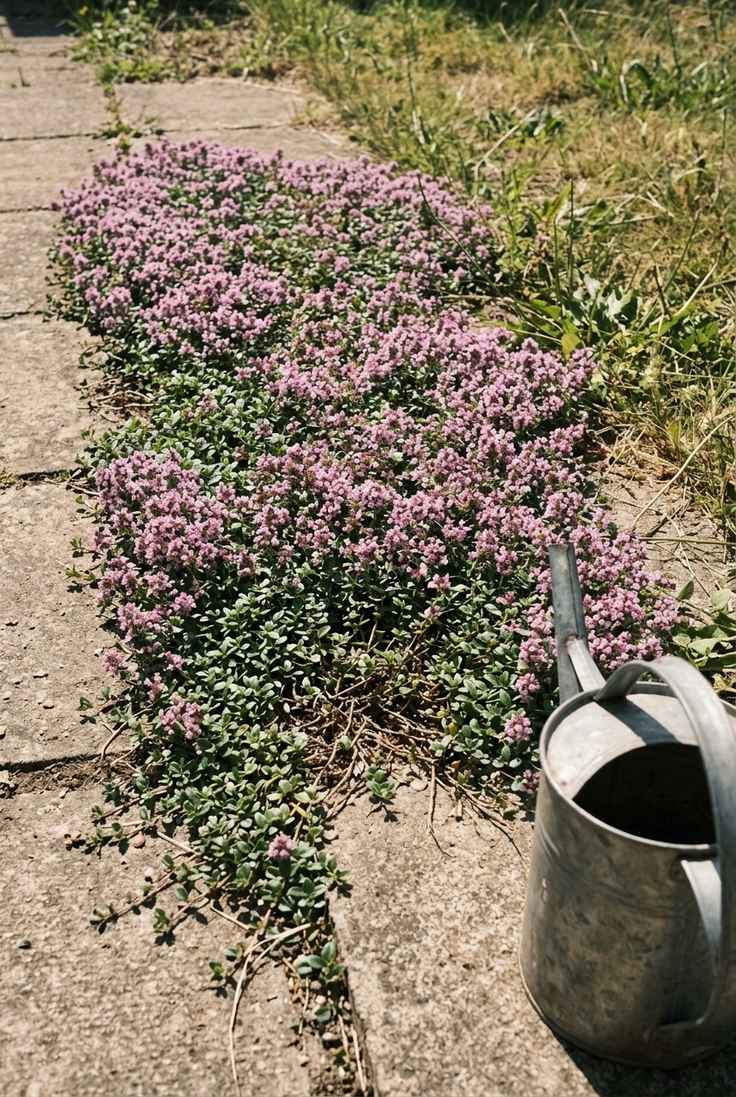
Honest note first: the flowers sit closer to pink-purple than true violet. Missouri Botanical Garden calls them deep pink, and NC State lists pink and lavender.
I’d still plant it, because nothing else here smells this good when you step on it.
Give it loose, gritty, nutrient-poor soil with sharp drainage. It tolerates drought and rots in wet ground, and it’s at its best in small areas or tucked between stepping stones, not across a whole lawn.
3. Hardy Ice Plant
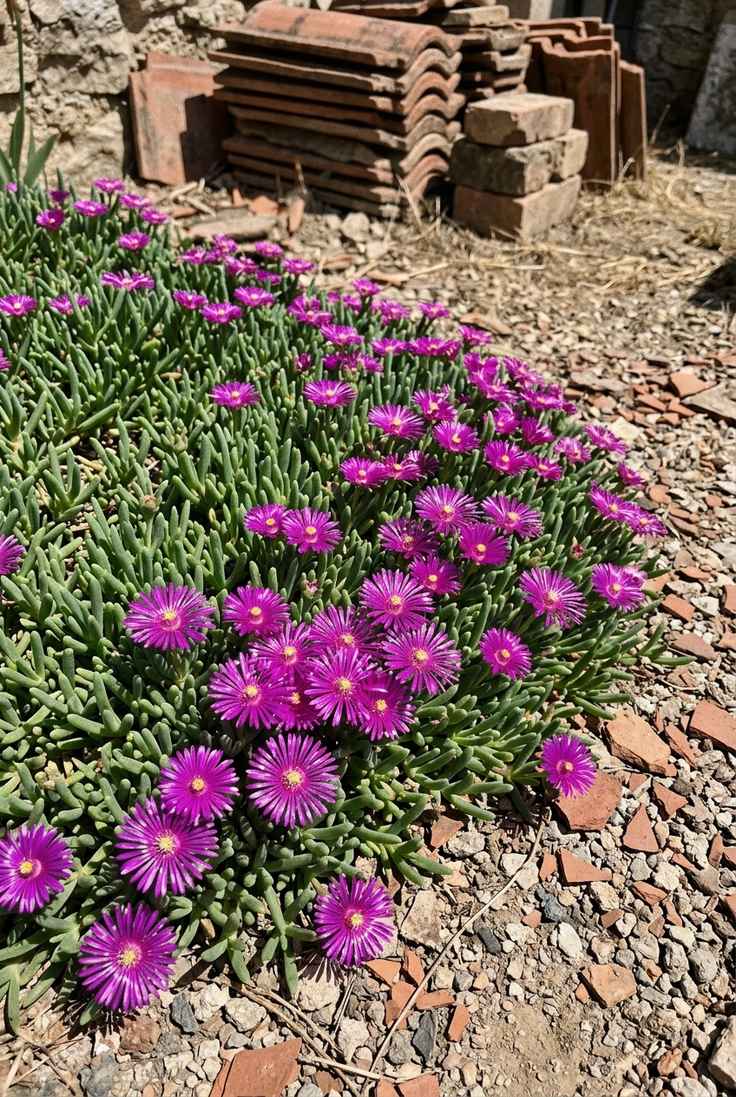
A succulent that flowers like it’s showing off. Glossy red-purple daisies from June to September, on a mat that stays under 6 inches (15 cm).
It has good tolerance for heat and drought, and it wants to be watered sparingly. The thing that kills it is wet feet: it grows poorly or dies in any soil that isn’t well-drained, so skip it in unamended clay (think gravel, not garden loam).
It’s also the least cold-hardy plant in the sun group. North of zone 7 it isn’t reliably winter hardy without shelter and very sharp drainage.
4. Purple Poppy Mallow
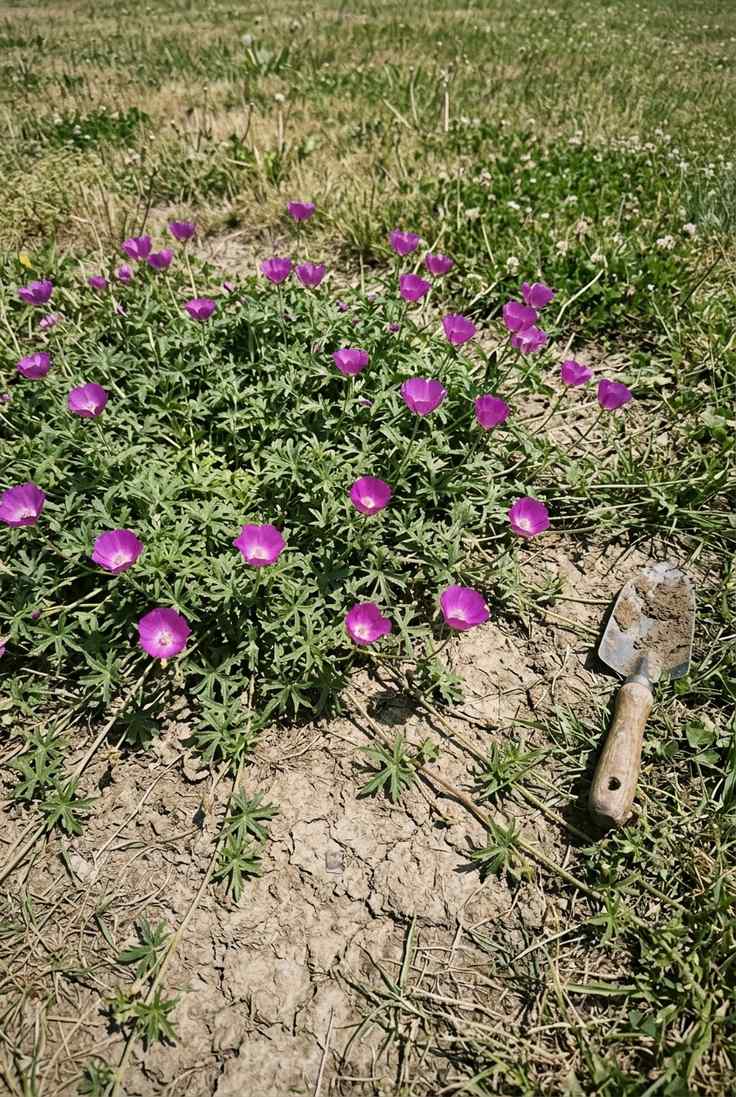
My favorite find on this list, and almost nobody plants it.
It’s a native of the Great Plains, with magenta cup-shaped flowers that look like small poppies. The foliage stays low while the stems trail outward along the ground, up to 3 feet (90 cm) wide.
A long taproot makes it properly drought tolerant. That same taproot makes it hard to move once it’s settled, so choose the spot carefully the first time (I say this as someone who rearranges everything).
5. ‘Homestead Purple’ Verbena
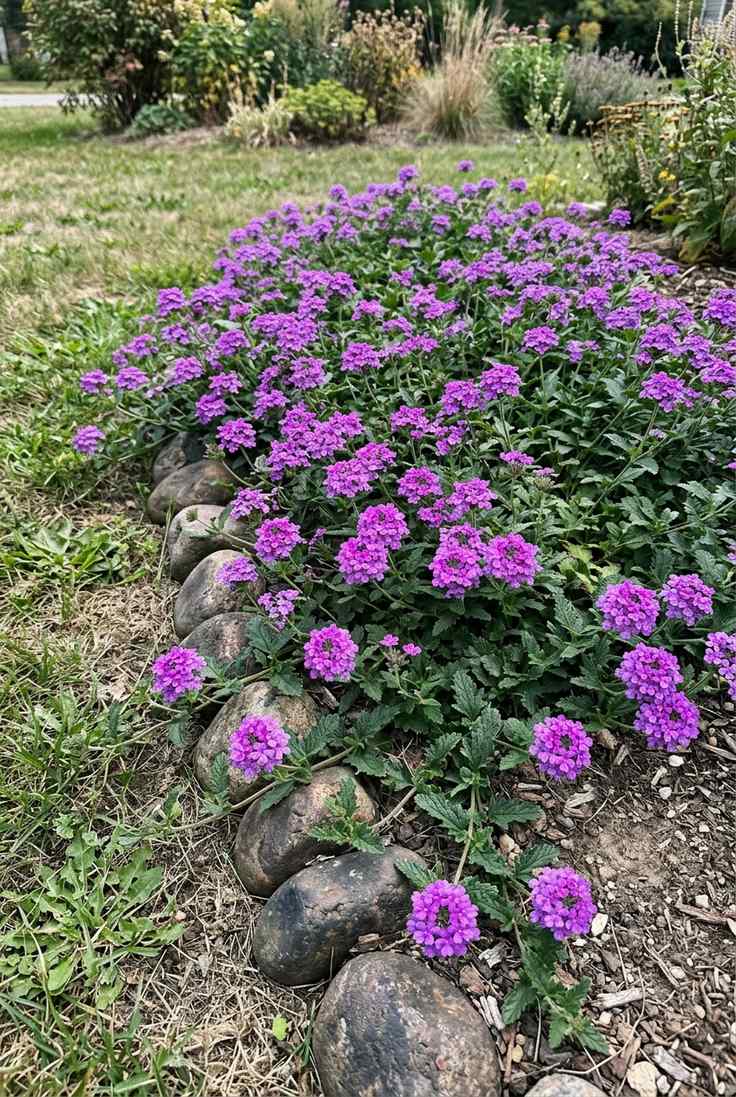
If you want the longest show, this is your plant: bright purple blooms that start in spring and continue until frost.
The University of Arkansas extension describes it as a rampant perennial about a foot (30 cm) tall and 3 feet (90 cm) wide. One plant covers a lot of ground in a single season.
Avoid wet, poorly drained soil. In the northern part of zone 5 the species isn’t reliably winter hardy, and it’s often grown as an annual there.
Sun for Part of the Day
Morning sun, afternoon shade, or light that moves around. These four are flexible.
6. Serbian Bellflower
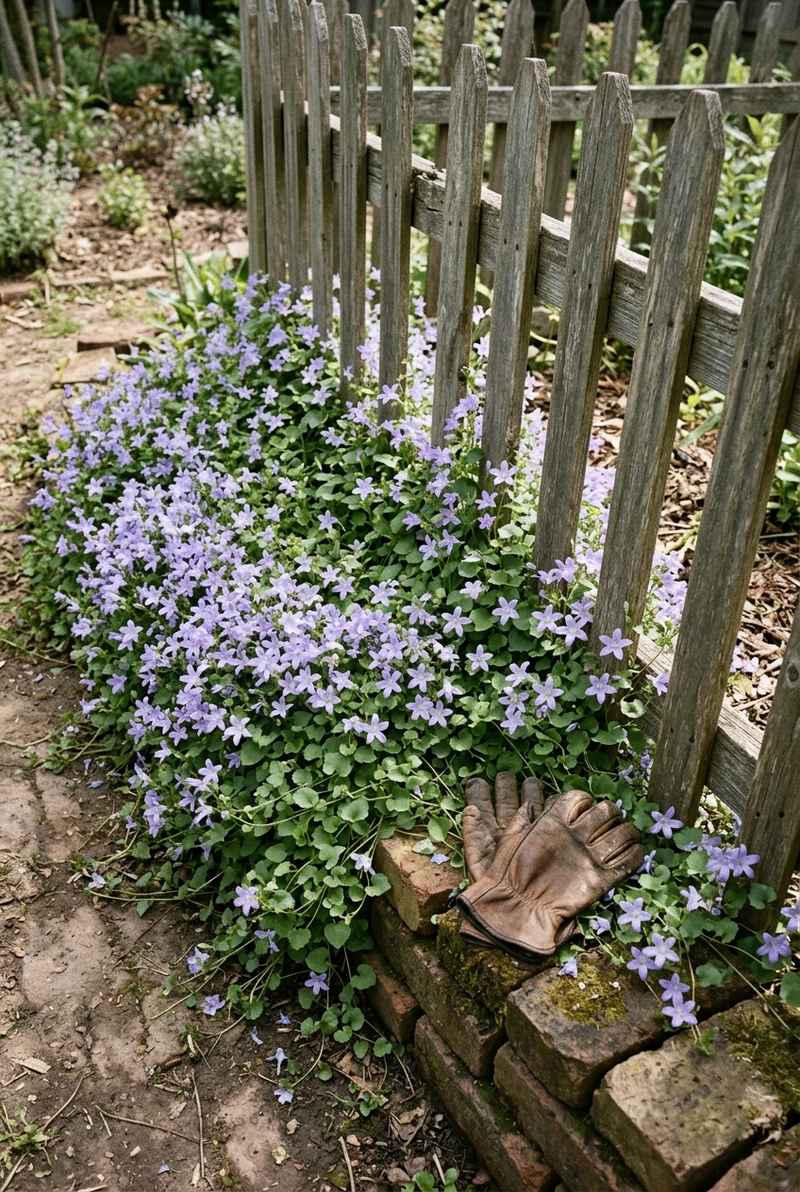
Lavender-blue stars, hundreds of them, spilling over a wall edge in late spring.
It spreads quickly, but it’s easy to control because the stems trim back without a fight. In hot-summer climates it prefers part shade and regular moisture.
It doesn’t do well where summer nights stay above 70°F (21°C), so gardeners in the hot, humid South should pick something else from this group. Deer usually leave it alone.
7. Rozanne Geranium
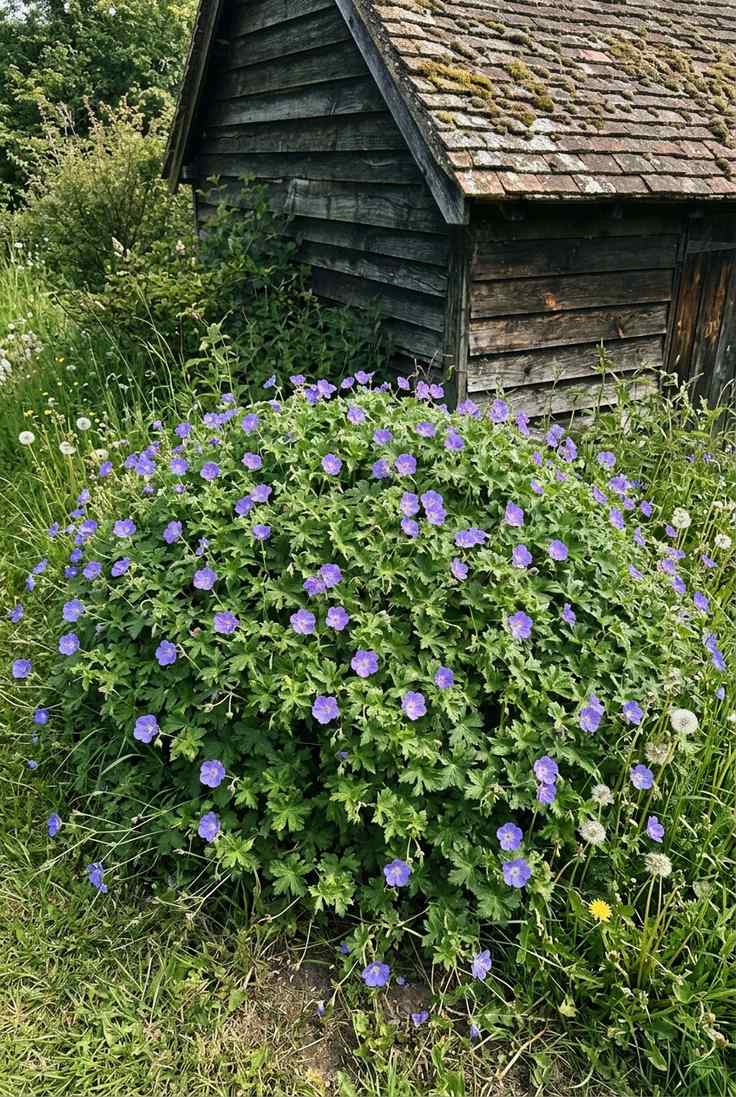
Not a creeper. A clump.
I’m including it anyway, because three plants set close together cover the ground as well as any runner, and the violet-blue flowers begin in late spring and keep coming for most of the summer. That’s longer than most of this list.
It tolerates sun or part shade but flowers best in full sun. NC State lists it as resistant to deer and rabbits, with excellent heat tolerance.
8. Creeping Mazus
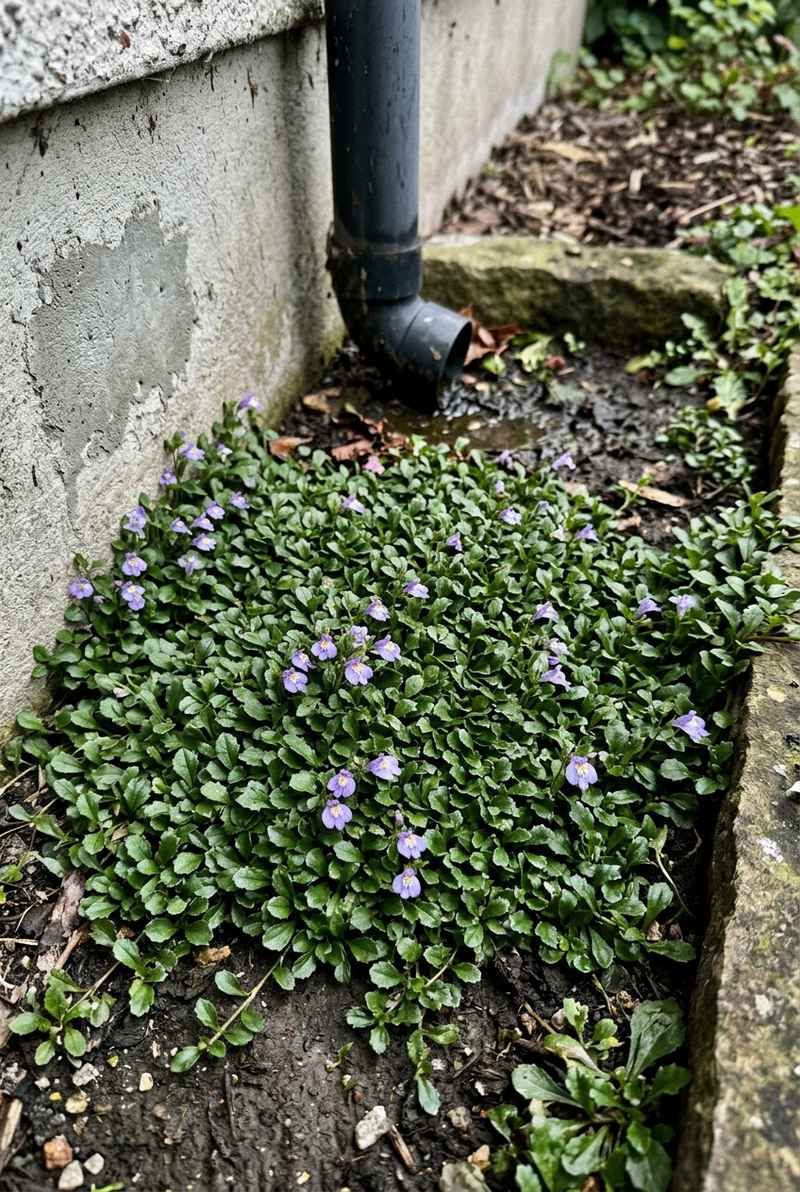
One of the flattest plants on the list, at 2 to 3 inches (5 to 8 cm) tall.
Tiny purplish-blue flowers with yellow and white markings cover it in early summer. NC State says it stands up well to foot traffic and can even be mowed, which makes it a real lawn alternative for a small damp patch.
Unlike the sun group, it likes medium to wet soil.
Check before you plant
NC State also notes that some northern states treat mazus as an invasive weed. The stems root wherever they touch the ground, so ask your local extension office before planting it near a lawn or a natural area.
9. Bugleweed
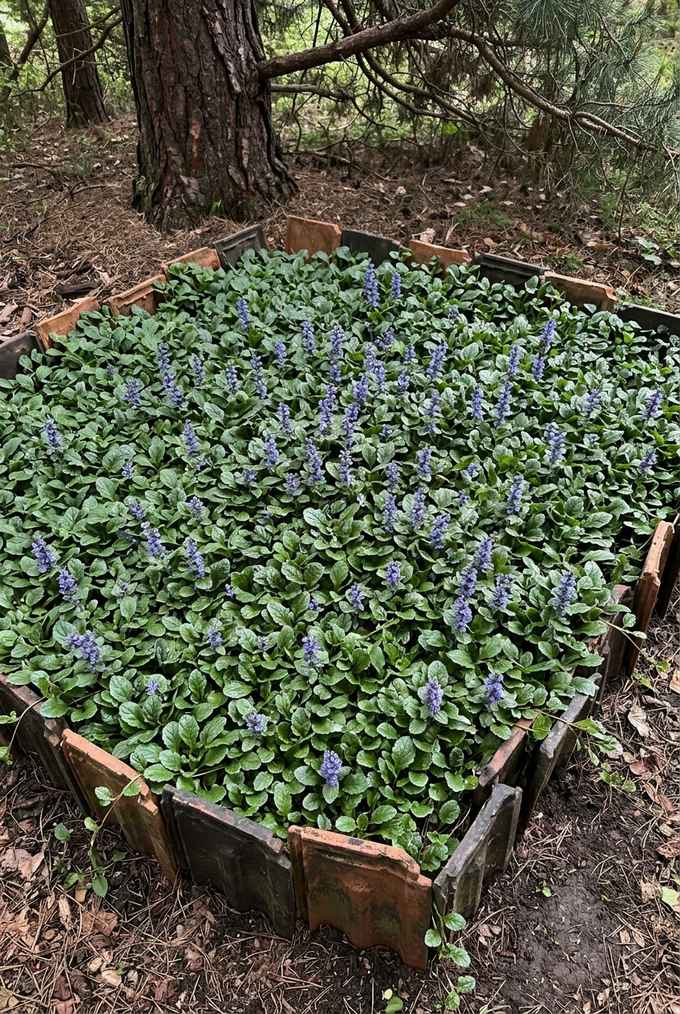
Bugleweed splits gardeners down the middle.
It covers shady, difficult ground fast, with glossy leaves and short blue-violet flower spikes in May and June. It also spreads by runners into lawns and flower beds, and NC State says other regions of the country list it as invasive.
One gardener on the UBC Botanical Garden forum made the case for it in a single sentence: “Yes, it spreads, but that’s what ground covers do.”
Fair. I’d use it only where it’s boxed in by paving or a deep edge, and never beside a lawn.
Save this to PinterestMostly Shade
Under trees, on the north side of the house, along a fence that blocks the afternoon. These five flower without much direct sun.
10. Creeping Woodland Phlox
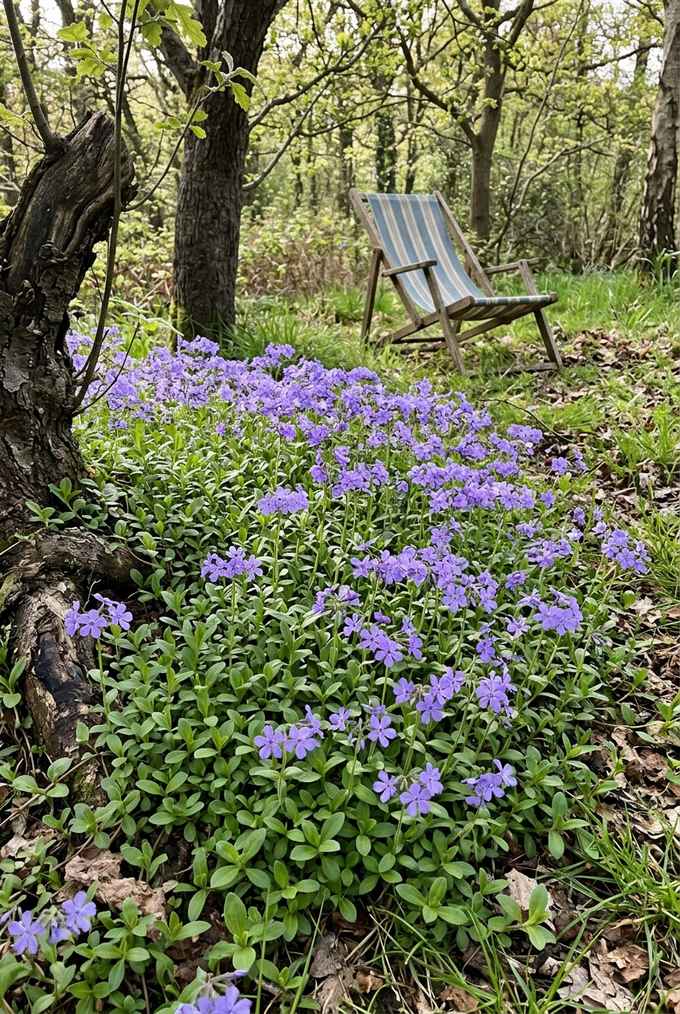
Creeping phlox has a shade-loving cousin, and it’s a native.
This one comes from the Appalachian mountains, and it spreads by leafy stems that root as they go to form a mat. ‘Sherwood Purple’ is the variety to look for: stems only 6 inches (15 cm) tall and very fragrant purple-blue flowers in spring.
Keep it watered through its first year. After that it’s very drought tolerant, and it even takes light foot traffic.
11. Dwarf Crested Iris
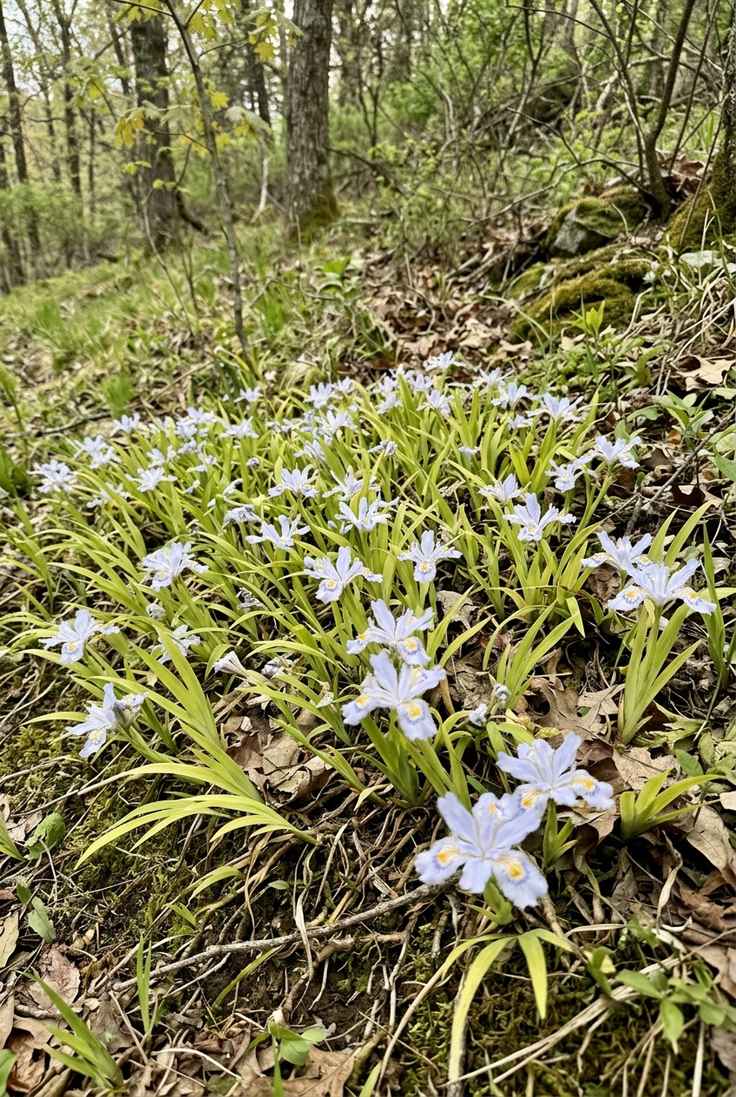
A tiny native iris that behaves like a ground cover. I didn’t know that was allowed.
Pale blue to lavender flowers with gold crests open in April on plants only 3 to 6 inches (8 to 15 cm) tall. It naturalizes quickly by branching rhizomes, and it tolerates close to full shade.
Part shade is the sweet spot. In full sun the soil has to stay consistently moist, so I’d keep it under trees where it grows wild anyway.
12. Spotted Dead Nettle
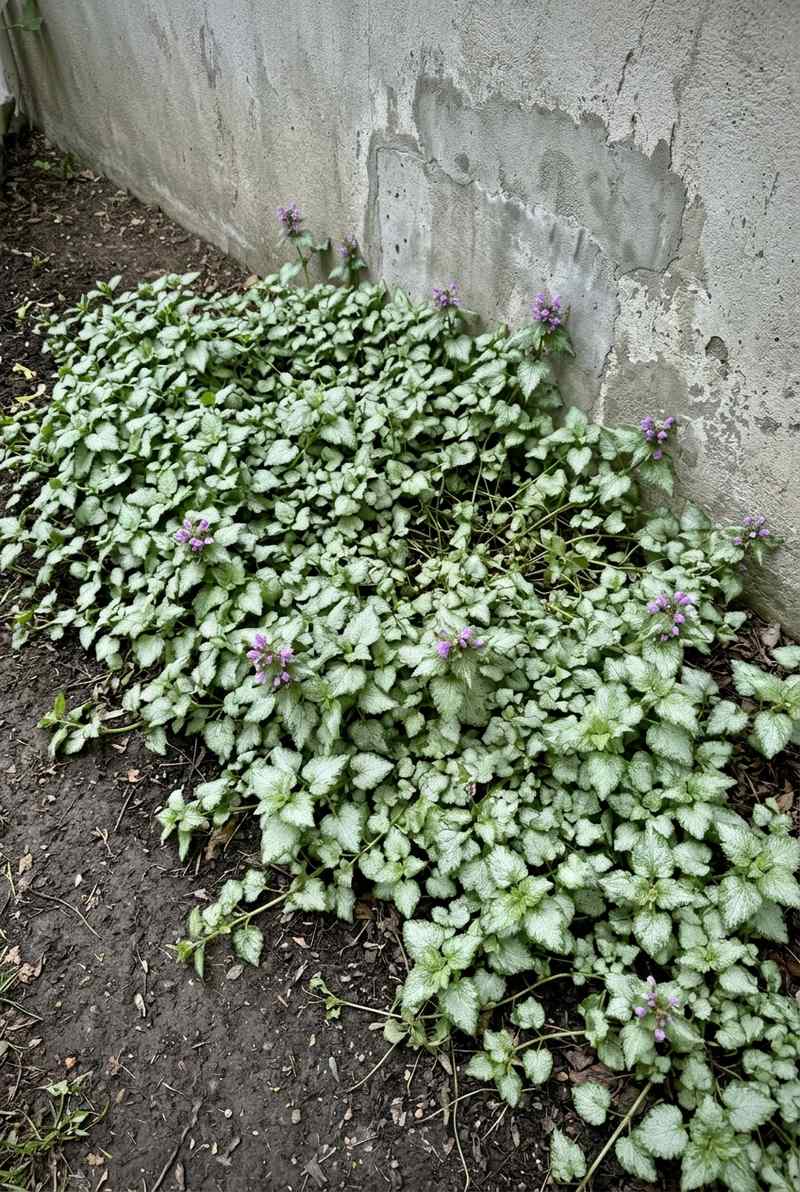
Terrible name. Lovely plant.
The leaves are silvery green with big silver blotches, so it lights up a dark corner even when it isn’t blooming. Clusters of small flowers, purple-lavender in many varieties, show up from spring into summer.
NC State calls it vigorous but easy to control and not aggressive, which is exactly what I want from a shade filler. Keep it out of foot traffic, and out of hot sun, where the leaves scorch.
13. Common Blue Violet
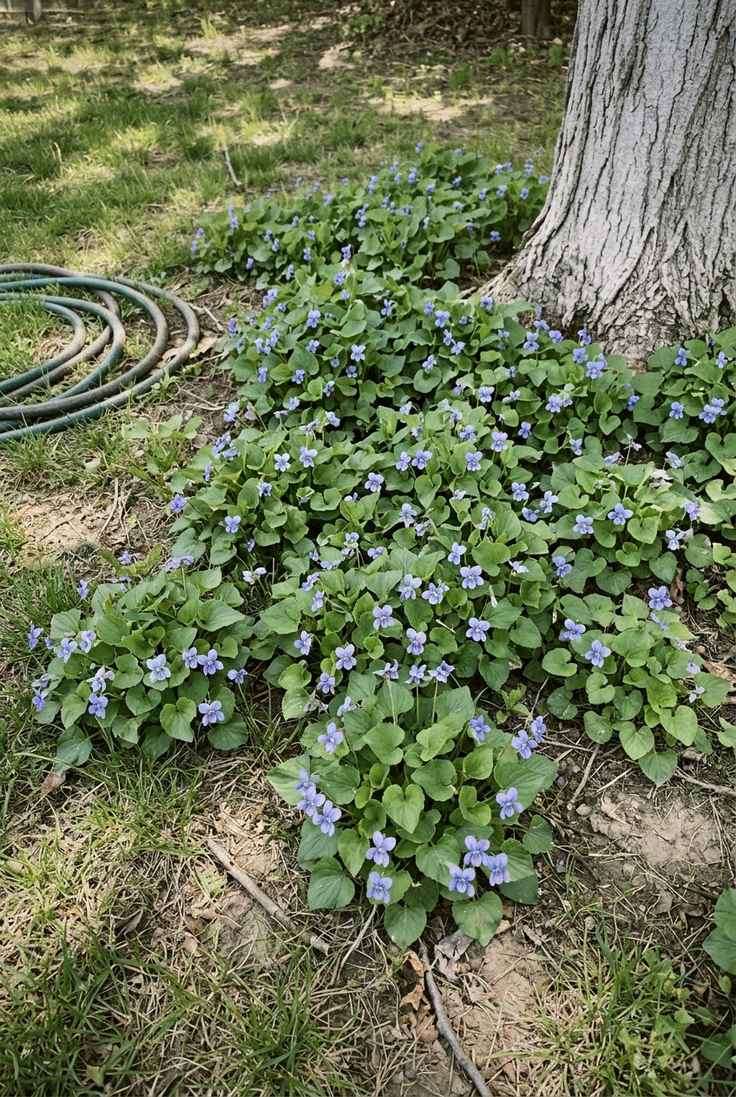
You may already own this one. It’s the native violet that pops up in lawns.
Big blue-violet flowers on heart-shaped leaves, starting in April. It grows in nearly any light, and it even tolerates black walnut.
Here’s the trade: it self-seeds freely and can turn weedy in rich, moist soil. Under trees where grass has given up, that’s a feature. Next to a tidy flower bed… less so.
14. Lilyturf
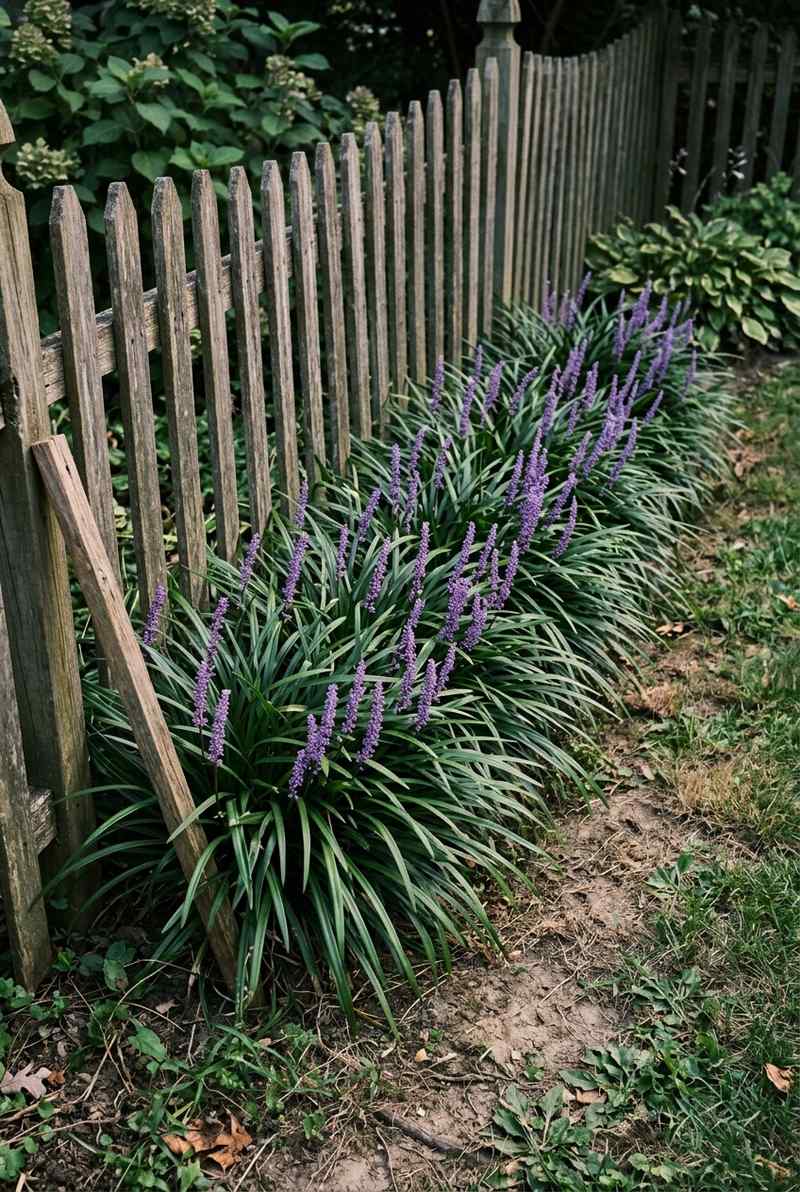
The grassy one, and the last to flower.
Violet-purple spikes rise above the leaves in August and September, after most of this list is done. It tolerates deer, rabbits, drought and erosion, and in warm southern climates the foliage is evergreen.
Read the tag closely. Liriope muscari grows in slow clumps, while its lookalike Liriope spicata spreads aggressively.
The One I Left at the Garden Center
Back to that flat of periwinkle.
It does everything a ground cover is supposed to do, and that’s the problem. Missouri Botanical Garden notes it can spread aggressively into adjacent lawns and garden areas.
NC State Extension goes further: it’s classified as invasive in North Carolina, and its aggressive nature has put it on many states’ most unwanted lists.
So the flowers are lovely, and I put the pot back (a little sadly). If you want that same lavender-blue in shade, woodland phlox and crested iris are the natives I’d plant in its place.
Purple From March to September
This is the part I had the most fun planning.
No single plant here blooms all season, but together they hand off like a relay. Creeping phlox opens in March, crested iris and woodland phlox follow in April, bellflower and poppy mallow take May and June, thyme and ice plant carry summer, and lilyturf finishes in September.
Tip
Pick one early bloomer, one for midsummer and one late bloomer that all suit your light. Three plants, and something purple is open for most of the growing season.
For more plants that cover ground and block weeds while they’re at it, I keep a separate list of ground covers that choke out weeds. The dry-sun group above also overlaps with my drought-tolerant flowers.
Questions About Purple Ground Covers
Which ground cover with purple flowers spreads fastest?
Bugleweed, mazus and ‘Homestead Purple’ verbena are the quick ones. Fast isn’t always good: bugleweed and mazus are both flagged as invasive in parts of the country, so check locally first.
What purple ground cover can I walk on?
Creeping mazus stands up well to foot traffic, and creeping woodland phlox takes light traffic. Creeping thyme is best between stepping stones, where feet land on the stones more than the plant.
Which purple ground cover grows in full shade?
Dwarf crested iris tolerates close to full shade, and spotted dead nettle grows in deep shade. Common blue violet handles nearly any light at all.
Is there a native ground cover with purple flowers?
Yes. Purple poppy mallow, creeping woodland phlox, dwarf crested iris and common blue violet are all native to parts of the United States, and ‘Homestead Purple’ is a selection of a native verbena. Missouri Botanical Garden has a good profile of poppy mallow if you’ve never seen one.
Twelve Pots I Didn’t Buy
I went back the next weekend and bought creeping phlox for the sunny bank and three crested iris for under the maple. Far fewer pots than twelve, and no regrets.
Match the plant to the light first. Then read the “spreads” line before the flower color, and check your state’s invasive list for anything that runs.
Do that and the purple takes care of itself.