How to Prune a Lilac Bush (And When Pruning Costs You the Flowers)

- When to prune
- Overgrown lilacs
- The 3-year method
- Why it won’t bloom
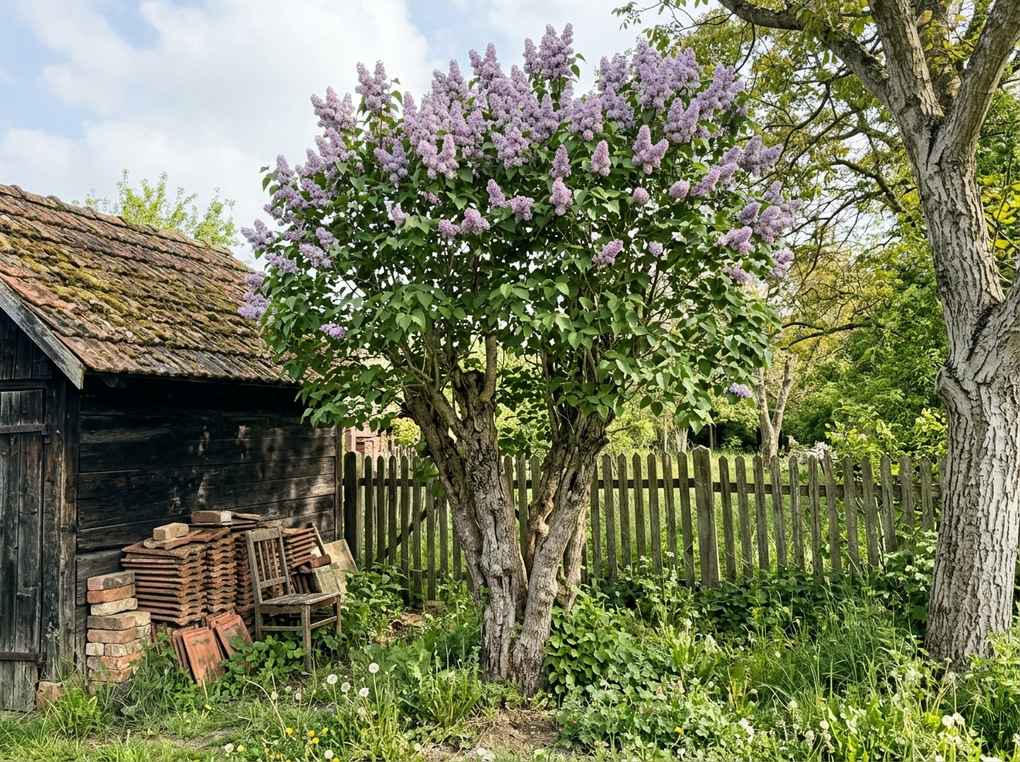
The lilac behind the shed was here long before I was, and it had grown taller than the shed itself. Every May it bloomed beautifully… twelve feet up, where the only ones enjoying the scent were the birds.
My first instinct was to wait for a quiet weekend in November and cut the whole thing down to shoulder height. I’m very glad I looked it up before I found the loppers.
Pruning a lilac isn’t hard. But there are three different cuts, each with its own season, and mixing them up is how people lose a year of flowers (or three).
The Short Version
- Lilacs bloom on last year’s wood. Next spring’s flower buds form in summer and sit on the branches all winter
- Trimming, shaping and deadheading: do it soon after the flowers fade, never in fall
- Old, overgrown lilac: remove one third of the thickest stems at the ground each year for three years
- Cutting the whole shrub down works, but expect about three years without flowers
- If you only remember one thing: no trimming of branch tips after midsummer.
The Buds Are Already There
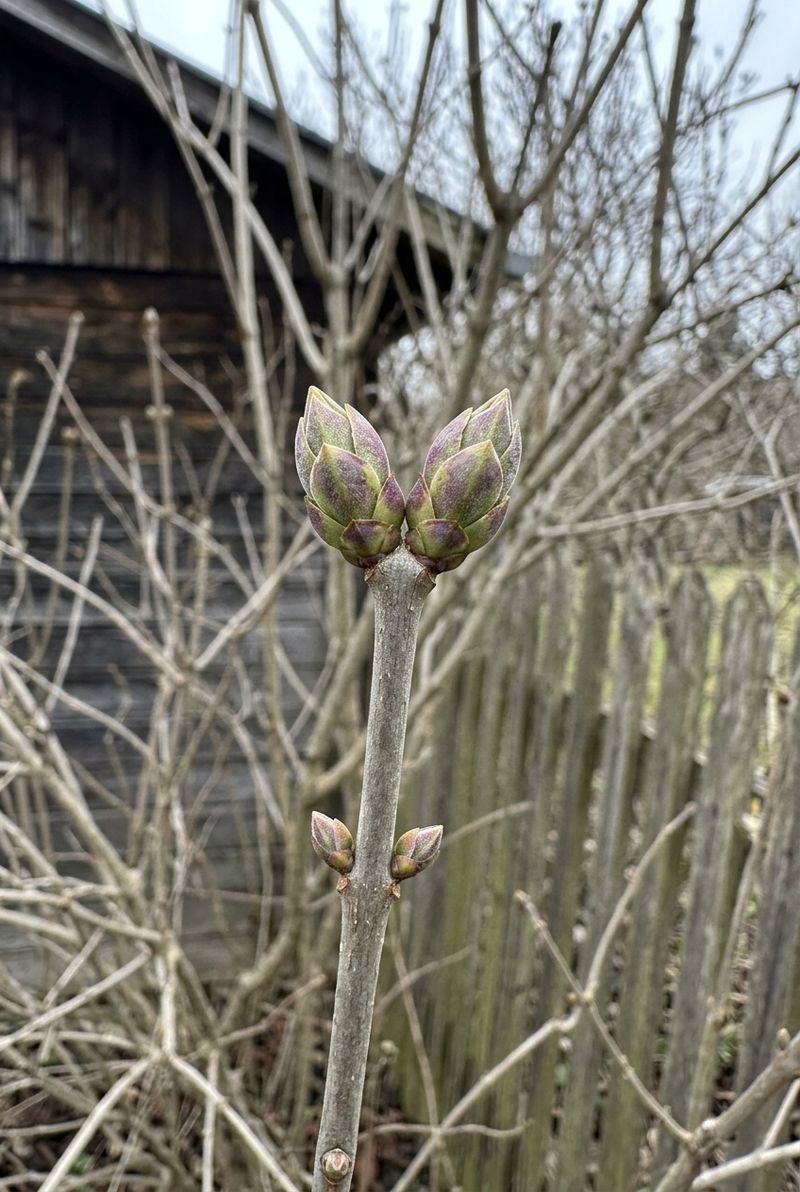
This is the whole secret, so I’ll say it plainly.
A lilac makes next year’s flowers this year. Oregon State University Extension says the buds begin forming in summer, and Nebraska Extension adds that they then sit on the branches through fall and winter before opening in late spring.
So from about midsummer on, every branch tip you snip has a flower inside it.
That’s why the usual shrub advice, “prune while it’s dormant,” backfires on lilacs. One gardener on the Garden.org forum summed it up better than I can: “You CAN prune then, but you won’t get flowers.”
Three Cuts, Three Calendars
What confused me at first is that the experts seem to disagree. One source says prune right after bloom, another says late winter.
They’re both right. They’re talking about different cuts.
| The cut | Best time | What it costs you |
|---|---|---|
| Deadheading and light shaping of branch tips | Soon after the flowers fade | Nothing, if you finish by early summer |
| Removing whole old stems at ground level | Right after bloom, or late winter | Only the flowers those stems would have carried |
| Cutting the entire shrub to 6-8 in (15-20 cm) | Late winter | All flowers for about three years |
Think of the first as grooming and the second as the real work of keeping a lilac young. The third is the emergency option.
Ten Minutes Every Year
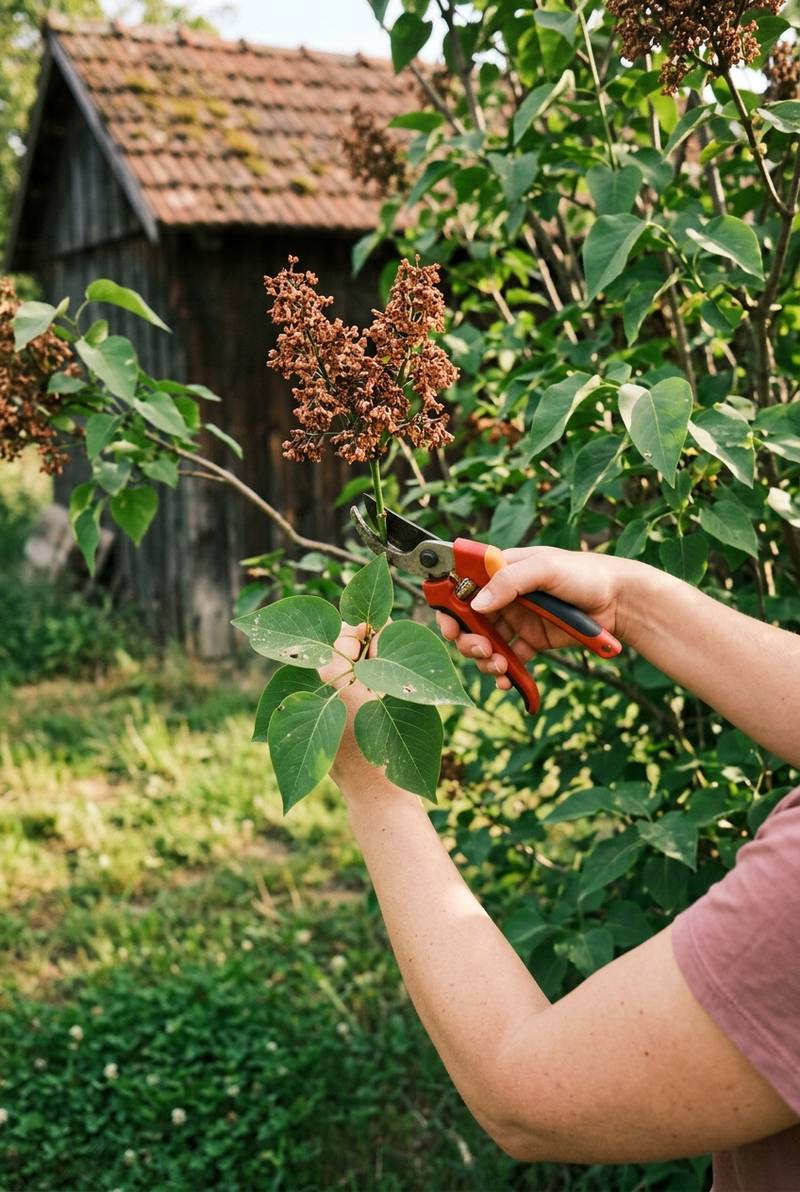
A healthy lilac needs very little.
Once the flowers turn brown, snip off the spent clusters. Oregon State says removing faded flowers each year stimulates new growth and encourages more blooms the following spring.
Then look at the base. Nebraska Extension suggests starting a routine once the shrub is four or five years old: each year, take out two or three of the thickest stems right at ground level, along with anything dead or unhealthy.
Thick old stems aren’t just ugly. They’re the ones lilac borers go for.
Tip
Check for suckers while you’re down there. NC State Extension notes that most lilacs are grafted, so shoots coming up from the rootstock should be removed. If yours is grafted, don’t cut any main stem below the graft union either.
The Three-Year Rescue

This is the method for the lilac I inherited, and probably for yours if you’re reading this.
Each year, remove one third of the oldest, thickest stems, as close to the ground as you can. After three years the entire shrub has been replaced with young wood, and you never went a spring without flowers.
How do you know which stems are oldest? Oregon State’s description is spot on: the bark is scaly and cracked, and the wood is dry and brittle.
Use loppers for the thinner stems and a hand saw for the thick ones. Clean the blades first, since a dirty saw can carry disease into a fresh cut.
The stems you remove are usually the tallest ones too. So the shrub comes down in height a little each year, all by itself, and the new shoots from the base flower lower, where you can actually reach them.
Did you know
The arborists at Holden Arboretum, who look after a whole lilac collection, are even more cautious: they don’t remove more than 20% of the live wood at one time. So if a third feels like too much, a fifth is fine and simply takes longer.
A note on timing, because this is where the sources split. Oregon State does these cuts right after flowering. Nebraska and Holden do them in late winter, when the shrub is bare and you can see what you’re doing.
I do mine in late winter. I lose the flowers on the stems I take out, but those were the ones blooming above my head anyway.
Save this to PinterestCutting It to the Ground
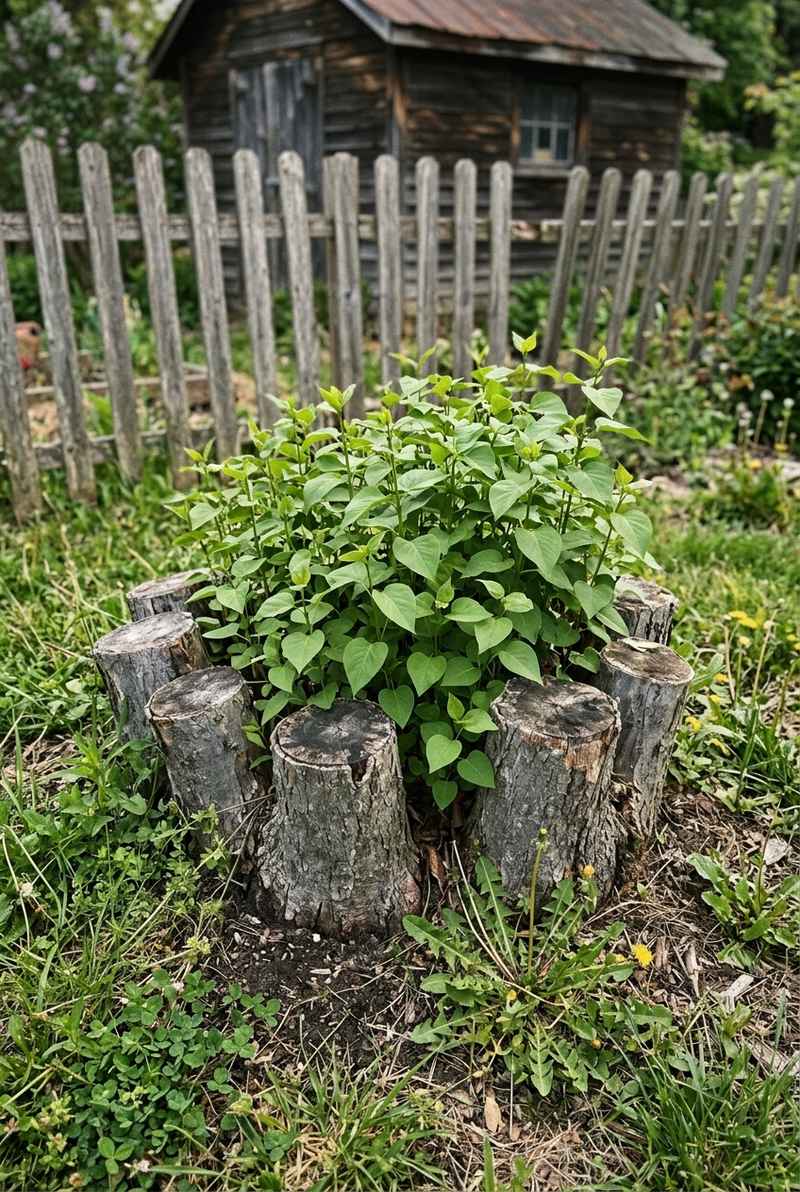
Yes, you can. Lilacs survive it.
Nebraska Extension describes the method: in late winter (they mean March or early April, before growth starts), cut the entire plant back to 6 to 8 inches (15 to 20 cm) from the ground. The following winter, keep several strong, healthy new shoots as the framework and remove the rest at ground level.
It gets the job done in one afternoon. Here’s the price:
It removes every flower bud, and Nebraska says flowering is delayed for about three years. It also triggers a huge flush of new shoots at the base, often far more than you want.
So it’s the same three years as the gentle method, only without flowers in the meantime. I’d save it for a lilac that’s mostly dead wood.
The flat-top haircut
The most common lilac pruning job is also the worst one: trimming the whole shrub evenly down to 3 or 4 feet (about 1 m). Nebraska Extension calls this shearing “often the worst option.” It leaves the thick old stem bases in place for borers to attack, which ends in dead sections, and if it’s done at the wrong time it removes the flower buds as well.
When a Lilac Won’t Bloom
Pruning is the usual suspect, but not the only one.
It was pruned in fall or winter. The buds went out with the clippings. Leave it alone and it’ll recover next year.
It was cut down hard. After a full renovation, about three years without flowers is normal.
It’s in too much shade. Oregon State calls sunlight a key factor for lilac blooms and suggests thinning overhead tree branches.
Trees grow. A lilac planted in sun twenty years ago may be sitting in shade now.
A late frost got the buds. NC State notes that a late frost will sometimes kill them, which is why lilacs are best planted in a protected spot.
It’s simply old. Lilacs flower most on healthy, young growth. A shrub that’s all thick gray trunks needs the three-year rescue more than fertilizer.
If this sounds familiar, it’s the same old-wood logic behind most hydrangea trouble, which I went through in why your hydrangea isn’t blooming.
Quick Lilac Questions
Can I prune a lilac in the fall?
You can, and the plant will survive. You’ll be cutting off next spring’s flowers, though, so the only fall job I’d do is removing dead or broken wood.
How big does a lilac get if I never prune it?
Bigger than most people expect. NC State lists common lilac at 8 to 16 feet (2.5 to 5 m), and Nebraska Extension says it may reach 15 to 20 feet (4.5 to 6 m).
The leaves turn white and powdery every summer. Should I cut it back?
No. That’s powdery mildew, and lilac foliage is prone to it. Removing a few old stems to open up the center helps more than cutting the whole shrub.
Is it the same for other spring shrubs?
Mostly, yes. Nebraska Extension says the three-year method also works on forsythia, mock orange, weigela and twig dogwoods. Hydrangeas have their own rules, which I covered in how to prune hydrangeas.
Flowers at Nose Height
My lilac is two winters into its rescue. This May, for the first time, there were flower clusters low enough to bury my face in.
Old stems out at the base, a few each year. No snipping of branch tips after midsummer. That’s the whole method.
If you’d like the original advice, Oregon State and Nebraska Extension are the two guides I keep going back to.