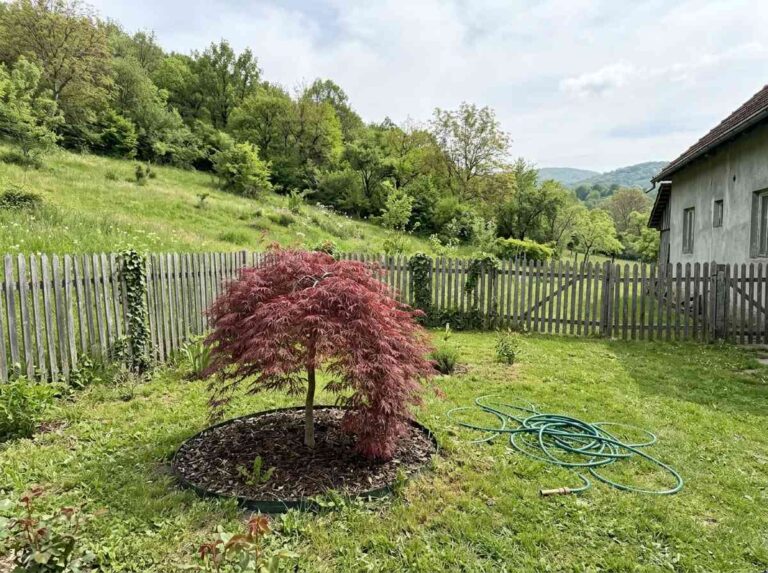
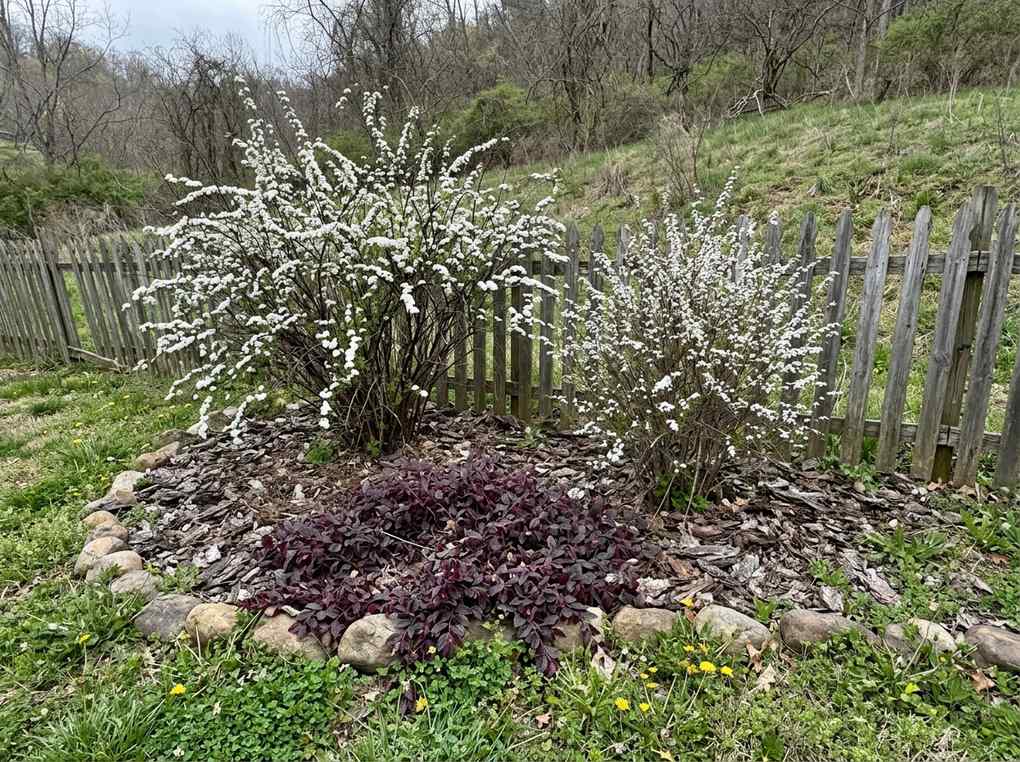
10 Weeping Shrubs That Stay Small Enough for Any Yard

- Arching branches
- Sorted by season
- Zones 3-10
- Typically under 8 feet
I have a weakness for anything that droops. Fountains, old willows, my own shoulders by Friday.
So when I ran out of room for weeping trees, I started looking lower. Shrubs do the same thing at knee height: branches that arch up, give in, and spill toward the ground.
These 10 weeping shrubs typically stay at 8 feet (2.5 m) or less, and most are far smaller. I’ve sorted them by the season when each one looks its best, so you can have something cascading in every month.
Quick Summary
- 10 shrubs with a naturally weeping or arching habit, typically 8 feet (2.5 m) tall or less
- Sorted by best season: 4 for spring, 3 for summer and fall, 3 evergreens
- The arching shape is simply how these shrubs grow
- Five popular “weeping” shrubs that get much bigger than people expect
- Best starter pick: Snowmound spirea. Hardy in zones 3-8, 2 to 4 feet (60 to 120 cm) tall, and no serious problems.
Don’t Give a Fountain a Haircut
One rule first, because it decides how every shrub here will look in five years.
A weeping shrub is a fountain. Shear it into a ball and you cut off the part that weeps. A longtime contributor on the UBC Botanical Garden forum describes the right way: every so often, take out a few of the oldest canes right at the ground, and leave the rest to arch.
Timing matters too. The spring bloomers below flower on wood they grew last year, so Missouri Botanical Garden says to prune them immediately after flowering.
Prune in fall or winter and you cut off next spring’s show.
Spring: Fountains of White
1. Bridal Wreath Spirea
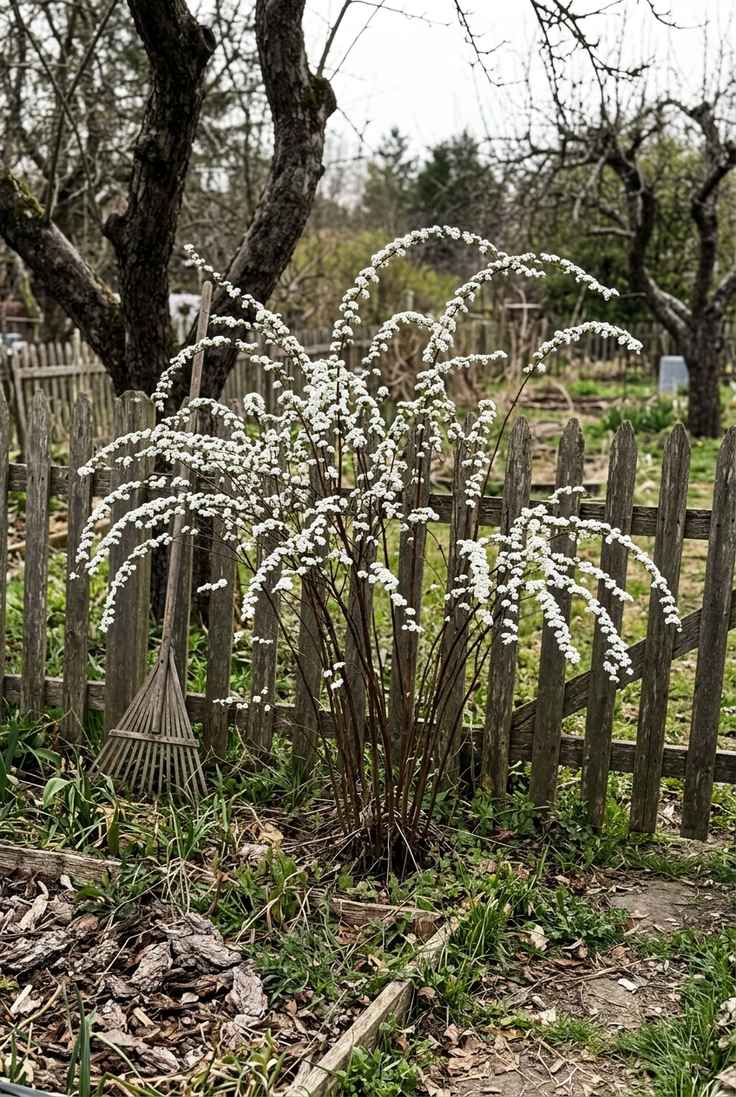
The classic. If your grandmother had one weeping shrub, it was this (mine did).
In March and April the bare, arching branches are lined with small double white flowers from base to tip. It’s easy to grow in average soil and tolerates some drought.
It’s also the tallest shrub on this list, 4 to 8 feet (1.2 to 2.5 m) tall and wide, and it gets open and leggy as it ages. Taking out the oldest canes after flowering is what keeps it graceful.
2. Thunberg Spirea
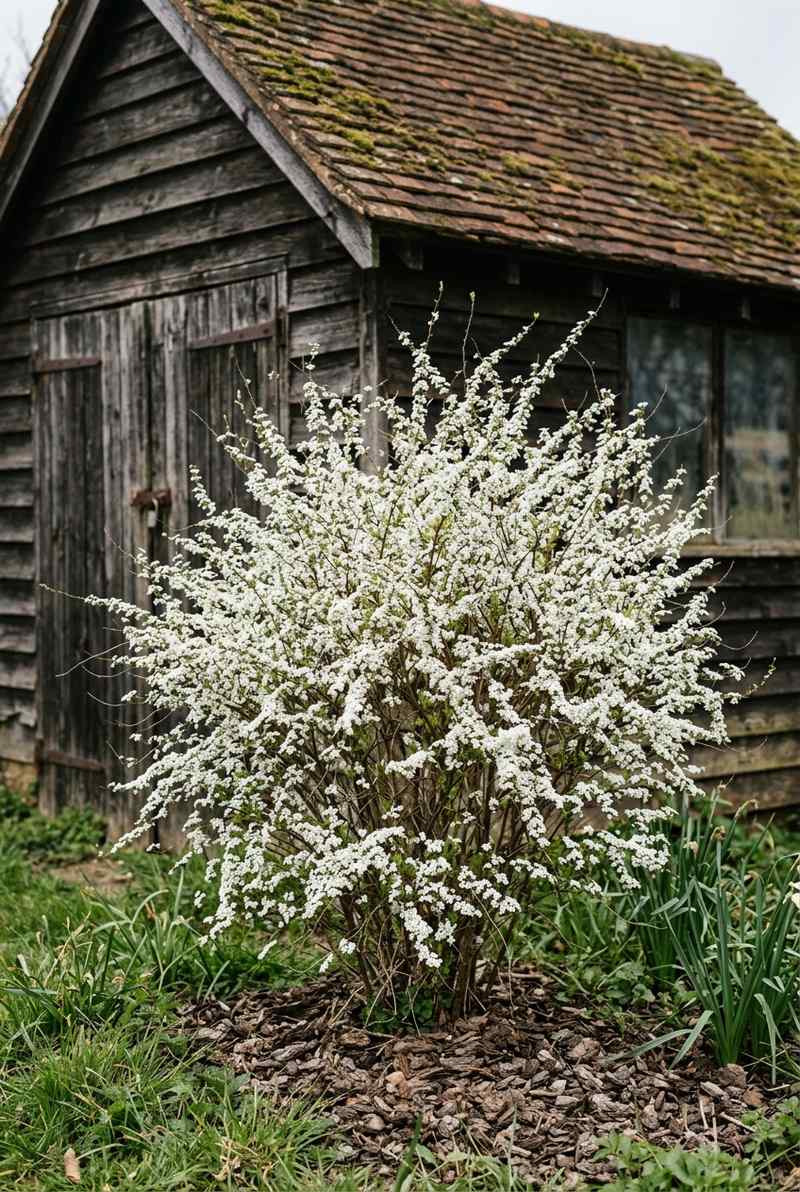
A finer, lighter version of the same idea.
The branches are thin and wiry and arch outward, and the white flowers open in April before the leaves. People call it baby’s breath spirea, which tells you how delicate it looks.
It stays 3 to 5 feet (90 to 150 cm) tall and wide. Like its bigger cousin, it can get a little leggy over time.
3. Snowmound Spirea
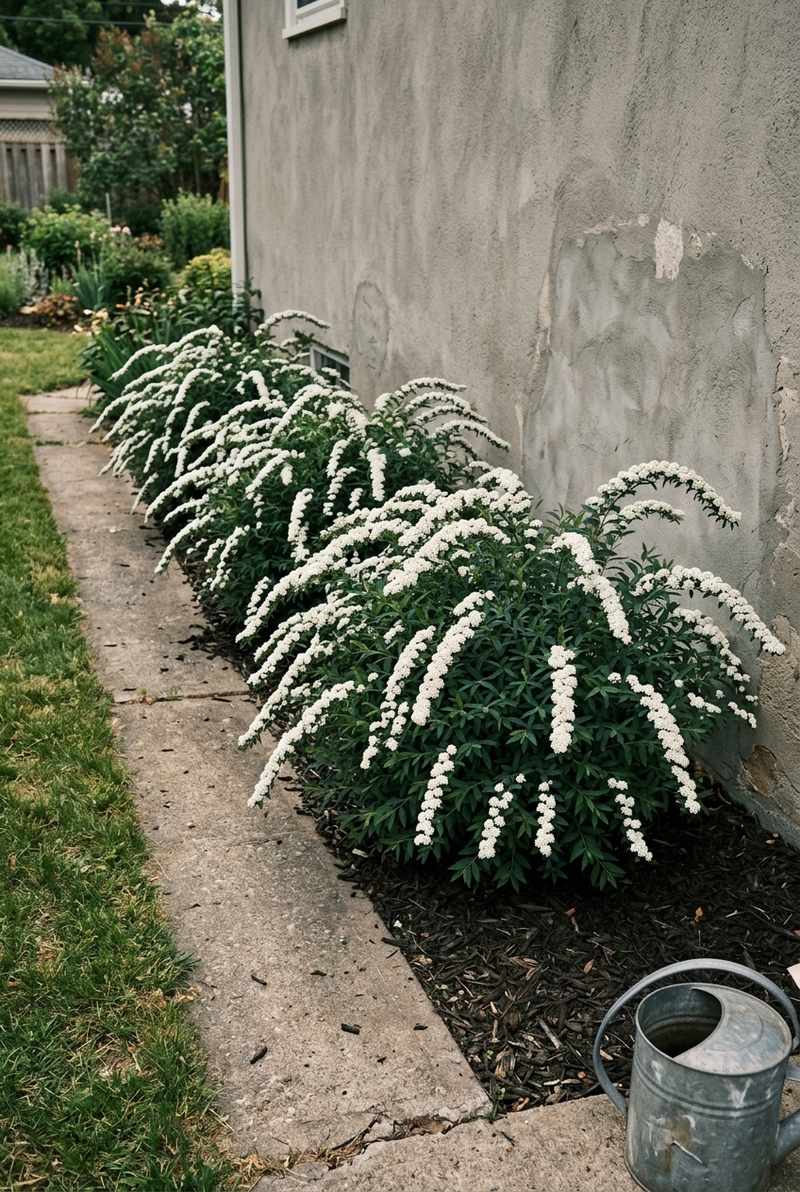
My starter pick. Small, cold-hardy, and it doesn’t ask for anything.
Here’s the detail I love: the flowers and leaves all sit on one side of each arching branch. So every stem looks like it’s been frosted along one edge.
It blooms in late spring, a few weeks after the two spireas above. Plant all three and you get white from March into June.
4. Nikko Slender Deutzia
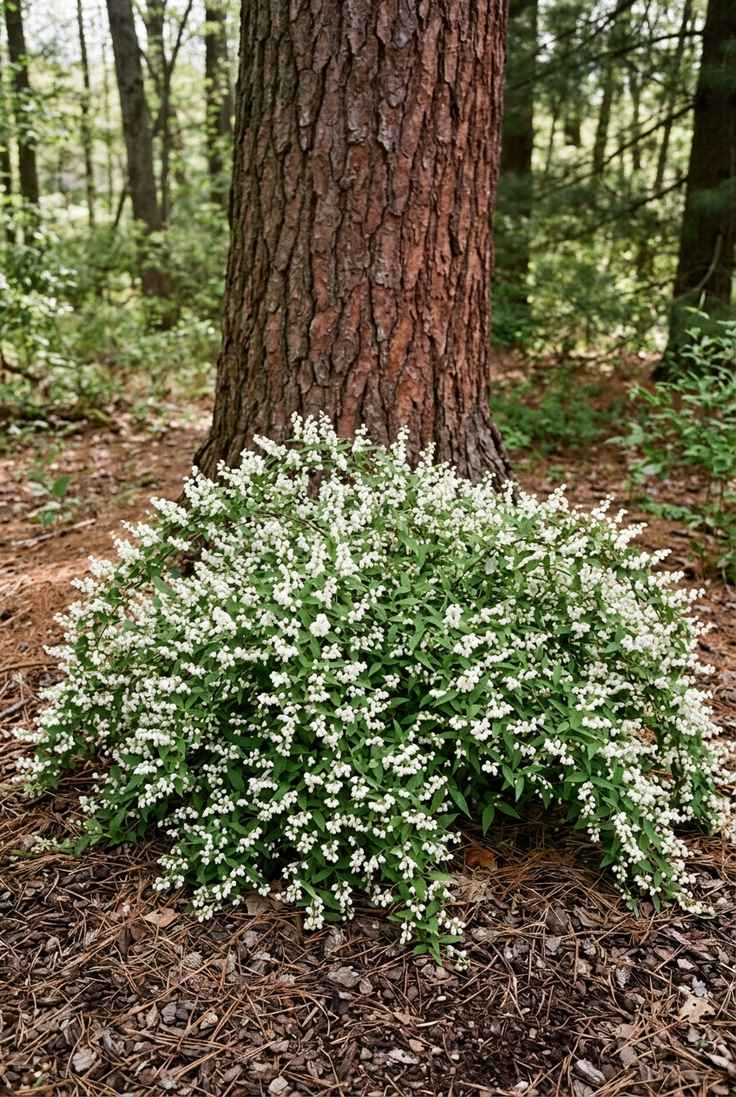
The smallest thing here. Barely knee-high.
It forms a graceful, spreading mound about 2 feet (60 cm) tall and up to 5 feet (1.5 m) across, and for ten days to two weeks in spring it’s covered in tiny white flowers. In fall the leaves turn deep burgundy.
It tolerates clay soil. Where summers are hot the foliage looks best in part shade, because the leaves can bleach in full sun and high heat.
Summer and Fall: After the Flowers
5. Little Henry Sweetspire
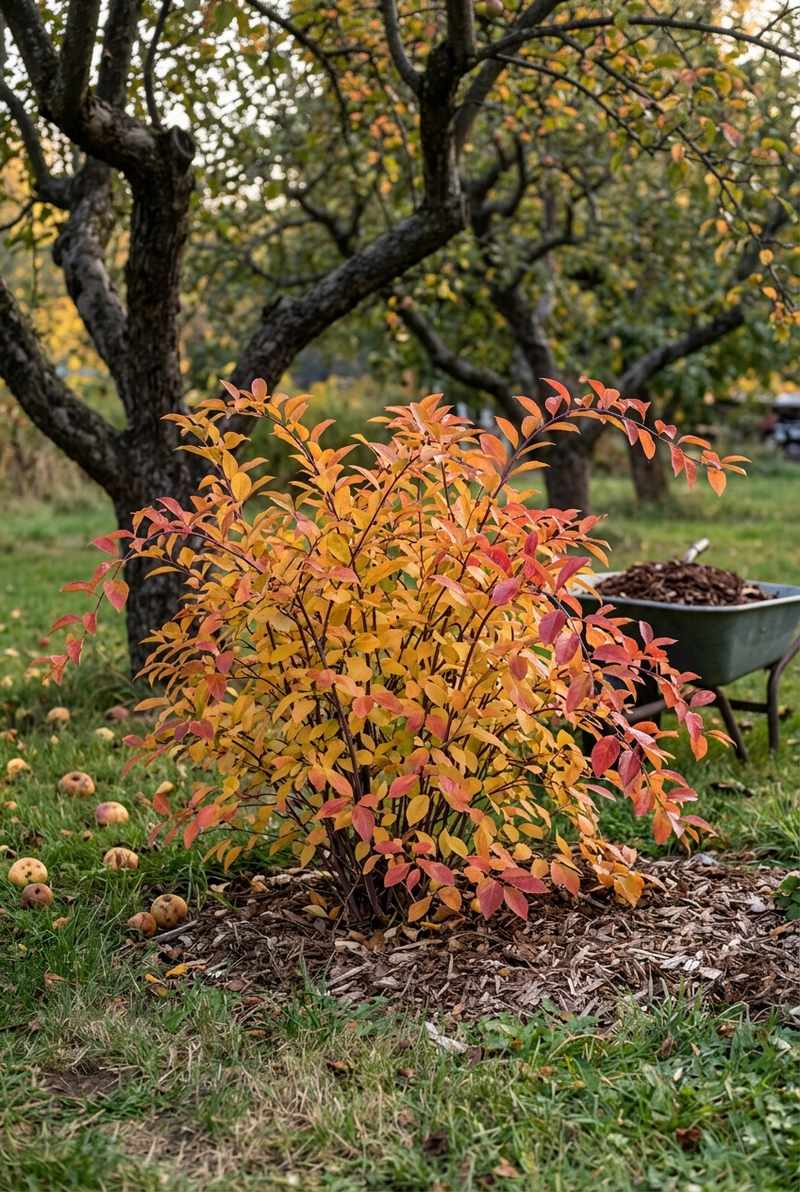
A dwarf form of a native shrub, and one of the few plants here that looks good in three seasons.
From late spring into summer, creamy white flower spires about 4 inches (10 cm) long droop from the arching branches. Then the leaves turn yellow, orange and red in fall, with the best color in full sun.
It’s adaptable to heavy clay and even poorly drained soil. Like the spireas, it blooms on old wood, so prune it right after flowering or not at all.
6. Cutleaf Stephanandra

Nobody plants this, and I can’t work out why.
There are flowers, but they’re tiny. The reason to grow it is the foliage: deeply cut leaves on branches that arch, weep downward, and root where the tips touch moist soil. Over a low wall it looks like green lace poured out of a bucket.
That rooting habit is also the warning. In good conditions it spreads quickly by suckers and rooted tips, so give it an edge it can’t cross.
Save this to Pinterest7. Purple Beautyberry
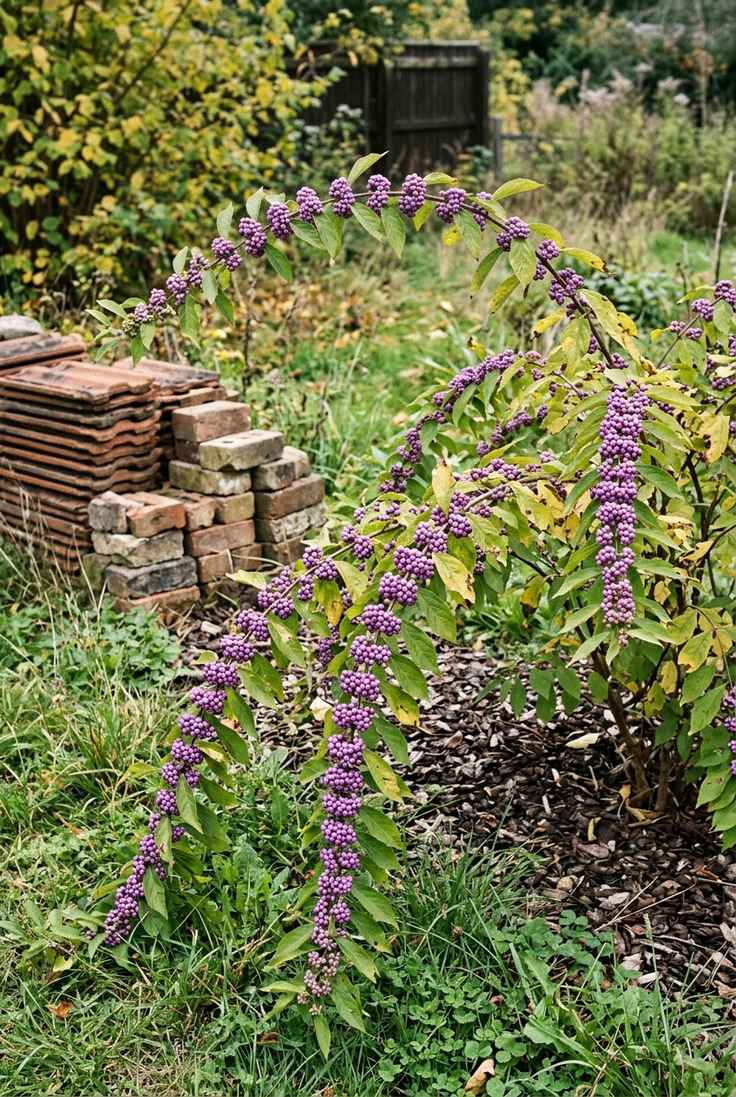
All summer this is a pleasant green shrub with long, slender branches that dip to the ground. Fine. Nothing special.
Then fall arrives and every branch is lined with clusters of lilac-violet berries, a color that doesn’t look real. It’s the reason the plant exists.
Plant two or three together, because fruiting is best in groups. In the coldest part of its range the stems can die back in winter, but that doesn’t affect the berries.
All Year: The Evergreens
8. Purple Pixie Loropetalum
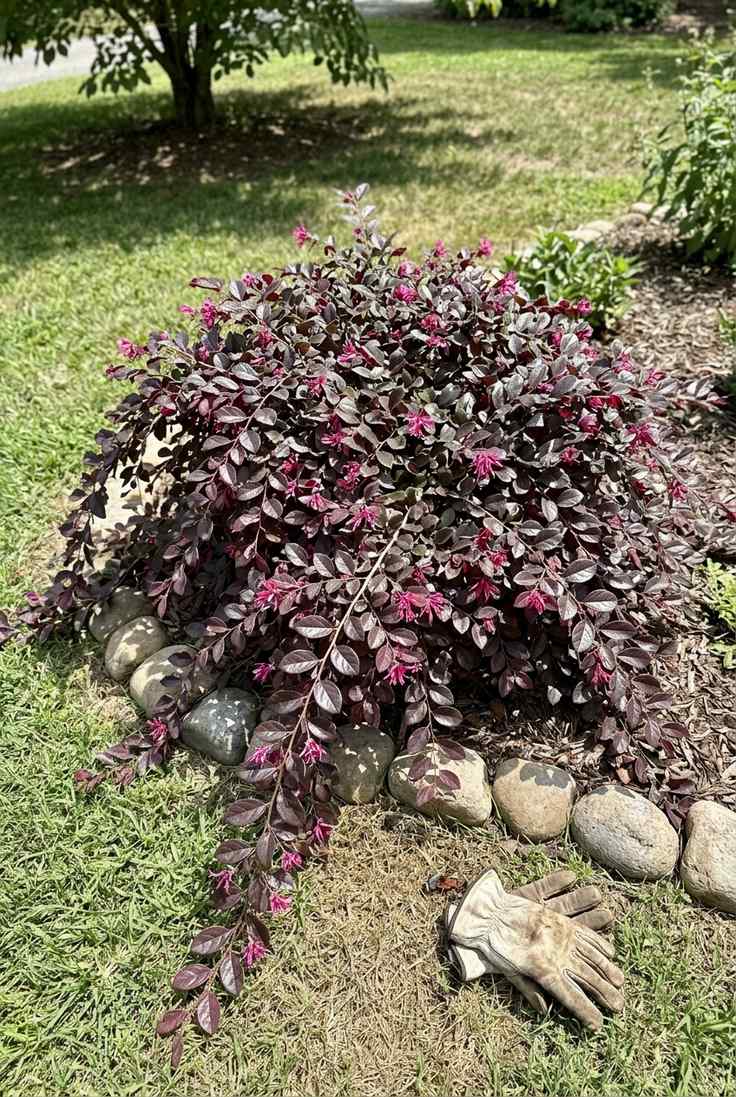
For warm zones only, and worth being jealous of if you’re not in one.
It grows just 1 to 2 feet (30 to 60 cm) tall and 3 to 4 feet (90 to 120 cm) wide, with burgundy-purple leaves that hold their color all year. Bright pink flowers come in early spring, with an occasional repeat in late summer or fall.
Mississippi State Extension describes its habit as naturally cascading and recommends it for spilling over a retaining wall. That’s exactly where I’d put it (and the leaves really do hold that color all year).
9. Drooping Leucothoe
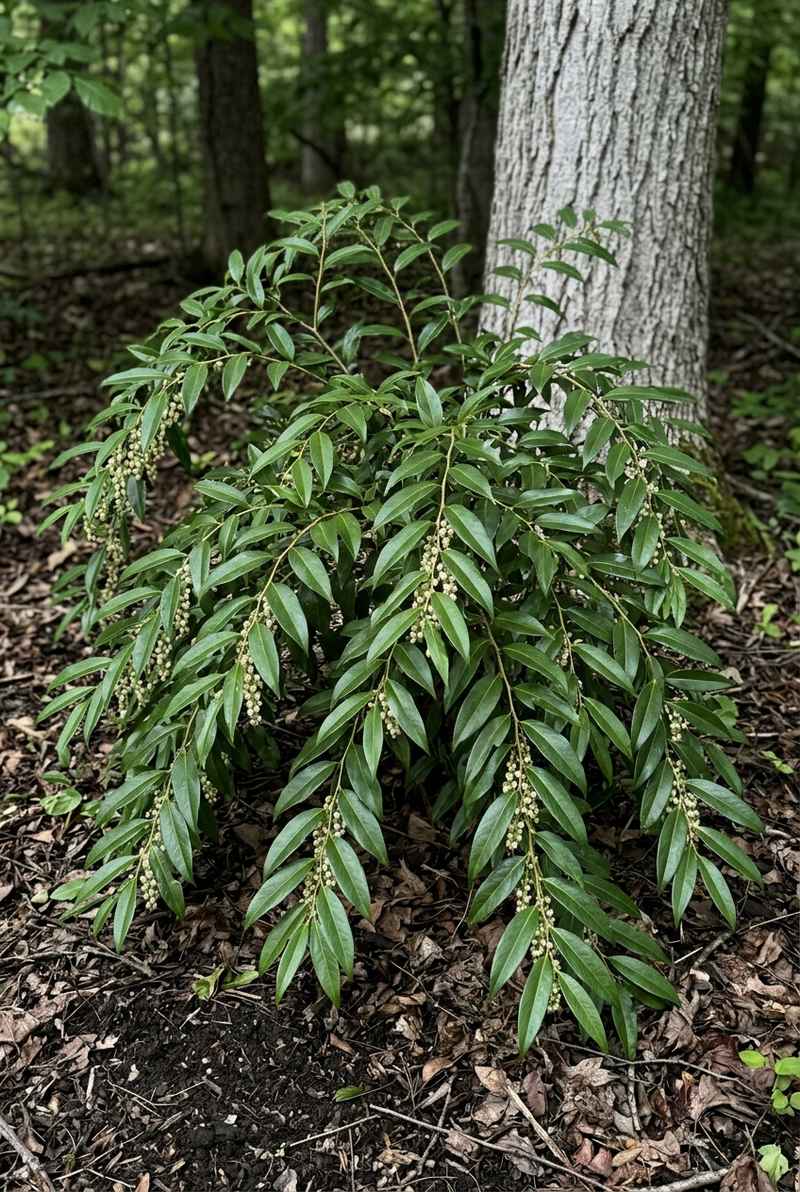
The answer for shade, and a native of the Appalachian mountains.
Evergreen leaves on arching branches, with white flowers in May. It tolerates full shade, which almost nothing else on this list does.
It doesn’t tolerate drought or wind, so give it a sheltered, moist spot.
Check before you plant
NC State Extension rates drooping leucothoe as having high-severity poison characteristics, in the leaves and flowers. If small children or pets chew on plants in your garden, choose the hemlock below for shade.
10. Weeping Canadian Hemlock
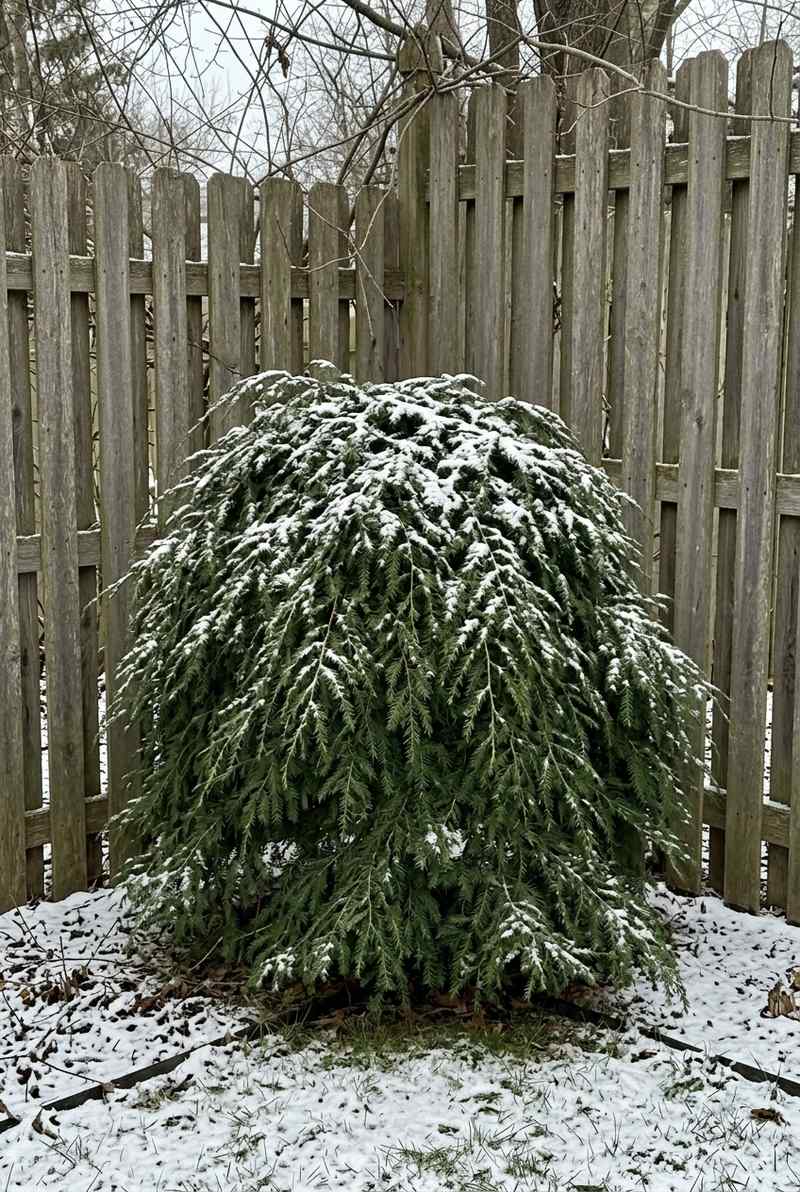
Technically a conifer. It behaves like the best weeping shrub there is.
It forms a low, wide mound of soft green that pours over itself, typically 4 to 5 feet (1.2 to 1.5 m) tall and 8 to 10 feet (2.5 to 3 m) across. With regular pruning it can be kept to a mound just 2 to 3 feet (60 to 90 cm) high.
Left completely unpruned, it may eventually reach 10 to 15 feet (3 to 4.5 m) at full maturity. So this is the one shrub here that wants the occasional trim.
It wants shade and steady moisture. Ask your extension office about hemlock woolly adelgid before buying, since it’s a serious pest in the eastern United States.
Weeping, but Not Small
These all get sold as weeping or cascading shrubs. They’re lovely. They are not small.
| Shrub | Mature size | The catch |
|---|---|---|
| Weeping forsythia | 6-10 ft tall and wide (1.8-3 m) | Branches root where they touch the ground and can take over an area |
| Vanhoutte spirea | 5-8 ft x 7-12 ft (1.5-2.5 m x 2-3.5 m) | Often sold as “bridal wreath,” and much wider |
| Japanese kerria | 5-10 ft x 6-10 ft (1.5-3 m x 1.8-3 m) | Needs part shade and room to arch |
| Fountain butterfly bush | 8-15 ft x 10-18 ft (2.5-4.5 m x 3-5.5 m) | Blooms on old wood, so it can’t be cut to the ground each year |
| Weeping yaupon holly | Usually 15-20 ft (4.5-6 m) tall | A small tree, not a shrub |
A note on butterfly bush, since a cascading one tops a lot of “weeping shrub” lists. Oregon and Washington have both declared the common butterfly bush a noxious weed, according to Missouri Botanical Garden, and it spreads aggressively in several eastern states. Check your state’s list before planting any of them.
Questions About Weeping Shrubs
What’s the smallest weeping shrub?
Nikko slender deutzia and Purple Pixie loropetalum both stay about 1 to 2 feet (30 to 60 cm) tall. Deutzia is the choice for zones 5 to 8, and Purple Pixie for zones 7 to 10.
Are there evergreen weeping shrubs?
Yes. Purple Pixie loropetalum for sun in warm zones, and drooping leucothoe and weeping Canadian hemlock for shade in cooler ones.
When should I prune a weeping shrub?
For the spring bloomers, right after the flowers fade. Cut a few of the oldest stems to the ground and leave the rest alone.
What weeping shrub grows in shade?
Drooping leucothoe tolerates full shade, and weeping hemlock grows in part shade to full shade. Little Henry sweetspire and Nikko deutzia are fine in part shade.
Room to Arch
I planted three Snowmound spireas along the low wall by the steps last year, and I haven’t touched them since. That turned out to be the right amount of care.
Give a weeping shrub its full width and keep the shears away. If you want the same look at tree height, my dwarf weeping trees list picks up where this one stops, and several more easy shrubs are on my plant-and-forget list. Mississippi State Extension’s piece on Purple Pixie is a nice read if you garden somewhere warm.