13 Tall Skinny Trees for Narrow Spaces (Sorted by Width)

- Narrow side yards
- Sorted by width
- Zones 2-10
- Evergreen and deciduous
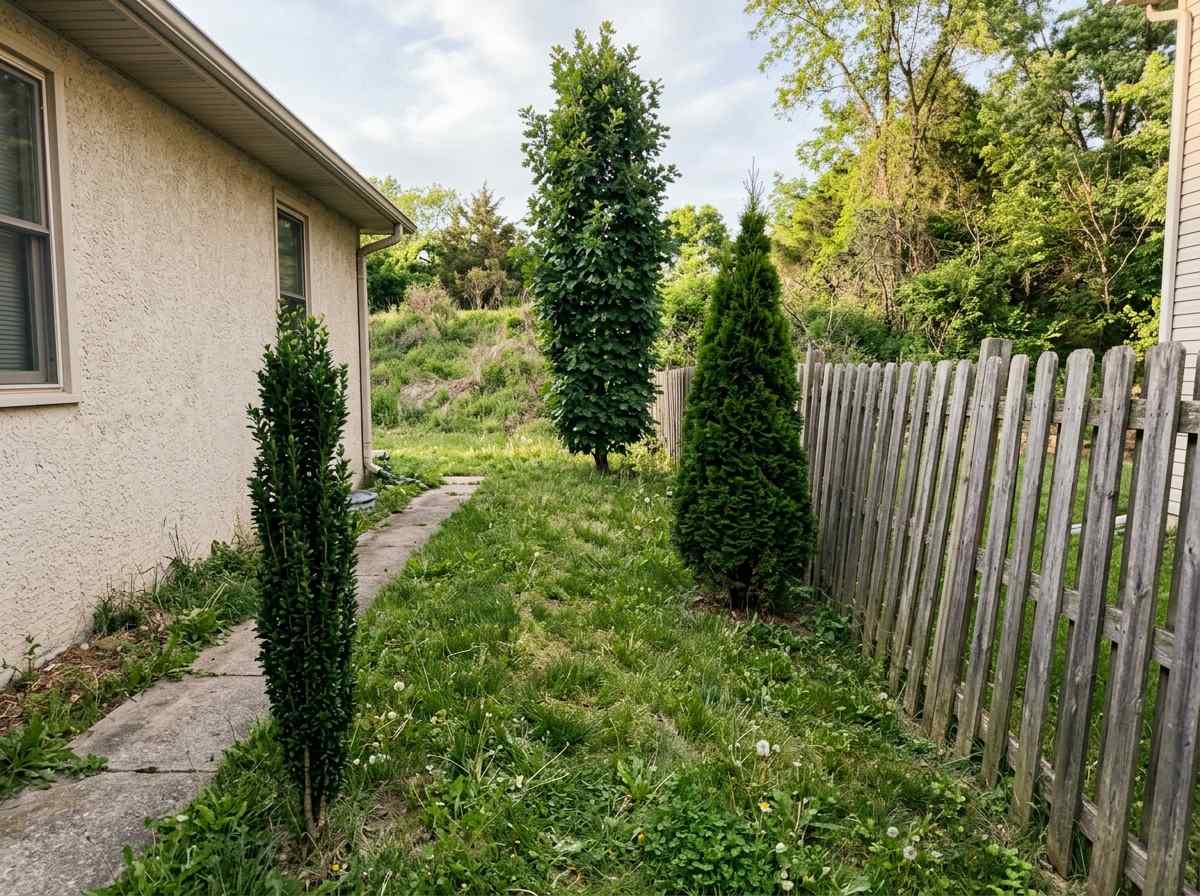
The strip between my driveway and the neighbor’s fence is seven feet wide. I measured it three times, hoping it would get wider.
It didn’t.
Every tree I liked wanted fifteen feet, and every “columnar” tag I trusted turned out to be optimistic. So I went looking for tall skinny trees with real numbers behind them, and sorted them the only way that matters here: narrowest first.
Quick Summary
- 13 tall, narrow trees sorted by mature width, from 3 feet (1 m) to 20 feet (6 m)
- 6 evergreens for year-round screening, 7 deciduous trees for flowers, fall color or sheer height
- Every entry lists width before height, plus zones and one honest problem
- A table of four “columnar” trees that don’t stay narrow
- Best starter pick: Emerald Green arborvitae. Hardy in zones 2-7, about 3 to 4 feet (1 m) wide, and one of the most widely planted narrow evergreens.
Measure the Gap, Then Halve It
A tree fits a narrow space only if half its mature width fits on each side of the trunk.
So a tree that grows 6 feet (1.8 m) wide needs its trunk at least 3 feet (90 cm) from the fence, and another 3 feet on the house side. That’s the tight version, with the branches brushing both.
I’d add a little breathing room on top. But start with that math, and half the trees at the garden center rule themselves out.
1. Sky Pencil Holly
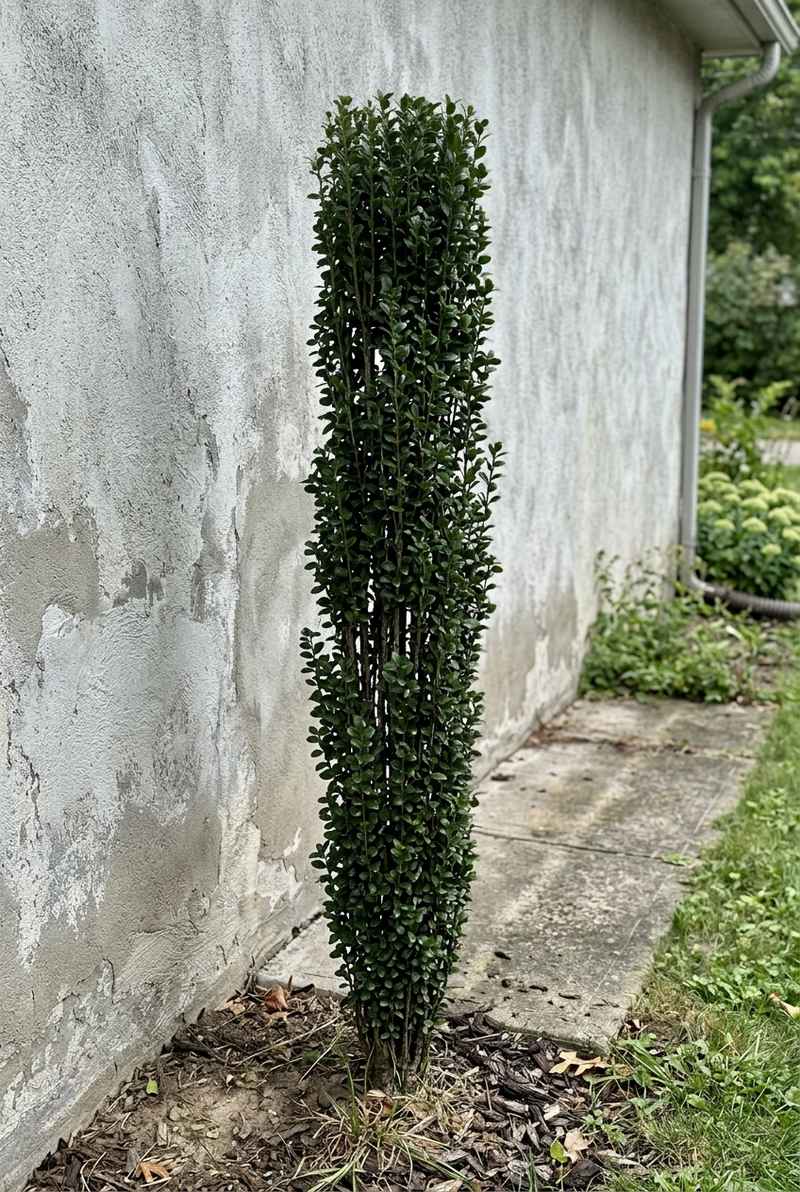
The skinniest thing on the list, and technically a shrub. I’m counting it anyway.
It tops out between 4 and 10 feet (1.2 and 3 m) and only 1 to 3 feet (30 to 90 cm) wide, and it keeps that pencil shape without any pruning. Growth is slow.
NC State warns it may not do well in high heat and humidity, and it isn’t reliably hardy all the way through zone 5. The middle zones are where it’s happiest.
2. Emerald Green Arborvitae
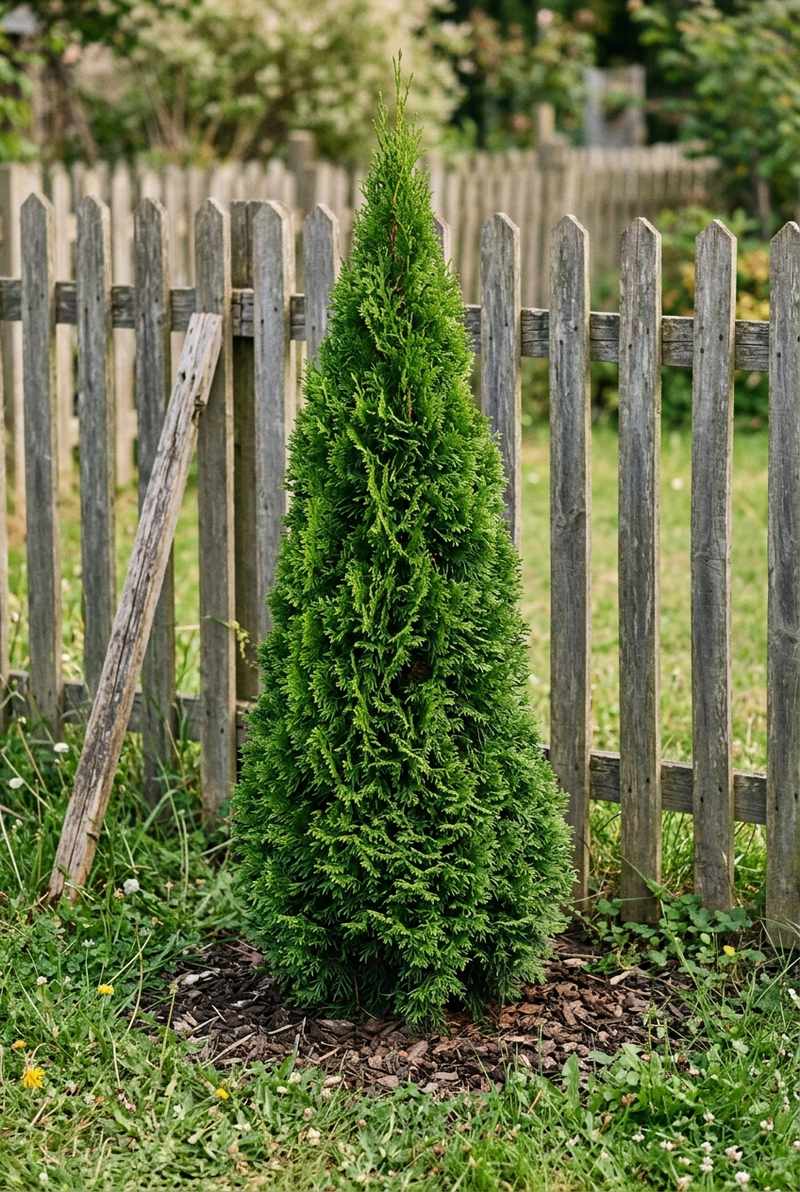
My starter pick, and probably the tree you’ve already seen lining somebody’s fence.
The official name is ‘Smaragd’. Emerald Green is the same plant, most often seen 7 to 15 feet (2 to 4.5 m) tall with a spread of just 3 to 4 feet (about 1 m). A longtime contributor on the UBC Botanical Garden forum summed it up in five words: “Dense, emerald green and narrow.”
It’s hardy to zone 2. The weak point is winter: foliage can burn in exposed sites, and heavy ice or snow can break the stems.
3. Taylor Juniper
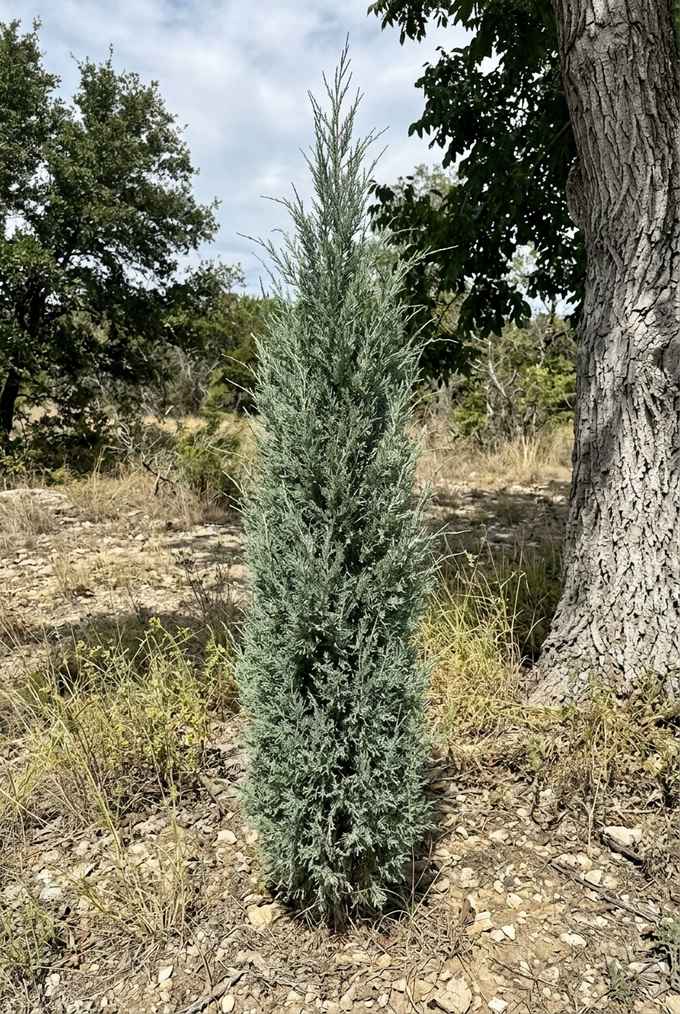
Emerald Green’s tougher cousin, for hotter and drier places.
‘Taylor’ started as a chance seedling in Taylor, Nebraska, and it’s a selection of the native eastern red cedar. It grows 15 to 20 feet (4.5 to 6 m) tall and stays 3 to 4 feet (about 1 m) wide.
The tolerance list is long: deer, drought, dry rocky soil, even black walnut. Cedar apple rust is the usual juniper complaint, so I wouldn’t plant it right next to an apple tree.
4. Standing Ovation Serviceberry
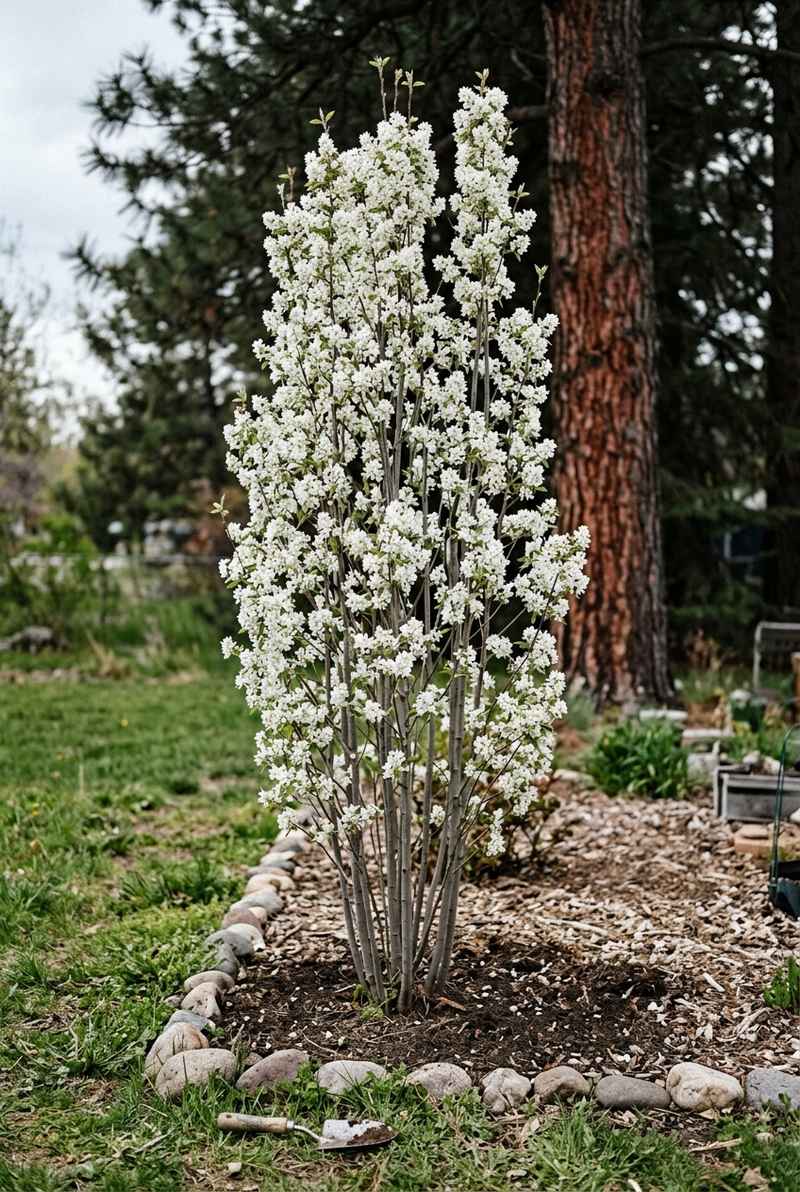
A skinny tree with flowers, and one of the hardiest things on this list.
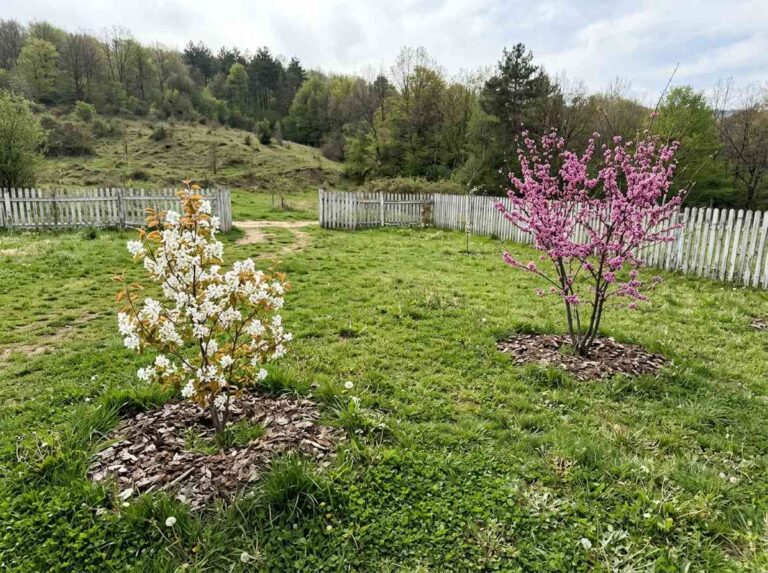
White blossoms open in April before the leaves, then come small edible berries that look and taste a lot like blueberries. In fall the leaves turn yellow.
It reaches about 15 feet (4.5 m) tall and around 5 feet (1.5 m) wide, and it’s hardy from zone 2 to zone 8. For a narrow bed by the patio, this is the one I’d plant (and then fight the birds for the berries).
5. Italian Cypress
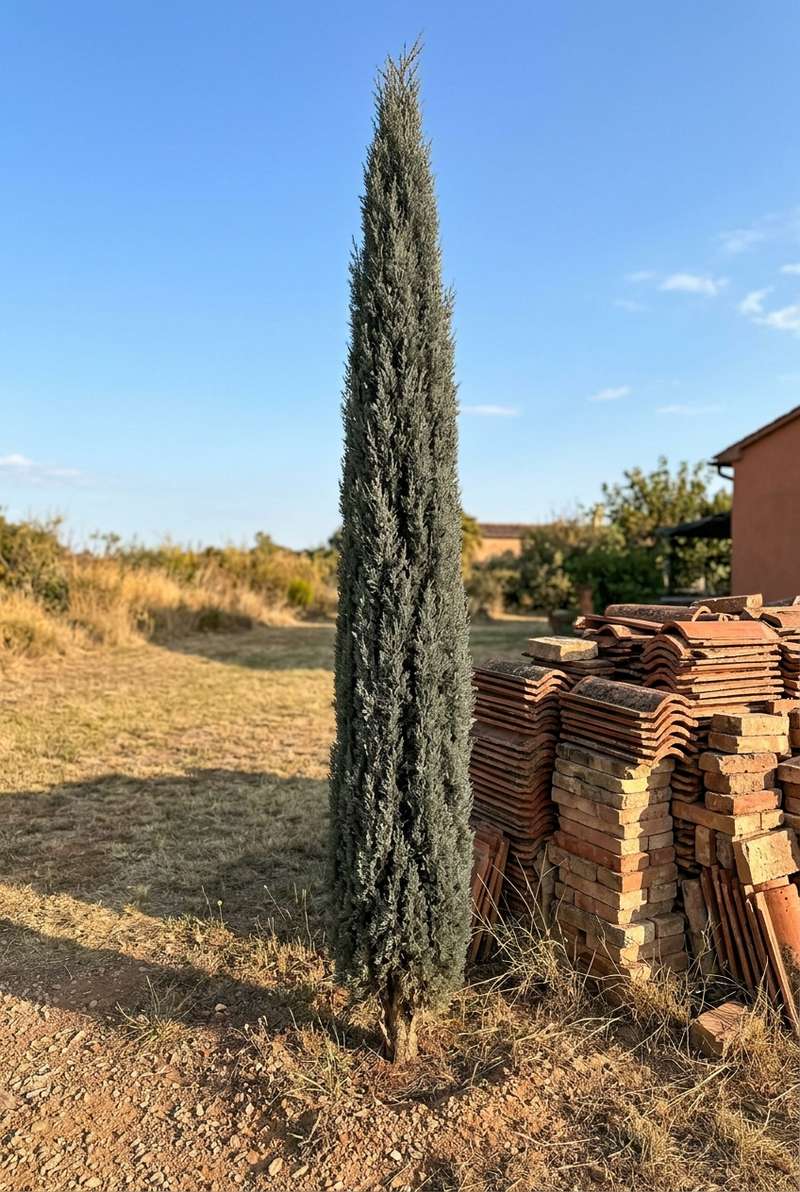
The exclamation point of the tree world.
Nothing else gets this tall while staying this thin: 40 to 70 feet (12 to 21 m) high, and NC State lists the columnar forms at only 3 to 6 feet (1 to 1.8 m) wide. Missouri Botanical Garden gives the plain species a spread of 10 to 20 feet (3 to 6 m), so buy a named narrow selection, not a seedling.
It’s a zone 7 to 10 tree that does best in dry, Mediterranean-type climates. Poor drainage brings root rot, and canker affects many trees.
6. Degroot’s Spire Arborvitae
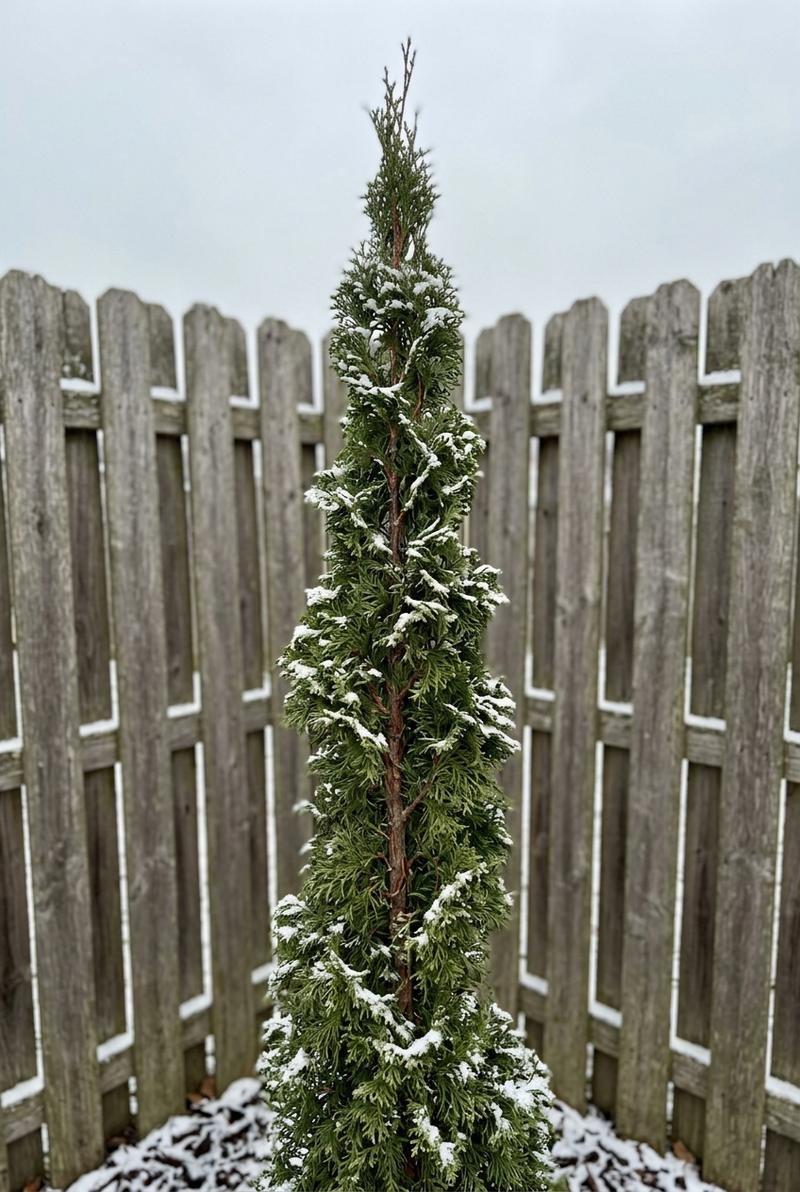
Slower and quirkier than Emerald Green, with twisted foliage that makes each plant look hand-carved.
Missouri Botanical Garden puts it at 15 to 20 feet (4.5 to 6 m) tall and 4 to 5 feet (1.2 to 1.5 m) wide after 15 to 20 years. It keeps going from there, slowly.
Same cold hardiness as its cousin, same caution about winter burn in exposed spots.
Save this to Pinterest7. Slender Silhouette Sweetgum
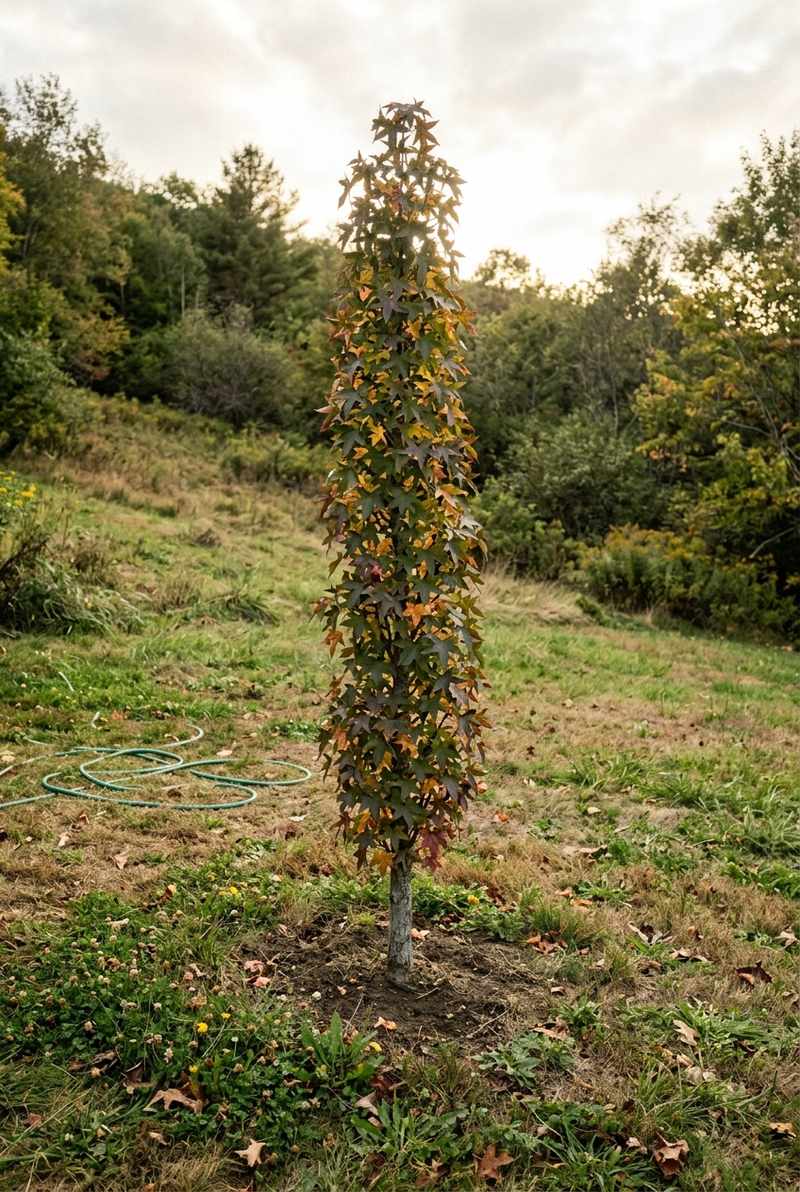
This tree looks like a mistake in the best way.
It grows 50 to 60 feet (15 to 18 m) tall and just 5 to 6 feet (1.5 to 1.8 m) wide, and the top stays about as wide as the bottom. A green column in summer, then, in a good year, a column of yellow, orange, red or burgundy (NC State calls the fall color unpredictable).
Sweetgums are famous for dropping spiky seed balls. This one makes far fewer than the species.
Tip
NC State’s advice here runs backward from everything else you’ve read: plant Slender Silhouette in poor soil and tough spots. Slower growth keeps it narrow. In ideal conditions it can grow too fast and split open.
8. Kindred Spirit Oak
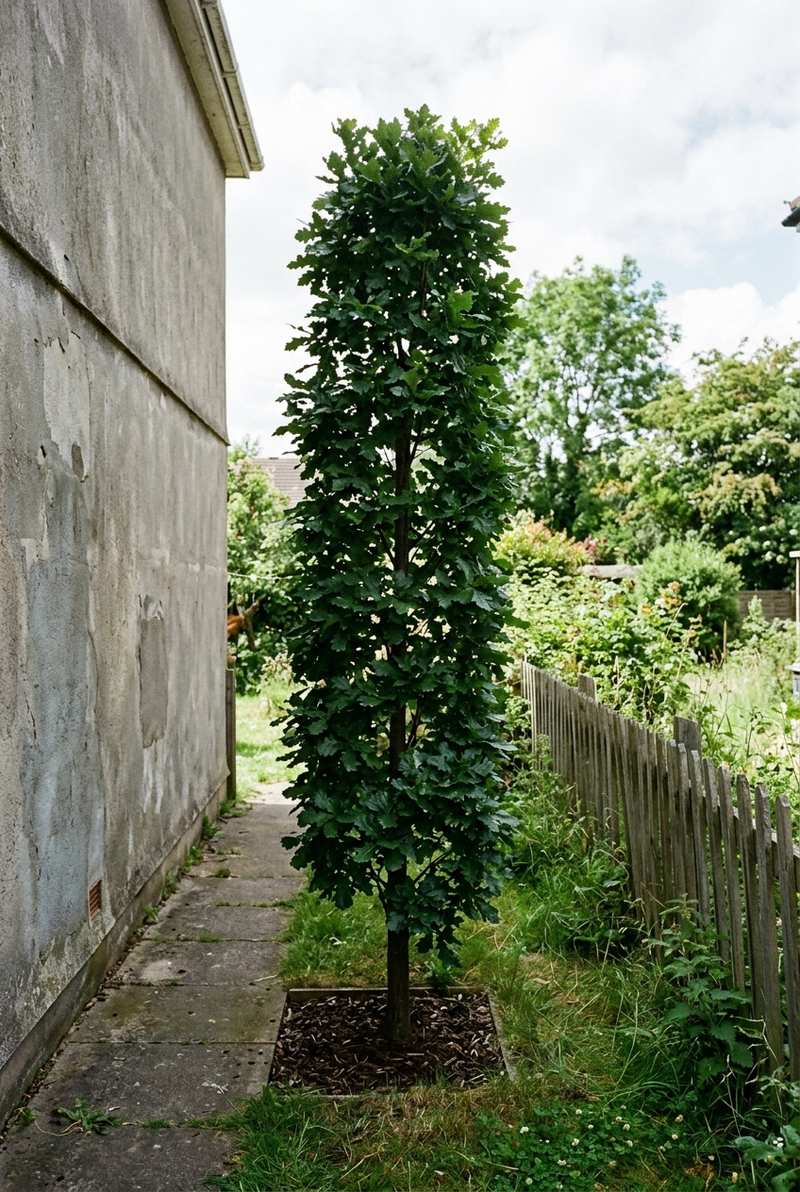
An oak for a seven-foot strip. I didn’t think that sentence was possible.
It’s a hybrid of swamp white oak and columnar English oak, bred to resist powdery mildew, and it grows quickly to about 30 feet (9 m) tall and 6 feet (1.8 m) wide. Once established it tolerates drought, clay soil and salt.
That last one matters if your narrow space runs along a road or a driveway that gets salted in winter.
9. Sky Tower Ginkgo
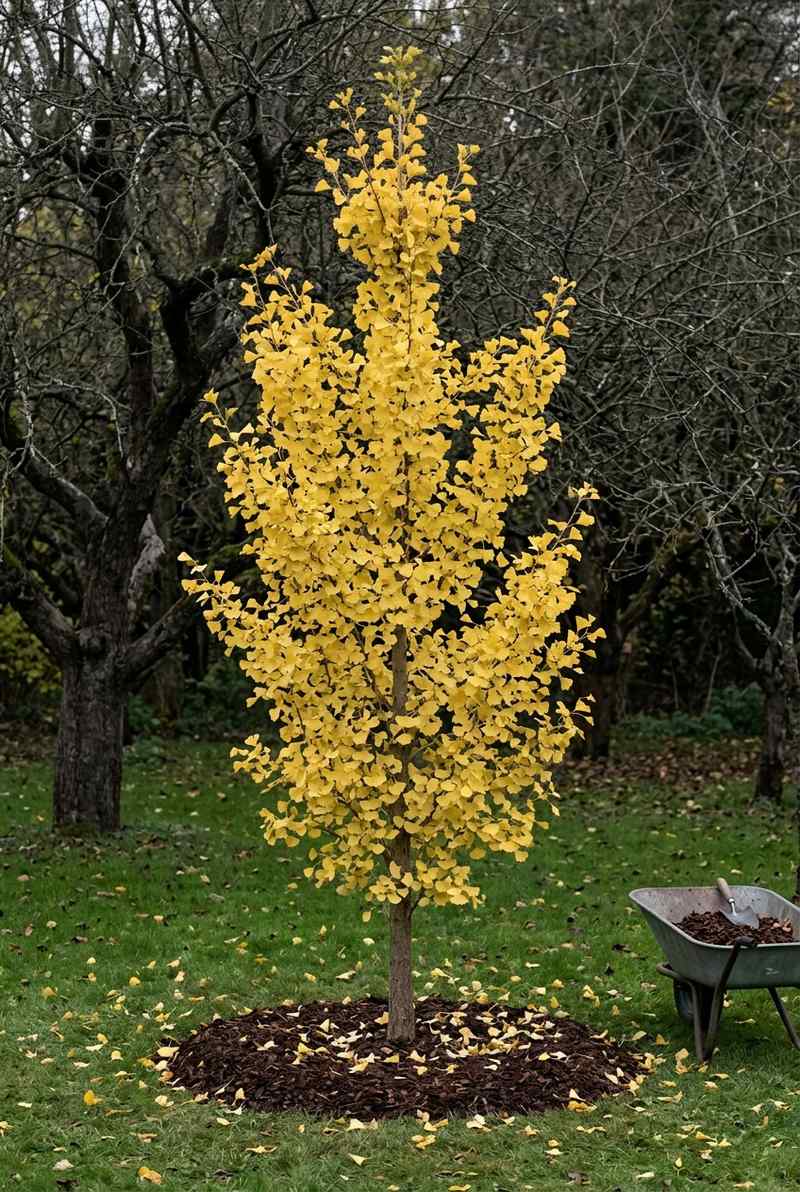
A small ginkgo, which almost never happens.
Sky Tower matures at only 15 to 20 feet (4.5 to 6 m) tall and 6 to 10 feet (1.8 to 3 m) wide, with the same fan-shaped leaves that turn bright yellow in fall. It tolerates air pollution, heat and compacted soil, so it’s a good city tree.
Be patient with it. Ginkgos are usually slow, and the early growth looks a bit sparse.
10. Columnar White Pine
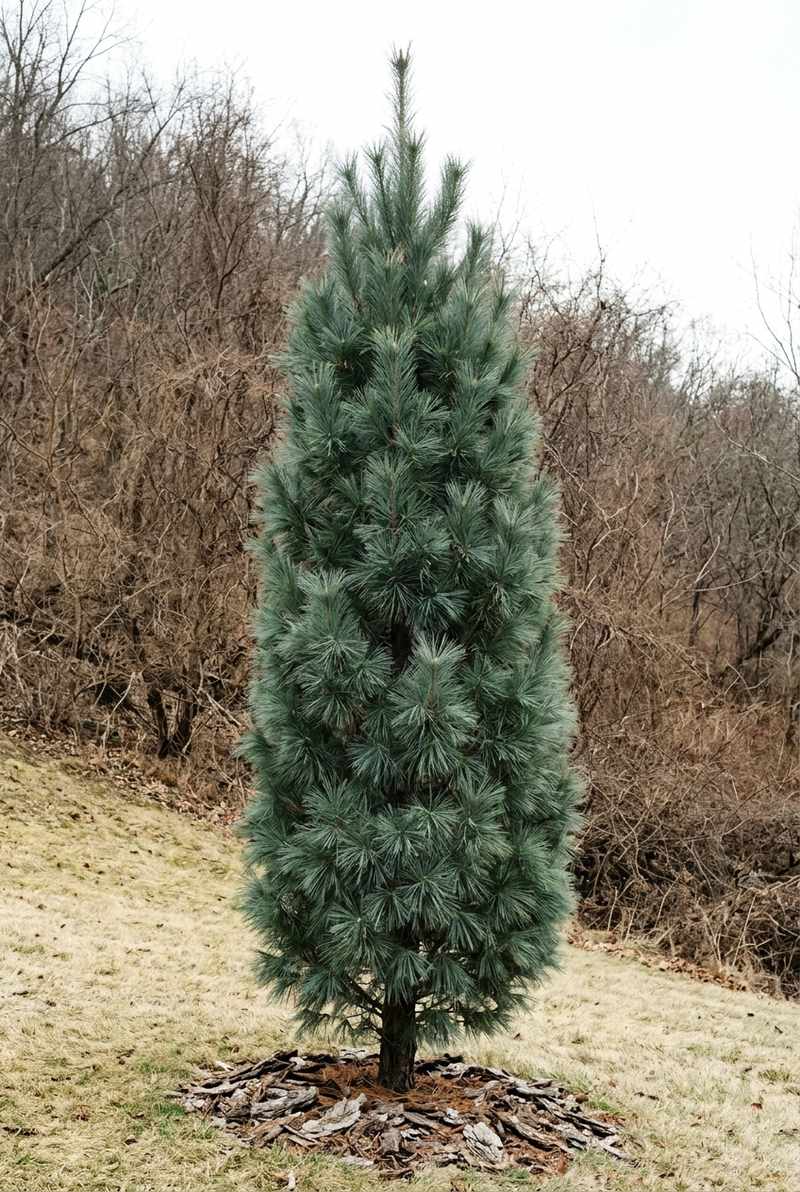
Soft blue-green needles, on a pine that grows up and not out.
It’s a fast grower, typically 30 to 40 feet (9 to 12 m) tall and around 10 feet (3 m) wide. One honest note: the shape broadens somewhat with age, so don’t squeeze it into a gap sized for a young tree.
Check with your extension office about white pine blister rust before you plant. Where that disease is present, it’s usually fatal.
11. Armstrong Maple
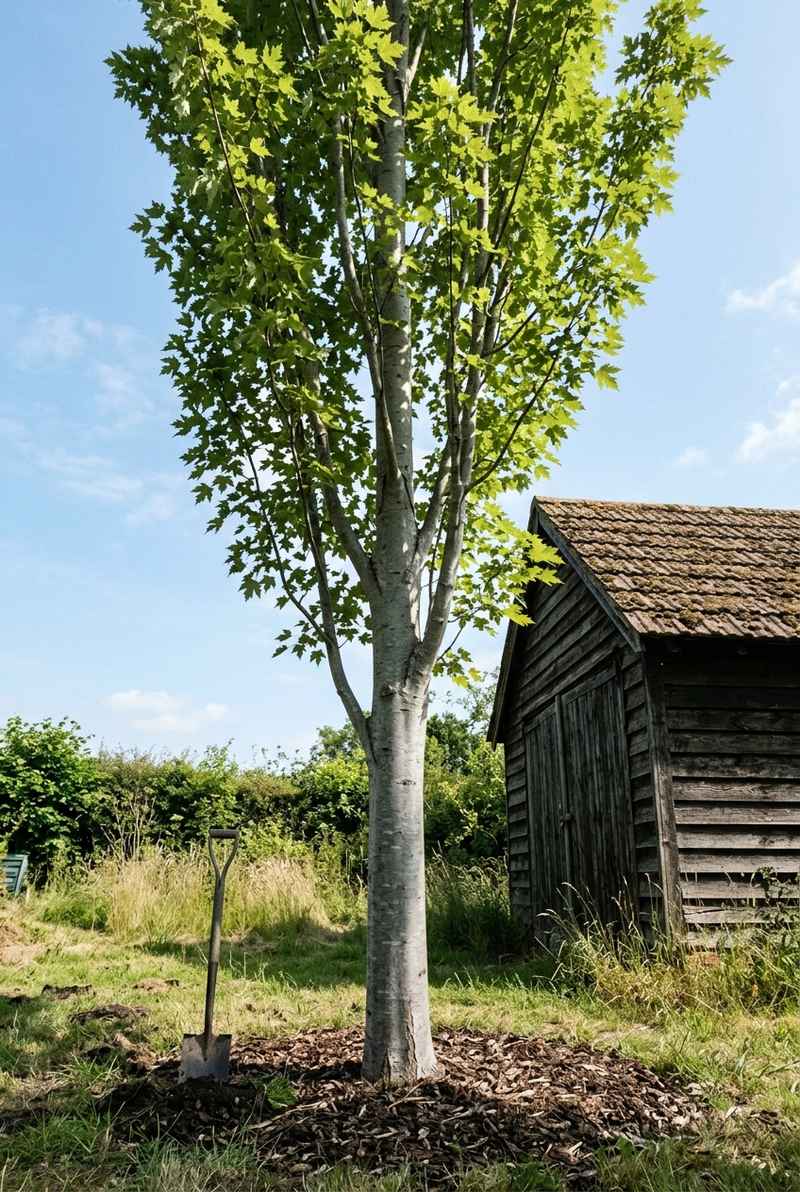
Now the big ones, for when “narrow” means narrower than a normal shade tree.
Armstrong is a red and silver maple hybrid with a very upright form and silvery bark. It runs 50 to 70 feet (15 to 21 m) tall and holds to 10 to 15 feet (3 to 4.5 m) wide.
Don’t buy it for fall color. Missouri Botanical Garden says the show can be good in some years, but more often it’s a weak yellowish orange.
12. Green Pillar Pin Oak
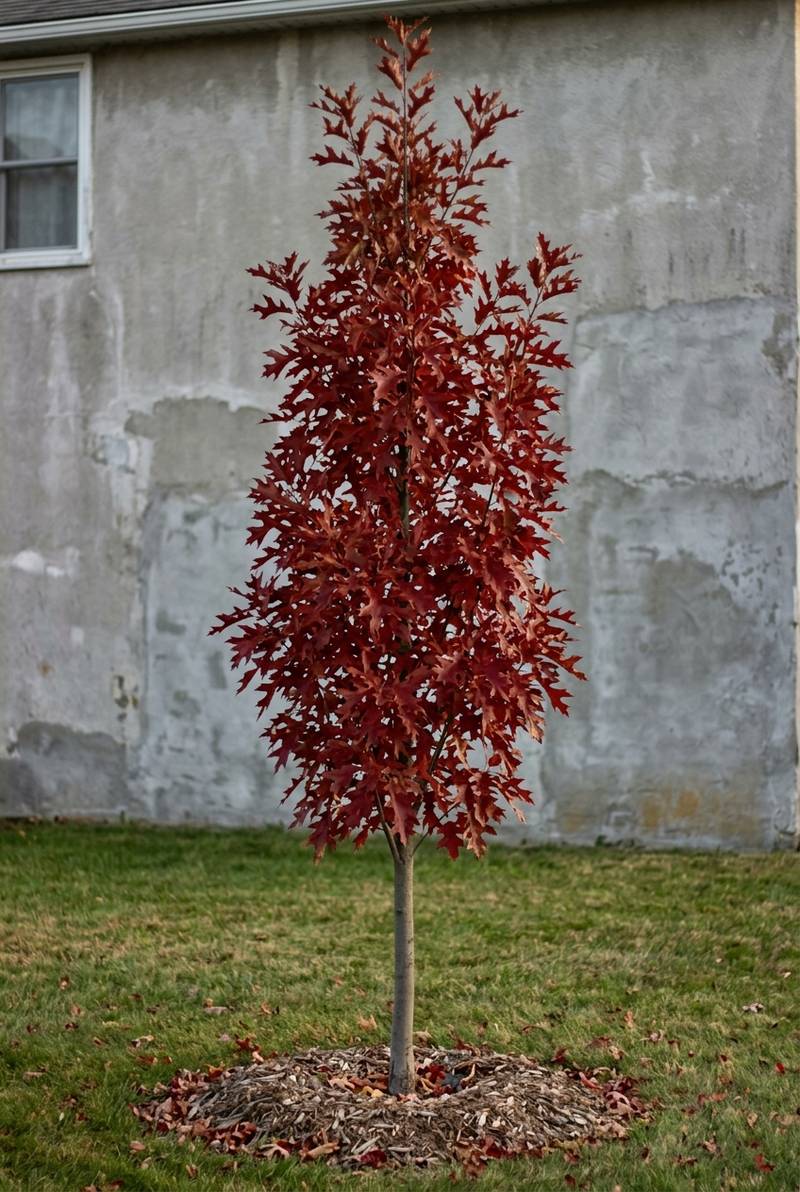
If you want the fall color Armstrong can’t promise, here it is.
A very narrow, columnar oak with nearly vertical branches and leaves that turn deep red in autumn. It reaches 50 to 60 feet (15 to 18 m) and stays 12 to 15 feet (3.5 to 4.5 m) wide.
Test your soil first. In alkaline soil the leaves turn yellow (it’s called chlorosis), and it can severely damage the tree.
13. Shawnee Brave Bald Cypress
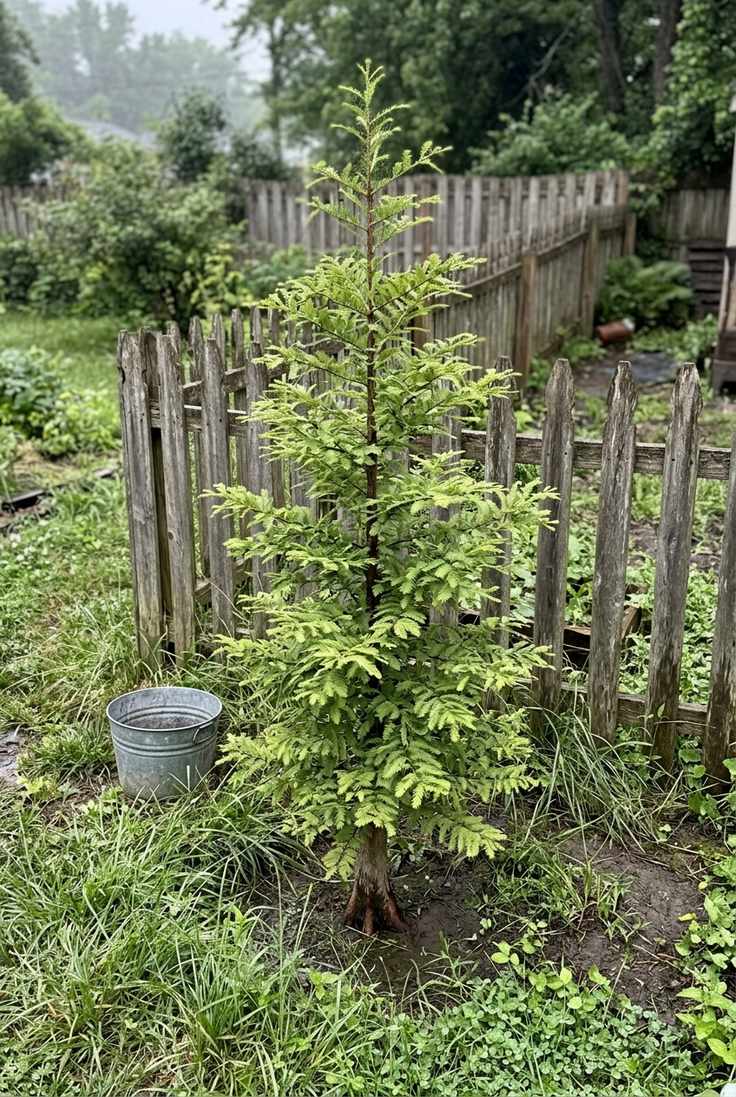
The widest tree here, and my pick for a properly wet spot.
Bald cypress is a conifer that drops its needles in fall, which surprises everyone the first year. Shawnee Brave grows 50 to 75 feet (15 to 23 m) tall and 15 to 20 feet (4.5 to 6 m) wide, narrower and denser than the species.
It handles anything from average garden soil to properly wet ground. For a soggy side yard where nothing else stands up straight… this.
Columnar on the Tag, Wide in the Yard
Words like “columnar,” “fastigiate” and “sentry” describe a young tree’s shape. They aren’t a promise about width.
| Tree | What the name suggests | What the records say |
|---|---|---|
| ‘Fastigiata’ hornbeam | Upright and narrow | Narrow in youth, then about 40 ft tall and 30 ft wide (12 x 9 m) |
| ‘Princeton Sentry’ ginkgo | A slim sentry | 40-50 ft tall and 20-30 ft wide (12-15 x 6-9 m) |
| Leyland cypress | A quick, slim screen | 60-70 ft tall and 10-15 ft wide (18-21 x 3-4.5 m), and prone to canker |
| Lombardy poplar | The classic tall thin tree | Short-lived, sometimes only 20 years, with serious canker problems |
I’d skip the last two entirely. The University of Georgia Extension ranks Seiridium canker as likely the most damaging disease Leyland cypress faces in Georgia landscapes, and Missouri Botanical Garden flatly says Lombardy poplar isn’t considered a good landscape tree.
Questions About Tall Skinny Trees
What’s the skinniest tall tree?
Italian cypress, at 40 to 70 feet (12 to 21 m) tall and 3 to 6 feet (1 to 1.8 m) wide in its columnar forms. In colder zones, Slender Silhouette sweetgum is the closest match at 5 to 6 feet (1.5 to 1.8 m) wide.
What tall skinny tree is best for privacy?
For year-round screening you need an evergreen: Emerald Green arborvitae, Taylor juniper or Degroot’s Spire, depending on your zone. Deciduous trees on this list go bare in winter.
Which narrow trees grow fast?
Slender Silhouette sweetgum, Kindred Spirit oak and columnar white pine are all listed as fast growers. Sky Pencil holly, Degroot’s Spire and Sky Tower ginkgo are slow.
Can I plant a skinny tree close to the house?
Width tells you if the branches fit, and that’s the part this list answers. For the trees I’d actually put near a front wall, see my small flowering trees for the front yard.
Seven Feet Is Enough
It turns out my strip has options. A row of Emerald Green would close it off, and one Kindred Spirit oak at the far end would give it some height.
Measure the gap, halve it, and shop by width. The trees that survive that math are the ones that will still fit in fifteen years. And if you’d like something with more movement than a column, my dwarf weeping trees stay small in a completely different way.
Most of the numbers here come from the plant profiles at Missouri Botanical Garden and NC State Extension, which are worth a look before you buy.