14 Weeping Evergreen Trees for Small Yards (Dwarf to Full Size)
- Small yards
- Year-round green
- Zones 2-9
- Narrow picks flagged
The saddest tree at my garden center was also one of the most expensive. A blue-green thing slumped over the edge of its pot like it had given up…
It was a weeping blue atlas cedar, and it wasn’t dying. It was waiting for someone to stake it.
These 14 weeping evergreen trees hold that drooping shape all year. Some stay knee-high, some become skinny spires, and each is listed with the number plant tags bury: how wide it gets.
Quick Summary
- 14 weeping evergreens: 12 conifers plus 2 broadleaf trees for warm zones
- Every entry lists zones and mature width, not only height
- Most weeping conifers have no fixed height. The stake decides it (explained below)
- Three of the tall, upright ones stay 12 feet (3.5 m) wide or less, narrow enough for a side yard
- Best starter pick: Weeping Norway spruce. Hardy in zones 3-7, tolerant of deer and city air, and happy at whatever height you stake it to.
The Stake Decides the Height
This took me embarrassingly long to understand. Most weeping conifers don’t have a height.
They have a leader that wants to flop.
Support that leader and the tree climbs. Stop supporting it and the tip turns around and heads for the ground.
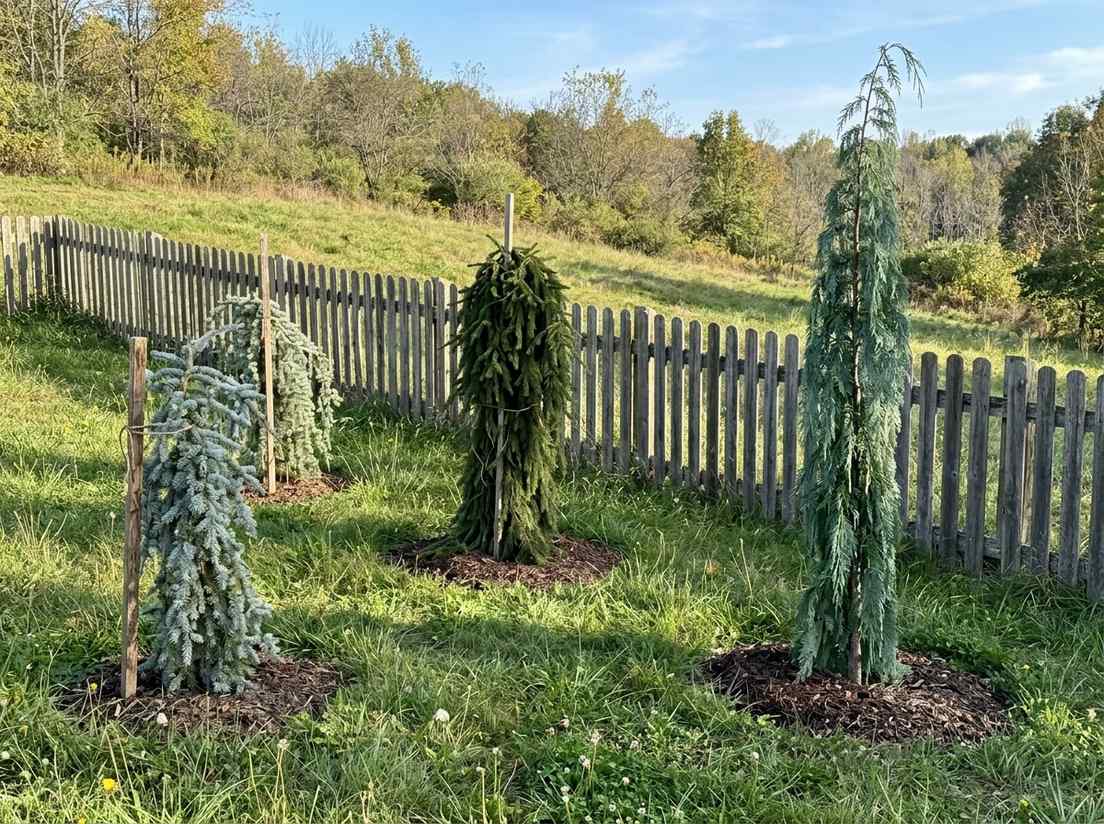
Missouri Botanical Garden says it plainly about the weeping Norway spruce: without a stake and support, it mostly stays low and spreads over the soil like a ground cover. Staked, the same plant becomes a 10 to 15 foot (3 to 4.5 m) tree.
So the tag that says “4 to 15 feet” isn’t being vague. It’s showing you the range you get to pick from.
Tip
Decide the height before you buy. Support the leader up to that point, then let it go, and everything above the stake arches over and weeps. One grower on the UBC Botanical Garden forum summed up the timeline in a single line: “They need staking for a few years.”
Pick by Width First
Height is negotiable. Width isn’t, so start there.
| Your space | Look at | Mature width |
|---|---|---|
| A strip about 6 ft (1.8 m) wide | Weeping oriental spruce | 3-6 ft (1-1.8 m) |
| A side yard 8-10 ft (2.5-3 m) wide | Weeping white spruce | 5-8 ft (1.5-2.5 m) |
| A corner with 12 ft (3.5 m) to spare | Weeping Alaskan cedar | 8-12 ft (2.5-3.5 m) |
| Shade under bigger trees | Weeping Canadian hemlock | 8-10 ft (2.5-3 m) |
| A wall or a slope | Weeping blue spruce or Japanese red pine | Depends on training |
The first four on the list are the narrow, upright ones. After that come the small and trainable types, then the big characters, then two for warm climates.
1. Weeping Alaskan Cedar
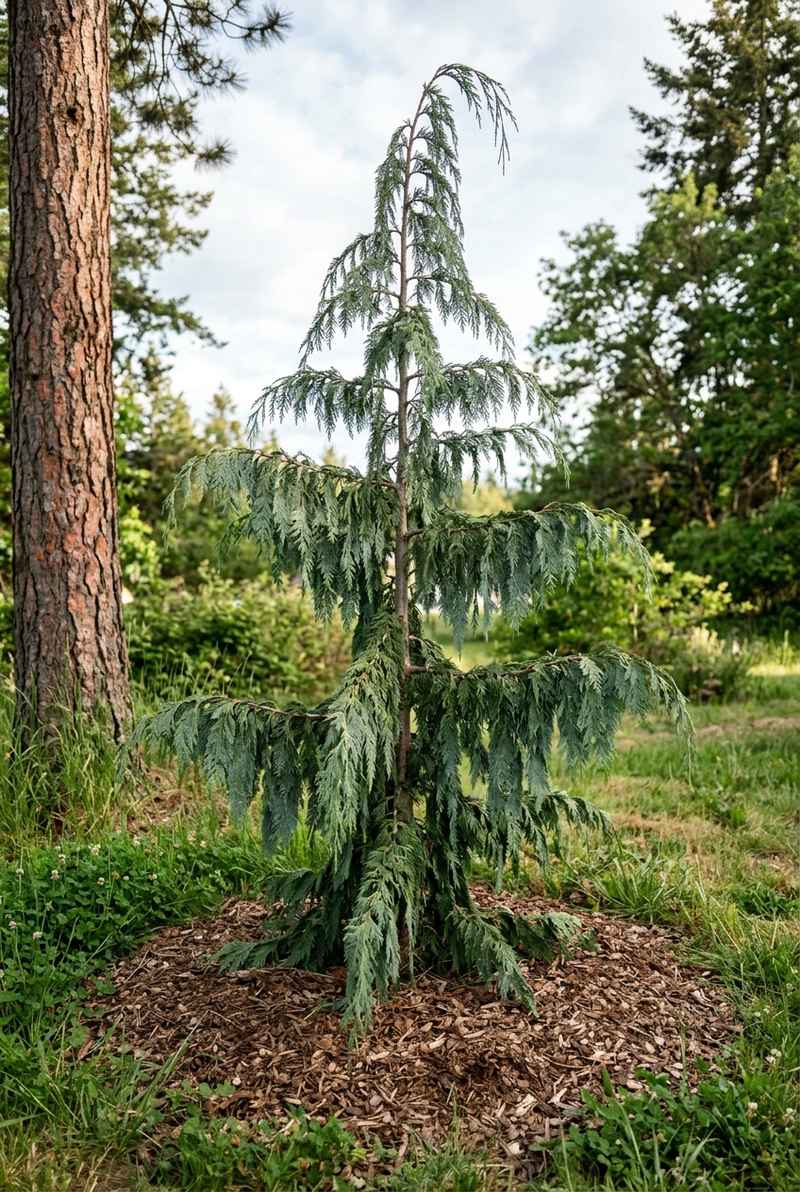
If I could plant only one tree from this list, this is it.
A slim green pyramid with a nodding tip, and branchlets that hang straight down like scarves on a rack. Missouri Botanical Garden gives it as much as 35 feet (10.5 m) tall and 12 feet (3.5 m) wide over 35 years, and notes it’s often seen growing much smaller.
It does best with cool summers and steady moisture. Hot-summer gardens are where it struggles, so look further down the list if that’s you.
2. Weeping White Spruce
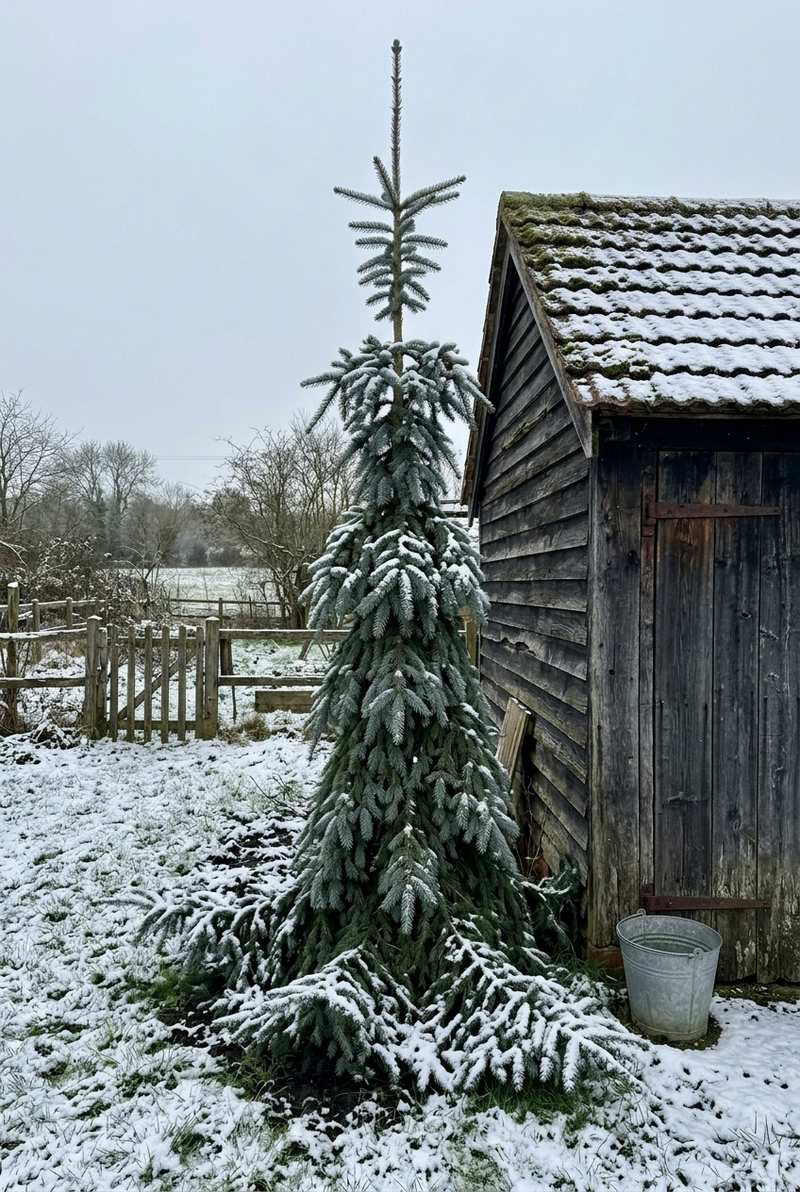
The skinniest tall tree here, and the toughest. Hardy to zone 2.
Depending on how strong the leader is, it ends up anywhere from 12 to 40 feet (3.5 to 12 m) tall, but the width holds at 5 to 8 feet (1.5 to 2.5 m). The lower branches drape all the way to the ground like a long skirt.
The catch is heat. It performs best where winters are cold and summers stay cool, and it’s somewhat intolerant of air pollution and salt spray.
3. Weeping Oriental Spruce
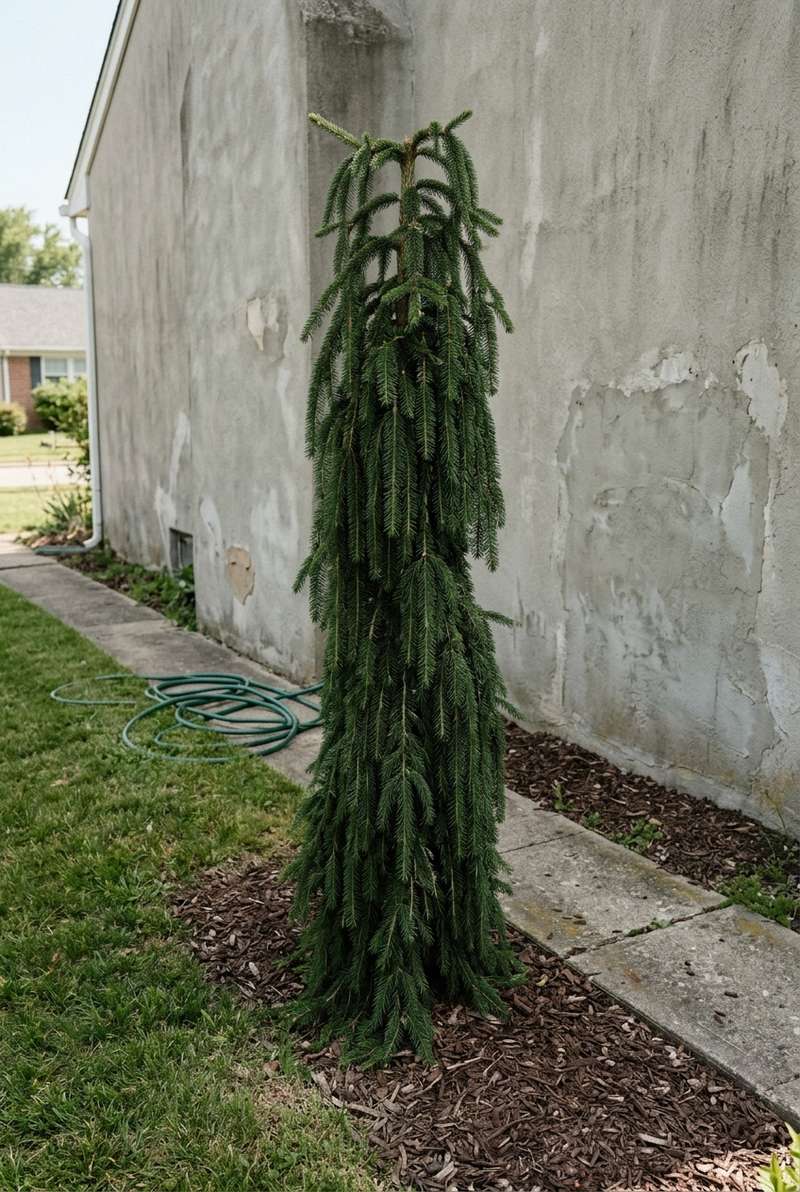
Small yard, no patience for a monster? Start here.
It grows slowly into a narrow, upright little tower, about 8 feet (2.5 m) tall over its first ten years, with side branchlets that weep. The needles are glossy, dark, and shorter than on other spruces, so the whole tree looks finer and neater.
One caution: cold winter wind can brown the needles. A spot out of the worst of the wind helps.
4. Weeping Serbian Spruce
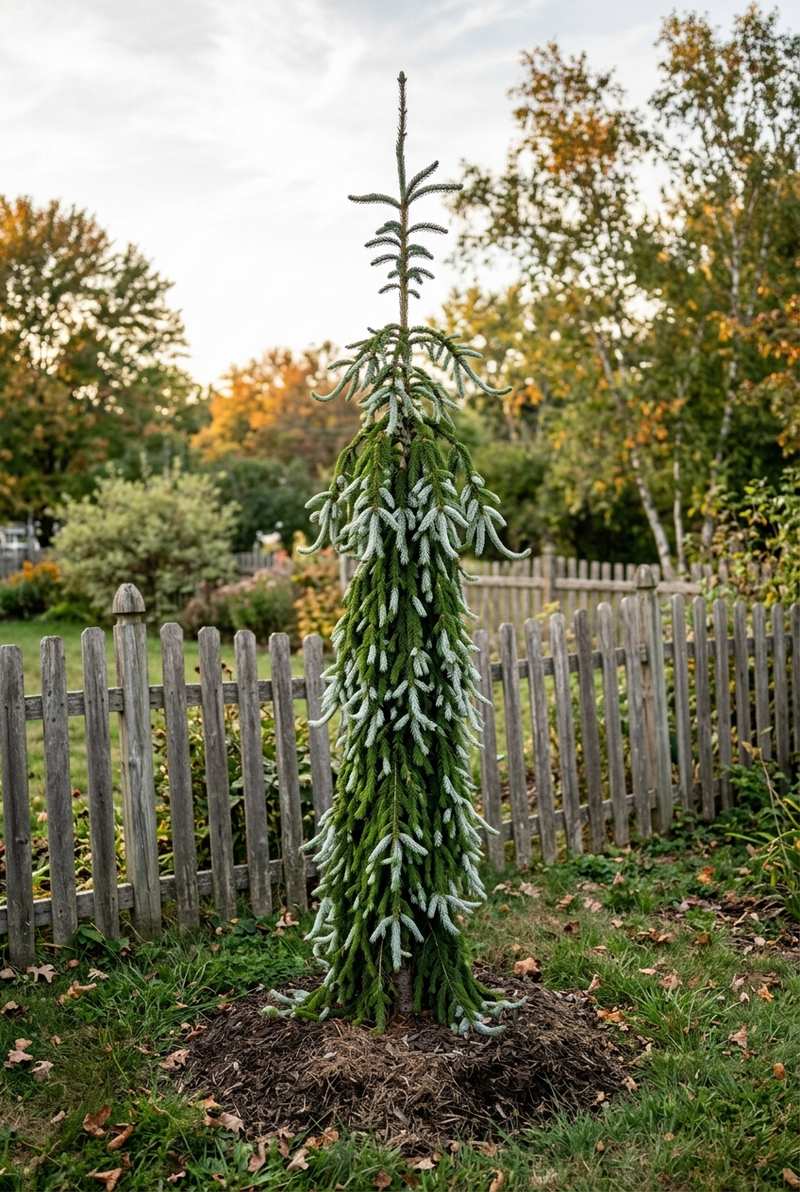
This is the one I’d put in a front yard that faces the street.
‘Berliner’s Weeper’ reaches 8 to 10 feet (2.5 to 3 m) over its first decade, then keeps climbing to 20 or 30 feet (6 to 9 m) as a narrow column with hanging branches. It tolerates urban conditions and deer, and it’s fine in part shade.
Not as slim as the first three. Still slim.
5. Weeping Norway Spruce
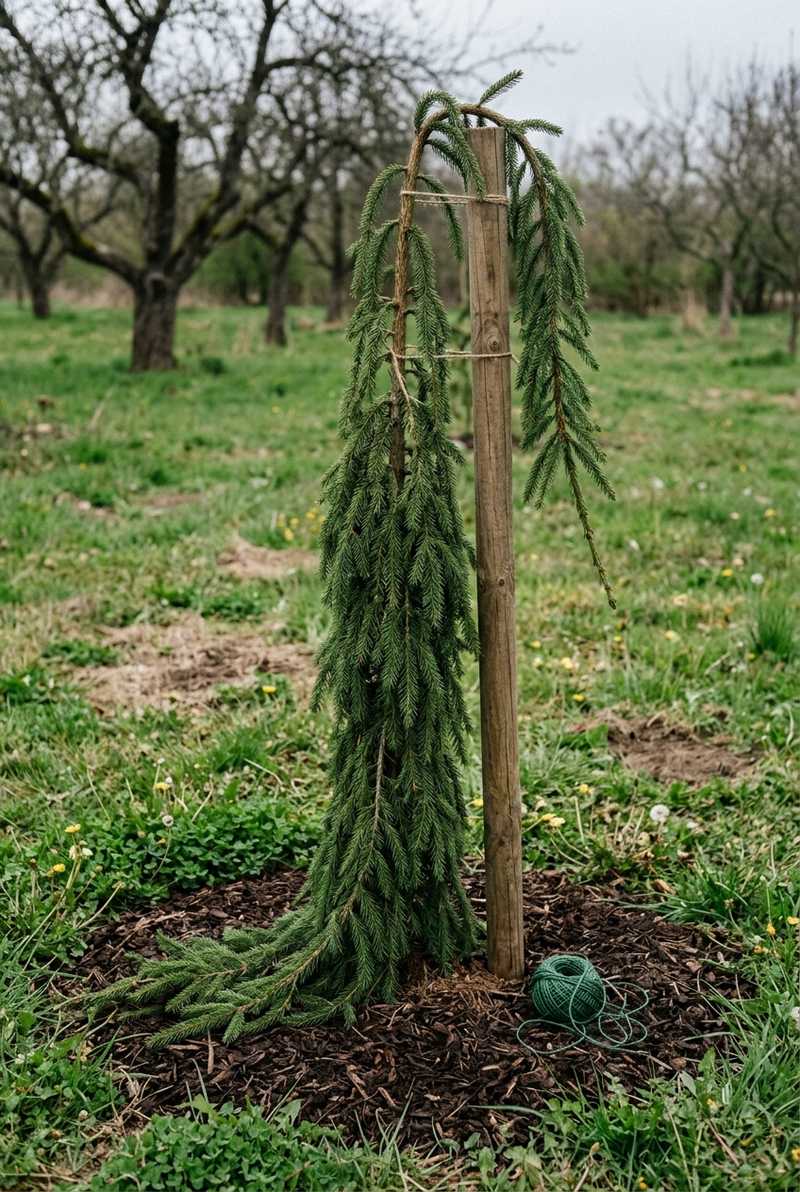
My starter pick, and the most forgiving tree on the list.
You already know its trick from the staking section. What I love is the range: let it crawl over a retaining wall, or stake it into a 10 to 15 foot (3 to 4.5 m) tree wearing a shaggy green cape.
Same plant.
It tolerates deer and urban conditions, and it’s hardy to zone 3. It often grows poorly south of zone 7, so think of it as a cold-to-moderate climate tree.
Most of the weeping trees on my dwarf weeping trees list are grafted. This one is all about training instead.
6. Weeping Colorado Blue Spruce
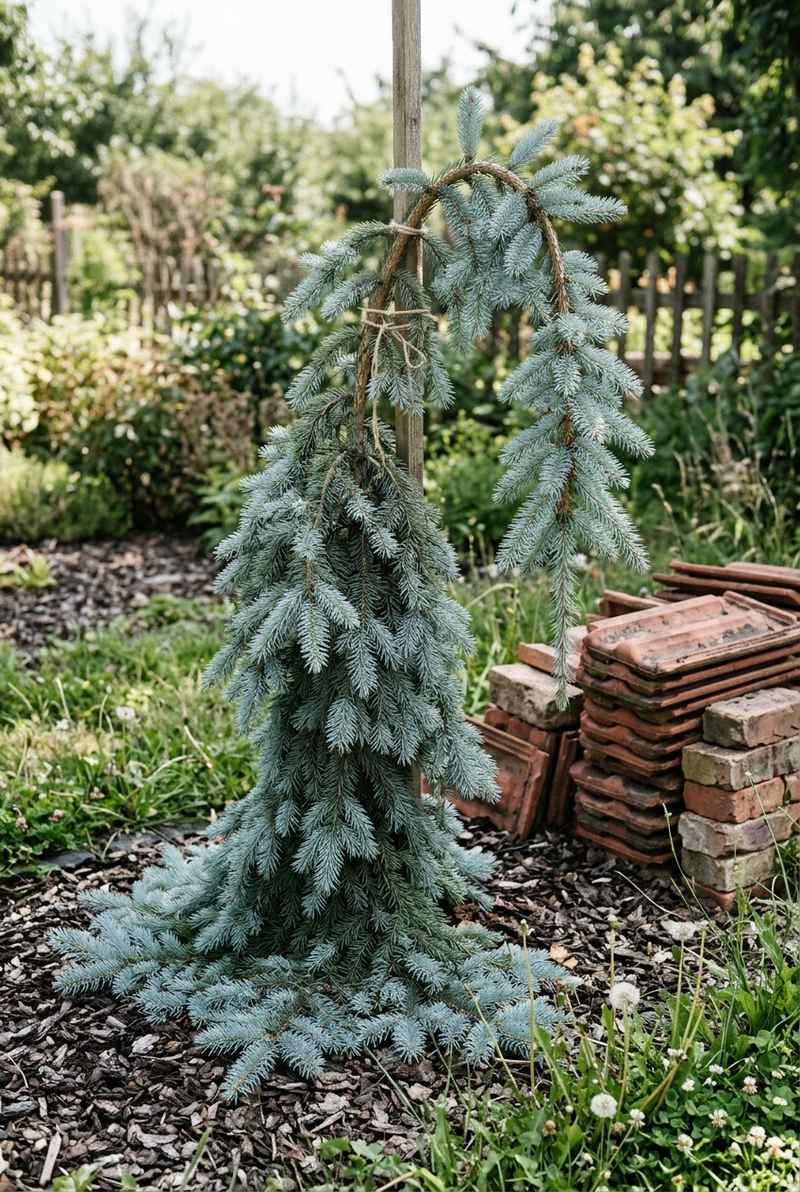
Silver-blue needles, and two completely different plants depending on what you do with a stake.
Staked, it’s often grown to about 6 feet (1.8 m). Unstaked, it rises only 1 to 2 feet (30 to 60 cm) and trails along the ground for 8 to 10 feet (2.5 to 3 m) or more.
I’d stake it. A blue waterfall beside the front steps beats a blue rug (the rug version is gorgeous spilling over a wall, though).
NC State Extension warns that southern heat and humidity are hard on it.
7. Weeping Canadian Hemlock
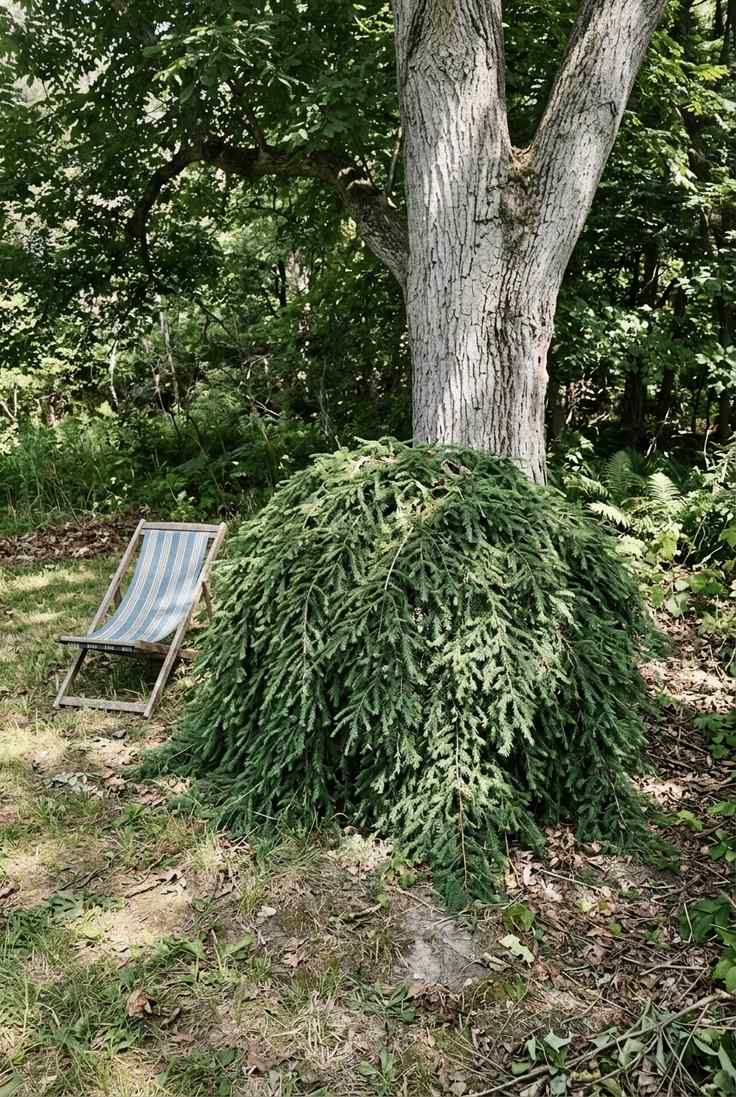
The only one here that wants shade.
Every other conifer on this list needs sun. Weeping hemlock is at its best in part shade to full shade, sheltered from drying wind and hot afternoon sun, and it even tolerates growing near black walnut.
Left alone it forms a wide green mound, typically 4 to 5 feet (1.2 to 1.5 m) tall and 8 to 10 feet (2.5 to 3 m) across. With regular pruning it can be held to a 2 to 3 foot (60 to 90 cm) mound, and unpruned it may reach 10 to 15 feet (3 to 4.5 m) at full maturity.
Honest warning
Hemlock woolly adelgid, a tiny sap-sucking insect, is a serious threat to hemlocks in the eastern United States. Ask your local extension office whether it’s active near you before you buy. Hemlock is also intolerant of drought, and a prolonged dry spell can be fatal, so water it through dry summers.
8. Weeping Japanese Red Pine
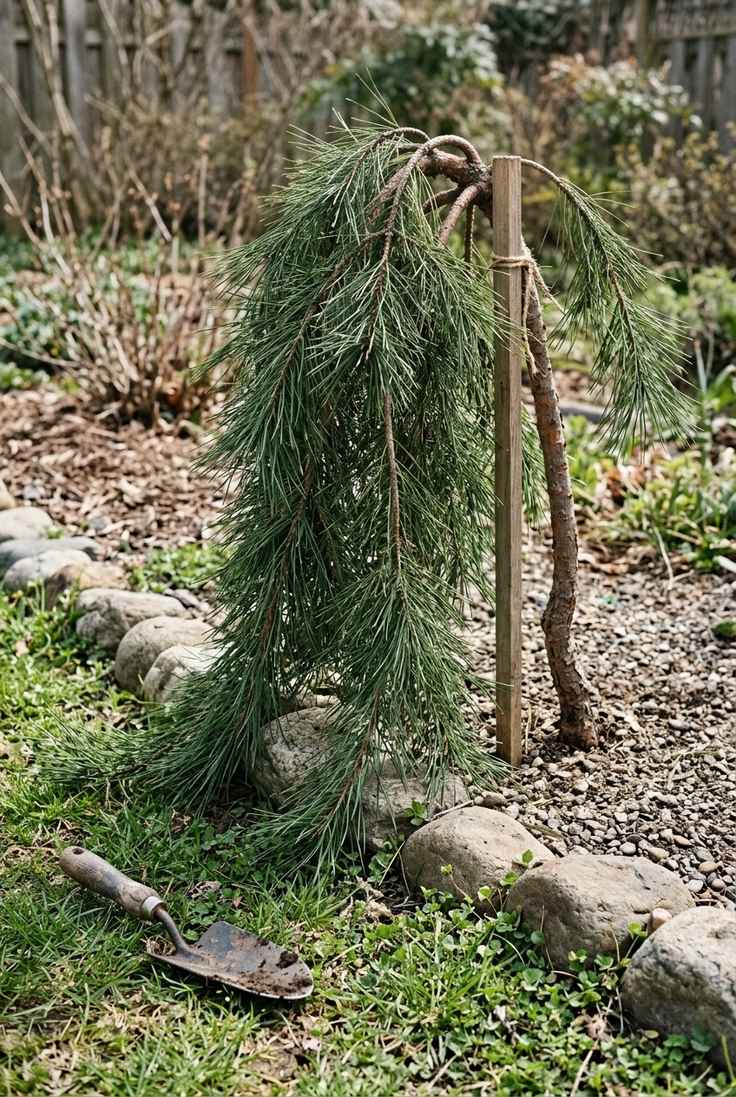
The smallest tree on the list. Also the most flexible.
It typically grows only 3 to 5 feet (1 to 1.5 m) tall over its first ten years, with dark green needles up to 4 inches (10 cm) long. You choose the form: a carpet along the ground, a drape over a wall, or a small standard with branches falling from the top.
For a courtyard, it’s the one I’d reach for. If you’re picturing a container instead, the trees I trust in pots (with minimum pot sizes) are in my small trees for pots list.
9. Weeping White Pine
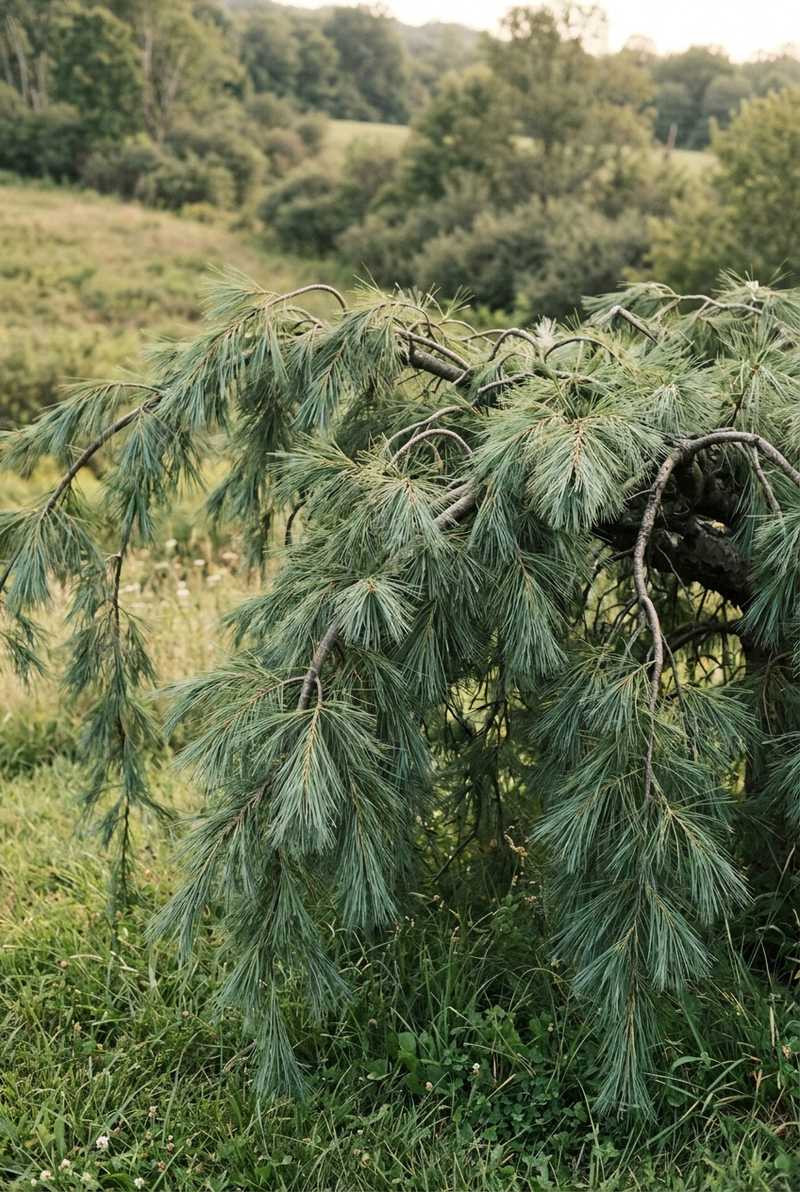
Soft. That’s the word for it.
Long blue-green needles you want to run your hand through, on a semi-dwarf tree 6 to 15 feet (1.8 to 4.5 m) tall. It spreads wider than it grows tall: the branches reach out sideways a little, then drop.
Not a city tree. It’s intolerant of compacted clay, alkaline soil and many air pollutants, and white pine blister rust is usually fatal where that disease is present (your extension office will know).
10. Weeping Blue Atlas Cedar
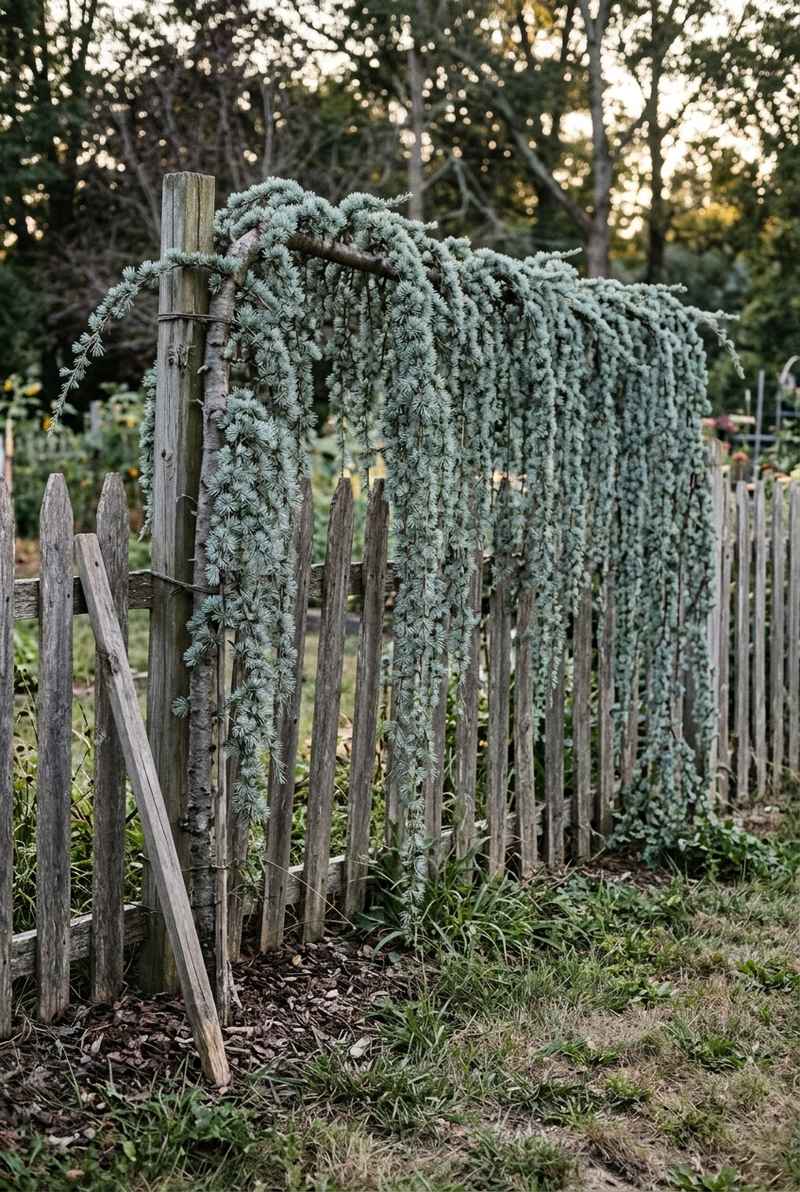
This is the slumped tree from my garden center.
Powder-blue needles on branches that hang like a curtain. Supported, the leader climbs about one foot (30 cm) a year, so you can walk it up to head height, along a fence, or over an arch, then let it spill.
Give it room and leave the lower branches alone (pruning them is how it loses its character). One gardener on the UBC Botanical Garden forum keeps theirs narrow and still plants it away from the house, because it can get to 5 feet (1.5 m) wide after ten years.
Heavy snow can break the branches. And at zones 6 to 8, it isn’t for cold-winter gardens.
11. Weeping Deodar Cedar
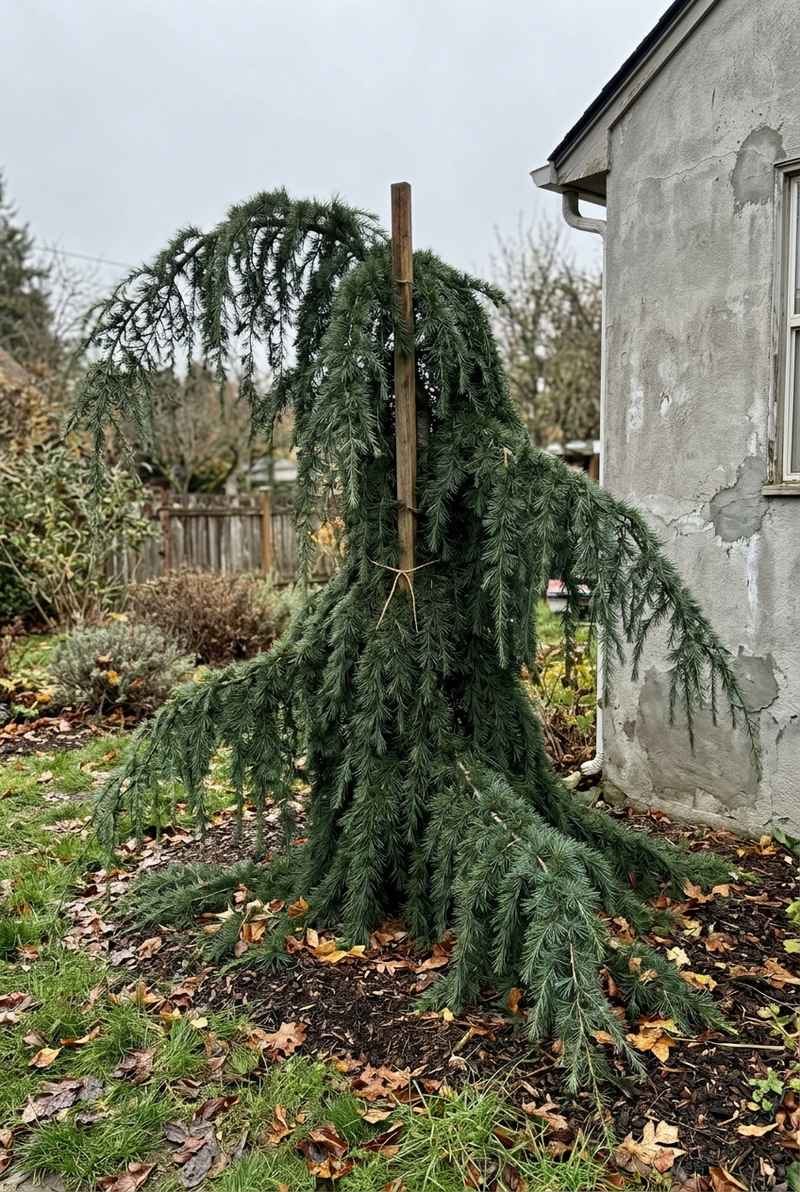
Atlas cedar’s softer cousin, for warmer gardens.
Dark blue-green, fragrant needles on a tree that spreads and weeps to about 15 feet (4.5 m). It takes zones 6 to 9, which carries it further south than the spruces and pines above.
It needs staking when young, or it sprawls on the ground. Young trees also want protection from frost and wind.
12. Weeping Giant Sequoia
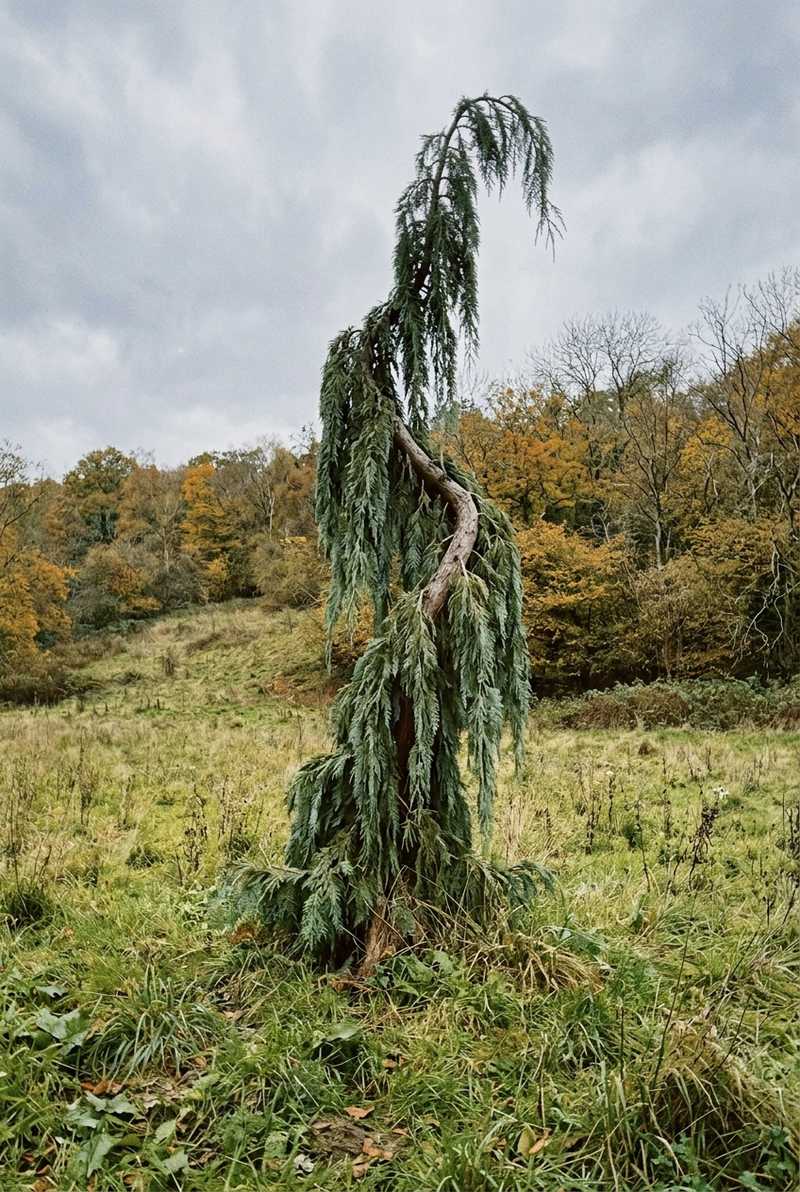
The strange one. I mean that with love.
It grows fast, more than a foot (30 cm) a year, and measures about 12 feet (3.5 m) tall after ten years. The American Conifer Society says its spread can’t be easily forecast and that no two plants are alike: the leader is strong, but it meanders off in odd directions.
Not for a tiny yard. For a big lawn that needs one thing nobody else on the street has, I can’t think of anything better.
13. Weeping Bottlebrush
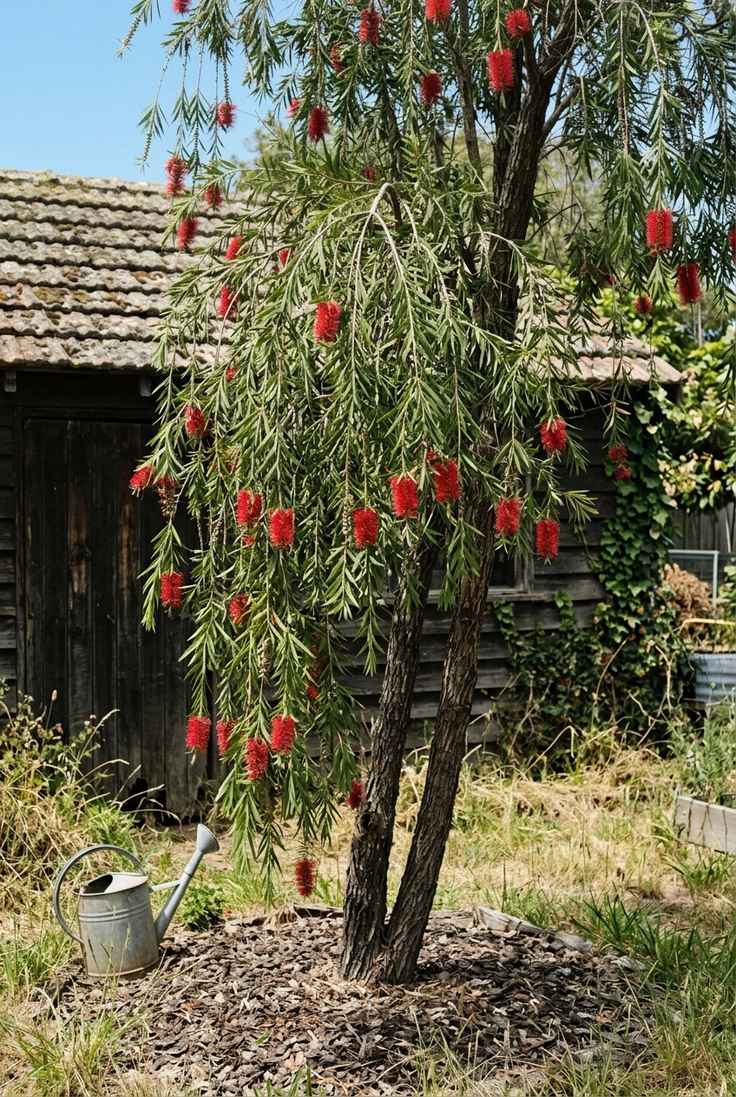
Warm-climate gardeners, this one’s yours.
A broadleaf evergreen with hanging branches and bright red bottlebrush flowers from spring to summer. Growth is fast, to 20 or 30 feet (6 to 9 m), often with several trunks.
Frost is the limit, and salt spray damages it, so plant it in zones 8 to 9 and away from the beach. It likes moist, well-drained soil and regular watering, though a mature tree can survive drought.
14. Weeping Yaupon Holly
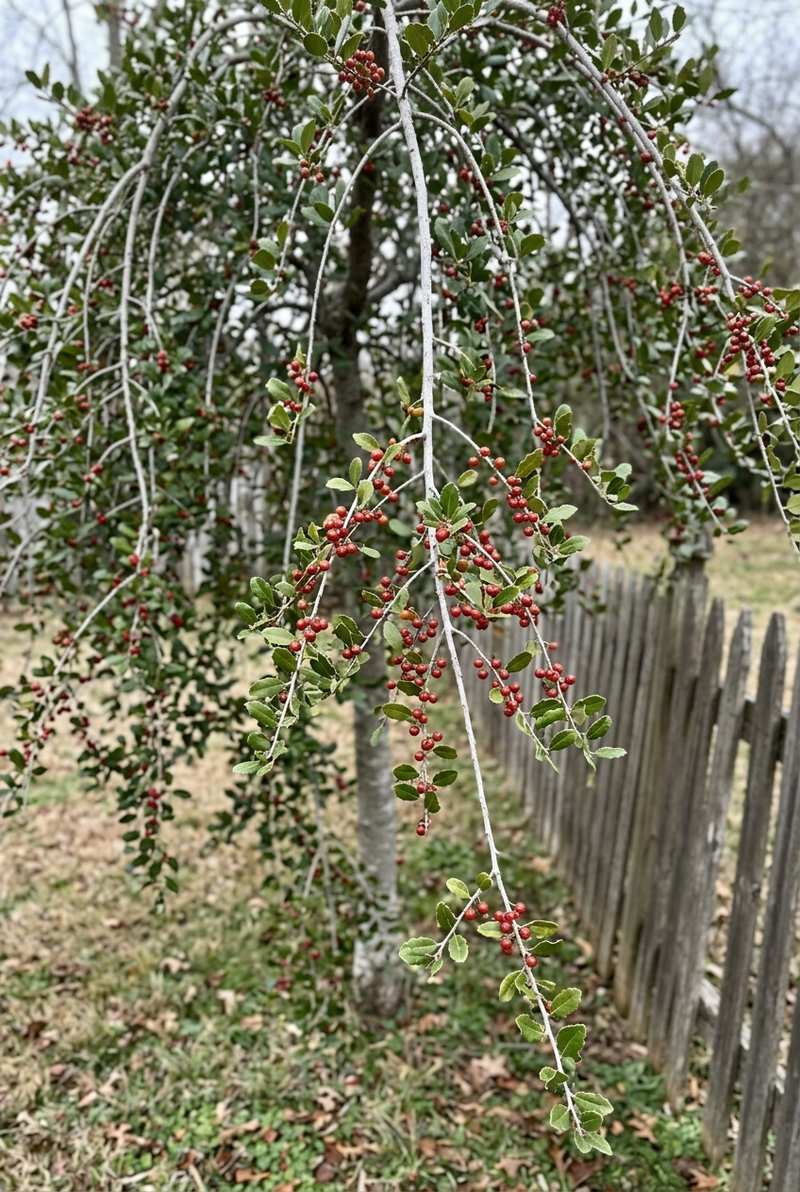
I saved my favorite surprise for last: a weeping evergreen that isn’t a conifer at all.
Weeping yaupon is a cultivar of a native holly, with small evergreen leaves on an irregular, open, weeping frame. It usually grows 15 to 20 feet (4.5 to 6 m) tall, and once established it’s drought tolerant and also puts up with brief flooding, salt and city conditions.
Tough barely covers it.
The winter show is the berries: translucent red, and only on female trees with a male somewhere nearby. Buy it in fall with berries on the branches and you know you have a female.
(The berries are for the birds. NC State lists the fruit as mildly poisonous to people, so it’s not a snack for small helpers.)
Three Questions Before You Buy
Forget the photos for a minute.
How wide is the space? Measure it, then believe the mature width, not the cute size in the pot.
What’s your zone? Cold gardens in zones 3 to 5 get Norway, blue and white spruce, white pine and hemlock. Zones 8 to 9 get deodar cedar, bottlebrush and yaupon holly.
Sun or shade? Shade means hemlock. Everything else on this list wants sun for most of the day.
Questions About Weeping Evergreens
Do weeping evergreen trees stay small?
Some do, and some really don’t. Weeping Japanese red pine stays around 3 to 5 feet (1 to 1.5 m) for its first decade, while weeping white spruce can reach 40 feet (12 m). Check the mature width as well as the height before you fall for one.
Why is my weeping spruce growing along the ground?
Because nobody staked it. Weeping Norway and blue spruce spread along the ground unless the leader is supported. Tie the strongest shoot to a stake and it’ll start climbing again.
Which weeping evergreens are narrow?
Among the tall, upright ones, weeping oriental spruce (3 to 6 feet wide), weeping white spruce (5 to 8 feet) and weeping Alaskan cedar (8 to 12 feet) are the narrowest. In metric that’s roughly 1 to 3.5 m, so all three fit a side yard.
How long do I have to stake one?
Until the leader reaches the height you want. Plan on a few years, not one season, and check the ties every year so they don’t dig into the trunk as it thickens.
One Stake, One Decision
That slumped blue cedar is still on my mind. I know what I’d do with it now: one tall stake by the front path, about five feet (1.5 m) up, and then let it pour.
Pick the width first, the zone second, and the height last, because the height is the part you control. I double-check every number against the plant records at Missouri Botanical Garden and NC State Extension before I buy, and it’s saved me from more than one tree that would have eaten the driveway.