12 Small Shade Trees That Won’t Take Over Your Yard
- Patio shade
- Sorted by growth rate
- Zones 3-9
- Canopy width listed
The patio gets full sun from two o’clock on. By July the chairs are too hot to sit in and the toddler’s sandbox turns into a frying pan.
I wanted shade, I wanted it soon, and I didn’t want a tree that would eat the yard in fifteen years.
It turns out those three wishes pull against each other. So this list of small shade trees is sorted the honest way: by how fast each one grows, with the canopy width listed first, because width is what makes the shade.
Quick Summary
- 12 small trees that cast real shade, none taller than 35 feet (10.5 m)
- Sorted by growth rate: 1 fast, 7 medium, 4 slow
- Canopy width is listed first, because a 25-foot (7.5 m) canopy shades a patio and a 10-foot (3 m) one shades a chair
- Three popular fast growers I’d skip, and why
- Best starter pick: Eastern redbud. Medium growth, zones 4-8, and a canopy wider than the tree is tall.
Fast and Small Rarely Go Together
This is the part nobody at the garden center says out loud.
Trees that grow fast usually keep growing. The ones that stop at a patio-friendly size mostly take their time getting there. One longtime contributor on the UBC Botanical Garden forum put it bluntly: “Even fast-growing trees take many years to produce substantial pools of shade.”
So I checked the growth rate NC State Extension gives for every tree here. Of the twelve, only one is rated fast.
Tip
Shade follows the sun, not the trunk. For afternoon shade on a patio in the northern hemisphere, plant on the west or southwest side, and far enough out that the mature canopy reaches over the seating without leaning on the house.
The Fast One
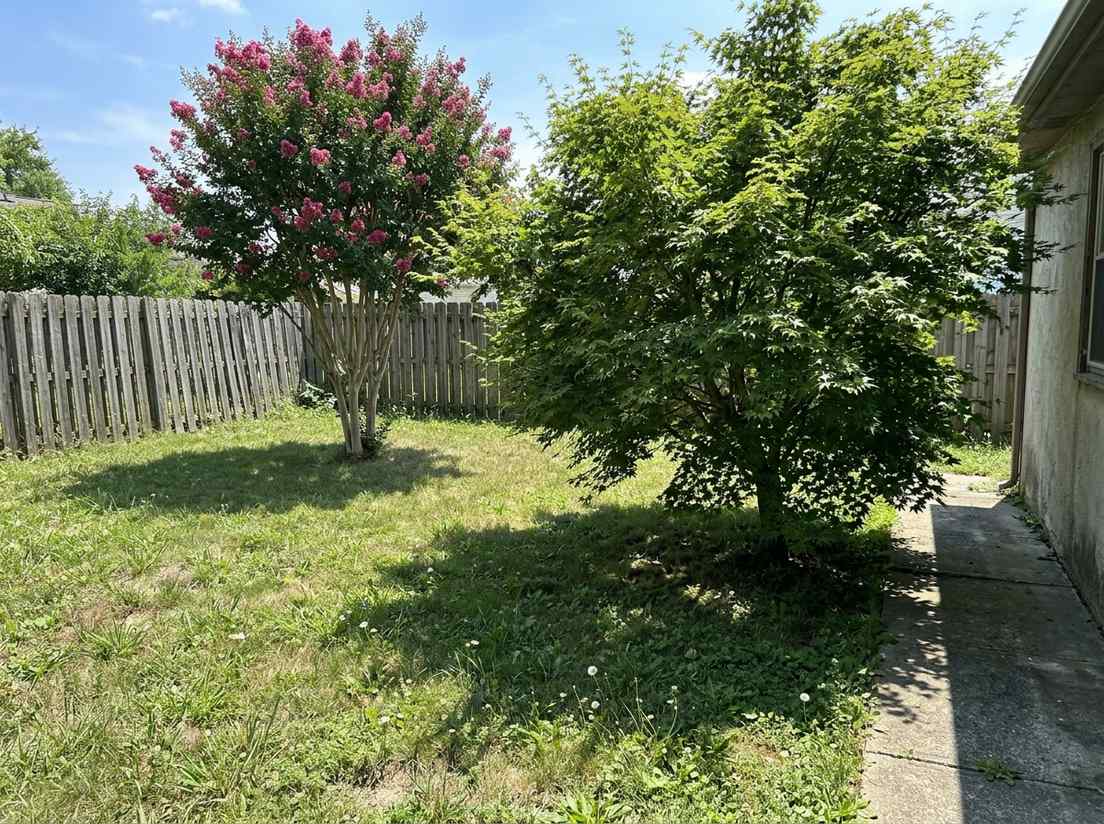
1. Crape Myrtle
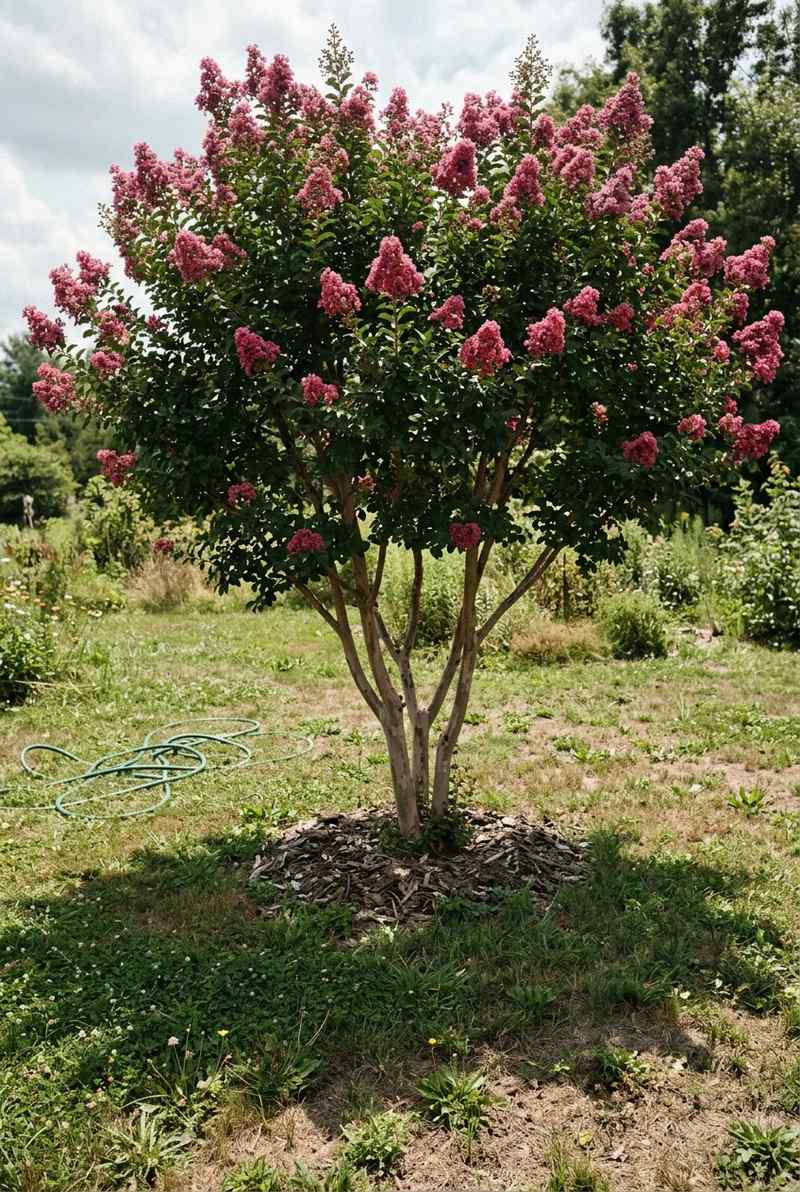
The only tree on this list that NC State rates as a fast grower, and it flowers from July to September while it’s at it.
Height depends completely on the variety, from 6 feet (1.8 m) to 25 feet (7.5 m), so read the tag and buy a tree-sized one if shade is the goal. It tolerates drought, clay and city conditions.
The limit is cold. In zones 5 and 6 the top growth often gets winter injury, so it’s happiest in zone 7 and warmer.
The Steady Ones
Medium growth. In my experience that’s the sweet spot: a few years of patience, and no monster at the end.
2. Eastern Redbud
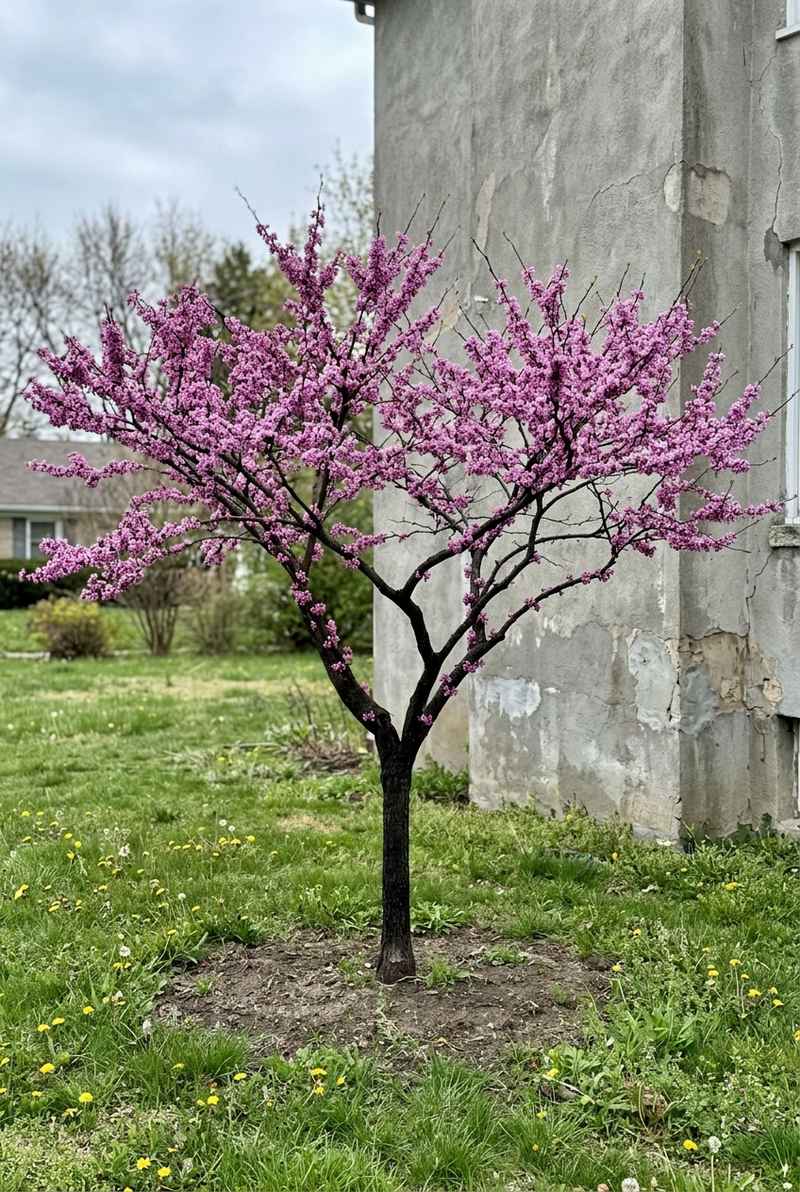
My starter pick, for one reason: it grows wider than it grows tall.
A redbud matures at 20 to 30 feet (6 to 9 m) with a slightly larger spread, which is exactly the shape you want over a patio. Before the leaves come, the bare branches cover themselves in rose-purple flowers.
Two cautions. It doesn’t transplant well, so plant it young and leave it where it is, and canker can be a significant problem on stressed trees.
3. Japanese Tree Lilac
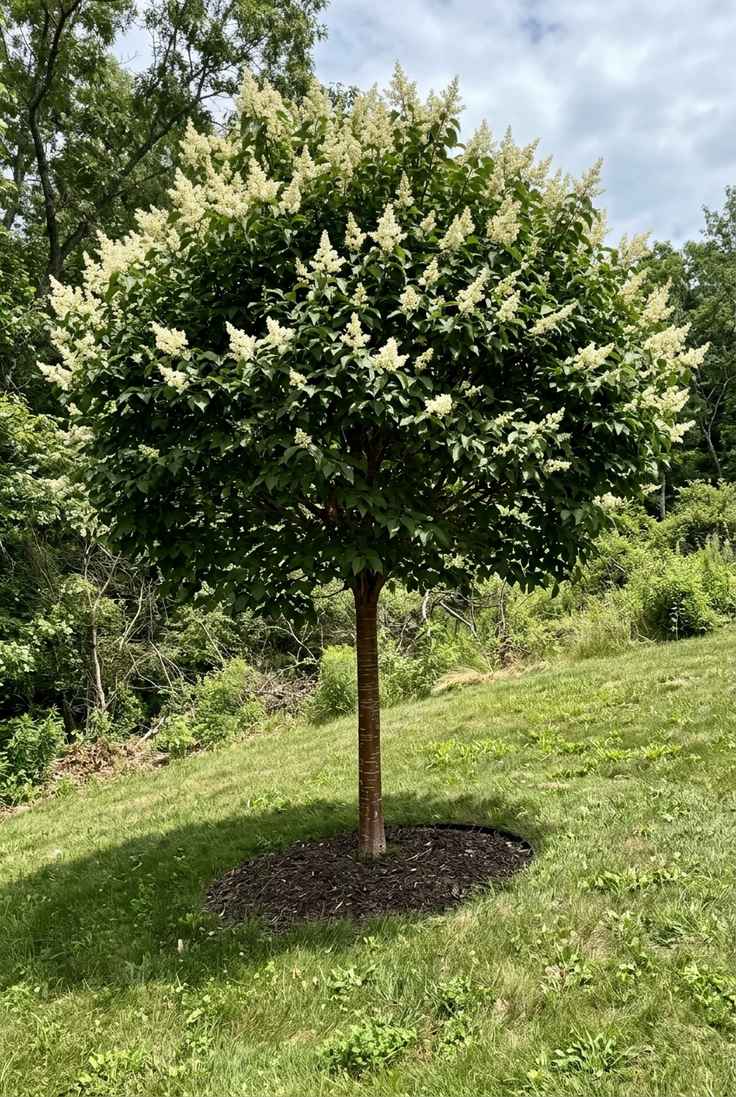
A lilac that’s an actual tree. I didn’t know that was an option for years.
‘Ivory Silk’ grows 20 to 25 feet (6 to 7.5 m) tall with a rounded crown, and its creamy white, fragrant flowers open later than other lilacs. It also reportedly has good resistance to the mildew and borers that bother shrub lilacs.
It’s hardy all the way to zone 3 and grows best where summers are cool. Missouri Botanical Garden doesn’t recommend it south of zone 7.
4. Saucer Magnolia
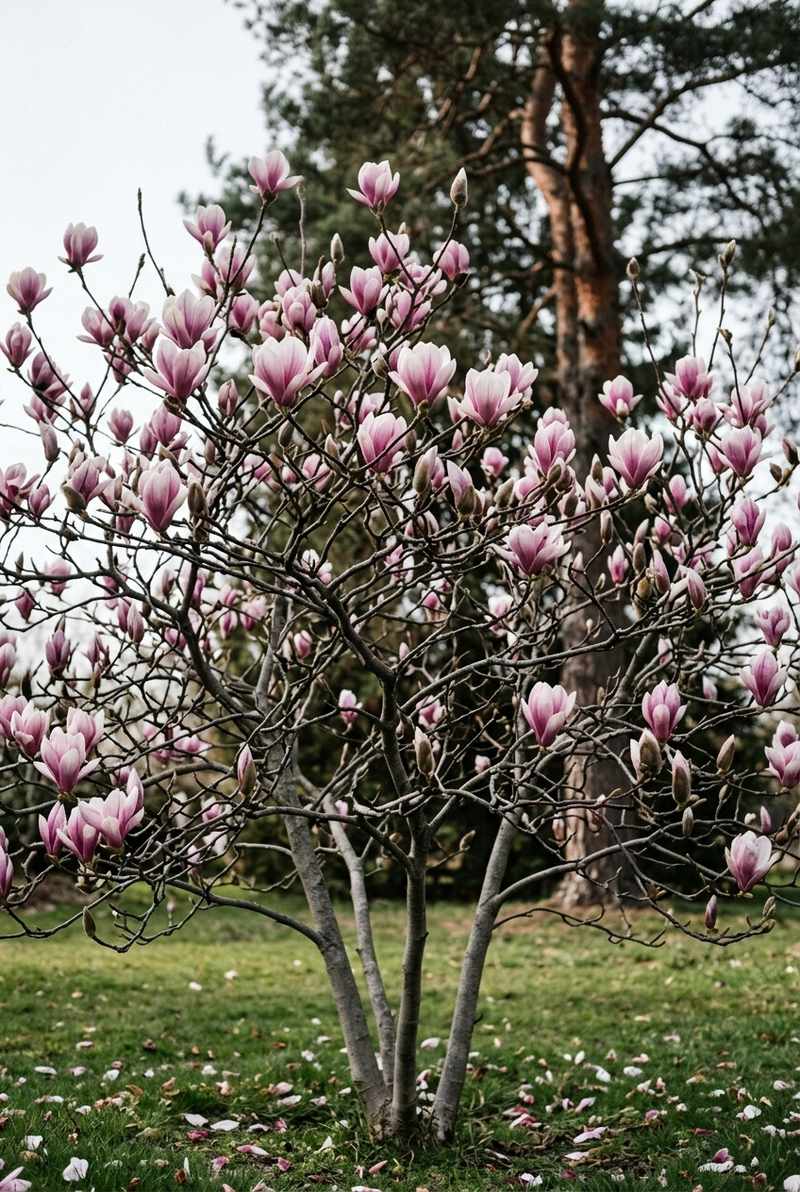
The big white-and-purple magnolia everyone photographs in March.
It’s the most commonly grown deciduous magnolia, and it makes a rounded crown about 20 to 25 feet (6 to 7.5 m) tall and wide.
Those early flowers are the gamble: a late frost can damage them. Missouri Botanical Garden’s advice is to avoid a warm southern exposure close to the house, where the buds get coaxed open too early (and to forgive it the odd bad year, which is my addition).
5. Japanese Snowbell
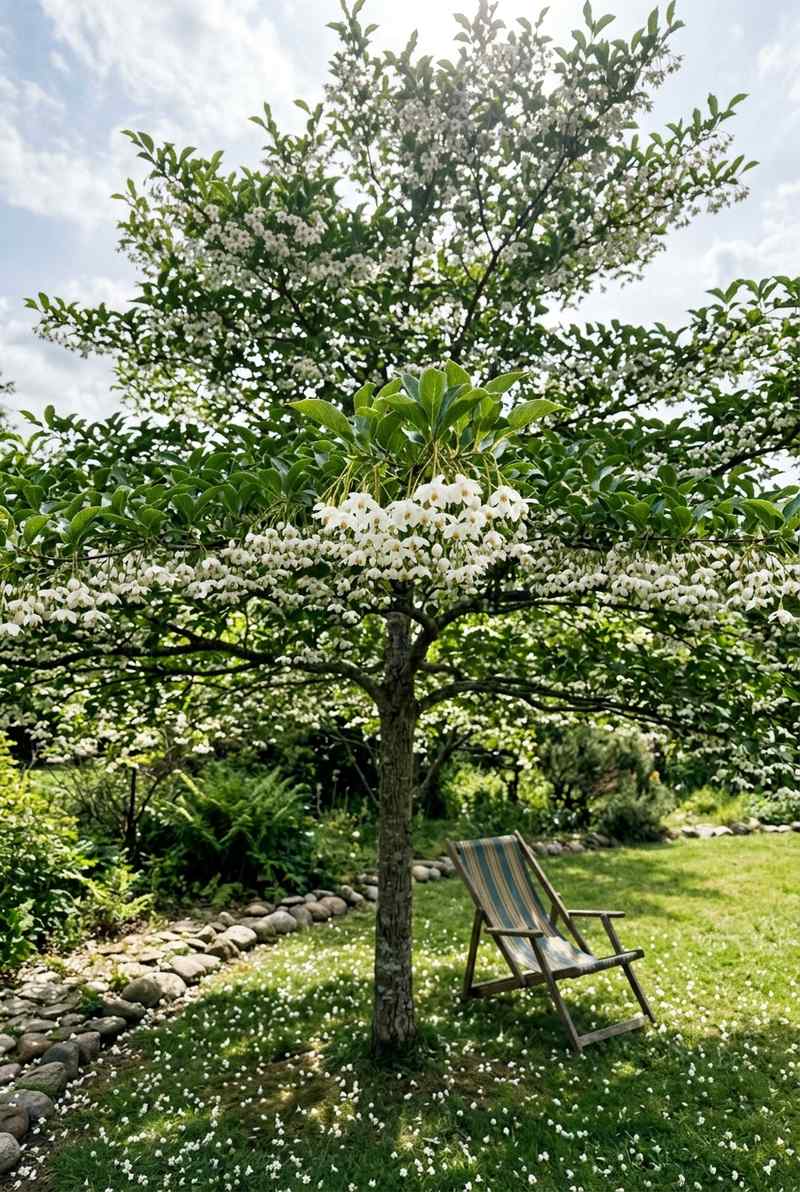
If I were planting for a spot where people sit, this is the tree I’d choose.
The branches grow out horizontally, and in May and June white bells hang underneath them, so the best view is from a chair looking up. The crown is rounded, 20 to 30 feet (6 to 9 m) tall and as wide.
Missouri Botanical Garden lists no serious insect or disease problems. That’s a short sentence I’ve learned to love.
6. Autumn Brilliance Serviceberry
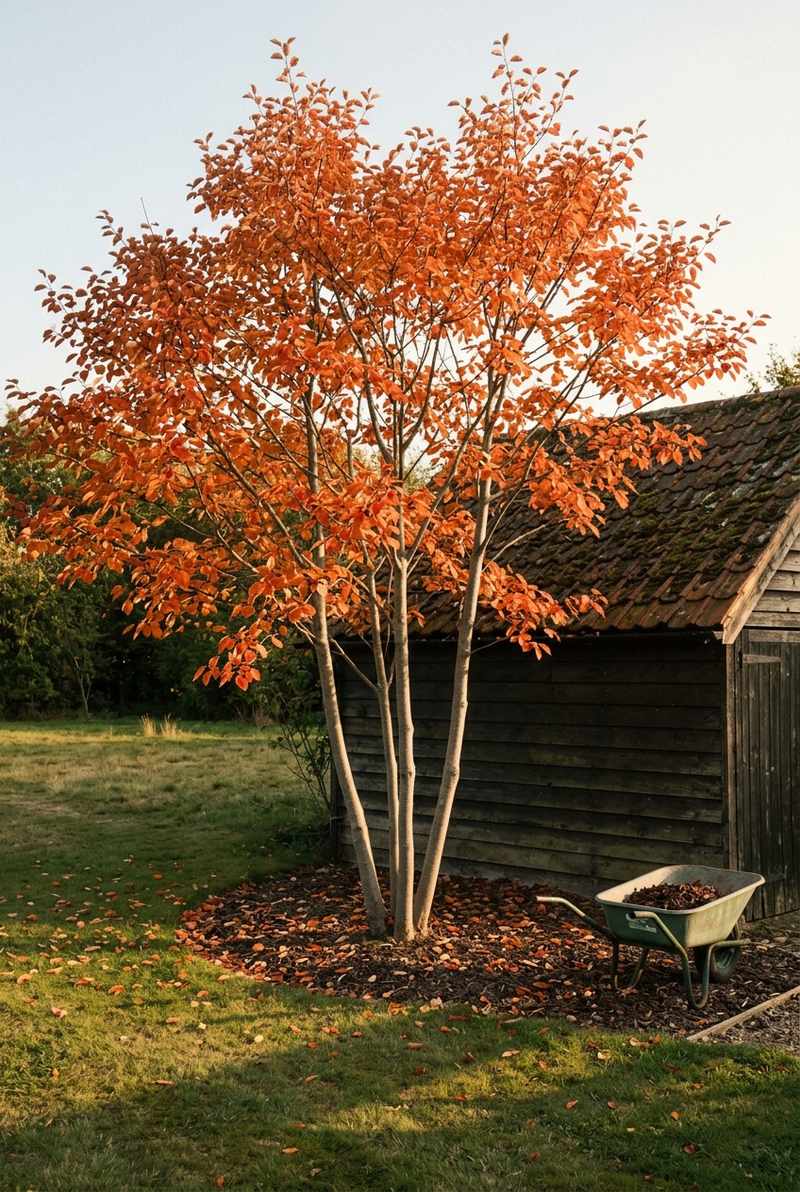
Three seasons from one small tree: white flowers in April, edible berries after that (the birds will get there first), and brilliant orange-red fall color.
It usually has several trunks and reaches 15 to 25 feet (4.5 to 7.5 m). It’s reported to have excellent disease resistance.
Watch the base. Root suckers are common, and if you don’t remove them the tree turns into a big shrub and the shade drops to knee height.
Save this to Pinterest7. Prairifire Crabapple
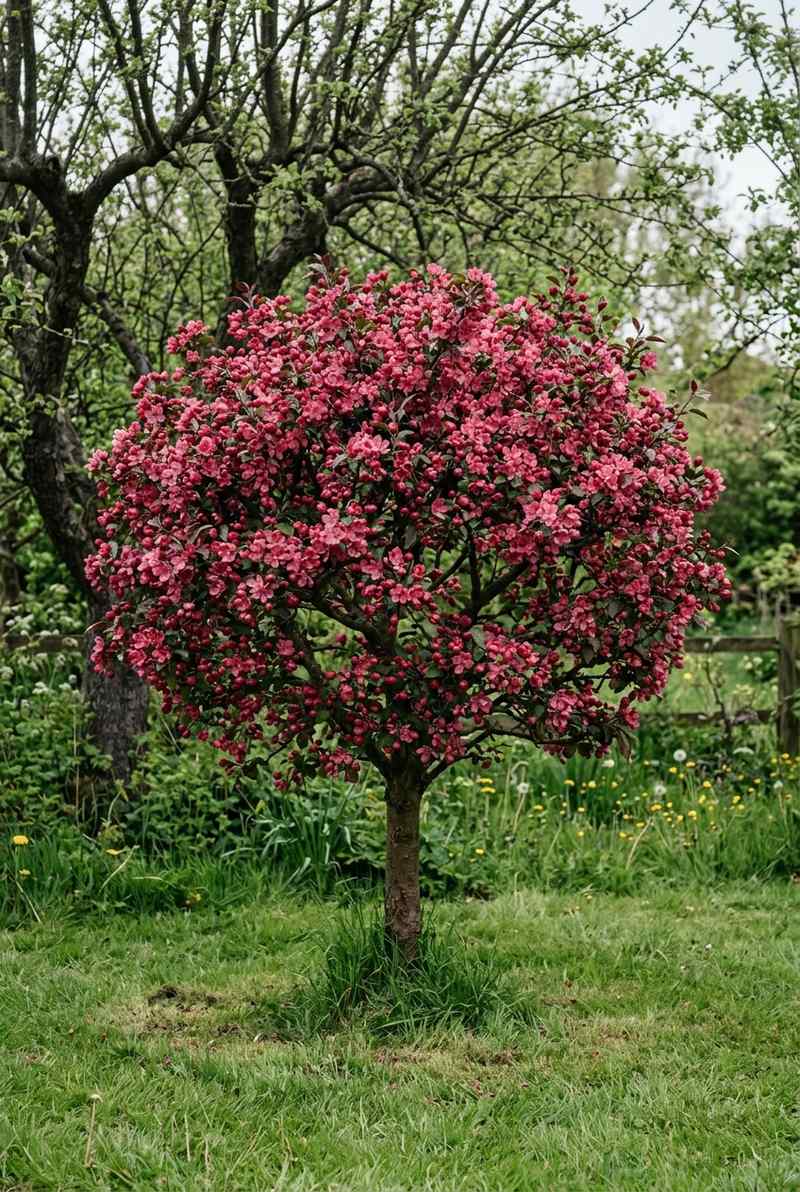
Dense and rounded, which is exactly what a shade tree should be.
Deep pink-red flowers in spring, then masses of small purplish-red fruit that hang on and feed the birds. It tops out at 15 to 20 feet (4.5 to 6 m) tall and wide, so think of it as shade for a bench, not a whole deck.
Crabapples have a reputation for scab and fire blight. ‘Prairifire’ reportedly has high disease resistance, which is why it’s the one I’d buy.
8. Trident Maple
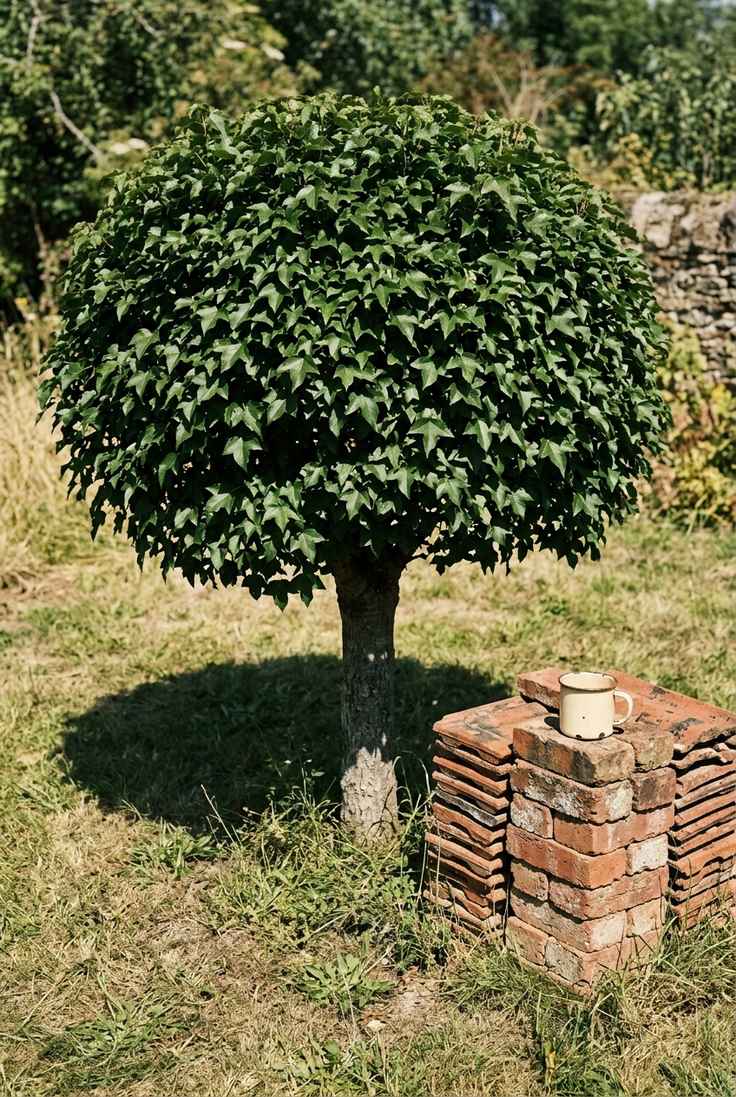
A real maple in a small-yard size.
It’s a small, rounded tree, 20 to 30 feet (6 to 9 m) tall and wide, with glossy three-lobed leaves and fall color in dark red and orange. It tolerates some drought once it’s settled.
NC State rates the growth as medium, and Missouri Botanical Garden says it grows rather slowly. I’d split the difference and call it unhurried.
The Slow Ones
These take longer. They’re also the ones people stop to look at.
9. Winter King Hawthorn
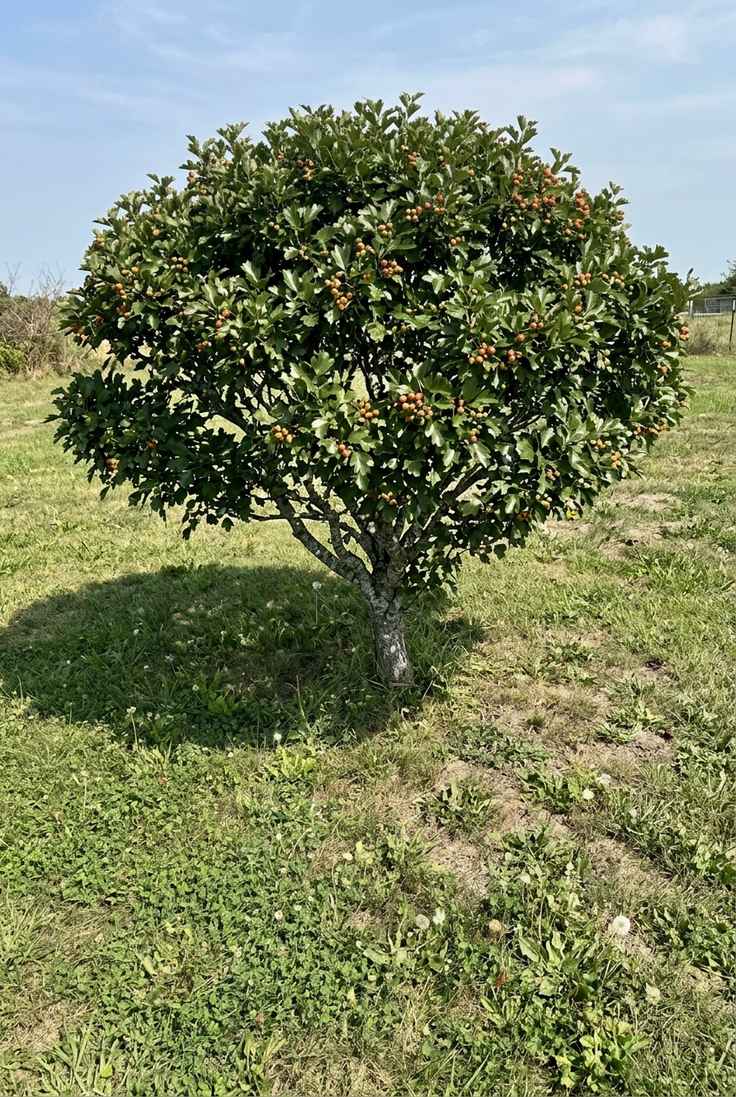
Tied with redbud for the biggest canopy on the list: 25 to 35 feet (7.5 to 10.5 m) across at maturity.
White flowers in May, then red fruit that lasts into winter. It handles drought and clay, and it ranks among the most disease-resistant of the hawthorns.
Missouri Botanical Garden calls it largely spineless, but it can still carry the odd thorn. And if eastern red cedars grow nearby, expect some rust on the leaves.
10. Japanese Maple
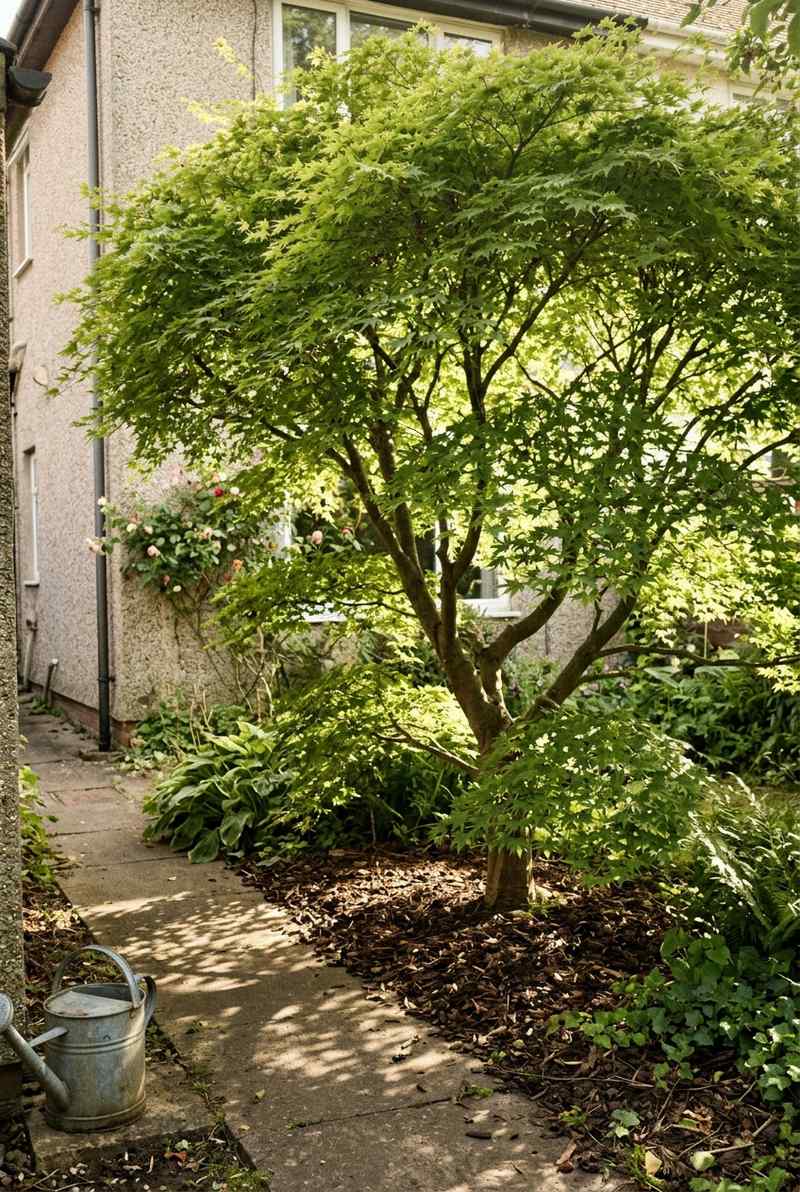
Not much shade per year of waiting, but nothing else looks like this.
A full-size Japanese maple reaches 10 to 25 feet (3 to 7.5 m) tall and wide. Dappled is the word for the light under one: soft, moving, never dark.
In hot climates it prefers afternoon shade itself, and new leaves can scorch in full sun. So it’s better as the tree beside the patio than the tree baking in the middle of the lawn.
11. Fringe Tree
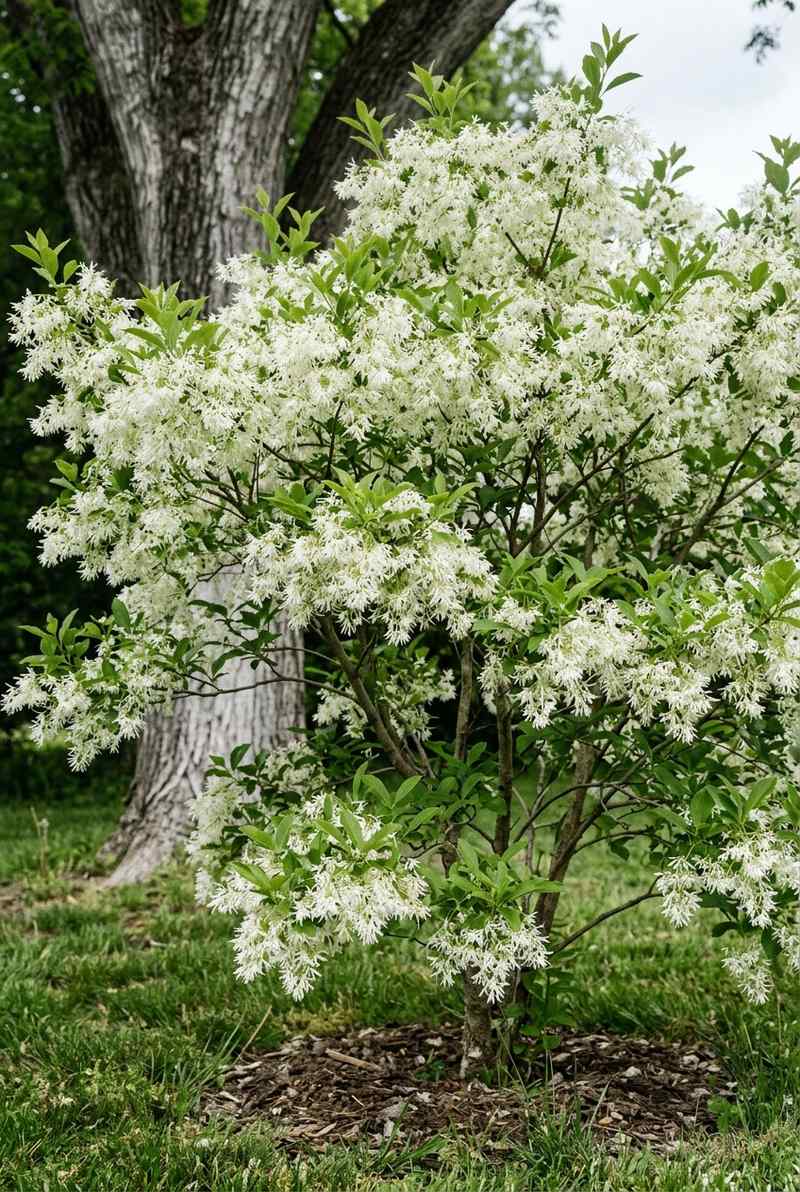
A native with fragrant, creamy white flowers that hang like fringe in late spring.
At 12 to 20 feet (3.5 to 6 m) tall and wide, it’s one of the smallest on the list. It tolerates clay, city air and even black walnut, and it seldom needs pruning.
What it won’t tolerate is a long dry spell. Water it in dry summers.
12. Pagoda Dogwood
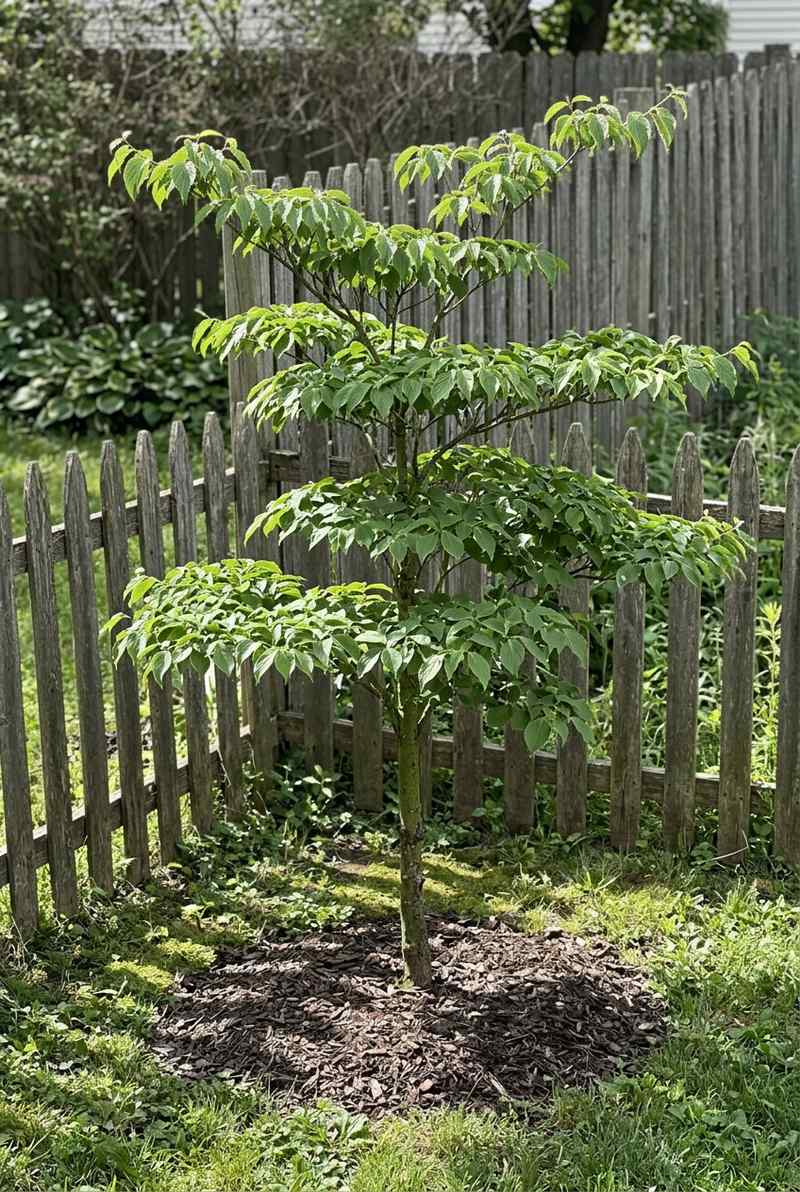
I saved the most beautiful shape for last.
The branches grow in flat, horizontal tiers, like a stack of green plates. That layered habit makes it wider than tall: 15 to 25 feet (4.5 to 7.5 m) high and 20 to 32 feet (6 to 10 m) across.
It’s a native that wants consistent moisture and a mulched root zone, and it can get leaf spot and canker when stressed. Give it a cool, moist spot and it’ll outclass everything around it.
The Fast Growers I’d Skip
Three trees get recommended constantly for quick shade in small yards. I wouldn’t plant any of them.
| Tree | Why it tempts you | Why I’d pass |
|---|---|---|
| Bradford pear | Fast, with white spring flowers | Invasive in North Carolina, and its tight branch crotches are likely to split in wind and storms |
| Amur maple | Small, tough, good fall color | Missouri Botanical Garden labels it “Midwest Noxious Weed: Do Not Plant” |
| Golden raintree | Sold as a small shade tree | Grows 30-40 ft (9-12 m) tall and just as wide |
The details on Bradford pear are on NC State Extension’s page, which also explains how it crosses back into the invasive wild form.
Questions About Small Shade Trees
What’s the fastest growing small shade tree?
Of the twelve here, crape myrtle is the only one NC State rates as fast. Redbud, serviceberry and saucer magnolia are medium growers and a better bet in colder zones.
How far from the patio should I plant a shade tree?
Far enough that the trunk sits about half the mature canopy width from where you want the shade to start. For a redbud that’s roughly 12 to 17 feet (3.5 to 5 m) out.
Which small trees give the most shade?
The ones with the widest canopy: Winter King hawthorn at 25 to 35 feet (7.5 to 10.5 m), redbud at the same 25 to 35 feet (7.5 to 10.5 m), and pagoda dogwood at 20 to 32 feet (6 to 10 m).
Can I just plant a big tree and keep it small?
Not for long. A tree that wants to be 60 feet (18 m) tall fights you every year, and heavy yearly pruning takes away the canopy you wanted in the first place.
Pick the Canopy, Then Wait Well
I went with the redbud. It’s about fifteen feet (4.5 m) out from the southwest corner of the patio, about as tall as I am, and I already check it every morning like it might have grown overnight.
Choose by canopy width, not by speed. Be honest about your zone, and take medium growth over fast.
If you care more about flowers than shade, my list of small flowering trees for the front yard ranks many of the same trees a different way, and the dwarf weeping trees cover the really small spaces. Missouri Botanical Garden’s page on eastern redbud has the full profile.